
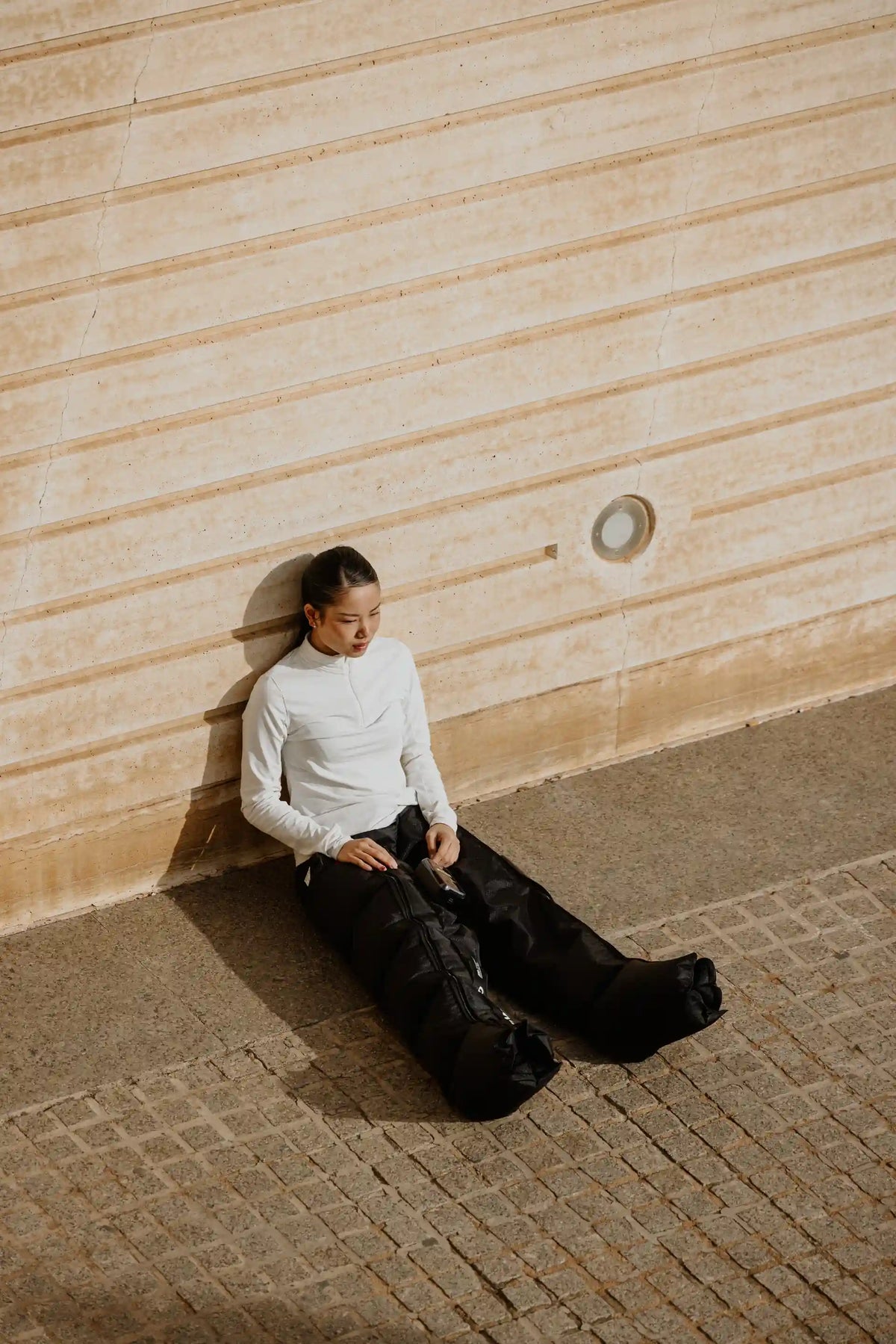
In triathlon, recovery is won between sessions. It is not just about resting more, but about spreading the load well, rehydrating and eating in time so you reach the next discipline with usable energy. The literature on endurance recovery and the recent triathlon-specific review both point that way.
On top of that, every change of discipline asks for something different: the transition, the coordination and the sense of effort do not behave the same way coming out of the water as they do getting off the bike. That is why it makes sense to train and recover in blocks, instead of thinking of triathlon as one single long session.
Red & infrared light
Recover faster, at home
★★★★★ 4,8/5 · rated by verified customers
The KumoLux panel supports muscle recovery with full-body red and infrared light.
- 660 nm red + 850 nm infrared light
- Full-body muscle recovery
- Clinically validated biohacking protocols
€399,00€499,00
−10% on your 1st order when you subscribe to the newsletter

What changes between swimming, cycling and running
In swimming, fatigue tends to show up in the shoulders, upper back and breathing; on the bike, the load is more sustained on the quads and glutes; in running, impact and stiffness in the ankles, calves and sole of the foot take their toll. The practical key is understanding that what you recover is not the same across the three disciplines. The international federation insists that transitions be practiced, because they demand more specific skill than pure endurance. Official advice on triathlon transitions.
If you want to know whether you are arriving loaded or simply tired, reading up on practical recovery metrics can help, because fatigue is not always obvious from feel alone. (usopc.org)
Personalized protocol · included with your purchase
Want us to tell you how to use it in your case?
With your purchase, our experts set up your red and infrared light sessions for your sport and goal.
Message us on WhatsAppOur experts reply · no obligation
How to organize the first 24 hours
As a baseline, the IOC points out that recovery rehydration should cover part of the mass lost and that food also provides fluids, sodium and carbohydrate. In parallel, nutritional recovery after endurance exercise improves when carbohydrate arrives early and protein comes along if the window between sessions is short. IOC consensus on recovery hydration and review on nutritional recovery after endurance exercise.
Practical summary by phase
| Timing | Goal | What to do |
|---|---|---|
| 0 to 60 min | Rehydrate and start topping up energy | If you sweated a lot, drink and add sodium; if you are training again soon, bring in carbohydrate and a serving of protein. |
| 1 to 4 h | Complete the recovery | Have a normal meal with carbohydrate, protein, fruit and vegetables, and adjust sodium to the heat and how much you sweat. |
| Night | Bring arousal down | Prioritize a stable sleep routine, because rest supports recovery, performance and load tolerance. |
If you want to turn this logic into something easy to repeat, this at-home recovery protocol can help.
Nutrition and hydration so recovery does not fall short
When recovery has to be fast, the literature cites simple reference points: around 1.2 g of carbohydrate per kilo per hour during the first hours, and a protein serving of roughly 0.25 g/kg, or some 20 to 40 g depending on context. If you have no session close by, a well-built complete meal is usually enough. The triathlon-specific review also stresses the importance of avoiding chronically low energy availability. Recent review on triathlon nutrition and nutritional recovery after endurance work.
on your first order when you join the newsletter
We send you the code instantly. No spam.
Brick training and transitions: turning the change of discipline into an advantage
Brick training is not punishment, it is adaptation. It means linking bike and run with little rest in order to train the feeling of tired legs and, above all, the logistics of the change. World Triathlon points out that transitions call for specific practice and less endurance than skill. Official transitions guide.
- Keep the brick short and at a controlled pace so you feel the change of movement without turning it into another hard session.
- Practice the full sequence: getting off the bike, putting your gear on and heading out to run calmly. (triathlon.org)
- Think of the first part of the run as a transition of effort, not as a speed test.
Recovery tools that can support the process
Wellness tools can support you, but they do not replace the basics: sleep, food, hydration and a well-spread load. If the goal is to feel less heaviness and handle demanding weeks better, it is best to see them as a complement.
Pressotherapy: useful as a complement, not as a shortcut
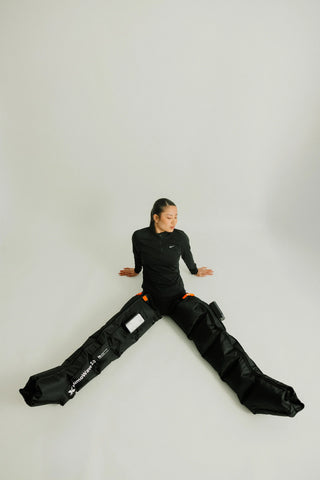
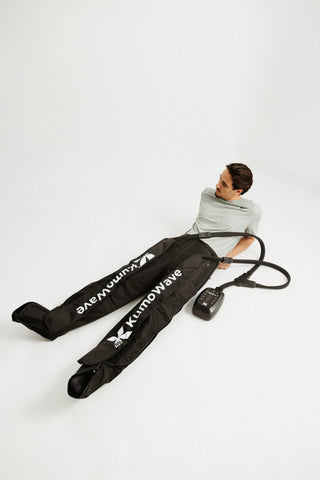
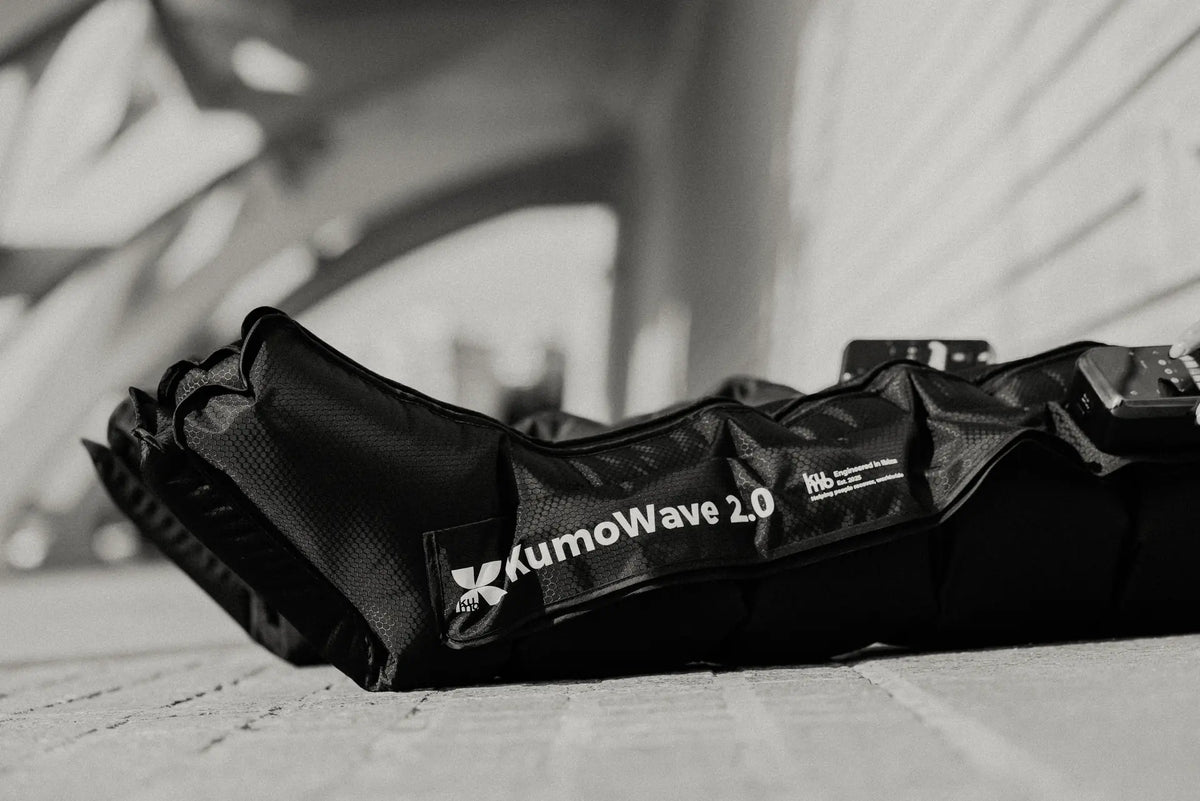
The available evidence on pressotherapy suggests moderate benefits in the perception of muscle soreness, but no clear and consistent improvements in performance. In other words, it can support recovery, though it does not replace it. Meta-analysis on pressotherapy and delayed onset muscle soreness.
If you want to apply it sensibly, pressotherapy and circulation and how to set the pressure in mmHg without overdoing it can help you.
Percussive massage: it may help how you feel, but the evidence is still limited
The systematic review on massage guns found few studies and variable methodological quality, so it pays to be cautious with expectations. It can be a useful tool for noticing less stiffness, but it is not magic and it does not replace load management. Systematic review on percussive massage and recovery.
Red light therapy and photobiomodulation: promising, but with mixed results
On photobiomodulation, recent reviews remain cautious: there are promising signals in some variables, but the evidence is not uniform and more research is needed. That is why it makes more sense to use it as part of a broad routine than as a single solution. Review on whole-body photobiomodulation and exercise.
If you are interested in how to fit it into higher-volume days, the guide on when to use red light therapy after training and the article on the weekly protocol based on volume and intensity give you a practical framework.
How to reduce the risk of overload and injury
The best recovery is also built before the next training session. The IOC consensus on athletic load warns that poor load management raises injury risk, and in the running world the NHS insists on not raising intensity or distance too fast, on top of doing a five to ten minute warm-up and cool-down.
- Respect deload days when the body no longer responds the same way.
- Use swimming or the bike as alternative aerobic work when running loads you too much. (newcastle-hospitals.nhs.uk)
- If a niggle changes your technique, lower the load before fatigue turns into a problem.
If you want to put those signals in order, you can lean on these practical recovery metrics so you are not deciding on feel alone.
When to seek medical assessment
Stop and get checked if the pain gets worse, if significant swelling or bruising appears, if you cannot put weight on it, if the area is very stiff or if it does not improve after a few days of basic care. For muscle or ligament injuries, the NHS recommends relative rest at first and warns against returning to intense load too early. (nhs.uk)
- If there was a snap, a deformity or a loss of sensation, the assessment should be urgent.
- If there is fever, chills or a clear worsening, do not keep training.
- If the discomfort does not fit normal fatigue, stop improvising and ask for a check-up.
With pneumatic compression, remember that there are absolute and relative contraindications, so do not use it if you have a condition a professional has advised you against, or if using it increases pain or swelling. The logic is simple: when the picture does not fit normal fatigue, you assess first and apply tools afterward.
FAQ on triathlon recovery
How should you split your triathlon training between swimming, cycling and running?
There is no single formula, but there is a clear idea: divide the week according to your weak point, your target distance and your real capacity to recover. For many age-group triathletes it works better to secure quality sessions in all three disciplines, one or two brick combinations and at least one deload day, rather than piling up volume without control. The key is not letting run fatigue eat the whole week. Managing load and recovery is what makes the difference.
What is brick training and why does it matter?
Brick training means linking two disciplines, normally bike and run, with little pause between them. It trains the change of motor pattern, the feeling of tired legs and the logistical side of the transition. It should not turn into another hard session, but into a specific, controlled block. World Triathlon points out that transitions call for practice, because they are not only a question of endurance but of skill. If you work on them calmly, you get to race day more automatic and less nervous.
How can I avoid injuries while training?
The basics are simple: progress gradually, respect rest and do not ignore fatigue. The NHS insists on warming up beforehand, loosening off afterward and not increasing distance or intensity too fast. The IOC consensus on athletic load also points out that poor management of volume and intensity raises injury risk. If you notice a niggle changing your technique or lasting longer than usual, cut the load and watch what happens before pushing on. (nhs.uk)
What should I eat before and after training?
Before a demanding session, prioritize carbohydrate that is easy to tolerate and, if it works for you, add some protein without overcomplicating things. Afterward, the order matters: hydrate first, then replace carbohydrate and finish with protein when the window between sessions is short. As a useful reference, the literature cites around 1.2 g/kg/h of carbohydrate in the first hours of recovery and about 0.25 g/kg of protein per serving, or 20 to 40 g. If you have no session close by, a complete meal is usually enough.
Triathlon transitions: how do you master them?
The best way to master them is to rehearse the sequence until it stops being a conscious decision. Practice entering and leaving transition, laying out your gear in the same order, dismounting and mounting calmly and starting the run without going out too hard. World Triathlon stresses that transition demands more practice than base fitness, and that holds for beginners and experienced athletes alike. The more automatic the process, the less mental energy it costs you on race day.
So what now?
If you want to move from theory to a routine that is easy to repeat, start at the Kumo Balance home page and build your recovery week around what you actually do: swim, ride, run and start again feeling better.

Red & infrared light
KumoLux Panel – Red and Infrared LED Panel
★★★★★ 4,8/5 · rated by verified customers
- 660 nm red + 850 nm infrared light
- Full-body muscle recovery
- Clinically validated biohacking protocols
€399,00€499,00· pay in installments with seQura or Klarna