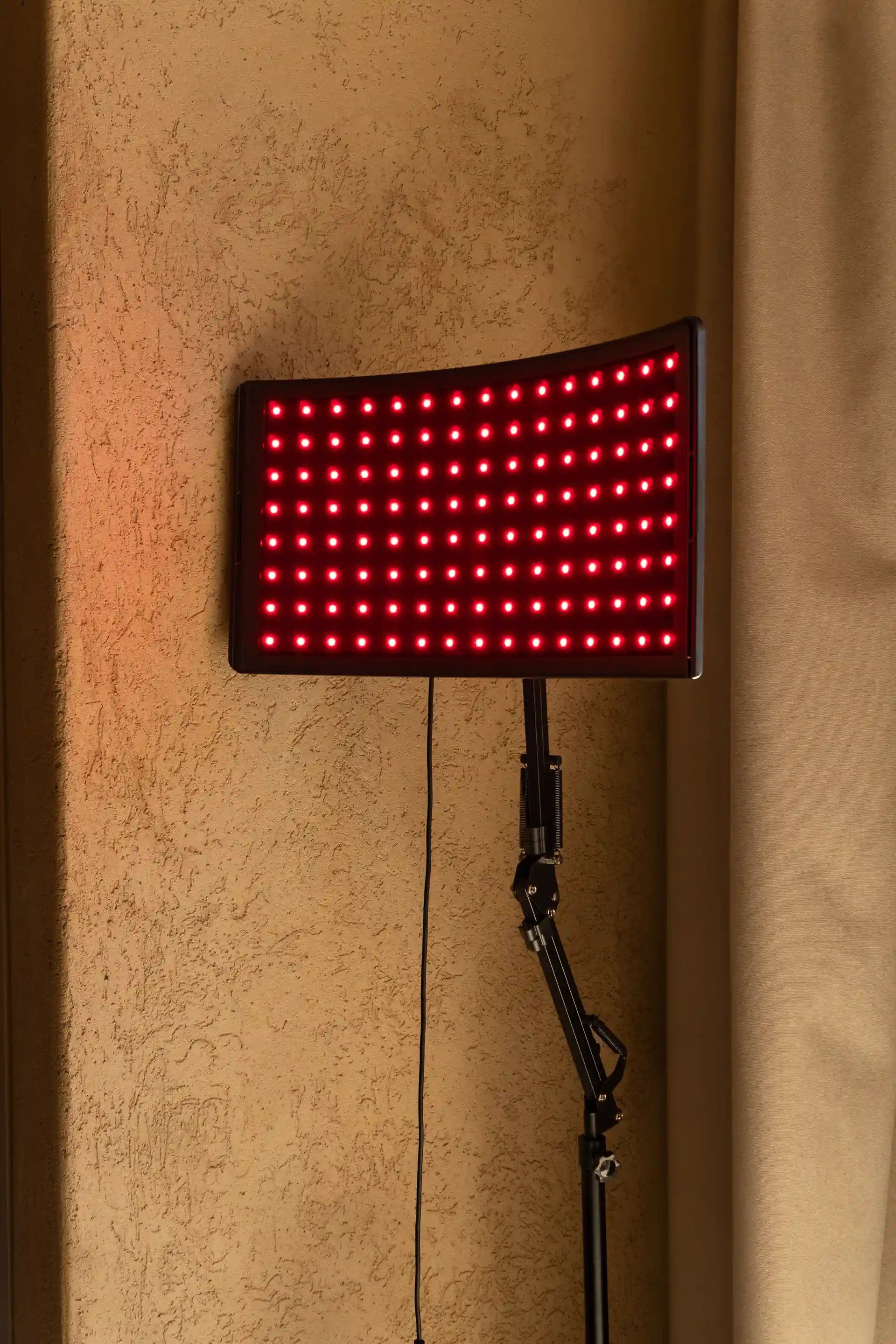
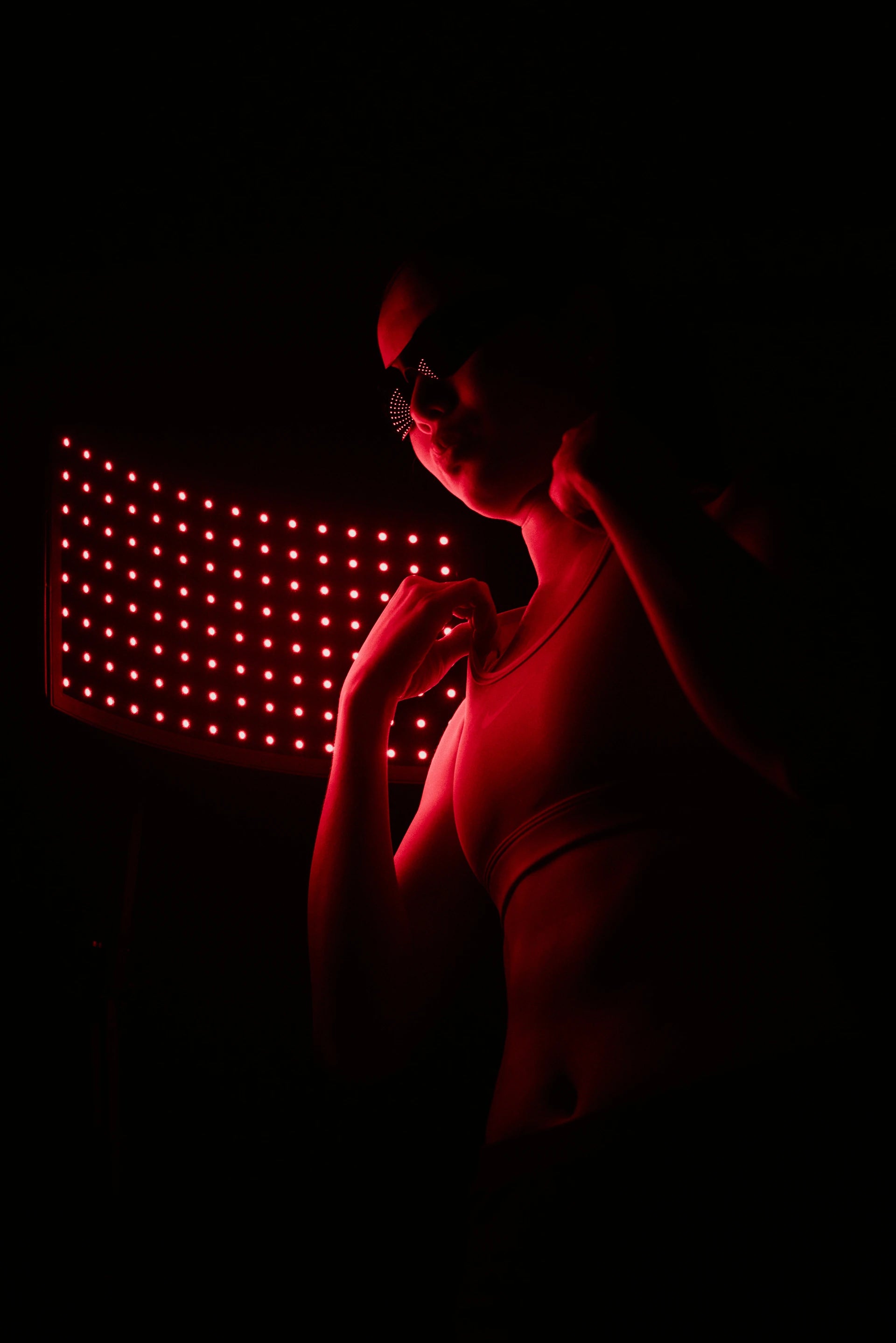
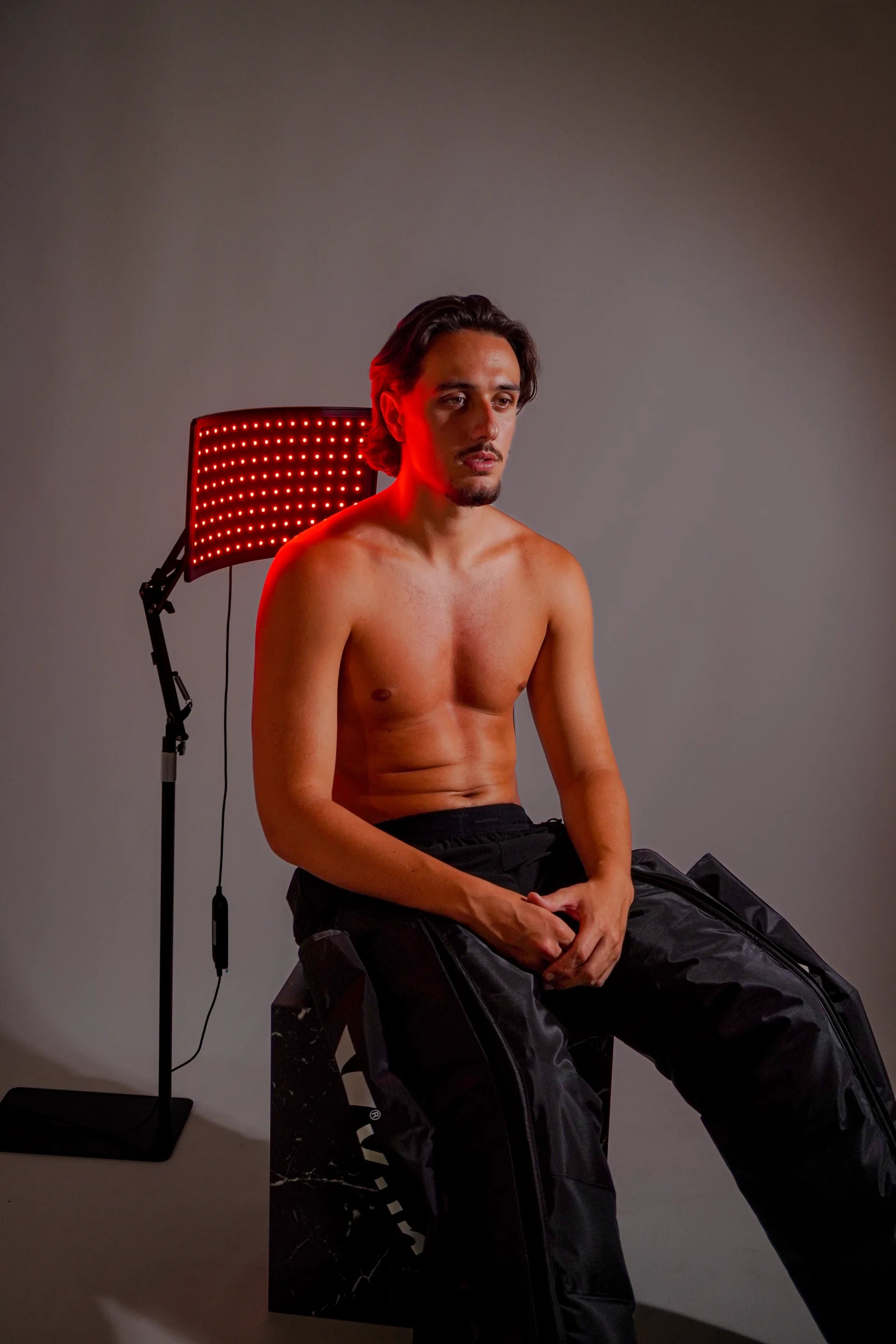
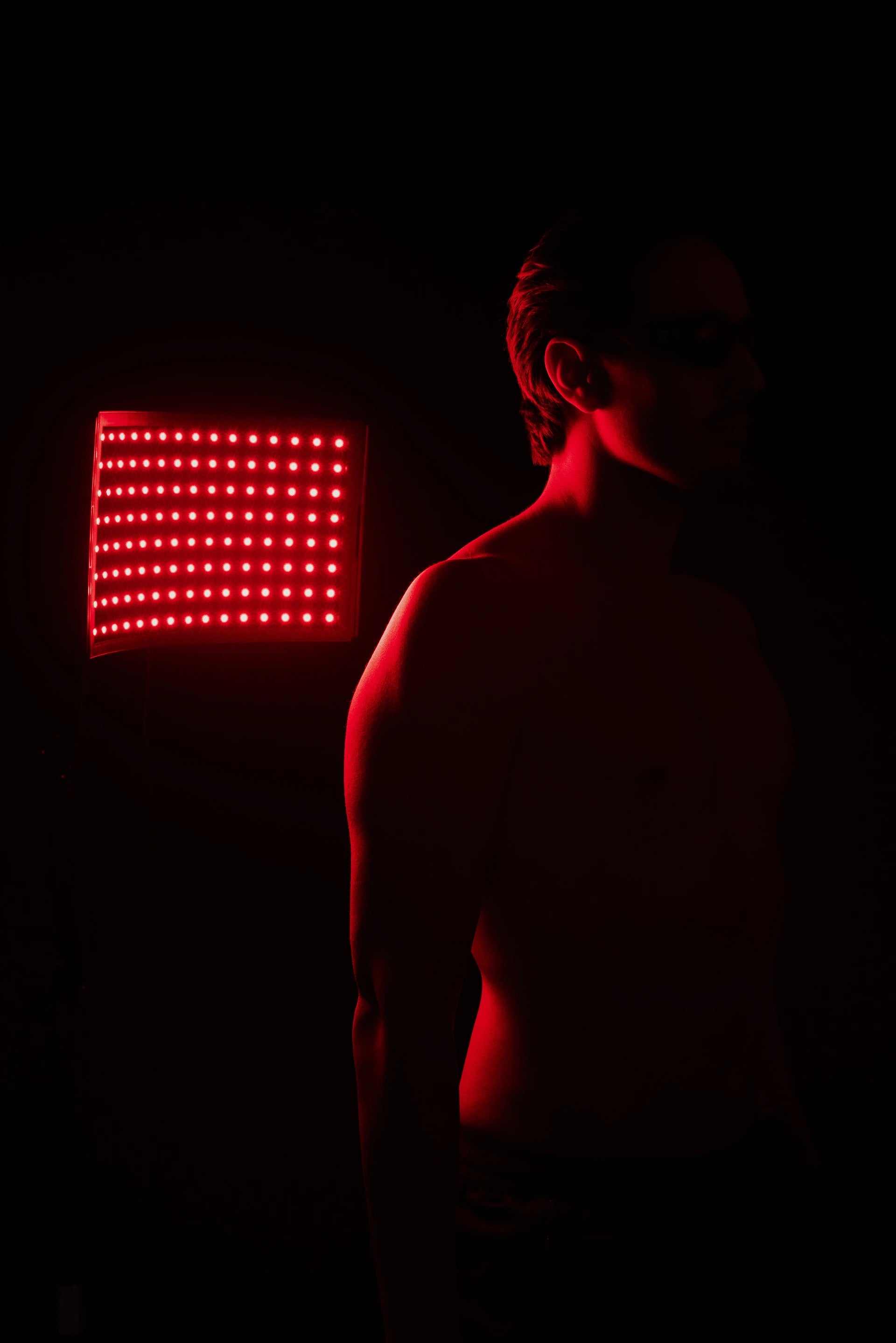
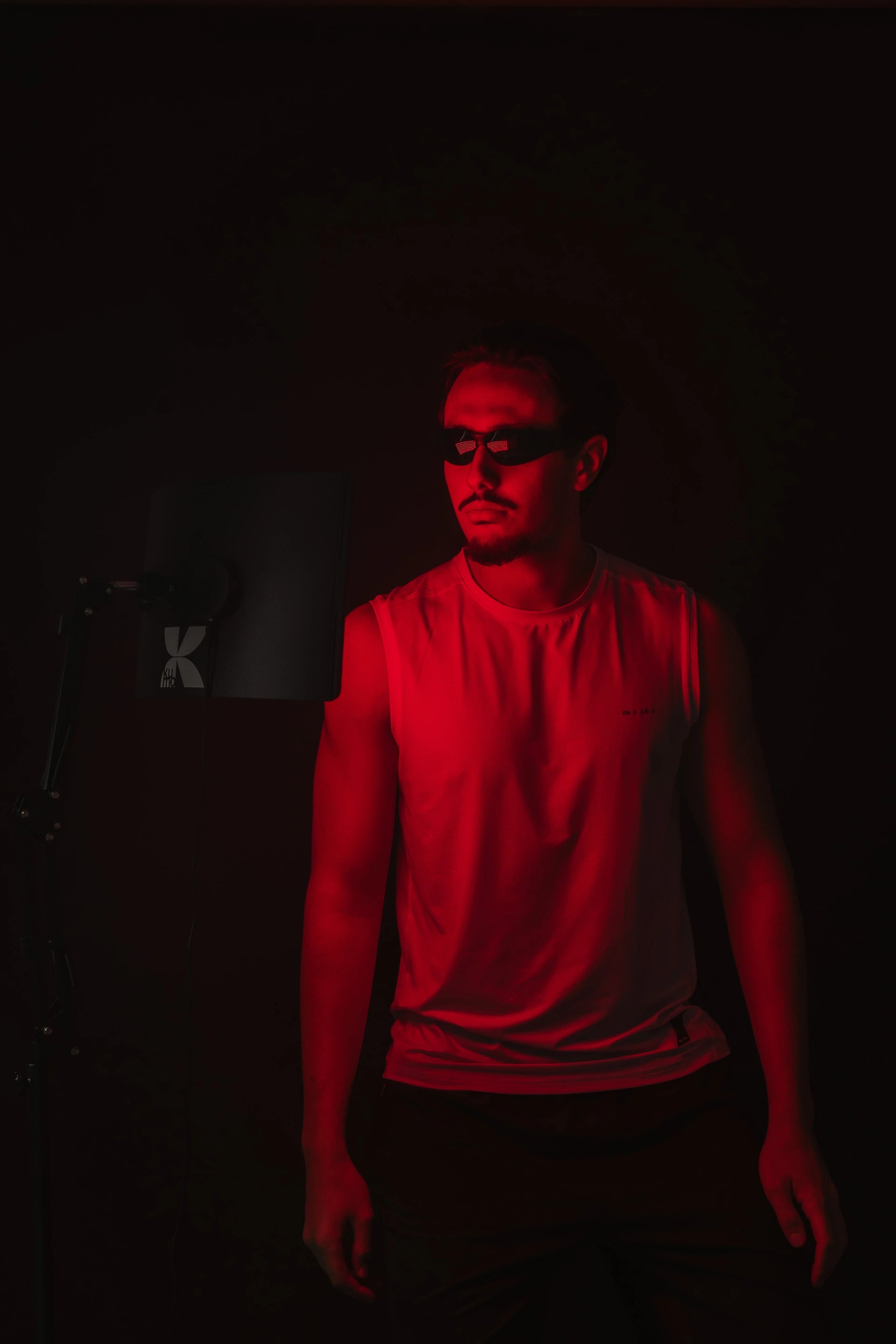

KumoLux Panel – Red and Infrared LED Panel
Red light at 660 nm and near infrared at 850 nm, with an irradiance of 122 mW/cm² on the skin. For rest and muscle recovery.
€133,00/mo
at no cost

Batch of 80 units, in stock and shipped in 24 to 48h. Orders and reservations in order of arrival.

Secure payment
How to get the most out of it
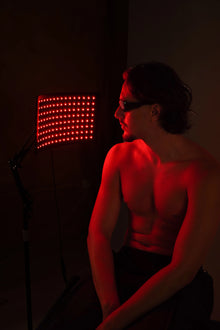
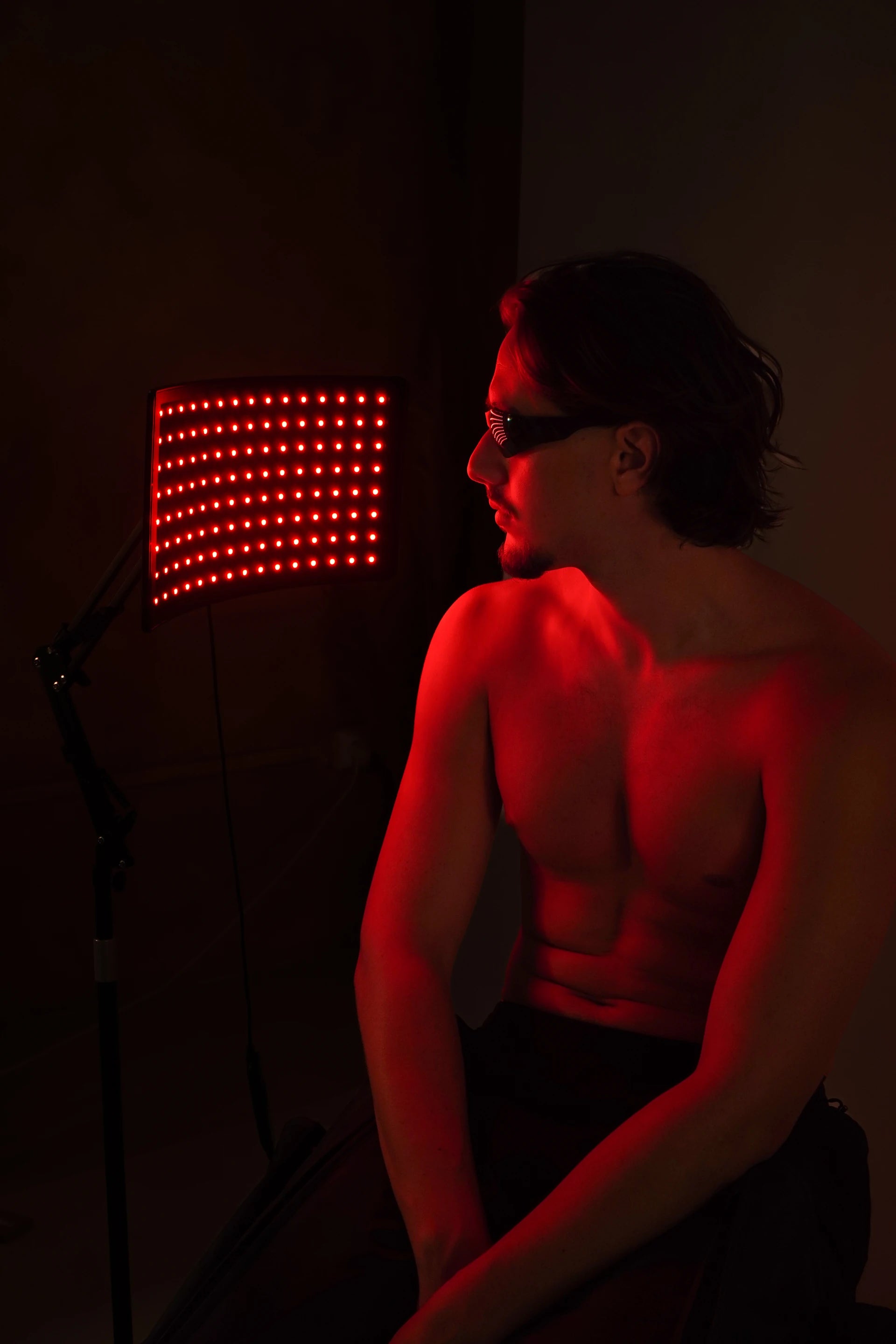
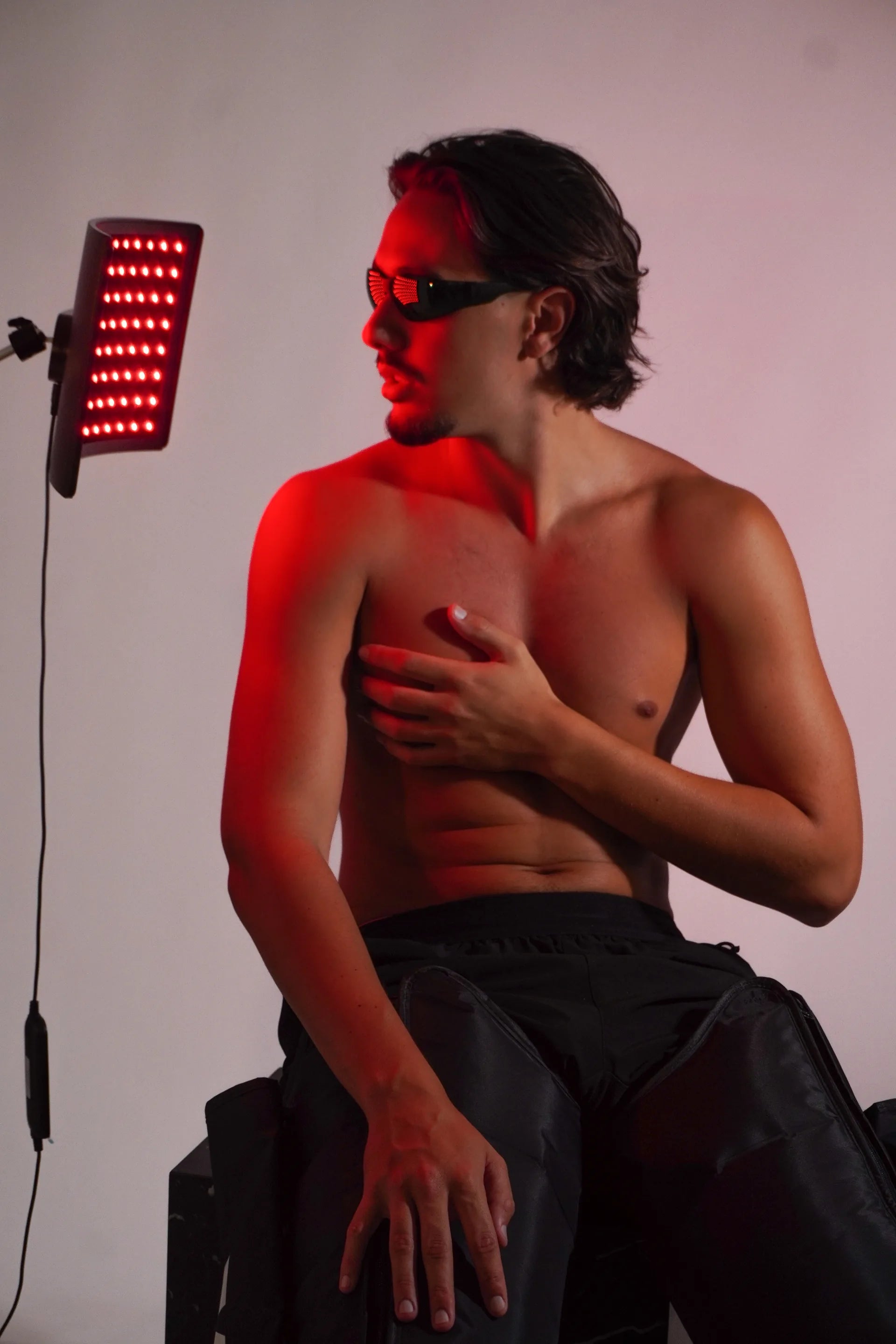
Bare skin, no creams, goggles on. Start with 5 minutes and build up.
| Goal | Distance and time |
|---|---|
| Skin and face | 15 to 20 cm · 10 min |
| Muscle and joints | 25 to 30 cm · 15 min |
| Rest and sleep | End of the day · 15 min |
Not sure about your case? Message us before ordering.


“El sueño es la mitad del entrenamiento y casi nadie lo trata así. Hay ensayos en atletas de élite donde dos semanas de luz roja por la noche movieron la melatonina y el rendimiento en el test de doce minutos. Con los míos lo veo igual: llegan más enteros a la sesión siguiente.”
Pep Roig Elite performance coachIrradiance on the skin
Real power reaching the skin at working distance. It is the figure that decides how much a session delivers.

Measured at 15 cm from the panel. It works at 660 nm and 850 nm, inside the 655 to 950 nm range the reviewed literature points to as useful (ref. 3).
What the evidence says
On photobiomodulation with red and near-infrared light, the technique this panel applies. Independent research, not claims about this product.
1.Zhao J, Tian Y, Nie J, Xu J, Liu D. Red light and the sleep quality and endurance performance of Chinese female basketball players. Journal of Athletic Training. 2012;47(6):673–678. doi:10.4085/1062-6050-47.6.08
2.Wunsch A, Matuschka K. A controlled trial to determine the efficacy of red and near-infrared light treatment in patient satisfaction, reduction of fine lines, wrinkles, skin roughness, and intradermal collagen density increase. Photomedicine and Laser Surgery. 2014;32(2):93–100. doi:10.1089/pho.2013.3616
3.Vanin AA, Verhagen E, Barboza SD, Costa LOP, Leal-Junior ECP. Photobiomodulation therapy for the improvement of muscular performance and reduction of muscular fatigue associated with exercise in healthy people: a systematic review and meta-analysis. Lasers in Medical Science. 2018;33(1):181–214. doi:10.1007/s10103-017-2368-6
4.Oliveira S, Andrade R, Valente C, et al. Effectiveness of photobiomodulation in reducing pain and disability in patients with knee osteoarthritis: a systematic review with meta-analysis. Physical Therapy. 2024;104(8):pzae073. doi:10.1093/ptj/pzae073
Informational content. It does not replace diagnosis or the advice of a healthcare professional.
- Technology: Professional LED Photobiomodulation
- Wavelengths: 660nm + 850nm
- LEDs: 120 clinical grade diodes
- Irradiance: 122 mW/cm² (15cm) · 85 mW/cm² (30cm) · 56 mW/cm² (45cm)
- Power: 32W real output
- Material: Thermal dissipation aluminum
- Design: Ergonomic curved panel
- Control: Digital timed control
- Size: 40 × 22 cm
- Weight: 0.5 kg
- Certifications: CE · ISO 13485 · RoHS
- Warranty: 3 years
- Muscle recovery after training
- Reduce inflammation and delayed muscle soreness
- Improve sleep quality and nocturnal recovery
- Cell optimization and mitochondrial energy
- Regulation of the nervous system and stress reduction
- Use in biohacking and performance protocols
- KumoLux Panel
- Professional articulated arm + metal base
- Eye protection glasses
- Digital controller
- Power supply
- Kumo premium packaging
- User manual


Recovery · Skin · Sleep
Clinical photobiomodulation. Now at home.
Red and near-infrared light that works at cellular level, boosts mitochondrial function, reduces inflammation and activates the body's natural regeneration processes.
Muscle recovery
Reduces pain and speeds up tissue regeneration after training.
Sleep quality
Regulates the nervous system and supports nightly cellular recovery.
Skin and anti-aging
Stimulates collagen production and improves surface microcirculation.
Physiological benefits of photobiomodulation
(RED & NEAR-INFRARED LIGHT)
The science behind cellular recovery
Photobiomodulation with red and near-infrared light interacts with cellular processes related to mitochondrial energy, microcirculation and physiological recovery.
KumoLux Panel vs conventional LED panels
Technical comparison between professional PBM technology and standard panels.
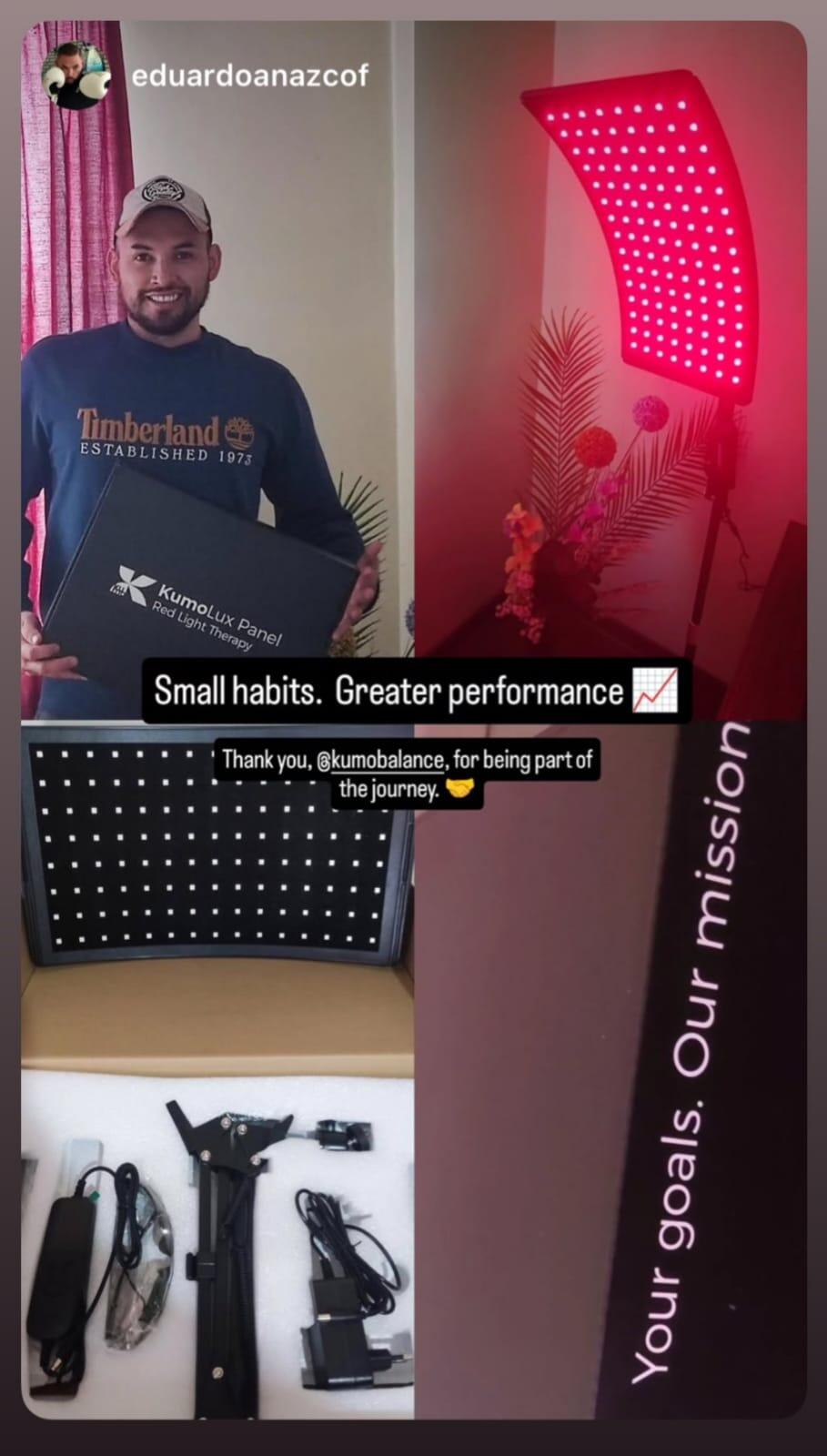
"Red and near-infrared photobiomodulation is used in exercise physiology for its ability to support muscle recovery, modulate inflammatory processes and enhance cellular energy production involved in performance."
Recommended by industry professionals
FAQ
Is red light therapy safe? Are there any dangers?
Yes. The red and near-infrared light used in photobiomodulation:
• Does not contain UV
• Does not damage the skin
• Is non-invasive
• Is painless
It is a technology used in physical therapy and sports medicine.
What's the difference between KumoLux Panel and other red light panels?
KumoLux Panel combines wavelengths used in clinical protocols (660 nm and 850 nm) with optimized actual irradiance to deliver real benefits, not just superficial illumination as with basic panels.
Includes:
• 660 nm + 850 nm to act on both skin and deep tissue
• High-quality LEDs for uniform and effective emission
• Optimized irradiance for effective sessions
• Stable and professional design
• Excellent value for money compared to similar panels
A panel designed to offer real photobiomodulation, not just decorative light.
Why invest in a red light panel at home?
Many people choose to have their own panel because it allows access to technology used in clinics without having to pay for recurring sessions.
With a home panel you can:
• Use it whenever you want
• Integrate it into your daily routine
• Avoid travel
• Save on long-term treatments
A practical solution for those who want to consistently take care of their recovery, skin, and well-being.
How often can red light therapy be used? Can it be daily?
Yes. It can be used daily depending on the goal and the treated area.
Many users incorporate it into their recovery or wellness routine.
Is it only for athletes, or for general well-being too?
No. Although many athletes use red light for muscle recovery, the KumoLux Panel is also designed for general wellness and daily recovery.
It can help to:
• Reduce accumulated tension from the day
• Promote muscle relaxation
• Support physical and mental recovery
• Improve skin quality
• Promote a feeling of rest
• Integrate into wellness and biohacking routines
Many people simply use it as part of their daily routine to improve their recovery and general well-being, without needing to be athletes.
Can red light therapy help improve sleep?
Red light is used in photobiomodulation protocols because it does not inhibit natural melatonin production, unlike blue or white light from screens.
That's why many people use it before bed as part of their nightly routine.
When do you see red light therapy results?
Many people notice muscle relaxation and improved circulation from the very first sessions.
Cumulative benefits appear with regular use over several weeks.
What if I'm not convinced?
We offer a 30-day risk-free trial.
You can test the panel at home, and if you are not satisfied, you can return it within that period for a refund.
How long does shipping take?
Shipping usually takes between 24 and 72 business hours depending on the destination.
You will receive a tracking number to check the status of your order at any time.
Does it have a warranty?
Yes. KumoLux Panel includes a 3-year warranty against manufacturing defects.