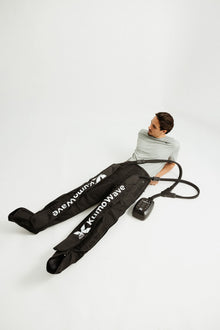

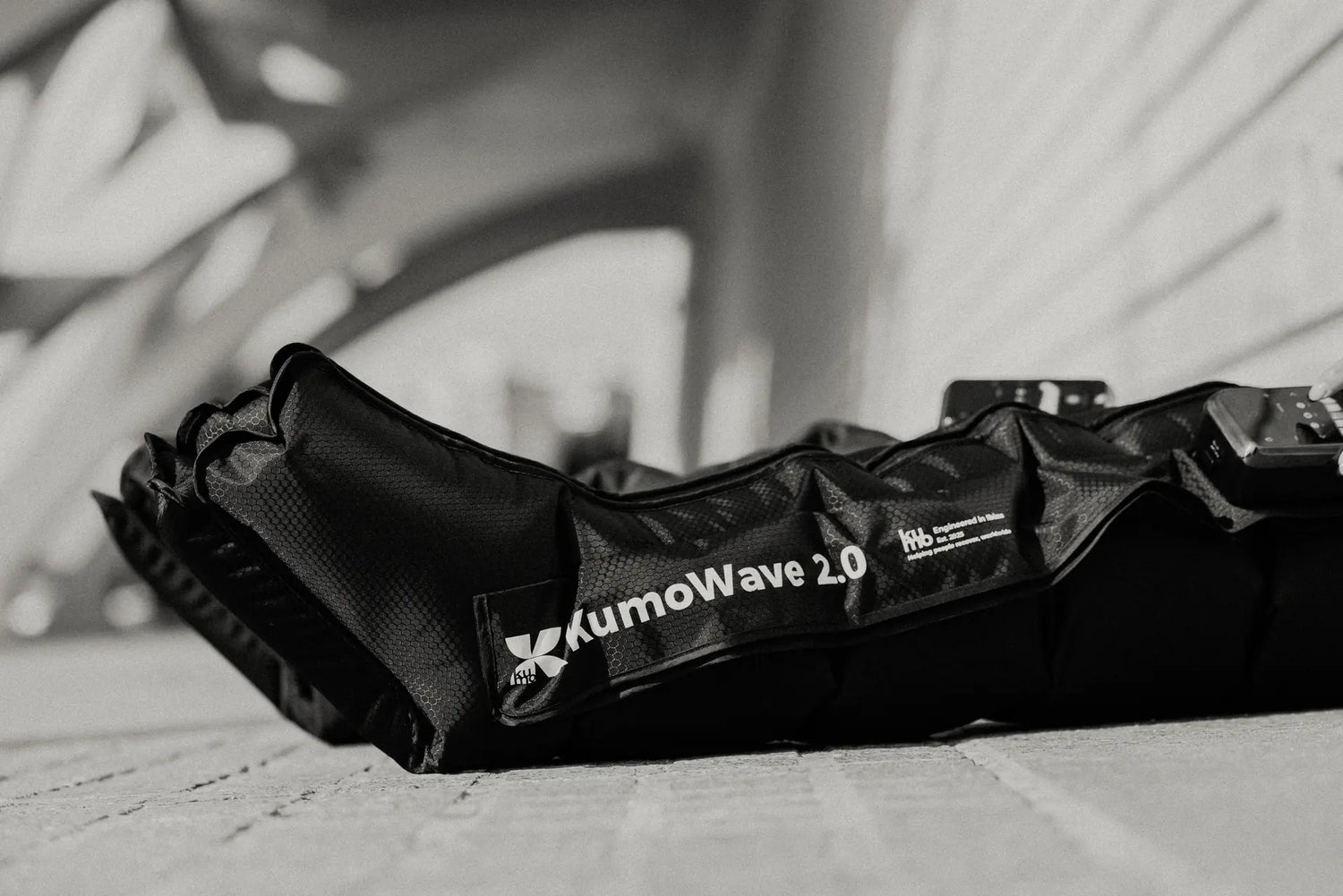
Pressure in mmHg matters.
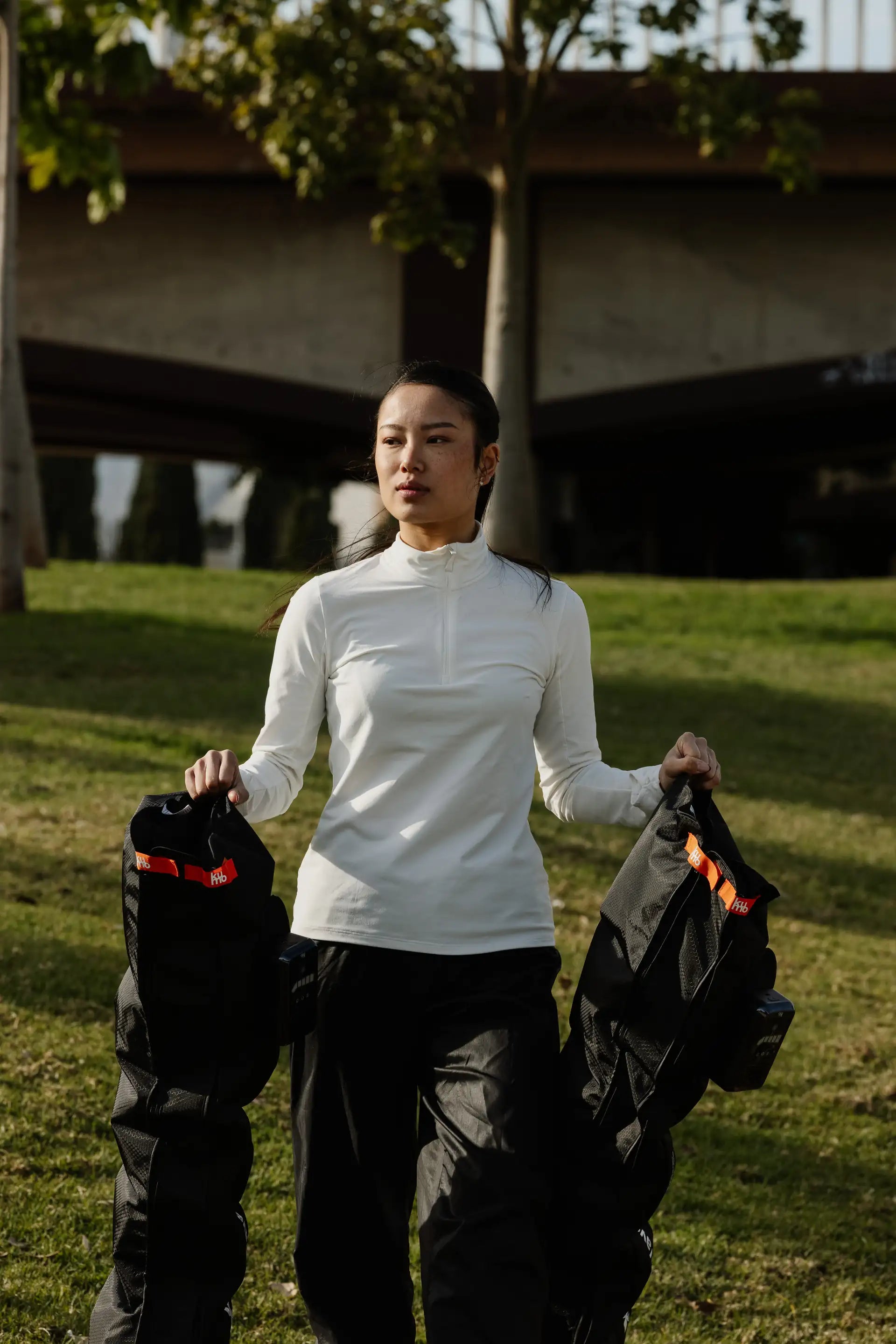
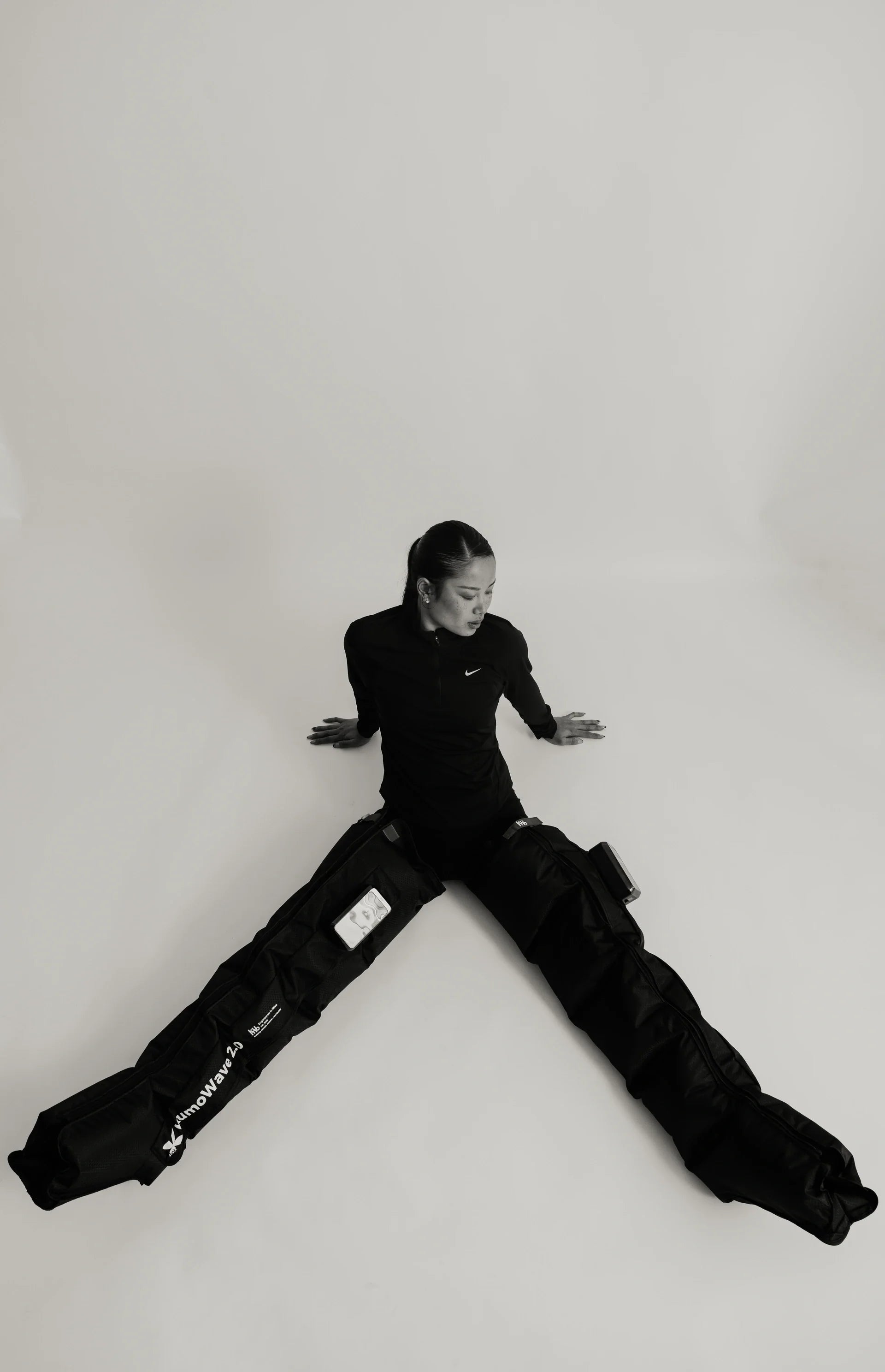
If you use pressotherapy boots (pneumatic compression) for better recovery or to relieve heavy legs, adjusting the mmHg correctly is the difference between a pleasant session and an "overly" intense one. In this guide, I explain how to choose and increase pressure step by step, what ranges are seen in the literature, what signs indicate you're overdoing it, and how to integrate pressotherapy into a more complete recovery routine, Kumo style.
Pressotherapy at home
End the day with light legs
★★★★★ 4,8/5 · rated by verified customers
KumoWave pressotherapy boosts circulation and helps drain fluid with sequential compression, in 20-minute sessions at home.
- Boosts circulation and helps drain fluid
- Chamber-based compression, adjustable to you
- Sequential compression that mimics manual drainage
€799,00€999,00
−10% on your 1st order when you subscribe to the newsletter

Important note: this is general information and does not replace medical advice. If you have vascular pathology, unusual pain, a history of thrombosis, or any doubts, prioritize professional evaluation.
What mmHg means in pressotherapy and why "maxing out" isn't always a good idea
mmHg: the same unit as blood pressure
mmHg stands for "millimeters of mercury." It is a unit of pressure also used to measure blood pressure. In a pressotherapy boot, this number represents the pressure that the system attempts to apply within the air chambers during the inflation cycle (depending on the mode and equipment).
Personalized protocol · included with your purchase
Want us to tell you how to use it in your case?
With your purchase, our experts prepare a personalized usage protocol for your case: sport, circulation, fluid retention, pregnancy or lipedema.
Message us on WhatsAppOur experts reply · no obligation
More pressure does not always equal better recovery
In intermittent pneumatic compression (IPC), there is no universal consensus on "optimal" parameters for all people and goals: tolerance, tissue condition, cuff size, and objective (wellness vs. clinical indication) vary greatly. For example, in lymphedema, a classic international consensus recommends adjusting pressure according to tolerance and response, and mentions indicative ranges (see below).
Golden rule: seek a feeling of "firm, comfortable compression," not pain, tingling, or numbness.
What the evidence says about pressure ranges (and what is still unclear)
Frequent ranges in clinical publications: 30–60 mmHg
In lymphedema, a systematic review published in Lymphatic Research and Biology (2019) concluded that there is low/moderate quality evidence showing results with 45–60 minutes and 30–60 mmHg in sequential IPC programs.
on your first order when you join the newsletter
We send you the code instantly. No spam.
Furthermore, the document "Best Practice for the Management of Lymphoedema" (International Consensus, 2006) indicates that, in general, 30–60 mmHg and durations/frequencies of 30 minutes to 2 hours per day are recommended (and lower pressures in palliative care). It also lists relevant contraindications (see safety section).
Why is "30 mmHg" sometimes seen as a threshold?
Physiological studies describe that the effectiveness in mobilizing tissue fluid/lymph depends on reaching a threshold; a study available in PubMed Central mentions 30 mmHg as a "borderline value" for tissue fluid mobilization in the context of sequential compression.
High pressures: they may exist clinically, but are not the starting point
In some studies (with specific populations and supervision), high pressures (e.g., 90–120 mmHg) have been used with varying results. In a trial on phlebolymphedema, greater edema reduction was observed with 120 mmHg, but it was also reported that some people did not tolerate it and had to interrupt due to pain or discomfort. The article itself discusses the debate: other authors argue against exceeding 40–50 mmHg due to potential adverse effects and tolerance.
Practical translation for wellness/recovery: if your goal is to feel lighter legs after the day or after training, it is usually smarter to master the technique and progression within moderate ranges before chasing "more mmHg."
Kumo method for adjusting mmHg without overdoing it (step by step)
1) First: safety (when NOT to use pneumatic compression)
Before adjusting mmHg, check if you have reasons to avoid or pause pressotherapy. The international lymphedema consensus lists contraindications such as: known or suspected deep vein thrombosis, pulmonary embolism, thrombophlebitis, acute skin inflammation (cellulitis/erysipelas), severe/uncontrolled heart failure, ischemic vascular disease, edema at the limb root/trunk, severe peripheral neuropathy, among others.
Useful resources for understanding risks and general use of IPC (in a medical context): Cleveland Clinic and Johns Hopkins Medicine. Johns Hopkins also mentions risks such as skin injury and nerve damage (rare), and emphasizes the importance of correct sizing.
- Stop the session and consult if severe pain, numbness, significant color change, cold toes, or loss of sensation occurs.
- If you have ulcers, burns, or peripheral vascular disease, the risk of problems may be higher (consult first).
2) Define the real goal of the session
Adjusting mmHg without overdoing it starts with a simple question: what do you want it for today?
- Heavy legs (many hours sitting/standing): priority = comfort and gentle drainage.
- Post-workout recovery: priority = feeling of relief without irritating tissue.
- Edema/lymphedema/lipodema: priority = individualized parameters and, ideally, specialized supervision.
3) Choose a prudent starting range (and progress in steps)
For wellness-oriented use, a safe strategy is to start low and gradually increase within moderate ranges that frequently appear in clinical literature (for example, 30–60 mmHg in sequential programs).
- First session: choose a pressure that allows you to maintain relaxed breathing and normal conversation.
- Increase in small steps (e.g., 5–10 mmHg) between sessions, not within the same session "recklessly."
- Stay at one level for 2–3 sessions before increasing again.
In clinical/hospital use protocols, prudence rules are found such as: not exceeding diastolic pressure (at least in initial applications), in addition to typical starting and treatment ceiling ranges in certain contexts. For example, a physical therapy procedure (reviewed in 2008) indicates taking blood pressure and that the garment pressure should not be higher than diastolic, with initial values around 40 mmHg and an upper range of 60–70 mmHg in its protocol.
4) Adjust time: not only mmHg matters
Pressure and duration go together. If you increase mmHg, reduce time; if you want more time, lower mmHg.
- In lymphedema, a systematic review mentions results with 45–60 minutes and 30–60 mmHg sequentially.
- The international consensus (2006) mentions sessions of 30 to 120 minutes (depending on the case) and emphasizes adjusting for tolerance.
For daily non-clinical recovery, it is usually preferable to start with shorter sessions and maintain adherence: comfortable 15–30 minute sessions repeated over weeks are often more useful than "one brutal session" that makes you quit.
5) Sizing and physical fit prevent pressure "spikes"
Even with moderate mmHg, improper placement can concentrate pressure at one point (crease, zipper, edge) and cause discomfort or marks. Johns Hopkins stresses that cuff size matters to prevent skin complications and improve tolerance.
- When placing the boot, avoid wrinkles and creases.
- If you notice localized "pinching," lower mmHg and reposition.
- The sensation should be uniform: "wave-like" compression, not "biting."
Signs that you are overdoing it (and how to correct it)
"Yellow" signals (lower the pressure)
- Increasing discomfort that doesn't improve after 1–2 cycles.
- Deep marks that take a long time to disappear.
- Feeling of pressure in joints (ankle/knee) rather than in the muscle.
"Red" signals (stop and consult if it persists)
- Pain, tingling or numbness.
- Cold toes, marked paleness, or striking color change.
- Clear worsening of swelling "above" the boot (tourniquet effect).
In medical settings, risks such as skin injury and nerve damage (rare) are described when IPC is used incorrectly or with poor sizing/fit. If something "doesn't feel right," don't normalize it: correct the pressure or stop.
Quick reference table: pressure (mmHg) and time without overdoing it
Indicative ranges based on clinical literature (and adapted to tolerance)
| Objective | Indicative Pressure (mmHg) | Indicative Duration | How it should feel | When to lower |
|---|---|---|---|---|
| Adaptation / first week | 20–40 (prioritize comfort) | 15–30 min | Gentle, relaxing compression | Localized discomfort, deep marks |
| General recovery (wellness) | 30–60 | 20–45 min | Firm but comfortable, uniform "wave" | Pain, tingling, numbness |
| Clinical use (edema/lymphedema) with supervision | 30–60 (frequent in reviews and consensuses) | 45–60 min (frequent in review); 30–120 min (according to consensus) | Controlled, monitoring response | Symptoms, worsening, proximal congestion |
- with 30–60 mmHg and 45–60 min in sequential IPC; international consensus (
- with 30–60 mmHg and 30–120 min/day, adjusting for tolerance
Concrete examples (to decide the "correct" mmHg today)
Example 1: tired legs after standing all day
Goal: lightness. Start with a low to moderate pressure (e.g., within 20–40 mmHg if you are sensitive, or around 30–45 mmHg if you are already used to it) and 20 minutes. If you notice your legs feel "looser" and without deep marks afterwards, you can maintain that level for 2–3 sessions before moving up a step.
Example 2: post-run recovery (no unusual pain)
Goal: relief without irritation. Try 25–35 minutes and moderate pressure within 30–60 mmHg (without chasing maximums). The key is to finish with a feeling of freshness and mobility, not "stiff legs." If you are more sensitive in your calves the next day, reduce by 5–10 mmHg or cut 10 minutes.
Example 3: tingling sensation when increasing pressure
That's a sign to lower it. Stop, reposition, and resume at a lower level. Remember that, although adverse events are rare with correct use, risks such as nerve damage or pressure injuries have been described in medical contexts when there is poor tolerance or adjustment.
Cases where it is advisable to speak with a professional before choosing mmHg
If you suspect peripheral arterial disease (PAD) or perfusion problems
When there is arterial disease, compression (in general) requires caution. The ankle-brachial index (ABI) is used to assess peripheral arterial disease; the American Heart Association (summarized by AAFP) considers ABI ≤ 0.9 as a diagnostic threshold for PAD.
In guidelines and reviews on compression (especially for venous ulcers), caution zones and the need for adaptation are described when the ABI is low; for example, NCBI/StatPearls resources advise using compression with caution and modification when there is significant arterial disease (e.g., ABI in low ranges).
Practical application: if you have symptoms of poor circulation (persistent cold, color changes, pain when walking, wounds that don't heal), avoid "experimenting" with mmHg and consult.
How pressotherapy fits into a Kumo recovery routine
At Kumo, we understand recovery as a system: circulation, muscle tissue, sleep, and skin. Pressotherapy is one piece, but you can enhance the result by combining it with other tools (without turning it into an endless ritual).
- Explore the pressotherapy category to integrate compression sessions into your weekly routine.
- If your priority is to release tight spots, combine it with a massage gun like KumoPulse Air (first gentle massage for 3–8 min per area, then moderate compression).
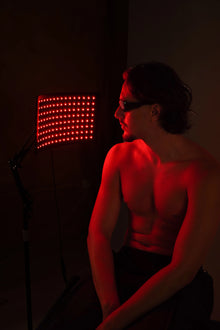
- For overall wellness habits and recovery, you can alternate with LED light therapy depending on your goal (skin, rest, recovery).
If you're starting, simplify: 2–4 sessions/week of moderate, well-tolerated pressotherapy often wins through consistency.
FAQ: frequent questions about mmHg pressure and Kumo pressotherapy
What mmHg pressure should I use if I am a beginner with Kumo pressotherapy boots?
As a beginner, prioritize tolerance: start with a low to moderate pressure and a short session (15–30 minutes), aiming for a firm but pleasant sensation. In clinical literature, ranges of 30–60 mmHg often appear in sequential programs, but that doesn't mean you should start high. Maintain 2–3 sessions at the same level and increase in small steps if there is no pain, tingling, or deep marks. If you experience localized discomfort, it's usually more a matter of adjustment/position or excessive pressure than "lack of familiarity."
How do I know if I'm using too much mmHg even if I can "tolerate" it?
"Tolerating" is not always a good sign. If you experience numbness, tingling, pain, cold toes, striking color changes, or very deep marks, you're going too high (or the boot is not positioned correctly). In medical contexts, rare complications like pressure injury or nerve damage are described, and emphasis is placed on using the correct size and avoiding excessive discomfort. Lower by 5–15 mmHg, reposition, and reduce time. If the symptom recurs, pause use and consult.
How long is recommended per session without "overdoing it"?
- reports results with 45–60 minutes using 30–60 mmHg sequentially; and an international consensus (
- mentions from 30 minutes up to 2 hours daily depending on the situation, always adjusting to tolerance. For wellness/recovery, many people benefit from 15–30 minutes initially and 20–45 minutes once they know their comfortable level. If you increase mmHg, cut minutes
Can I combine Kumo pressotherapy with a massage gun and LED light on the same day?
- gentle massage gun for 3–8 minutes per tired muscle group (without overworking acute pain), (
- moderate pressure pressotherapy to "decompress" and (
- LED light if your goal is global wellness or a nightly routine. The key is for each tool to add value, not to leave you more sensitive. If you notice irritation or extra fatigue the next day, lower the pressure (mmHg), shorten the session, or alternate days instead of doing it all together
What now?
If you want to make recovery a habit (without overdoing the mmHg), start with the essentials: one tool, one goal, gradual progression. You can discover the Kumo recovery ecosystem and, if you need guidance on how to integrate pressotherapy, LED, or massage into your routine, write to us from the contact page.
KumoWave pressotherapy
Choose your at-home pressotherapy
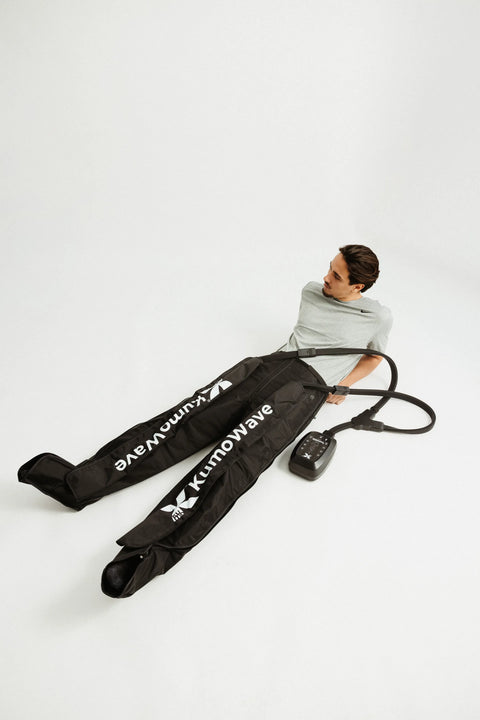
KumoWave Elite – Pressotherapy Pants
Full-coverage trousers. Ideal for lipedema, fluid retention and intensive use.
€799,00 €999,00
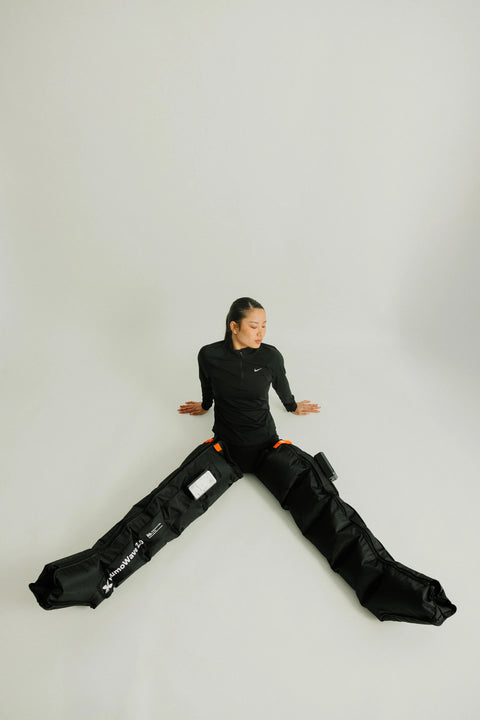
KumoWave 2.0 - Wireless Pressotherapy
Wireless, lightweight boots. Perfect for daily use and recovery.
€499,00 €599,00