
Post-workout asymmetry is not always a problem: often, it's pending recovery.
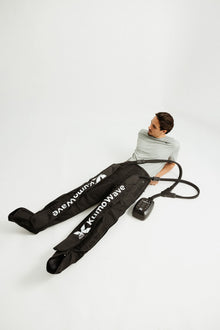
If after a unilateral strength session (lunges, Bulgarian split squats, step-ups, single-leg press, single-leg deadlift) you notice one leg feeling "heavier," with more pump, tightness, or even slightly more volume, compression therapy can help you to normalize sensations and to manage inflammation and fatigue within a smart recovery routine. In this guide, I'll provide you with a clear, progressive, and applicable protocol using Kumo's compression therapy boots, with no exaggerated promises or shortcuts.
Pressotherapy at home
End the day with light legs
★★★★★ 4,8/5 · rated by verified customers
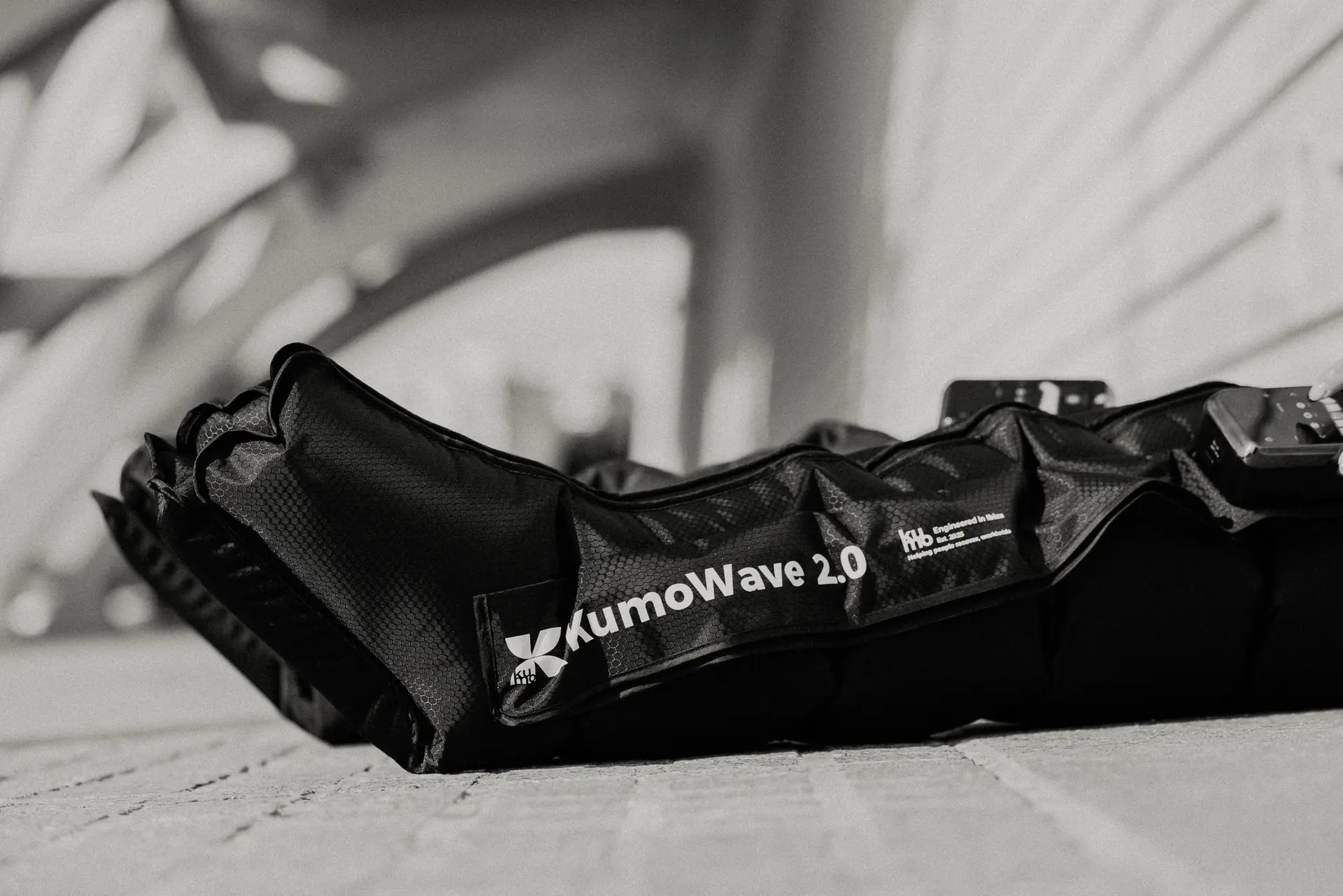
KumoWave pressotherapy boosts circulation and helps drain fluid with sequential compression, in 20-minute sessions at home.
- Boosts circulation and helps drain fluid
- Chamber-based compression, adjustable to you
- Sequential compression that mimics manual drainage
€799,00€999,00
−10% on your 1st order when you subscribe to the newsletter

What "asymmetry" means after unilateral training (and why it happens)
After unilateral work, it's common to perceive differences between legs for reasons that don't always imply a "real" asymmetry in strength or muscle:
- Edema / transient swelling due to microdamage and inflammatory response from training.
- Fluid accumulation and a "heavy leg" sensation (especially if you train standing or have been sitting for many hours).
- DOMS (Delayed Onset Muscle Soreness), which usually peaks at 24–48 hours.
- Differences in motor control: hip/ankle stability, technique, range of motion.
- Dominance (dominant leg vs. support leg), injury history, or compensations.
In terms of tissues, swelling after a strength session exists and can last: a study using ultrasound observed that exercise produced a high swelling response up to 48 hours post-workout. (pubmed.ncbi.nlm.nih.gov)
Personalized protocol · included with your purchase
Want us to tell you how to use it in your case?
With your purchase, our experts prepare a personalized usage protocol for your case: sport, circulation, fluid retention, pregnancy or lipedema.
Message us on WhatsAppOur experts reply · no obligation
What compression therapy can (and cannot) provide
Compression therapy (also called intermittent pneumatic compression, IPC) is based on inflation/deflation cycles that "push" fluids from distal to proximal. In clinical settings, it is used to promote venous flow and reduce the risk of complications associated with stasis during periods of immobility; the mechanical principle is the same as what we seek in recovery: to improve return and reduce the feeling of congestion. (hopkinsmedicine.org)
What it can help you notice (especially if the "asymmetry" is a feeling of heaviness):
- Decrease in heaviness and "full legs."
- Improved tolerance to moving again (walking, gentle mobility).
- Subjective relief of pain/stiffness in some people and at certain times (especially around 48 hours).
What it doesn't do on its own:
on your first order when you join the newsletter
We send you the code instantly. No spam.
- It doesn't "correct" a structural strength asymmetry if your programming, technique, or motor control aren't supportive.
- It doesn't replace rest, sleep, nutrition, and sensible load progression.
- It's not a tool to "mask" suspicious pain (stabbing pains, strong localized pain, abnormal heat/redness).
In sports, the evidence is promising but heterogeneous. A systematic review and meta-analysis on IPC in sports recovery reported small to moderate effects on pain/soreness depending on the timing, with a higher effect around 48 hours (effect size ~0.644), and notes the high variability of protocols and the limited number of studies. (pmc.ncbi.nlm.nih.gov)
First, identify the type of asymmetry: “sensation” vs. “performance”
Before applying compression therapy as if it were a reset button, it's wise to do a 3-minute mini-check. The idea: differentiate fluid/fatigue asymmetry (highly treatable with recovery) from performance asymmetry (more linked to strength/coordination).
Quick check (3 minutes)
- Perimeter: Measure with a tape measure always at the same point (e.g., 10 cm below the kneecap and the widest point of the calf). Record.
- Sensation (0–10): heaviness, stiffness, soreness.
- Easy test: 8–10 assisted single-leg squats (holding onto a wall) or 20 calf raises per leg. Is there a clear difference in control or pain?
If the main difference is sensation + slight swelling, compression therapy usually fits well. If the difference is acute pain, instability, marked loss of strength, or unusual symptoms, prioritize professional evaluation.
Compression therapy protocol after unilateral strength training (Kumo approach)
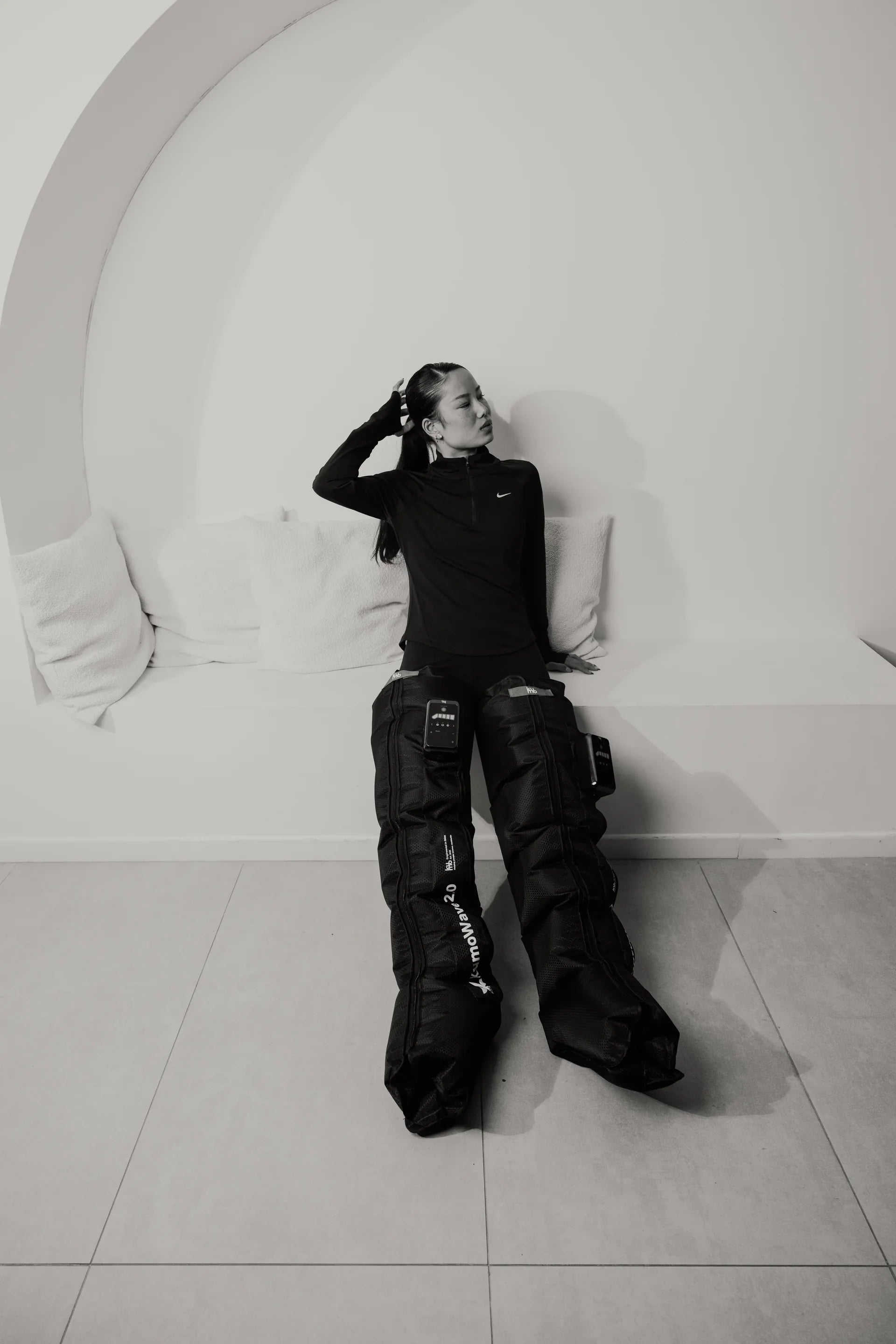
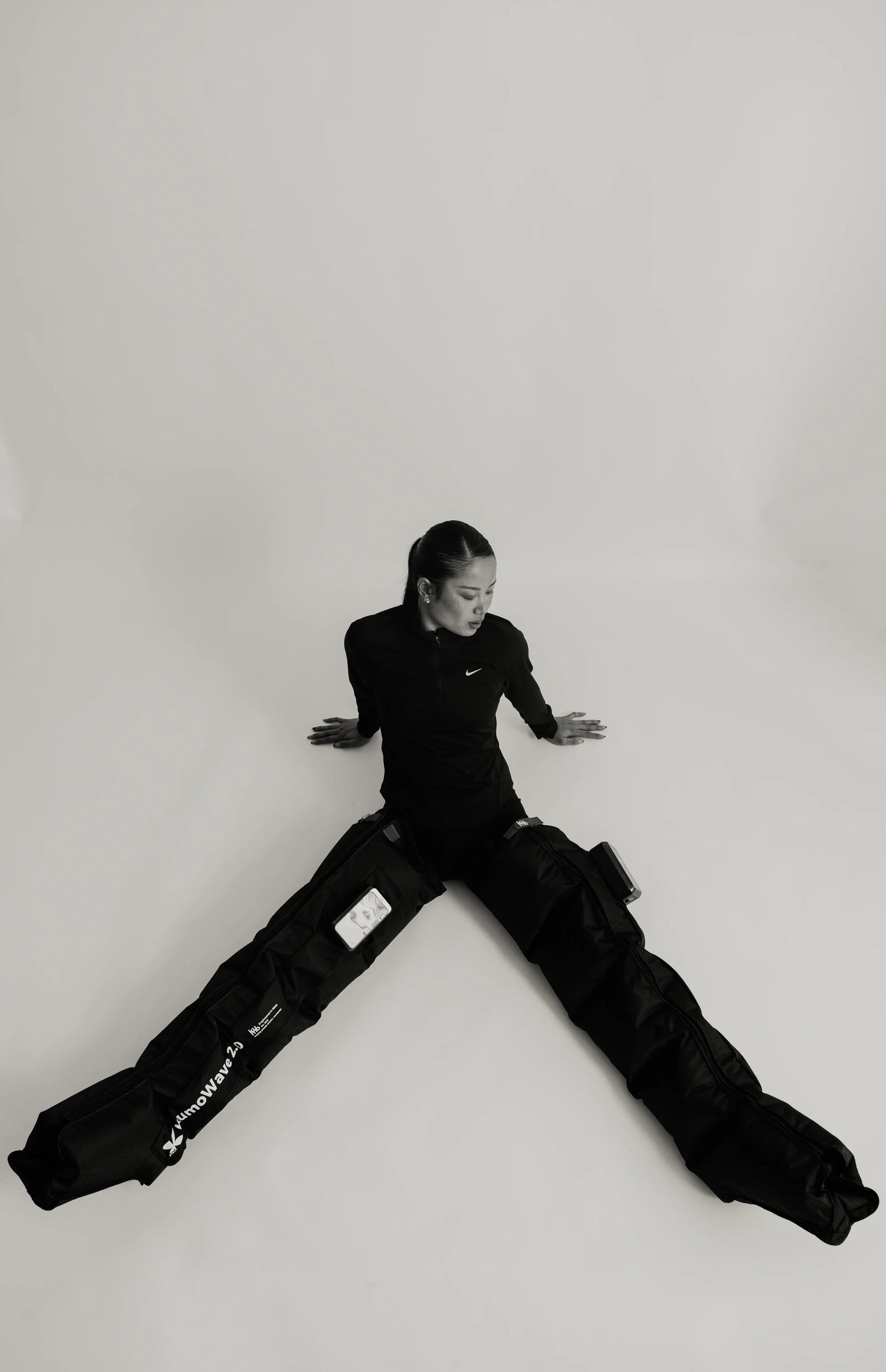
This protocol is designed for use with home compression therapy boots, like those you can find at Kumo, integrating it with basic recovery habits. It's progressive: start gently, observe your response, and adjust.
Table: Recommended timeline (according to post-workout timing)
| Time | Main goal | Approximate duration | Perceived intensity | What to monitor |
|---|---|---|---|---|
| 0–2 hours | Relieve congestion and heaviness | 15–25 min | Low | Comfort, tingling, skin color changes |
| 24 hours | Reduce stiffness and facilitate gentle mobility | 20–30 min | Low–medium | DOMS (0–10), sensation when walking/on stairs |
| 48 hours | Typical peak soreness window: subjective support | 25–40 min | Medium (no pain) | Pressure pain, joint range, nighttime sleep |
| 72–96 hours | Only if heaviness or accumulation persists due to high load | 15–25 min | Low | If no improvement: review load/technique/recovery |
This structure aligns with what's observed in literature: studies involve sessions of 15 to 60 minutes and highly variable pressures (approx. 60 to 235 mmHg), which reinforces the practical idea of prioritizing tolerance and consistency over "stronger is better." (pmc.ncbi.nlm.nih.gov)
Step-by-step (for a "perfect" session)
- Position: Lying down or semi-reclined, legs relaxed. If possible, slightly elevate your feet.
- Duration: Choose the block according to your timing (table). Better 20 consistent minutes than 60 minutes once and nothing the rest of the week.
- Pressure: Start at low. Compression therapy should feel firm, not painful. If it causes numbness or sharp pain, it's too much.
- Breathing: 2–3 minutes of slow nasal breathing at the beginning (helps you to "slow down").
- Exit: Afterward, walk for 3–5 minutes or do ankle/hip mobility to "consolidate" the relief.
What if the asymmetry is only in one leg?
Many systems work both legs at once. If your equipment allows independent adjustments, a prudent strategy is to equalize sensations: lower intensity in the "good" leg and slightly more in the heavier leg. If it doesn't allow side-by-side adjustments, use the same setting and rely on other tools (mobility, walking, localized massage) to fine-tune.
How to tell if you're improving (simple indicators)
- Perimeter: Reduces the difference between legs in 24–72 hours.
- DOMS: Decreases by 1–2 points on your subjective scale after the session or the next day.
- Movement: Less stiffness when going down stairs or in assisted single-leg squats.
- Sleep: Better onset or fewer awakenings due to discomfort (if you had them).
Compression therapy + training: the "why" of asymmetries is not fixed by recovery alone
Compression therapy is a freshness sensation accelerator, but functional symmetry largely depends on how you train. For example, a study (2023) compared unilateral vs. bilateral training for 6 weeks and found strength improvements (peak isometric squat force) in both groups, but no significant changes in the symmetry index. Practical translation: unilateral training helps, but doesn't guarantee symmetry if you don't adjust the overall picture (technique, volume, control). (pubmed.ncbi.nlm.nih.gov)
Interpreting asymmetries with fixed thresholds can be misleading: reviews on inter-limb asymmetry warn that using "arbitrary" values (e.g., 10–15%) may lack a solid basis and propose more individualized approaches. (pmc.ncbi.nlm.nih.gov)
Combine it with other Kumo recovery technologies (without mixing just for the sake of it)
If your goal is to reduce the perception of asymmetry and return to training with good quality, a sensible combination (without overdoing it) is usually:
- Compression therapy for heavy legs and a feeling of congestion: start here. Visit the compression therapy collection.
- Localized massage if there are very tight spots (gluteus medius, adductors, calf): brief, controlled work can help. If you're interested, check out the KumoPulse Air.
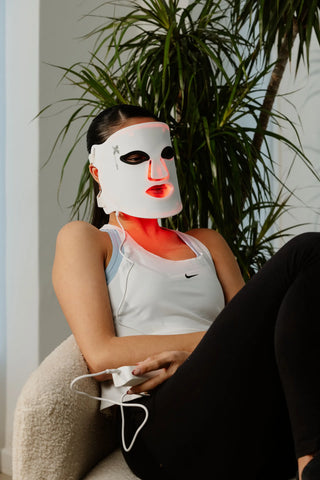
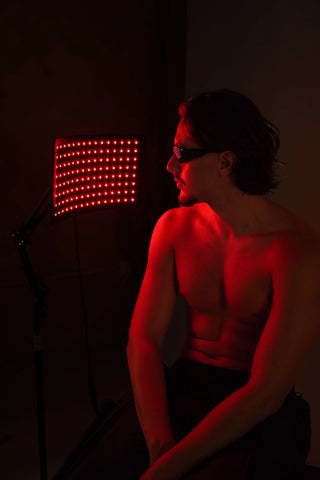
- LED light / photobiomodulation as support for wellness and recovery routines (without replacing training or treatment): you can see options in LED light therapy.
Practical advice: avoid doing everything at maximum intensity on the same day. Recovery works better as a routine, not as a post-workout "punishment."
Frequent mistakes (and how to avoid them)
- Increasing pressure too much: If it hurts or causes numbness, you're overdoing it.
- Eternal sessions: More time doesn't mean more results; prioritize consistency and comfort.
- Using it to ignore unusual pain: Compression therapy should not mask warning signs.
- Forgetting the basics: Hydration, sleep, and walking 10–20 minutes a day often move the needle as much as any technology.
Safety: when NOT to use compression therapy (or when to consult)
Although it is considered a non-pharmacological and widely used technique, there are situations where it is not advisable to improvise. Johns Hopkins Medicine describes risks such as discomfort, heat/sweating, skin irritation or injury (rarely nerve or pressure injury) and notes that some people with leg ulcers, burns, or peripheral vascular disease are at higher risk of problems. (hopkinsmedicine.org)
Additionally, intermittent pneumatic compression is used in contexts of thrombosis prevention and venous flow management; if you have a history of vascular conditions or symptoms compatible with circulatory problems, it is especially important to consult a professional. (my.clevelandclinic.org)
- Consult if you have pain and increased swelling with marked heat/redness, shortness of breath, or symptoms that concern you.
- Stop the session if acute pain, numbness, persistent tingling, or noticeable changes in foot color appear.
FAQ: compression therapy, asymmetries, and Kumo
Is Kumo compression therapy useful if only one leg feels heavier after unilateral training?
It's usually helpful when the "asymmetry" is primarily a sensation of heaviness, stiffness, or congestion. Although many boots work both legs, the goal isn't to "punish" the heavier leg, but rather to facilitate fluid return and improve overall sensations. If your equipment allows for independent intensity adjustments, you can lower the pressure on the less heavy leg and maintain a gentle stimulus on the other. If not, use a comfortable intensity and complement it with light walking and mobility.
How long should I use Kumo compression therapy boots after a unilateral leg session?
As a practical rule: 15–25 minutes right after if you're looking to relieve "pump" and heaviness; 20–30 minutes at 24 hours if you feel stiffness; and 25–40 minutes at 48 hours if soreness is at its peak. Evidence shows that studies use highly variable durations (15–60 min), so at home, it's usually best to start short, observe your response, and maintain a consistent routine. (pmc.ncbi.nlm.nih.gov)
Can compression therapy "correct" a strength asymmetry between legs?
Not directly. Compression therapy can improve sensations and tolerance to movement, but strength symmetry depends on training programming and execution. In fact, there's research where training unilaterally or bilaterally improves strength, but doesn't necessarily change the symmetry index in a few weeks. If your goal is to balance strength, combine compression therapy with load adjustments, technical work, motor control, and a progression that doesn't leave the non-dominant leg "behind." (pubmed.ncbi.nlm.nih.gov)
What pressure is appropriate in compression therapy for recovery and asymmetries?
The appropriate pressure is one that feels firm and comfortable, without pain, numbness, or a "cutting" sensation. In sports research, very different pressures have been used (approx. 60 to over 200 mmHg depending on protocols), which indicates that there is no single universal standard. At home, the most prudent approach is to start at low levels, prioritize comfort and consistency, and only increase if your body tolerates it well. (pmc.ncbi.nlm.nih.gov)
When should I contact Kumo to choose the right recovery solution?
If you're hesitating between compression therapy, massage, or LED light; if you train several times a week and are looking for a sustainable routine; or if you notice that your asymmetries recur due to accumulated load, it may be helpful for the team to guide you towards a realistic setup for your daily life. In that case, the best thing to do is to write from Kumo's contact page to resolve questions about use and integration with your routine.
What now?
If you want to turn recovery into a habit (and not a "patch" when you're already overloaded), start with a simple routine: compression therapy 2–4 times a week depending on your load, short daily walks, and consistent sleep. Explore Kumo's compression therapy boots and Kumo's recovery approach; and if you need guidance, contact us from this page.
KumoWave pressotherapy
Choose your at-home pressotherapy
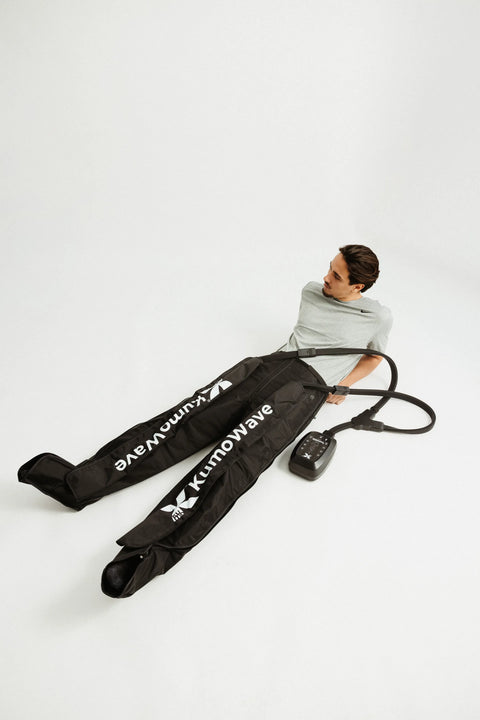
KumoWave Elite – Pressotherapy Pants
Full-coverage trousers. Ideal for lipedema, fluid retention and intensive use.
€799,00 €999,00
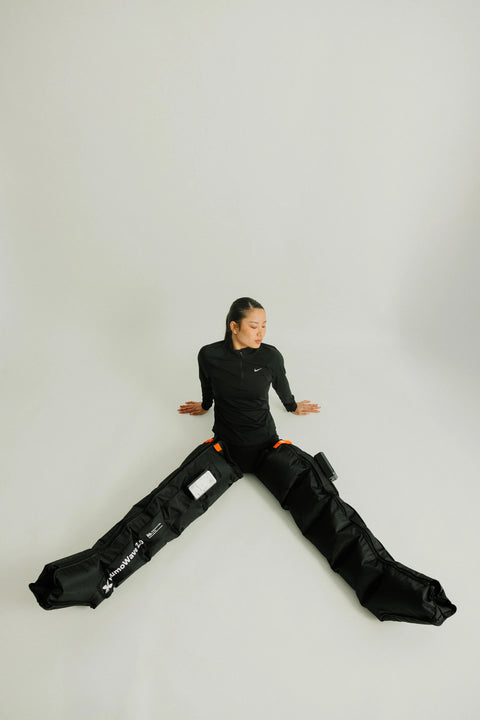
KumoWave 2.0 - Wireless Pressotherapy
Wireless, lightweight boots. Perfect for daily use and recovery.
€499,00 €599,00