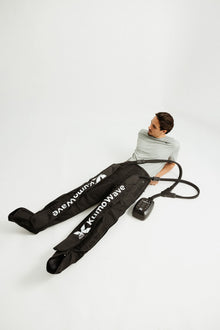

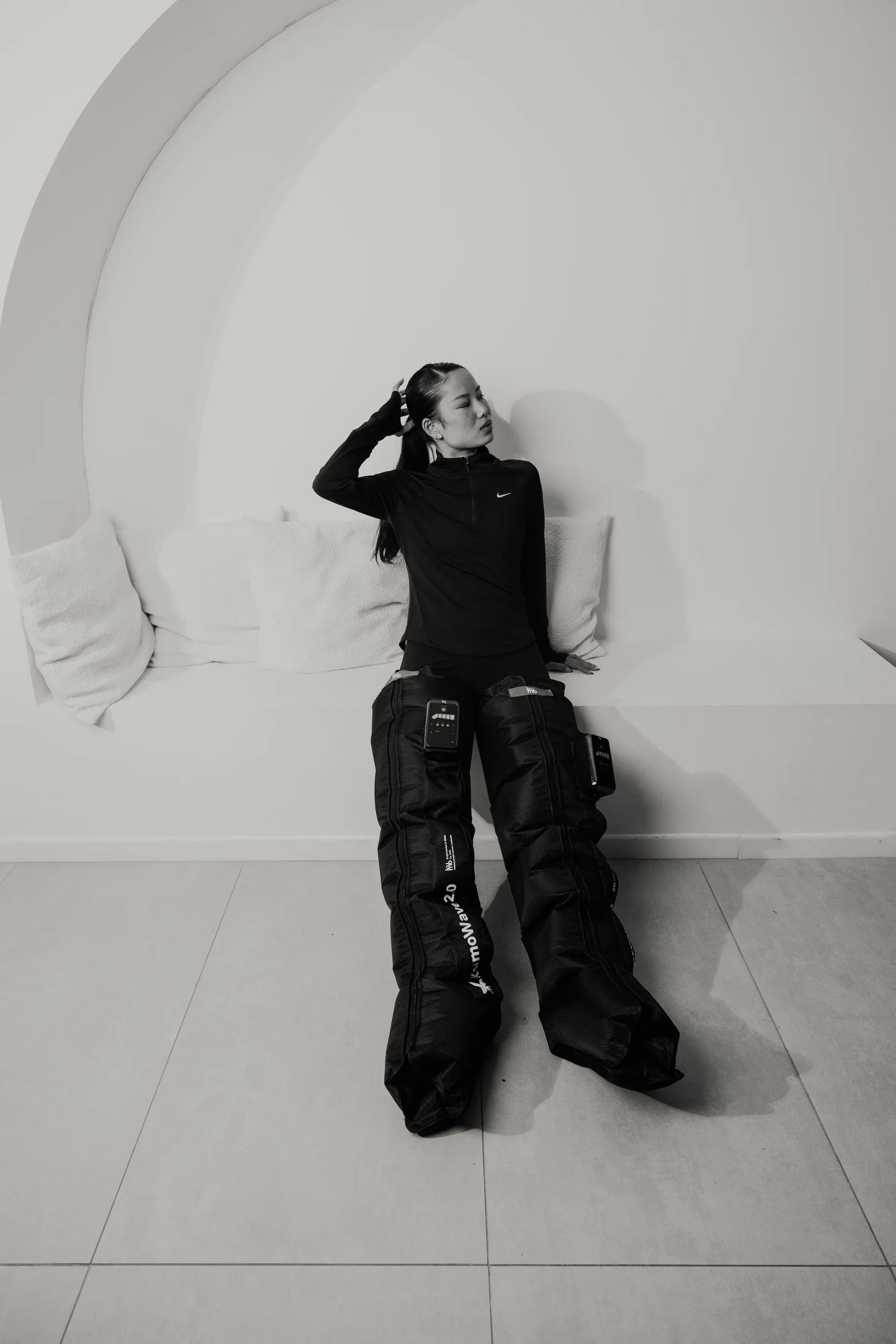
When your quads are "burning," 15 minutes done right can make all the difference.
If you're coming off a tough leg session (squats, lunges, hills, plyometrics) and your thighs feel heavy or sore, a short pressotherapy session can help you reduce the feeling of load and recover better for your next workout. In this guide, I'll explain what to expect from a 15-minute session, how to apply it safely, and how to integrate it into your routine with Kumo.
Pressotherapy at home
End the day with light legs
★★★★★ 4,8/5 · rated by verified customers
KumoWave pressotherapy boosts circulation and helps drain fluid with sequential compression, in 20-minute sessions at home.
- Boosts circulation and helps drain fluid
- Chamber-based compression, adjustable to you
- Sequential compression that mimics manual drainage
€799,00€999,00
−10% on your 1st order when you subscribe to the newsletter

Why your quads get sore (and when it's "normal")
The quadriceps often get particularly sore with eccentric work (when the muscle lengthens while braking or controlling movement): lowering into a squat, going down stairs, or running downhill. This type of stimulus is associated with the classic DOMS (delayed onset muscle soreness), which can include stiffness, tenderness to the touch, and temporary loss of performance.
Reviews on DOMS describe that symptoms appear with a delay and that the peak of pain usually occurs around 48–72 hours post-exercise, although it can vary depending on training level, volume, and novelty of the stimulus.
Personalized protocol · included with your purchase
Want us to tell you how to use it in your case?
With your purchase, our experts prepare a personalized usage protocol for your case: sport, circulation, fluid retention, pregnancy or lipedema.
Message us on WhatsAppOur experts reply · no obligation
Signs that it's muscle soreness and not "something more"
- Diffuse discomfort in the muscle belly (not a very localized, sharp pain).
- Stiffness when going down stairs or sitting, which improves with warming up.
- Tenderness when pressing the muscle and "tightness" when stretching.
However, if there is sudden acute pain, bruising, deformity, clear inability to bear weight, or disproportionate swelling, prioritize professional assessment: pressotherapy should not "mask" an injury.
What pressotherapy provides when your quads are sore
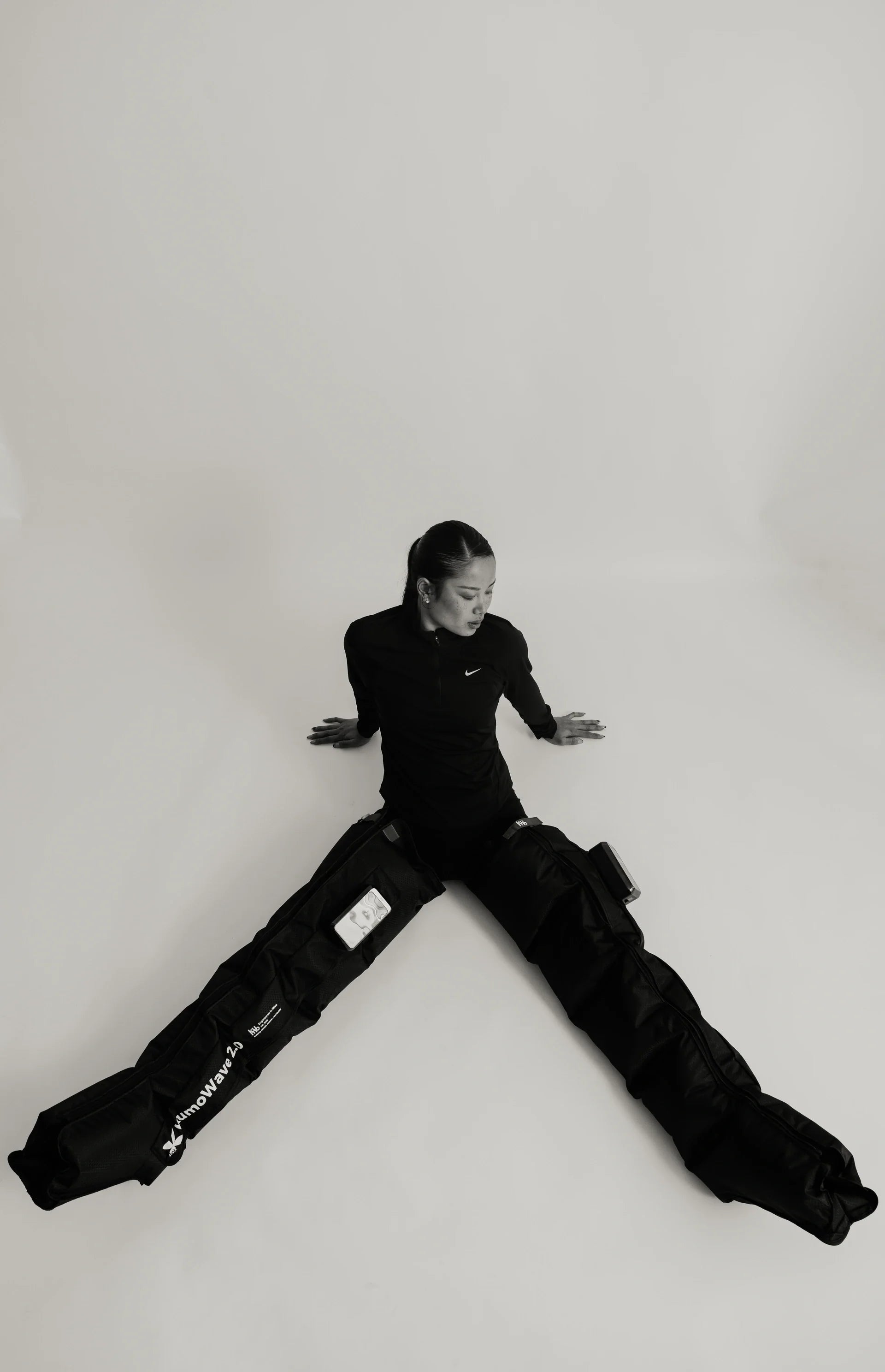
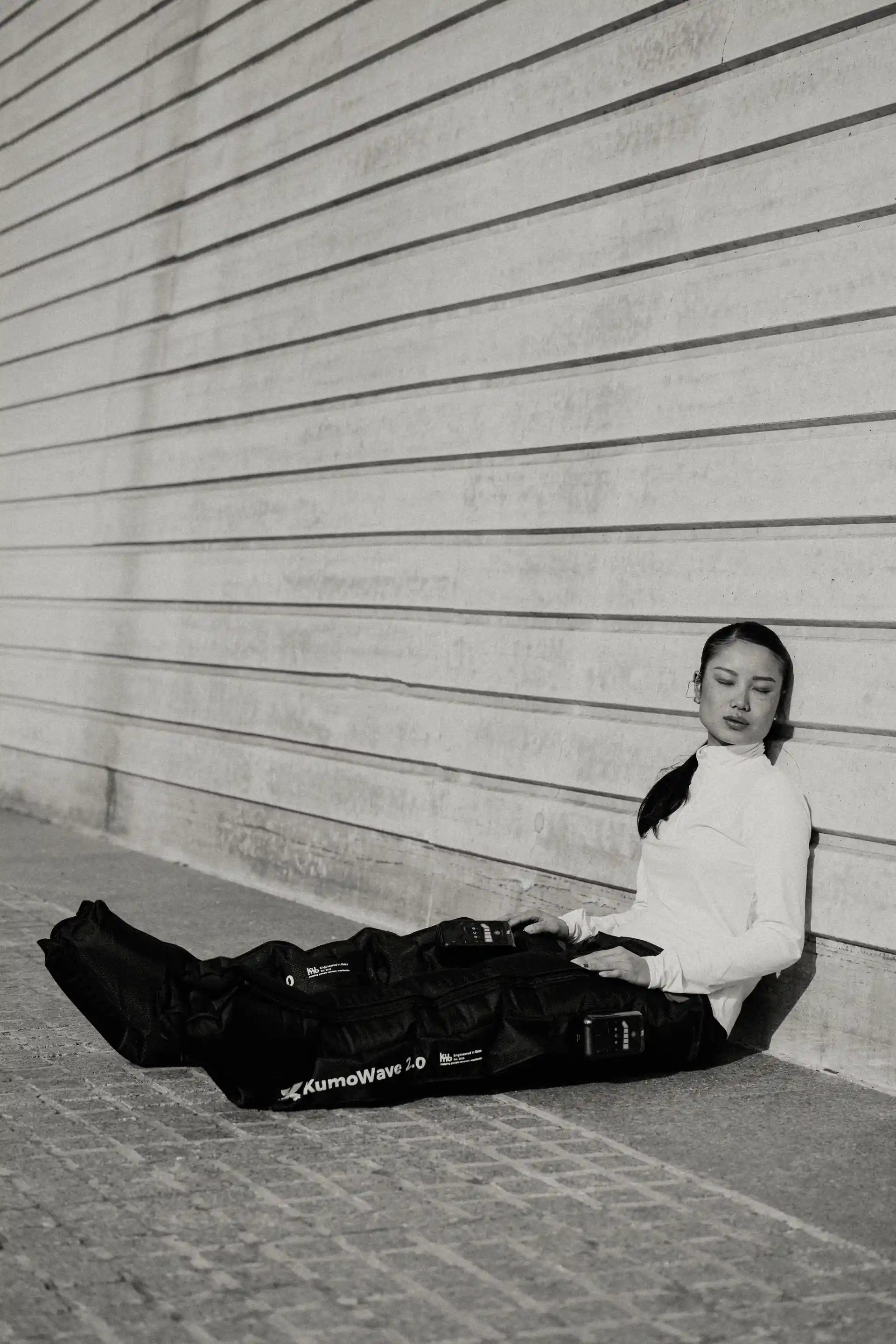
Pressotherapy (also called intermittent pneumatic compression) applies inflation and deflation cycles to the legs, usually in a distal-proximal direction, with the aim of promoting venous return and fluid management. In the clinical setting, these devices are described as repeatedly "squeezing" the leg, which increases blood flow in the veins and helps move blood towards the heart.
After training, the logic of use in sports usually focuses on:
on your first order when you join the newsletter
We send you the code instantly. No spam.
- Decreasing the perception of heaviness, tension, or post-exertion pain.
- Providing a feeling of "lighter legs" on double-session days or when accumulating load.
- Supplementing basic recovery habits: sleep, nutrition, and hydration.
What the evidence says (without magical promises)
In a systematic review and meta-analysis published in Biology of Sport (2024), the authors conclude that intermittent pneumatic compression in the legs can offer, at most, moderate effects on the perception of pain/soreness and small (and not necessarily significant) effects on the recovery of some mechanical functions; results on markers of damage and inflammation are variable. They also note that the most common protocols used in studies are usually around 20–30 minutes and approximately 80 mmHg of pressure.
However, for a search like "pressotherapy for sore quads: 15-minute session," the important thing is that there is indeed research with 15-minute sessions. For example, a randomized controlled trial in 2025 (PM&R) applied a 15-minute protocol after plyometric exercise and repeated sessions on subsequent days; the study reports improvements in pain recovery (VAS) and suggests that the peak therapeutic effect could be observed between 48–72 hours post-exercise.
Practical translation: a 15-minute session can be a useful tool, especially for how you feel (soreness/heaviness), but it does not replace the pillars of recovery nor does it guarantee direct performance improvements from one day to the next.
15-minute pressotherapy session for sore quads (step by step)
The key to a short session is that it is tolerable, consistent, and doesn't leave you feeling numb or in pain. With Kumo pressotherapy boots, always ensure the safest use by following the device manual and prioritize comfort.
Before starting (2 minutes)
- Position: Lying down or semi-reclined, legs supported and relaxed.
- Skin: Avoid using on open wounds or marked irritation.
- Hydration: A glass of water can help the session integrate better into your recovery "ritual."
- Quick check: If you feel tingling, loss of sensation, or unusual pain beforehand, choose a very low intensity or do not use it.
Express protocol (15 minutes) for sore quads
- Minutes 0–3 | "Gentle start": low intensity. Goal: accustom the tissue to compression and avoid a sudden sensation.
- Minutes 3–12 | Main phase: medium intensity (firm but comfortable). You should be able to breathe normally and relax your leg without "fighting" the inflation.
- Minutes 12–15 | Close: maintain medium or low intensity (depending on sensations). Finish seeking a feeling of lightness, not "pounding."
Golden rule: in pressotherapy, "stronger" is not always "better." If pain, numbness, or a "crushed" pulse appears when increasing intensity, lower the level.
Table: quick adjustments for a 15-minute session
| Typical situation | Realistic goal | Recommended adjustment (indicative) | Signs that you're doing well |
|---|---|---|---|
| After heavy leg day (squats/lunges) | Reduce stiffness and heaviness | Sequential + low→medium intensity | Relaxation, "looser" legs when getting up |
| Soreness at its peak (48–72 h) | Improve comfort and tolerance to movement | Medium (without pain), 15 consistent minutes | Less discomfort going down stairs after warming up |
| Double session day (morning/evening) | Arrive at the second session feeling better | 15 min between sessions (low→medium) | Less "heavy leg" feeling during warm-up |
| Long trip or many hours sitting | Feeling of lightness | Gentle, prioritizing comfort | Less perceived swelling / less tension |
If your device allows you to configure pressure in mmHg, sports research frequently reports pressures around ~80 mmHg and durations of 20–30 min; for 15 minutes, use this as a maximum reference and adjust it to your tolerance.
When to do the 15-minute session (for it to make sense)
- Right after training (when you don't have time): as a quick "closure" before showering and eating.
- Between 6 and 24 hours post-workout: when stiffness begins, especially if you need to move a lot throughout the day.
- At the peak of DOMS (48–72 h): if the goal is comfort and gentle mobility (not to "erase" soreness).
- Before bed: as part of a recovery ritual (preferably accompanied by sleep hygiene).
How to boost results: "360" recovery approach with Kumo
Pressotherapy works best when it fits into a system. If you want to make recovery a habit (Kumo's philosophy), combine the 15-minute session with one or two of these actions, without overcomplicating things:
- Gentle mobility (5–8 min): assisted squats, knee flexion-extension, dynamic stretches without pain.
- Localized self-massage (2–5 min): especially on the rectus femoris and vasti, avoiding areas of acute pain.
- Targeted percussion: if you like the tool, the KumoPulse Air massage gun can complement the release work (always with caution: low pressure, continuous movement, without "pounding" the patellar tendon).
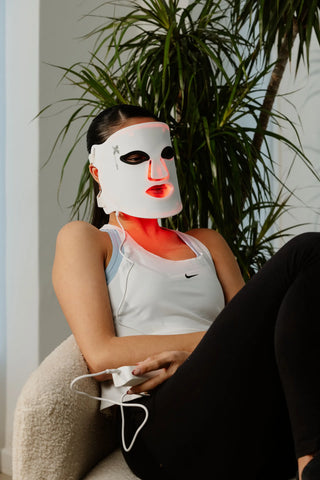
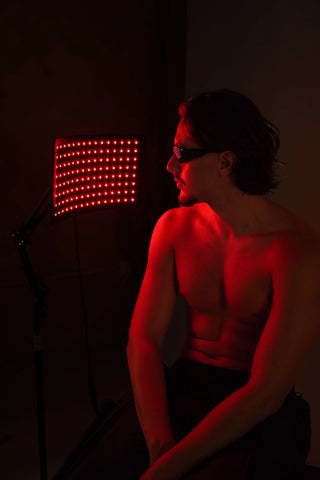
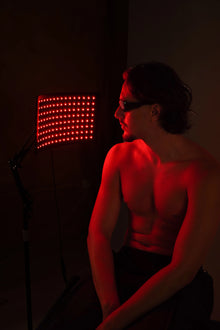
- Red light/LED as a complement: depending on your wellness strategy, explore LED light therapy as part of a nightly or regeneration routine, without replacing rest or clinical guidelines.
Precautions and contraindications (safety first)
Pressotherapy is a technique used in different contexts, but it is not for everyone. Evaluation documents and guidelines on pneumatic compression list contraindications that should be respected, such as suspected deep vein thrombosis or pulmonary embolism, infections (e.g., cellulitis), congestive heart failure, or acute thromboembolic situations.
- Do not use pressotherapy if you suspect a clot (severe pain in calf or thigh, asymmetrical swelling, warmth, redness) or symptoms of embolism (shortness of breath, chest pain): medical attention is required.
- Avoid it over skin infections, unhealed wounds, or significant inflammation without diagnosis.
- If you have vascular disease, heart disease, or neuropathy, consult a healthcare professional beforehand.
Furthermore, even when indicated, mild discomfort may occur (excessive pressure, skin irritation). The solution is almost always simple: lower intensity, check placement, and limit duration.
Common mistakes that make 15 minutes ineffective
- Increasing pressure too much seeking "more effect" and ending up tense during the session.
- Using it as a substitute for getting enough sleep or eating enough protein/energy.
- Doing it once and expecting miracles: in DOMS, comfort usually improves with consistency, especially around 48–72 hours.
- Ignoring warning signs (unusual pain, numbness, marked swelling).
FAQ: Kumo pressotherapy and sore quads
How often can I use Kumo pressotherapy boots if my quads are sore?
With a goal of comfort and feeling lighter, a common guideline is 1 short session per day during the period of greatest stiffness (often 24–72 hours after the stimulus), adjusting the intensity to be comfortable. Research on DOMS has applied repeated sessions on successive days, and it is observed that the perceived relief can be more evident around 48–72 hours. If you notice the area becomes irritated or more sensitive, reduce pressure or rest for a day.
Kumo pressotherapy before or after leg training?
For "sore quads," it usually makes more sense after training or between sessions (if you have a double workout). Before training, prioritize an active warm-up: pressotherapy does not replace neuromuscular activation. If you still want to use it before, keep it very gentle and short, seeking relaxation, not "emptying" the leg. After training, the 15-minute session fits as a quick cool-down when you can't do 20–30 minutes.
What intensity should I choose for a 15-minute session with Kumo?
The best indicator is tolerance: firm compression, but without pain, numbness, or a "prickling" sensation. In sports research protocols, pressures around ~80 mmHg and durations of 20–30 minutes have been frequently used, but that doesn't mean you should "force" that level, especially in a short session. Start low, go up to medium if it feels pleasant, and finish comfortably. If you're stiffer when you get up, you overdid it.
Can I combine Kumo pressotherapy with red light or a massage gun on the same day?
Yes, as long as you consider it a complement and not a recovery marathon. A simple and sustainable combination is: 15 minutes of pressotherapy + 5 minutes of gentle mobility. If you add tools, do so in moderation: localized percussion (like the KumoPulse Air) can be useful on the thigh, avoiding joints/tendons, and LED light therapy can be integrated into a wellness routine. If you have an injury or unusual pain, prioritize diagnosis.
Does Kumo pressotherapy completely eliminate muscle soreness?
The most realistic expectation is an improvement in perception (less heaviness, less sensitivity, more comfort when moving), not "erasing" the process. Recent reviews on intermittent pneumatic compression in sports describe variable results: benefits are usually clearer in perceived pain/soreness than in physiological markers, and depend on the protocol (duration, pressure, timing). In short: it can help, but it doesn't replace sleep, nutrition, rest, or intelligent load progression.
What's next?
If you want to make recovery a simple and high-quality habit, start with a minimal routine: 15 minutes of pressotherapy + gentle mobility + good rest. Discover Kumo's pressotherapy solutions, and if you need guidance on which technology best fits your daily life (LED, pressotherapy, massage), you can contact the Kumo team. To see the entire recovery ecosystem, visit the official Kumo website.
KumoWave pressotherapy
Choose your at-home pressotherapy
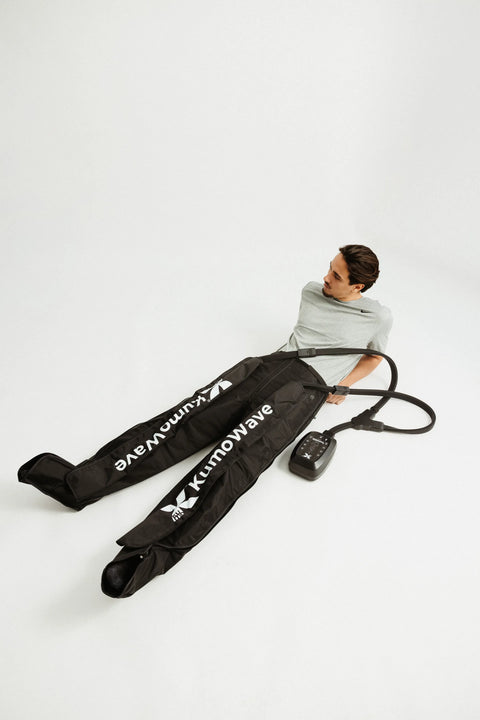
KumoWave Elite – Pressotherapy Pants
Full-coverage trousers. Ideal for lipedema, fluid retention and intensive use.
€799,00 €999,00
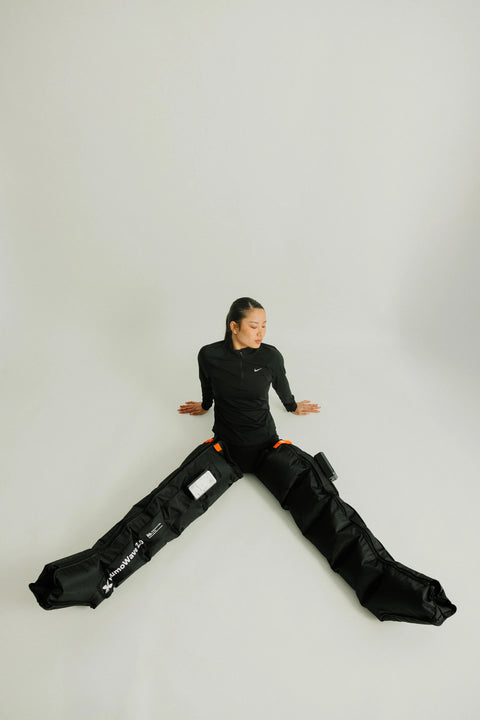
KumoWave 2.0 - Wireless Pressotherapy
Wireless, lightweight boots. Perfect for daily use and recovery.
€499,00 €599,00