Two workouts in one day demand smart recovery.
If you do a double session (e.g., strength training in the morning and running in the afternoon), pressotherapy can especially help you with one specific thing: making your legs feel "lighter" and improving your perception of recovery between sessions. Scientific evidence suggests more consistent benefits in pain/soreness and subjective feeling than in physiological markers or pure performance, and it also heavily depends on the protocol. (pmc.ncbi.nlm.nih.gov)
Pressotherapy at home
End the day with light legs
★★★★★ 4,8/5 · rated by verified customers
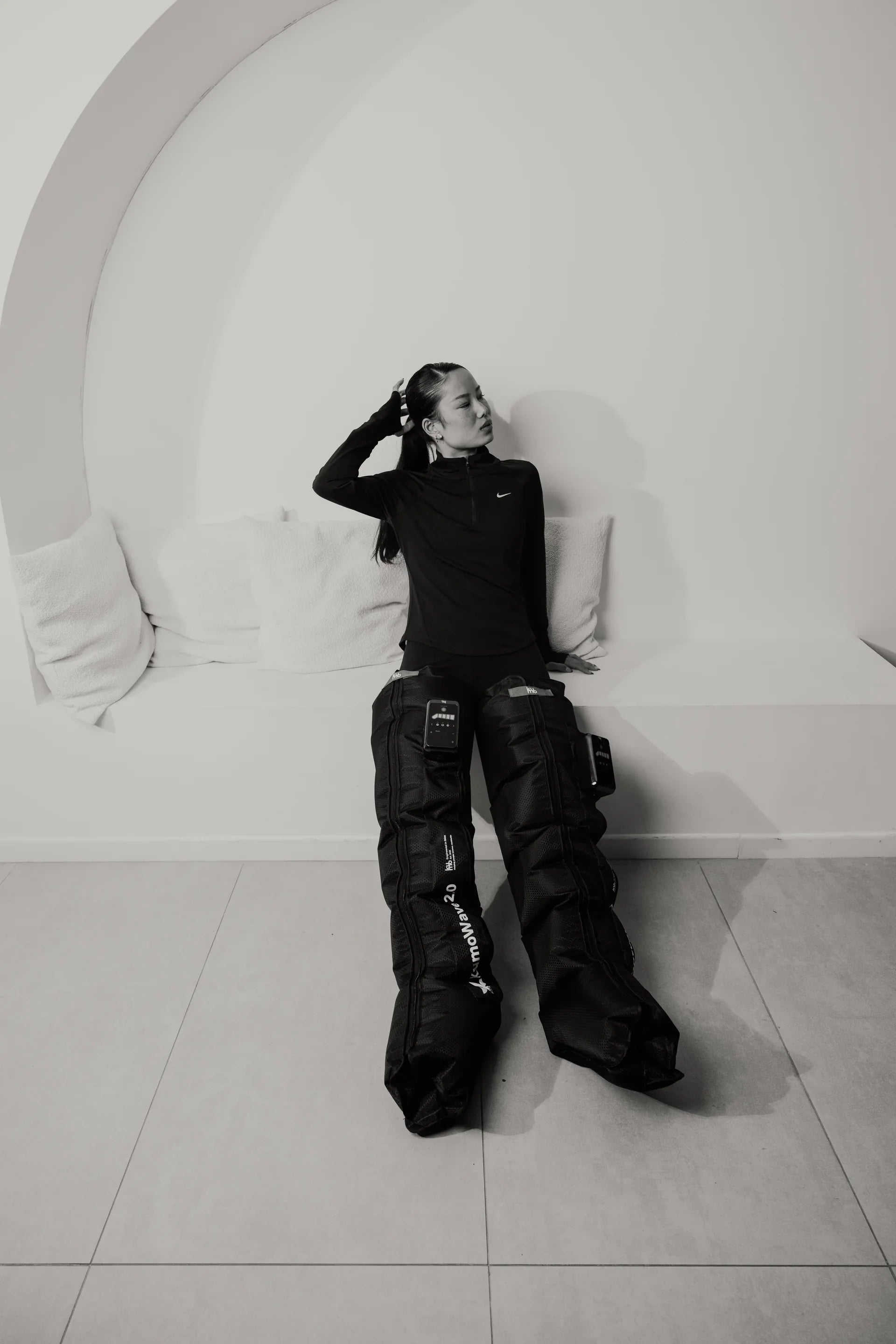
KumoWave pressotherapy boosts circulation and helps drain fluid with sequential compression, in 20-minute sessions at home.
- Boosts circulation and helps drain fluid
- Chamber-based compression, adjustable to you
- Sequential compression that mimics manual drainage
€799,00€999,00
−10% on your 1st order when you subscribe to the newsletter

In this guide, I'll explain when to use it on a two-workout day, what duration and pressure usually make the most sense, what signs indicate you're "overdoing it," and how it fits into a modern recovery routine with Kumo Balance.
What is pressotherapy (and why it fits into a double session)
Pressotherapy = intermittent pneumatic compression
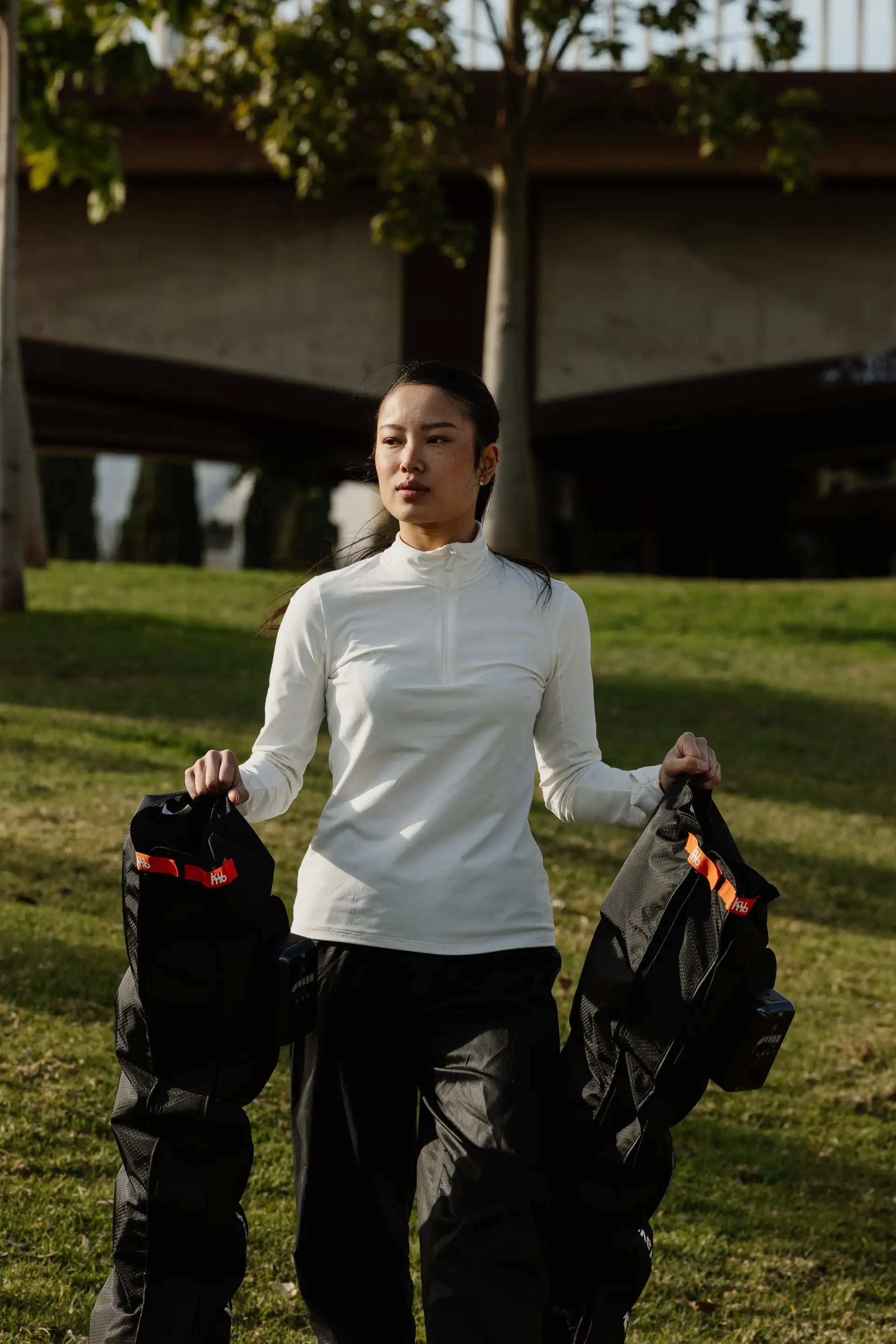
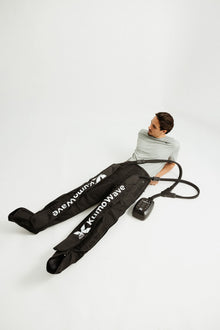
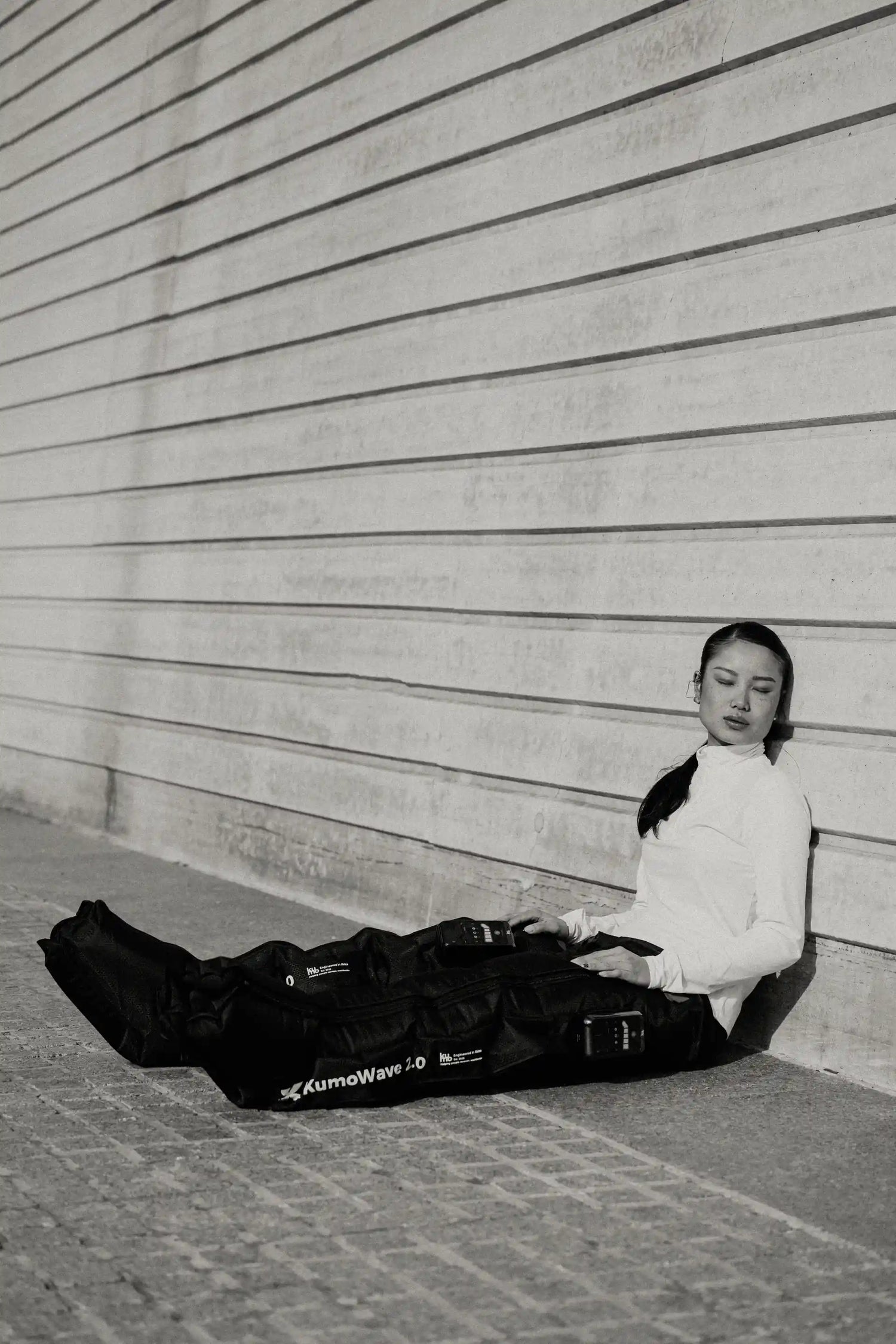
Home pressotherapy typically comes as boots or sleeves that inflate and deflate through chambers, applying rhythmic compression (also called intermittent pneumatic compression). In medicine, it is used, among other purposes, to increase venous flow and reduce stasis in the lower limbs. (hopkinsmedicine.org)
Personalized protocol · included with your purchase
Want us to tell you how to use it in your case?
With your purchase, our experts prepare a personalized usage protocol for your case: sport, circulation, fluid retention, pregnancy or lipedema.
Message us on WhatsAppOur experts reply · no obligation
What "problem" it solves between two workouts
Between one session and the next, several factors accumulate: neuromuscular fatigue, micro-damage (especially if there was eccentric or plyometric exercise), and also circulatory load (a feeling of heaviness, congestion, fluid retention after many hours on your feet or after impact). Pressotherapy primarily targets this last block: leg sensations and comfort.
Golden rule: if your second session heavily depends on "how your legs feel" (technique, coordination, impact), pressotherapy usually makes more sense as a support than if you rely solely on energy (glycogen) and the nervous system.
What science says about pressotherapy and sports recovery
Overall results: small effects and highly context-dependent
A systematic review and meta-analysis on intermittent pneumatic compression in sports recovery (including studies up to November 2022) found:
on your first order when you join the newsletter
We send you the code instantly. No spam.
- Small improvements in pain/soreness at certain times (e.g., greater effect around 48 h, when DOMS is typically high).
- Trivial or non-significant effects in functional/performance measures in many scenarios.
- Great heterogeneity in protocols: durations between 15–60 min and reported pressures from ~60 to ~235 mmHg.
Furthermore, the work itself highlights that subjective scales seem to be the most "benefited," but also the most sensitive to placebo/expectations. (pmc.ncbi.nlm.nih.gov)
An example of benefit in DOMS (2025) vs. studies with neutral results
In a randomized trial (2025) with plyometric-induced DOMS, applying IPC for 15 minutes immediately after and repeating at 24/48/72 h showed significant improvements in pain (VAS) and contractility measures (tensiomyography) compared to control, especially at 48–72 h. (pubmed.ncbi.nlm.nih.gov)
In contrast, in a study with long-distance runners (2020), after two 20-mile long runs, the IPC protocol used showed no clear differences in perceived pain or CRP compared to control. (pubmed.ncbi.nlm.nih.gov)
Practical takeaway: pressotherapy can be useful, but it's not "magic." It works best when the goal is to improve sensation (heaviness, comfort, perception of recovery) and when the protocol is well-integrated into the day.
When to use pressotherapy in a double session (practical guide)
1) Between the first and second sessions (when you have 3–8 hours between them)
This is the most typical time if you're looking to start your second workout with fresher legs. Use it especially if:
- Your first session involved impact (running, jumping, changes of direction).
- You tend to feel heaviness or "heavy legs" more than localized pain.
- You're going to do a second session where technique/fluidity are important (intervals, tempo, team sports).
In terms of protocols in the literature, there's quite a bit of variability, but pressures around ~80 mmHg for 20–30 minutes are frequently mentioned as a common option for reducing pain/soreness and supporting mechanical function. (pmc.ncbi.nlm.nih.gov)
2) After the second session (when you prioritize rest and comfort)
Here, pressotherapy fits well if you end the day with "swollen" legs or a feeling of congestion. It can be a good way to conclude your day alongside a relaxation routine (shower, dinner, sleep hygiene). The idea isn't to "go to the maximum," but to switch off the sympathetic nervous system and improve comfort.
3) Days of high non-sporting load (travel, many hours standing, heat)
On days with circulatory stress (plane, car, standing work), pressotherapy often feels especially useful because the component of stasis is greater. If your double session coincides with such a day, it can be a reasonable "extra," always respecting safety and tolerance.
How to adjust the protocol without overcomplicating it: time, pressure, and body signals
Duration: less is often more (if you have another workout ahead)
- Between sessions: prioritize 20–30 min so as not to "turn off" the system too much and to fit it in with food, hydration, and mobility.
- End of day: you can allow for a longer session if it feels good, but remember that the literature includes durations from 15 to 60 min, and there's no "single" standard. (pmc.ncbi.nlm.nih.gov)
Pressure: seek comfortable stimulation, not heroic efforts
Evidence does not support that "more pressure = more recovery" for everyone. In fact, the meta-analysis describes a wide dispersion and suggests that the most commonly used protocols tend to involve pressures around 80 mmHg for 20–30 min. (pmc.ncbi.nlm.nih.gov)
The Kumo pressotherapy range (KumoWave line) features models with different chambers and declared pressure ranges (depending on the model) that can reach up to 260 mmHg. This doesn't mean you should use the maximum: it means you have room to personalize intensity and progression judiciously. (kumobalance.com)
Signs to reduce intensity or stop:
- Tingling, numbness, or "stabbing" pain.
- Marked color changes, distal coldness, or loss of sensation.
- Joint discomfort (knee/ankle) due to poor positioning or compression in a fold.
Mobility + pressotherapy: the most realistic combo
If you're in a double session mode, pressotherapy works best as a "bridge" if you combine it with:
- 5–10 min of gentle walking or very easy cycling (actual cool-down).
- A recovery meal (carbohydrates + protein) and rehydration.
- A short block of pressotherapy to improve comfort.
Nutrition between sessions: what pressotherapy cannot replace
In a double session, often the real limiting factor for the second workout is not DOMS, but available energy (glycogen) and fluid replenishment.
A position stand from the International Society of Sports Nutrition (ISSN) on nutrient timing (2017) mentions that, when rapid recovery is needed, a common strategy is aggressive carbohydrate replenishment at around 1.2 g/kg/h (especially if there's little time between sessions). (jissn.biomedcentral.com)
Similarly, a position paper on carbohydrates in sports nutrition (DGE, 2020) also recommends, when there are repeated sessions with a short interval, ingesting approximately 1–1.2 g/kg/h in the first hours post-exercise to promote rapid glycogen replenishment. (germanjournalsportsmedicine.com)
Practical translation: use pressotherapy to improve sensations, but if you don't eat and drink well, the second session will still feel "empty."
Example of a double session day with Kumo (no fluff, step-by-step)
- Session 1 (morning): leg strength or quality run.
- Cool-down: 5–10 min gentle activity + nasal breathing to lower heart rate.
- Immediate recovery: hydrate and prioritize carbohydrates if training again in a few hours (ISSN 2017 / DGE 2020 references). (jissn.biomedcentral.com)
- Pressotherapy (20–30 min): comfortable intensity, aiming for "decongestion," not pain.
- Window between sessions: work, active rest, short nap if it works for you.
- Session 2 (afternoon): technique, intervals, easy run, or sport.
- End of day (optional): another short pressotherapy session if you feel heaviness or swelling.
If you want to explore options for compression boots/pants for this type of routine, you can check out Kumo's pressotherapy collection.
How to combine pressotherapy with other Kumo recovery technologies
Pressotherapy + percussive massage (when there's localized overload)
Pressotherapy acts "globally" on the leg. If you also have very specific points (calf, quadriceps, IT band), a brief percussive massage might fit better after or at another time of day. For Kumo, the KumoPulse Air model specifies features like 4 levels (1800–3200 rpm) and recommends 5–15 min sessions per area, which fits well into a post-workout routine without prolonging it too much. (kumobalance.com)
Pressotherapy + red light/LED (for "low-impact" recovery routine)
If your goal is recovery that doesn't "stress" the tissue further (especially during high-load weeks), you can alternate pressotherapy with LED light therapy sessions as part of your nighttime ritual. The key is consistency: a few minutes, many days, and without interfering with sleep and nutrition.
Safety and contraindications: when NOT to use pressotherapy
Pressotherapy is a powerful tool and, like any compression device, it's not for everyone. There are described contraindications for compression treatments (including IPC), such as severe peripheral arterial disease (e.g., very low ABPI), severe heart failure (NYHA IV), material allergies, or severe diabetic neuropathy with sensory loss, among others. (phlebolymphology.org)
Additionally, clinical sources point out risks such as irritation, heat, skin lesions, and recommend special caution for people with peripheral vascular problems or leg injuries, and always consulting a professional if in doubt. (hopkinsmedicine.org)
This is not medical advice. If you have acute pain, asymmetrical swelling, redness, shortness of breath, or suspect thrombosis, prioritize medical evaluation and avoid "self-treatment."
How to quickly decide if it's right for you today (checklist)
- Yes, probably: heavy legs, long day standing, travel, technical second session, or feeling of congestion.
- Maybe: you're very fatigued but still need activation (use less time/pressure).
- No/consult: unusual pain, persistent tingling, significant skin lesion, relevant vascular/cardiac pathology.
Suggested protocols based on your second session
Decision Table (simple and applicable)
| Double Session Scenario | Main Objective | When to use Pressotherapy | Approximate Duration | Intensity (Practical Criterion) | Important Notes |
|---|---|---|---|---|---|
| Strength (morning) + Light Cardio (afternoon) | Reduce heaviness and stiffness | Between sessions | 20–30 min | “Firm and comfortable,” no numbness | Prioritize food/hydration: energy is key for the 2nd session |
| Interval Running (morning) + Technique (afternoon) | Arrive with good leg feeling | Between sessions | 20–30 min | Medium, avoiding aggressive compression | If it "shuts you down," reduce time; accompany with gentle walking |
| Team Sport (morning) + Gym (afternoon) | Comfort and volume tolerance | After the 2nd session | 20–40 min | Medium | Useful if you finish with swollen or very heavy legs |
| Double Session + Travel or Many Hours Standing | Decongestion | Upon arriving home / evening | 20–30 min | Low to medium | If unusual pain/asymmetries, prioritize evaluation |
FAQ: Kumo pressotherapy on double session days
Is Kumo pressotherapy better used before or after the second workout?
In a double session, it usually makes more sense between workouts if your problem is heaviness or the feeling of tired legs, because you'll start the second workout with better comfort. After the second workout, it fits when your goal is to relax and "close out" the day. Evidence in sports recovery points to clearer benefits in subjective sensation (pain/soreness, perception of recovery) than in performance, so decide based on what you need today: perceived performance vs. rest. (pmc.ncbi.nlm.nih.gov)
How long should I use Kumo pressotherapy boots between two sessions?
If you train twice in the same day, a practical approach is 20–30 minutes between sessions, at a comfortable intensity. This is a common range in research and also easy to fit in with the rest of your recovery (eating, hydrating, commuting, working). While longer protocols exist in the literature, for a double session, the goal isn't to "do more," but to arrive better prepared for the second workout without feeling your legs drained. Always adjust based on your sensations and avoid tingling or numbness. (pmc.ncbi.nlm.nih.gov)
Does pressotherapy really help with DOMS if I train legs twice a day?
- observed improvements in perceived pain (VAS) and contractility parameters after plyometric-induced DOMS with repeated IPC sessions. (pubmed.ncbi.nlm.nih.gov) However, other studies (e.g., in runners
- have not found clear differences in pain or CRP with certain protocols. (pubmed.ncbi.nlm.nih.gov) In practice, it is more realistic to use it to improve sensations and daily tolerance, without expecting it to "erase" muscle damage if the volume is very high.
Can I combine Kumo pressotherapy with a massage gun on the same day?
Yes, but with order and purpose. Pressotherapy can serve as a "global" tool for leg comfort, and the massage gun as localized work on specific areas (calves, quadriceps, glutes). Avoid turning it into a recovery marathon: in a double session, less is more if it allows you to sleep and eat well. In the case of KumoPulse Air, sessions of 5–15 minutes per area are suggested, which fits better than "pounding" the tissue too much between sessions. (kumobalance.com)
What now?
If you want to turn recovery into a habit (and not just a "patch" when you're already broken), explore KumoWave pressotherapy for high-load and double session days, complement with LED therapy for a consistent routine, and fine-tune localized work with KumoPulse Air. If you have questions about which option suits your case, you can contact the team or return to the main page of Kumo Balance to explore the complete ecosystem.
KumoWave pressotherapy
Choose your at-home pressotherapy
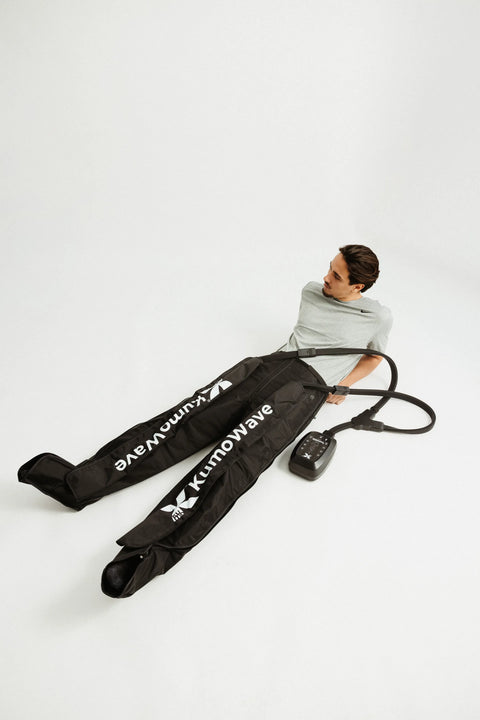
KumoWave Elite – Pressotherapy Pants
Full-coverage trousers. Ideal for lipedema, fluid retention and intensive use.
€799,00 €999,00
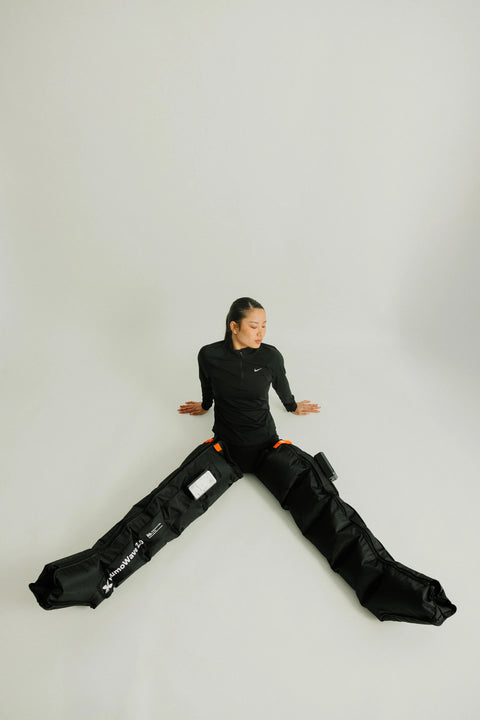
KumoWave 2.0 - Wireless Pressotherapy
Wireless, lightweight boots. Perfect for daily use and recovery.
€499,00 €599,00