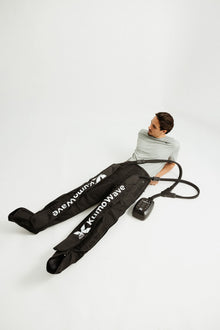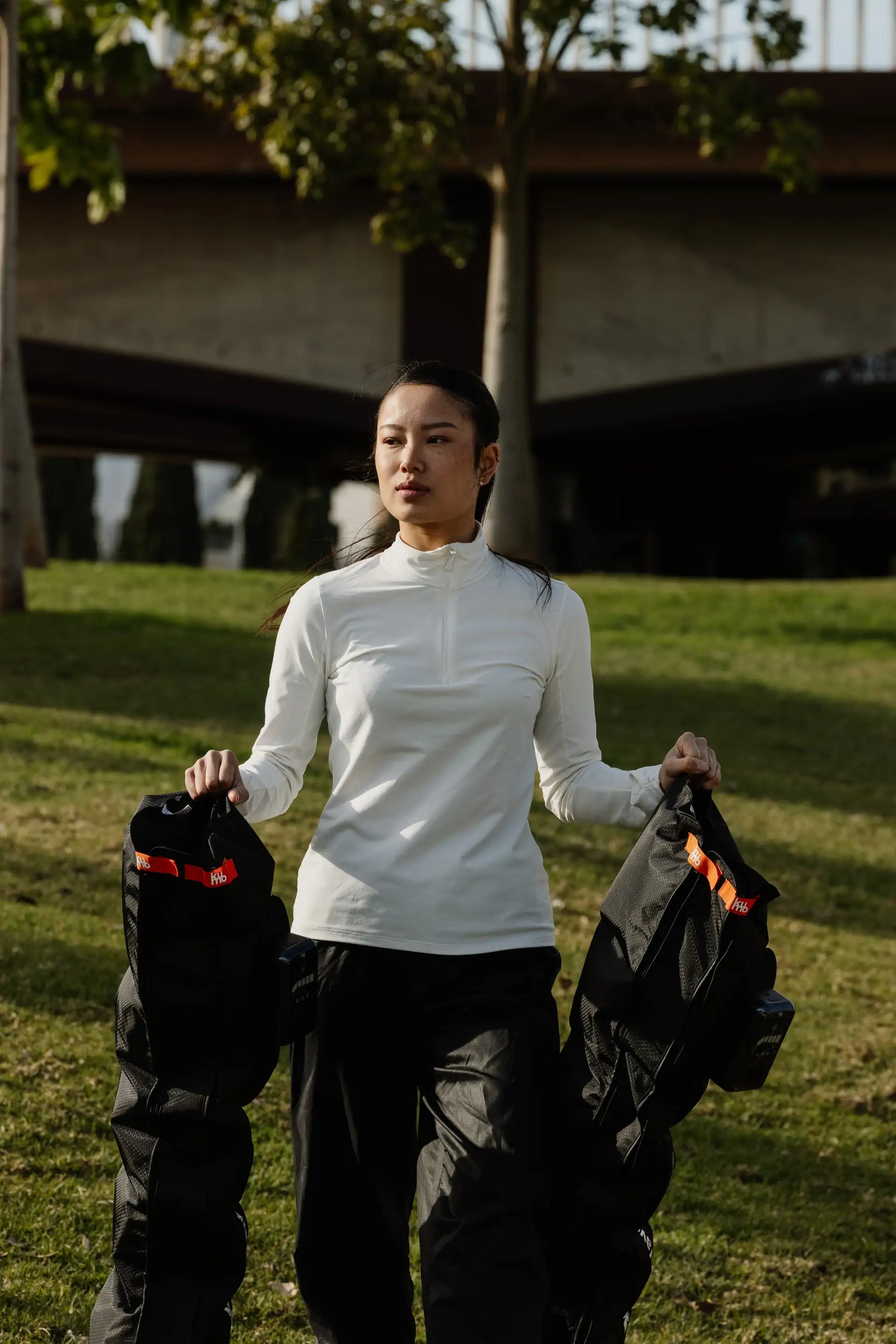
5-Chamber Pressotherapy: Noticeable Uniformity.
When a boot is divided into 5 air chambers, the compression is distributed across more segments and can be applied more progressively from the foot towards the thigh. The desired result is a more homogeneous "firm hug" sensation, with fewer pressure points and a smoother sequence, especially useful for tired legs, post-exercise recovery, and daily well-being.
Pressotherapy at home
End the day with light legs
★★★★★ 4,8/5 · rated by verified customers
KumoWave pressotherapy boosts circulation and helps drain fluid with sequential compression, in 20-minute sessions at home.
- Boosts circulation and helps drain fluid
- Chamber-based compression, adjustable to you
- Sequential compression that mimics manual drainage
€799,00€999,00
−10% on your 1st order when you subscribe to the newsletter

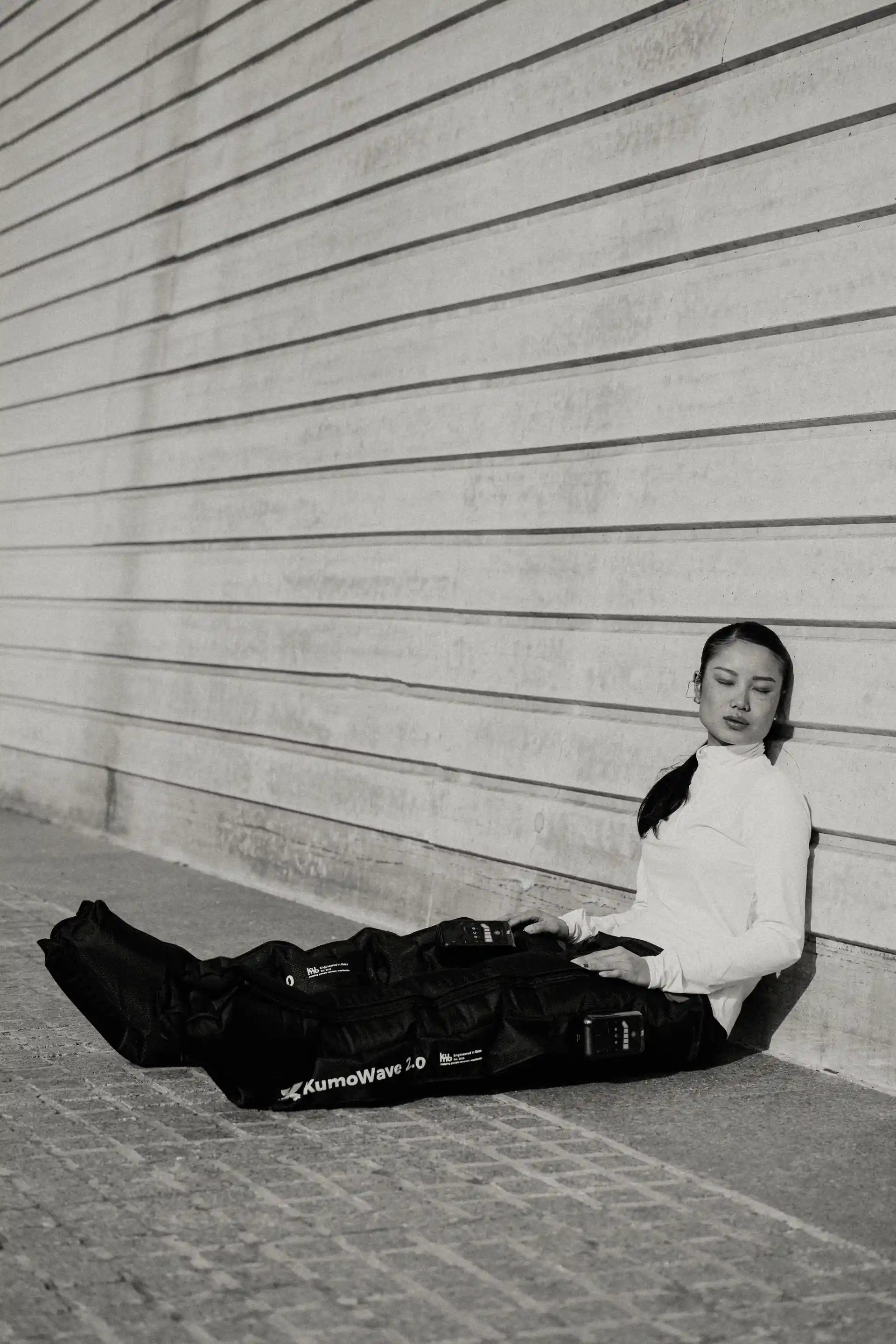
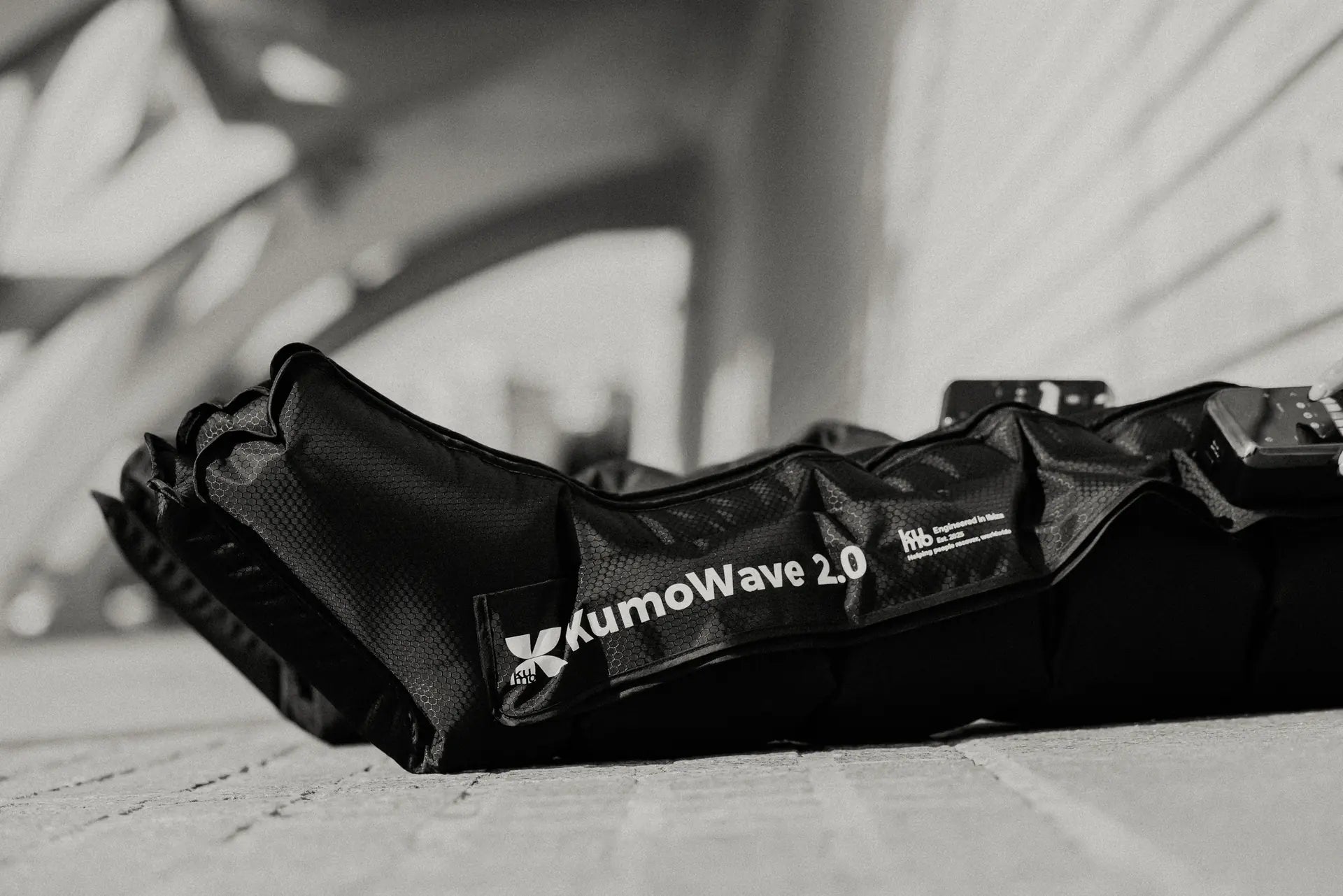
At Kumo, this logic translates into solutions like KumoWave 2.0, a wireless 5-chamber system with digital pneumatic compression and modes designed to customize the session according to your goal (drainage, relief, relaxation, or zone focus).
What "5 chambers" means in pressotherapy
In pressotherapy (also called intermittent pneumatic compression), "chambers" are compartments that inflate and deflate inside the boot. Each chamber covers a section of the leg and, depending on the program, can compress sequentially (one after another), in waves, or even simultaneously.
Personalized protocol · included with your purchase
Want us to tell you how to use it in your case?
With your purchase, our experts prepare a personalized usage protocol for your case: sport, circulation, fluid retention, pregnancy or lipedema.
Message us on WhatsAppOur experts reply · no obligation
In a 5-chamber design, the usual distribution covers from the foot/ankle to the thigh in five stages. In KumoWave 2.0, for example, the active zones are described as: feet/ankles, calves, knees, lower thigh, and thigh.
Typical 5-chamber distribution (distal to proximal)
| Chamber | Approximate zone | What to feel | Practical objective |
|---|---|---|---|
| 1 | Foot / ankle | Soft and stable compression | "Activate" from below and prevent cutting sensation |
| 2 | Calf | Firm pressure, no pinching | Promote return and relieve the most tense area |
| 3 | Knee | Homogeneous contact (no hard spots) | Smooth transitions between calf and thigh |
| 4 | Lower thigh | Progressive wave upwards | Continuity of massage and "peristaltic" sensation |
| 5 | Thigh | Enveloping, tolerable compression | Close the sequence without pressure "rebound" |
Why 5 chambers can provide more uniform compression
1) More contact points = fewer pressure "voids"
With fewer chambers, each segment has to cover more surface. This can create areas with higher pressure (for example, in folds or contours) and others with less contact. In contrast, with 5 chambers, the same path is better divided: each section compresses a smaller area, which helps distribute the force more regularly.
2) Better transition between "difficult" areas (ankle and knee)
Uniformity doesn't just depend on "more power," but on how it's applied. The ankle (narrower) and knee (flexion area) are usually points where irregular compression is noticeable. An extra chamber dedicated to the knee or a part of the thigh can smooth the jump between the calf and thigh, making the massage more continuous.
on your first order when you join the newsletter
We send you the code instantly. No spam.
3) Finer sequence to promote return
The goal of sequential compression is usually to push blood flow proximally (upwards). In clinical settings, this type of compression is widely used to maintain venous flow and reduce the risk of thrombotic events in people with reduced mobility, as stated in guidelines like NICE NG89 (updated with copyright 2025), which mentions intermittent pneumatic compression as a mechanical prophylaxis measure in various hospital contexts.
Key idea: "more uniform compression" is not just about squeezing harder, but about applying stable, tolerable, and progressive pressure without uncomfortable peaks.
What benefits are realistic (and what recent evidence says)
At home, pressotherapy usually aims for a feeling of lightness, comfort, and recovery. In clinics, it is also used for thrombosis prevention and edema management under supervision. In both cases, results depend on variables such as pressure, duration, inflation pattern, and individual characteristics.
Useful data to understand "why it works"
- A study in Frontiers in Physiology published on February 12, 2026 (59 healthy adults) evaluated 30 minutes of pneumatic compression at 90 mmHg and observed increases in regional oxygen saturation (rSO₂) during the session, along with indicators compatible with fluid content reduction after the intervention.
- In a randomized controlled trial (monocentric) published in the Journal of Clinical Medicine on May 9, 2025, intermittent pneumatic compression as an adjunct showed reduction in ankle circumference and improvements in oxygenation-related measures in the context of stasis dermatitis (in hospitalization, for five days).
- In biomechanics, research also suggests that frequency and compression mode influence perfusion. A paper in the Journal of Biomechanics (volume 160, November 2023) explored customized compression modes to maximize perfusion in the foot, highlighting that there is no single ideal configuration for everyone.
- In lymphedema, there is literature emphasizing a practical point: the "programmed" pressure in the chamber does not always equate to the effective pressure in the tissue, and the inflation time can change the result (tissue pressure and flow dynamics measurements).
How to read all this without overcomplicating it: pressotherapy can improve variables related to circulation and fluids, but the magnitude of the effect and the best configuration depend on the individual case. Therefore, the experience of "uniform compression" is optimized more by control and tolerance than by pursuing the highest number.
How to use 5-chamber pressotherapy to maximize uniformity (step-by-step)
A good session should not cause pain or numbness. The goal is for the compression to feel firm, progressive, and comfortable.
- Brief preparation: hydrate yourself and move your ankles/hips for 3–5 minutes if you can.
- Placement: wear thin clothing or socks for comfort and adjust zippers/Velcro without overtightening.
- Start gently: first sessions with moderate pressure and short duration (10–15 minutes) and progress according to sensations.
- Posture: sitting or lying down, legs relaxed; if seeking drainage, elevate slightly.
- After: walk for 2–3 minutes or breathe diaphragmatically to maintain the sensation of return.
These guidelines align with practical recommendations for home use (progression, hydration, and comfort) that Kumo also emphasizes in its guides.
Which modes best contribute to a "uniform" sensation
In 5-chamber pressotherapy, uniformity can come from different patterns:
- Sequential upward: the classic option to feel a wave from the foot upwards.
- Alternating waves (double wave): useful if you want a more dynamic massage without a "block" sensation.
- Simultaneous total compression: can give a very homogeneous sensation (the entire leg at once), although not everyone finds it equally pleasant.
- Manual mode: ideal if you want to correct asymmetries or give more attention to a specific section.
In KumoWave 2.0, these patterns appear as programs (sequential, double wave, combined, simultaneous, and manual), with a configurable timer between 5 and 30 minutes and adjustable pressure levels.
The role of pressure: how to get it right without overdoing it
In pressotherapy, more pressure doesn't always mean a better session. Two simple rules help:
- Tolerance rule: if pain, tingling, marked coldness, or color change appears, lower intensity or stop the session.
- Regularity rule: more consistent (and well-tolerated) sessions usually provide more than an occasional "strong session."
In the case of KumoWave 2.0, the pressure is specified in a range of 95 to 195 mmHg with predefined levels, and the equipment includes an approach to pressure stability during the session (according to its technical description).
What to look for in 5-chamber pressotherapy if your priority is uniform compression
If the goal is "to feel homogeneous," these points usually make a difference:
- Inflation and sequence quality: the transition between chambers should be smooth and without sudden jolts.
- Actual fit to your leg: correct size and material that wraps without creating hard creases.
- Time and mode control: more options aren't "better" in themselves, but they allow for fine-tuning the sensation.
- Portability and adherence: if it's easy to use, you'll use it more (and that matters).
- Noise and environment: quiet operation helps integrate it into nightly or resting routines (in KumoWave 2.0, < 45 dB is indicated).
If you want to see options within the Kumo ecosystem, you can explore the pressotherapy section, where 5-chamber solutions (leg-focused) coexist with configurations offering more coverage or more chambers for those seeking a different experience (e.g., 6 or 8 chambers depending on the model).
Safety: signs to stop (and when to consult)
In healthcare settings, intermittent pneumatic compression is used with clear protocols to reduce risks. At home, it's advisable to apply the same principle: if something doesn't feel normal, don't force it.
- Stop and check: acute pain, numbness, intense cold sensation, color change, marks that don't fade.
- Avoid using it: on open wounds, infections, or acute inflammation (and do not use while sleeping, according to home use guidelines).
- Consult first: if you have a history or vascular/circulatory pathology, or doubts about the indication (for home use, it is recommended to learn correct placement and size with health instructions when appropriate).
To understand clinical use and the risks/benefits in thrombosis prevention, informative resources such as the Cleveland Clinic's explanation of IPC devices are useful, describing their frequent use in hospitals, typical inflation cycles, and potential complications.
How Kumo pressotherapy fits into a "360°" recovery routine
Pneumatic compression works best when it's not alone. If you're looking for a consistent routine (without overcomplicating it), this combination is usually practical:
- Daily movement: walking and ankle mobility help support return.
- Rest and sleep: real recovery happens outside the boot.
- Red light (LED): as a complement for well-being and recovery, you can explore Kumo's LED light therapy (their catalog mentions the use of wavelengths like 660 nm and 850 nm in red light and near-infrared solutions).
- Percussion massage: to relieve trigger points before or after, one option within Kumo is KumoPulse Air (lightweight, with 4 speeds and specifications oriented to portable use).
FAQ: 5-chamber pressotherapy and Kumo
What does a Kumo 5-chamber pressotherapy offer compared to one with fewer segments?
In a 5-chamber configuration, compression is distributed across more sections, which usually translates into a more continuous sensation from the foot to the thigh. At Kumo, KumoWave 2.0 works with five zones (feet/ankles, calves, knees, and two thigh segments), and offers various modes (sequential, waves, simultaneous, and manual) to adjust that "uniformity" to your tolerance. The practical key is that you can regulate pressure and time without uncomfortable points appearing: if you feel pinching or pain, that is not the goal.
What pressure and duration do you recommend for KumoWave 2.0 if I'm a beginner?
As a cautious rule, start with short sessions and a moderate sensation. KumoWave 2.0 allows for a timer from 5 to 30 minutes and graded pressure levels; if it's your first week, a reasonable guideline is 10–15 minutes in sequential mode with low or medium pressure, and gradually increase only if your body responds well. Always aim for firm but comfortable compression. If you feel pain, numbness, or color changes, stop the session and readjust. For pre-existing circulatory pathology, consult a professional.
Does Kumo's 5-chamber pressotherapy help with tired legs from standing for many hours?
It is usually one of the most appreciated uses, because fatigue from prolonged standing is associated with a feeling of heaviness and accumulation of tension in the calves and feet. A well-graded sequence (from foot to thigh) can provide a perceived "lightness" at the end of the day, especially if combined with hydration and a couple of minutes of walking afterwards. Still, it is important to understand that pressotherapy does not replace movement or treat medical causes on its own. If there is marked swelling, unilateral pain, or a history of vascular issues, it is advisable to assess the case with a specialist.
Can I combine Kumo pressotherapy with red LED light in the same routine?
Yes, many people integrate it as a "block" of home recovery: pressotherapy for relief and a feeling of lightness, and red/near-IR light as support for well-being and recovery. The practical recommendation is to separate them by a few minutes or decide on a simple order (for example, pressotherapy first if your legs are heavy, and LED afterwards as a quiet session). Keep the total routine sustainable: better 3–5 days a week consistently than one very long occasional session. If you are following a clinical plan, always prioritize professional instructions.
When should I not use Kumo pressotherapy (basic contraindications)?
Avoid using it if there is intense pain, local infection, open wounds, or acute inflammation in the area, and do not use it while sleeping. It is also advisable to exercise extreme caution if thrombosis is suspected (sudden pain, warmth, unilateral redness) or if you have known vascular pathology without supervision. For home use, it is important that the size is correct and that you know how to properly place the boots, as recommended by medical centers when these devices are indicated outside the hospital. If something "doesn't feel right" during the session, stop and consult.
What next?
If your priority is more uniform compression and an easy-to-maintain routine, take the next step by exploring Kumo's pressotherapy collection and combine your session with simple habits (mobility, hydration, rest) and complementary tools like LED or massage. And if you need guidance on choosing or using your equipment safely, you can write directly from the contact page.
KumoWave pressotherapy
Choose your at-home pressotherapy
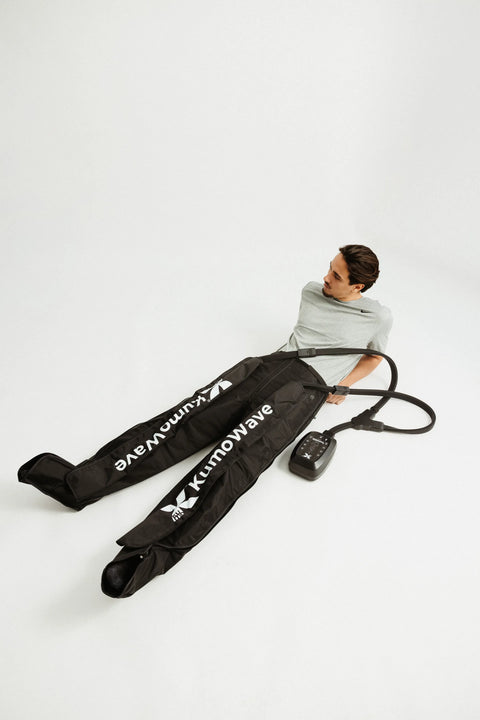
KumoWave Elite – Pressotherapy Pants
Full-coverage trousers. Ideal for lipedema, fluid retention and intensive use.
€799,00 €999,00
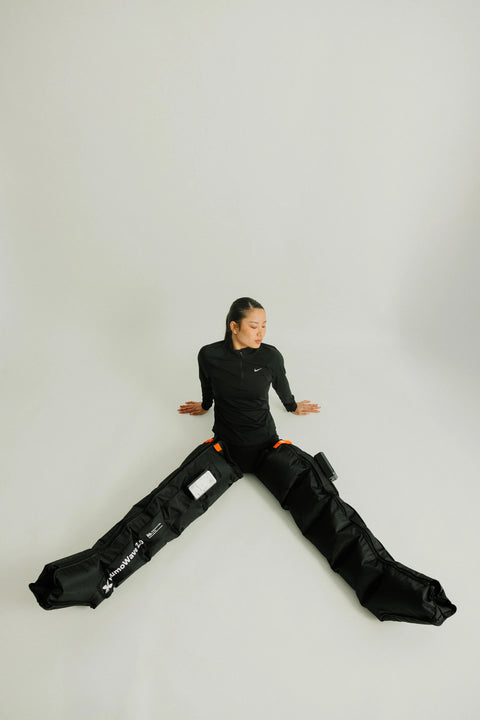
KumoWave 2.0 - Wireless Pressotherapy
Wireless, lightweight boots. Perfect for daily use and recovery.
€499,00 €599,00