
Your legs aren't tired: they've been still for too long.
If you work sitting down (or alternating between sitting and meetings), it's normal to notice heavy legs, slightly swollen ankles at the end of the day, or a feeling of “slow circulation.” The good news is that you don't need an extra hour at the gym to change this: with micro-habits and, when it suits you, a pressotherapy session, you can bring rhythm back to your legs even during your workday.
Pressotherapy at home
End the day with light legs
★★★★★ 4,8/5 · rated by verified customers
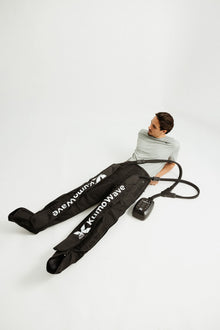
KumoWave pressotherapy boosts circulation and helps drain fluid with sequential compression, in 20-minute sessions at home.
- Boosts circulation and helps drain fluid
- Chamber-based compression, adjustable to you
- Sequential compression that mimics manual drainage
€799,00€999,00
−10% on your 1st order when you subscribe to the newsletter

In this practical guide, you'll get a clear plan to activate the calf's muscle pump, reduce fluid accumulation, and organize a realistic recovery routine with Kumo's wellness ecosystem.
Why the office “shuts down” your legs (and what's happening down there)
When you spend a lot of time sitting, a very specific combination occurs:
Personalized protocol · included with your purchase
Want us to tell you how to use it in your case?
With your purchase, our experts prepare a personalized usage protocol for your case: sport, circulation, fluid retention, pregnancy or lipedema.
Message us on WhatsAppOur experts reply · no obligation
- Fewer contractions of the calf (the “pump” that aids venous return).
- More stasis and accumulation of blood and fluids in the legs due to gravity.
- Pressure from the edge of the seat and repeated postures (crossing legs, pointed ankles) that worsen the feeling of heaviness.
Physiology describes it quite directly: during sedentary time, "pooling" (accumulation) in venous circulation increases, and calf circumference rises, especially if muscle activity is low. (pmc.ncbi.nlm.nih.uk)
Furthermore, interrupting sedentary behavior matters: controlled studies have observed that breaking up prolonged periods of sitting with short transitions (sit-stand) attenuates markers associated with leg swelling in the short term. (pmc.ncbi.nlm.nih.uk)
Key principle: for lighter legs, it works better to move little but often than to “compensate” once a day.
−10%on your first order when you join the newsletter
We send you the code instantly. No spam.
Useful fact for context (without dramatizing)
This isn't just an office issue: the WHO reported that the risk of venous thromboembolism approximately doubles after journeys of 4 hours or more, due to prolonged immobility. (who.int) Work isn't the same as a long flight, but the mechanism of "being still" is similar: that's why micro-breaks in movement are so effective for daily comfort.
Micro-habits for active legs: the minimal plan that actually sticks
The goal isn't to sweat: it's to reactivate circulation and “turn on” the calf several times a day. I propose a simple rule:
45/2 Rule: every 45 minutes, 2 minutes of easy movement. If your day is very busy, start with 60/1 (every 60 minutes, 1 minute).
Every 45–60 minutes: 6 discreet movements (without leaving your desk)
- Ankle pumps (flexion/extension): 30–40 repetitions per foot.
- Heel raises (calves): 15–25 controlled repetitions.
- Toes up (tibialis anterior): 15–25 repetitions.
- Glute isometric: squeeze 10 seconds, release 10 seconds (3 times).
- Knee extension (one leg): 10–15 repetitions per side.
- Mini-walk: 60–90 seconds to the printer/water/window and back.
If you only choose one, choose ankle pumps: they're quick, don't draw attention, and bring back the feeling of "awake legs."
Postures that add (and others that subtract)
- Add: feet flat, knees at ~90°, stable pelvis, low (diaphragmatic) breathing for 3–4 cycles before returning to typing.
- Subtract: crossing legs for long periods, sitting on tiptoes under the chair, sitting on the edge with pressure on the back of the thigh.
Hydration and “salt” checklist (without promising miracles)
Fluid retention has many causes, but in an office setting, two simple things often help:
- Water distributed throughout the day (not all at the last minute).
- Less salty meals at midday if you notice frequent swelling.
No need to obsess: use it as an additional lever when your body asks for it.
Ergonomics for light legs: adjustments that cost nothing (and make a difference)
Ergonomics isn't just about neck and back. For active legs, check:
- Chair height: ensure feet aren't “dangling.”
- Foot support: if you can't reach the floor properly, a footrest helps distribute pressure.
- Space under the desk: leave room to move ankles and change posture.
- Alternate sitting/standing if you have an adjustable desk, but with real breaks (not standing still for 2 hours).
Table: “anti-heavy legs” micro-habits (by objective and duration)
| Objective | Micro-habit | Duration | When | Sign it's working |
|---|---|---|---|---|
| Activate venous return | Ankle pumps + heel raises | 1–2 min | Every 45–60 min | Warmer feet, less tingling |
| Reduce stiffness | Chair squats (very gentle) | 60–90 s | Mid-morning and mid-afternoon | "Loose" knees when walking |
| Decongest | Short walk + nasal breathing | 2–4 min | After calls or meetings | Less feeling of heaviness |
| End-of-day recovery | Elevated legs (if possible) + ankle mobility | 5–8 min | At the end of the day | Less "sock mark" on ankles |
What is pressotherapy and why does it fit so well into an office routine?
Pressotherapy is a pneumatic compression technique (inflation and deflation by chambers) applied to the legs to support venous return and fluid drainage. In the clinical setting, there is a very similar concept, intermittent pneumatic compression (IPC), frequently used to promote blood flow in situations of immobility. (my.clevelandclinic.org)
In a wellness context, the idea is not to "medicalize" your day, but to add a recovery tool that:
- helps you release the feeling of heavy legs,
- provides ritual and consistency (the hardest part when there's work),
- complements your micro-habits (not replaces them).
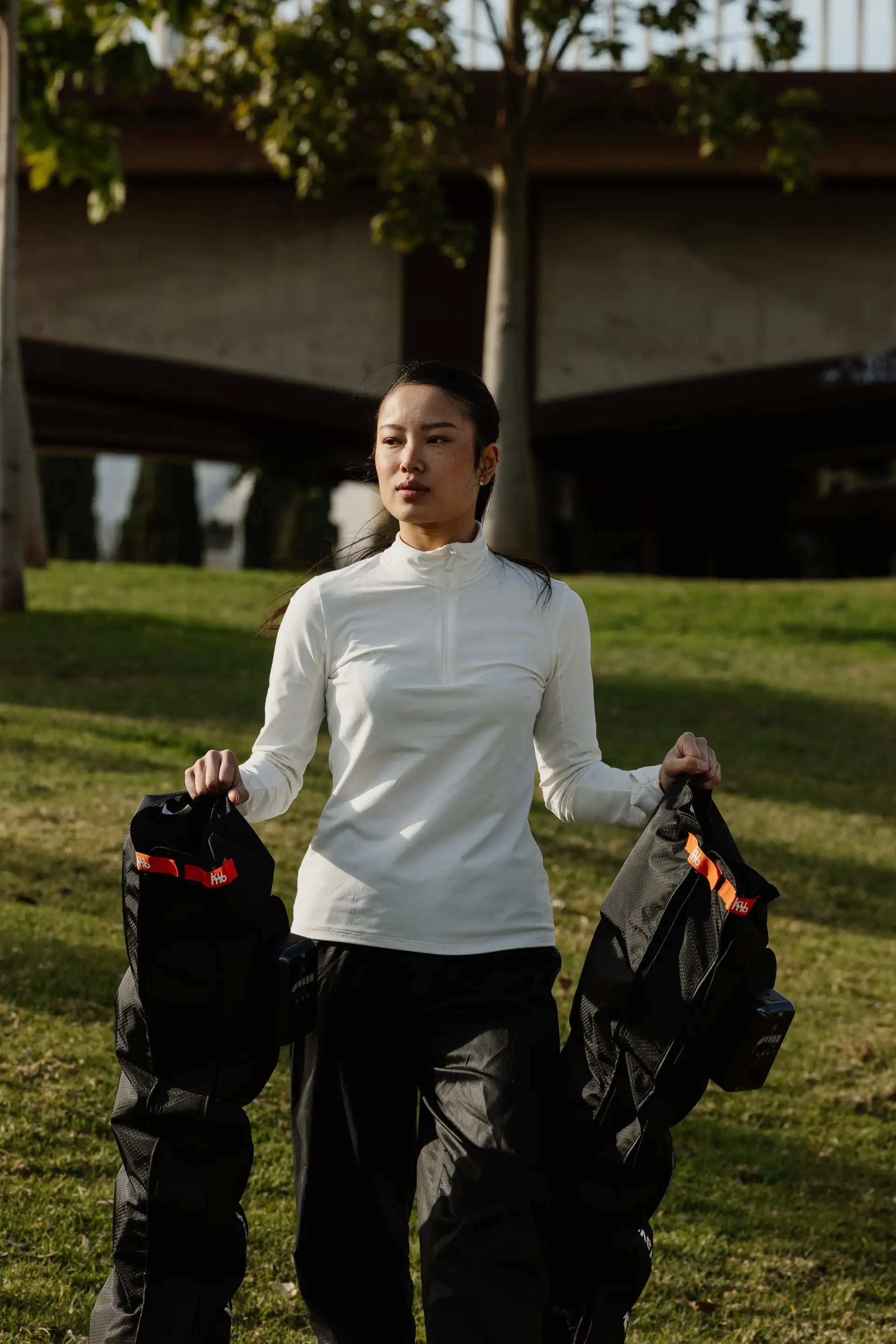
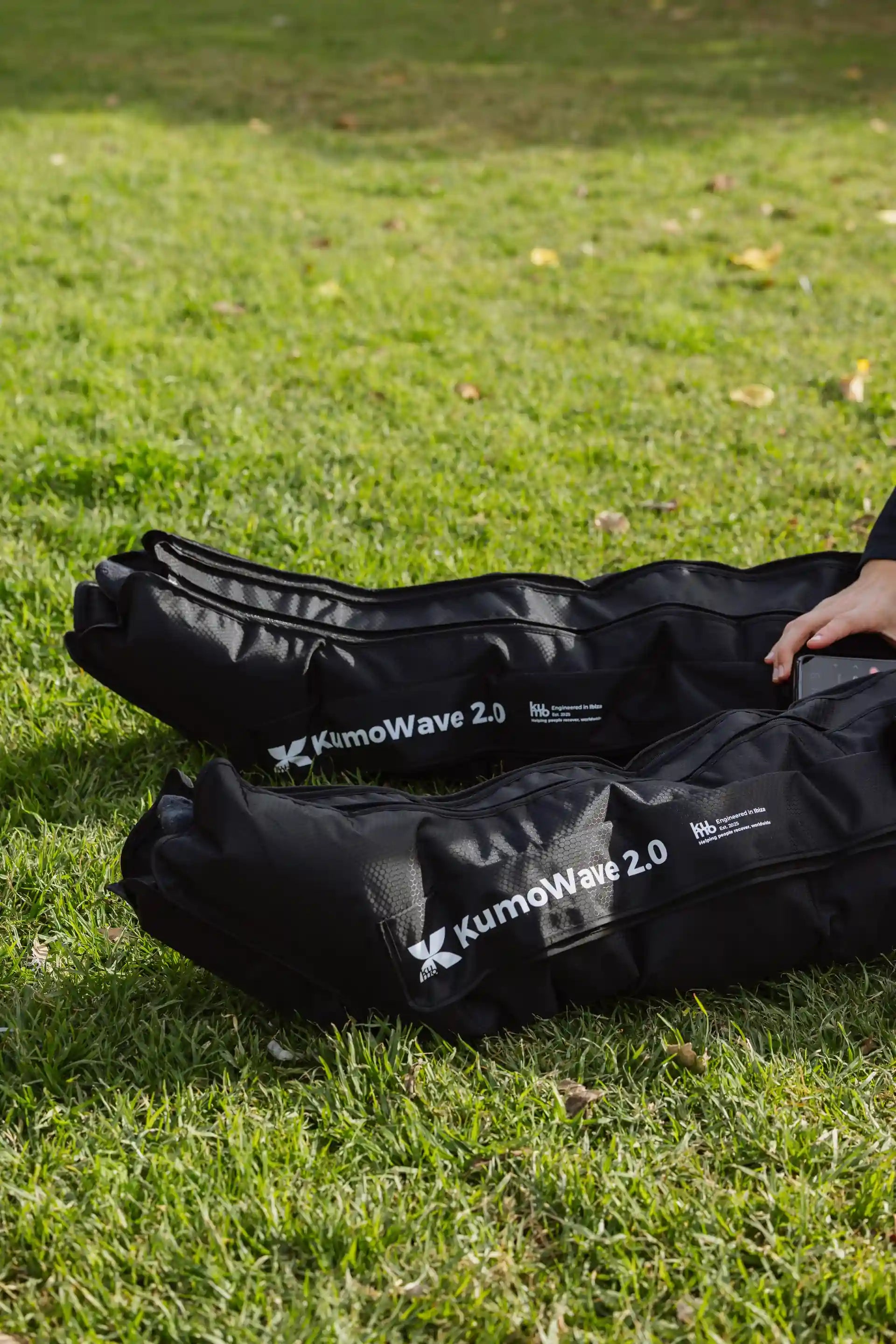
If you want to explore this line, you can view Kumo's pressotherapy boots collection, designed to integrate comfortable recovery into daily life.
How to integrate it without "breaking" your workday (3 easy moments)
- Before starting (10–15 min): for those who arrive with already heavy legs from a long commute.
- During lunch break (15–25 min): gentle release and you return to your desk feeling better.
- After work (20–40 min): the most common use, when you are no longer dependent on meetings or calls.
Duration: what the evidence says (and how to translate it to real life)
In applied research, sessions of around 30 minutes of intermittent pneumatic compression have been tested after working days with heavy loads (e.g., jobs with many hours on your feet) with improvements in pain and swelling in the short term. (pmc.ncbi.nlm.nih.gov)
In the office, the practical translation is usually:
- 15–25 min if your goal is "reset" and lightness.
- 25–40 min if you've had a long day or notice heavier ankles.
If it ever leaves you with an odd sensation (numbness, pain, strange discoloration), don't force it: recovery should feel pleasant.
Basic safety: when to avoid compression and when to consult
In general, compression (including IPC/pressotherapy) has recognized contraindications in healthcare settings. For example, clinical documents from the NHS list situations such as untreated or recent deep vein thrombosis, severe uncontrolled heart/kidney/liver failure, or ischemic vascular disease, among others, as contraindications. (wsh.nhs.uk)
Additionally, if your concern is a possible clot or sudden pain, it is important to be aware of warning signs. The CDC describes symptoms such as swelling, pain, or tenderness in the leg (often in only one), and recommends moving and exercising calves during long periods of sitting. (wwwnc.cdc.gov)
Signals to stop and seek medical evaluation
- Marked swelling in only one leg, with pain or local heat.
- Difficulty breathing or chest pain (emergency).
- Severe unusual pain, changes in color, or loss of sensation.
Responsible note: this article is informative and does not replace medical advice. If you have a history of vascular problems, severe varicose veins, pregnancy, cardiac/renal pathology, or specific doubts, consult before using compression.
Kumo routine for the office: combine pressotherapy + massage + habits
What works best in the long run is usually a layered strategy:
- Layer 1 (daily): 1–2 minute micro-habits (ankles, heels, mini-walks).
- Layer 2 (2–4 times/week): pressotherapy as a structured release.
- Layer 3 (when you need it): massage and muscle release, especially in calves and plantar fascia.
Quick calf massage for "reset" (5 minutes)
If your calf is stiff, circulation feels worse even if you move. A short, consistent massage can help restore a feeling of lightness. If it suits you, you can use a percussion device like KumoPulse Air for localized work (always avoiding painful areas, prominent varicose veins, or sensitive spots without diagnosis).
What about LED light?
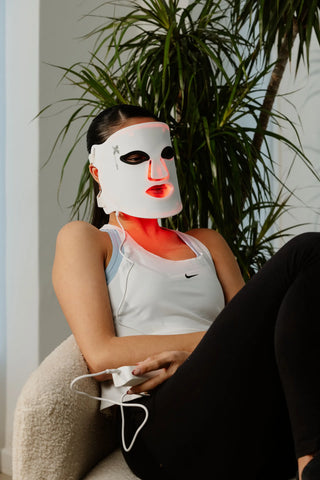
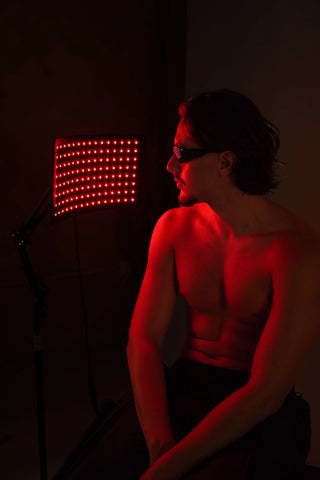
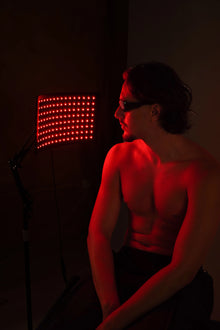
Kumo also works with technologies aimed at wellness and recovery. If your "heavy legs" are accompanied by a general feeling of fatigue, a more complete self-care routine may include moments of pause and relaxation. You can learn about the brand's proposal for LED light therapy as part of a global approach (skin, rest, and recovery), without making it an "all or nothing."
FAQ: office pressotherapy and routine with Kumo
How often should I use Kumo pressotherapy boots if I work sitting all day?
For a primarily sedentary job, a frequency of 2 to 4 times a week as a discharge routine, and daily micro-habits (ankles/heels) as a base, usually fits. On particularly long days (back-to-back meetings or a lot of commuting), an extra session can help you regain lightness. The key is to observe your response: if you end up with "looser" legs and no discomfort, you're on the right track. If pain, numbness, or persistent discomfort appears, reduce intensity/duration and consult if you have a history of vascular problems.
Does pressotherapy replace walking or active breaks?
No: ideally, they should complement each other. Interrupting sitting time helps reduce acute swelling and improves the feeling of active legs. (pmc.ncbi.nlm.nih.gov) Pressotherapy, on the other hand, usually works best as a recovery block (for example, at midday or at the end of the day). If you only choose one thing due to lack of time, prioritize the micro-habit (1–2 minutes every hour) because it addresses the cause: too much immobility.
Can I use pressotherapy if I have varicose veins or spider veins?
It depends on the case. Many people with venous discomfort use compression strategies to relieve symptoms, but there are also situations where compression is contraindicated or requires supervision (e.g., arterial disease, recent thrombosis, or uncontrolled heart failure). (wsh.nhs.uk) If you have painful varicose veins, marked inflammation, or a history of thrombosis, it is wise to seek clinical guidance before using pressotherapy. If your situation is mild, start with short sessions and gentle sensations, and always maintain your active breaks.
What can I do if my ankles swell at the office even though I exercise?
- programmed micro-breaks (ankles/heels), (
- check your chair and foot support to avoid pressure on your thigh, and (
- a recovery block at the end of the day (elevated legs and/or pressotherapy). If the swelling is new, very rapid, or asymmetrical (one leg much more than the other), consult to rule out medical causes and don't attribute it solely to work.
So what now?
If you want to make recovery a habit (without complicating things), start today with the 45/2 rule and keep pressotherapy as your weekly "discharge block." Explore Kumo's proposal to integrate wellness and technology into your routine, discover the pressotherapy boots, and if you need guidance on what fits your daily life, contact us from the contact page.
KumoWave pressotherapy
Choose your at-home pressotherapy
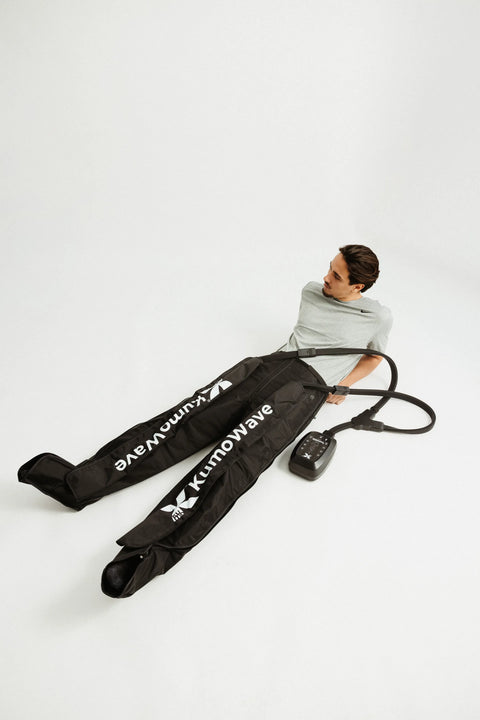
KumoWave Elite – Pressotherapy Pants
Full-coverage trousers. Ideal for lipedema, fluid retention and intensive use.
€799,00 €999,00
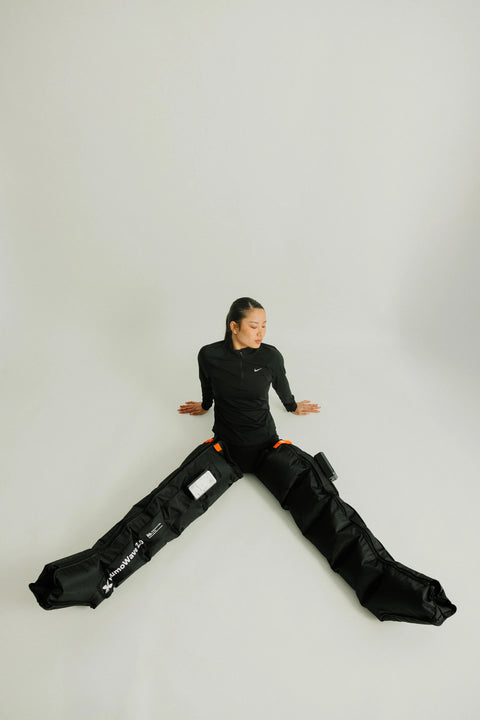
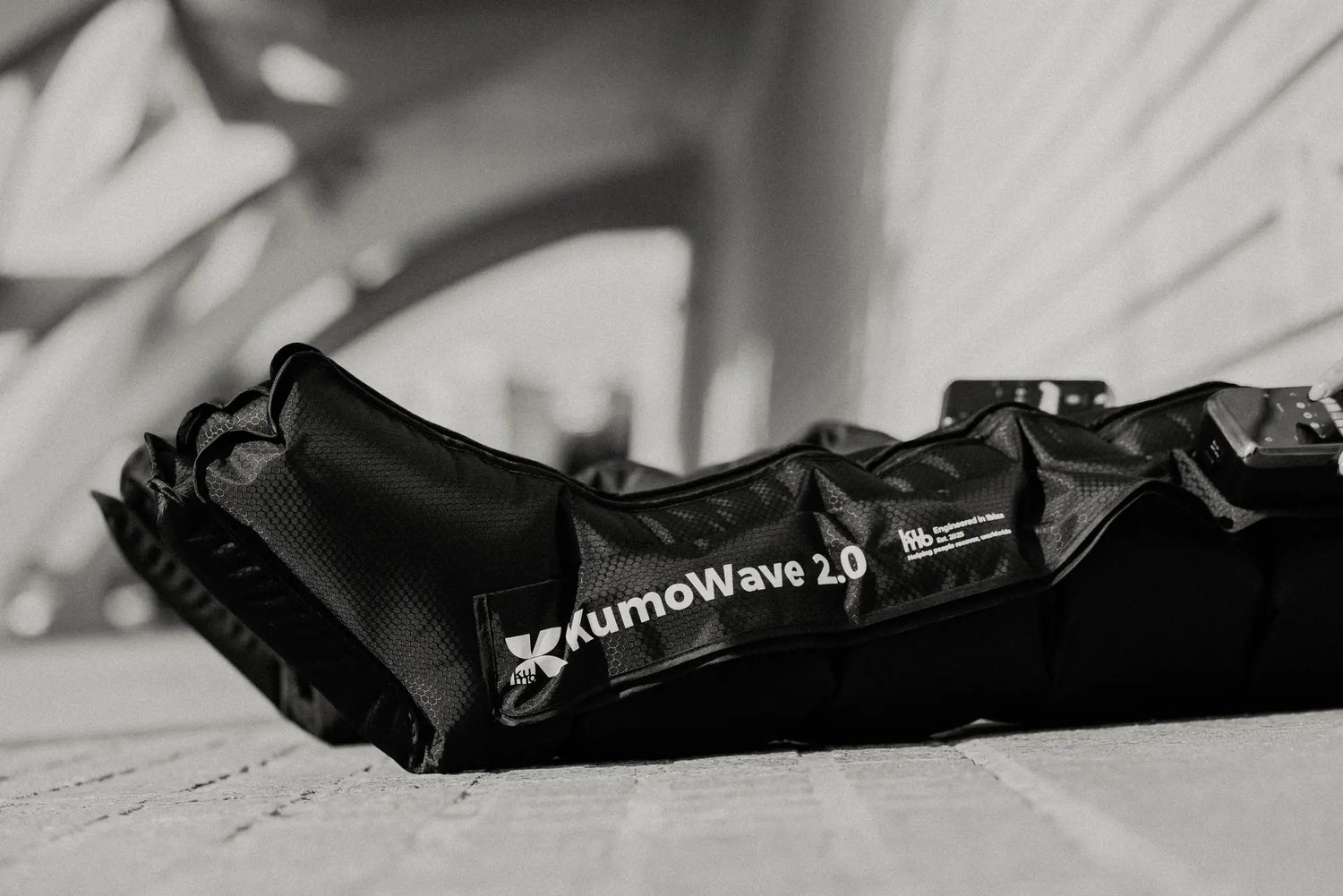
KumoWave 2.0 - Wireless Pressotherapy
Wireless, lightweight boots. Perfect for daily use and recovery.
€499,00 €599,00