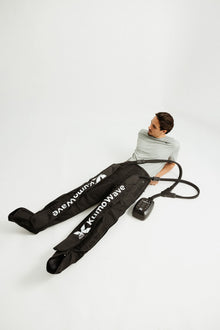
Pressotherapy can make a difference when your legs feel heavy.
If your goal is to support venous return (blood flowing from your legs back to your heart), the key is to combine simple habits—movement, elevation, and compression—with tools like intermittent pneumatic compression (pressotherapy). In this article, you’ll learn how it works, what the evidence says, and how to sensibly integrate it into your routine with Kumo’s recovery ecosystem. (my.clevelandclinic.org)
Pressotherapy at home
End the day with light legs
★★★★★ 4,8/5 · rated by verified customers
KumoWave pressotherapy boosts circulation and helps drain fluid with sequential compression, in 20-minute sessions at home.
- Boosts circulation and helps drain fluid
- Chamber-based compression, adjustable to you
- Sequential compression that mimics manual drainage
€799,00€999,00
−10% on your 1st order when you subscribe to the newsletter

What is venous return and why does it get "stuck" in the legs?
Venous valves + muscle pump: the duo that "deflates" you
In the legs, blood must travel upwards against gravity. To achieve this, the body relies on:
- Valves inside the veins, which help prevent "backflow."
- Muscle contractions (especially of the calf and ankle), which act as a natural "pump."
When the valves don't function properly or you spend many hours sitting/standing, blood can accumulate and increase pressure in the veins, leading to symptoms like heaviness and swelling. (hopkinsmedicine.org)
Personalized protocol · included with your purchase
Want us to tell you how to use it in your case?
With your purchase, our experts prepare a personalized usage protocol for your case: sport, circulation, fluid retention, pregnancy or lipedema.
Message us on WhatsAppOur experts reply · no obligation
Common signs of slow venous return (and why they matter)
Some typical signs (especially at the end of the day) include:
- Heaviness, tiredness, or diffuse pain in the legs.
- Swelling in the ankles or calves.
- Itching, tightness, or cramps.
- New or more visible varicose veins.
- Skin discoloration changes (closer to the ankle) in more advanced cases.
If these symptoms are recurrent, it’s advisable to discuss them with a healthcare professional to rule out venous insufficiency or other causes of edema. (hopkinsmedicine.org)
Relevant fact: it's more common than it seems
In the United States, a 2020 review study indicated that chronic venous insufficiency affects 25 million adults and that nearly 6 million have advanced disease; additionally, the annual cost of caring for venous ulcers was estimated at $3 billion and a loss of 2 million workdays per year. (These figures are estimates and may vary depending on definition and population). (pmc.ncbi.nlm.nih.gov)
on your first order when you join the newsletter
We send you the code instantly. No spam.
Warning signs: when not to wait
Seek urgent medical attention if any of these scenarios appear:
- Marked swelling in one single leg, local warmth, and pain (possible deep vein thrombosis).
- Sudden shortness of breath, chest pain, or coughing up blood (possible pulmonary embolism).
- Wounds that don't heal, discharge, or signs of skin infection.
Pressotherapy and compression stockings are tools, but they do not replace a diagnosis when there are worrying symptoms. (my.clevelandclinic.org)
Pressotherapy (intermittent pneumatic compression): how it really works
The principle: inflation, deflation, and sequential compression
Pressotherapy is based on intermittent pneumatic compression (IPC): air chambers inflate and deflate cyclically, creating a pressure pattern that "pushes" fluids upwards. In a clinical setting, Cleveland Clinic describes inflation cycles every 20 to 60 seconds, with a sensation similar to a leg massage. (my.clevelandclinic.org)
In simple terms, the aim is to:
- Reduce stasis ("stagnant" blood) associated with sedentary lifestyle or immobility.
- Support venous and, in some cases, lymphatic flow (swelling).
What the evidence shows (and how to interpret it without exaggeration)
Most solid research on IPC comes from the healthcare field (prevention of hospital-acquired and postoperative thrombi). Even so, it helps to understand the mechanism:
- Venous hemodynamics: In a crossover study (1997) with healthy volunteers, IPC increased peak velocity and flow in the common femoral vein, showing that compression can measurably increase venous return. (pubmed.ncbi.nlm.nih.gov)
- Reduction of thrombosis in surgery (clinical context): A randomized trial published in JAMA (1990) observed deep vein thrombosis by venography in 49% of the control group vs 24% with intermittent compression; it also reduced proximal thrombosis (27% vs 14%). (pubmed.ncbi.nlm.nih.gov)
- Meta-analysis (gynecological surgery): A systematic review and meta-analysis (2017 article) found that IPC reduced the risk of DVT compared to control with an RR = 0.33 (95% CI 0.16–0.66). (pubmed.ncbi.nlm.nih.gov)
Important: These data do not mean that wellness pressotherapy boots "prevent thrombi" by themselves in everyone. Thrombosis prevention is a medical issue and depends on individual risk.
What clinical guidelines say (to understand the place of IPC)
Guidelines recognize IPC as part of the compression and prevention arsenal in specific profiles:
- The NICE NG89 guideline on reducing the risk of venous thromboembolism includes intermittent pneumatic compression in hospital recommendations (published 2018, with 2019 amendments; versions with later editorial updates). (nice.org.uk)
- The 2022 guidelines of the European Society for Vascular Surgery (ESVS) include IPC within compression modalities and state that exercise should be considered to reduce venous symptoms; they also mention that adjuvant IPC may be considered in post-thrombotic syndrome to reduce severity. (esvs.org)
Pressotherapy vs. compression stockings: they are not the same
Both apply pressure, but with different approaches:
- Compression stockings: constant (graduated) pressure, useful during the day (work, travel, standing).
- Pressotherapy: intermittent pressure, usually in sessions (for example, when arriving home or after training).
In practice, many people combine them: stockings for "maintenance" during the day, pressotherapy for "resetting" at specific times.
Practical table: strategies that best support venous return
| Leverage | What it does | Simple example | When it usually helps most |
|---|---|---|---|
| Movement | Activates the muscle pump (calf/ankle) and reduces stasis. | Walk 5–10 min, climb stairs, "tiptoes" 30 repetitions. | After many hours sitting/standing. |
| Elevation | Decreases the effect of gravity and accumulation in the ankles. | Lie down with legs elevated (above heart level). | At the end of the day or when there is swelling. |
| Elastic compression | Supports venous return during prolonged activities. | Graduated stockings (ideally recommended by a professional if there is a pathology). | Standing work, office, long trips. |
| Pressotherapy (IPC) | Intermittent compression that promotes flow during a session. | Short, comfortable session at home, following device instructions. | Recovery, tired legs, post-travel routine. |
| Habit hygiene | Reduces factors that worsen edema (e.g., excess salt) and improves tolerance. | Hydrate, moderate sodium, active breaks. | If swelling is recurrent due to lifestyle. |
The most robust approach is usually a constant "mix" (habits) + specific intervention (pressotherapy) when needed.
How to support venous return in daily life (without relying on a session)
The "3E" method: exercise, elevation, and compression
A very useful summary comes from UC Davis Health: conservative treatment of venous insufficiency, when needed, focuses on the three Es: Exercise, Elevation, Elastic compression. (health.ucdavis.edu)
Micro-habits when you can't move much
- Long trips or meetings: flex and extend feet/ankles for ~5 minutes every 30 minutes to maintain flow. (wsh.nhs.uk)
- Office: stand up and walk every 60–90 minutes whenever you can.
- Upon arriving home: 10 minutes of elevation before dinner can "reduce" the feeling of heavy legs.
Simple exercises to activate the calf "pump" (2–4 minutes)
- Heel raises (standing): 2 sets of 15–25 repetitions.
- Toe-to-heel alternating support: 60–90 seconds.
- Ankle mobility sitting: "draw circles" with each foot for 30 seconds.
- Mini walk (if you can): 3–8 minutes at a comfortable pace.
These actions are especially useful if your job requires you to stay still for long periods.
Hydration and salt: two factors that show in the ankles
In an informative interview, the American Medical Association emphasizes the importance of habits like hydration and monitoring sodium to prevent fluid accumulation due to gravity. Keep in mind that specific figures (for example, daily targets) should be adapted to your context (blood pressure, kidney, medication). (ama-assn.org)
Key idea: if "circulation complains," there is almost always a part of the solution in frequent movement and reducing prolonged immobility.
Practical guide: integrating Kumo pressotherapy boots into your routine
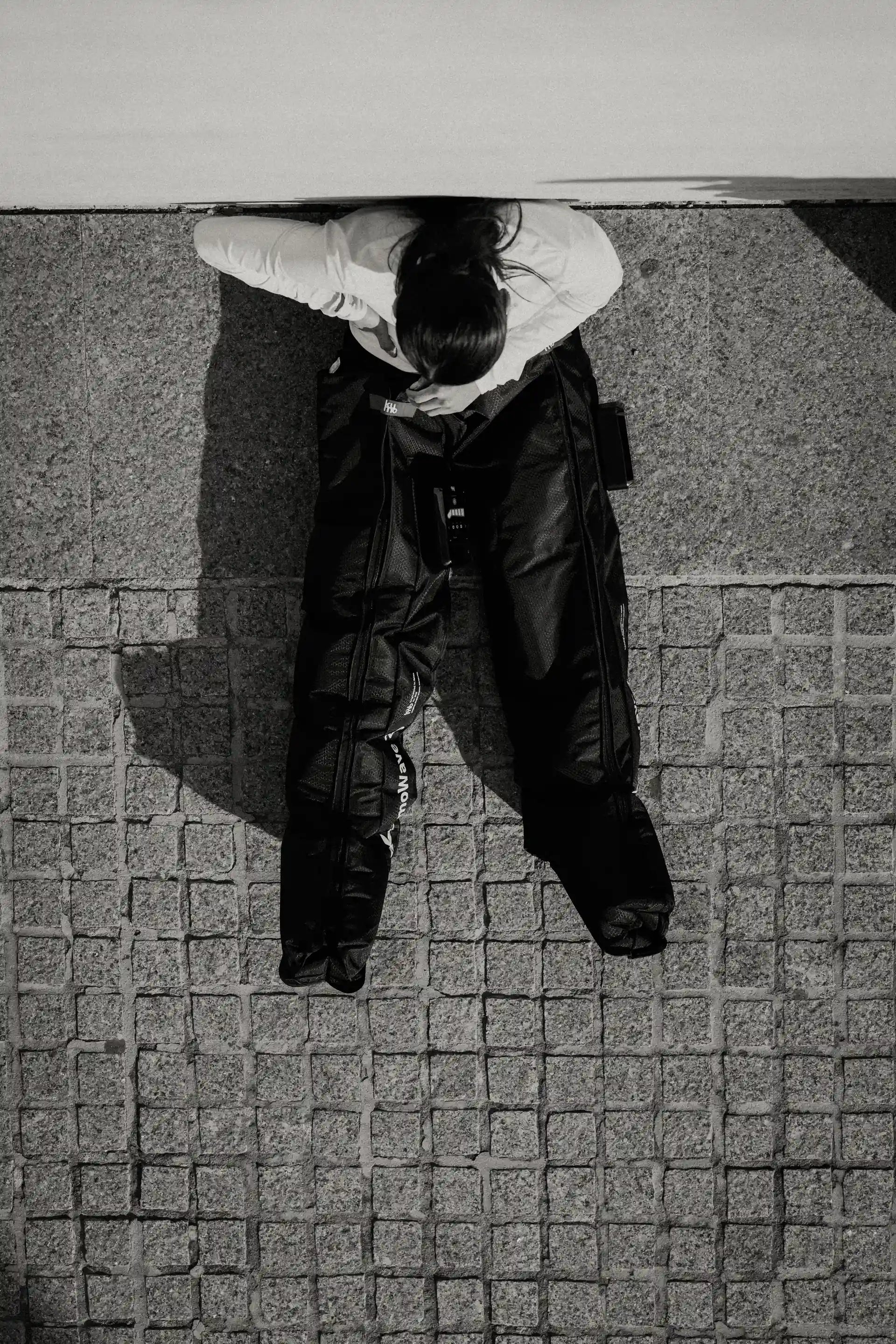
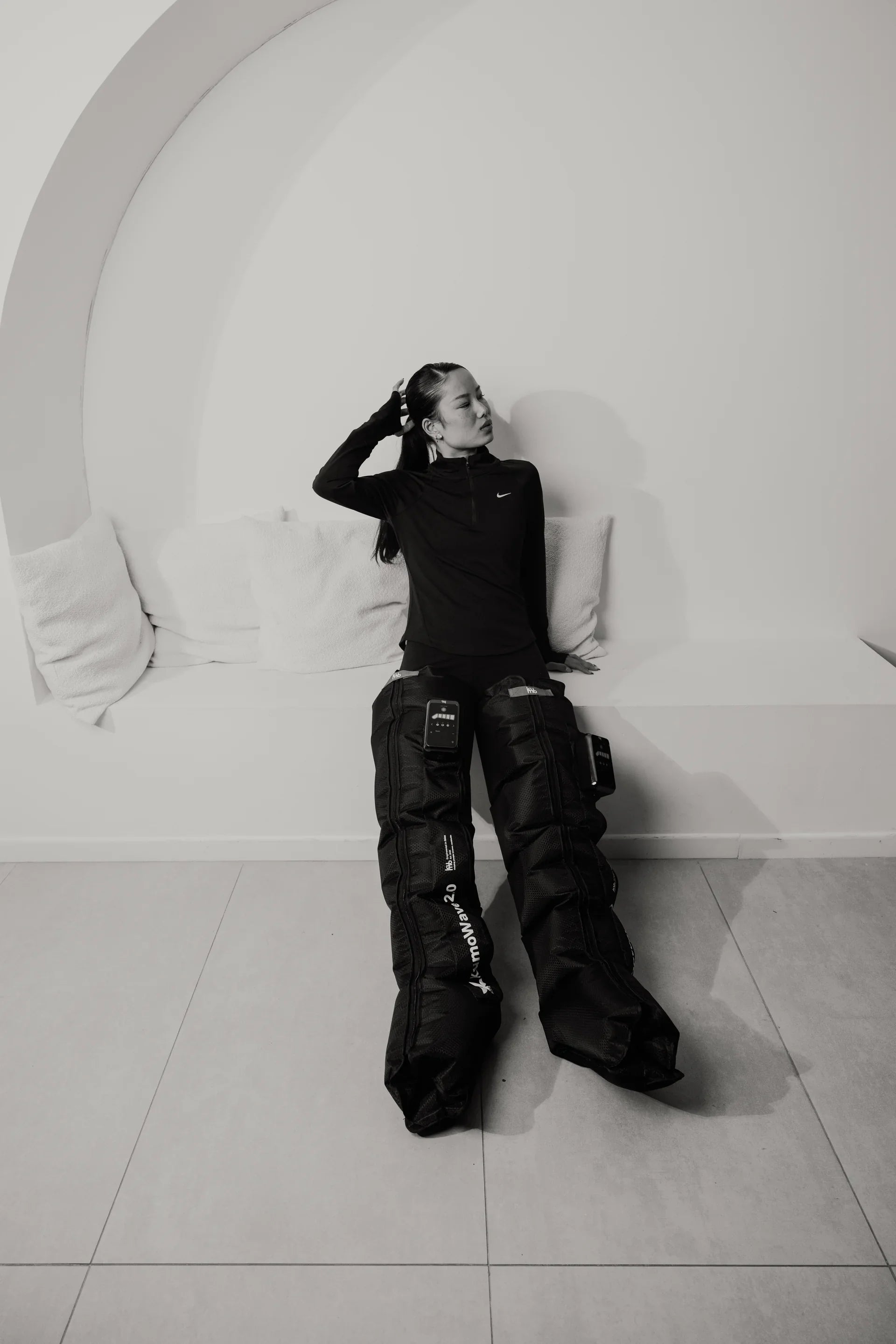
At Kumo, we approach recovery as a sustainable routine: technology, aesthetics, and performance. If you're looking for a solution focused on tired legs and circulatory activation, you can check out Kumo's pressotherapy boots collection.
When a session usually fits best (real examples)
- After work (especially if you spent the day standing or sitting): to "reset" the feeling of heaviness.
- Post-travel (car, train, flight): as part of your discharge routine upon arrival.
- Post-workout: as a complement to cool-down (after a gentle walk and rehydration).
Duration and intensity: the "start gentle and listen to your legs" rule
As a conservative wellness guideline (not medical):
- First week: short sessions and low/medium pressure to assess tolerance.
- Progression: gradually increase duration or intensity, prioritizing comfort.
- Stop signal: pain, numbness, marked tingling, or worsening swelling.
In a clinical setting, IPC is applied with parameters defined by professionals; at home, your reference should always be the device manual and, if there is venous pathology, your doctor's indication. (my.clevelandclinic.org)
Good practices that enhance the experience
- Before: 3–5 minutes of ankle mobility or a short walk.
- During: comfortable posture, no crossed legs, and calm breathing.
- After: 5 minutes of elevation and a glass of water (if appropriate for hydration).
Contraindications and precautions (very important)
There are situations where intermittent pneumatic compression may be contraindicated or require supervision. For example, a HIQA assessment mentions as contraindications: phlebitis, cellulitis, osteomyelitis, congestive heart failure, suspected deep vein thrombosis or pulmonary embolism, and acute thromboembolic ischemia. (hiqa.ie)
Additionally, if you have a vascular diagnosis, edema of uncertain cause, active wounds, recent unilateral pain, or are pregnant/postpartum, it is prudent to consult before using pressotherapy. For specific questions, you can write to Kumo contact and, in parallel, confirm with your healthcare professional.
Kumo and holistic recovery: how to combine pressotherapy with other technologies
One advantage of approaching recovery as a habit is that you can combine stimuli with different objectives:
- Pressotherapy for a feeling of lightness and leg relief: view Kumo pressotherapy.
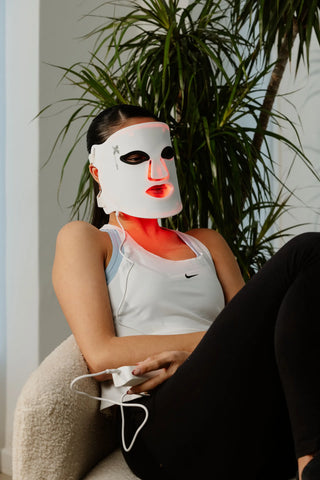
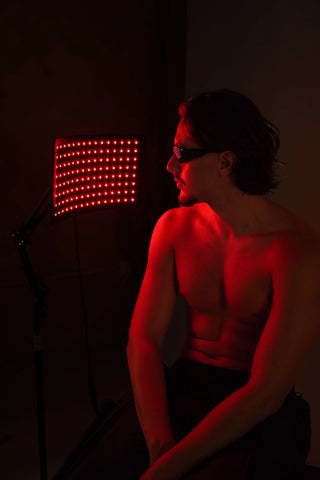
- LED light therapy (e.g., red light) as part of your recovery and rest ritual: explore Kumo LED therapy.
- Percussive massage to release muscle tension: KumoPulse Air.
Suggested order (wellness/recovery): simple and logical
- Mobility (2–5 min) to activate the muscle pump.
- Massage (optional) if you notice localized overload (calf, soleus).
- Pressotherapy for overall leg relief.
- Red/LED light as a relaxing finish (if it's part of your nightly routine).
FAQ: pressotherapy, venous return, and Kumo
How often should I use Kumo pressotherapy boots for tired legs?
It depends on your lifestyle and how your legs respond. As a prudent wellness approach, many people start with short sessions several days a week and adjust based on feelings of lightness, rest, and tolerance. If you've had long days sitting/standing, it might fit at the end of the day; if you're an athlete, it can work after your cool-down. If you have a diagnosed venous condition (symptomatic varicose veins, significant edema, history of thrombosis), prioritize medical guidance. You can see options at Kumo pressotherapy.
Does Kumo pressotherapy replace compression stockings for venous return?
They are not usually equivalent. Stockings apply graduated compression for hours (for example, work and travel), while pressotherapy acts in "session blocks" with intermittent compression. In many routines, they complement each other: stockings for the day and pressotherapy for relief when you get home. If there is diagnosed venous insufficiency, elastic compression and an exercise/elevation plan are among the most common conservative approaches. If in doubt, consult a professional and use pressotherapy as support, not as an absolute substitute.
Can I combine Kumo pressotherapy and LED light therapy in the same routine?
Yes, it is usually a comfortable combination because they work on different objectives within recovery: pressotherapy focuses on a feeling of relief in the legs, while light (e.g., red) is usually integrated into muscle recovery and rest rituals. A common sequence is: gentle mobility → pressotherapy → LED light at a relaxing moment. If your priority is to sleep better, do the more "active" part (pressotherapy) earlier and use light as a close. You can find more information in the LED therapy collection.
What should I do if I experience more swelling or discomfort with pressotherapy?
The first thing is to stop the session and check the settings: too high pressure, too long a session, or an unsuitable posture can worsen the sensation. Restart with lower intensity and shorter sessions. If there is pain, local heat, noticeable redness, or marked swelling in only one leg, do not attribute it to "recovery": it is advisable to rule out medical causes. In general, intermittent pneumatic compression has contraindications in certain conditions (for example, suspected DVT/PE or heart failure). If you need guidance on use and sensations, write to Kumo. (hiqa.ie)
Is Kumo pressotherapy suitable for "venous return" if I work sitting all day?
It can be a useful support as part of a broader strategy, especially if your main problem is prolonged immobility. Even so, the most decisive factor is usually to introduce micro-movements: getting up every so often, flexing and extending your ankles, and walking for a few minutes. An NHS information sheet recommends moving your feet and ankles regularly for a few minutes when you have to sit for a long time. Use pressotherapy as a "closer" at the end of the day, and not as a replacement for movement. (wsh.nhs.uk)
What now?
If you want to turn recovery into a habit, explore the Kumo universe and, in particular, our Kumo pressotherapy boots to support the feeling of lightness in your legs. And if you have questions about use, compatibilities, or precautions, you can contact us here: contact page.
KumoWave pressotherapy
Choose your at-home pressotherapy
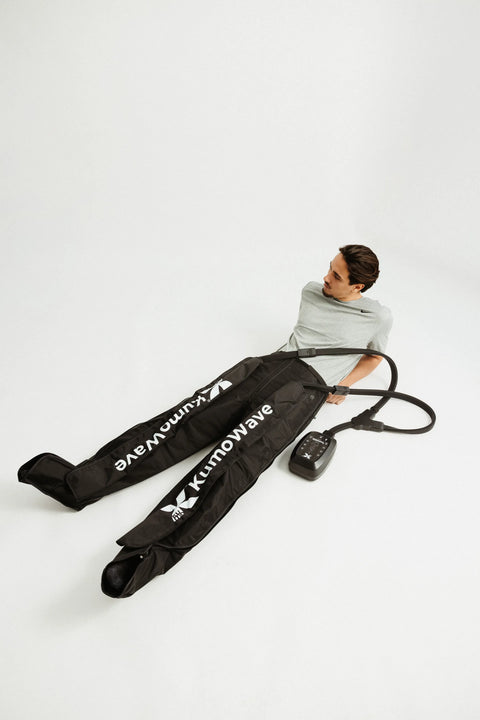
KumoWave Elite – Pressotherapy Pants
Full-coverage trousers. Ideal for lipedema, fluid retention and intensive use.
€799,00 €999,00
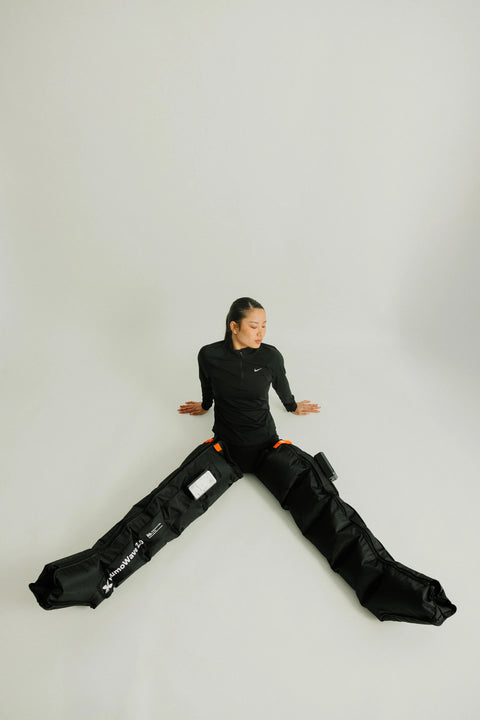
KumoWave 2.0 - Wireless Pressotherapy
Wireless, lightweight boots. Perfect for daily use and recovery.
€499,00 €599,00