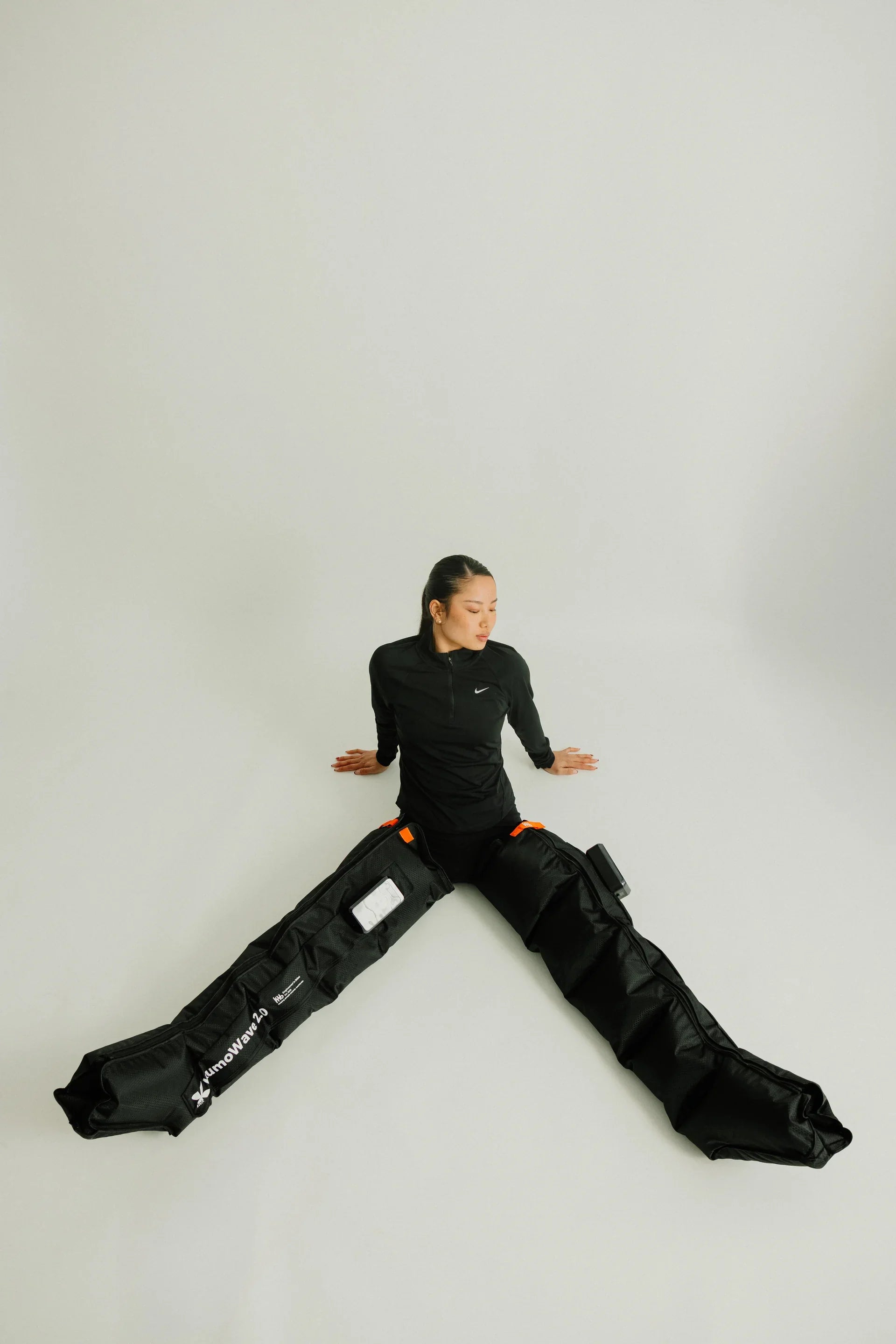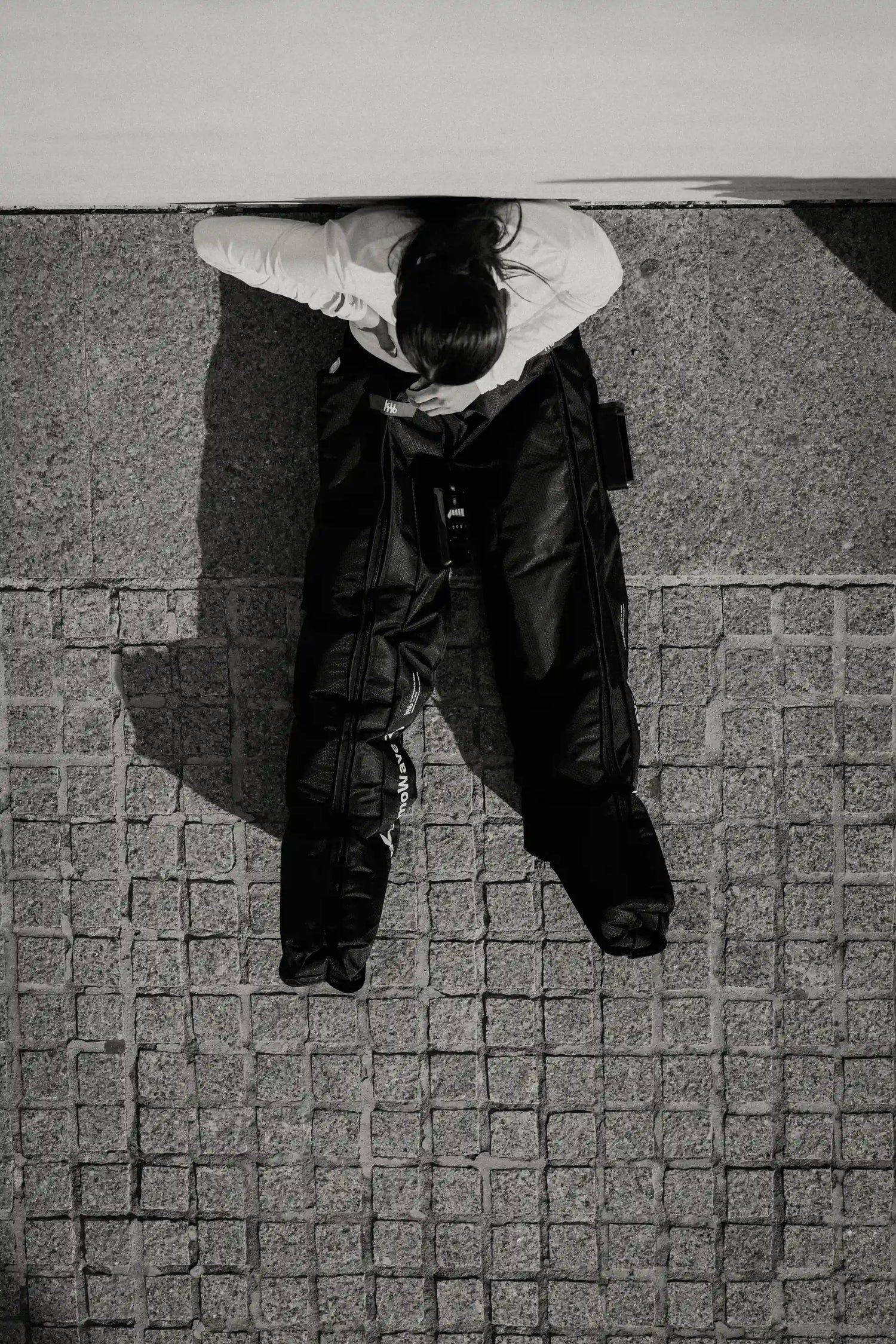
Heavy legs after playing padel.
Pressotherapy (also called intermittent pneumatic compression) can be a practical way to relieve the feeling of heaviness in your legs and calves in a short session—for example, 20 minutes—when used judiciously and as a complement to the basics (hydration, sleep, mobility). (pmc.ncbi.nlm.nih.gov)
Pressotherapy at home
End the day with light legs
★★★★★ 4,8/5 · rated by verified customers
KumoWave pressotherapy boosts circulation and helps drain fluid with sequential compression, in 20-minute sessions at home.
- Boosts circulation and helps drain fluid
- Chamber-based compression, adjustable to you
- Sequential compression that mimics manual drainage
€799,00€999,00
−10% on your 1st order when you subscribe to the newsletter

In this guide, I'll explain how it works, what the scientific evidence says about sports recovery, and how to integrate it into your padel routine with Kumo's premium recovery approach.
Why padel leaves your legs feeling "heavy" (and it's not just fatigue)
Sustained intensity that takes its toll
Padel combines repeated actions (starts, stops, changes of direction, short jumps) with brief pauses. Studies analyzing internal load show that intensity typically hovers around 70%–80% of maximum heart rate, varying by level and competitive context. (pmc.ncbi.nlm.nih.gov)
Personalized protocol · included with your purchase
Want us to tell you how to use it in your case?
With your purchase, our experts prepare a personalized usage protocol for your case: sport, circulation, fluid retention, pregnancy or lipedema.
Message us on WhatsAppOur experts reply · no obligation
In other reviews on racket sports (including padel), markers such as heart rate and lactate are used to describe effort and adjust training. (pubmed.ncbi.nlm.nih.gov)
What happens in your legs after a match
When you play back-to-back matches or training sessions, it's normal to notice:
- Stiffness in calves, soleus, and quadriceps due to repeated impacts and braking.
- A feeling of "heavy legs" due to accumulated fatigue and, in some people, slight transient swelling.
- DOMS (Delayed Onset Muscle Soreness) which is usually most intense 24–48 hours after exertion.
This is where many people seek tools that improve the sensation of recovery, even if it doesn't always translate into direct performance improvements on court. (pmc.ncbi.nlm.nih.gov)
on your first order when you join the newsletter
We send you the code instantly. No spam.
What pressotherapy is and how it works
Pressotherapy is performed with boots or sleeves that inflate and deflate in cycles, applying intermittent pressure. In healthcare, these devices are used to support circulation and help prevent clots in situations of immobility, through a mechanical effect that propels venous blood flow toward the heart. (hopkinsmedicine.org)
According to Cleveland Clinic, the sensation is often described as a leg massage, with inflation/deflation cycles at intervals of tens of seconds. (my.clevelandclinic.org)
For athletes, the goal is not to "treat" an illness, but to seek effects such as:
- Improved post-match comfort (looser legs).
- Reduced perceived pain/soreness the next day in some cases.
- Support for those with high training volume (tournaments, double sessions).
In a review on pneumatic compression in sports recovery, "subjective parameters appeared to benefit the most." (pmc.ncbi.nlm.nih.gov)
Does it work for recovery after padel? What the evidence says (without hype)
The evidence on pressotherapy/IPC in sports recovery is extensive but heterogeneous (different sports, protocols, pressures, durations, and metrics). A systematic review and meta-analysis focusing on lower limb IPC as a recovery tool concluded that benefits tend to be small and appear more clearly in subjective measures (pain/sensation of recovery) than in physiological markers or performance. (pmc.ncbi.nlm.nih.gov)
A key point to manage expectations: studies use very varied protocols, with approximate durations of 15 to 60 minutes and pressures ranging from 60 mmHg to much higher values (in some protocols, >200 mmHg). (pmc.ncbi.nlm.nih.gov)
Regarding the "quick format," the same review indicates that there is preliminary evidence that a single session of 20–30 minutes may be sufficient to observe immediate or short-term benefits in certain contexts (especially in perceived fatigue/pain), though it's not a universal guarantee. (pmc.ncbi.nlm.nih.gov)
Furthermore, it's worth remembering that not all trials find an effect: for example, a randomized placebo-controlled trial (2026) in youth football with a 30-minute session of high-pressure IPC did not observe improvements compared to placebo in neuromuscular, biochemical, or perceptual markers. This reinforces the idea that the response depends on the context, protocol, and placebo effect/expectations. (pubmed.ncbi.nlm.nih.gov)
20-minute routine for padel: lighter legs without complications
If your main goal is to feel better (less heaviness, more comfort) after padel, a short session can fit very well. The key is to make it simple, consistent, and safe. (pmc.ncbi.nlm.nih.gov)
- 2–3 minutes cool-down: gentle walking and nasal breathing to lower your heart rate.
- Water + electrolytes if you sweat a lot: "heavy legs" worsen when you're dehydrated.
- Slightly elevate your legs (if comfortable) and put on the boots.
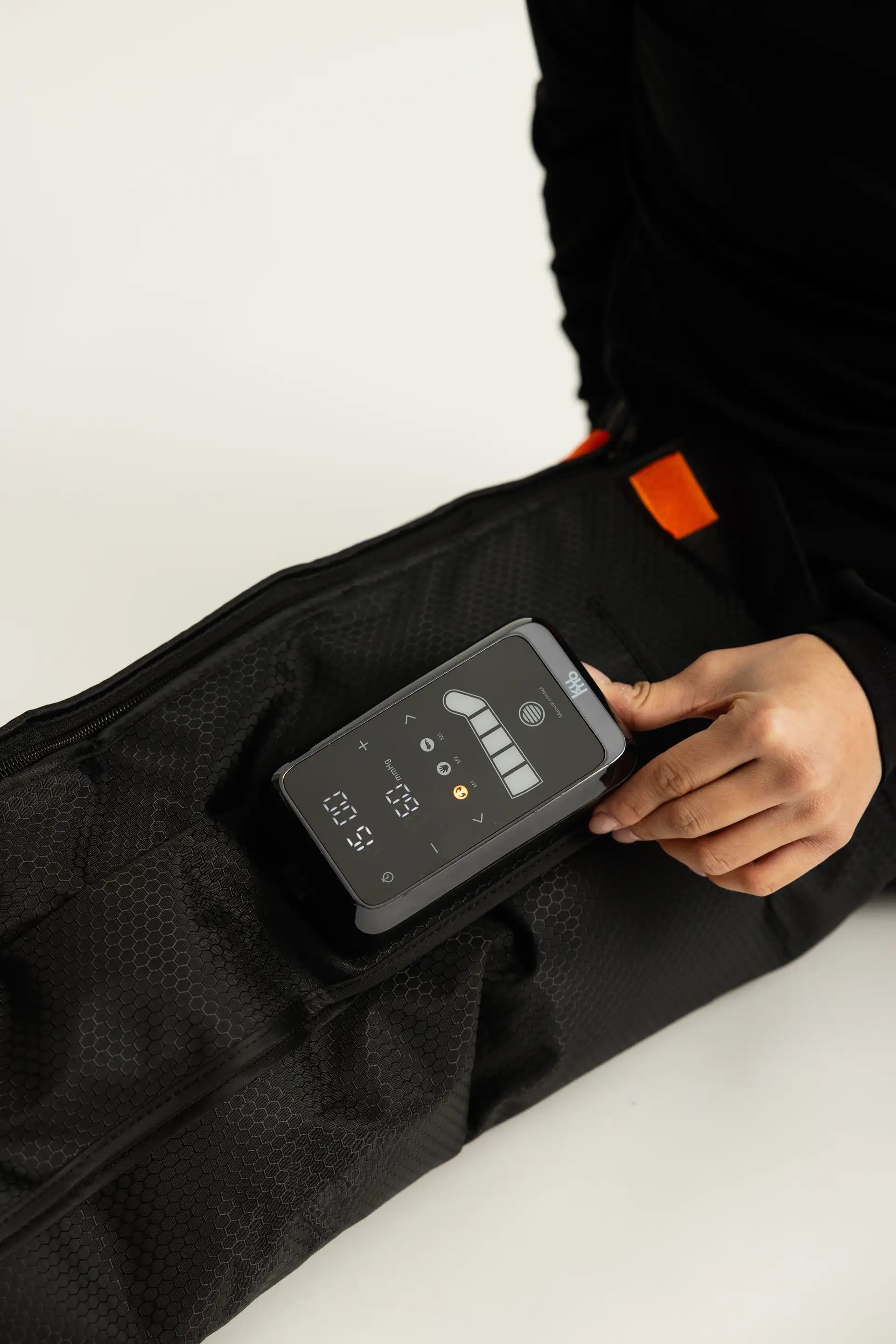
- 20 minutes of pressotherapy: start conservatively (low/moderate intensity) and prioritize comfort; it should not cause pain or numbness.
- 1 final minute: afterwards, walk a bit and do 10–15 slow calf raises.
Important: there is no universal "perfect mmHg." In sports research, there is enormous variability in pressures and durations; therefore, at home, it is usually sensible to start gently and gradually increase according to tolerance, always following the device's instructions. (pmc.ncbi.nlm.nih.gov)
Table: Express Pressotherapy Protocol (20 minutes) for Padel Players
| Minutes | What to do | Goal | Sign of good progress |
|---|---|---|---|
| 0–2 | Put on the boots and adjust your posture (comfortable, no creases) | Avoid pressure points and improve tolerance | No tingling or "pinching" pressure |
| 2–7 | Gentle/moderate compression | Adaptation | Sensation of rhythmic massage |
| 7–15 | Maintain or go up one level if tolerated well | Post-match comfort | "Looser" legs, relaxed breathing |
| 15–20 | Finish steadily (no need to press to the maximum) | Leave with a feeling of lightness | When you stand up, you notice less stiffness when walking |
How to integrate it into your padel week (training, tournaments, and real life)
Pressotherapy works best when you treat it as a habit, not as a sporadic "miracle solution." Useful ideas:
- After training (late/evening): 15–30 min to reduce the feeling of heaviness; this is a common range in sports protocols, though not the only one. (pmc.ncbi.nlm.nih.gov)
- Between tournament matches: a short session can help you "reset" the sensation in your legs, especially if you can't do a long active recovery.
- Days with prolonged standing or long journeys: in non-sporting contexts, IPC devices are associated with circulatory support in situations of immobility (here the goal is well-being, not performance). (hopkinsmedicine.org)
If you like a "stack" approach to recovery, you can combine it (without overdoing it) with other tools:
- Red light / LED: as a rest and body care routine, you can explore Kumo's LED light therapy (especially useful if your recovery is affected by stress or poor sleep).
- Localized massage: for calves and quadriceps, a massage gun can complement the feeling of release. At Kumo, you have the KumoPulse Air for more targeted work.
Safety and contraindications: when NOT to use pressotherapy
Although compression is generally a widespread technique, it is not "for everyone." In medicine, emphasis is placed on screening for risks and using the device with correct adjustment to avoid complications (skin, pain, excessive pressure). (pmc.ncbi.nlm.nih.gov)
Consult a healthcare professional before using pressotherapy if you have (or suspect) any of these scenarios:
- Known or untreated deep vein thrombosis, or recent history of embolism/thrombophlebitis (some hospital guidelines include this as a contraindication in certain contexts). (wsh.nhs.uk)
- Peripheral arterial disease or relevant vascular problems (increased risk of complications from compression). (hopkinsmedicine.org)
- Decompensated heart failure, active infections, or significant skin lesions in the area (according to compression risk consensus, these are situations to monitor). (pmc.ncbi.nlm.nih.gov)
- Active oncological treatments or specific indications from your medical team (some clinical units consider this). (wsh.nhs.uk)
Warning signs during use: acute pain, numbness, discoloration, persistent tingling, or loss of sensation. In this case, stop the session and check adjustment/intensity; if it persists, consult a professional. (hopkinsmedicine.org)
Kumo Pressotherapy: Recover better to perform (and live) better
At Kumo, we understand recovery as a real part of performance: it's not about "doing less," it's about making it sustainable. That's why we work with high-end wellness technologies to make recovery an easy-to-maintain daily ritual.
If your goal is to support circulation, relieve leg fatigue, and leave the match feeling better, you can check out our pressotherapy boots and build your routine around short, consistent, and well-tolerated sessions (especially during weeks with more padel). (pmc.ncbi.nlm.nih.gov)
For more scientific information (without relying on opinions), here are reliable sources:
- Systematic review and meta-analysis on IPC and sports recovery (PMC). (pmc.ncbi.nlm.nih.gov)
- Mini-review on padel conditional demands (PMC). (pmc.ncbi.nlm.nih.gov)
- What is an IPC device and how it helps venous flow (Johns Hopkins Medicine). (hopkinsmedicine.org)
- International consensus on risks and contraindications of medical compression (PMC). (pmc.ncbi.nlm.nih.gov)
FAQ: Pressotherapy for Padel and Recovery with Kumo
Can I use Kumo pressotherapy boots before playing padel?
If you're looking to "activate" your legs, the most common approach is to prioritize a dynamic warm-up (mobility, movements, calf and glute activation). Pressotherapy before playing can be used by some people as a wellness routine, but it's not intended as a substitute for warming up. Additionally, sports evidence focuses more on post-exercise use and recovery metrics (often subjective). If you use it beforehand, keep intensities low and make sure you don't feel "numb" afterward. (pmc.ncbi.nlm.nih.gov)
When is it better: pressotherapy right after finishing or at night?
It depends on your logistics and your goal. Right after finishing, it can help you transition from "lead legs" to a more comfortable feeling, especially if you've had high volume. At night, it fits well if you want to make it a habit and combine it with adequate hydration, dinner, and sleep. In scientific literature, there's a lot of variability in protocols, but it's described that a single 20-30 minute session can provide benefits in some contexts, especially in perceived recovery/pain. (pmc.ncbi.nlm.nih.gov)
What pressure or intensity should I choose to feel lighter without overdoing it?
There is no single standard: sports studies show very different pressures and disparate results, which makes it impossible to give a universal figure. As a prudent rule at home, start at low or moderate intensity and prioritize comfort (no pain, no tingling, no numbness). If you tolerate it well, gradually increase in successive sessions. Always check that the boot fits well (without creases) to reduce the risk of irritation or discomfort. If you have vascular pathology or a history of thrombosis, consult your doctor beforehand. (pmc.ncbi.nlm.nih.gov)
Can I combine pressotherapy with KumoPulse Air on the same day?
- 5–8 minutes of localized massage with the KumoPulse Air on calves/quadriceps (without insisting on very painful areas) and (
- 15–20 minutes of pressotherapy for a more global feeling of "loose" legs. If you've had a tough match, less is often more: aim to feel better, not to "overdo it" with recovery. And if unusual pain, tingling, or persistent discomfort appears, reduce intensity or rest. (pmc.ncbi.nlm.nih.gov)
Is pressotherapy safe if I have varicose veins or a history of thrombosis?
With varicose veins, each case is different; with a history of thrombosis, greater caution is needed. In clinical settings, there are contraindications and situations that require supervision (e.g., untreated or recent thrombosis, certain vascular problems, or fragile skin). The responsible approach is to consult your doctor/physiotherapist before using pneumatic compression boots at home, especially if there is pain, asymmetric swelling, local heat, or changes in color. Safety also depends on correct fitting and not using excessive pressures. (wsh.nhs.uk)
What now?
If you want to make recovery a habit and not just a "patch" when you're already worn out, start with something simple: a short, consistent session, and tools that make you want to use them. Discover Kumo's pressotherapy for your legs, explore LED therapy as global support, and if you need help choosing your routine, you can contact our team.
KumoWave pressotherapy
Choose your at-home pressotherapy
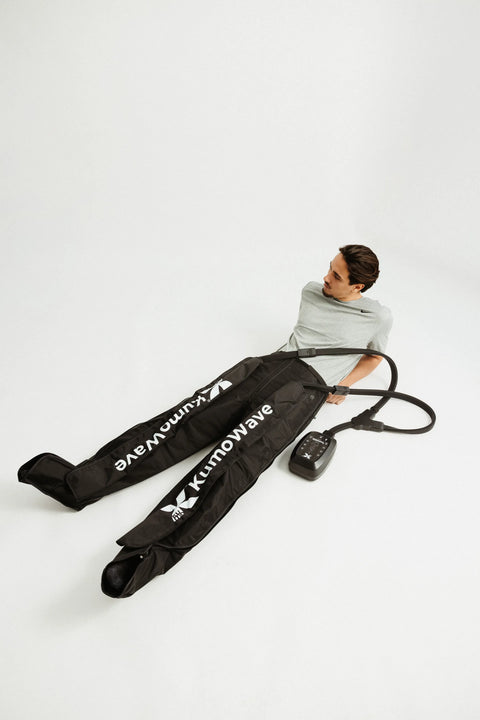
KumoWave Elite – Pressotherapy Pants
Full-coverage trousers. Ideal for lipedema, fluid retention and intensive use.
€799,00 €999,00

KumoWave 2.0 - Wireless Pressotherapy
Wireless, lightweight boots. Perfect for daily use and recovery.
€499,00 €599,00