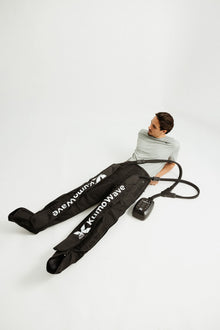

Downhills leave your legs "trashed."
In trail running, descents cause a large part of the muscle damage (especially in the quadriceps and tibialis anterior) due to eccentric loading, which translates into heaviness, stiffness, and muscle soreness that can last for several days. In this guide, you will learn how presotherapy (intermittent pneumatic compression) fits into "unloading" after descents, what the evidence says, and how to apply it practically and safely with Kumo's recovery approach.
Pressotherapy at home
End the day with light legs
★★★★★ 4,8/5 · rated by verified customers
KumoWave pressotherapy boosts circulation and helps drain fluid with sequential compression, in 20-minute sessions at home.
- Boosts circulation and helps drain fluid
- Chamber-based compression, adjustable to you
- Sequential compression that mimics manual drainage
€799,00€999,00
−10% on your 1st order when you subscribe to the newsletter

If you want to see brand options, you can start with the official Kumo website.
Why downhills are so punishing (and why you feel it 24–72 hours later)
The key: eccentric contractions and muscle damage
When running downhill, you brake with each stride: the muscle lengthens while producing tension (eccentric contraction). This pattern is very effective at "destroying" fibers and generating exercise-induced muscle damage.
Personalized protocol · included with your purchase
Want us to tell you how to use it in your case?
With your purchase, our experts prepare a personalized usage protocol for your case: sport, circulation, fluid retention, pregnancy or lipedema.
Message us on WhatsAppOur experts reply · no obligation
In a 2022 study with trail runners, a controlled descent of 5 km at a 15% gradient elevated markers of muscle damage (such as creatine kinase and myoglobin) and showed that those who regularly trained downhills had a "milder" response: for example, average CK 182 ± 73 U/L versus 290 ± 192 U/L in those who did not regularly do downhill repetitions.
What usually happens in the body after a downhill session
Research on downhill running observes a typical combination:
- Increased pain/soreness and feeling of stiffness.
- Local inflammation and, in some cases, swelling (feeling of "heavy legs").
- Transient drop in strength and neuromuscular performance.
For example, a study on downhill running (30 min at -20% on a treadmill) observed that variables such as isometric strength, CK, quadriceps swelling, and pain sensation increased and, overall, tended to resolve around 4 days after the stimulus.
on your first order when you join the newsletter
We send you the code instantly. No spam.
In ultras, markers can skyrocket (without "always" being pathological)
In very long distances and with a lot of elevation gain, some biomarkers can rise significantly. An open-access review on ultramarathon physiology collects data where, after a 161 km trail ultramarathon (Western States), post-race CK values of around ~17,965 U/L have been reported (with wide distribution depending on the runner and conditions). This does not mean that "everyone has rhabdomyolysis," but it does help to understand why downhills and volume generate such a feeling of muscle destruction.
What is presotherapy (intermittent pneumatic compression) and what does it aim to achieve
What it does mechanically
Sports presotherapy is usually based on intermittent pneumatic compression (IPC) using boots with chambers that inflate and deflate sequentially. In the clinical setting, IPC is used to promote venous flow and reduce stagnation (for example, as part of thrombosis prevention strategies in hospital settings). In simple terms: it squeezes and releases to aid return and the feeling of "drainage."
What it can contribute to trail running (without promising miracles)
In sports recovery, the realistic goal is usually not to "repair" the muscle in minutes, but to:
- Improve the perception of heavy legs (pain/soreness/heaviness).
- Reduce the feeling of swelling after many hours of impact and elevation changes.
- Facilitate subjective recovery when you need to walk, travel, or even train lightly the next day.
Useful tip for trail running: Presotherapy does not replace sleep, nutrition, and load progression; it works best as a complement to improve sensations after tough descents.
What the evidence says about presotherapy/IPC in sports recovery
Most consistent: improvement in pain/soreness (moderate at times)
An open-access systematic review and meta-analysis (2024) on lower-limb IPC in sports recovery concluded that:
- For pain and muscle soreness, the effect can range from trivial to moderate, with significant results at some time points (e.g., in the first 0–2 h post-exercise, SMD 0.486).
- For muscle function/performance, the effects tend to be small and often not significant (e.g., in 0–2 h, SMD 0.243 with an interval that crosses zero).
- Muscle damage markers such as CK show variable and inconclusive results.
Protocols used in studies: 20–30 min and pressure around 80 mmHg (as a trend)
In that same review (2024), the authors point out that the most commonly used protocols are usually in the range of 20–30 minutes and pressures "around 80 mmHg" (note: individual tolerance matters and devices vary).
In real racing (ultra): immediate subjective benefit, but not a "cure" at 7 days
A randomized controlled trial (2015, published in 2016) in 161 km runners compared 20 minutes post-finish line of massage, sequential pneumatic compression, or rest. Pneumatic compression showed immediate improvement in perceived muscle fatigue compared to rest, but no relevant differences were observed between groups in functional or subjective measures from day 1 to 7.
In lab-induced DOMS: signals in favor (but depends on design)
- with DOMS induced by plyometrics, a 15-minute repeated IPC protocol (immediate and at 24/48/72 h) was associated with improvements in pain (VAS) and muscle parameters, with differences especially visible around 48–72 h. In another placebo-controlled trial (published in
- with a damage protocol from flywheel squats, IPC showed a trend towards lower perceived pain, but no clear improvements in neuromuscular performance compared to placebo
Practical conclusion: if you're looking for "unloading" after downhills, presotherapy makes more sense for sensations (pain/stiffness/heaviness) than for promising large and consistent performance improvements the next day.
How to use presotherapy after downhills: practical guide (trail-friendly)
When to use it: three windows that usually work well
- Window 1 (0–2 h post-descent or post-training): to reduce the feeling of congestion and "heavy legs," especially if you have accumulated a lot of technical downhill.
- Window 2 (evening/night): when you have already eaten, hydrated, and want to go to bed with less heaviness.
- Window 3 (day +1): to manage soreness when going down stairs, walking, or before a light run.
Duration: less is more (if you do it consistently)
As a reference based on common research protocols, a session of 20–30 minutes fits well as an "effective minimum" for many runners. In specific contexts, sessions of 15–20 minutes have also been used (especially post-exertion or repeated over several days).
Intensity/pressure: prioritize comfort and safety
Without knowing your exact device, the rule is simple: firm pressure, not painful. Avoid:
- Tingling or numbness.
- Stabbing pain.
- Intense marks that last too long.
- Worsening of localized inflammation or "strange" (non-muscular) pain.
Table of practical protocols for "unloading" after downhills
Indicative presotherapy protocols for trail running (downhills specific)
| Situation | Objective | Timing | Duration | Recommended Intensity | Key Complement |
|---|---|---|---|---|---|
| Training with a lot of downhill (e.g., 600–1200 m D-) | Alleviate heaviness and stiffness | 0–2 h post | 20–30 min | Low → medium (comfort) | 10 min gentle walk + hydration |
| Long run (2–5 h) with technical descents | General leg "unloading" | Night | 20–30 min | Medium (no pain) | Dinner with carbohydrates + protein + sleep |
| Next day with severe muscle soreness | Improve sensation when moving | Morning or afternoon | 15–20 min | Low | Gentle mobility + light isometrics |
| Multi-stage race or mountain weekend | Better tolerate accumulation | Post-stage | 20 min | Low → medium | Leg elevation 10–15 min |
| Travel after race (car/plane) | Reduce swelling sensation | Before leaving or upon arrival | 20 min | Low | Walking breaks + fluids |
Specific "unloading" after downhills: what else to work on besides presotherapy
1) Quadriceps and tibialis anterior: the duo that suffers the most
In trail running, downhills "bite" the quadriceps (braking) and the tibialis anterior (foot control). If your stairs hurt the next day, that's a clue. Presotherapy can help with the overall feeling of heaviness, but for the muscle to truly adapt, you need:
- Downhill progression (short, controlled repetitions).
- Eccentric strength (squats, lunges, step-downs) dosed.
- Technique: shorter stride and impact control on broken terrain.
2) The "repetition effect" exists: training downhills protects you
Evidence suggests that exposure to downhill running (in a planned way) can create a protective effect against future sessions (less fatigue and better tolerance). This aligns with what is observed in studies where prior downhill exposure reduces neuromuscular impact in subsequent efforts.
3) Combine "mechanical" recovery with "biological" recovery (Kumo approach)
If your goal is to recover better between sessions, presotherapy is one piece. At Kumo, the idea is to make recovery a habit with complementary technologies:
- Presotherapy for circulation and the sensation of relief: see the presotherapy collection.
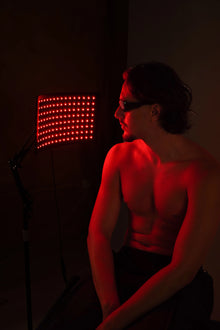
- LED therapy (red light) to support recovery and rest routines: see LED light therapy.
- Massage gun for specific points (calves, soleus, plantar fascia, gluteus medius): see KumoPulse Air.
Safety: when to avoid presotherapy (and warning signs)
Contraindications and precautions (important)
Intermittent pneumatic compression is also used in medicine, and there are described contraindications for certain devices (for example, in regulatory documentation): deep vein thrombosis or suspicion, decompensated heart failure, severe arterial/ischemic disease, processes such as phlebitis, or active infection in the affected limb, among others. Therefore, if you have a history of vascular problems, unexplained edema, or unusual pain, it is prudent to consult a healthcare professional before using presotherapy.
- Useful reference (general explanation of IPC and skin care): Johns Hopkins Medicine on intermittent pneumatic compression devices: IPC and circulation/thrombosis prevention.
- Example of contraindications list in regulatory documentation (FDA, PDF): K160180 (IPC) – contraindications.
Signs to stop and not "force" the session
Stop use and seek guidance if any of the following appear:
- Acute pain (non-muscular), localized heat, or marked redness.
- Asymmetrical swelling (one leg much more than the other) or calf pain to the touch.
- Numbness, loss of sensation, or changes in discoloration.
- Skin lesions or worsening irritation (in clinical settings, skin examination is emphasized).
How Kumo fits into your post-descent routine (without complicating things)
"Simple" routine of 30–45 minutes upon returning home
- 10 min of gentle walking + ankle/hip mobility (lowers "tone" post-impact).
- Food and hydration (prioritize carbohydrates and protein; and salts if you sweated a lot).
- 20–30 min of presotherapy at a comfortable intensity.
- If needed, 2–6 min of massage gun on calves/soleus (without overworking the quadriceps if it's very damaged).
The key is not to do it perfectly one day: it's to repeat it when necessary (especially in blocks with a lot of elevation changes) so that your "recovery" is as trainable as your descents.
FAQ about presotherapy for trail running (Kumo)
Does Kumo presotherapy help with muscle soreness after a long descent?
It can help mainly at the sensation level: less heavy legs, less stiffness, and, in some cases, less perceived pain. In scientific evidence on IPC applied to sports recovery, the most consistent effects usually appear in pain/soreness rather than clear performance improvements. After a long descent, the most useful approach is to combine presotherapy with the basics (hydrate, eat, sleep) and with a progression of strength/downhills to reduce eccentric damage in the future.
How long should I use Kumo presotherapy boots after a trail run?
As a practical reference, a session of 20–30 minutes aligns with many common research protocols and the idea of post-workout "unloading." If you are very fatigued, you can also opt for 15–20 minutes and repeat the next day (at low intensity). The best guide is tolerance: look for firm but comfortable compression, without tingling or pain. Consistency over weeks with a lot of elevation gain usually provides more than a single "very intense" session.
What's better for calves and tibialis after downhills: Kumo presotherapy or KumoPulse Air?
They are not mutually exclusive. Presotherapy is usually more "global" (whole leg) and useful for general heaviness and swelling sensation. A massage gun like KumoPulse Air works very well for localized work: tight calves/soleus, plantar fascia, or tense tibialis anterior. If after downhills you notice very specific points, the combination is usually: presotherapy first (relaxes overall) and then short, controlled percussive massage.
Can I combine presotherapy with Kumo LED light therapy on the same day?
Yes, it is usually a logical combination because they act on different "layers" of your routine. Presotherapy is a mechanical tool aimed at the sensation of relief, and LED light therapy can fit better in quiet moments (for example, at the end of the day) as part of a recovery ritual. If your priority is to sleep better after a race, the practical order is usually: dinner + brief presotherapy + LED in a relaxed environment, and then bed.
When should I NOT use Kumo presotherapy after a trail run?
Avoid it if you have abnormal pain (non-muscular), asymmetrical swelling, marked redness/heat, loss of sensation, or if there is suspicion of a vascular problem. It is also advisable to exercise extreme caution with a history of thrombosis, severe arterial disease, decompensated heart failure, or active infection in the area. When in doubt, it is correct to consult a healthcare professional. Presotherapy is intended for recovery, not to "mask" warning signs.
What now?
If you want to make post-descent recovery a habit (and not an improvisation), explore Kumo presotherapy solutions and complete your routine with LED or massage as needed. And if you need guidance on which technology best fits your trail training, you can write directly from the contact page.
Sources and recommended readings
- Systematic review and meta-analysis (2024) on IPC in sports recovery (PMC): Effects of lower-limb intermittent pneumatic compression on sports recovery.
- Ultramarathon 161 km trial (Western States, published 2016, PubMed): Massage and Pneumatic Compression for Ultramarathon Recovery.
- DOMS and IPC (2025 trial, PubMed): Effects of intermittent pneumatic compression on DOMS.
- IPC placebo-controlled and muscle damage (published 2025, PubMed): IPC may reduce soreness but does not improve neuromuscular function.
- Downhill running and markers of muscle damage (PMC): Downhill running increases markers of muscle damage.
- Trail runners and adaptation to downhills (PubMed, 2022): Downhill Running-Induced Muscle Damage in Trail Runners.
- Open review on ultramarathon physiology and CK (PMC): Physiology and Pathophysiology in Ultra-Marathon Running.
- Clinical explanation of IPC and skin care (Johns Hopkins): Intermittent Pneumatic Compression Devices.
- Regulatory document (FDA, PDF) with examples of contraindications: K160180.
KumoWave pressotherapy
Choose your at-home pressotherapy
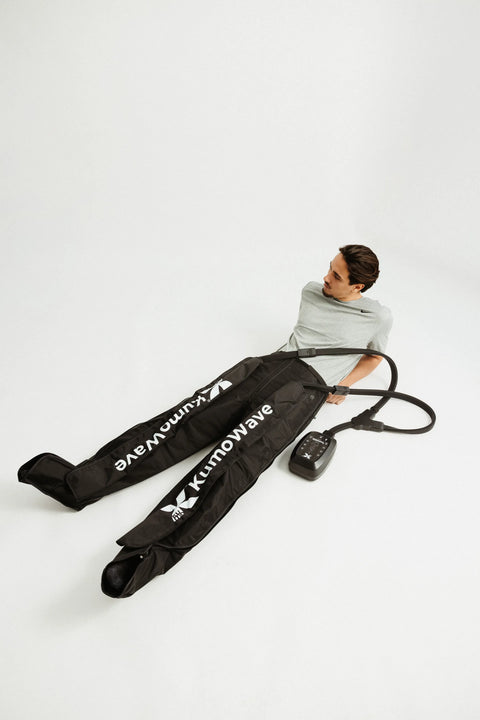
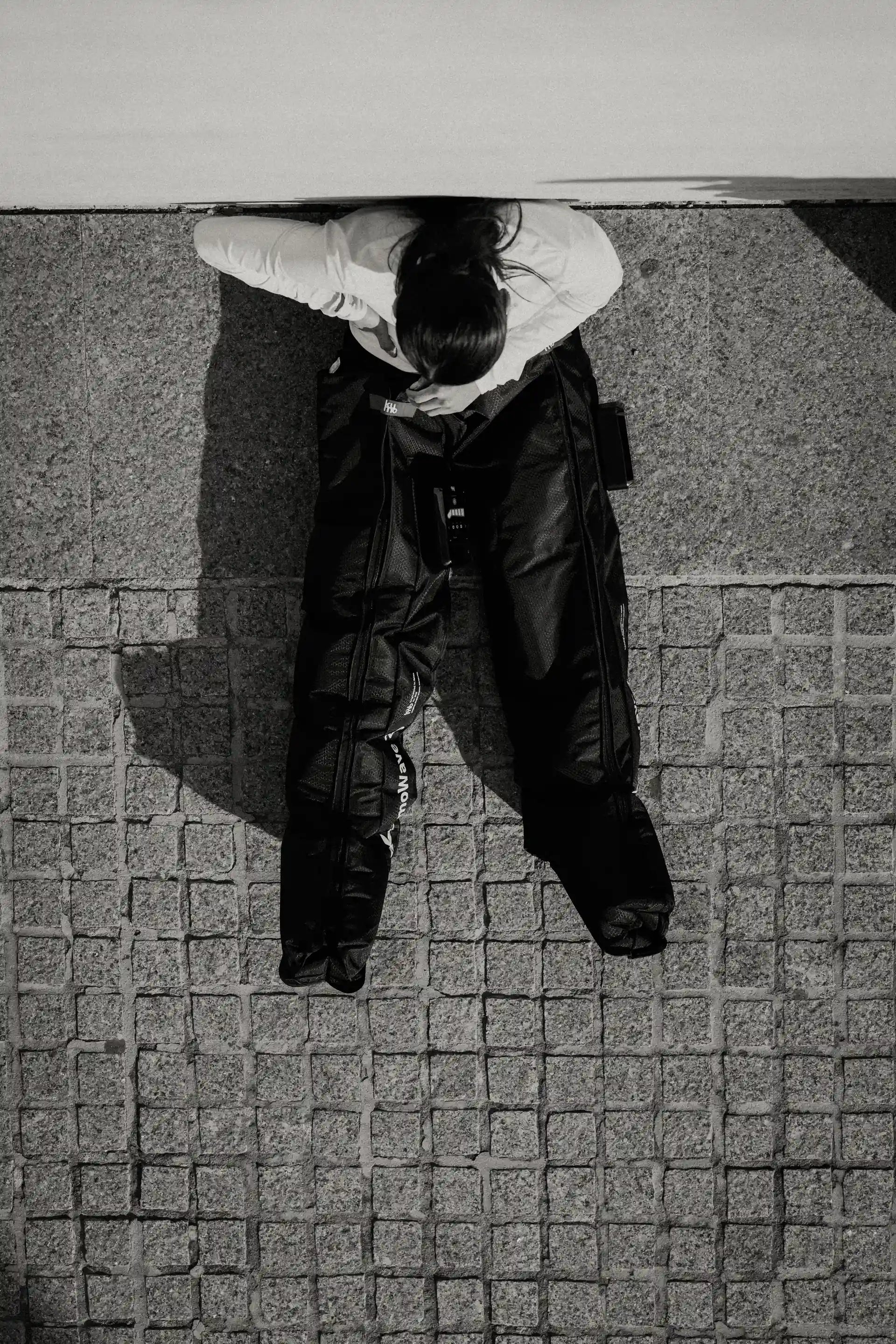
KumoWave Elite – Pressotherapy Pants
Full-coverage trousers. Ideal for lipedema, fluid retention and intensive use.
€799,00 €999,00
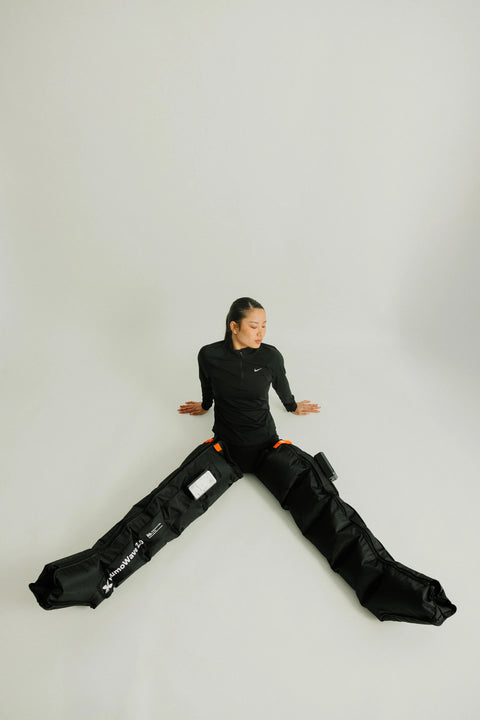
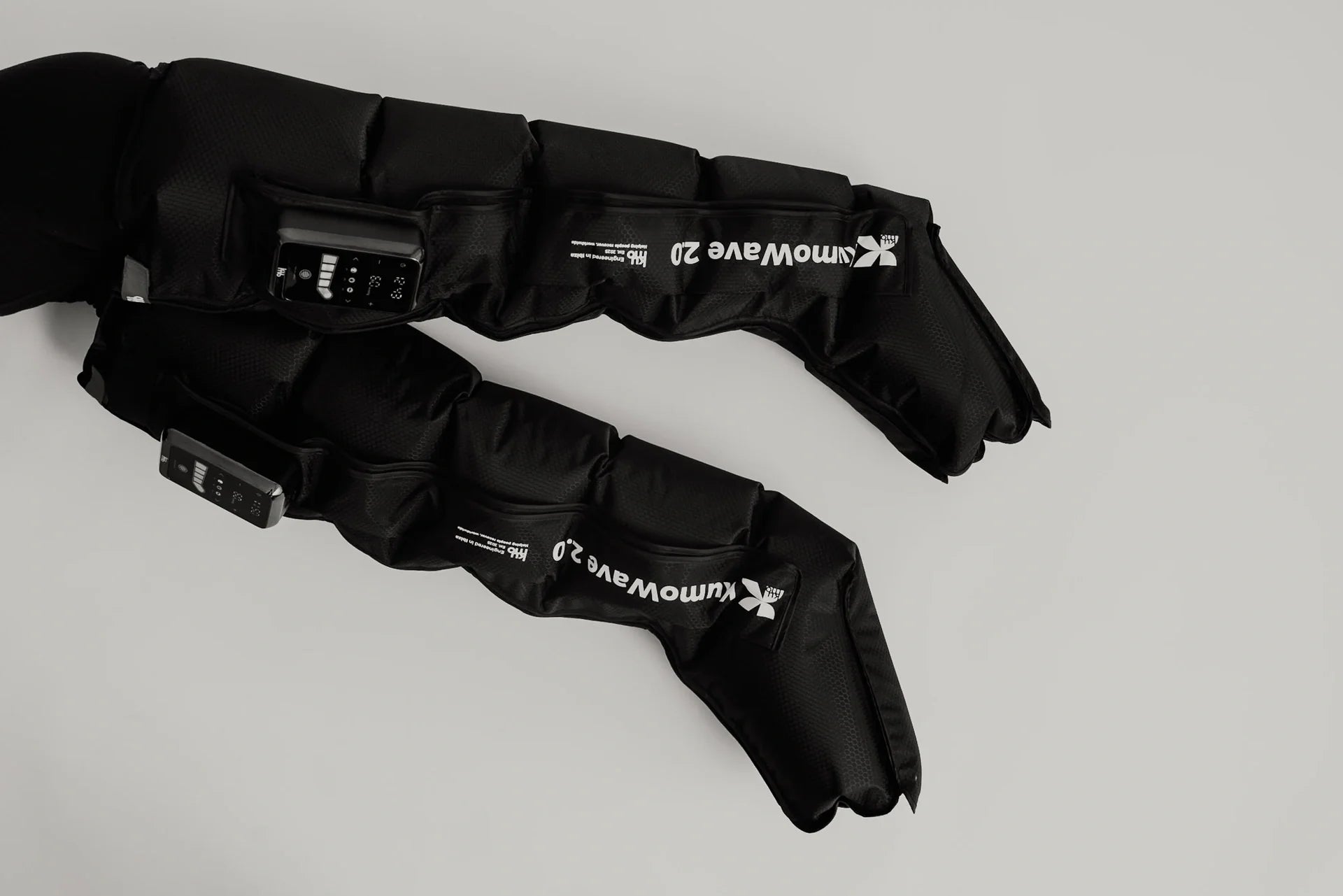
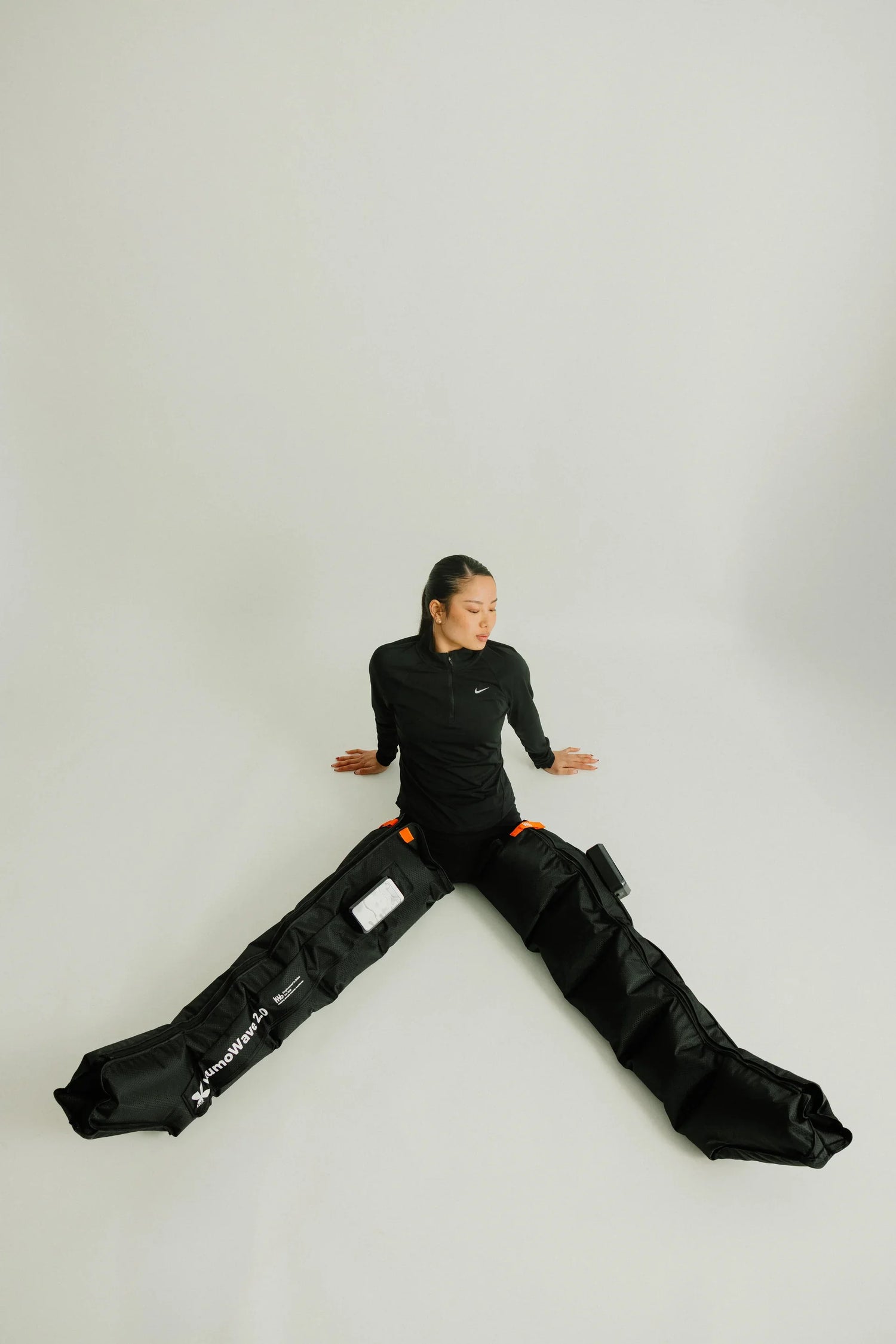
KumoWave 2.0 - Wireless Pressotherapy
Wireless, lightweight boots. Perfect for daily use and recovery.
€499,00 €599,00