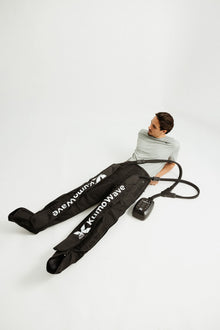

Heavy legs after cycling: pressotherapy can help you recover faster without adding impact.
For many cyclists, the problem is not training, but assimilating the load: stiffness in calves and quadriceps, a feeling of swelling after long rides, or a lack of "freshness" between sessions. Pressotherapy (also called intermittent pneumatic compression) uses boots that inflate and deflate segmentally to promote venous return and fluid movement. Used correctly, it is a convenient tool for adding recovery at home, especially when you can't do a gentle spin or a massage.
Pressotherapy at home
End the day with light legs
★★★★★ 4,8/5 · rated by verified customers
KumoWave pressotherapy boosts circulation and helps drain fluid with sequential compression, in 20-minute sessions at home.
- Boosts circulation and helps drain fluid
- Chamber-based compression, adjustable to you
- Sequential compression that mimics manual drainage
€799,00€999,00
−10% on your 1st order when you subscribe to the newsletter

In this article, you will see how it works, what the evidence says (with nuances), practical protocols for cycling, and how to integrate it into a complete routine with Kumo.
What is pressotherapy (intermittent pneumatic compression) and why it's of interest to cyclists
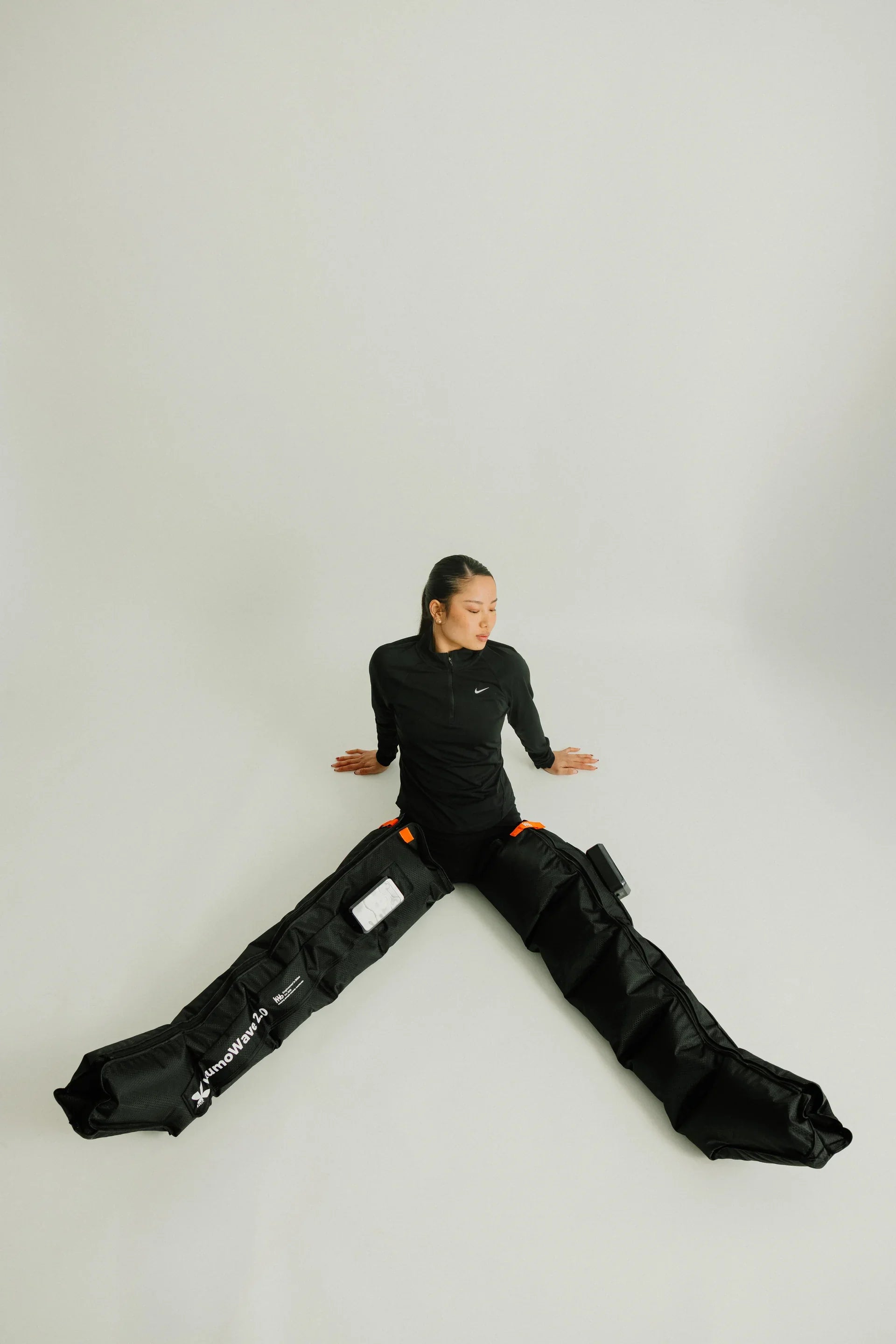
Pressotherapy applies sequential pressure with a pneumatic boot/garment connected to a control unit. Unlike a compression stocking (constant pressure), here the pressure is intermittent and usually travels up the leg from distal to proximal (from the ankle upwards).
Personalized protocol · included with your purchase
Want us to tell you how to use it in your case?
With your purchase, our experts prepare a personalized usage protocol for your case: sport, circulation, fluid retention, pregnancy or lipedema.
Message us on WhatsAppOur experts reply · no obligation
In the medical field, these devices are used to support circulation and reduce the risk of thrombosis in situations of immobility. For example, Johns Hopkins explains that the cuffs inflate and "squeeze" the leg to increase venous flow back to the heart and help prevent clots: DVT Prevention: IPC devices (Johns Hopkins Medicine).
In cycling, the interest is more "athletic" than clinical: we seek to relieve legs after demanding training sessions, manage the feeling of swelling (due to fluid accumulation and sitting for a long time after the ride), and improve the perception of recovery between sessions.
How it works: venous return, fluid movement, and the feeling of "light legs"
The logic of pressotherapy is mechanical, not magical: by inflating and deflating, the boot creates an external "pumping" action that can support circulation at rest. Cleveland Clinic describes how these systems inflate and deflate the sleeves every 20 to 60 seconds, creating a sensation similar to a massage, and supporting blood movement toward the heart: Intermittent Pneumatic Compression (Cleveland Clinic).
on your first order when you join the newsletter
We send you the code instantly. No spam.
Why cyclists particularly notice it
- Post-exertion: after intervals, climbs, or long rides, it's normal to feel stiffness and muscle "load."
- After stopping: when you finish your ride and sit down (meal, car, office), the natural "pump" of the calf muscles works less, and the feeling of heaviness can increase.
- On consecutive days: during high-volume weeks or cycling trips, the accumulation of microfatigue + hours of sitting often takes its toll.
What the scientific evidence says (and doesn't say)
Pressotherapy in sports yields mixed results. In practice, many cyclists value it for the sensation of relief; in science, the effect on performance doesn't always appear, and depends on the protocol, population, and what variable is measured (perceived pain, markers, jump, contraction, time trial, etc.).
Performance: In trained cyclists, it doesn't always improve the "next ride"
In a study with trained cyclists (2018), using pneumatic compression boots for 30 minutes between a 20-minute block and a 4-minute maximum test did not improve subsequent performance compared to passive recovery: Pneumatic Compression Fails to Improve Performance Recovery in Trained Cyclists (PubMed, 2018).
This does not mean that it "doesn't work," but rather that it should not be bought with the promise of "more watts tomorrow" in every context. Its greatest value is usually found in variables such as comfort, perception of fatigue, and consistency of the plan.
Pain/DOMS and fatigue: here, interesting signals do appear
- regarding delayed onset muscle soreness (DOMS) induced by plyometrics, the pressotherapy group underwent 15-minute sessions immediately after and at 24, 48, and 72 hours, showing significant improvements in pain (VAS) and muscle function variables at certain points (especially 48–72 h): Effects of IPC on DOMS and recovery of muscular fatigue (PubMed
In other sports research, the results are less clear (some markers do not change, or change without translating into performance). For example, a trial (2021) compared pressotherapy with placebo and other interventions in a muscle damage model, showing changes in different indicators, but without "everything" always improving at once: Wiecha et al., RCT on IPC and function/pain/damage indices (BMC Sports Sci Med Rehabil, 2021, PDF).
Time and pressure: there are usual ranges, but no "magic number"
- found moderate-to-low quality evidence supporting results with times of 45–60 minutes and pressures of 30–60 mmHg in sequential programs (with caution due to methodological limitations): IPC dosage for lymphedema: systematic review (PubMed
In regulatory documentation (FDA, 2016) for an IPC system, pressure settings for the leg of 20–60 mmHg are described as an example (depending on the device): FDA 510(k) K160180 (2016), example specifications/contraindications.
- applied 20 minutes at 80 mmHg in sequential boots (a "common" parameter in some sports settings): Crossover trial IPC 20 min at 80 mmHg (MDPI Sports
- This does not mean you should use 80 mmHg: at home, it is sensible to prioritize tolerance, progression, and safety.
Key idea: Pressotherapy is usually more consistent in improving sensations (relief, lightness, stiffness) than in guaranteeing direct performance improvements in the next workout.
Practical pressotherapy protocol for cyclists (no refill): when and how to use it
If you want it to work in the real world, the goal is simple: fit it into your routine sustainably, without interfering with what recovers you most (sleep, nutrition, and load management).
Step-by-step: a "well-done" session in 6 points
- Hydration first: drink water and add salts if you've been sweating a lot (pressotherapy does not replace rehydration).
- Correct placement: no creases, zippers/fasteners without pain, and feet well positioned.
- Start gently: first week, low-to-medium pressures and shorter sessions to check tolerance.
- Breathe and relax: use it while sitting or lying down, with your leg supported. Avoid doing it in a hurry.
- Observe the response: you should feel massage/compression, not strong tingling, acute pain, or numbness.
- After finishing: stand up, walk 2–3 minutes, and do gentle ankle/hip mobility exercises.
When to use it depending on the type of training
- After interval training (VO2/threshold/sprints): ideal if you're training again the next day. Short to medium session, aiming to "wind down" your legs.
- After a long endurance ride: useful when heaviness comes more from accumulation and standing/sitting time. Medium session, with comfortable pressure.
- During high-load weeks: 3–5 weekly sessions are usually more realistic than "only when I remember."
- When traveling: especially helpful after car/plane travel when you feel swelling or stiffness due to immobility (if there are no contraindications).
Quick session guide (approximate) for cycling
| Situation | Goal | Duration | Approximate pressure | Practical notes |
|---|---|---|---|---|
| Z2 ride (60–120 min) | Relieve and reduce heaviness | 15–25 min | Low–medium (e.g., 20–40 mmHg if your equipment allows) | Perfect if you're going to be sitting afterward (car/couch). |
| Intervals/HIIT | Reduce stiffness and feeling of fatigue | 20–30 min | Medium (e.g., 30–50 mmHg) | Prioritize comfort: more pressure is not always better. |
| Long ride + demanding next day | Improve perceived recovery | 25–40 min | Medium (e.g., 30–60 mmHg) | Combine with a carb-rich dinner and good sleep. |
| Active rest day | Impact-free recovery | 15–30 min | Low–medium | Use it as a "ritual" to help you maintain consistency. |
Important: The mmHg ranges depend on the device and profile. For reference, leg settings of 20–60 mmHg are described in FDA documentation (2016) for an IPC system, and for lymphedema, 30–60 mmHg for 45–60 min frequently appear (2018 review). Always adjust to tolerance and the indications of your equipment and/or healthcare professional.
Safety: contraindications, precautions, and signs to stop
Pressotherapy is "impact-free," but it's not "for everyone." There are contraindications and situations where it should be avoided or medical approval sought.
Contraindications and situations requiring special care
- Current or suspected deep vein thrombosis (DVT) or pulmonary embolism: avoid due to the risk of clot mobilization. In an FDA document (K160180, 2016), contraindications such as pre-existing DVT and other cardiovascular conditions are listed: FDA 510(k) K160180 (2016).
- Decompensated heart failure or severe vascular disease: compression may not be appropriate (see list of contraindications/precautions in regulatory documentation and clinical guidelines).
- Active infection, open wounds, or skin problems in the boot area.
- Peripheral arterial disease/ischemia: caution due to possible worsening of distal flow (also noted in clinical summaries): IPC devices: overview/complications (LITFL).
Warning signs: stop the session and consult a doctor
- Acute pain, marked numbness, or increasing tingling.
- Significant color change in the foot (very pale/bluish) or abnormal coldness.
- Calf pain with unilateral swelling, warmth, or redness (possible DVT).
How to integrate it into a complete recovery strategy with Kumo
The key is not to do "more things," but to do what adds value and allows you to train continuously. Kumo specializes in high-end recovery technologies (pressotherapy, light, massage, and skin care), and you can combine them logically according to your week.
1) Pressotherapy: the foundation for heavy legs
If your main limitation after cycling is the feeling of heaviness, start with sequential compression boots. You can explore the Kumo pressotherapy collection to incorporate this tool into your post-workout routine.
2) Red light/LED: complementary support (not a substitute) in recovery
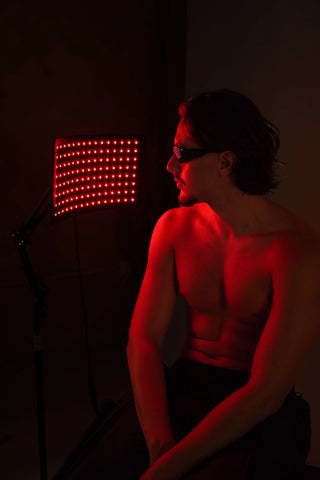
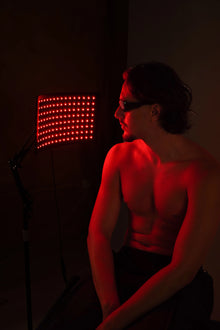
Light therapy (especially red light) is often used as a supplement for well-being, rest, and perceived recovery. If you're interested in this approach within a recovery ecosystem, check out the LED light therapy section.
3) Localized release: massage gun for "tight" spots
Pressotherapy works globally (full leg). For specific areas—for example, a tight band in the quadriceps or calf—a percussion tool may be suitable. At Kumo, you have the KumoPulse Air massage gun for local and brief work (preferably 30–90 seconds per area, without "pounding" tendons or painful spots).
4) Skin and aesthetics: when recovery is also a habit
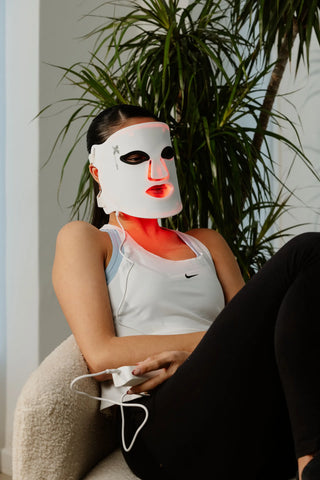
If, in addition to performance, you're looking to turn recovery into a complete ritual (well-being, rest, and personal care), Kumo also integrates solutions like LED masks aimed at skin regeneration. This doesn't directly affect your watts, but it does affect the consistency of the habit: when something is pleasant, it's repeated.
Common mistakes when using pressotherapy in cycling (and how to avoid them)
- Increasing pressure "just because": stronger doesn't equate to better recovery. Start comfortably and progress.
- Using it to compensate for little sleep: prioritize sleep; pressotherapy is a supplement.
- Having eternal sessions without a goal: 15–30 minutes, well-fitted and consistent, is better.
- Ignoring warning signs (acute pain, numbness, color changes): stop and consult.
- Seeking guaranteed performance improvement: evidence for performance is variable; use it as a tool for comfort, relief, and consistency.
FAQ: Pressotherapy for cyclists with Kumo
How long should I use Kumo pressotherapy boots after training?
For most cyclists, a practical range is 15–30 minutes after training, adjusting the pressure to a firm but comfortable massage sensation. If you've had a very long session or several consecutive days, you can extend it to 30–40 minutes if you tolerate it well. For reference, in clinical contexts (lymphedema), protocols of 45–60 minutes with 30–60 mmHg are described, but it's not essential to replicate that in sports. Prioritize consistency: 20 minutes, 4 times a week, is better than 60 minutes once a month.
Does Kumo pressotherapy replace foam rolling, massage, or gentle spinning?
No. Pressotherapy is excellent for impact-free recovery when you're tired, short on time, or don't feel like moving, but it doesn't replace everything. A gentle spin provides active movement (which has its own value), foam rolling releases superficial tissue, and massage can work on adhesions or specific points. The most effective approach is usually a combination: pressotherapy for overall leg relief, and foam rolling/massage gun for localized areas. If you have to choose, prioritize what you can sustain week after week without overdoing it.
Can I use Kumo pressotherapy if I have varicose veins or a history of thrombosis?
In cases of a history of thrombosis, or if DVT is suspected (calf pain, unilateral swelling, warmth/redness), it is prudent not to use pressotherapy without medical authorization. Regulatory documentation and clinical summaries indicate contraindications such as pre-existing DVT and precautions in significant vascular disease. With varicose veins, the situation can vary greatly depending on severity and diagnosis; therefore, if there is known venous pathology or significant symptoms, consult a professional before incorporating pneumatic compression at home.
Does it make sense to use Kumo pressotherapy before cycling?
It can make sense, but with a specific goal: a feeling of lightness and mobility, not "guaranteed performance improvement." If you do, keep the session short (for example, 10–15 minutes) and at low pressure, so as not to leave your legs feeling "numb." On key days (competition or quality training), it is more common to reserve pressotherapy for afterward, when you are looking for impact-free relief. If you find that it leaves you feeling strange before a ride (tingling or lack of pep), only use it afterward.
What now?
If you want to make recovery a natural part of your cycling week, start simple: a post-workout routine you can maintain. Explore Kumo pressotherapy to relieve your legs without impact, and if you need help fitting it in with other habits (light, massage, or well-being), you can contact us through the contact page.
KumoWave pressotherapy
Choose your at-home pressotherapy
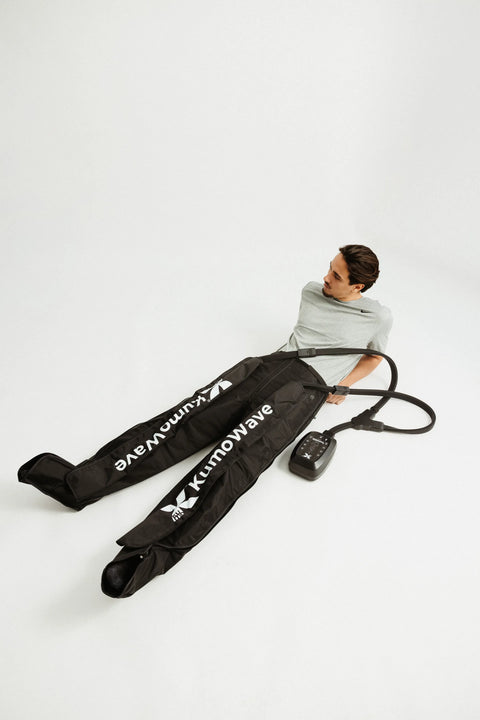
KumoWave Elite – Pressotherapy Pants
Full-coverage trousers. Ideal for lipedema, fluid retention and intensive use.
€799,00 €999,00
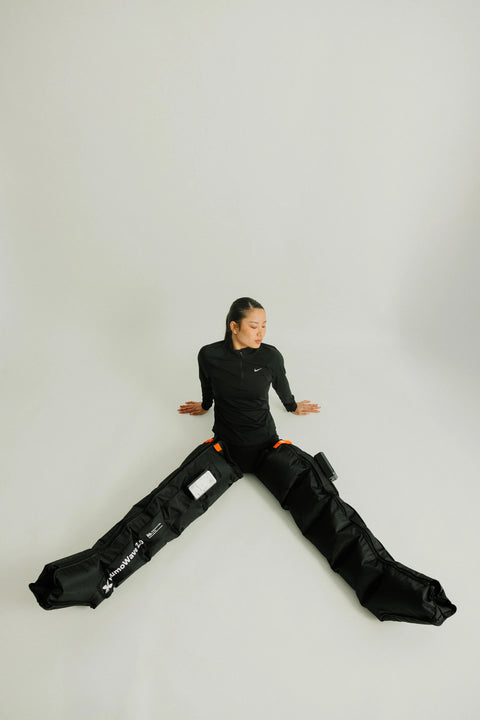
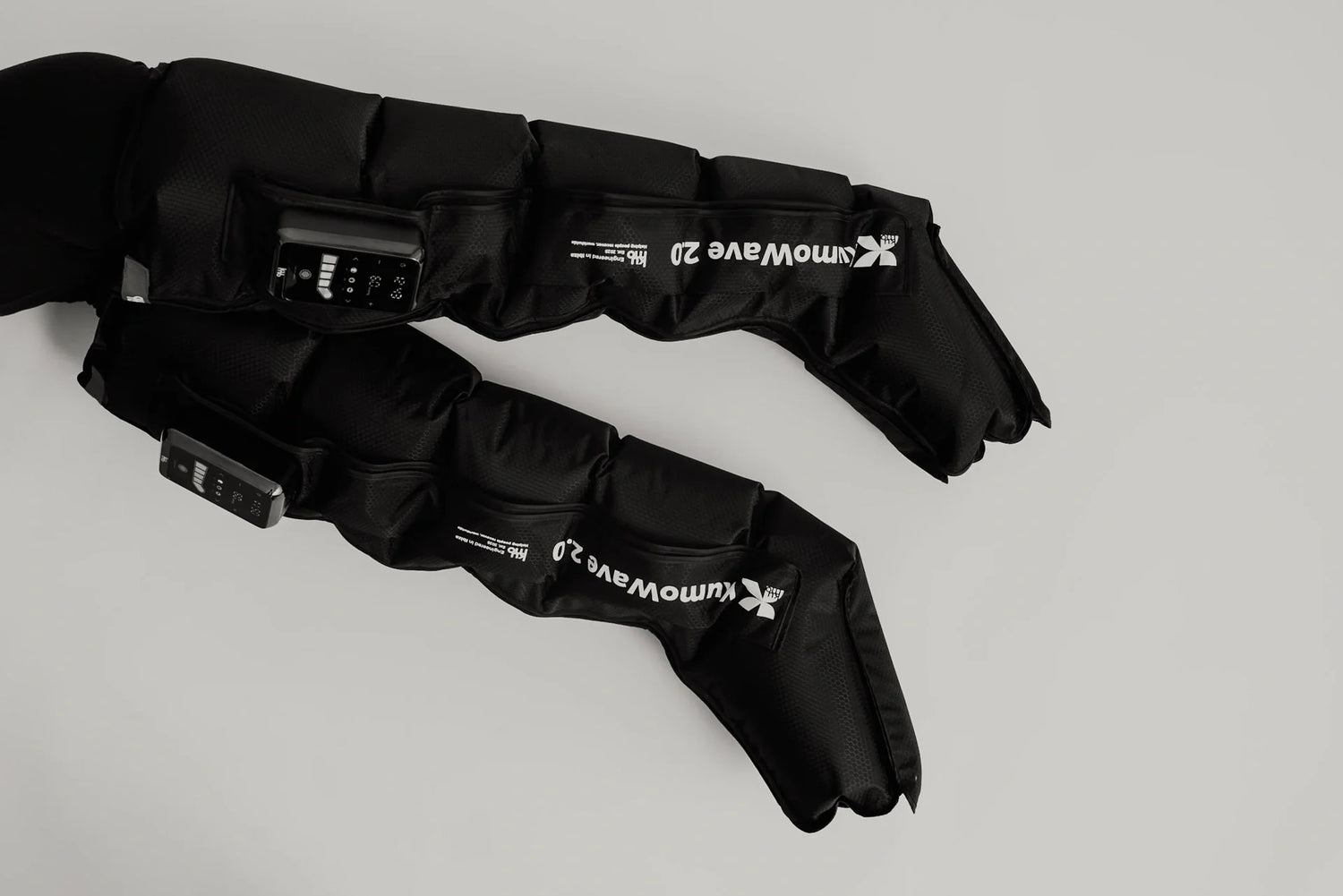
KumoWave 2.0 - Wireless Pressotherapy
Wireless, lightweight boots. Perfect for daily use and recovery.
€499,00 €599,00