You do not beat jet lag through willpower. When you change time zones, your body clock keeps reading old signals, and light is the most powerful one for bringing it back into sync. (cdc.gov)
That is why a well-chosen pattern of light exposure combined with a steady night routine usually makes more difference than any isolated trick. Beyond disrupting sleep, jet lag can leave you more tired, less focused and feeling a step behind your own day. (mayoclinic.org)
Red & infrared light
Recover faster, at home
★★★★★ 4,8/5 · rated by verified customers
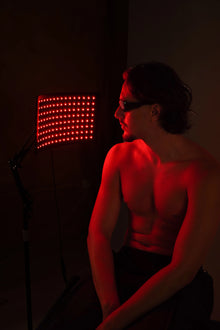
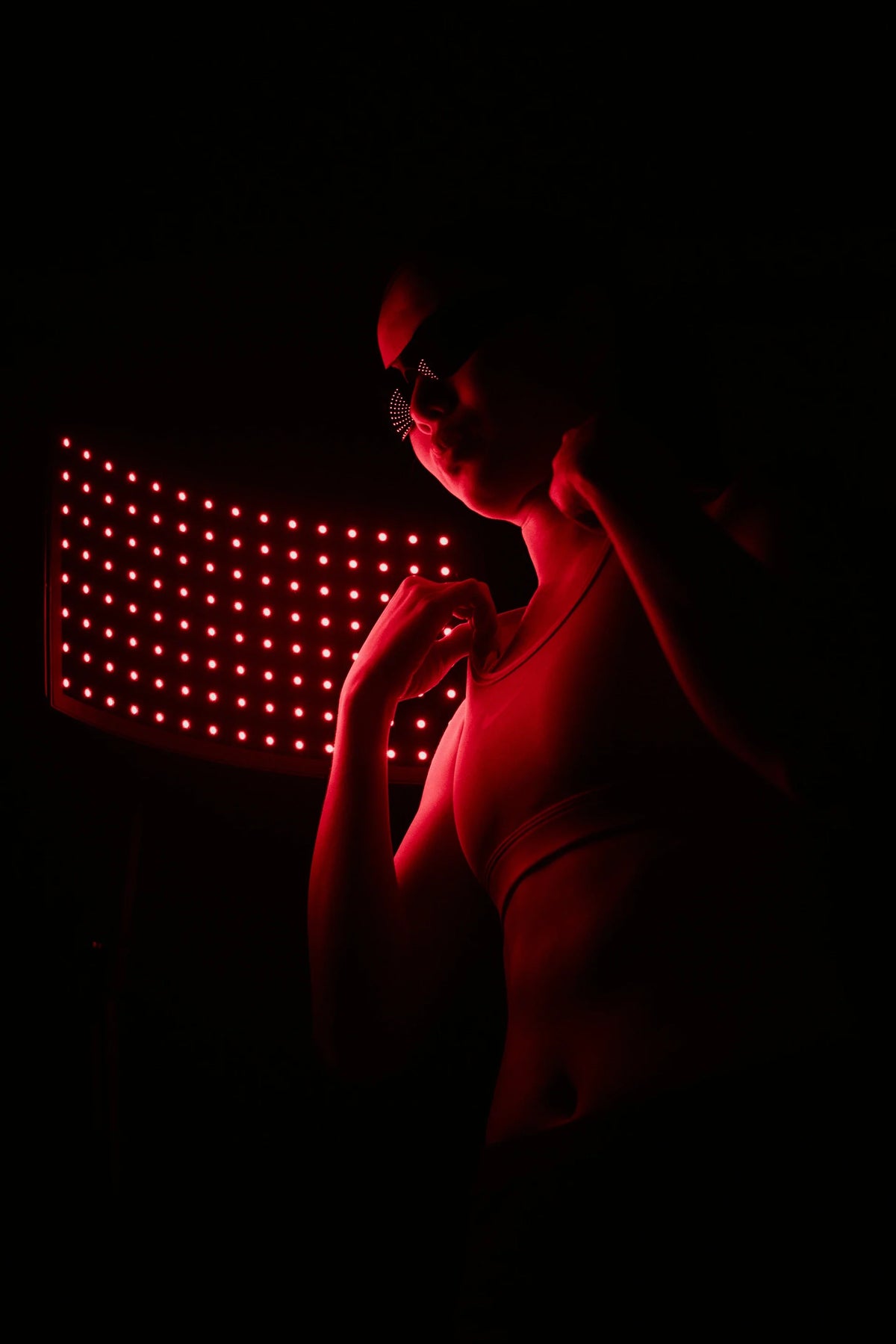
The KumoLux panel supports muscle recovery with full-body red and infrared light.
- 660 nm red + 850 nm infrared light
- Full-body muscle recovery
- Clinically validated biohacking protocols
€399,00€499,00
−10% on your 1st order when you subscribe to the newsletter

Why light runs your body clock
Bright light in the morning, dim light at night
Your body reads light as an instruction. When your eyes take in light, the brain understands it is time to switch on; when darkness falls, melatonin rises and the wind-down toward sleep begins. That logic works the same at home and while traveling, which is why the mismatch shows up when the light signal stops lining up with local time. (nhlbi.nih.gov)
Morning light shifts the body clock earlier, while bright light in the afternoon or evening can push it later. That is why not every hour of the day should be treated the same way.
Personalized protocol · included with your purchase
Want us to tell you how to use it in your case?
With your purchase, our experts set up your red and infrared light sessions for your sport and goal.
Message us on WhatsAppOur experts reply · no obligation
In practice, that means sleeping more is not enough on its own. You have to give the body a clear day-and-night sequence so it reads local time as the correct one again. The NHS notes that getting outside into natural light during the day helps the body adjust, and the CDC explains that well-timed light exposure shortens circadian desynchronization. (nhs.uk)
A night routine for landing better after a trip
A good routine does not need to be long. It needs to be repeatable, predictable and calm enough that your nervous system understands the day ends here. If you want a more developed example, the guide to a night routine with red light therapy explains how to turn that close of the day into a habit that is easy to keep.
- Lower the ambient light gradually over the last hour of the day. The signal does not have to be dramatic, only clear.
- Avoid coffee and alcohol in the afternoon or evening, because they can worsen the mismatch and make sleep more fragile.
- Keep a fixed sequence, for example washing up, laying out tomorrow's clothes, drinking water and going to bed on local time.
- If it helps, use an eye mask or earplugs to block light and noise, especially during the first few nights.
- Make the transition in a dim, quiet room rather than under bright lighting until the last minute.
A simple 90-minute example before sleep
- Ninety minutes before, dim the lights and set aside any task that revs you up too much.
- Sixty minutes before, finish tidying up the day, prepare what you need for tomorrow and do not drag dinner out.
- Thirty minutes before, switch to something calm, such as reading or breathing slowly.
- At bedtime, make sure the room is dark and that your sleep hour lines up with the local clock, not with the time back home.
If you would like a more relaxed, sensory version of that close of the day, the night ritual with red light and relaxation can serve as a reference for winding down without overcomplicating it.
on your first order when you join the newsletter
We send you the code instantly. No spam.
How to adjust light depending on the direction of travel
If your flight crosses several time zones, the same light can help you or work against you depending on the time of day and the destination. The CDC recommends starting to shift your sleep a few days before the trip and points out that the ideal timing for light depends on the direction you are traveling.
What to do at each stage of the trip
| Stage | What to do with light | What to do with your routine | Why it helps |
|---|---|---|---|
| Before leaving | Move your bedtime earlier or later in gradual steps, according to the schedule at your destination. | Start matching the destination for meals and sleep, even if only partly. | The CDC advises preparing the body in advance, because you then arrive with less of a time shock. |
| First day at your destination | Seek natural light if it is already daytime. If it is still night, reduce stimulation and prioritize rest. | Avoid daytime sleep unless you truly need it, and set an alarm if necessary. | Natural light helps the body adjust, and the NHS recommends moving your sleep schedule to the new zone as soon as possible. |
| If you are traveling east | Morning light matters more to you, because it helps shift the body clock earlier. | Try to go to bed and get up earlier, as far as that is possible. | Morning light advances the circadian phase, and the NHLBI uses it precisely to move the schedule forward. |
| If you are traveling west | Later light suits you better, because it tends to delay the phase and fits with a later bedtime. | Shift sleep earlier less aggressively and let the local night arrive at its own pace. | Evening exposure usually pushes the clock back, which is useful when the destination calls for sleeping later. |
On short trips it sometimes pays not to force a full change. The NHS points out that if the trip lasts only two or three days, keeping part of your usual rhythm can save you from having to readjust twice.
When the body is still running fast at the end of the day, a sequence of low light, calm breathing and gentle movement can be enough to bring the noise down. If you want a more guided version, you can also read about what the science says about red light therapy and about how to use red light therapy to sleep better.
Can red light help at night?
In a small 2025 study in healthy adults, nighttime exposure to blue light sustained melatonin suppression for longer than red light across three hours. That does not make red light a solution for jet lag, but it does suggest that red or very dim lighting can be a less stimulating option for the end of the day.
If it fits into your evening wind-down, think of red light as support for slowing down rather than a correction for the time zone. To see how to fit it in at home, you may find it useful to read the steps and frequency for red light therapy at home and, if you want more context, this explanation of how it works.
When to seek medical advice for warning signs
Jet lag usually improves within a few days, but it is worth seeking advice if the disruption is very intense, if you travel often and notice it complicating daily life, or if the symptoms do not fit a simple change of schedule. Mayo Clinic notes that people who travel frequently and have repeated jet lag may benefit from seeing a sleep specialist.
- Marked insomnia or sleepiness that stops you from working or driving normally.
- Problems with concentration, memory or mood that do not improve after several days.
- Nausea, digestive discomfort or a general feeling of being unwell that lasts longer than expected.
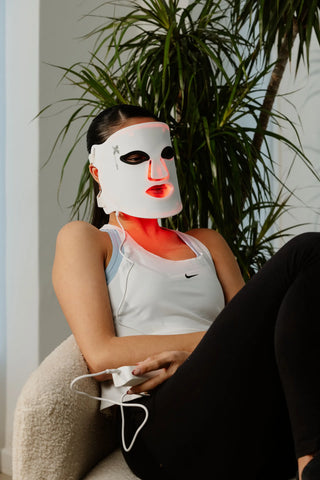
- If you plan to use a light panel or mask, be cautious about using it if you have retinal disease, recent eye surgery, bipolar disorder or take medication that increases light sensitivity. The NCCIH also warns of possible dizziness, nausea, headache and eye strain. (nccih.nih.gov)
Wellness devices are not a substitute for medical assessment. If warning signs appear, the sensible thing is to stop and seek advice.
Frequently asked questions
How long does it take for the body clock to reset after a trip?
It depends on how many time zones you crossed and on the direction of travel. The NHS says jet lag usually improves within a few days, while Mayo Clinic notes that, as a rough guide, it can take around one day per time zone crossed. On long trips, especially heading east, adaptation can be slower. The key is not to fight your body but to give it consistent signals of light, darkness and local time.
Is it better to get light in the morning or at night?
It depends on what you want to do with your body clock, but for most travelers the morning tends to be more useful. Morning light advances the circadian phase, while afternoon or evening light delays it. That is why, when you are adapting to a new destination, light is not used generically but strategically. The CDC and the NHLBI agree that the timing of exposure matters as much as the intensity.
Should you nap when you arrive at your destination?
If the goal is to adapt quickly, it is best not to extend sleep during the day. The NHS recommends switching your sleep schedule to the new zone as soon as possible and, in its general guidance, avoiding daytime sleep unless it is unavoidable. If you are exhausted, a very short nap may feel tempting, but the longer you stretch it, the more likely you are to push back the local night. It is better to save the energy so you reach the real bedtime awake.
Is melatonin essential for getting over jet lag?
Not necessarily. The NHS does not recommend melatonin tablets for jet lag because it says there is not enough evidence to support them routinely. That does not mean everyone should avoid it in every context, but rather that the basis of resetting stays the same: light, darkness and a steady schedule. If you ever consider supplements, the most sensible approach is to do it with clinical guidance and not as a replacement for the routine.
Can a red light routine help, or is it just a trend?
It can help as part of a less stimulating evening wind-down, but it does not correct the time shift on its own. A small 2025 study observed that blue light sustained melatonin suppression more than red across a three-hour exposure, which suggests red light can be a gentler signal for the evening. Even so, the real adjustment depends on combining that visual calm with a fixed hour, fewer stimuli and natural light during the day.
What now?
If you want to start today, think of two steps: the right light and a consistent schedule. Begin with the Kumo Balance home page and, if you feel like going deeper into a better-organized night, the guide to a night routine with red light therapy will serve as your next read. If you prefer a calmer close to the day, you can also look at the night ritual with red light and relaxation.

Red & infrared light
KumoLux Panel – Red and Infrared LED Panel
★★★★★ 4,8/5 · rated by verified customers
- 660 nm red + 850 nm infrared light
- Full-body muscle recovery
- Clinically validated biohacking protocols
€399,00€499,00· pay in installments with seQura or Klarna