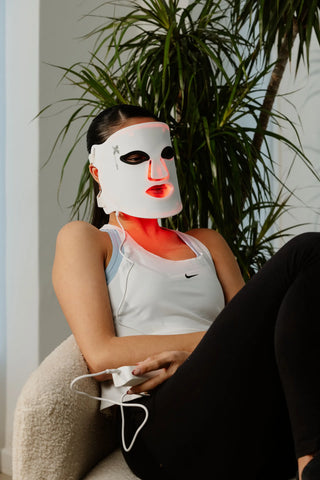

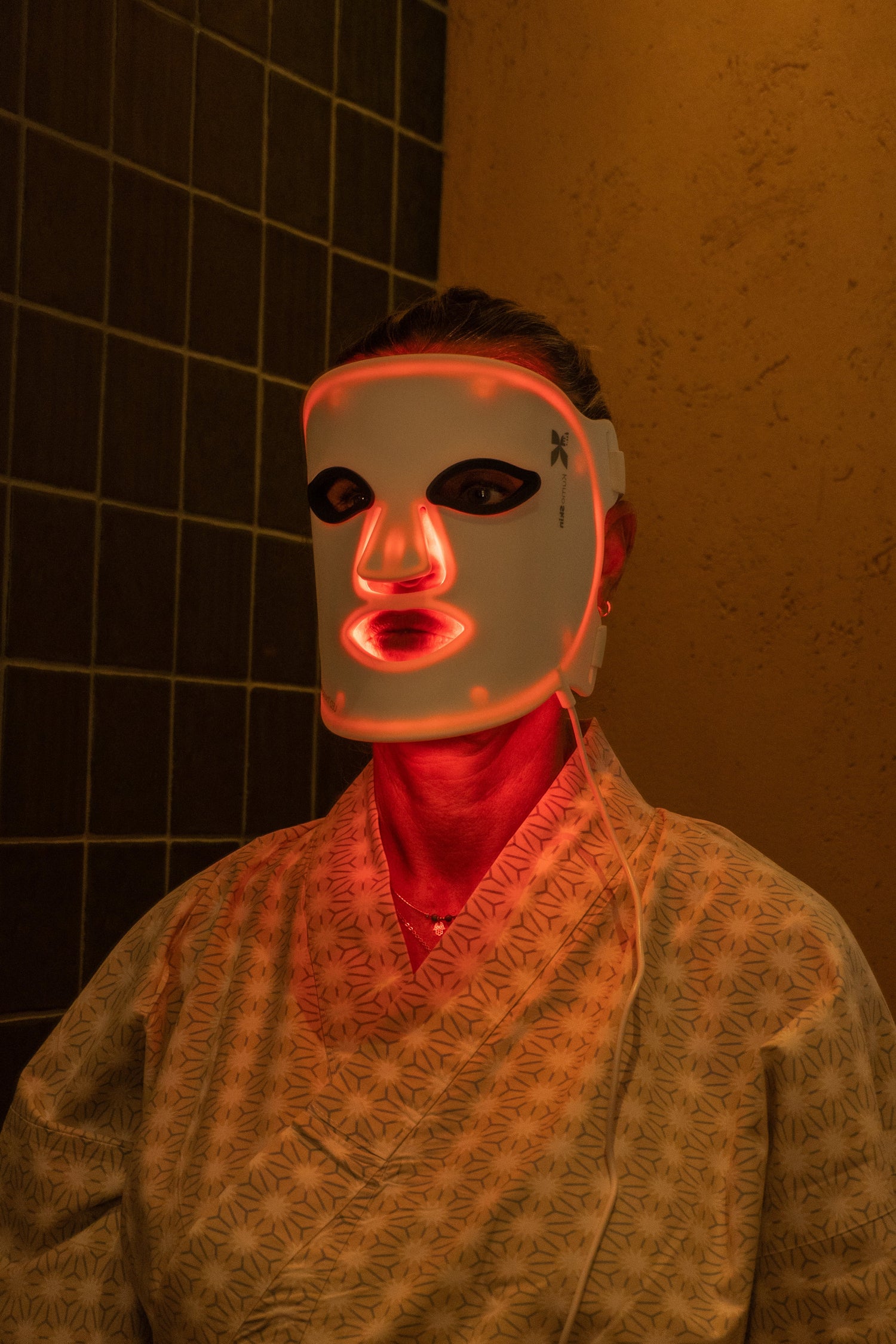
Red light therapy at home, with clear steps and frequency. If you're looking for a simple and safe protocol to get started, here's how to prepare for the session, how long to apply it to each area, and how many days a week depending on your goals (skin, muscle recovery, or sleep).
In a little while
- Prepare: Clean and dry skin, remove makeup/creams and metal accessories; avoid looking directly at the LEDs.
- Guide parameters: 630–670 nm (red) and 810–880 nm (near infrared), 5–15 minutes per area, 3–5 days/week for skin; 10–20 minutes, 2–4 days/week for muscles.
- Usual distance: 10–30 cm from the device; adjust to feel gentle heat, never burning.
- Safety: short sessions, gradual progression, and rest if persistent redness appears.
- Results: brighter skin in 4–8 weeks; muscle relief in 1–3 weeks, with consistency.
How red light therapy works
Photobiomodulation (PBM) uses low-intensity red and/or near-infrared light to stimulate cellular processes. When absorbed into mitochondria (e.g., by cytochrome c oxidase), it can increase ATP production, modulate oxidative stress and inflammation, and promote microcirculation. These responses aid skin repair and muscle recovery after exertion. A clinical review in dermatology describes improvements in skin texture and signs of aging with red LEDs and NIR in consistent protocols (Avci et al., 2013 ). For an overview of benefits and limitations in practice, also see the Cleveland Clinic summary.
Red & infrared light
Recover faster, at home
★★★★★ 4,8/5 · rated by verified customers
The KumoLux panel supports muscle recovery with full-body red and infrared light.
- 660 nm red + 850 nm infrared light
- Full-body muscle recovery
- Clinically validated biohacking protocols
€399,00€499,00
−10% on your 1st order when you subscribe to the newsletter

Tip: Think of "light doses" like exercise or coffee: too little has no effect; too much can be counterproductive. The response is usually U-shaped (biphasic).
Steps to use it at home
1) Preparation of the environment and the skin
- Cleanse and dry your skin. Remove makeup, photosensitizing creams, and jewelry from the area.
- Place the device on a stable, well-ventilated surface. If the glare bothers you, wear suitable sunglasses.
- Avoid looking directly at the LEDs. Adjust the room for comfort for 10–20 minutes.
2) Basic device settings
- Wavelength: visible red 630–670 nm is usually directed at superficial skin; near infrared (NIR) 810–880 nm penetrates more, useful in muscles/joints Avci et al., 2013 .
- Distance: 10–30 cm for domestic panels/masks, seeking a mild and homogeneous heat.
- Time per area: start with 5–8 minutes and progress to 10–15 minutes if the skin tolerates it.
- Frequency: 3–5 days/week for skin; 2–4 for muscle recovery. Adjust according to response.
3) Session protocol (step by step)
- Place the device at the chosen distance.
- Position the target area in front of the light, relaxing the muscles.
- Turn it on and start the timer. Keep your breathing calm.
- Change areas if you are treating several (e.g., face, neck, calves), respecting the time per area.
- Turn off, let cool, and clean the equipment according to the manufacturer's instructions.
Practical rule: if after the session the skin is slightly pink and comfortable, you're doing well; if irritation persists >24 h, reduce time or distance.
Personalized protocol · included with your purchase
Want us to tell you how to use it in your case?
With your purchase, our experts set up your red and infrared light sessions for your sport and goal.
Message us on WhatsAppOur experts reply · no obligation
4) Safety and contraindications
- Do not use if your doctor advises against it or if you are taking photosensitizing drugs; consult your doctor if you are pregnant or suffer from eye disorders.
- Do not apply to untreated skin lesions, recent tattoos, or open wounds without professional advice.
- Follow reasonable exposure limits. International guidelines describe safety criteria for visible and infrared radiation (ICNIRP, 2013 ).
- For sleep: avoid bright blue light at night; red/amber light is less disruptive to melatonin(Harvard Health, 2012 , Sleep Foundation).
Frequency and schedule per objective
Skin care: tone, texture and radiance
- Start: 3 days/week, 8–10 minutes per area (face/neck).
- Progress: 4–5 days/week, 10–15 minutes, depending on tolerance.
- Maintenance: 2–3 days/week after 8 weeks.
- Expectation: improvements in texture/fine lines after 4–8 weeks of consistent use, according to clinical reviews in dermatological LED Avci et al., 2013 .
Muscle and joint recovery
- Start: 2–3 days/week, 10–15 minutes per muscle group worked.
- Progress: Up to 20 minutes on large areas (quadriceps/back), 2–4 days/week.
- Useful times: 1–3 hours after exercise or on active rest days.
- Rationale: PBM can modulate inflammation and promote physiological recovery in muscle tissues; the response is dose-dependent and biphasic Huang et al., 2009 .
Sleep and circadian rhythm
- Objective: light hygiene in the evening; low intensity red or warm light interferes less with sleep than blue-white light (Sleep Foundation).
- Routine: 10–20 minutes of soft red light 1–2 hours before bed, combined with blue screen reduction(Harvard Health ).
- Note: Evidence on “improving sleep” with PBM is emerging; prioritize consistency and classic sleep hygiene.
Quick guide to indicative parameters at home
The ranges below are general for household devices. Always follow your equipment's manual and adjust according to your individual response.
| Aim | Wavelength | Typical intensity (irradiance) | Approximate distance | Duration per zone | Frequency | Results window |
|---|---|---|---|---|---|---|
| Skin (luminosity/wrinkles) | 630–670 nm (red) ± 810–880 nm (NIR) | 20–60 mW/cm² | 10–25 cm | 8–15 min | 3–5/week | 4–8 weeks |
| Muscle recovery | 810–880 nm (NIR) ± red | 50–100 mW/cm² | 10–20 cm | 10–20 min | 2–4/week | 1–3 weeks |
| Sleep hygiene (environment) | 620–700 nm, low intensity | Dim ambient lighting | >50 cm (ambient) | 10–20 min | 5–7/week | 1–2 weeks |
General reference of mechanisms and dose-response in PBM: review with emphasis on biphasic curve Huang et al., 2009 and clinical summary Cleveland Clinic.
Integrate red light into your recovery routine
Combine it with habits that add up
- Hydration, sufficient protein, and restful sleep.
- Gentle stretching or post-session percussion massage to relax the muscles.
- On days with tired legs: alternate PBM sessions with circulatory activation techniques, as you find comfortable.
Before or after exercise
- If you're looking for performance, some people use PBM before exercise to prepare the tissue; if you prioritize recovery, use it afterward or on rest days. Try it for 2–4 weeks and compare how you feel and your recovery time.
How to measure progress and adjust dosage
Practical indicators
- Skin: Take photos under the same lighting every 2 weeks; observe texture, luminosity, and evenness of tone.
- Muscles: perceive morning stiffness, DOMS, and performance in the next session.
- Sleep: records sleep latency and nighttime awakenings along with your sleep hygiene.
Avoid excess: the dose matters
- Photobiomodulation shows a biphasic response: moderate doses help; very high doses can cancel out effects (Huang et al., 2009 ).
- Adjust one factor at a time (time or distance), in increments of 10–20%, and reassess after one week.
Frequently Asked Questions
How many times a day can I use the red light?
For most home use, one session per day per area is sufficient. On skin, 3–5 days per week are usually effective; on muscles, 2–4 days. Doubling sessions on the same day does not necessarily accelerate results due to the "biphasic" dose response in photobiomodulation (Huang et al., 2009 ). If you are treating different areas (e.g., face and quadriceps), you can divide the sessions on the same day, respecting the recommended treatment times for each area and avoiding persistent irritation.
on your first order when you join the newsletter
We send you the code instantly. No spam.
How long does it take to see a real change?
It depends on the goal and consistency. In LED skincare protocols, gradual improvements are described after 4–8 weeks of consistent use (Avci et al., 2013 ). In muscle recovery, some people experience relief between the first and third week. Document your progress with photos or a journal to assess trends and adjust the dosage if you don't see improvement after 4–6 weeks.
Is it safe for the eyes or do I need glasses?
Avoid looking directly at LED light sources at close range. If you experience discomfort, wear appropriate dark glasses or close your eyes when working on your face. Visible and infrared exposure guidelines recommend limiting intense direct radiation to the eyes (ICNIRP, 2013 ). Follow your device's manual and prioritize comfort: gentle warmth, yes; glare, no.
Can I combine it with creams or retinoids?
Apply the light to clean, dry skin. Some active ingredients (retinoids, AHAs/BHAs) can increase sensitivity; it's best to separate their use (e.g., light in the morning and retinoid at night) and start with a low frequency. Dermatological literature on LED light therapy reports generally good tolerability (Avci et al., 2013) , but adjust to your skin type and consult your dermatologist if you use photosensitizing treatments.
Does using red light at night help you sleep better?
The key is to reduce bright blue light before bed; low-intensity red/warm lighting is less disruptive to melatonin(Harvard Health , Sleep Foundation). You can create a routine with 10–20 minutes of soft red light 1–2 hours before bed, along with good sleep hygiene habits. Specific evidence on PBM and sleep is still limited, so focus on consistency and comfort.
To go
- Start simple: 5–10 minutes per area, 3–4 days/week, at 10–30 cm; progress according to tolerance.
- Red (630–670 nm) targets skin; NIR (810–880 nm) reaches deeper, useful in muscle/joint.
- Less is more: aim for mild warmth, without persistent redness; adjust the dose gradually.
- Stay consistent: 4–8 weeks for visible skin changes; 1–3 weeks for muscle recovery.
- Take care of the lighting hygiene at night: less blue, warmer and dimmer.
- Ready to integrate red light into your routine? Discover how KUMO understands high-performance recovery at kumobalance.com .

Red & infrared light
KumoLux Panel – Red and Infrared LED Panel
★★★★★ 4,8/5 · rated by verified customers
- 660 nm red + 850 nm infrared light
- Full-body muscle recovery
- Clinically validated biohacking protocols
€399,00€499,00· pay in installments with seQura or Klarna