

Not all flicker is the same.
With red light, involuntary flicker and pulsed mode can look identical to the naked eye, but the cause, the experience and the way you adjust the device all change. The DOE explains that LEDs respond very quickly to current from the driver or the dimmer, while sensitivity to flickering light varies a great deal from one person to another. (energy.gov)
Red & infrared light
Recover faster, at home
★★★★★ 4,8/5 · rated by verified customers
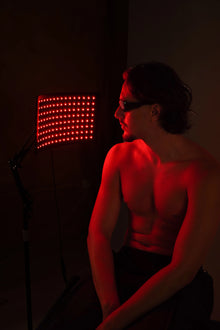
The KumoLux panel supports muscle recovery with full-body red and infrared light.
- 660 nm red + 850 nm infrared light
- Full-body muscle recovery
- Clinically validated biohacking protocols
€399,00€499,00
−10% on your 1st order when you subscribe to the newsletter

What each term means
Involuntary flicker
This is an unintended variation in light intensity. It usually comes from the power electronics, from the way brightness is regulated or from an unstable driver. In LED technology this matters a lot, because the diode reacts almost instantly to changes in current and can create a sense of instability, a stroboscopic effect or visual smearing whenever there is movement. The DOE draws a clear distinction between direct flicker, the stroboscopic effect and the phantom array.
Pulsed mode
This is deliberate emission in pulses. In photobiomodulation, the pulse is part of the protocol and is set alongside wavelength, irradiance, fluence, frequency and exposure time. Recent reviews point out that these parameters shape the results, so pulsed mode cannot be judged out of context. Put cautiously, it is not automatically better or worse than continuous light, because the evidence depends on the goal and on the whole set of parameters, not on a single label. (pmc.ncbi.nlm.nih.gov)
Personalized protocol · included with your purchase
Want us to tell you how to use it in your case?
With your purchase, our experts set up your red and infrared light sessions for your sport and goal.
Message us on WhatsAppOur experts reply · no obligation
If you want to review the general context before getting into emission frequency, the guide on what red light therapy is and how it works helps you place the mode of use within the protocol.
What really changes for the person using it
The real difference is not a technical word, but three things: who decides on the flicker, how often it happens and how your eyes perceive it. The DOE notes that perception depends on modulation, on relative movement and on individual sensitivity, and that even some high-frequency lights become noticeable when the head or the gaze moves.
Quick comparison
| Aspect | Involuntary flicker | Pulsed mode | What really matters |
|---|---|---|---|
| Origin | Comes from the electronics, the dimmer or the driver, not from the protocol. | Programmed on purpose with a defined frequency and duty cycle. | The key difference is whether the modulation is intended or shows up as a side effect. |
| Experience | Can be noticed as instability, glare or an intermittent image. | Can be almost imperceptible or clearly rhythmic, depending on the setting. | Perception depends on frequency, contrast and each person's sensitivity. |
| In photobiomodulation | Offers no useful control on its own. | Is part of adjusting the device's parameters. | The literature focuses on wavelength, irradiance, fluence and mode of application. |
| Practical safety | If it bothers you, it is worth checking signal stability and how you use the device. | If the frequency falls in sensitive ranges, it can also be uncomfortable for some people. | In photosensitive people, the safety threshold weighs more than the label on the mode. (epilepsy.com) |
If you also want to separate the technical side from the practical side, the guide on practical differences between 660 nm and 850 nm helps you tell wavelength and emission mode apart, because they are not the same thing.
on your first order when you join the newsletter
We send you the code instantly. No spam.
Why unwanted flicker can be bothersome
Because the eye and the brain do not only register whether the light "is" or "is not" there, they also interpret how it changes. The DOE explains that flicker can range from simple discomfort to unwanted effects such as distraction, headache or, in rare cases and in predisposed people, seizures triggered by light stimuli. The Epilepsy Foundation adds that frequency, brightness, contrast, distance and wavelength strongly influence the response. (energy.gov)
In sensitive people, lights between 5 and 30 hertz are the ones that most often trigger problems, although the likelihood depends a great deal on each case. That is why a light that looks "simply red" should not be judged by color alone, but also by its stability and by how it makes you feel during the session.
How to reduce discomfort and use it sensibly
The practical side matters as much as the theory. If you want to adjust where the device sits, the guide on the ideal distance to the red light panel by model can help you settle your routine without improvising.
- If the device lets you regulate brightness or mode, try the most stable and most comfortable option for your eyes first, because modulation and frequency change perception a great deal.
- If you notice a headache, dizziness or an odd visual sensation, stop the session and do not force the exposure.
- Use eye protection when the manufacturer calls for it, because the FDA notes that light can injure the eyes. (fda.gov)
- If you already know you are sensitive to flickering light, favor a gentle, short routine before lengthening the exposure.
Here is a useful idea: involuntary flicker is a stability problem; pulsed mode is a design decision. If the experience is pleasant, the device is well adjusted. If it is not, the technical label matters less than your actual response.
When to seek medical advice for warning signs
If a flickering light triggers clear symptoms, do not treat it as normal. The Epilepsy Foundation recommends seeking advice if you are concerned about seizures triggered by lights, and the FDA notes that photobiomodulation is not appropriate in several specific clinical contexts.
- If you get a severe headache, dizziness, nausea, blurred vision, persistent flashes or eye pain, stop the session and seek medical advice.
- If you already have photosensitivity or photosensitive epilepsy, do not improvise with flickering light without professional advice.
- As a general safety reference, the FDA does not recommend photobiomodulation if you have photosensitivity disorders, pregnancy or plans for pregnancy, active implants such as a pacemaker or defibrillator, a history of cancer in the area, photosensitizing medication or a wound, infection or active lesion in the area.
- Eye protection and the manufacturer's guidance are not a minor detail, because light can harm the eyes even when the energy is low.
Frequently asked questions
How do I know whether my panel has flicker or a pulsed mode?
Check whether the device states a pulse frequency, a duty cycle, adjustable brightness or a specific emission mode. If the variation appears when you lower the intensity or change the driver, it is usually involuntary flicker. If the manufacturer describes a programmed pulse, we are talking about a deliberate pulsed mode. Even so, what counts is the real experience: if the light feels unstable or uncomfortable to you, perception matters more than the technical label. The DOE and photobiomodulation reviews insist that modulation, frequency and mode of application change the response.
Is pulsed mode always better than continuous light?
No. Scientific reviews of photobiomodulation show that results depend on several parameters at once, such as wavelength, irradiance, fluence, frequency of use and mode of application. That means pulsed mode can be part of certain protocols, but it does not make a device superior on its own. The cautious reading is that the pulse is one more variable, not a guarantee of better sensations or better results in every case.
Can flickering red light cause a headache?
Yes, in sensitive people it can cause visual discomfort, distraction or headache. The DOE describes flicker as a temporal modulation that can go from simple discomfort to unwanted effects, and the Epilepsy Foundation notes that frequency, contrast, brightness and distance have a strong influence. In people with photosensitivity, lights between 5 and 30 hertz are especially delicate. If you notice symptoms, stop the session and do not drag it out "to see if it passes".
Who should not use photobiomodulation without medical advice?
As a general safety reference, the FDA does not recommend photobiomodulation for people with photosensitivity disorders, pregnancy or plans for pregnancy, active implants, a history of cancer in the area, photosensitizing medication or a wound, infection or active lesion in the area. On top of that, light can injure the eyes, so protective goggles and the manufacturer's instructions really do matter. If you have any doubts, the sensible move is to review your case with a professional before starting.
What now?
If you want to keep putting these concepts in order, start with red light therapy at home, steps and frequency and then come back to the Kumo home page to see the overall picture of the site. If you feel like continuing with the technical groundwork, you can also revisit red light therapy benefits and how it works 2025 and bring theory, routine and sensations together in a single read.

Red & infrared light
KumoLux Panel – Red and Infrared LED Panel
★★★★★ 4,8/5 · rated by verified customers
- 660 nm red + 850 nm infrared light
- Full-body muscle recovery
- Clinically validated biohacking protocols
€399,00€499,00· pay in installments with seQura or Klarna