
Two wavelengths, two different uses.
If you're trying to understand the practical difference between red light (660 nm) and near-infrared (NIR) light (850 nm) , the short answer is: it doesn't "feel" the same, it doesn't penetrate as deeply, and you don't choose it for the same reasons . In recovery and wellness—the kind of habits Kumo promotes—this difference matters just as much as exposure time or consistency.
Red & infrared light
Recover faster, at home
★★★★★ 4,8/5 · rated by verified customers
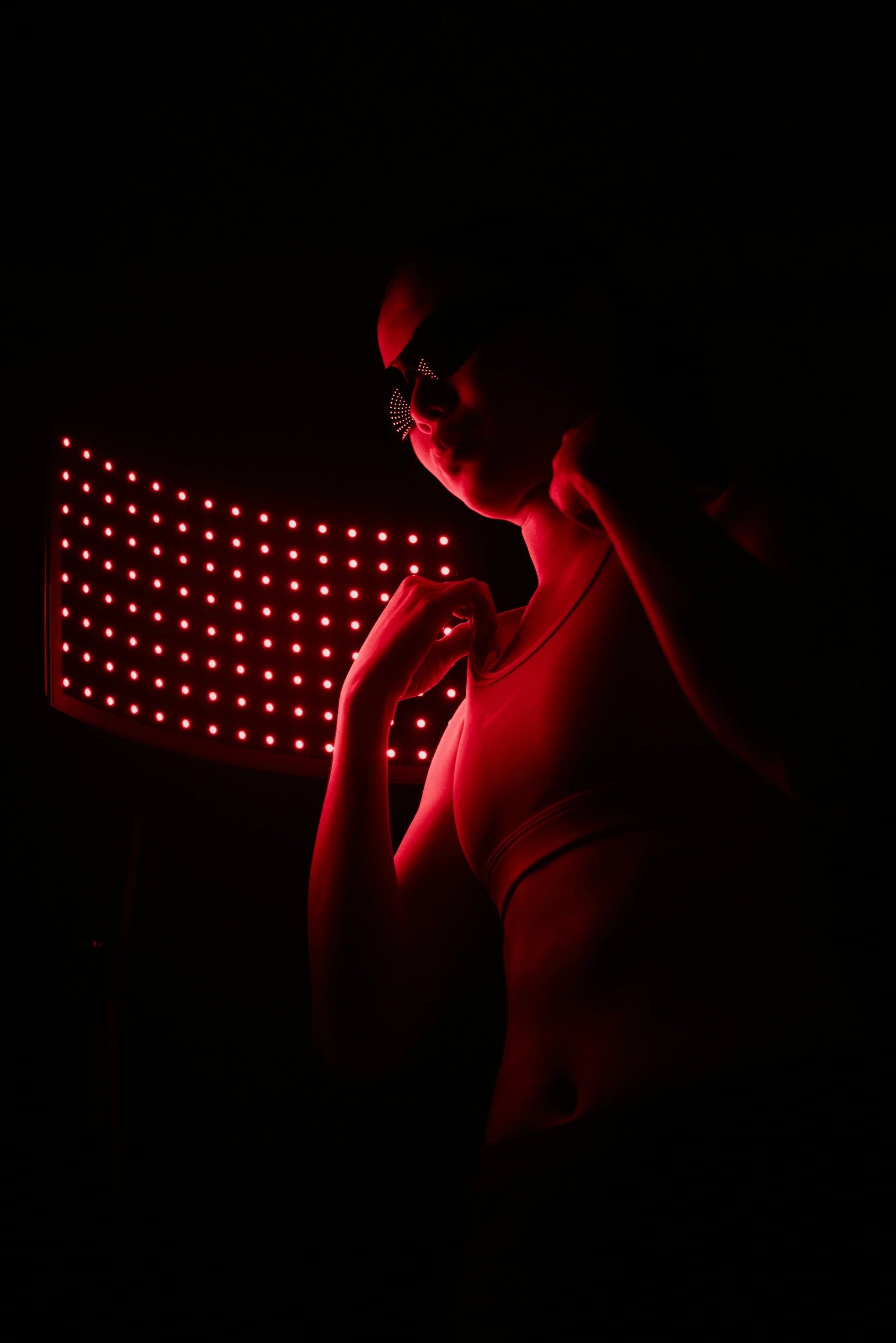
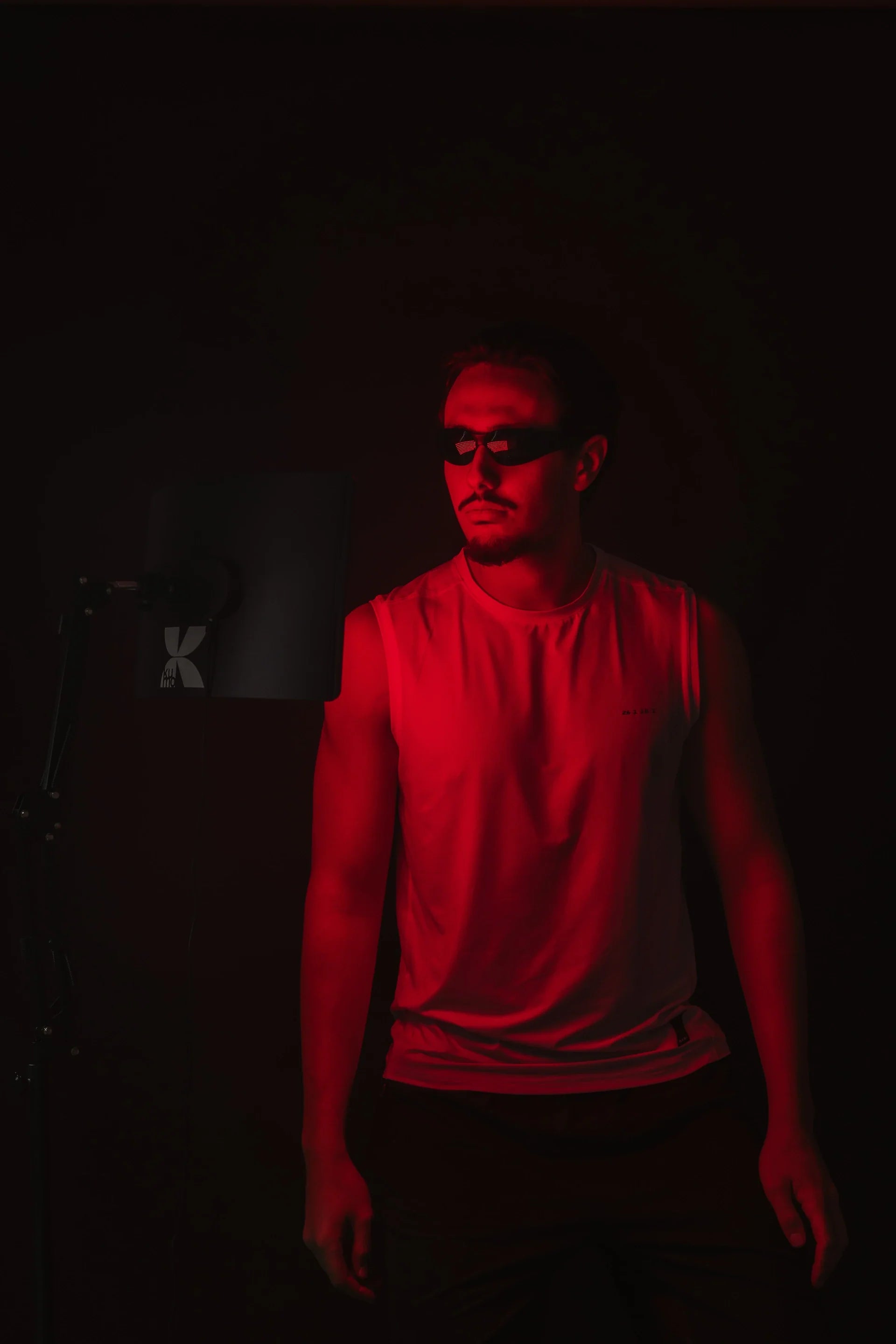
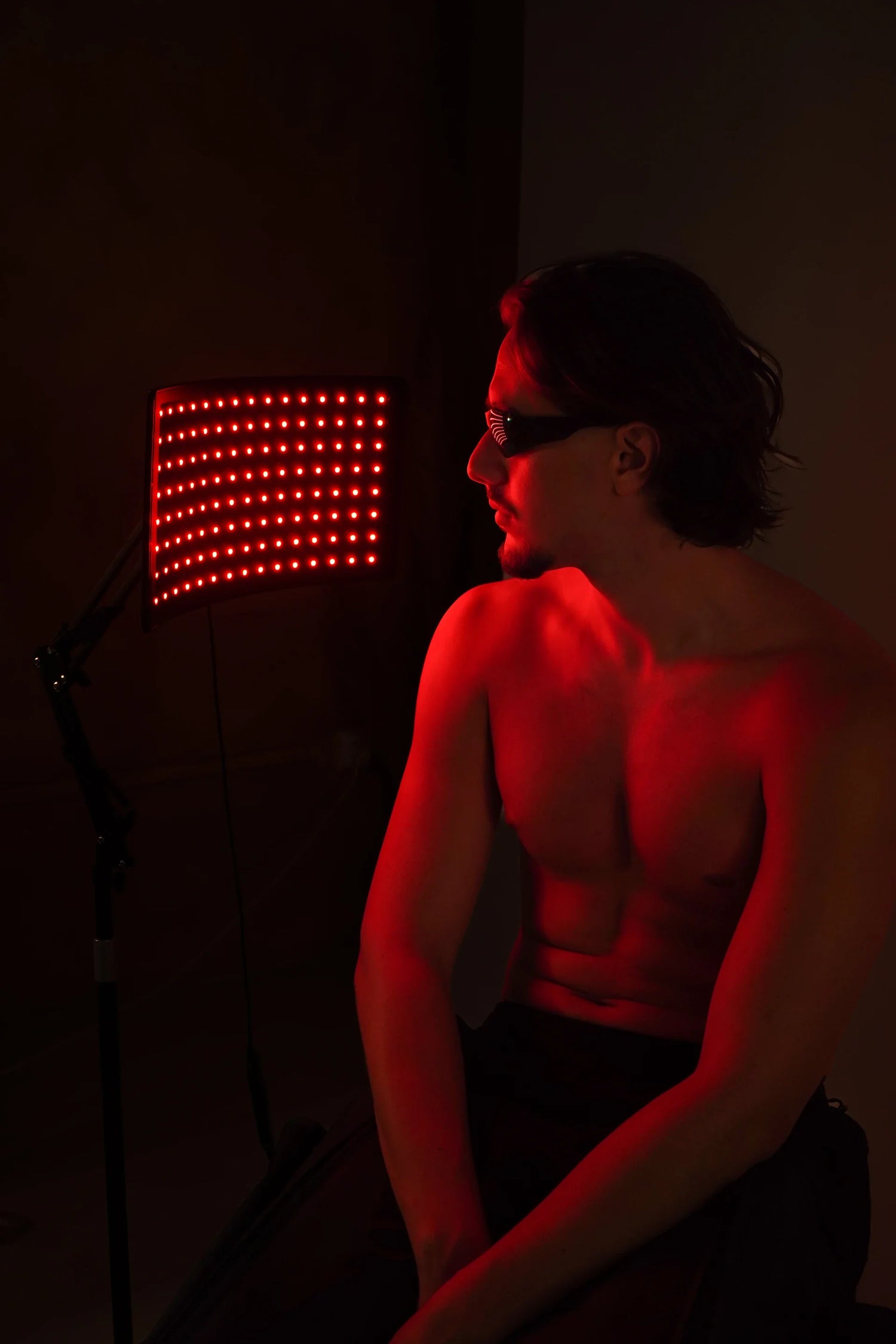
The KumoLux panel supports muscle recovery with full-body red and infrared light.
- 660 nm red + 850 nm infrared light
- Full-body muscle recovery
- Clinically validated biohacking protocols
€399,00€499,00
−10% on your 1st order when you subscribe to the newsletter

In this article we will bring the theory down to earth: realistic penetration , tissue targets , indicative protocols , safety and how to combine photobiomodulation with other recovery tools (without falling into exaggerated promises).
Important note: Light therapy (photobiomodulation) is not a substitute for medical diagnosis or treatment. If you have a medical condition, photosensitivity, are taking photosensitizing medication, or are undergoing cancer treatment, consult a healthcare professional before exposure.
Personalized protocol · included with your purchase
Want us to tell you how to use it in your case?
With your purchase, our experts set up your red and infrared light sessions for your sport and goal.
Message us on WhatsAppOur experts reply · no obligation
What is photobiomodulation (PBM) and why does “wavelength” change everything
PBM in one sentence: light that modulates cellular functions
Photobiomodulation (PBM, formerly known as LLLT) uses red and/or near-infrared light at non-thermal power levels to induce biological responses. One widely described mechanism is interaction with mitochondria —particularly with cytochrome c oxidase —which can trigger signals related to cellular energy and tissue repair. You can delve deeper into the mechanistic aspects in biomedical reviews such as Hamblin's (2018) on PubMed.
Recommended external source: Hamblin MR, 2018 (review on mitochondrial mechanisms in PBM).
The “therapeutic window”: why 660–850 nm is used
In biological tissues, absorption and scattering change with wavelength. This is why we speak of an optical/therapeutic window (approximately 600–1300 nm, depending on the context) in which light can penetrate effectively without being absorbed too quickly by water or blood. Tissue optics reviews, such as Jacques's (2013), explain how absorption and scattering vary across the spectrum.
on your first order when you join the newsletter
We send you the code instantly. No spam.
Recommended external sources: Jacques SL, 2013 (optical properties of fabrics).
660 nm vs 850 nm: physical differences that are noticeable in use
1) Visibility: red “seen”, NIR “not seen”
660 nm is visible red: it illuminates the surrounding environment and is often uncomfortable to look at the source. 850 nm is in the near-infrared: it is practically invisible , which can give a false impression of "low intensity." In practice, this affects two things:
- Perception of eye safety: with NIR you can expose yourself without the natural reflex to look away.
- Use in nighttime routine: visible red can be more visually intrusive if you do it close to bedtime, although the circadian impact depends on intensity, spectrum (if there is blue) and context.
2) Penetration: “deeper” does not mean “deep for everything”
The typical phrase " 850 nm penetrates more " is true in relative terms , but it is important to understand the nuance: most of the energy is lost in superficial layers and the dose that reaches a deep tissue can be much lower than the dose in the skin.
- In an experimental study with 850 nm on human skin samples, it was observed that the intensity was markedly reduced when passing through less than 1 mm of tissue; the authors conclude that most of the radiation is absorbed in the first millimeter (Esnouf et al., 2007).
- In another study on the penetration of 660 nm in different locations and thicknesses of human tissue (living and cadaveric), transmitted light was measured and it was concluded that penetration depended on irradiance , composition and thickness; they report that with certain levels of irradiance it was possible to penetrate tissues of <50 mm , but that for greater thickness disproportionate increases were required (Lynch et al., 2019).
Recommended external sources: Esnouf et al., 2007 (850 nm and skin penetration) and Lynch et al., 2019 (660 nm penetration into human tissues).
3) Target by tissue: skin vs deep structures
In practical terms:
- 660 nm is usually used when the main objective is skin (texture, appearance, skin comfort, superficial areas).
- 850 nm is often chosen when the target is muscle, joint, or deeper structures , assuming that the effective dose at the “actual target” will be lower and that dosimetry (time/distance/irradiance) matters more.
Practical guide: how to choose between 660 nm and 850 nm depending on your objective
Functional comparison (without marketing, based on usage criteria)
| Aspect | 660 nm (red light) | 850 nm (near infrared) |
|---|---|---|
| What you see | Visible red (evident brightness) | Virtually invisible (doesn't "warn") |
| Typical use | Skin, surface areas, care routines | Muscle, joints, deeper recovery |
| Penetration (in practice) | More superficial; highly dependent on power and tissue | Greater relative penetration, but with significant surface loss. |
| Eye comfort | It's annoying to look directly at (you tend to look away) | Risk of involuntary exposure due to invisibility |
| When does it usually make sense to combine them? | When you want to work on “layers”: skin + underlying tissue, or general well-being + local target | |
| Most common indicator of “excess” | Redness/irritation if there is overexposure or photosensitivity | Overdosage due to overconfidence (not seen), or heat due to proximity/device |
Useful (and honest) evidence: what has been observed in studies with lengths close to 660 and NIR
660 nm and skin: clinical data with numbers
In the field of aesthetics and skin care, controlled trials with clear parameters do exist. For example, a randomized clinical trial (2023) compared red 660 nm PBM versus amber in a split-face design in 137 women (40–65 years old), with 10 sessions over 4 weeks and a dose of 3.8 J/cm² . They reported a 31.6% reduction in periorbital wrinkle volume with red (and 29.9% with amber). This is a concrete result, measured by a facial analysis device.
Recommended external source: Mota et al., 2023 (660 nm and reduction of periorbital wrinkles).
Red spectra + NIR on skin: when “wider” isn’t always “better”
A controlled study (published in 2014 , with the intervention performed between January and December 2012 ) evaluated PBM with polychrome spectra: 611–650 nm (red) versus 570–850 nm (broader), in 136 volunteers with 30 sessions . The authors report improvements in skin parameters and intradermal collagen density, but conclude that the broad spectrum showed no advantage over red in that context.
Recommended external source: Wunsch & Matuschka, 2014 (controlled assay with red and red+NIR) .
Recovery and pain: mixed evidence, useful as a supplement
In musculoskeletal pain and recovery, the evidence is heterogeneous (devices, dosage, sites, frequency). Even so, there are some interesting recent syntheses:
- A systematic review with meta-analysis (2024) on PBM in knee osteoarthritis included 10 studies (542 participants) and found a reduction in pain at rest versus placebo (with low/very low certainty of evidence, according to GRADE in that work).
- An umbrella review (2025) that reviews multiple meta-analyses of RCTs (more than 9000 patients aggregated) concludes that there are no results with high certainty evidence, but there are some with moderate evidence in specific domains (pain, disability, fatigue, etc.).
- and Umbrella review PBM (
Dosage: the real difference is not just 660 vs 850, but “how much energy is delivered”
Basic concepts to avoid getting lost
- Irradiance (mW/cm²): “power per area”.
- Time (so min): session duration.
- Fluence (J/cm²): total energy per area. Approximation: J/cm² = (mW/cm² × seconds) / 1000 .
- Distance : drastically changes the irradiance received by LEDs.
The two-phase response: more is not always better
PBM is often associated with a biphasic dose-dependent response (benefit with low/moderate doses and possible loss of effect or reverse effect with high doses). This is discussed in classic reviews in the field (e.g., Chung et al., 2012) and is observed in experimental cell studies where lower doses can favor mitochondrial viability/activity compared to higher doses (e.g., studies using 660 nm in human fibroblasts published in 2020).
Recommended external sources: Chung et al., 2012 (review “nuts and bolts”) and In vitro dose-response study (2020, 660 nm).
Guiding protocols (without promising miracles)
If your target is skin (focus 660 nm)
- Frequency: 3–5 times/week at the beginning; then maintenance 2–3 times/week.
- Key points: consistency > intensity; avoid combining with strong irritants if you have sensitive skin.
- Useful reference: In the 2023 RCT, the protocol consisted of 10 sessions over 4 weeks with a defined dose (3.8 J/cm²) and objective outcome measurement.
If your goal is muscle/joint recovery (850 nm focus)
- Frequency: 3–6 times/week depending on training load and tolerance.
- Key points: the effective dose at depth is lower; the technique (distance, area, time) becomes more relevant.
- Realistic expectation: the evidence is mixed depending on the condition and protocol; it is usually presented as a complement to strength, mobility, rest and recovery strategies.
Safety: what to do right from day one
Eyes: Avoid direct exposure, especially with NIR light
In eye research, studies have examined retinal safety thresholds under PBM or even intense NIR exposure (generally with lasers and controlled conditions). Practical advice for home use is to be cautious: do not look directly at the source and consider eye protection when working near the face, especially if there is an NIR component.
Recommended external sources: Ao et al., 2020 (safety in retinal PBM) and Lorach et al., 2015 (retinal safety with NIR in an experimental context).
Photosensitivity and common contraindications
- Retinoids (topical or systemic) and other photosensitizing drugs: increase the risk of irritation.
- Pregnancy : caution, especially regarding the abdomen, due to a lack of conclusive data for all scenarios.
- Oncology : PBM is used in clinical settings for side effects; safety depends on the indication and parameters. A systematic review (2020) by the WALT group discusses safety in cancer patients with follow-up clinical outcomes in specific indications.
Recommended external source: Bensadoun et al., 2020 (PBM in oncology, systematic review).
How does this fit into a “Kumo-style” recovery routine?
At Kumo, we talk about sustainable performance: creating a recovery routine you can maintain. Red/NIR light can be one piece, but not the only one. A practical way to structure it is by "layering":
- Local signal (light): exposure planned according to objective (skin vs muscle).
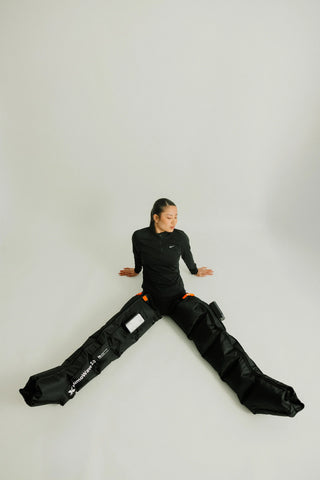
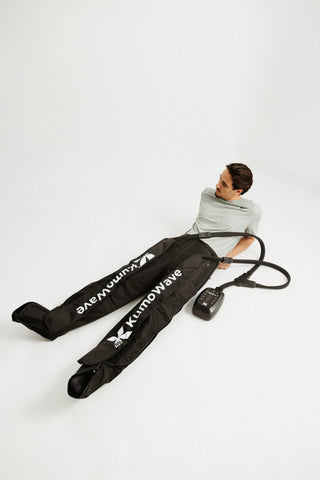
- Circulation and relief: On days when your legs feel heavy, pressotherapy helps create a ritual of relief and a feeling of lightness. You can see options in the pressotherapy collection .
- Soft tissue work: a percussive massage can help relax tense areas after training. At Kumo, the KumoPulse Air is a supporting tool.
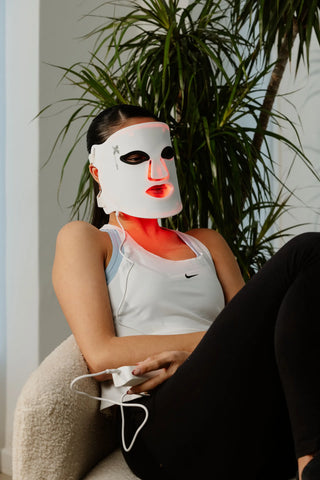
If your focus is on facial care and wellness habits using light, you can explore the LED light therapy section . To learn about the brand's overall approach and recovery philosophy, the starting point is Kumo (official website) .
Frequently Asked Questions (FAQ) about 660 nm, 850 nm and the Kumo focus
What is the purpose of 660 nm in a Kumo-type facial care routine?
The 660 nm wavelength (visible red) is often used when the primary focus is on the skin: a feeling of comfort, improved appearance, and support for surface regeneration processes. In terms of evidence, there are trials using 660 nm in defined protocols; for example, a 2023 randomized controlled trial in women aged 40–65 used 660 nm (3.8 J/cm², 10 sessions/4 weeks) and reported a reduction in periorbital wrinkle volume of approximately 31%. In a Kumo routine, consistency is key, and it's important to avoid overdoing it.
Is 850 nm "better" for muscle or joint recovery?
850 nm is often chosen because, compared to visible red light, it has greater relative penetration into tissue; therefore, it is associated with deeper targets (muscle, tendon, joint). That said, "reaching deeper" does not mean it delivers the same dose at depth as in the skin: surface loss is significant, and the actual dose depends on irradiance, distance, and time. For this reason, in Kumo therapy, 850 nm is well-suited as a complement to sleep, training load, mobility, and decompression tools.
Can I combine light therapy with pressotherapy on the same day (Kumo approach)?
Yes, it's a common combination in recovery routines because they work on different "layers": light as a local stimulus and pressotherapy as a strategy for comfort and a feeling of lightness. A simple way to do it is to do the light therapy session (target area) first, and then pressotherapy, when you're ready to relax and stay still. Keep the frequency consistent each week (same duration and same days) to observe trends, and adjust according to your tolerance. If you have a vascular condition, consult your doctor beforehand.
Which is better at night: 660 nm or 850 nm if I don't want to "wake up"?
In practice, 660 nm is very visible and can be more stimulating due to ambient brightness, although the circadian effect depends heavily on intensity and whether there is emission at shorter wavelengths (blues). 850 nm is almost invisible, which facilitates a routine without visually "polluting" the room, but requires eye caution because there is no reflex to look away. If your goal is relaxation, prioritize a short session, low intensity, and a dark environment afterward. Consistency matters more than power.
How do I know if I'm overdosing at home?
The most common signs of overuse are not usually "deep pain," but rather simple things: skin irritation, a sensation of heat from proximity, headaches if you're near your eyes, or fatigue from excessively long sessions. PBM is associated with a biphasic response: more isn't always better, and some experimental research shows that low doses can be more beneficial than high doses. Start with short sessions, increase gradually, and respect breaks. If there's an unexpected reaction, pause and reassess.
So what now?
If you want to make recovery a habit, the next step is to create a simple, repeatable routine: light (660/850 depending on your goal), discharge, and rest. You can explore Kumo 's recovery ecosystem, review LED light therapy , and complement it with compression therapy or a massager like the KumoPulse Air . If you need guidance on which approach best suits your routine, the contact form is available.

Red & infrared light
KumoLux Panel – Red and Infrared LED Panel
★★★★★ 4,8/5 · rated by verified customers
- 660 nm red + 850 nm infrared light
- Full-body muscle recovery
- Clinically validated biohacking protocols
€399,00€499,00· pay in installments with seQura or Klarna