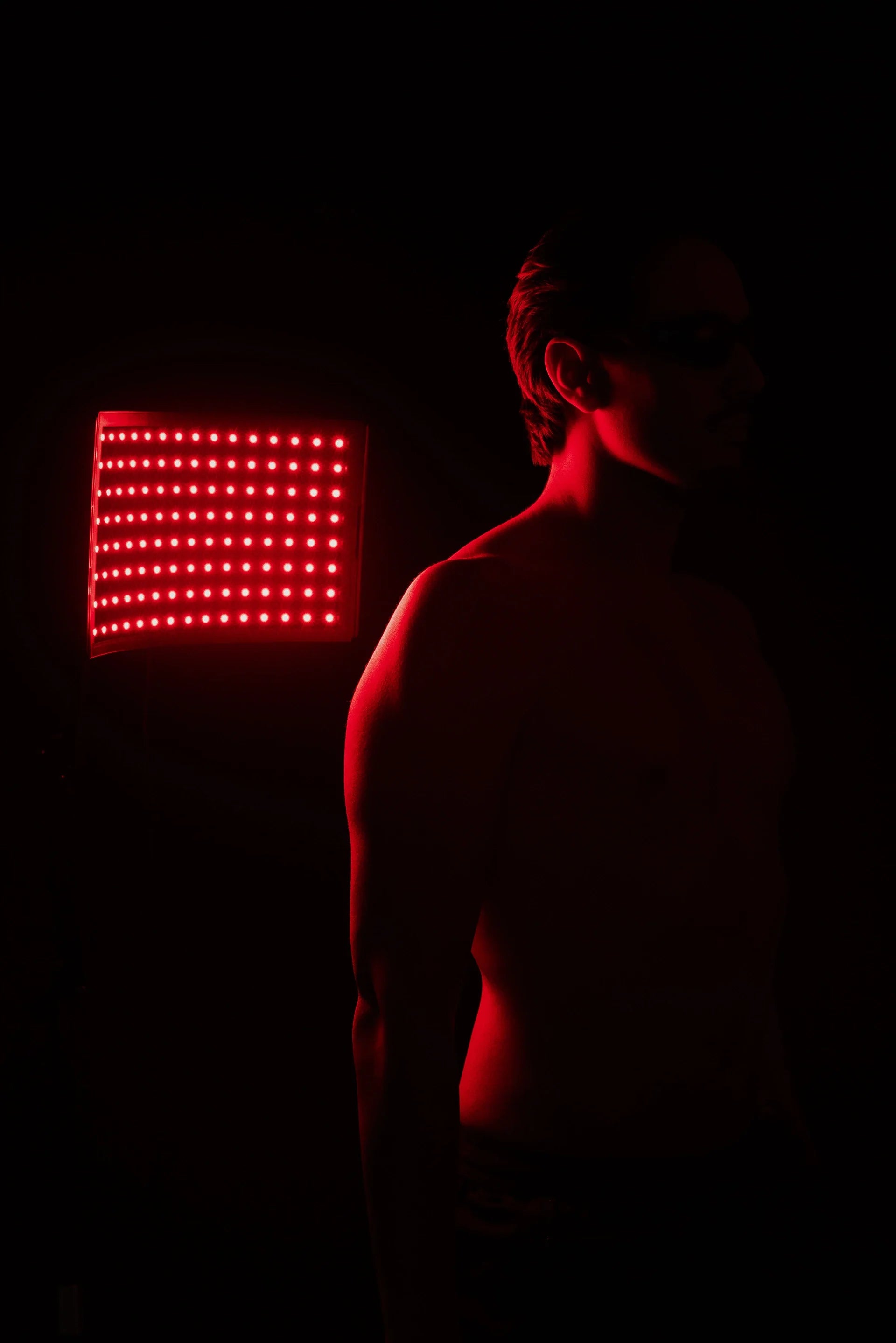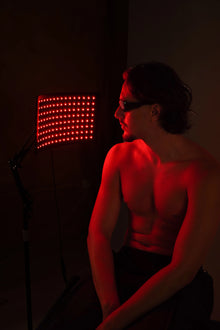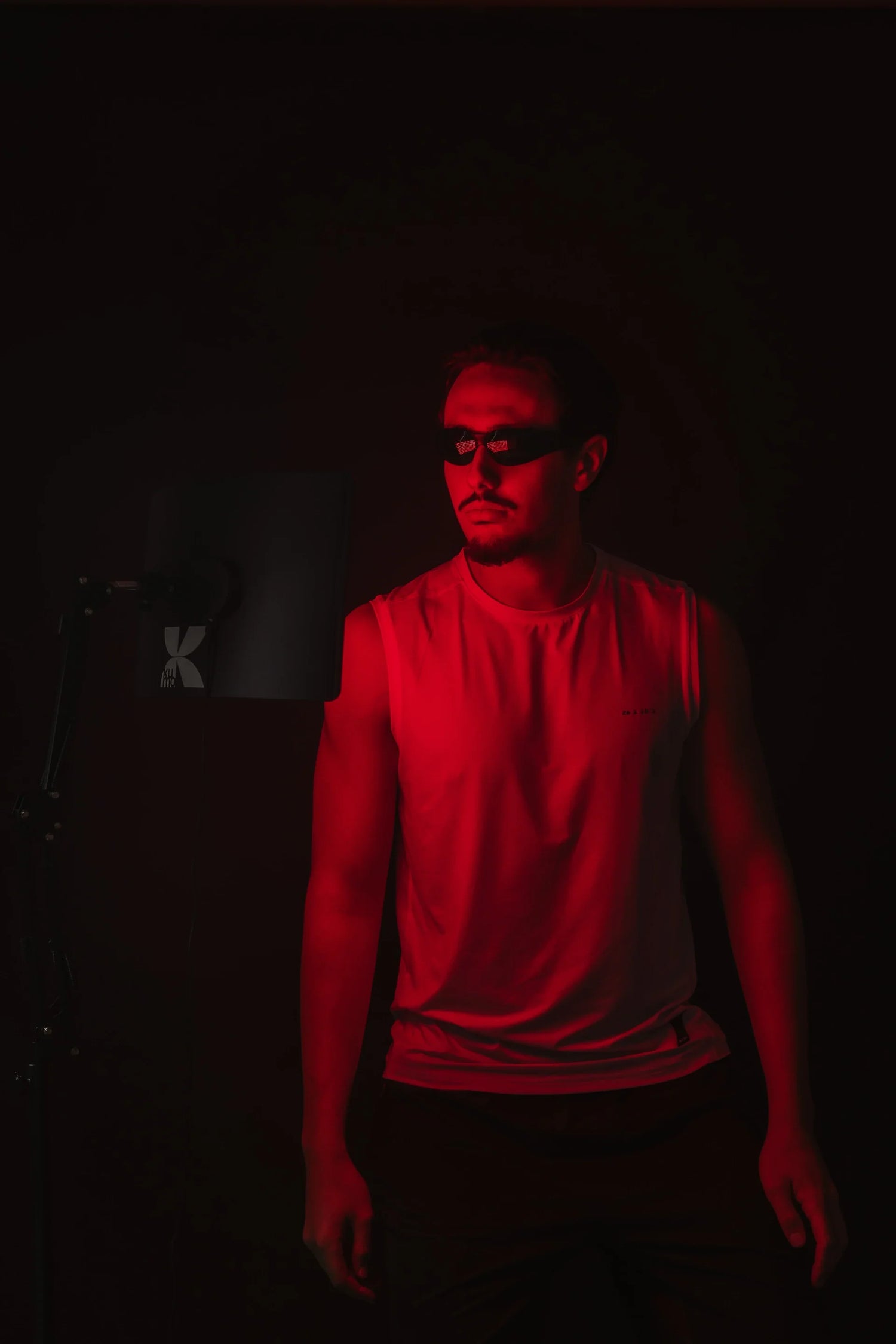
The day begins with light.
A morning routine using red light can help you enter a "calm + focus" mode from the very first minutes: less rushing, greater mental clarity, and a more "awake" feeling in your body without overstimulating yourself. In this guide, you'll see how to structure it step by step , what the evidence says about photobiomodulation (PBM), and how to realistically integrate it into the Kumo recovery ecosystem.
Red & infrared light
Recover faster, at home
★★★★★ 4,8/5 · rated by verified customers
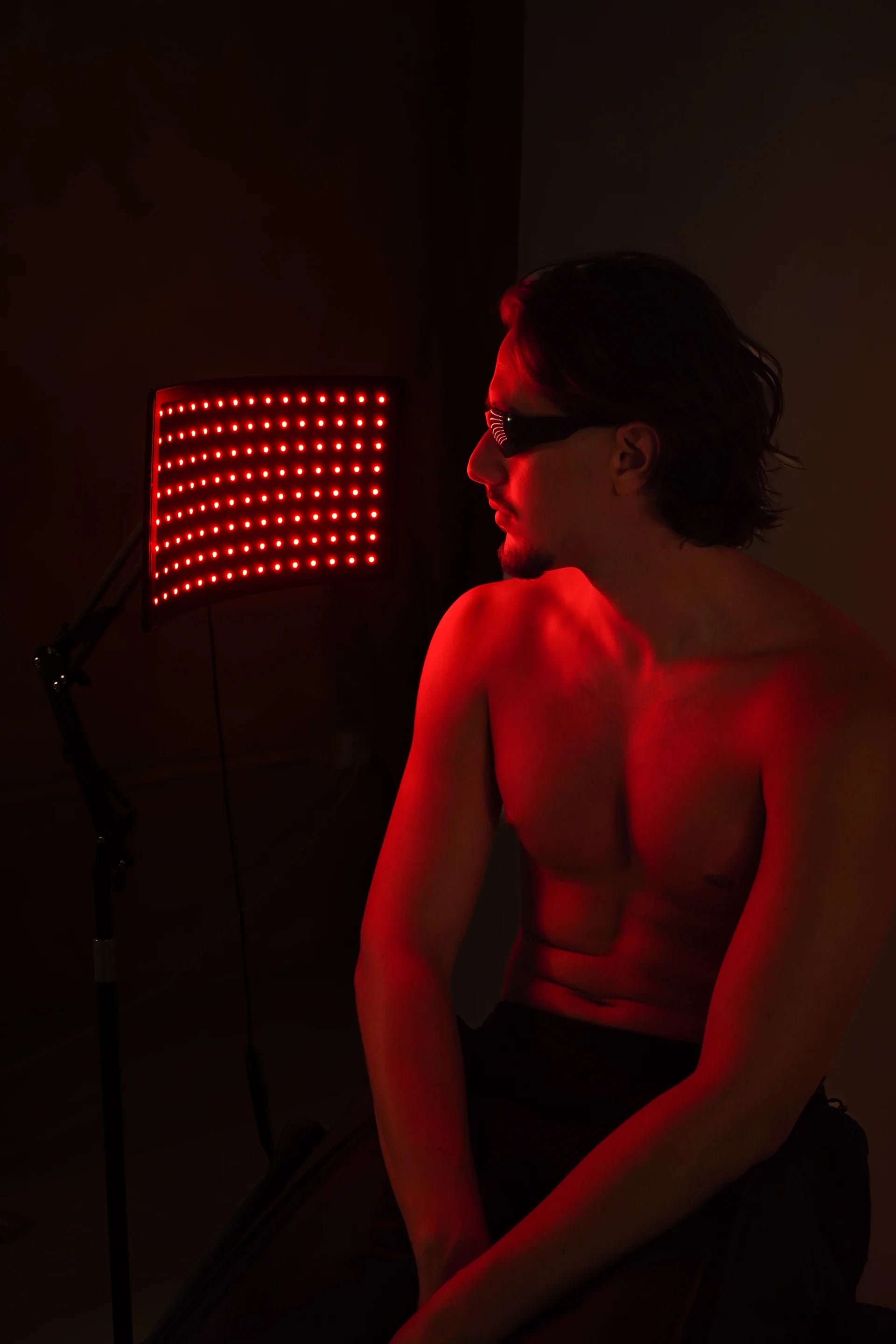
The KumoLux panel supports muscle recovery with full-body red and infrared light.
- 660 nm red + 850 nm infrared light
- Full-body muscle recovery
- Clinically validated biohacking protocols
€399,00€499,00
−10% on your 1st order when you subscribe to the newsletter

Important: Red light does not replace natural morning light for circadian rhythm; it works best as a complementary module for skin, recovery and mood regulation (feeling of well-being/relaxation) within a coherent routine.
Why morning light changes your day (and where red light fits in)
Light and biological clock: timing matters
Your circadian rhythm is primarily synchronized with light. In practical terms, bright light in the morning tends to advance your internal clock (making it easier to fall asleep and wake up earlier), while bright light at night tends to delay it.
Personalized protocol · included with your purchase
Want us to tell you how to use it in your case?
With your purchase, our experts set up your red and infrared light sessions for your sport and goal.
Message us on WhatsAppOur experts reply · no obligation
Therefore, for most people with "daytime" schedules, a key element of well-being is exposure to light upon waking (ideally outdoor light). Even in clinical settings, light therapy is scheduled for the morning when the goal is to shift the sleep-wake cycle to earlier times.
So… why use a red light in the morning?
Because red light is used in photobiomodulation (PBM): an application of red and/or near-infrared (NIR) light at low to moderate intensities to elicit biological responses (for example, in the skin or tissues). It doesn't aim to "trick" the brain like a 10,000 lux lamp, but rather to support recovery processes and promote feelings of well-being within your daily routine.
Furthermore, compared to more "blue" wavelengths, red lighting is generally less disruptive to melatonin in prolonged exposures: in a study comparing red vs. blue LEDs for 3 hours, blue maintained a more marked suppression, while with red, melatonin tended to recover over time.
on your first order when you join the newsletter
We send you the code instantly. No spam.
What is photobiomodulation (PBM) and what can it do for your morning?
The key idea (without jargon): cellular energy and signaling
PBM uses low-power red or near-infrared light to modulate cellular functions. A widely cited explanation is that a primary target is the mitochondria , particularly the cytochrome c oxidase enzyme, triggering changes in electron transport, redox signaling, and pathways associated with repair and adaptation.
Potential benefits (with realistic expectations)
- More "awake" skin : many people use LED masks to support luminosity, evenness and a calmer skin feeling (gradual, not immediate result).
- Muscle recovery : the evidence on performance/recovery is extensive but heterogeneous; there are meta-analyses that find small/moderate improvements in variables such as muscle endurance, although it depends on the protocol and the context.
- Functional calm : Integrating 10 minutes of red light with breathing, gentle movement, and less screen time can improve your "start" through behavioral means (habit + environment), in addition to any effects of the light itself.
Safety: things to keep in mind
In general, short-term red light therapy is considered non-invasive and usually has mild adverse effects (e.g., temporary irritation or redness), but dermatology guidelines insist on: following device instructions, wearing eye protection when indicated , and consulting if there are photosensitive conditions or a risk of hyperpigmentation (e.g., melasma or skin that is more reactive to visible light).
Golden rule: If you are on photosensitizing medication or have a history of melasma/hyperpigmentation, prioritize medical/dermatological criteria and conservative protocols.
Step-by-step morning routine (20–35 minutes) with red light
This routine is designed to be sustainable : brief, repeatable, and adaptable. If you only do one part, let it be this: light + breath + movement .
0) Preparation (30 seconds)
Prepare your device the night before: a clear space, a chair or mat, and a glass of water. The less friction, the more consistent you'll be.
1) Minute 0–2: hydration + air + quick “reset”
- Drink water.
- Open a window or go out onto the balcony for 30–60 seconds.
- Avoid looking at your mobile phone "on loop" (news/social media) before starting.
2) Minute 2–7: natural light (even if brief)
Before or after the red light, try to expose yourself to natural sunlight in the morning (if possible, without sunglasses for a few minutes). It's the most reliable anchor for your circadian rhythm and daytime alertness.
3) Minute 7–17: Red light session (PBM) with intention
This is where you can integrate the "technological" part of your routine. If you use a mask or a red light device, do so with a simple goal:
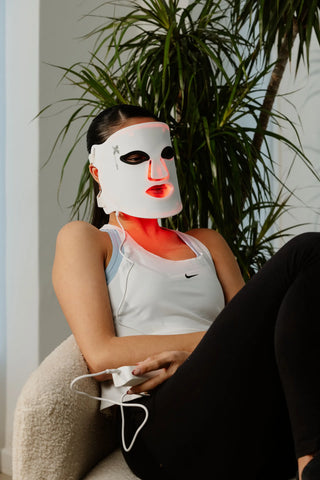
- Skin/face: 5–10 minutes as a care module (consistency > intensity).
- Body: 8–15 minutes on an area you want to gently “activate” (upper back, quadriceps, calves), especially if you train.
If you're looking for a starting point with the brand's products, you can explore Kumo's LED light therapy collection and its high-end recovery approach. You can also learn more about the brand's philosophy on Kumo's official website .
How to dose without making up numbers: use the “method”
Dosage in PBM is usually expressed as energy per unit area (J/cm²), which depends on the actual power of the device and the distance. Since these specifications vary (and should not be assumed), a safe way to proceed is:
- Start with the minimum time recommended by the manufacturer.
- Maintain the same distance/position for 2 weeks.
- Evaluate changes (skin, recovery, leg sensation, sleep quality) and adjust only one variable at a time.
If your device emits irradiance (mW/cm²), a useful formula is: J/cm² = (mW/cm² × seconds) ÷ 1000. For example: 50 mW/cm² for 600 s (10 min) ≈ 30 J/cm². This is just a mathematical example; the actual figure will depend on your equipment and usage.
4) Minute 17–25: mobility + breathing (to “land”)
- 2 minutes of slow nasal breathing (e.g., inhale 4s, exhale 6s).
- 4–6 minutes of mobility: thoracic spine, hips, ankles.
- 1–2 minutes of gentle stretching (without forcing).
5) Minute 25–35: Simple breakfast + plan for the day (1 decision)
Closing your routine is what most affects your clarity: choose a priority (the most important task) and define the first concrete step. If you drink coffee, try to do so after you've breathed or moved your body, not as an automatic first action.
Protocols according to your goal (skin, recovery, focus)
If your focus is on skin (clarity and calm)
Think of red light therapy as a "habit of consistency." In skincare, changes are usually gradual and depend on the overall routine (cleansing, moisturizing, sun protection, sleep). From a dermatological safety perspective, LED therapy is generally considered safe when used correctly, but it's not a "anything goes" approach: follow instructions, protect your eyes, and monitor for irritation or blemishes.
If your focus is muscle recovery (without magical promises)
PBM has been studied in sports with mixed results. Recent meta-analyses have found small to moderate improvements in muscular endurance and some recovery measures, but the effect depends on several parameters (wavelength, dose, timing, muscle group, training level).
There are also trials where no clear benefits are observed (for example, in delayed onset muscle soreness/DOMS in untrained individuals, the result may be null or inconsistent). This reinforces an important point: use it as a support , not as a substitute for sleep, nutrition, and training program.
If your focus is on mental calmness (gentler than blue light)
For many people, red light fits well into calming routines because it's not as "activating" as intense white/blue light, and it can be combined with breathing exercises or journaling. Furthermore, compared to blue light, red light appears to be less disruptive to melatonin production during prolonged exposure.
Note: If your main goal is to adjust your circadian clock (waking up earlier, daytime sleepiness), the mainstay remains bright morning light (natural or therapeutic when appropriate).
Common mistakes (and how to fix them in 48 hours)
- Use red light but skip natural light: add 3–5 minutes outside. It's the most efficient setting.
- Increasing time/intensity too quickly: if you notice irritation, decrease duration or increase distance and then progress slowly again.
- Not protecting eyes when required: wear eye protection if the device indicates it (especially near the face).
- Looking for results in 3 days: In skin and recovery, the useful sign is usually a "trend" within weeks, not an immediate dramatic change.
- Don't make it too long a routine: 12 minutes a day is better than 45 minutes once a week.
Quick checklist to make your routine consistent
Table: Morning routine with red light (minimalist version and full version)
| Block | Minimalist (12–15 min) | Complete (20–35 min) | Aim |
|---|---|---|---|
| Water + air | 1–2 min | 1–2 min | Soft activation |
| Natural light | 2–3 min | 5 min | Anchoring circadian rhythm and daytime alertness |
| Red light (PBM) | 6–8 min | 8–15 min | Skin/recovery/calming ritual |
| Breathing + mobility | 3–4 min | 8–10 min | Mental clarity and a "soft" body |
| Plan of the day | 1 min | 2–5 min | Priority and focus |
How to integrate the Kumo approach (without complicating things)
Kumo treats recovery as a habit: aesthetics, technology, and performance in a single language. If your morning is the "start," the rest of the day can be sustained with complementary recovery tools:
- LED/red light therapy as the basis of your routine (skin and wellness): ideal in the morning or evening, depending on your lifestyle. (Already seen above with the LED therapy collection.)
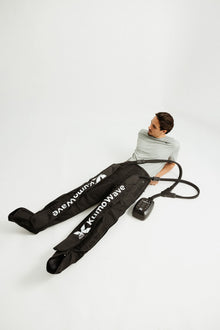
- Pressotherapy if you tend to have tired legs or are looking to take care of circulation on days of long periods of sitting or demanding workouts: you can discover it in Kumo's pressotherapy collection .
- Deep muscle massage when you notice points of tension or localized stiffness: as a point support, a massage gun-type device can fit (for example, KumoPulse Air ) to relieve specific areas after training or at the end of the day.
Useful resources (if you want to delve deeper without the noise)
- CDC/NIOSH: Effects of light on circadian rhythms .
- NIH (NHLBI): Light therapy and sleep synchronization .
- Review in PMC on photobiomodulation mechanisms (Hamblin, 2018) .
- PMC study comparing red vs. blue light on melatonin .
- American Academy of Dermatology: Safety and Precautions .
- Meta-analysis (2024) on PBM and resistance/recovery .
- Essay (2012) on red light and sleep in athletes .
FAQ: Frequently asked questions about Kumo and a red light morning routine
What is the best time to use the red light in the morning to feel calmer?
In practice, it works well within the first 60–90 minutes after waking up because it helps you create a "wake-up ritual" that prevents you from rushing into a workout. If your priority is your circadian rhythm, first make sure you're exposed to natural light (even if it's just for a few minutes) and then use red light as a care/recovery module. If you train very early, you can use red light after some light movement; if you train late, reserve deep recovery for the afternoon or evening.
Can the red light replace going outside in the morning?
- 3–10 minutes of outdoor light upon waking and (
- 5–15 minutes of red light while breathing or doing mobility exercises
How long does it take to see results with an LED mask or red light therapy?
It depends on the goal and consistency. For skin, the usual approach is to look for trends (less dullness, better tolerance, a feeling of calm) over several weeks, not "miracles" in days. In recovery, some people notice "lighter" legs or muscles in the short term, but the actual result usually depends more on the overall picture: sleep, hydration, training, and stress. If you want to measure it, use a simple 14-day log (energy upon waking, sleep quality, muscle stiffness).
Is red light safe if I have melasma, hyperpigmentation, or darker skin?
It's best to be conservative here. Dermatological recommendations suggest caution because some skin types may be more sensitive to visible light, and in certain cases, it can worsen hyperpigmentation or melasma (sometimes due to the device's heat). Start with short sessions, monitor the temperature, avoid using it on active pigmentation outbreaks, and discontinue use if you notice new or darker spots. It's wisest to consult a dermatologist, especially if you're undergoing depigmenting treatment or have a history of melasma.
Can I combine red light therapy with my skincare routine (vitamin C, retinoids, acids)?
In general, the combination depends on your skin's tolerance and the risk of irritation. As a general rule: use red light on clean, dry skin and apply active ingredients afterward if your skin tolerates it. If you're using retinoids or acids and experience sensitivity, alternate days or reduce the intensity/time. Avoid making too many changes at once: adjust the light frequency first, and then the active ingredients. If you have rosacea, dermatitis, or persistent irritation, prioritize a minimal routine and consult a professional.
So what now?
If you want to make recovery a habit, you can start with a simple base: red light therapy + mobility in the morning, and a recovery module (pressotherapy or massage) when your body needs it. Explore the Kumo range in their shop and, if you need guidance on what best suits your lifestyle, get in touch through the contact page .

Red & infrared light
KumoLux Panel – Red and Infrared LED Panel
★★★★★ 4,8/5 · rated by verified customers
- 660 nm red + 850 nm infrared light
- Full-body muscle recovery
- Clinically validated biohacking protocols
€399,00€499,00· pay in installments with seQura or Klarna