
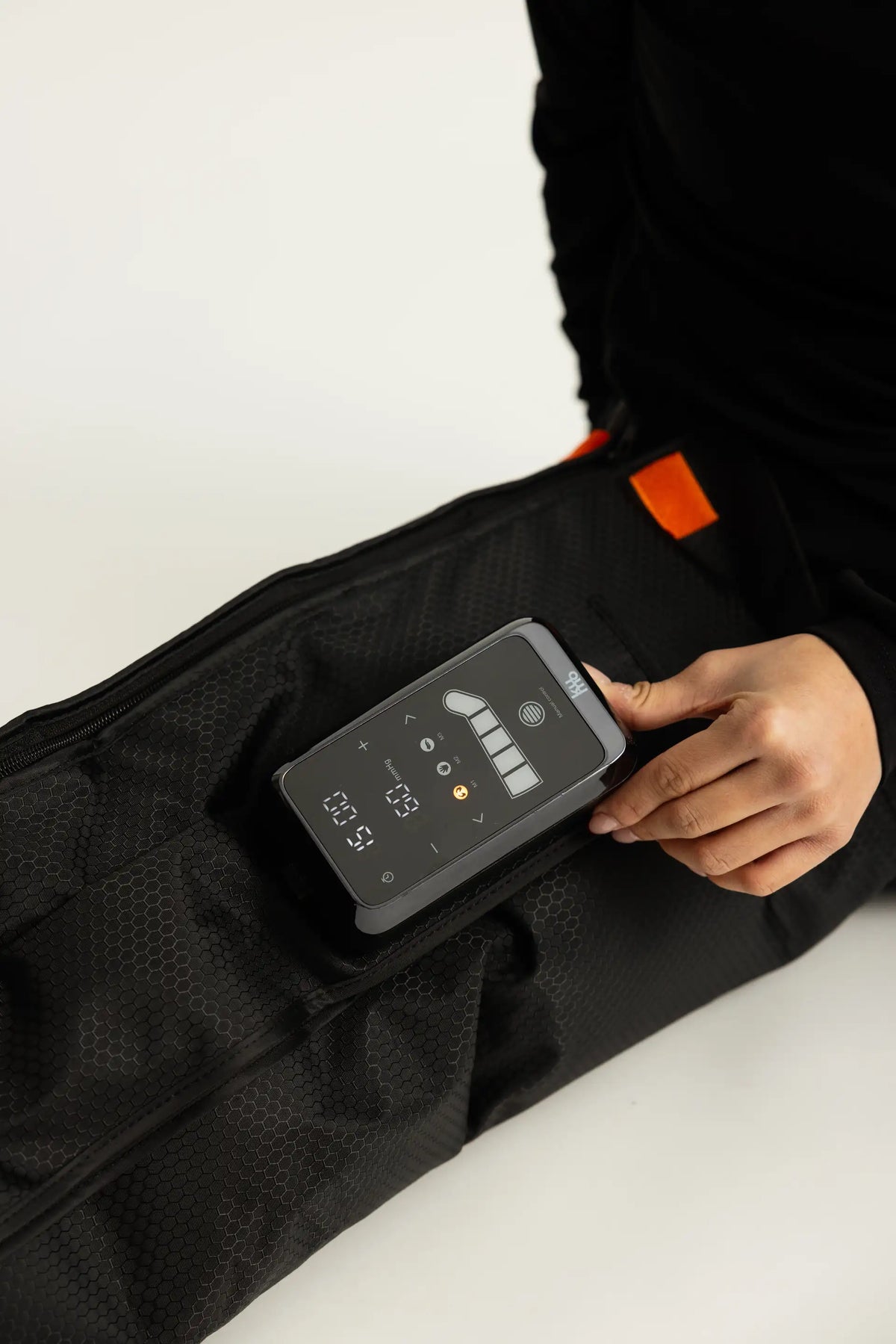
HYROX demands both engine and power.
If you're preparing for this event or for any hybrid race, the goal isn't just to run more, but to arrive with enough strength to push, pull, carry, and repeat without losing your technique. The official format alternates 1 km of running with one functional station, eight times over, until you complete 8 km and 8 stations.
Pressotherapy at home
End the day with light legs
★★★★★ 4,8/5 · rated by verified customers
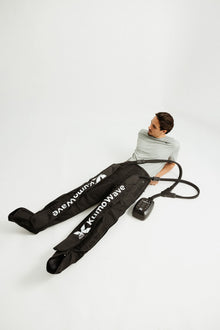
KumoWave pressotherapy boosts circulation and helps drain fluid with sequential compression, in 20-minute sessions at home.
- Boosts circulation and helps drain fluid
- Chamber-based compression, adjustable to you
- Sequential compression that mimics manual drainage
€799,00€999,00
−10% on your 1st order when you subscribe to the newsletter

What HYROX is and why it feels so demanding
The organization presents it as a fitness race for a broad audience, and the official rulebook confirms the same pattern of running and stations across every event. If you want to read the primary source, the official explanation of the HYROX format and the official season rulebook make clear what is assessed and why the race punishes poor effort management so heavily.
In practice, the difficulty comes from stacking fatigue on top of fatigue. Running with a high heart rate, moving into sleds, rowers, carries, lunges, and wall balls, then going back out to run with no real pause, forces you to train three things at once: endurance, useful strength, and the ability to recover between blocks.
Personalized protocol · included with your purchase
Want us to tell you how to use it in your case?
With your purchase, our experts prepare a personalized usage protocol for your case: sport, circulation, fluid retention, pregnancy or lipedema.
Message us on WhatsAppOur experts reply · no obligation
- Running fast isn't enough if your posture collapses at the stations afterward.
- Strength without running usually falls short across the whole event.
- Recovery between sessions matters as much as the training itself.
That design forces you to think of your preparation as a whole, not as a pile of separate sessions.
How to prepare for a hybrid race without improvising
The best preparation starts from a simple fact: if the official format alternates running and stations, your week should alternate running, strength, and technique too. Kumo Balance's noninvasive wellness technology fits precisely into that idea of adding complementary tools for recovery, not of replacing specific training.
Aerobic base and pace tolerance
Start by building a base that can hold several kilometers without every surge emptying you out. For most people, it works well to combine one easy run with another more controlled one, so your heart and legs learn to work with accumulated fatigue. That way you train the engine, but you also learn to run after pushing, pulling, and carrying.
on your first order when you join the newsletter
We send you the code instantly. No spam.
Specific strength for the stations
In HYROX, the lunge, the push, the pull, the core, and your grip all matter a great deal. That's why your strength sessions should resemble what you'll do on race day: squats, hip hinges, lunges, sled work, rowing, and carries. You don't need to chase maximum exhaustion in the gym; you need strength that serves you once your legs already have work in them.
Technique, transitions, and effort economy
Many people lose time and energy in the station changes, not in the station itself. Practice entering and leaving calmly, breathe before you start each block, and learn to break the effort into clean repetitions. If you're in weeks with a heavy load, it can help to plan with a logic close to avoiding accumulated fatigue week after week.
A 6-week guideline plan
The table below is a practical guide, not a fixed plan. It's built from the official pattern of 8 km and 8 stations and from current evidence on post-exercise recovery. To go deeper into that approach, you can look at the meta-analysis on recovery techniques and the review on pneumatic compression.
| Phase | Focus | What to do | How it should feel |
|---|---|---|---|
| Weeks 1 and 2 | Base and general strength | Several easy runs, several strength sessions, and one technique session | You finish with margin and without endless DOMS |
| Weeks 3 and 4 | More specificity | 1 km blocks, specific stations, carries, and short transitions | You feel fatigue, but you hold the quality |
| Weeks 5 and 6 | Simulation | Mini blocks with running and stations, steady pace, and little improvisation | You recognize race effort without ending up empty |
| Final 5 to 7 days | Tapering | Less volume, some intensity, and more rest between sessions | You arrive fresh, with no urge to try anything new |
The mistakes that cost the most time and energy
- Training only the running and forgetting useful strength.
- Going out too hard on the first stations.
- Not practicing transitions or breathing under fatigue.
- Leaving recovery until the end of the block.
In an event like this, consistency is usually worth more than one heroic session. The official format itself and the evidence on active recovery and compression both point that way.
If you want to set up a simple, repeatable at-home sequence, this at-home recovery routine with pressotherapy, red light therapy, and massage can serve as a reference for organizing your loading days better. (Kumo Balance)
How to recover better after training and competing
The most useful recovery is usually the kind that combines gentle movement, enough sleep, and coherent nutrition. A broad meta-analysis found that active recovery, massage, compression, and other techniques can reduce DOMS, although the effect size varies. Along the same lines, a 2024 review on pneumatic compression observed small benefits for muscle function and the sensation of soreness; in those studies, the most commonly used protocols ran around 20 to 30 minutes and roughly 80 mmHg, always as a research reference and not as a universal prescription.
The next 24 hours
- Walk for 10 to 20 minutes to loosen the body up.
- Hydrate regularly and don't put off your meal.
- Include a meal with protein and carbohydrates after the effort.
- Prioritize a long night without screens late on.
The evidence particularly supports the combination of gentle activity, protein, and nighttime rest. A 2023 review found significant effects of protein in preserving isometric strength after exercise-induced muscle damage, and another review showed that each additional hour awake before the effort was associated with a drop of roughly 0.4% in performance.
If sleep is hard after a tough week, this approach to pressotherapy and rest pairs very well with a calmer recovery night. (Kumo Balance)
How to fit in pressotherapy, red light therapy, and massage
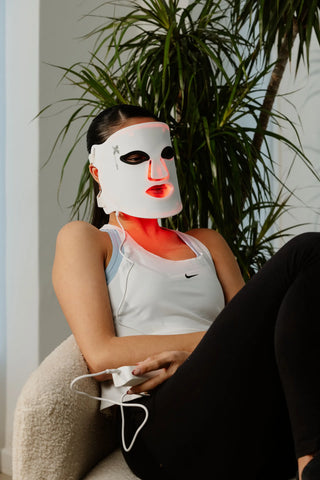
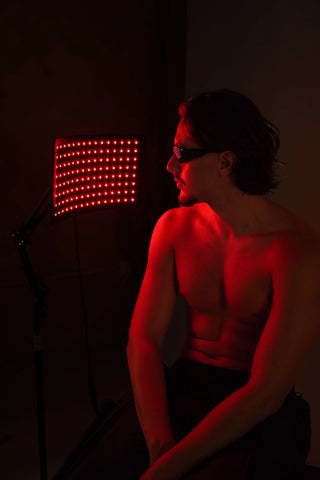
Within an at-home wellness ecosystem, pressotherapy, photobiomodulation, and percussive massage can be complementary tools to support the feeling of lighter legs and better rest. An at-home recovery routine with pressotherapy, red light therapy, and massage shows how to organize them without turning them into an obsession. Light therapy has also shown promising signals for delayed onset muscle soreness, although the quality of the evidence is still low.
If you want to understand how those pieces come together within the brand's approach, Kumo Balance's noninvasive wellness technology sums up the logic of pressotherapy, LED therapy, and percussive massage as supporting tools for a daily routine. (Kumo Balance)
When to see a professional
If something doesn't fit a simple overload, stop. Seek medical assessment if the pain is sharp or getting worse, or if you notice one-sided swelling, heat, redness, fever, shortness of breath, chest pain, loss of strength, numbness, persistent dizziness, or dark urine. These are signals that shouldn't be treated as normal recovery.
And as a precaution, any compression or massage tool should be paused if you have a recent injury, a skin infection, an open wound, or intense discomfort while using it. Johns Hopkins explains that some people with ulcers, burns, or peripheral vascular disease shouldn't use pneumatic compression, and the NHS leaflet adds clear precautions around cellulitis, acute deep vein thrombosis, heart failure, and open wounds.
In the case of the massage gun, the evidence on indications and contraindications remains limited, and rare adverse events have been described when it's used improperly. As a cautious reference, Mayo Clinic's massage safety guidance is a reminder to flag recent fractures, wounds, clotting disorders, infectious diseases, and other conditions that call for care. On top of that, published cases on percussive massage advise avoiding use over the eye area and, as a precaution, not working on anatomically delicate areas.
Frequently asked questions about HYROX
What is HYROX, and what does this hybrid-format race that mixes running and strength stations involve?
HYROX is a fitness race that alternates 1 km of running with one functional station, eight times in a row, until you complete 8 km and 8 stations. The organization presents it as a global, repeatable format designed for different levels. In practice, it demands running with fatigue, moving sleds, rowing, carrying, jumping, and doing wall balls without losing your rhythm. That's why it isn't wise to prepare with easy runs alone: strength and technique are a central part of the result.
How should you train for HYROX when the goal is 8 km of running and 8 functional stations?
A week with running, strength, and one specific station session usually works well, without forgetting a deload when fatigue climbs. The goal is to arrive with a steady pace and without losing technique, not to nail every workout as if it were a race. The most useful approach mixes controlled running, useful strength work, short transitions, and sessions where you practice accumulated effort. If you come more from the gym, add more running; if you come from running, add more strength.
What gear do I need to compete in HYROX, in clothing, shoes, and accessories?
The basics are comfortable clothing, closed shoes, and socks that minimize chafing. The official rulebook requires closed footwear during the race and allows certain specific accessories, but it also restricts others for safety reasons. The most sensible thing is to test everything in training and not to try anything new on race day. If you have doubts about permitted equipment, check the rulebook for the relevant season and avoid accessories that could get in your way during lunges, pushes, or carries.
What are the official HYROX rules for races in the United States?
In the United States, the official rules for the relevant season apply, just as at every other event. That includes completing the 8 km and 8 stations in the set order, respecting your assigned start, wearing the timing chip on your ankle, and meeting the movement standards for each station. There are also rules about permitted equipment and about the correct use of each zone. The prudent move is to review the updated rulebook before you travel, because it's the document that overrides old videos or social media advice.
How do you recover after a HYROX race, and what recovery exercises do coaches recommend?
After the race, prioritize gentle walking, hydration, eating, and sleeping. The evidence particularly supports active recovery, massage, compression, and sufficient protein intake, although no technique replaces rest. If you want something simple, many coaches recommend a gentle walk, light mobility, calm breathing, and a good night's sleep before loading again. And if you also use pressotherapy, red light therapy, or percussive massage, think of them as allies in your routine, not as shortcuts.
So what now?
If you want to turn all of this into a sustainable habit, start with the Kumo Balance home page and explore at-home pressotherapy solutions to fit recovery into your week with more order and less friction. (Kumo Balance)
KumoWave pressotherapy
Choose your at-home pressotherapy
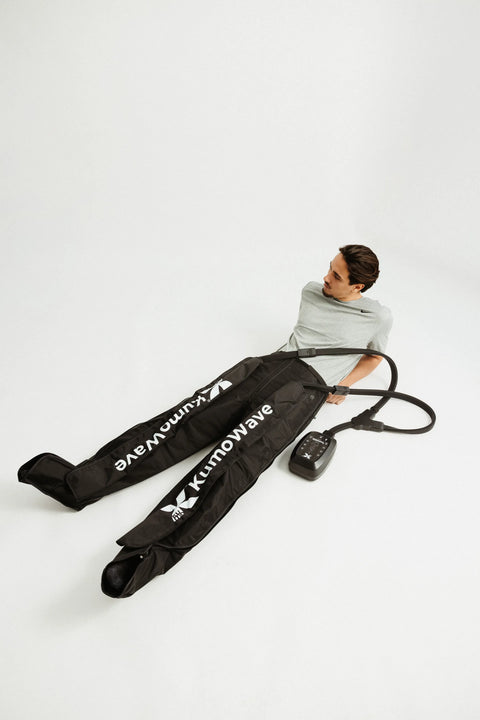
KumoWave Elite – Pressotherapy Pants
Full-coverage trousers. Ideal for lipedema, fluid retention and intensive use.
€799,00 €999,00
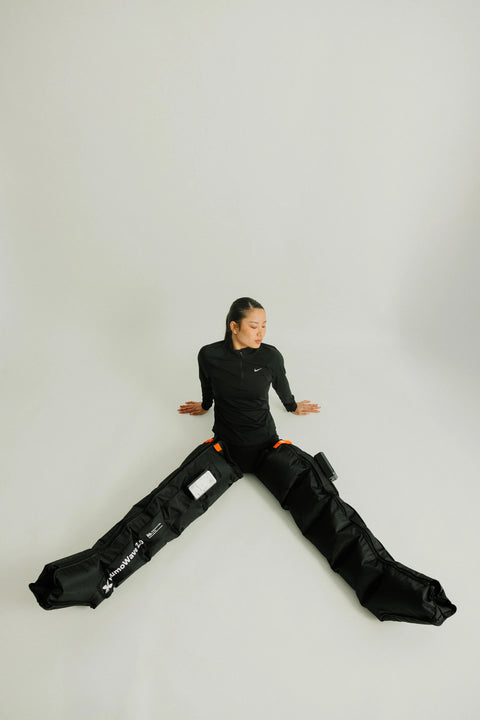
KumoWave 2.0 - Wireless Pressotherapy
Wireless, lightweight boots. Perfect for daily use and recovery.
€499,00 €599,00