Recover better without leaving home.
If you train, spend many hours sitting, or experience heavy legs and sore muscles, a home routine combining compression therapy , red light therapy (photobiomodulation) , and percussion massage can help you make recovery a sustainable habit. This guide will show you how to structure it clearly (without unnecessary details), with realistic timelines, and based on current evidence.
Pressotherapy at home
End the day with light legs
★★★★★ 4,8/5 · rated by verified customers
KumoWave pressotherapy boosts circulation and helps drain fluid with sequential compression, in 20-minute sessions at home.
- Boosts circulation and helps drain fluid
- Chamber-based compression, adjustable to you
- Sequential compression that mimics manual drainage
€799,00€999,00
−10% on your 1st order when you subscribe to the newsletter

At Kumo, we see recovery as a lifestyle: aesthetics, technology, and performance. You can start by visiting Kumo's homepage to learn about the brand's approach.
Why combine these 3 technologies (and what each one brings to the table)
The three tools do not "do the same thing": they complement each other because they act on different levers of post-exertion well-being: feeling of relief , circulation/venous return , tissue quality , stiffness and, in the case of light, processes associated with muscle recovery and rest.
Personalized protocol · included with your purchase
Want us to tell you how to use it in your case?
With your purchase, our experts prepare a personalized usage protocol for your case: sport, circulation, fluid retention, pregnancy or lipedema.
Message us on WhatsAppOur experts reply · no obligation
Pressotherapy: supports circulation and provides a feeling of light legs
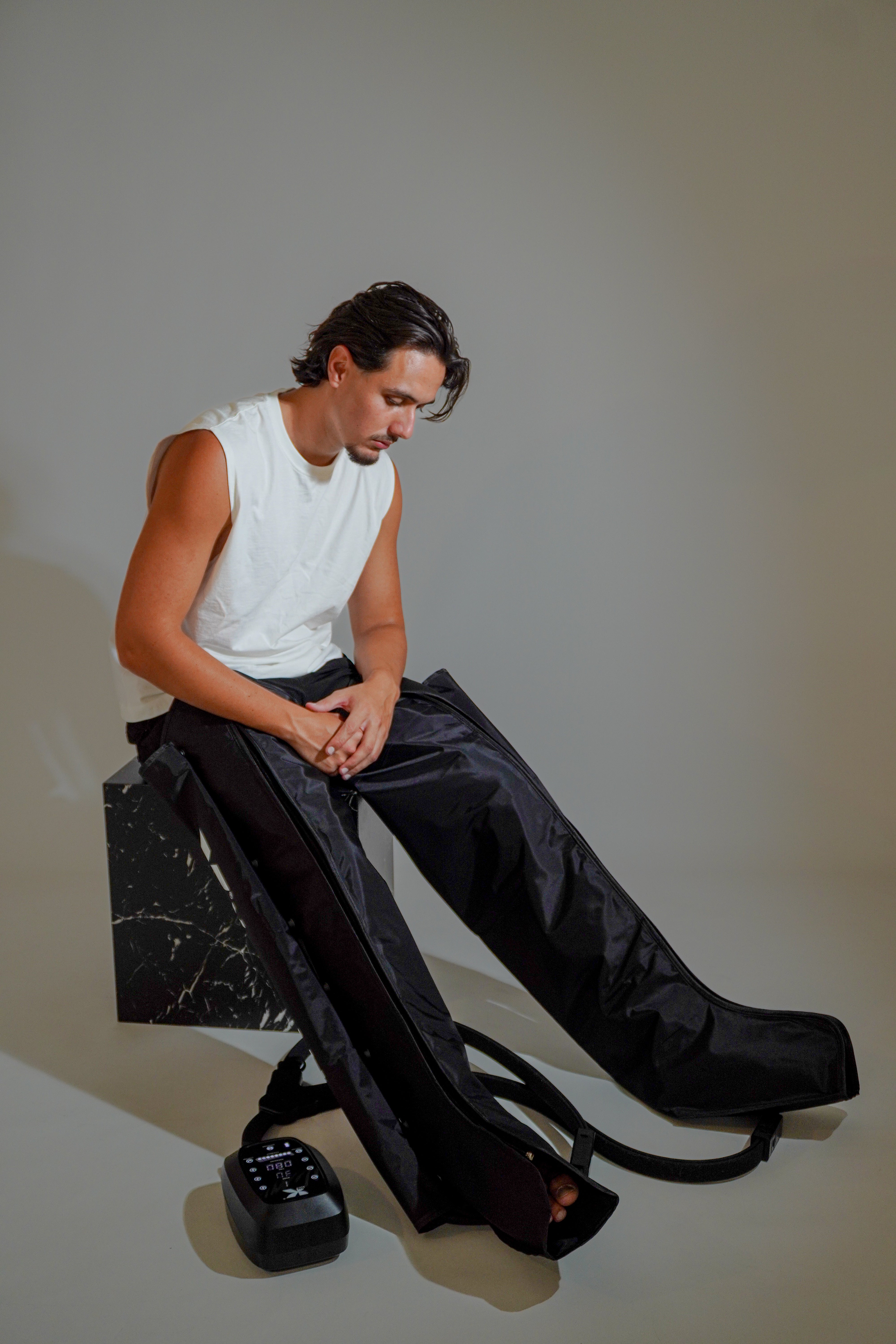
Home compression therapy is often inspired by intermittent pneumatic compression (IPC) , widely used in clinical settings to promote venous blood flow and prevent thrombosis in specific situations (in clinical practice, not as a substitute for medical advice). Johns Hopkins explains the mechanism simply: sequential inflation and deflation "pushes" blood toward the heart and aids venous flow. Source (Johns Hopkins Medicine) . ( hopkinsmedicine.org )
In sports, a systematic review and meta-analysis (2024) on CPI in recovery suggests small effects on muscle function and trivial to moderate effects on pain/soreness, with frequent 20–30 minute protocols and pressures around 80 mmHg (highly variable depending on studies and devices). ( pmc.ncbi.nlm.nih.gov )
To learn about the brand's pressotherapy options, you can consult Kumo's pressotherapy collection .
on your first order when you join the newsletter
We send you the code instantly. No spam.
Red light (photobiomodulation): a promising tool (with nuances)
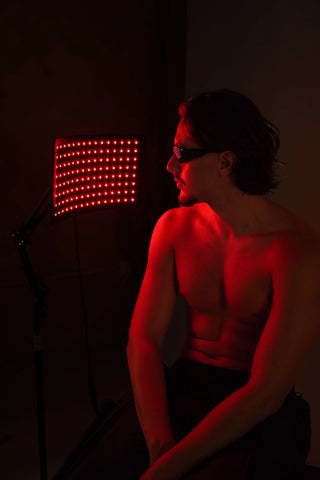
Photobiomodulation with red/near-infrared light is being investigated for its potential role in muscle recovery and the management of delayed onset muscle soreness (DOMS). A 2025 meta-analysis on photomodulation therapy for DOMS found moderate reductions in pain at 72–96 h (e.g., SMD ≈ -0.55 at 72 h) and large improvements in strength at 24–48 h (SMD ≈ 0.97–0.99 ), although with limitations due to the number of quantifiable studies. ( pmc.ncbi.nlm.nih.gov )
Furthermore, there is evidence in sports regarding sleep: a trial with female athletes (2012) applied 30 minutes of red light at night for 14 days and observed improvements in PSQI (subjective sleep quality), melatonin levels, and 12-minute sprint performance, with a correlation between changes in PSQI and melatonin (r = -0.695 ). ( pubmed.ncbi.nlm.nih.gov )
If you're interested in incorporating this into your home routine, you can check out Kumo's LED light therapy collection (it includes options focused on skin regeneration and well-being).
Percussion massage: useful for stiffness and range of motion (not always for pain)
Percussion massage is often praised for its practicality: it's quick, targeted, and easy to dose. However, the evidence is mixed depending on the objective.
- Range of motion (ROM): One study (using a Theragun-type percussor) observed acute improvements in ROM, with a relative increase of +11.4% compared to control (passive rest). ( pmc.ncbi.nlm.nih.gov )
- DOMS/pain: There are trials where percussion does not outperform rest or other techniques in relieving DOMS pain within 24–48 h. ( pubmed.ncbi.nlm.nih.gov )
- Recovery (recent designs): There are RCTs comparing the duration and approach of percussion massage after inducing muscle soreness, indicating that the “how much” and “how” to apply it are still being refined. ( pmc.ncbi.nlm.nih.gov )
At Kumo, this part of the routine can be supported with the KumoPulse Air massage gun .
The Kumo routine at home: the simplest (and most repeatable) method
The goal isn't to do endless sessions, but a routine you can repeat 3–6 days a week. Here's a practical framework for fitting in compression therapy, red light therapy, and percussion into 30–50 minutes, depending on your day.
Step 0 (2 minutes): Prepare the body to recover
- Stay hydrated (drink water) and add some sodium if you have sweated a lot.
- 2–3 minutes of slow nasal breathing or gentle walking to lower heart rate.
- If you can: take a warm shower (without extremes), especially after intense training.
Step 1 (6–10 minutes): “Intelligent” (non-aggressive) percussion massage
Use it as an exploration tool (localized tension) and to improve the feeling of "loosness," not as punishment. Simple structure:
- Select 2–4 maximum zones (e.g., calves, quadriceps, gluteus medius, latissimus dorsi).
- 30–60 seconds per zone at a comfortable intensity; repeat once if you feel it's too intense.
- Avoid joints, bone, anterior neck, direct lumbar area and prominent varicose veins.
- In severe DOMS: prioritize gentle and short (tolerance rules).
Practical idea: if after 60–90 seconds the movement “opens up” (squat, hinge, heel raise) you have already achieved the goal of the day.
Step 2 (20–30 minutes): Pressotherapy to relieve leg tension and reset
If your focus is on tired legs, a feeling of swelling, or simply slowing down, compression therapy is often the key. Sports literature summarizes that common protocols last around 20–30 minutes and that pressures of around 80 mmHg are used in many studies (this is not a universal recommendation: it depends on the equipment and your tolerance). ( pmc.ncbi.nlm.nih.gov )
- When: after training, at the end of the day or after many hours of standing/sitting.
- How it feels: firm rhythmic compression, without pain or persistent tingling.
- Objective: to leave with a feeling of lighter legs and less "heaviness".
Important note: Pneumatic compression has contraindications in certain cases (e.g., suspected thrombosis, some vascular/arterial pathologies, skin infections, etc.). Clinical guidelines on pneumatic compression emphasize the importance of considering absolute/relative contraindications and state that adverse events are rare when used correctly. ( pubmed.ncbi.nlm.nih.gov )
Step 3 (10–15 minutes): Red light for “shutdown” (muscle or sleep)
Here are two realistic household uses:
- Muscle-focused: Apply light to worked muscle groups (e.g., quadriceps/hamstrings behind the leg). DOMS evidence suggests potential benefits in pain reduction at 72–96 hours and strength improvement at 24–48 hours with some photobiomodulation protocols. ( pmc.ncbi.nlm.nih.gov )
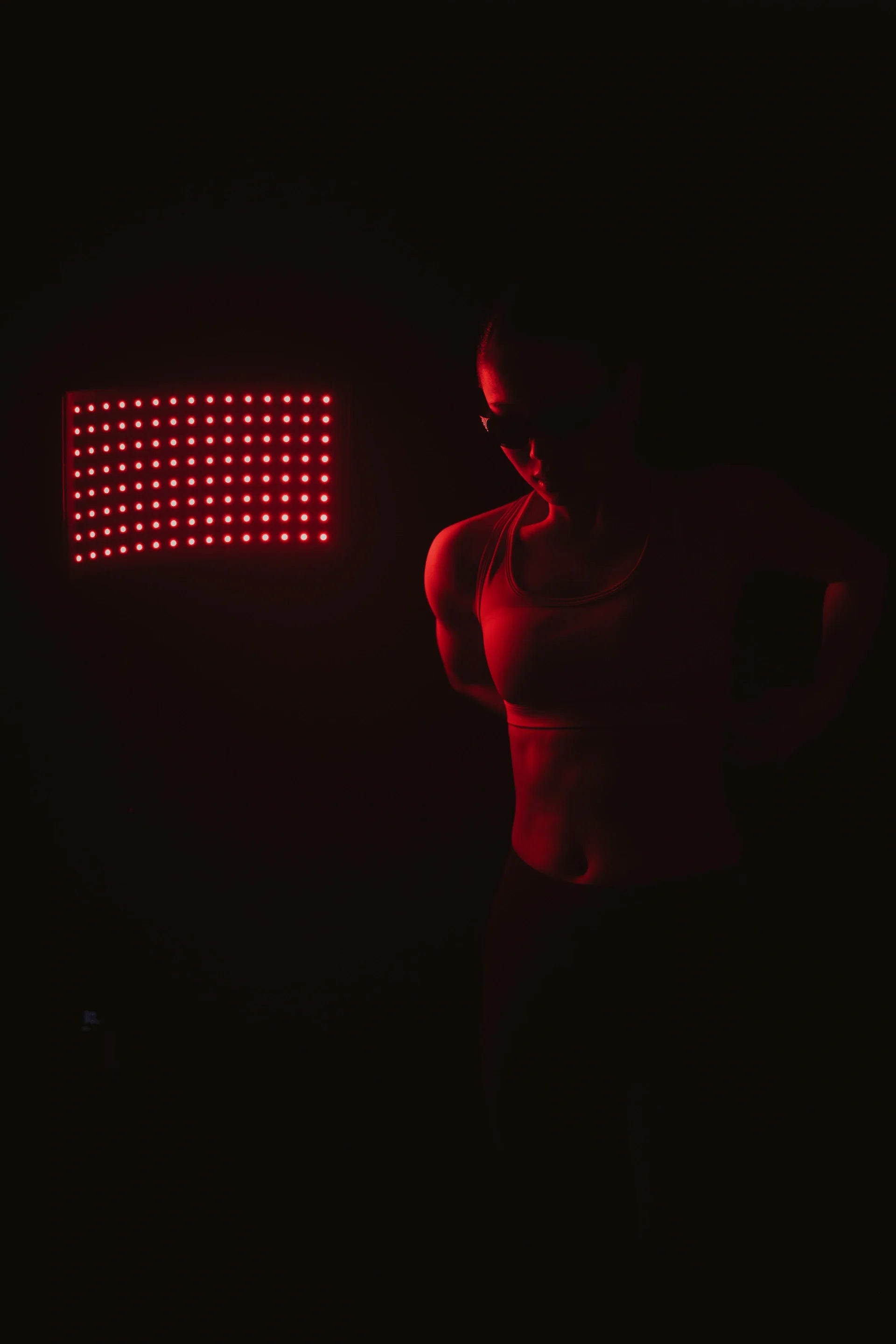
- Focused on rest: A gentle evening session (without glare) can fit into a sleep hygiene routine; improvements in PSQI and melatonin have been observed in athletes after 14 nights of exposure. ( pubmed.ncbi.nlm.nih.gov )
If you are also interested in the aesthetic aspect (skin), you can integrate your LED mask within the same "light block" on alternate days, always respecting the device's instructions and your skin's tolerance.
Recommended order: 3 sequences depending on your goal
There is no single "perfect" order. These three sequences work well because they minimize friction and maximize grip.
1) Post-leg workout (45–55 min)
- Percussion (8–10 min) – rapid focal discharge
- Pressotherapy (20–30 min) – light legs
- Red light (10–15 min) – closure in quadriceps/hamstrings or calves
2) Office day / heavy legs (25–40 min)
- Pressotherapy (20–30 min)
- Gentle percussion (3–6 min) on calves/gluteus medius if needed
- Short red light (5–10 min) if you are looking to lower overall tension
3) Sleep focus (15–30 min, night)
- Very light percussion (3–5 min) on upper trapezius or back (without intensity)
- Red light (10–15 min) with dim ambient light
- End: dark and cool room (without leaving any lights on)
Weekly template (simple) to avoid relying on motivation
A good routine isn't the most intense, but the most consistent. This example is compatible with 3–5 workouts per week.
- 2–3 days/week: complete routine (percussion + pressotherapy + red light).
- 1–2 days/week: pressotherapy “legs only” + short red light.
- 1–2 days/week: minimal recovery (10–15 min): rapid percussion + gentle mobility.
Safety and good practices (no drama, but serious)
- Pressotherapy: Avoid using it if there is unusual acute pain, asymmetric swelling, local heat, or a suspected vascular problem; pressotherapy has contraindications that must be respected. ( pubmed.ncbi.nlm.nih.gov )
- Percussion massage: Do not use on recent injuries, significant bruising, or "electrical" pain. If it worsens, reduce the intensity or stop.
- Red light / LED: If you have photosensitivity or are taking photosensitizing medication, consult a healthcare professional before using it (and avoid looking directly at the source).
- Golden rule: “better 70% comfortable and consistent” than “100% strong and abandoned”.
Typical mistakes that hinder results (and how to avoid them)
- Doing everything too forcefully: especially percussion and compression. Recovery should aim to regulate , not "pound."
- Very long sessions: if you find it difficult to maintain, reduce to 20–30 min and repeat on more days.
- Expect percussion to always eliminate muscle soreness: evidence suggests that range of motion may improve, but pain does not always change compared to rest. ( pmc.ncbi.nlm.nih.gov )
- Using red light as a sleep substitute: it can help, but the core is still getting enough sleep and eating enough food.
Quick guide to timings (to paste on your mobile)
Table: times, objective and recommended use at home
| Technology | Main objective | When does it fit best? | Practical time range | Evidence-based notes |
|---|---|---|---|---|
| Percussion massage | Stiffness/ROM/focal discharge | Post-workout or at the end of the day | 6–10 min (2–4 zones) | Acute improvements in ROM were observed (e.g., +11.4% in one study); for DOMS, pain may not improve vs. rest. ( pmc.ncbi.nlm.nih.gov ) |
| Pressotherapy (IPC) | Light legs / perception of recovery | After leg, travel, days on your feet | 20–30 min | 2024 meta-analysis: small effects on muscle function and trivial to moderate effects on pain/sensation; common protocols of 20–30 min and ~80 mmHg in studies. ( pmc.ncbi.nlm.nih.gov ) |
| Red light (photobiomodulation) | Support for muscle recovery and/or rest | After training (muscle) or night (sleep) | 10–15 min | 2025 meta-analysis in DOMS: less pain at 72–96 h (SMD ~ -0.55) and better strength at 24–48 h (SMD ~ 0.97–0.99) in some protocols. ( pmc.ncbi.nlm.nih.gov ) |
FAQ: Frequently asked questions about Kumo and home recovery
In what order do I use pressotherapy, red light, and percussion massage in a Kumo routine?
For most people, a practical order is: percussion → compression therapy → red light therapy . Percussion first helps to release tension and improve mobility; compression therapy then provides a comfortable, long block to relieve leg tension; and red light therapy finally acts as a closing treatment (for muscle or sleep). If your priority is nighttime rest, you can simplify to red light therapy + gentle percussion . The important thing is to repeat a sustainable protocol 3–6 days per week.
How long should a session with compression boots at home last?
In sports research, sessions of around 20–30 minutes and varying pressures are frequently observed (in many studies, around 80 mmHg , although this depends on the equipment and design). ( pmc.ncbi.nlm.nih.gov ) At home, a good guideline is to start with 20 minutes at a comfortable intensity and assess: if you finish with lighter legs and no discomfort, it's a reasonable duration. If you notice persistent tingling, pain, or worsening symptoms, reduce the intensity or stop using it.
Does Kumo's red light help you sleep better?
Red light is being studied for both muscle recovery and sleep. In athletes, a 2012 trial applied 30 minutes of red light each night for 14 days and observed improvements in subjective sleep quality (PSQI) and melatonin levels. ( pubmed.ncbi.nlm.nih.gov ) Even so, it's not a magic "switch": it works best when combined with basic sleep hygiene (dark room, less screen time in the evening, consistent sleep schedule). If you are sensitive to light, use it in a dimly lit, glare-free environment.
How often can I use the KumoPulse Air massage gun without overdoing it?
A conservative and useful guideline is 6–10 minutes per session (2–4 areas), 3–6 days/week , avoiding intense pressure on the same spot. The literature suggests that it can acutely improve range of motion, but it doesn't always reduce muscle soreness compared to rest. ( pmc.ncbi.nlm.nih.gov ) In practice, if you feel more irritated or sensitive the next day, reduce the intensity and duration. The best dose is the one that leaves you feeling relieved, not sore.
Can I combine pressotherapy and red light therapy on the same day?
Yes, and it's often a comfortable combination: compression therapy as the main block for legs (20–30 min) and red light therapy as a cool-down (10–15 min), especially on muscle groups that have been worked or as part of a nighttime routine. In DOMS, a meta-analysis (2025) suggests potential benefits of photobiomodulation on pain (72–96 h) and strength (24–48 h) with specific protocols. ( pmc.ncbi.nlm.nih.gov ) Keep realistic expectations: the combination supports recovery, but it's not a substitute for sleep, sufficient protein, and deload days.
So what now?
If you want to create your complete routine using the Kumo approach, you can explore pressotherapy , LED/red light therapy , and the massage gun to create a simple and repeatable system. And if you need help choosing a routine that fits your daily life, please contact us through the contact page .
KumoWave pressotherapy
Choose your at-home pressotherapy
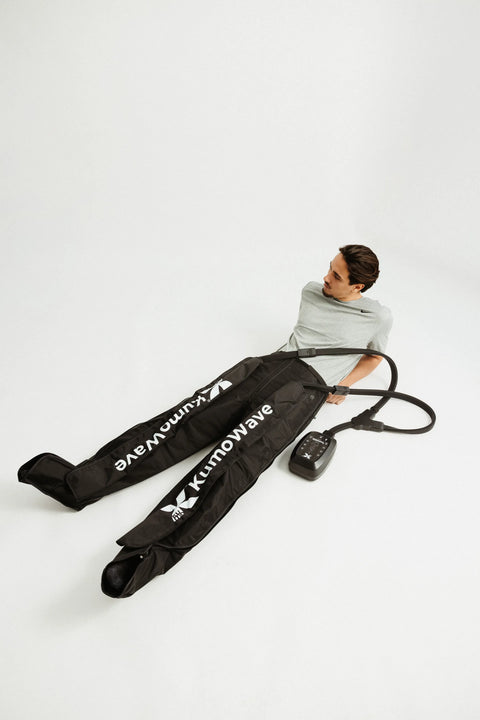
KumoWave Elite – Pressotherapy Pants
Full-coverage trousers. Ideal for lipedema, fluid retention and intensive use.
€799,00 €999,00
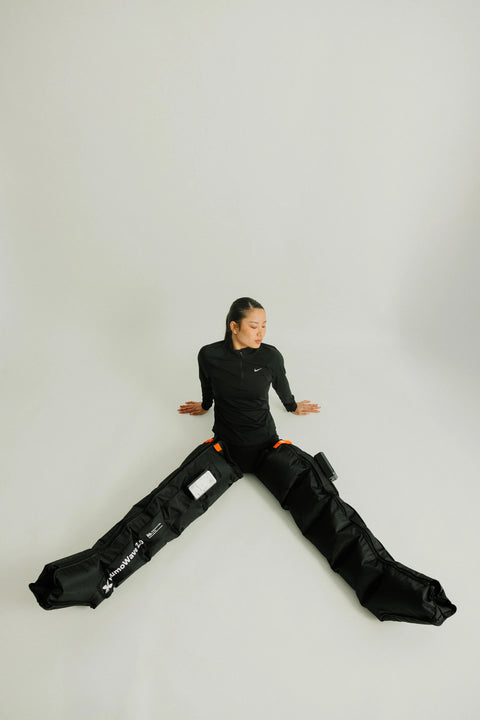
KumoWave 2.0 - Wireless Pressotherapy
Wireless, lightweight boots. Perfect for daily use and recovery.
€499,00 €599,00