
The trapezius muscle doesn't "tense up on its own": it usually responds to stress, posture, and many hours of screen time.
If you notice raised shoulders, stiffness at the base of your neck, or pain that appears at the end of the day, this article guides you through a practical self-care protocol (ergonomics + breaks + mobility) and the safe use of percussion massage to release tension in the trapezius muscle without irritating sensitive structures. You'll also see how to integrate it with Kumo recovery technologies into a realistic routine.
Facial red light
Bring your skin back to life
★★★★★ 4,8/5 · rated by verified customers
The KumoSkin LED mask helps repair and calm your skin in short sessions at home.
- 250 LEDs in flexible medical silicone
- Red light to boost collagen and glow
- 4 lights: red, infrared, blue and yellow
€299,00€429,00
−10% on your 1st order when you subscribe to the newsletter

Why does the trapezius muscle get strained by stress and screens?
What does the trapeze do (and why does it "grab" at the top)
The trapezius is a large muscle that connects the upper back to the shoulder and neck. Its upper portion helps elevate and stabilize the shoulder girdle. When you work with your arms extended forward (keyboard/mouse), unconsciously shrug your shoulders, or hold your head forward, the upper trapezius tends to overwork and under-rest.
Over time , trigger points (hyperirritable areas) may appear that "refer" pain to the neck, head, or shoulder. The literature on myofascial pain describes this pattern as common in the cervicothoracic region and shoulder.
Personalized protocol · included with your purchase
Want us to tell you how to use it in your case?
With your purchase, our experts prepare the ideal LED protocol for your skin type and goal (acne, wrinkles, dark spots...).
Message us on WhatsAppOur experts reply · no obligation
Sedentary lifestyle + screen time: what the evidence says (with figures)
Neck pain is very common: a global analysis from the Global Burden of Disease study estimated that in 2020 neck pain affected 203 million people and projected an increase to 269 million by 2050. ( pmc.ncbi.nlm.nih.gov )
Furthermore, it's not just "bad posture": the amount of sedentary behavior matters. A systematic review with meta-analysis published in 2025 (25 studies; 43,184 participants) found an association between sedentary behavior and neck pain (pooled OR 1.46 ). It also observed a dose-response relationship: around 4 hours/day of sedentary behavior was associated with a higher risk, and above 6 hours/day the risk increased even further; screen use (mobile/computer) stood out as a relevant factor. ( bmcpublichealth.biomedcentral.com )
In a real-world office setting, a 2020 study of frequent computer users reported work-related pain in 88% of 511 respondents, with common areas being the neck (63%) and shoulder (58%) . ( journals.lww.com )
on your first order when you join the newsletter
We send you the code instantly. No spam.
Stress, breathing and “shoulders up”
When stressed, it's common to adopt a protective pattern: deeper breathing, slightly raised shoulders, and a tense jaw/occipital region. Research is exploring how breathing training may influence pain and function: a meta-analysis review (published in 2025 ) found short-term effects of breathing exercises on pain and disability in persistent neck pain, although with low certainty of evidence. ( pmc.ncbi.nlm.nih.gov )
The practical idea: if your trapezius is "on guard mode", combining mechanical release (movement and well-applied percussion massage) with lowering the tone (breathing and pauses) usually works better than "hammering" the area.
Warning signs: when it's not "just tension"
Self-care is helpful for mild-to-moderate stiffness, but seek professional evaluation if any of these signs appear:
- Pain after an accident/fall or whiplash.
- Pain that radiates to the arm, with tingling , numbness or weakness .
- Balance/coordination problems, marked loss of fine motor skills, or neurological symptoms.
- Fever, severe stiffness, or persistent pain that does not improve.
These recommendations align with guidelines published by medical societies such as AAOS and AANS. ( orthoinfo.aaos.org )
The basis of relief: ergonomics and pauses (before the massage)
Quick workstation adjustments (2-3 minutes that change the day)
If your monitor is too high, too low, or off-center, your neck will compensate. OSHA recommends the following for screen ergonomics:
- Monitor in front of you (avoid turning your head/neck for extended periods).
- Top of the screen at eye level or slightly below.
- Center of screen approximately 15–20° below the horizontal of the eyes (comfortable viewing angle).
These are small details that reduce the sustained load on the cervical and scapular muscles. ( osha.gov )
Anti-trapezius pauses: less heroism, more frequency
If you spend many hours sitting, you don't need "an hour at the gym" for your trapezius muscles: you need micro-breaks . Set aside 1–2 minutes every 30–60 minutes to:
- Lower your shoulders (exhale deeply) and relax your jaw.
- 10 chest openers (shoulder blades back and down, without pain).
- 5 gentle thoracic extensions (like “growing” out of the sternum).
Kumo self-care protocol with percussion massage (10–12 minutes)
This protocol is designed to be done at the end of the workday or during a long break. You can apply it with a percussion massage gun like KumoPulse Air (use on muscle tissue, avoiding sensitive structures).
Before we begin: safety rules (essential)
- Do not use on the front/side of the neck (area of arteries and nerves), or on the spine, or on bone (clavicle/scapula/vertebrae).
- Avoid using it if there are wounds, recent bruising, fractures, skin infections, or suspected thrombosis; and consult if you have relevant medical conditions (e.g., clotting disorders, neuropathies, osteoporosis, pregnancy, implanted devices).
These precautions appear consistently in reviews on percussive massage and contraindications. ( pmc.ncbi.nlm.nih.gov )
1) Preparation (1 minute)
- Quick check : 0-10 How bothersome is it? If you're at 7-10 or there are unusual symptoms, don't push it.
- Optional local heat (warm shower or compress for 3–5 min) if you are very stiff.
- Breathe in 4 cycles: gentle nasal inhalation + longer exhalation (lower shoulders).
2) Percussion massage: step by step (5–7 minutes)
Goal: to reduce stiffness and improve range of motion, not to strain the muscle. Maintain comfortable pressure (tolerable discomfort, no sharp pain) and move slowly.
- Upper trapezius (right side) (45–60 s): Place the head over the fleshy area between the neck and shoulder, but without moving up towards the nape of the neck or near the side of the neck. Glide in short passes.
- Upper trapezius (left side) (45–60 s): repeat.
- Levator scapulae (posterior zone) (30–45 s per side): works the most posterior region, near the inner upper border of the scapula, avoiding bone.
- Chest (upper area, without collarbone) (30–45 seconds per side): The trapezius muscle is often overloaded because the chest is shortened. Go easy.
- Dorsal/infrascapular (30–45 s per side): helps to “redistribute” tension from the shoulder girdle.
Evidence-based guidelines (without getting bogged down in numbers): A systematic review on massage guns suggests that, for recovery/stiffness, users tend to use more than 2 minutes per muscle group at lower frequencies (<40 Hz) ; and for mobility/ROM, brief applications (≤2 min) at higher frequencies (>40 Hz) . It also advises against prolonged, aggressive use and recommends light/moderate pressure. ( pmc.ncbi.nlm.nih.gov )
3) Mobility + activation (3–4 minutes)
- “Chin tuck” (cervical retraction): 6 repetitions of 5 seconds (like lengthening the neck, without looking up).
- Angels on the wall (if it doesn't hurt): 6 slow repetitions keeping ribs "down".
- YTW (without weight or with very little): 5 repetitions of each form, thinking about “scapulae back and down” (activate middle/lower trapezius).
Table: Express protocol (10–12 min) for trapezoidal tension per screen
| Block | What are you doing | Time | Execution keys |
|---|---|---|---|
| Preparation | Breathing + pain check (0–10) | 1 min | Long exhalation to lower shoulders |
| Percussion | upper trapezius + levator scapulae + pectoralis major + latissimus dorsi | 5–7 min | Muscle only; no lateral/anterior neck or spine; moderate pressure |
| Mobility | Chin tuck + thoracic opening/scapulae | 2–3 min | Without sharp pain; prioritize control |
| Closing | 2–4 respiratory cycles | 1 min | Notes “weight” from shoulders down |
How to integrate Kumo technologies into a recovery routine (without promising miracles)
Trapezius muscle tension caused by stress and screen time is often multifactorial. Therefore, in addition to percussion massage, you can incorporate recovery habits and technologies to improve the regularity of your self-care routine.
Red light / photobiomodulation: a complementary option
Photobiomodulation (red and near-infrared light) is being studied in myofascial pain. A systematic review with meta-analysis (published in 2022 ) analyzed the use of photobiomodulation in upper trapezius myofascial syndrome , evaluating variables such as pain and pressure pain threshold. ( pubmed.ncbi.nlm.nih.gov )
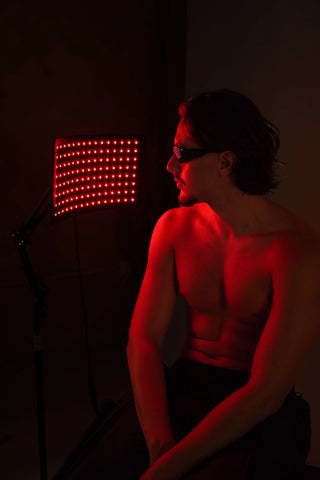
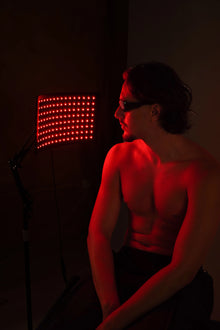
If you are interested in this approach as a complement to exercise and ergonomics, you can explore Kumo LED light therapy as part of a recovery routine (for example, during moments of disconnection after the day).
Pressotherapy: useful for circulation and legs (indirectly, it also helps to "slow down")
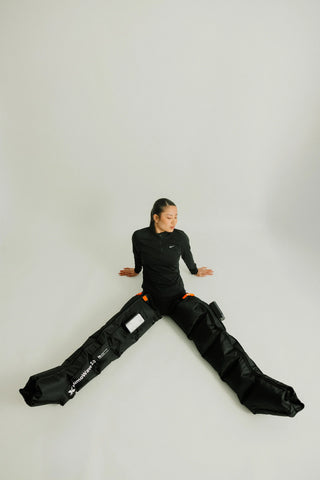
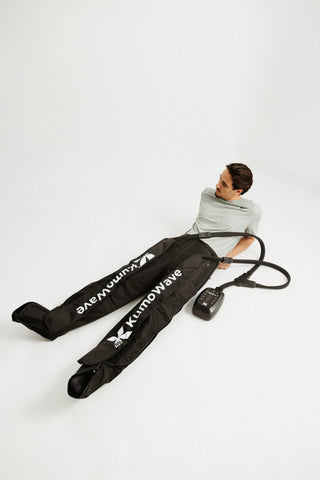
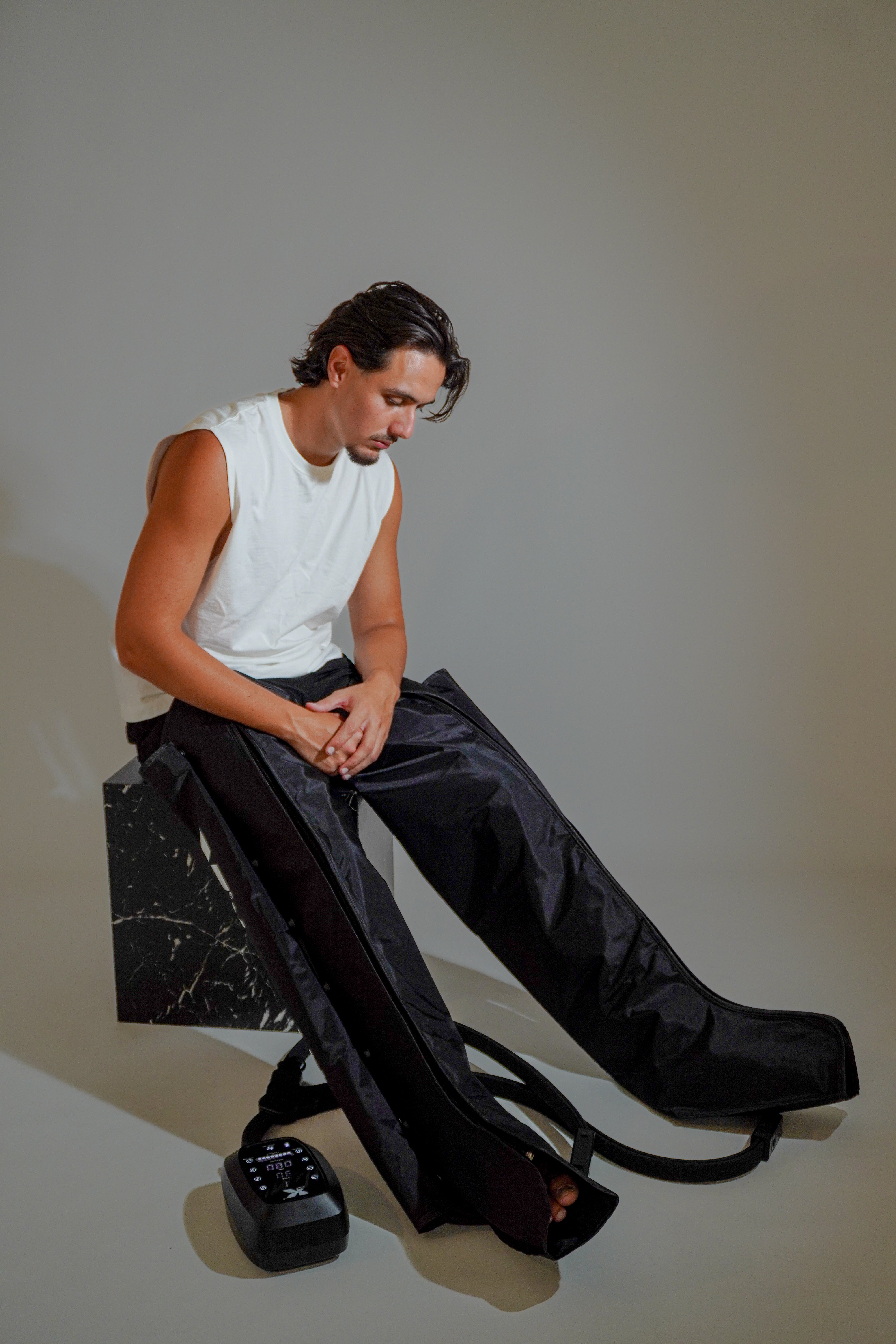
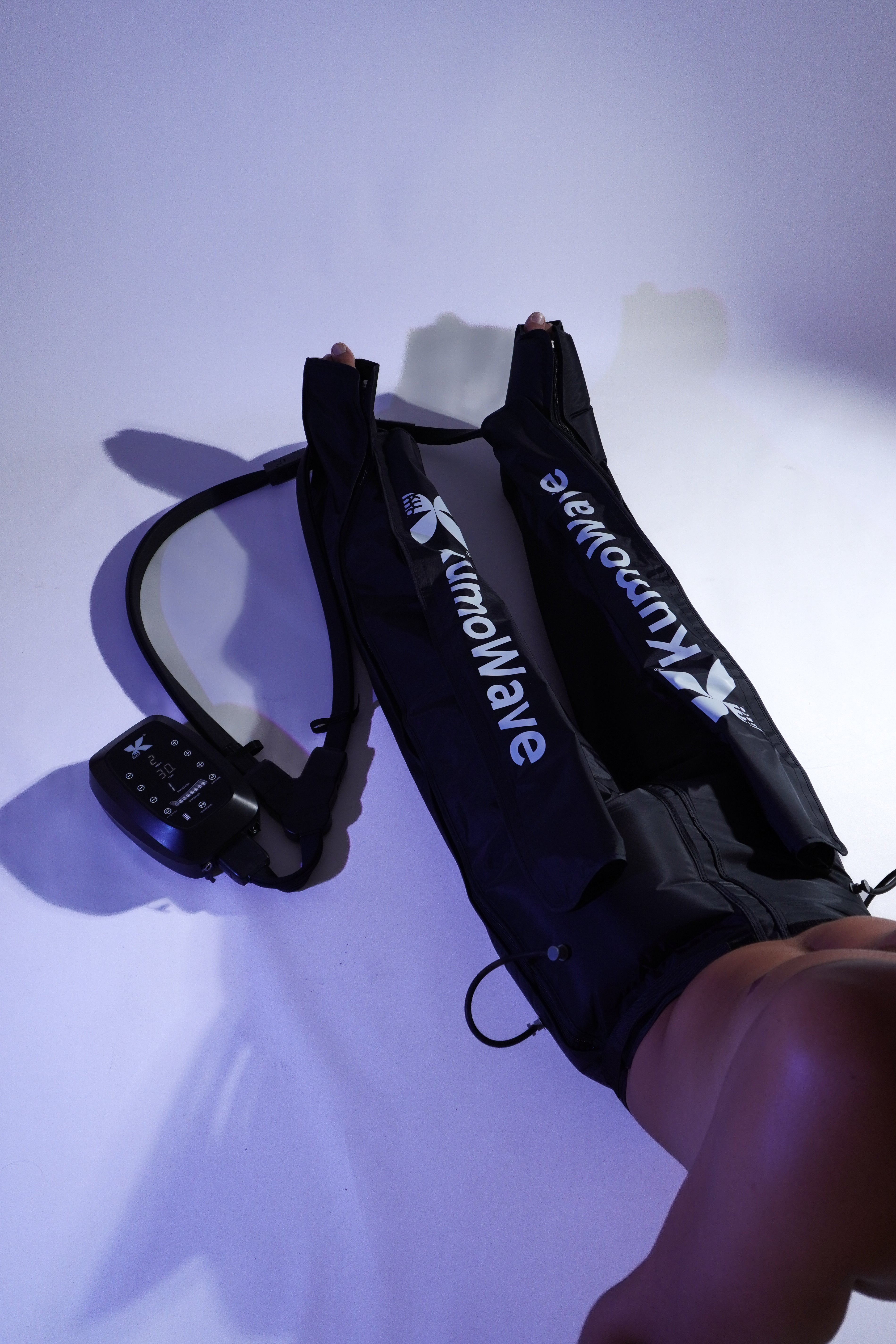
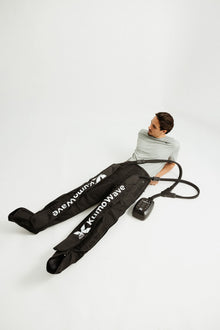
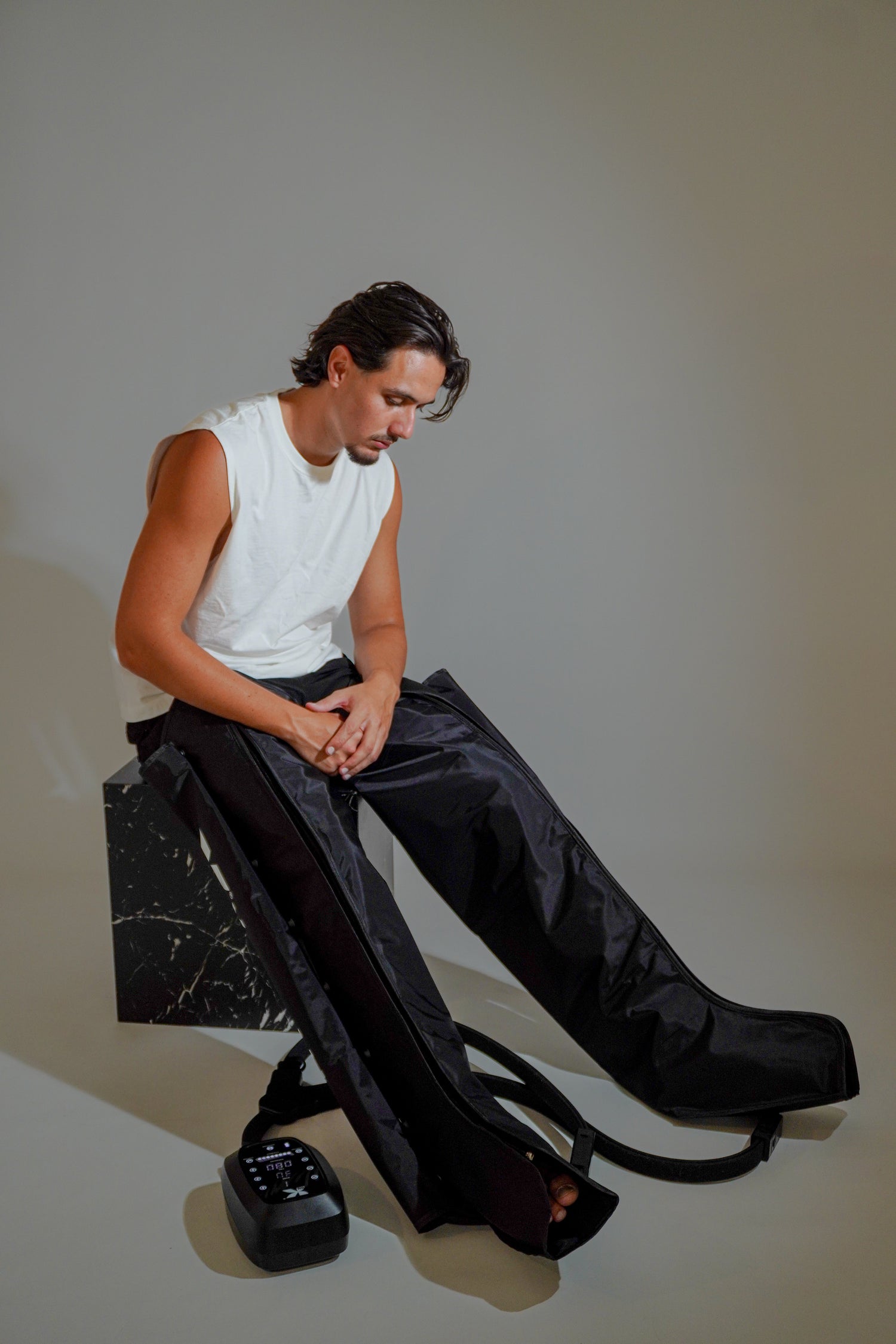
If your day is very sedentary, recovery isn't just about your neck and shoulders. Improving the feeling of heaviness in your legs can encourage movement and rest. At Kumo, you can find compression boots for a more comprehensive recovery strategy (without replacing active breaks and walks).
The Kumo key: consistency and quality of use
More important than doing it hard is doing it well and repeatably : 10 minutes, 4–6 days/week, with ergonomics and breaks, is usually more sustainable than long, sporadic sessions.
Common mistakes (and how to avoid them)
- Going straight for the neck : The temptation is great, but avoid the front/side of the neck and the spine. Prioritize the trapezius muscle and the shoulder/scapula area. ( pmc.ncbi.nlm.nih.gov )
- Increase intensity to "win" : if you're stiffer the next day, you probably overdid it (or stayed in the same position for too long).
- Ignoring the cause : If the monitor is too high/low or off-center, the voltage will return. Adjust it first. ( osha.gov )
- Only unload, never strengthen : the upper trapezius often compensates when scapular control is lacking (middle/lower trapezius, serratus anterior). Hold for 3–4 minutes of activation.
FAQ about trapezius tension and percussion massage (Kumo)
How to use KumoPulse Air on the trapezius muscle without touching the neck?
Place the massage head on the fleshy area between your shoulder and upper back, keeping it away from the front and sides of your neck. Use slow, steady strokes of 45–60 seconds per side, applying moderate pressure (tolerable discomfort, no sharp pain) and avoiding pressing on any bone (collarbone/scapula) or your spine. If you experience tingling, pain radiating down your arm, or dizziness, stop. For a longer-lasting effect, combine the massage with 2–3 minutes of shoulder and chest mobility exercises.
Is percussion massage helpful if I have "knots" or trigger points in my trapezius muscle?
It can help modulate the feeling of stiffness and improve mobility, but it's not magic and doesn't replace posture work, rest, and strength training. Think of percussion as a tool to "lower the tension" and allow you to move better afterward. Use it in short sweeps (not like drilling into a single spot) and finish with gentle stretches or scapular activation. If the "knot" doesn't change in 2–3 weeks, or the pain becomes constant, a professional evaluation is advisable.
Can I combine Kumo percussion massage with LED light therapy?
Yes, as a complementary approach. A practical option is: first 5–7 minutes of percussion on the muscles (upper trapezius, pectoralis major, latissimus dorsi) and then a cool-down/recovery block (breathing exercises and/or red light therapy) to end the day with less activation. Photobiomodulation has been specifically studied for myofascial pain in the upper trapezius in systematic reviews, typically assessing pain and pressure sensitivity. Keep realistic expectations and prioritize consistency and ergonomics.
How many times a day should I use a Kumo massage gun if I work with a screen?
For office-related tension, one short session at the end of the day (10–12 minutes with mobility exercises) is usually sufficient. If you're feeling particularly strained, you can add a micro-session of 60–90 seconds per side of the upper trapezius (muscle only) in the mid-afternoon, provided it doesn't increase the pain. Avoid repeated long sessions on the same spot. And remember: if you spend 8 hours a day in front of a screen, the biggest benefit is taking breaks and adjusting your monitor so your neck isn't constantly compensating.
What should I do if my trapezius muscle tenses up due to stress even without a screen?
In this case, the goal is twofold: mechanical release and relaxation of the nervous system. Keep the percussion gentle (without causing pain) and add 2 minutes of breathing exercises with a longer exhalation to encourage shoulder descent. Evidence on breathing exercises for neck pain suggests short-term effects on pain and disability, although with low certainty; as a practical tool, it is often helpful if applied daily. If there is bruxism, poor sleep, or high anxiety, a holistic approach (rest and activity habits) makes more of a difference than intensifying the massage.
And now?
If you want to make this protocol a habit, start with a simple routine: ergonomics + breaks + 10 minutes of relaxation with your massage gun. Within the Kumo universe, you can explore muscle recovery with Kumo , percussion massage with KumoPulse Air , and complement your routine with LED light therapy or pressotherapy . If you need guidance on which solution best suits your routine, contact the Kumo team .

Facial red light
KumoSkin Mask – LED Facial Mask
★★★★★ 4,8/5 · rated by verified customers
- 250 LEDs in flexible medical silicone
- Red light to boost collagen and glow
- 4 lights: red, infrared, blue and yellow
€299,00€429,00· pay in installments with seQura or Klarna