
A stiff hip robs you of movement.
If you experience tightness when walking, getting up from a chair, or squatting, combining percussion massage (when properly applied) with opening and control exercises is often one of the most effective ways to regain mobility without straining the joint. In this guide, you'll find a clear protocol: which muscles to treat, which stretches to choose, and how to integrate recovery into your routine with Kumo 's focus on wellness and performance.
Facial red light
Bring your skin back to life
★★★★★ 4,8/5 · rated by verified customers
The KumoSkin LED mask helps repair and calm your skin in short sessions at home.
- 250 LEDs in flexible medical silicone
- Red light to boost collagen and glow
- 4 lights: red, infrared, blue and yellow
€299,00€429,00
−10% on your 1st order when you subscribe to the newsletter

Why does hip stiffness occur (and why it's not always "lack of stretching")
The sensation of a "closed" hip is usually a mixture of:
- Sustained postures (many hours sitting): the hip flexors tend to remain in a shortened position and the body "learns" that range.
- High muscle tone in the glutes, tensor fasciae latae (TFL), adductors, or quadriceps can limit the range of motion even if the joint is healthy.
- Lack of strength and control in the gluteus medius and external rotators: if there is no stability, the nervous system may "brake" amplitude to protect.
- Joint pain or tenderness : due to overload, femoroacetabular impingement, bursitis, tendinopathies, or osteoarthritis (more frequent with age).
As a public health context: In the US, the age-adjusted prevalence of diagnosed arthritis in adults was 18.9% in 2022 (CDC/NHIS). This doesn't mean that all stiffness is osteoarthritis, but it does remind you that persistent pain warrants evaluation. You can consult the official CDC report here: Arthritis in Adults: United States, 2022 (NCHS Data Brief, 2024) .
Personalized protocol · included with your purchase
Want us to tell you how to use it in your case?
With your purchase, our experts prepare the ideal LED protocol for your skin type and goal (acne, wrinkles, dark spots...).
Message us on WhatsAppOur experts reply · no obligation
Signs that you shouldn't "self-treat" and should consult a doctor.
- Acute pain after a fall or blow, or inability to bear weight.
- Blocking (feeling that it "gets stuck"), painful clicking or marked loss of range.
- Groin pain that worsens when flexing and rotating the hip (deep squats, getting into the car).
- Tingling , loss of strength, fever, or severe night pain.
What can percussion massage contribute to hip mobility?
- It includes potential improvements in recovery and performance variables, and also details contraindications and precautions. (Open access): The Effects of Massage Guns on Performance and Recovery: A Systematic Review (
- An increase in hamstring range of motion was observed after a brief dose of percussion, along with a reduction in tissue stiffness measured by myotonometry. Article (open access): The Acute Effects of Theragun™ Percussive Therapy… (Journal of Sports Science & Medicine)
Key idea: percussion works best as a “bridge” to movement: first we lower tension, then we consolidate the range with exercises.
Basic safety: where to do and where not to
For hip stiffness, the goal is to treat the muscle , not the joints, superficial nerves, or vascular areas. In practical terms:
- Yes : gluteus maximus, gluteus medius (upper lateral area), quadriceps (anterior thigh), adductors (middle thigh, with caution), hamstrings.
- No : groin/femoral fossa (femoral artery and nerve), hip bone (iliac crest), "pointed" hip joint, lumbar spine directly, areas with bruising, wounds or sharp pain.
If you are taking blood thinners, have thrombosis/a history of blood clots, osteoporosis, or other conditions, it is best to speak with a healthcare professional before applying intense pressure. For a general reference on contraindications in manual therapy, you can review: Cleveland Clinic — Massage Therapy (precautions) .
on your first order when you join the newsletter
We send you the code instantly. No spam.
Kumo Protocol: Percussion massage + hip opening (10–15 min)
This protocol is designed to be done 4–6 days a week, especially if you spend a lot of time sitting. You can perform it with a massage gun like the KumoPulse Air (without needing to press too hard).
Step 0 (1 minute): Warm up before stretching
Stretching "cold" stretches often feels worse. Do 60–90 seconds of gentle movement:
- Light walking around the house or going up/down stairs slowly.
- Short forward-backward leg swings while holding onto a wall.
Classic safety tip: Stretching is best when the muscle is warm. (Source: American Heart Association — Flexibility Exercise (stretching))
Step 1 (3–5 minutes): Percussion massage by zones (without acute pain)
Practical rule: 30–60 seconds per area , comfortable pressure, keeping the brush head moving slowly. If you find a sensitive spot, gently pause for 5–10 seconds and then continue sweeping.
- Gluteus maximus (center of the gluteus): 45–60 s per side.
- Gluteus medius (high lateral, “up and out” of the gluteus): 30–45 s per side.
- TFL / lateral thigh (upper lateral part of the thigh): 30 s per side, without going down towards the knee.
- Adductors (inner thigh, mid-area): 30 seconds per side, avoiding the groin.
- Quadriceps (anterior thigh): 45–60 s per side.
Note: the psoas/iliacus (deep flexor) does not respond well to direct percussion; it is usually more helpful to release nearby tissues (quadriceps, TFL, glutes) and then perform active stretching.
Step 2 (6–8 minutes): Opening exercises (mobility that “stays”)
Choose 3 exercises and do 1–2 rounds. Breathe slowly and avoid sharp pain.
Exercise A — 90/90 (internal and external rotation)
The 90/90 stretch is excellent because it works internal and external rotation , two key ranges of motion for a "loose" hip. Do 20–60 seconds per side, 1–2 times. Reference guide: Cleveland Clinic — 90/90 hip stretch (2022) .
- If you find it difficult, sit on a cushion or block.
- Don't force your knee to the ground: look for a stretching sensation, not a pinching sensation.
Exercise B — Hip flexor stretch (low lunge with posterior pelvic tilt)
- Lunge position with one knee on the ground.
- Perform a slight pelvic tilt ("tuck your tail in") and squeeze the gluteal muscle of the back leg.
- Hold for 20–30 seconds per side, 2 repetitions.
Exercise C — Adductor Rockback (gentle opening)
- On all fours, stretch one leg to the side with the foot on the ground.
- Slowly move your hips back (like sitting down towards your heels).
- 8–10 slow repetitions per side.
Exercise D — Glute bridge (to “give stability” to the hip)
- 2 sets of 8–12 repetitions.
- Pause for 1 second at the top without arching the lower back.
Exercise E — Clamshell (gluteus medius, lateral control)
The clamshell exercise is a classic for activating the gluteus medius and has a good ratio of activation to the tensor fasciae latae (TFL) in many rehabilitation settings. Reference (muscle activation): EMG in clamshell vs abduction (2014, PubMed) .
- 2 sets of 10–15 per side.
- Avoid tilting your pelvis backward to "cheat".
Step 3 (1 minute): Integrate the range with a functional pattern
To make mobility a part of your day:
- 5 slow partial squats (only as far as there is no pinching).
- or 6–8 controlled low step-ups per side.
Quick guide: what to do depending on your stiffness type
Symptom map → Recommended muscles and exercises
| What you feel | Percussion zones (30–60 s) | Mobility/key exercises (1–2 rounds) |
|---|---|---|
| Tightness from sitting for a long time | Quadriceps, TFL (high), gluteus maximus | Lunge with flexors + glute bridge |
| “Hip closed” when opening knees (tight adductors) | Adductors (mid-section), gluteus maximus | Adductor rockback + soft 90/90 |
| Lateral stiffness (hip/outer part) | Gluteus medius, TFL (upper) | Clamshell + controlled partial squat |
| Posterior stiffness (gluteus maximus/hamstrings) | Gluteus maximus, hamstrings | 90/90 + very light hip hinge (pain-free) |
Common mistakes (and how to avoid them)
- Applying too much pressure : harder isn't better. If it leaves bruises, you went too far.
- Going directly to the groin : avoid the vascular and nerve area. Work around it (thigh, glute) and use active stretches.
- Just stretching without strengthening : if you gain range but not control, stiffness returns.
- Look for "good pain" : the guide is tolerable tension, not joint pain.
How to create a recovery habit (Kumo approach)
Stiffness improves when the body receives small, frequent doses of movement. Two useful facts to illustrate this:
- Globally, the WHO estimated in 2024 that 31% of adults do not meet the recommended levels of physical activity. Source: WHO — Physical activity (updated 26 June 2024) .
- In the US, in 2020 only 25.2% of adults met the aerobic + strength training target in their leisure time (Healthy People 2030 / NHIS). Source: ODPHP — Healthy People 2030 (PA-05) .
At Kumo we like to think of recovery as a "minimum viable" routine:
- Daily (5–8 min) : light percussion + 1–2 exercises (90/90 + bridge).
- 2–3 times/week (12–15 min) : full protocol of this guide.
- On days of high workload : accompany with overall recovery strategies (rest, hydration, gentle walks).
If you're also looking for a holistic approach to wellness, you can explore the brand's complementary technologies:
- Deep percussion massage with KumoPulse Air .
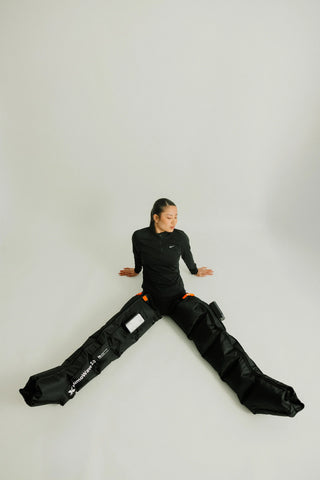
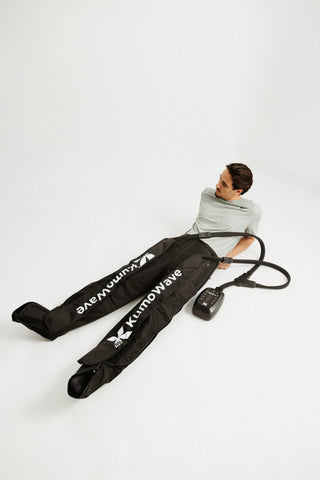
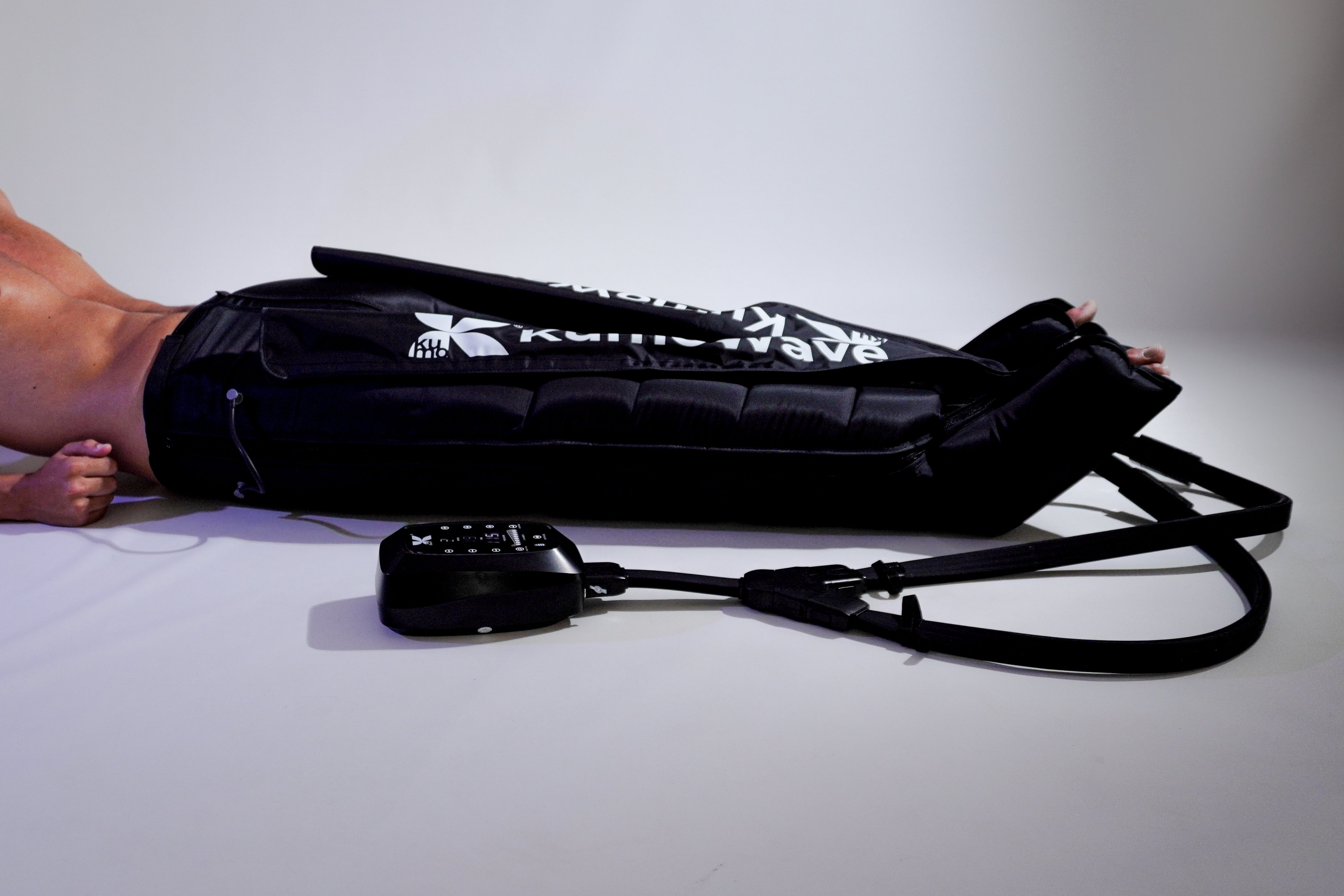
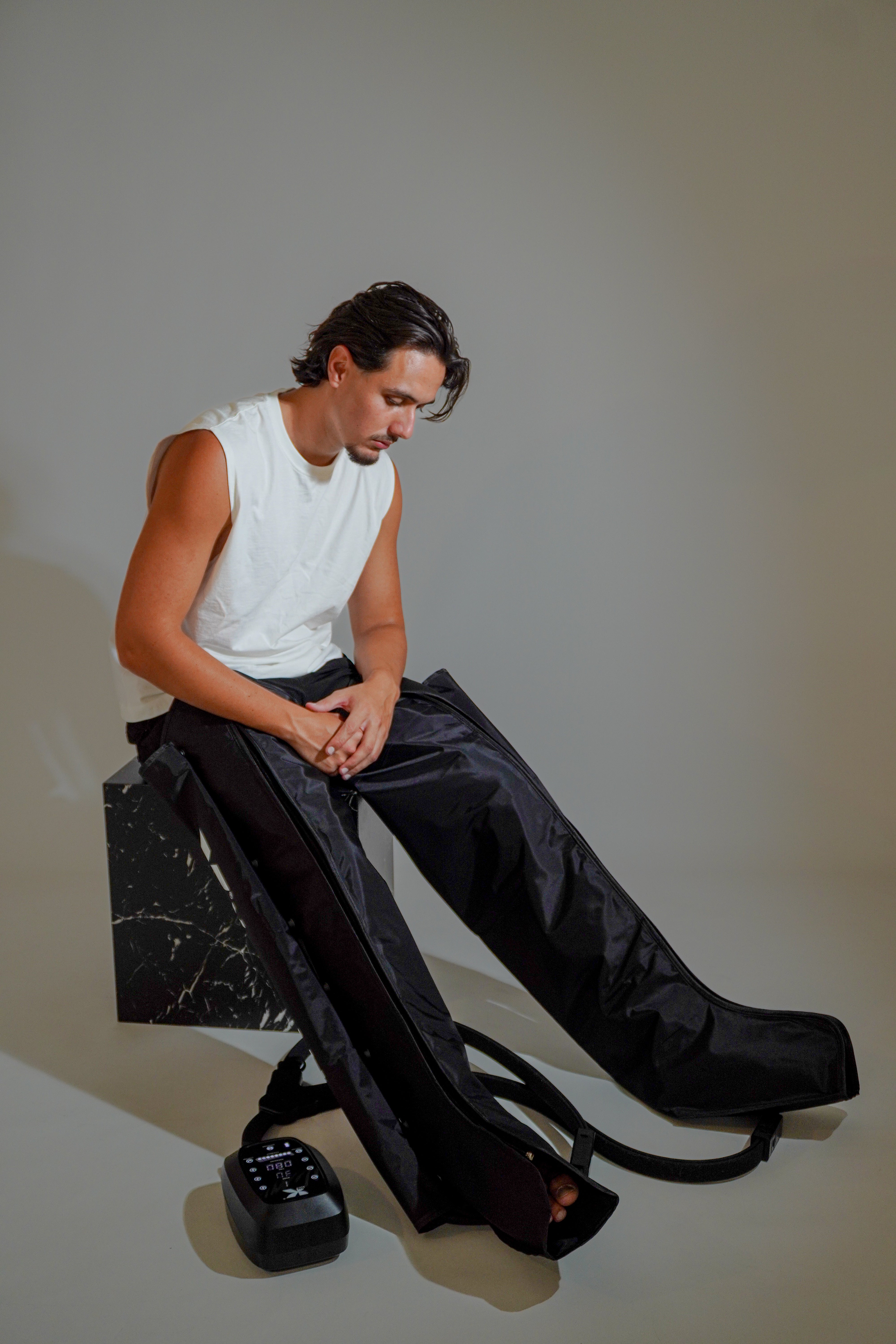
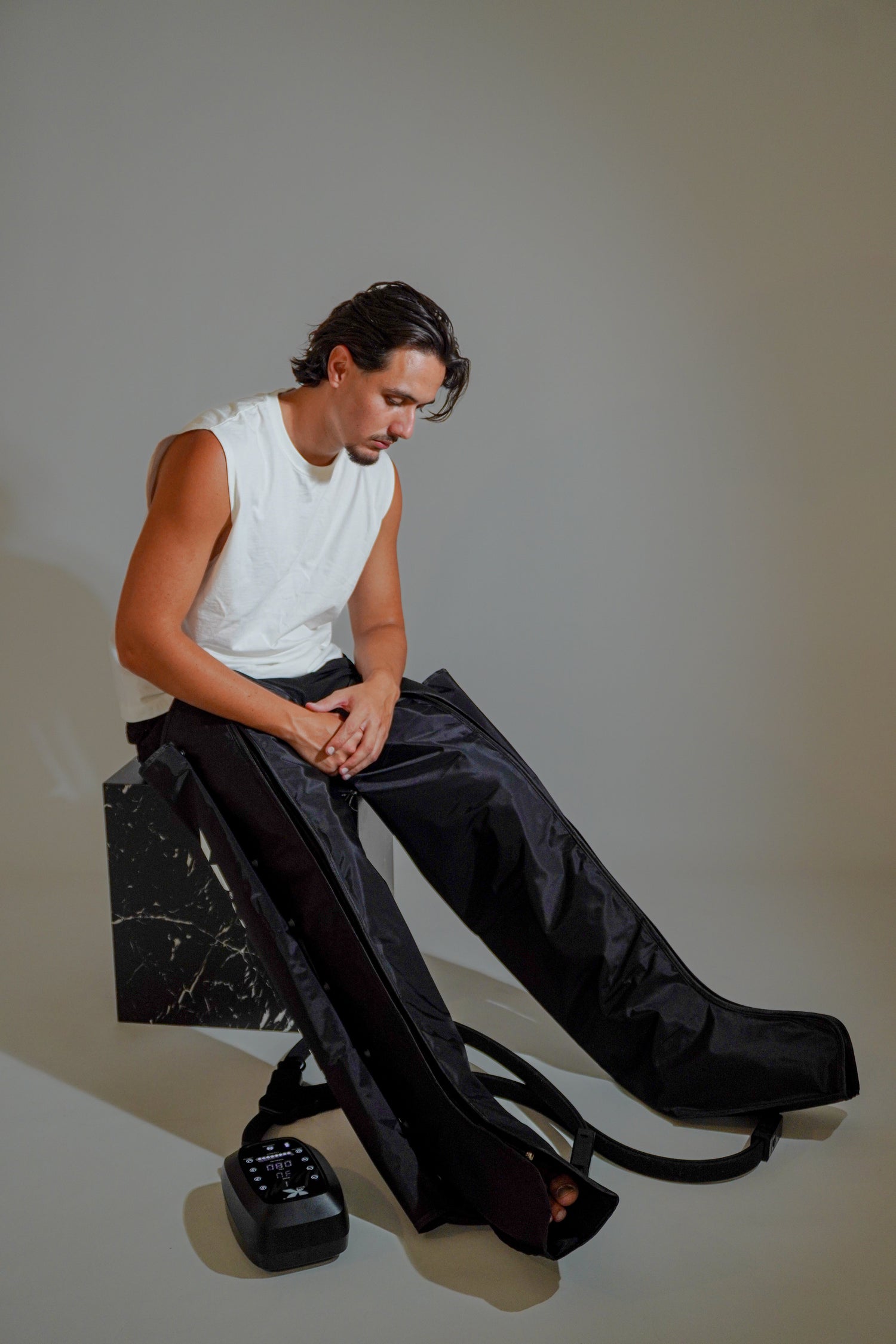
- Circulatory recovery with pressotherapy (ideal if you notice heavy legs or a lot of strain on your lower body).
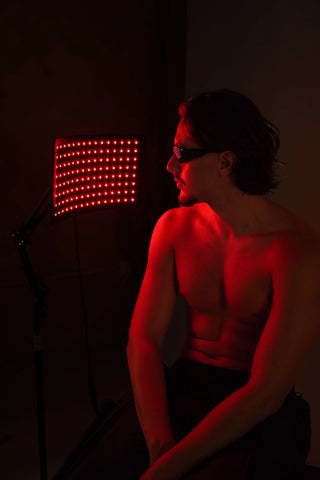
- Routine support with LED light therapy and an advanced care approach.
Recommended external sources (reliable readings)
- Systematic review on massage guns (2023, open access in PMC)
- Study on percussion and ROM/tissue stiffness (2023, PMC)
- American Heart Association — practical stretching recommendations
- Cleveland Clinic — 90/90 for hip mobility (2022)
- CDC — Arthritis in Adults, 2022 (published 2024)
FAQ: Frequently asked questions about Kumo, percussion massage and hip stiffness
How long should I use KumoPulse Air for hip stiffness?
As a conservative and useful guideline, apply percussion in 30- to 60-second blocks per area (gluteus maximus, gluteus medius, quadriceps, adductors with caution, and high TFL). In total, 3 to 5 minutes is usually enough to "open the door" to movement without irritating the tissue. Avoid focusing on one spot until it hurts: aim for a tolerable sensation. Afterward, consolidate the change with 2–3 exercises (for example, 90/90 + glute bridge). The combination usually works better than percussion alone.
Can I do the 90/90 exercise right after the percussion massage?
Yes, and it's actually a good strategy. After percussion, the tissue usually feels more receptive and the nervous system less defensive. Do the 90/90 movement with slow breathing and hold for 20 to 60 seconds without pinching. If you feel discomfort in your knee or a feeling of entrapment in your groin, reduce the range of motion (sit on a cushion or shorten the position). The goal is to gain internal/external rotation with control, not to force it at all costs.
What is better for a stiff hip: percussion massage or stretching?
It's not a competition; they're usually complementary. Percussion can help lower tension and prepare for movement, while stretching and mobility (especially with activation exercises like glute bridges or clamshells) help maintain range of motion. If you only stretch, you might feel momentary relief and be back to square one the next day. If you only do percussion, you might lack range of motion training. Short, frequent combinations (10–15 minutes) are generally more sustainable than long, sporadic sessions.
Can I combine KumoPulse Air with pressotherapy or LED light therapy in a recovery routine?
Yes, as long as you use it as part of a coherent plan. For hip stiffness, the core is mobility and strength ; then you can add general recovery tools. For example: percussion and exercises (10–15 minutes), and on days with heavy leg work, you can add compression therapy for circulatory support. LED light therapy can be integrated into a broader wellness routine. The key is not to replace movement: use it as a complement to improve adherence and the feeling of recovery.
My groin pinches when I open my hip: should I continue with the massage and stretching?
It's best not to persist if you experience anterior groin impingement or sharp pain with flexion/rotation. In that case, avoid deep ranges of motion (very low squats, aggressive 90-90 squats) and prioritize gentler options: glute bridges, pain-free short ranges of motion, and gluteus medius exercises. When using percussion, stay away from the groin/femoral fossa and focus on the glutes and thigh muscles. If the impingement recurs or limits your activity, a professional evaluation is advisable to rule out joint-related causes.
So what now?
If you want to make recovery a simple habit, you can start with the essentials: a short routine of mobility and support with technology. Discover Kumo 's approach, explore the KumoPulse Air massage gun , and if you need guidance on which solution fits your lifestyle, get in touch here: contact page .

Facial red light
KumoSkin Mask – LED Facial Mask
★★★★★ 4,8/5 · rated by verified customers
- 250 LEDs in flexible medical silicone
- Red light to boost collagen and glow
- 4 lights: red, infrared, blue and yellow
€299,00€429,00· pay in installments with seQura or Klarna