Red light therapy, explained by science. What it is, how it works, and when it makes sense to use it for performance, skin, pain, or sleep.
In a little while
- Red light therapy (or photobiomodulation) uses red (≈630–660 nm) and near-infrared (≈800–900 nm) wavelengths to modulate cellular processes without heat or UV.
- The evidence is promising for skin and healing, musculoskeletal pain and physical recovery; for sleep, the data are preliminary.
- It acts on cytochrome c oxidase, increases ATP, regulates nitric oxide and inflammatory mediators; the dose matters: too little doesn't work and too much can inhibit.
- It is generally safe if eyes are protected and times/doses are respected; consult if you are pregnant, taking photosensitizing drugs or have an active pathology.
- At home: prioritize devices with validated wavelengths, known irradiance and certified safety; be consistent and adjust distance/time according to the area.
What exactly is red light therapy?
Photobiomodulation (PBM) describes the therapeutic use of red visible light and near-infrared light emitted by LEDs or low-power lasers. Unlike UV light, these wavelengths do not tan or damage DNA. Their aim is to activate cellular pathways that promote repair and balance.
Red & infrared light
Recover faster, at home
★★★★★ 4,8/5 · rated by verified customers
The KumoLux panel supports muscle recovery with full-body red and infrared light.
- 660 nm red + 850 nm infrared light
- Full-body muscle recovery
- Clinically validated biohacking protocols
€399,00€499,00
−10% on your 1st order when you subscribe to the newsletter

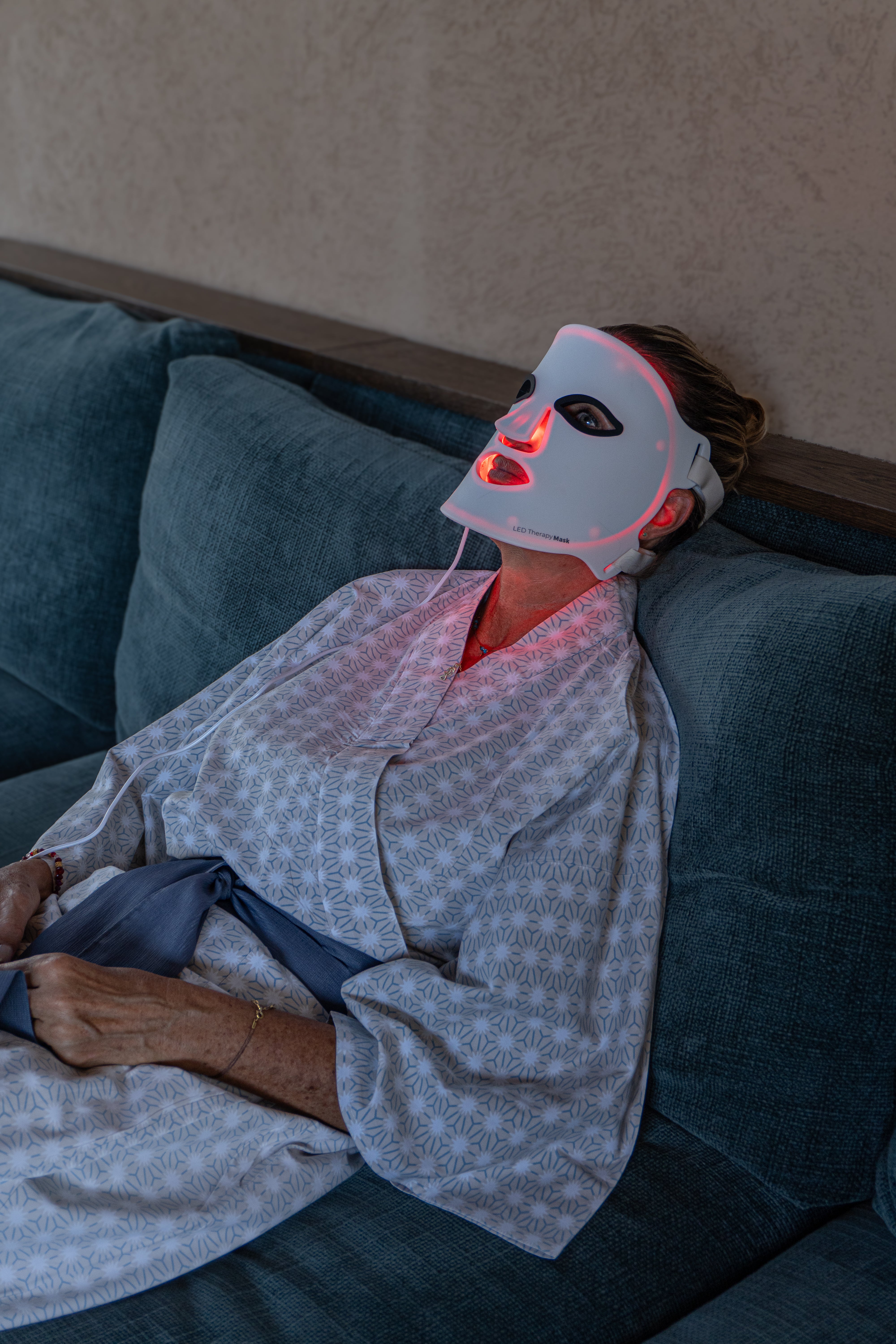
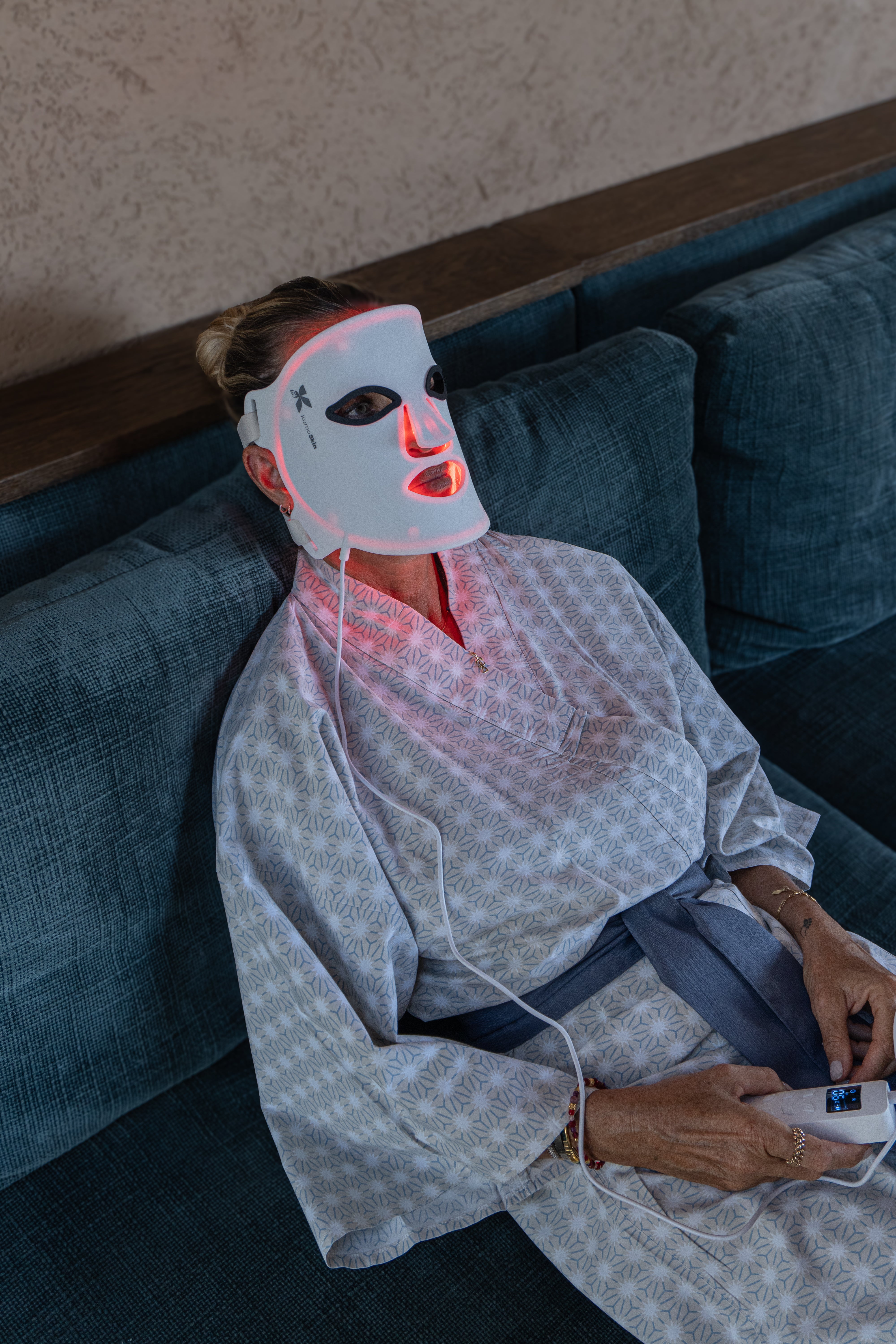
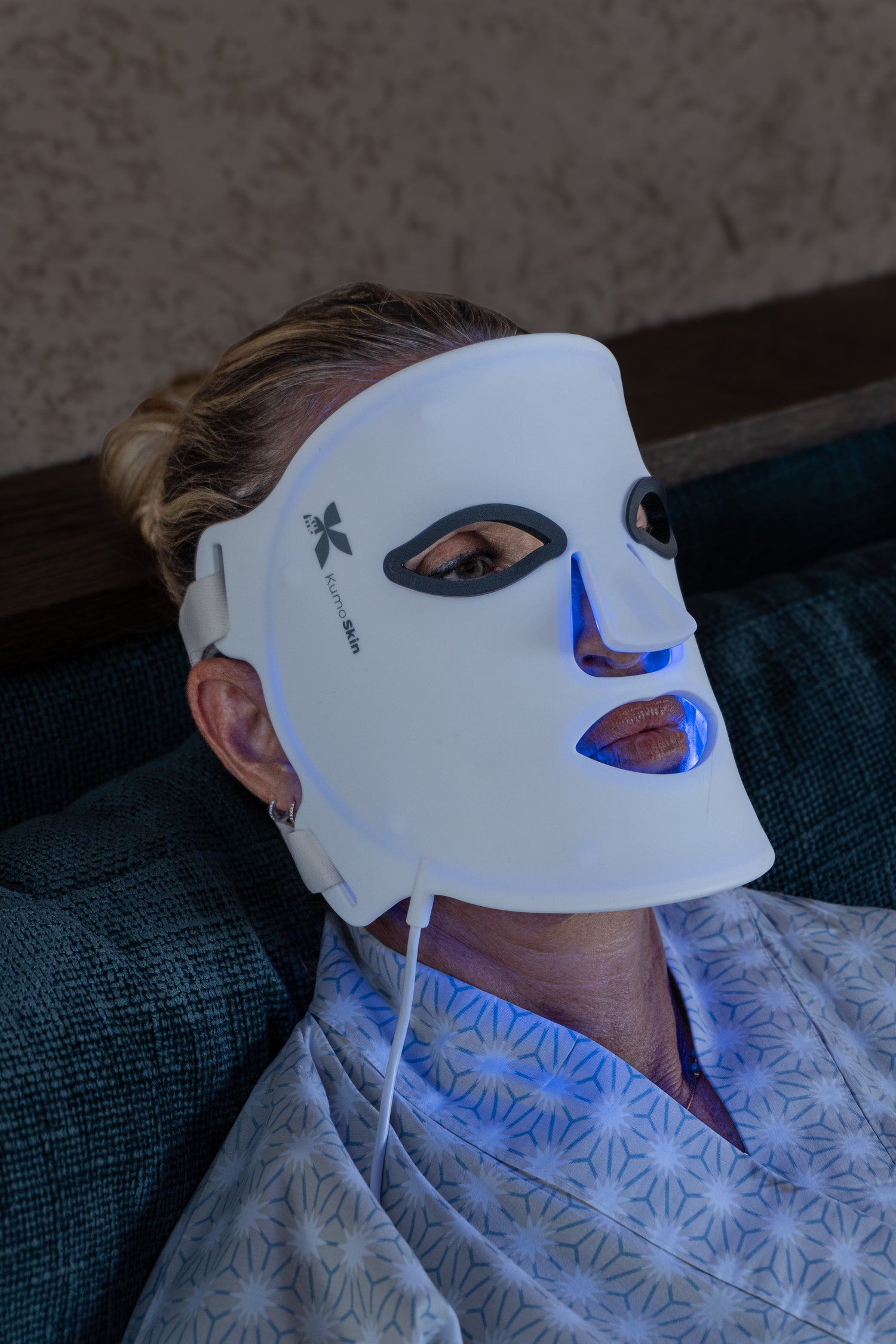
In practice, you'll find LED panels, face masks, and wearable devices. The most commonly used wavelengths are 630–660 nm (red) for the skin's surface layers and 800–900 nm (NIR) for deeper tissues like muscle or joints. The key is not just the wavelength, but the total dose delivered to the area.
How it works in the body: the biophysical basis
Red and near-infrared (NIR) photons are absorbed by chromophores such as cytochrome c oxidase in mitochondria. This can:
Personalized protocol · included with your purchase
Want us to tell you how to use it in your case?
With your purchase, our experts set up your red and infrared light sessions for your sport and goal.
Message us on WhatsAppOur experts reply · no obligation
- Increase ATP production (cellular energy).
- Modulate reactive oxygen species (ROS) and nitric oxide (NO), with vasodilatory and anti-inflammatory effects.
- Adjusting gene expression involved in tissue repair.
PBM follows a “biphasic” response: low doses stimulate, high doses may not provide additional benefits or may even inhibit the response. Therefore, dosage is crucial.
Academic reviews detail these mechanisms and emerging clinical applications in dermatology and rehabilitation. Consult leading scientific abstracts in peer-reviewed journals and professional PBM societies for further information on physiology and dosimetry.
What the evidence says (by objective)
Skin: rejuvenation, acne and scarring
In dermatology, multiple trials have documented modest to moderate improvements in skin texture, fine wrinkles, and elasticity by stimulating collagen with red LEDs and near-infrared (NIR) light. In mild acne, red light is often used in conjunction with blue light to modulate bacteria and inflammation; dermatological guidelines consider it a non-invasive adjunct.
on your first order when you join the newsletter
We send you the code instantly. No spam.
For wound healing, PBM can accelerate skin repair phases in certain clinical contexts, leading to improved re-epithelialization and reduced erythema. As always, results depend on dosage, protocol, and consistency.
- See guidelines and clinical evidence on light therapy for acne at the American Academy of Dermatology: light therapy for acne.
Musculoskeletal pain and recovery
In cases of neck pain, tendinopathies, and arthralgia, systematic reviews and meta-analyses report short-term pain relief and functional improvement when appropriate PBM protocols are applied. In the sports context, controlled studies indicate that preconditioning with red/NIR light can improve acute performance and accelerate post-exercise recovery through bioenergetic optimization and modulation of inflammation.
- Review on PBM and performance/recovery in exercise physiology: Frontiers in Physiology .
Sleep and circadian rhythm
Red light, lacking a blue component, barely interferes with melatonin. A small randomized trial (2012) in athletes observed that 30 minutes of nighttime exposure for 14 days improved sleep quality and performance markers, although overall evidence remains limited and inconsistent. It is a promising use, but not yet definitive.
- Essay on red light and sleep in athletes (2012): PubMed .
- Critical analysis for a general audience: Cleveland Clinic: Red Light Therapy.
Security and current limits
PBM is well-tolerated by most users, with mild and transient adverse events (moderate warmth, temporary redness). Protect your eyes with powerful devices, avoid looking directly at the LEDs, and consult a doctor if you are taking photosensitizing medications. No UV light is involved.
- Difference between visible/IR and UV light, and safety considerations: WHO – UV Radiation.
Reference table: wavelengths and common uses
These are indicative ranges reported in the scientific literature and recommendations from professional societies. The exact dose depends on the device, irradiance, and target.
Title: Quick guide to common parameters in photobiomodulation
| Aim | Typical wavelength | Target fabric | Energy dose (J/cm²) indicative | Frequency | Observations |
|---|---|---|---|---|---|
| Facial rejuvenation | 630–660 nm | Epidermis/superficial dermis | 3–8 | 3–5 times/week | Improves collagen; avoid makeup/filters during the session. |
| Mild acne | 630–660 nm (± blue) | Sebaceous glands | 4–8 | 3–5 times/week | Often combined with blue light according to dermatological guidelines. |
| Skin scarring | 630–660 and/or 800–850 nm | Superficial wound | 4–10 | 3–7 times/week | It does not replace wound care; follow clinical protocol. |
| Joint pain | 800–900 nm | Joints/tendons | 10–30 | 2–4 times/week | Adjust by depth; consider two-phase window. |
| Muscle recovery | 800–900 nm | Muscle | 10–60 | 2–4 times/week | It can be applied pre- or post-exercise according to the literature. |
- Dosage recommendations by indication (for clinicians): WALT PBM – Recommendations .
How to use it at home wisely
Choosing the right device
- Choose validated wavelengths (≈630–660 and/or 800–900 nm) and request irradiance (mW/cm²) and energy density (J/cm²) data.
- He prefers equipment with safety certifications, a timer, and quality materials.
- Avoid UV sources; PBM is not tanning or "hot laser".
For a comprehensive approach to daily recovery with aesthetic and performance technology, discover the universe of KUMO: KUMO Balance .
Dosage, distance, and consistency
- Place the device at the distance recommended by the manufacturer (e.g., 10–30 cm on domestic panels).
- Adjust the time to reach the target dose without overexposure. Start low and progress.
- Constant thirst: 2–5 weekly sessions for 4–8 weeks are usually needed to notice changes in skin or pain.
Safety and precautions
- Protect your eyes during intense exposure and avoid looking directly at LEDs.
- Consult us if you are pregnant, have active cancer in the area to be treated, have photosensitive epilepsy, or are taking photosensitizing drugs.
- If persistent irritation occurs, reduce the dose or discontinue use and consult a doctor.
- Academic overview of mechanisms and safety: PBM review in dermatology (2018) .
- Scientific introduction to mitochondrial mechanisms and biphasic response: PBM review – mechanisms .
- Overview for non-technical readers: Harvard Health: Red light therapy.
Use cases: Who is it most useful for?
Athletes and active people
To improve recovery between sessions, modulate pain and fatigue, and, in certain protocols, enhance acute performance. It integrates well with massage, mobility exercises, and adequate sleep.
Wellness and skin
Those seeking brighter, more elastic skin, or non-invasive cosmetic support for texture and tone. Consistency is key to seeing subtle but cumulative changes.
Neck/back and joint pain
As a complement to physiotherapy and therapeutic exercise, it can help relieve mild to moderate pain and stiffness with well-dosed protocols.
Myths and realities
- It doesn't "burn fat" on its own. It can support metabolism and cellular function, but it's not a substitute for nutrition or exercise.
- It's not UV or tanning. PBM does not pigment the skin.
- It does not replace medical treatment. It is a complementary tool; if you have a medical condition, follow the guidance of your healthcare professional.
Frequently Asked Questions
How long does it take to see improvement?
It depends on the goal, the dosage, and consistency. For skin conditions, many users report gradual improvements over 4–8 weeks with 3–5 sessions per week. For musculoskeletal pain, some studies observe relief after 1–2 weeks, although the effects are usually consolidated with cycles of several weeks. The response is individual: start with conservative doses, record sensations and progress, and adjust the frequency according to tolerance and results. If there are no changes after 6–8 weeks, review your parameters or consult a professional.
Is it safe to use it every day?
PBM is generally safe, but more isn't always better. Remember the biphasic response: there's an effective dose window, and exceeding it doesn't provide additional benefits and may even diminish the response. For most goals, 3–5 sessions per week are sufficient. With powerful devices, alternate days or reduce the treatment time per area. Protect your eyes and avoid prolonged sessions without guidance. If you're taking photosensitizing medications or have specific medical conditions, consult a professional first.
What is the difference between red light and near-infrared light?
Red light (approximately 630–660 nm) primarily interacts with superficial layers (skin), making it useful for rejuvenation, acne, and superficial scarring. Near-infrared light (approximately 800–900 nm) penetrates deeper and targets muscles, tendons, and joints, which is why it is frequently used for rehabilitation and deep pain relief. Many devices combine both types of light to treat different tissues. The choice depends on the objective, the depth of the target tissue, and the total dose you wish to achieve safely.
Can I combine it with exercise or physiotherapy?
Yes. There is evidence that applying PBM before or after exercise can improve acute performance and accelerate recovery in certain protocols. It can also complement manual therapy, mobility, and strengthening exercises. If you work with a physical therapist or trainer, coordinate the dosage and timing (pre/post) to optimize the effect. Avoid overlapping several intense techniques on the same day in the same area if you notice irritation or tissue fatigue.
Does it really help with sleep?
Initial data are promising but still limited. A small trial (2012) in athletes found improvements in sleep quality with nightly red light sessions for two weeks, likely due to the absence of blue light and neuromodulatory effects. However, large studies and standardized protocols are lacking. If you have trouble sleeping, prioritize sleep hygiene (routine, darkness, temperature) and consider PBM as a complement, not as the sole strategy.
The essentials
- Red light/NIR therapy modulates cellular processes that promote repair, pain relief, and recovery, without UV or ablative heat.
- The evidence is strong in some dermatological uses and musculoskeletal pain, and promising in sports recovery; in sleep, it is still preliminary.
- Dosage, distance, and time make all the difference: look for the effective window, not the maximum possible.
- Safety first: protect your eyes, avoid overexposure, and consult a doctor if you have any specific conditions.
- Consistency multiplies results: 3–5 sessions/week for several weeks is a typical guideline.
Want to integrate technology into your recovery and wellness routine? Get inspired and start here: KUMO Balance .

Red & infrared light
KumoLux Panel – Red and Infrared LED Panel
★★★★★ 4,8/5 · rated by verified customers
- 660 nm red + 850 nm infrared light
- Full-body muscle recovery
- Clinically validated biohacking protocols
€399,00€499,00· pay in installments with seQura or Klarna