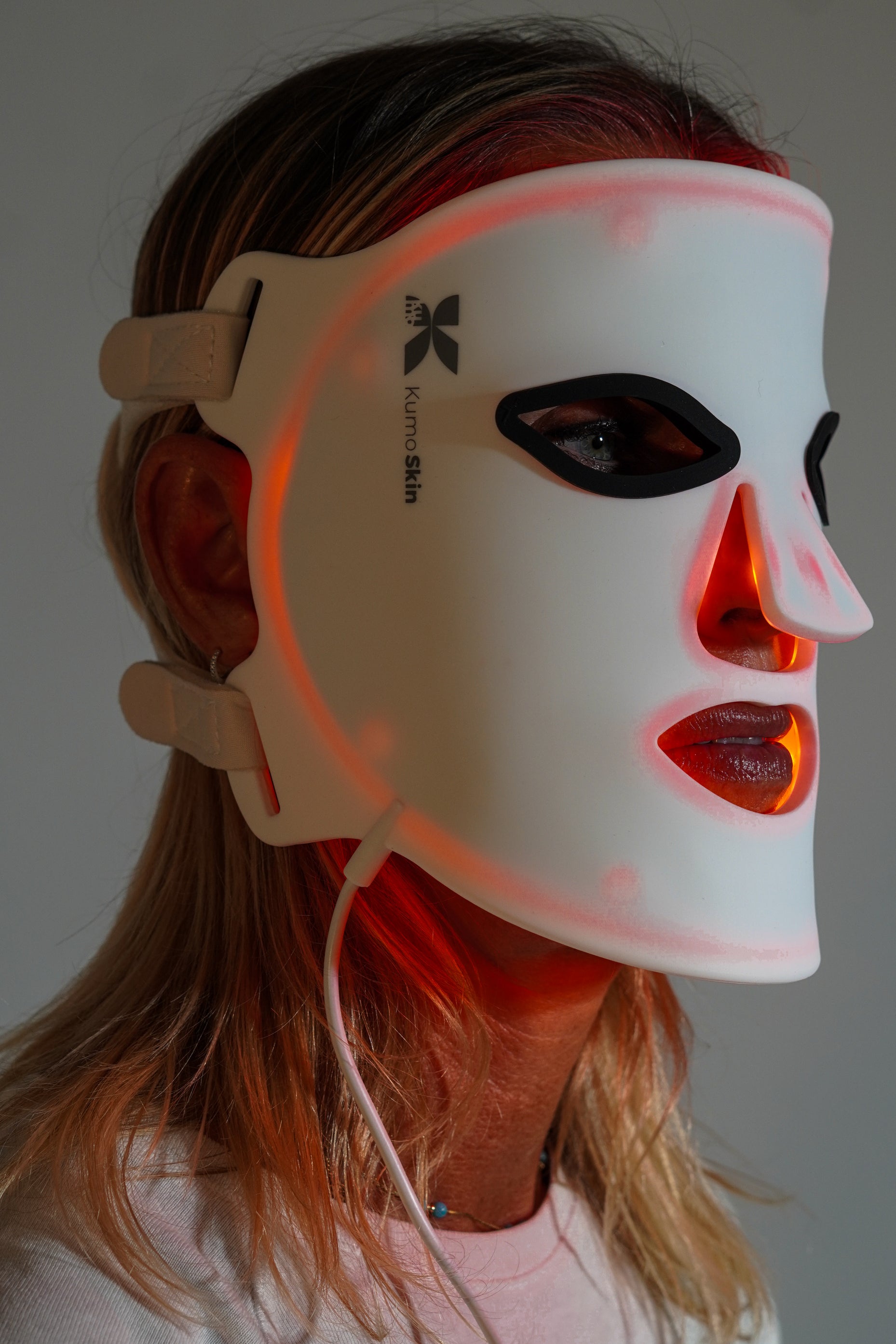

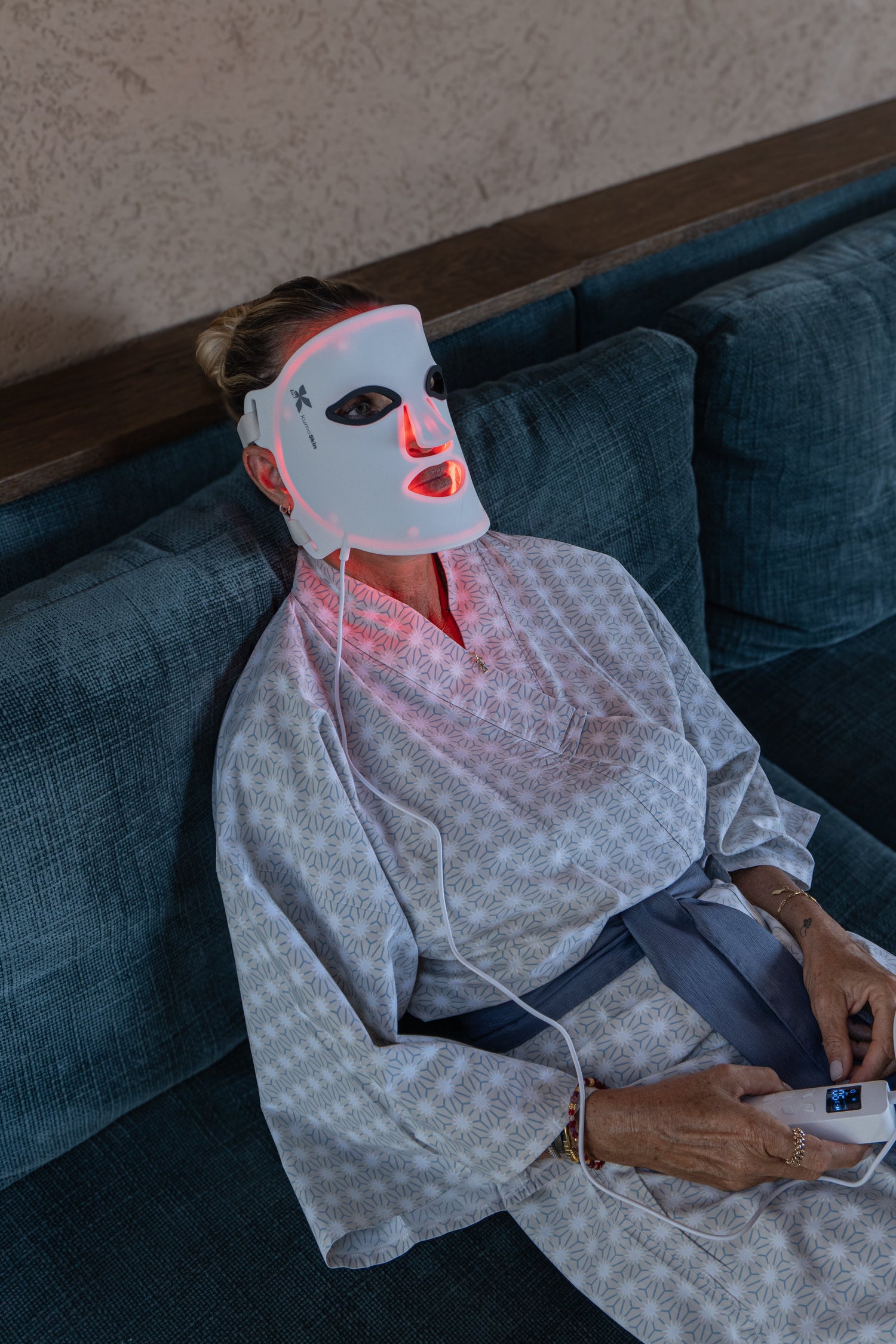
Red light therapy and sleep: how to use it safely and effectively. If you want to fall asleep more easily, sleep more deeply, and wake up with more energy, here you'll find the essentials for integrating red light into your nighttime routine without complications.
Red light therapy (photobiomodulation) uses specific wavelengths from the red and near-infrared spectrum to modulate cellular processes and help relax the body and mind. With well-planned application, it can promote healthy sleep, reduce evening muscle tension, and does not interfere with melatonin as blue light does. Evidence is emerging but promising, and results depend on dosage, timing, and consistency.
Red & infrared light
Recover faster, at home
★★★★★ 4,8/5 · rated by verified customers
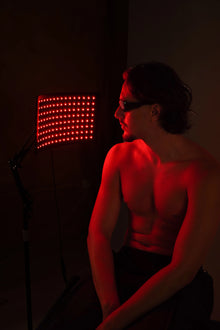
The KumoLux panel supports muscle recovery with full-body red and infrared light.
- 660 nm red + 850 nm infrared light
- Full-body muscle recovery
- Clinically validated biohacking protocols
€399,00€499,00
−10% on your 1st order when you subscribe to the newsletter

In a little while
- Dim exposure to red light 30–60 minutes before bed can help you relax without suppressing melatonin.
- Prioritize red (≈630–670 nm) and near-infrared (≈800–880 nm) wavelengths, with moderate dosages.
- Start with 10–15 minutes, 3–5 days per week, and adjust according to tolerance and response.
- Avoid screens/blue light simultaneously; the combination enhances the impact on the circadian rhythm.
- Consult us if you have photosensitivity, light-triggered migraines, or are undergoing photosensitizing treatments.
What is red light therapy and why can it help you sleep?
Photobiomodulation uses low-intensity red and near-infrared light to stimulate mitochondrial function (particularly cytochrome c oxidase), optimize cellular energy production, and modulate inflammation. This is associated with muscle relaxation and recovery, key factors for better sleep. Relevant to sleep, red light does not suppress melatonin as blue light from screens and cool LEDs does, making it a gentler option for nighttime.
- General introduction and clinical safety of red light: Cleveland Clinic.
- Photobiomodulation mechanisms: NCBI – scientific review .
- Impact of light on circadian rhythm:Harvard Health on blue light .
The key with photobiomodulation is not "more light", but the right dose, consistency and the right time of day.
Personalized protocol · included with your purchase
Want us to tell you how to use it in your case?
With your purchase, our experts set up your red and infrared light sessions for your sport and goal.
Message us on WhatsAppOur experts reply · no obligation
What does the evidence say about red light and sleep?
The literature on red light applied to sleep is still limited, but it points to benefits in subjective sleep quality, sleep latency, and pre-sleep relaxation. Controlled studies have shown that red light at night does not alter melatonin levels as much as blue light and can facilitate sleep onset, especially when combined with good sleep hygiene. The most robust data on the influence of light on sleep show that screen exposure at night reduces REM sleep and delays the biological clock, so replacing that exposure with dim red light is a physiologically sound change.
- Evening light and sleep: Sleep Foundation – red light and sleep.
- Screen light and sleep disruption (PNAS, 2015): Electronic readers and sleep .
- Review on photobiomodulation and brain/rhythms: Frontiers in Neuroscience, 2019 .
- Light therapy for rhythm disorders: AASM – light therapy.
Practical conclusion: Replacing bright/blue light sources with dim red light at the end of the day and applying photobiomodulation with moderate doses can create a “pro-sleep environment” without interfering with the circadian clock.
Practical benefits for your rest
- Preparing the body for sleep: by decreasing sympathetic tone and evening muscle tension, the transition to sleep is facilitated.
- Consistent routine: Using a predictable stimulus each night (e.g., 10–15 min) acts as a behavioral “anchor”, reinforcing the signal to begin rest.
- Recovery and pain: By modulating mild inflammatory processes and relieving muscle discomfort after exercise, it can reduce discomfort-related awakenings.
- Circadian compatibility: dim red light does not compete with melatonin secretion; it avoids the "light coffee maker" effect of blue night light.
How to use it properly: a simple step-by-step protocol
- Choose the time: 30–60 minutes before going to bed, with the room already dimmed and without screens.
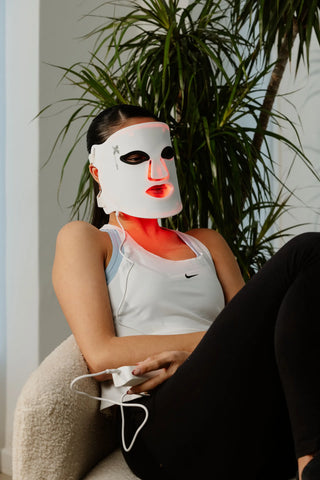
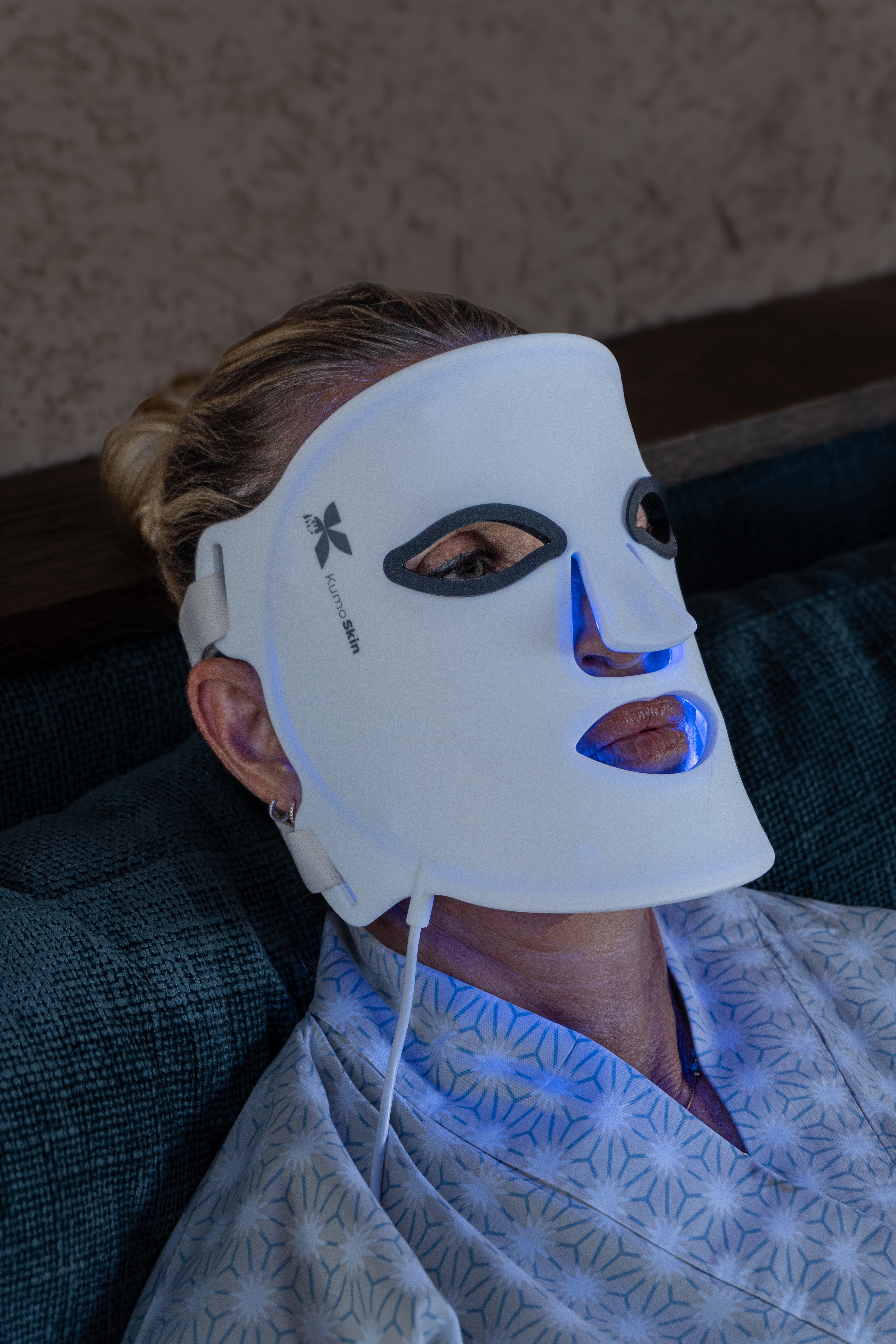
- Position and distance: Place the device 20–40 cm from the application area. For general relaxation, the face, chest, and neck work well; for localized discomfort, target the specific area.
- Initial duration: 10–15 minutes per session, 3–5 times per week. Gradually increase to 20 minutes if you tolerate it and it helps you.
- Environment: turn off cool lights, activate "night mode" on devices or, better yet, leave them out of the bedroom.
- Consistency: Keep the same schedule and note sensations (latency, awakenings, morning energy) for 2–4 weeks.
- Eye safety: avoid looking directly at the LEDs; wear glasses if the device is intense or if you experience discomfort.
Rely on photobiomodulation dosage guidelines for superficial tissues (energy per area), which suggest moderate ranges and controlled times for biological effects without overexposure: WALT recommendations.
on your first order when you join the newsletter
We send you the code instantly. No spam.
Common mistakes to avoid
- Excessive intensity or timing right before sleep, which can be triggering for some sensitive people.
- Use red light but keep the TV or mobile phone switched on: the benefit is diluted by the blue/green light.
- Irregular sessions: without consistency, it is difficult to assess changes.
- Ignoring basic sleep hygiene factors (temperature, late caffeine intake, chaotic schedules).
Integrate red light with solid sleep hygiene
For maximum results, combine photobiomodulation with proven habits:
- Maintain consistent schedules and a sufficient sleep window.
- Reduce blue light 1–2 hours before bedtime and favor warm/dim environments:Harvard Health – blue light .
- Optimizes temperature (≈18–20 °C) and noise.
- Limit caffeine and alcohol in the afternoon.
- If you work shifts or travel, use bright local light in the morning and dim red light at night to help with adjustment: AASM – light therapy.
Table of indicative parameters for home use
Note: General ranges for consumer LED devices. Adjust according to individual sensitivity and manufacturer specifications. If you have a medical condition or are taking photosensitizing medication, consult a doctor first.
| Aim | Wavelength (nm) | Approximate intensity (irradiance) | Duration/Frequency | Recommended moment | Area of application |
|---|---|---|---|---|---|
| Pre-sleep relaxation | 630–670 (red) | 10–30 mW/cm² | 10–15 min, 4–5x/week | 30–60 min before bed | Face, neck, chest |
| Post-workout muscle relief | 630–670 / 800–880 | 20–50 mW/cm² | 10–20 min, 3–5x/week | Late afternoon/evening, avoiding high intensity right before going to bed | Specific area |
| General recovery | 800–880 (NIR) | 20–40 mW/cm² | 10–15 min, 3–4x/week | Last 2 hours of the day | Back, legs |
| Environment without suppressing melatonin | 620–680 (dim ambient light) | <5 mW/cm² (indirect light) | During the last hour | From sunset | Ambient lighting |
References for technical context and light hygiene: Cleveland Clinic, NCBI – photobiomodulation , Sleep Foundation – red light and sleep.
Safety, contraindications, and when to consult
In general, red LED light is well tolerated. Even so:
- Avoid looking directly at the emitters; protect your eyes if you experience discomfort.
- Consult if you have photosensitive epilepsy, light-triggered migraine, eye disorders, are pregnant, or are taking photosensitizing drugs (e.g., certain antibiotics/retinoids).
- If you suffer from chronic insomnia, sleep apnea, or excessive daytime sleepiness, seek professional diagnosis; the red light is not a substitute for a sleep evaluation. General hygiene guidelines: CDC – sleep hygiene.
Practical examples: how it would look in your routine
- Amateur athlete: After training in the late afternoon, apply 12 minutes of red light to the quadriceps and 10 minutes to the neck; then, stay in a room with dim red light and read on paper. Goal: less tension and reduced latency.
- Professionals who use screens: replace the last hour of mobile/TV use with 10 minutes of red light therapy + gentle stretching; add blue light filters and warm lighting. Goal: to establish a sleep-signaling routine.
Frequently Asked Questions
What is the best time to use red light if I want to sleep better?
For most people, 30–60 minutes before bedtime works well. This timeframe allows the session to act as a bridge between daytime activity and rest, without interfering with melatonin. Keep the rest of your environment warm and dimly lit, avoid screens, and don't prolong the session if you feel energized. If you work shifts or travel, adjust your usage to your new local nighttime and combine it with exposure to daylight in the morning to reinforce your circadian rhythm: AASM.
Which wavelength is best for sleep?
The most commonly used bands are red (≈630–670 nm) and, for deeper tissues, near-infrared (≈800–880 nm). Red light is sufficient for superficial relaxation and does not compete with melatonin; near-infrared (NIR) may be helpful for deeper muscle discomfort. Evidence compares blue light versus non-blue light better than subtle differences within the red spectrum; the important thing is to avoid cool spectra at night and use moderate dosages:Harvard Health , NCBI .
How long does it take to notice the effect on sleep?
It varies depending on the person and consistency. Many users report changes within 1–2 weeks of a consistent routine (10–15 minutes, 4–5 times per week, along with good sleep hygiene). If there is pain or muscle tension, local relief may be more immediate and result in fewer awakenings. If you don't see changes after 3–4 weeks, review your sleep schedule, exposure to blue light, and other factors (caffeine, stress), and consider professional advice: Sleep Foundation.
Is it safe for the eyes?
Well-designed consumer LED devices are low-risk, but it's best to avoid looking directly at the diodes, especially at close range. If you experience discomfort, close your eyes or wear protective eyewear. People with specific eye conditions should consult a doctor first. Safety and Uses Review: Cleveland Clinic.
Can it replace sleep hygiene or medical treatment?
No. Red light therapy is a complementary tool. It works best when integrated with healthy sleep habits (schedule, environment, daylight exposure) and should never delay a diagnosis if you suspect disorders such as sleep apnea, chronic insomnia, or restless legs syndrome. For general guidance on habits: CDC – sleep hygiene.
To remember
- Red light does not suppress melatonin and can help prepare the body and mind for sleep.
- Timing matters: 30–60 minutes before bedtime, with the rest of the lights dimmed.
- Start with 10–15 minutes and adjust; weekly consistency is more important than long sessions.
- Avoid screens and cold lights at night; combine red light with sleep hygiene.
- Consult us if you have photosensitivity, sleep conditions, or clinical concerns.
Want to make recovery and rest a new part of your life? Discover more about wellness and technology at KUMO .

Red & infrared light
KumoLux Panel – Red and Infrared LED Panel
★★★★★ 4,8/5 · rated by verified customers
- 660 nm red + 850 nm infrared light
- Full-body muscle recovery
- Clinically validated biohacking protocols
€399,00€499,00· pay in installments with seQura or Klarna