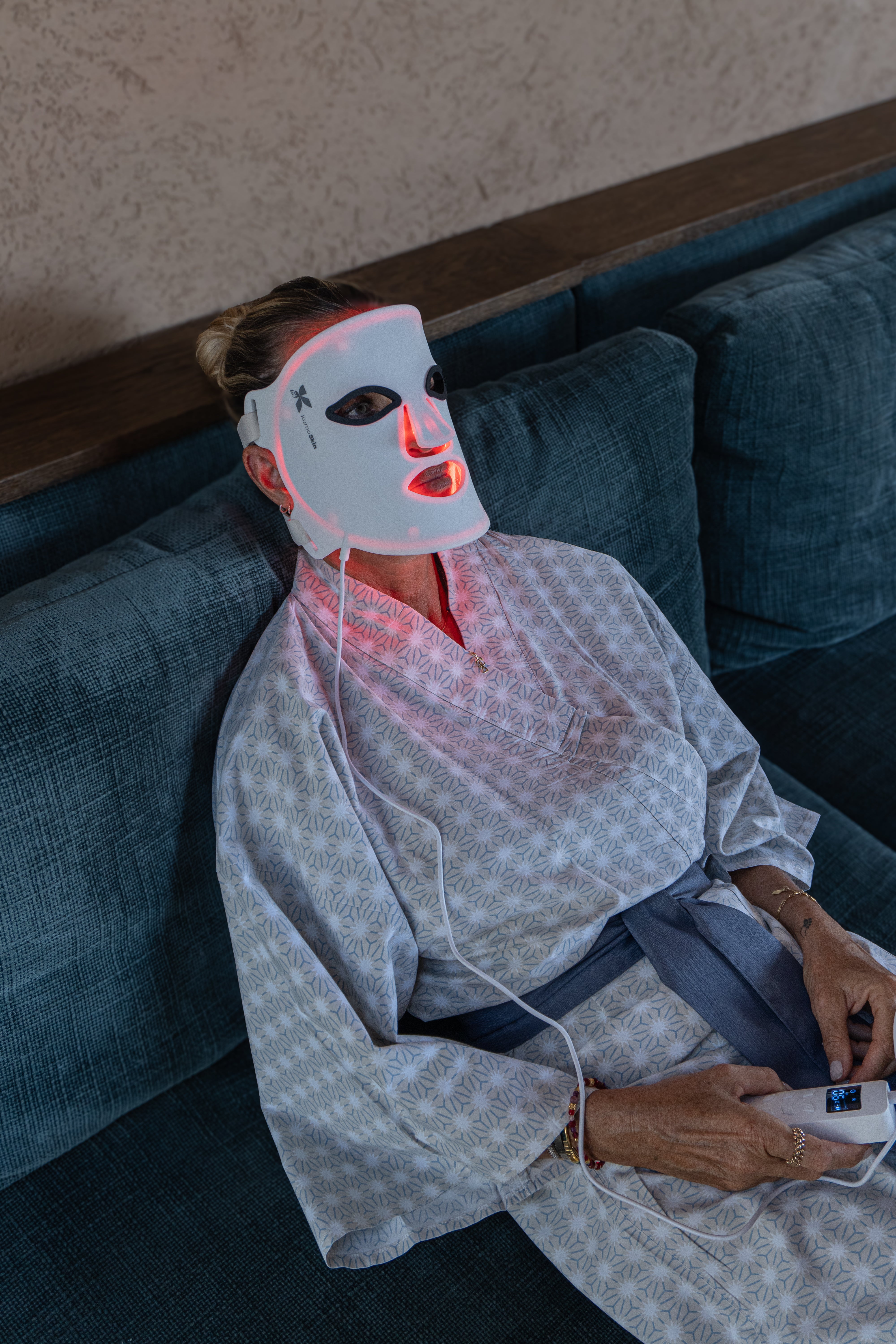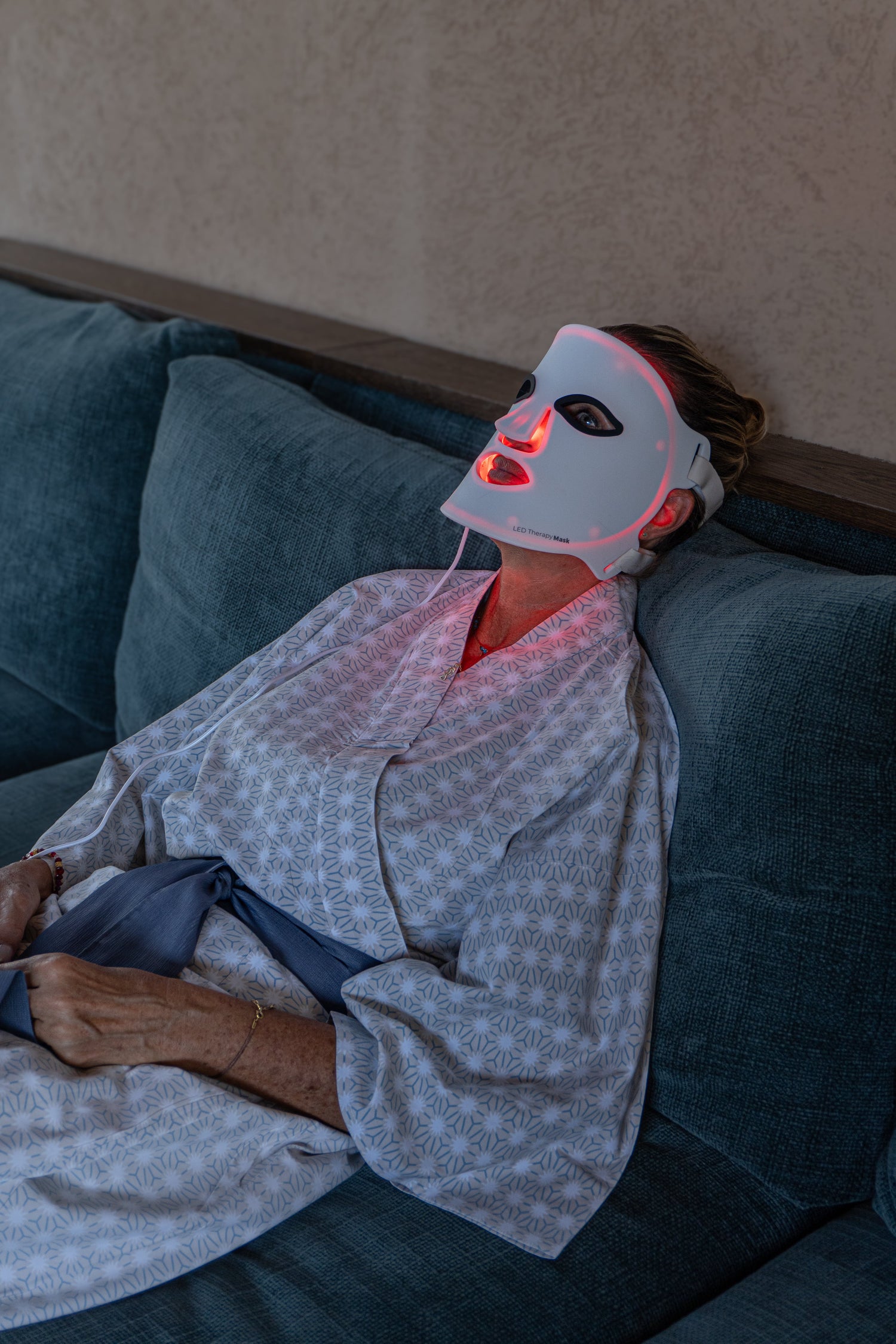
Red light therapy for acne and scars, explained clearly. If you're looking to reduce breakouts, soothe inflammation, and improve the appearance of post-acne marks, here's how it works, what results to expect, and how to use it safely at home.
In a little while
- Red LED (≈630–660 nm) and near-infrared (≈800–850 nm) therapy reduces inflammation, promotes tissue repair, and may improve the appearance of acne and certain marks.
- In active acne, it helps primarily to reduce inflammation and accelerate recovery; combined use with blue light enhances the control of Cutibacterium acnes.
- In scars, it is most effective on residual redness (PIE) and fine texture; for deep sunken scars it is advisable to combine it with other treatments.
- Typical routine: 10–20 minutes per session, 3–5 times/week for 8–12 weeks, then maintenance 1–3 times/week.
- High safety: avoid direct eye exposure, check for photosensitivity, and consult if you are taking photosensitizing drugs.
How red light affects the skin
Photobiomodulation: from photon to cell
Red light therapy is a form of photobiomodulation: certain wavelengths are absorbed by cellular chromophores (such as mitochondrial cytochrome c oxidase), increasing ATP production, modulating reactive oxygen species and signaling that reduces inflammation and promotes tissue repair. This mechanistic basis is extensively described in reference scientific reviews (Hamblin, 2017).
Red & infrared light
Recover faster, at home
★★★★★ 4,8/5 · rated by verified customers
The KumoLux panel supports muscle recovery with full-body red and infrared light.
- 660 nm red + 850 nm infrared light
- Full-body muscle recovery
- Clinically validated biohacking protocols
€399,00€499,00
−10% on your 1st order when you subscribe to the newsletter

Red light does not "burn" or "kill" acne: it optimizes cellular processes that soothe, repair, and reorganize tissue over time.
Red vs. near-infrared: depth and targets
- Visible red (≈630–660 nm): reaches epidermis and superficial dermis; useful for modulating inflammation, microcirculation and stimulating superficial collagen.
- Near infrared (≈800–850 nm): reaches deeper (mid dermis), with a greater impact on tissue repair and possible pain relief.
The two bands are often used together to cover different skin layers, with similar safety profiles when used at appropriate doses. Synthesis 2016 .
Personalized protocol · included with your purchase
Want us to tell you how to use it in your case?
With your purchase, our experts set up your red and infrared light sessions for your sport and goal.
Message us on WhatsAppOur experts reply · no obligation
And what about acne bacteria?
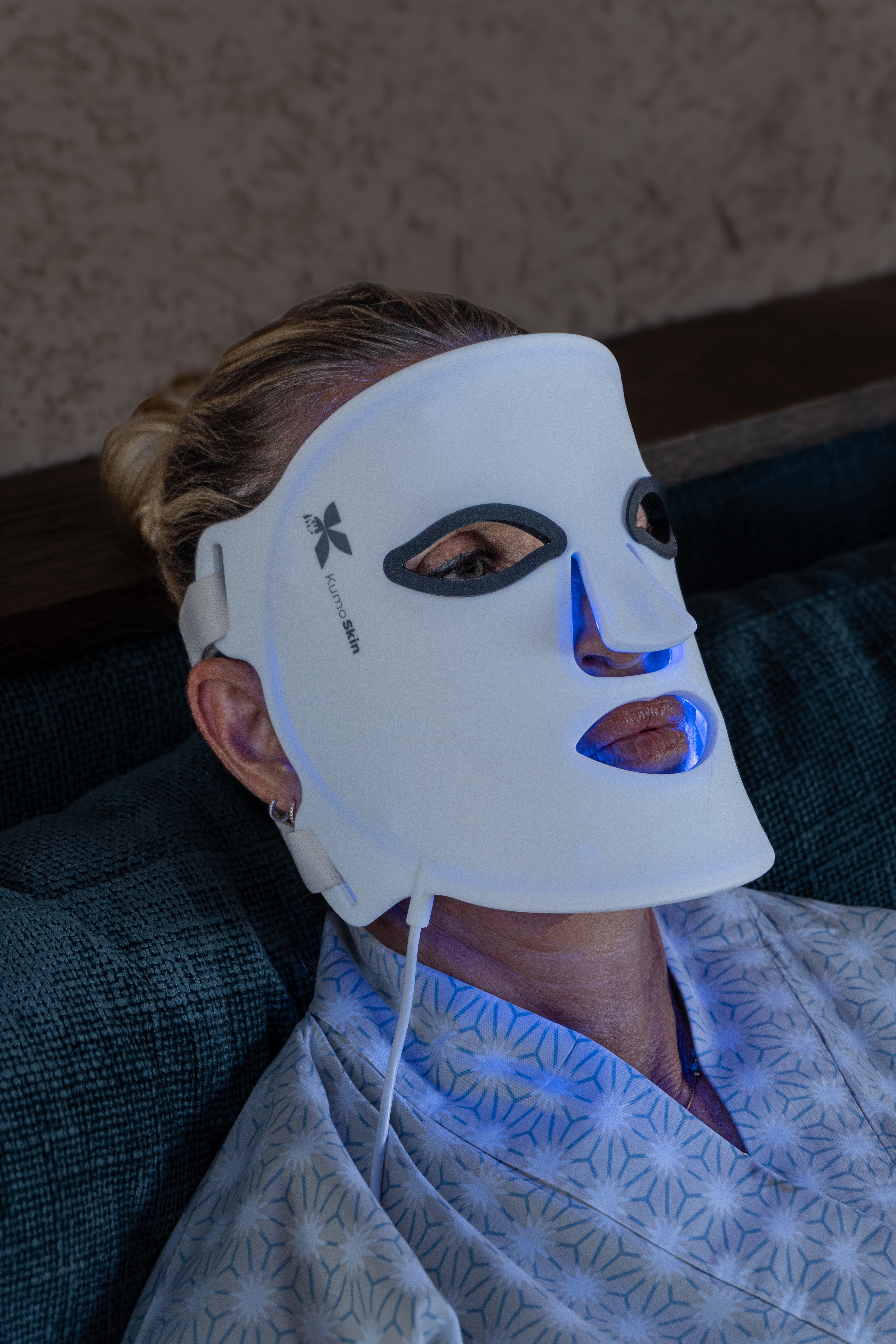
Blue light (≈415 nm) oxidizes the porphyrins of C. acnes, reducing their charge; red light, on the other hand, is notable for its anti-inflammatory and reparative effects. Therefore, in inflammatory acne, the blue+red combination is frequently used in clinical settings and in home devices (AAD, 2024). If you only have access to red light, you may still notice less redness, pain, and better lesion resolution.
Expected benefits: acne and blemishes
Active acne: what to do and what not to do
- What it does have: less erythema, edema and pain in papules/nodules; better lesion resolution time; skin more tolerant to retinoids or other topical treatments.
- What it doesn't: it doesn't usually "dry out" comedones on its own; bacterial control is limited without blue; results require consistency (weeks, not days).
Reviews from 2016–2021 report moderate clinical improvements, especially in inflammatory flares, with a good safety profile compared to thermal or ablative therapies (Cleveland Clinic Review 2016 , 2022).
Acne scars: distinguishing them to get it right
- Post-inflammatory erythema (PIE): reddish patches that appear after a flare-up. Red light often helps to reduce these patches more quickly by modulating microcirculation and residual inflammation.
- Post-inflammatory hyperpigmentation (PIH): brown spots. The impact of redness is more modest; photoprotection and depigmenting agents remain key.
- Atrophic scars (dimples): Red LED can improve fine skin texture and quality, but for deep atrophy, procedures such as microneedling or fractional laser are usually necessary, where light can act as an adjunct to healing. Summary 2016 .
The American Academy of Dermatology notes that light treatments are used as an adjunct to comprehensive plans for acne and its sequelae AAD, 2024.
on your first order when you join the newsletter
We send you the code instantly. No spam.
How to use it safely at home
Basic parameters that do matter
- Wavelengths: red 630–660 nm; NIR 800–850 nm.
- Dosage (“fluence”): often effective between 5–50 J/cm² per session depending on indication and area, with variations by equipment and distance to the skin. Scientific basis .
- Frequency: 3–5 sessions/week at the beginning (8–12 weeks); maintenance 1–3/week.
- Duration: 10–20 minutes per zone, depending on the device's power.
- Distance: Follow the manufacturer's instructions to achieve the intended dose.
Always prioritize consistency over intensity: more is not better in photobiomodulation.
Sample 12-week routine
- Preparation: Clean and dry skin; avoid photosensitizers just before (strong acids, recent peeling).
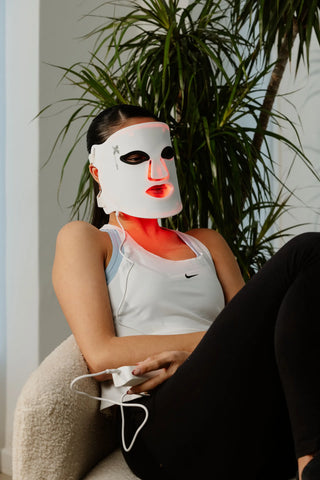
- Session: Apply the mask or panel at the recommended distance; protect your eyes with opaque glasses if the device does not include them.
- Post-session: nighttime retinoid or niacinamide may be complementary; use broad-spectrum sunscreen daily.
- Review: at 4 weeks, assess inflammation; at 8–12 weeks, assess markings and texture. Adjust frequency according to response.
To integrate this routine with quality devices and careful design, you can explore KUMO and its focus on recovery and wellness technologies , KUMO Balance .
Precautions and contraindications
- Eyes: Do not look directly at the LEDs; wear eye protection.
- Photosensitivity: Consult your doctor if you are taking photosensitizing medications (e.g., some antibiotics, diuretics, St. John's wort). Avoid using on suspicious lesions or skin cancer.
- Pregnancy, photogenic migraine, photosensitive epilepsy: consult beforehand.
- Isotretinoin: Although LED is gentle, coordinate with your dermatologist any procedures during or after its use; some interventions should be spaced out for safety. AAD, general guide.
Clinical evidence supports a high safety profile when appropriate indications and doses are followed. DermNet NZ, 2023.
Practical table: parameters and objectives of red light
| Wavelength | Main objective | Estimated depth | Indicative dose per session | Initial frequency | Typical indications |
|---|---|---|---|---|---|
| 630–640 nm (red) | Modulate superficial inflammation, microcirculation | Epidermis/superficial dermis | 5–20 J/cm² | 3–5/week | Post-acne erythema, mild inflammatory outbreak |
| 650–660 nm (red) | Stimulate collagen, repair | Superficial dermis | 10–30 J/cm² | 3–5/week | Fine texture, supports minor scars |
| 810–850 nm (NIR) | Deeper tissue repair, analgesia | mid-dermis | 10–40 J/cm² | 3–4/week | Painful nodules, tissue recovery |
| Red+NIR combination | Multi-layered coverage | Epidermis–mid dermis | 10–30 J/cm² | 3–5/week | Comprehensive plan for acne and scars |
Note: Ranges based on photobiomodulation literature; adjust to the actual power of your equipment and the manufacturer's guidelines. 2017 Revision .
Practical examples
Case 1: Inflammatory acne on cheeks
- Weeks 1–4: Red LED 650 nm, 15 minutes, 4 times/week. Complement: gentle cleanser, retinoid every other night, daily SPF.
- Expected result: less redness and pain; outbreaks resolve faster. Adjust to 3 times/week if skin is stable.
Case 2: Post-acne red marks (FOOT)
- Weeks 1–8: Red 630–640 nm + NIR 830 nm, 12–15 minutes, 3–4 times/week. Add 4–5% niacinamide and SPF.
- Expected result: gradual reduction of erythema and improvement in uniformity. For marked pitting, consider combining with microneedling later; LED therapy may facilitate post-procedure recovery. Clinical Synthesis 2016 .
What the evidence says
- The AAD describes the use of blue/red light in acne and highlights its complementary role and the need for several sessions to see results.
- Systematic reviews report modest to moderate improvements in inflammatory acne with a good safety profile (2016) PubMed .
- The biological basis of photobiomodulation explains the reduction of inflammatory mediators and the stimulation of repair processes (2017) NCBI .
- In clinical practice, 8–12 week protocols with multiple sessions and subsequent maintenance are used (Cleveland Clinic DermNet NZ).
Frequently Asked Questions
How long does it take to see a change with red light therapy?
Most users notice subtle changes within 2–4 weeks (less redness, better tolerance), with more noticeable results at 8–12 weeks. This depends on consistency, the device's power, and the severity of the acne or scarring. Red light doesn't work overnight because it modulates gradual cellular processes. Start with 3–5 sessions per week, then reduce to 1–3 for maintenance. Complementing with a suitable topical skincare routine often accelerates and consolidates AAD results.
Does red light therapy work for brown marks (post-inflammatory hyperpigmentation)?
It can indirectly help by calming inflammation and improving barrier function, but it's not the most targeted tool for pigmentation. For PIH, prioritize daily sun protection and depigmenting agents (azelaic acid, niacinamide, retinoids) and consider targeted treatments if it persists. Red light improves uniformity and texture and is useful as an adjunct to comprehensive plans, but it doesn't replace DermNet NZ anti-pigmentation therapies.
Is it safe if I'm using retinoids or topical antibiotics?
Yes, it is generally well-tolerated and, in fact, often improves skin tolerance to retinoids by calming inflammation. Avoid applying it immediately after harsh exfoliants or peels to prevent irritation. If you are taking photosensitizing medications (e.g., certain tetracyclines), consult your doctor first. Always protect your eyes and follow the manufacturer's instructions regarding timing and dosage to avoid overexposure. (Cleveland Clinic)
Red light alone or combined with blue light for acne?
For inflammatory acne, the blue and red combination often offers better control: blue reduces C. acnes, and red soothes and promotes repair. If your device only emits red, you can still experience anti-inflammatory and recovery benefits. In moderate to severe cases, a comprehensive treatment plan, which may include topical, oral, and/or surgical treatments, guided by an AAD dermatologist, is ideal.
What power or “J/cm²” do I need?
In cutaneous photobiomodulation, approximate ranges of 5–50 J/cm² per session are used, adjusting according to the indication, device power, and distance. The important thing is to achieve a sufficient "dose" without exceeding it, because the response is dose-dependent and biphasic (too much can be less effective). Always consult the technical guide for your device and look for validated protocols whenever possible (2017 revision ).
Final Keys
- Red light therapy reduces inflammation and supports repair, useful in acne and post-acne redness.
- The best results come with consistency: 8–12 weeks of regular use and maintenance.
- For acne bacteria, combine with blue light or topical/dermatological treatments.
- For marks, it has a greater effect on the foot and a light texture; for deep scars, combine it with specific procedures.
- High safety when used with eye protection and respecting dose/frequency.
Ready to integrate light therapy into your skin recovery and care routine? Discover KUMO's technological wellness approach here: KUMO Balance .

Red & infrared light
KumoLux Panel – Red and Infrared LED Panel
★★★★★ 4,8/5 · rated by verified customers
- 660 nm red + 850 nm infrared light
- Full-body muscle recovery
- Clinically validated biohacking protocols
€399,00€499,00· pay in installments with seQura or Klarna