
Sleeping better with the help of red light is possible.
Red light therapy involves exposure to specific, soft, and warm wavelengths of light to promote relaxation, respect melatonin production, and support more restful sleep. This article will explain exactly what it is, how light influences your biological clock, what science says about it, and how to safely incorporate it into your nighttime routine.
The light you receive at night is just as important as the mattress you sleep on. Changing the type of lighting at the end of the day—and supplementing it with appropriate light therapy—can make all the difference between tossing and turning in bed and waking up truly refreshed. If you're interested in incorporating technological recovery solutions into your daily routine, at KUMO you'll find devices designed precisely with this goal in mind.
Red & infrared light
Recover faster, at home
★★★★★ 4,8/5 · rated by verified customers
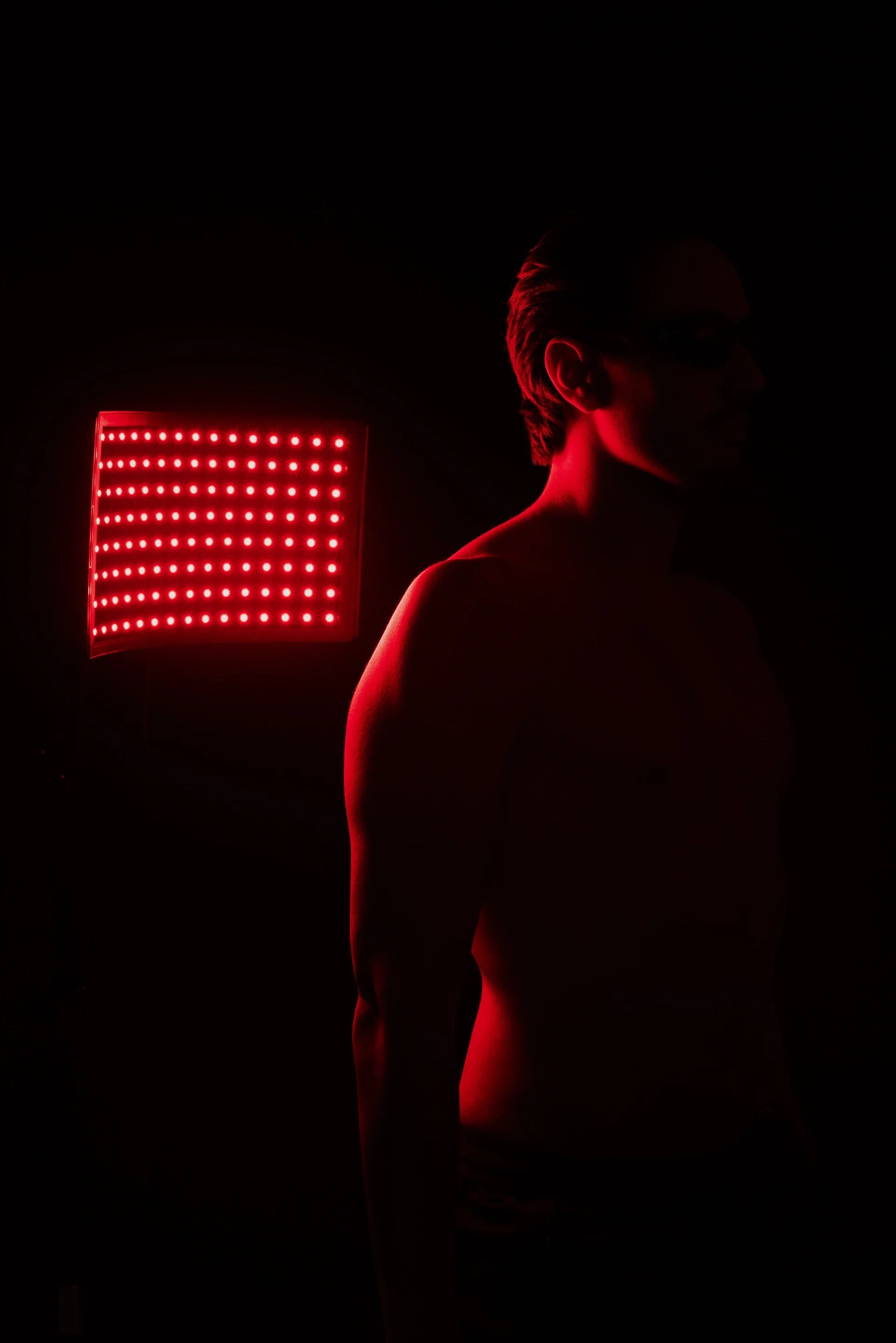
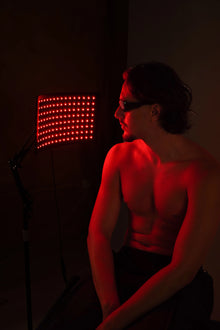
The KumoLux panel supports muscle recovery with full-body red and infrared light.
- 660 nm red + 850 nm infrared light
- Full-body muscle recovery
- Clinically validated biohacking protocols
€399,00€499,00
−10% on your 1st order when you subscribe to the newsletter

What is red light therapy?
Red light therapy (often called photobiomodulation) uses LEDs that emit red light and, in many cases, near-infrared light, at wavelengths generally above 600 nm. These lights do not heat the skin like a tanning bed: they act gently on the cells, especially the mitochondria, to support recovery and regeneration processes.
It originated in medical and aesthetic fields (scar healing, skin regeneration, muscle discomfort) and has gradually become popular for home use. Today, it is used for facial care, sports recovery, and general well-being, as well as a complementary tool for sleep hygiene.
Personalized protocol · included with your purchase
Want us to tell you how to use it in your case?
With your purchase, our experts set up your red and infrared light sessions for your sport and goal.
Message us on WhatsAppOur experts reply · no obligation
How is it different from a "normal" light?
Household lamps and LED screens emit a mixture of wavelengths, with a significant proportion of blue and white light. This part of the spectrum is very stimulating for the brain and is naturally intended for daytime use.
Therapeutic red light, on the other hand:
- It has very little or no blue component .
- It is usually used at low or medium intensity , which is more pleasant for the eyes at night.
- It is applied in a targeted way (panel, mask, localized device), not filling the entire room with light.
This means that, when used correctly, it can be integrated into a nighttime routine without "breaking" the message of darkness that your body needs to produce melatonin.
on your first order when you join the newsletter
We send you the code instantly. No spam.
Table: Types of light at night and their approximate impact
| Type of night light | Dominant spectrum | Typical intensity | Approximate effect on melatonin | Potential impact on sleep |
|---|---|---|---|---|
| White ceiling light (standard) | Mixture, with marked blue component | Medium-high | Major suppression | It can delay sleep and shorten the night |
| Unfiltered mobile/computer screen | Blue and white, very targeted to the retina | Medium (very close to the eyes) | Moderate-high suppression | Promotes wakefulness, makes it difficult to fall asleep |
| Soft warm light (amber bulb) | Yellow-red, little blue | Low | Low suppression | Less interference with rest |
| Targeted red light therapy | Red and infrared, almost no blue | Local, controlled | Very low suppression (if it is mild) | It can support relaxation and sleep routines. |
| Almost total darkness | No light | — | Maximum production | Ideal condition for maintaining sleep |
How light influences sleep
Circadian rhythm and melatonin
Your brain has a "master clock" (in the suprachiasmatic nucleus) that is primarily adjusted by the light entering through your eyes. When it gets dark, the pineal gland begins to produce melatonin , the hormone that signals it's time to sleep.
Laboratory studies have shown that staying in relatively bright room light during the hours before bedtime delays the onset of melatonin and shortens its duration compared to very dim lighting, reducing the "biological night" by about an hour and a half. ( pubmed.ncbi.nlm.nih.gov ) This can result in taking longer to fall asleep and feeling less rested.
Why does blue light keep us awake?
The photosensitive cells in the retina that synchronize the internal clock are especially sensitive to short-wavelength blue light . Therefore, the same intensity of blue light suppresses much more melatonin than red light of equal brightness.
In controlled environments (such as hospital units), replacing standard lighting with LED systems with reduced blue spectrum has resulted in less melatonin suppression, more REM sleep, and a slight improvement in total sleep time, without significant side effects. ( pubmed.ncbi.nlm.nih.gov )
This doesn't mean that all blue light is "bad" (it can be very useful during the day), but it does mean that it's best to minimize it at night , especially the blue light received close to the eyes: screens, bright white lights, etc. Even the light from smartphones without proper filters can measurably reduce nighttime melatonin production. ( people.com )
How can red light help you sleep better?
Warm spectrum and respect for melatonin
Lacking almost all blue light, low-intensity red light tends to be much less disruptive to the biological clock . In experimental studies comparing different light colors, exposure to moderately bright blue light has shown clear melatonin suppression, while equivalent conditions with red light have produced much less suppression or even minimal changes in this hormone. ( bmcneurosci.biomedcentral.com )
Translated to real life, this means that:
- Using soft red light in the late afternoon and early evening better respects the "nightfall" signal for your brain.
- You can continue watching, reading or performing your personal care routine without flooding the room with intense white light.
- It can become a kind of visual anchor that your body associates with the start of rest.
Muscle relaxation, pain, and recovery
Poor sleep isn't solely dependent on melatonin: muscle pain, heavy legs, and stress can also make it difficult to fall asleep. Red and near-infrared phototherapy has been used for years to promote recovery after exercise, relieve overworked areas, and improve muscle comfort.
A nighttime routine that combines:
- a few minutes of red light,
- gentle stretching or self-massage,
- and slow breathing,
It can help to "slow down" the nervous system and the body. Integrating it with other recovery technologies, such as leg pressotherapy or a massage gun to release muscle tension, creates a physiological environment more conducive to rest.
Potential benefits and what science says
Research on light and sleep is extensive, but specific evidence on red light therapy for better sleep is still emerging .
- In several environmental design studies, the key has been to reduce the blue component of evening lighting. Environments with "blue-depleted" light show less melatonin suppression and small improvements in sleep architecture (e.g., slightly more REM sleep) compared to standard lighting. ( pubmed.ncbi.nlm.nih.gov )
- In a 2023 clinical trial with 30 adults with sleep complaints, a device emitting red and near-infrared light applied before bed did not clearly change objective sleep parameters compared to placebo, but subjective improvements in sleep quality, relaxation, and mood were observed in the active group. ( pubmed.ncbi.nlm.nih.gov )
In other trials, red light has been used as a “neutral” comparator against very bright white light to study sleep disorders in specific populations (e.g., Parkinson's patients), with red light alone showing no significant changes. ( pubmed.ncbi.nlm.nih.gov )
Cautious conclusion: red light therapy appears safe, well-tolerated, and promising as a support for sleep hygiene (especially when replacing white/blue light at night), but it is not a miracle cure nor does it replace medical advice , especially in cases of chronic insomnia or diagnosed sleep disorders.
How to use red light therapy to improve your sleep
Important: The following recommendations are guidelines and do not replace a personalized evaluation by a healthcare professional.
Choose the type of device and environment
When choosing a red light device for your nighttime routine, consider the following:
- Spectrum : emitting mainly red and/or near-infrared light, with minimal blue component.
- Adjustable intensity : being able to lower the power at night helps to avoid overstimulating the visual system.
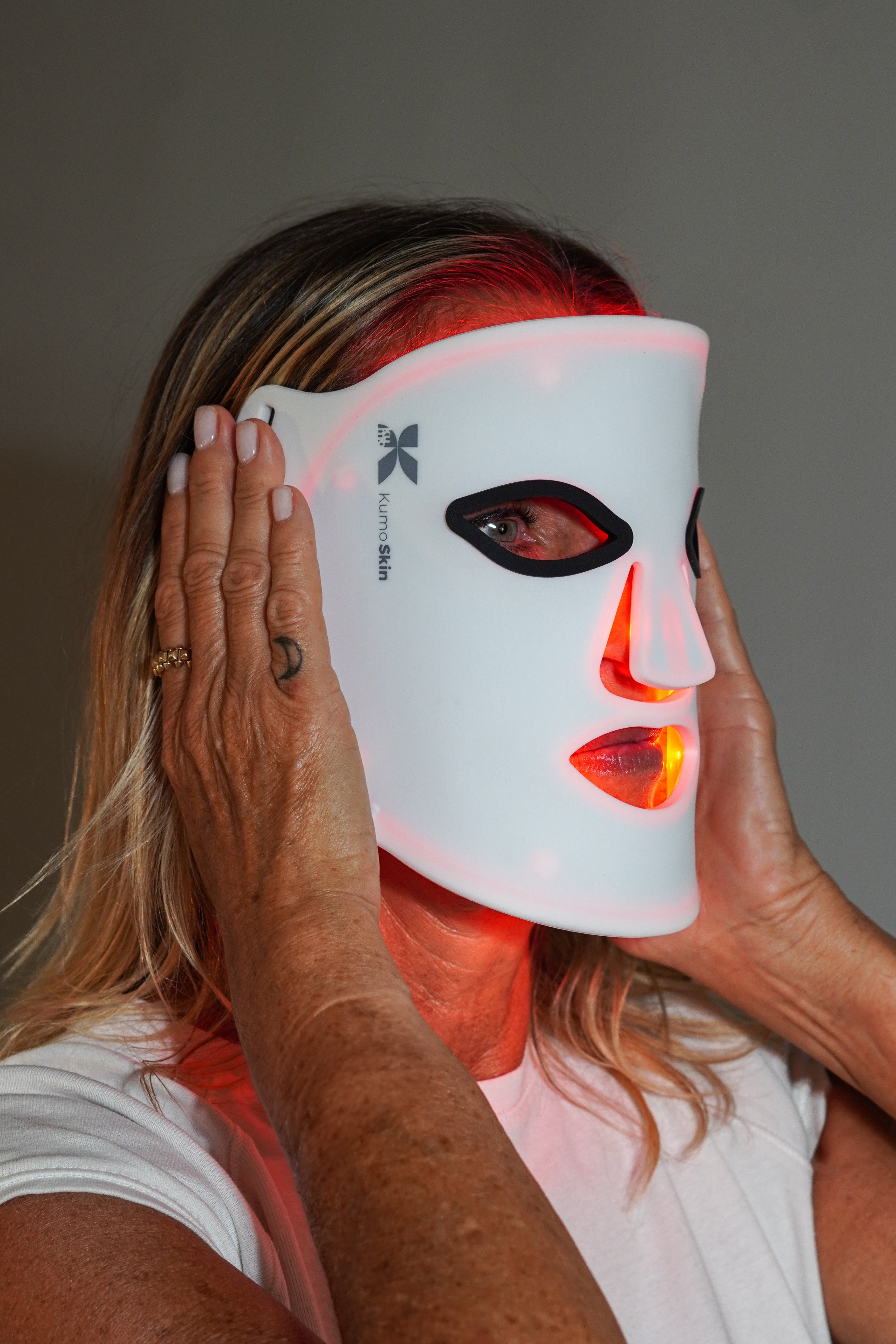
- Treatment area : full body panel, face mask, localized device, etc., depending on your main goal (skin, muscle recovery, relaxation).
LED light therapy devices aimed at recovery and wellness are usually designed with these criteria in mind, in addition to taking care of ergonomics and user experience.
When and for how long to use it
A common and reasonable approach to promoting rest is:
- Timing : between 60 and 120 minutes before your usual bedtime.
- Duration : Start with short sessions (5–10 minutes) and, if you feel good, gradually extend them to 15–20 minutes.
- Frequency : 3 to 7 days per week, focusing on regularity rather than intensity.
Some people prefer to use red light in the morning to support mood and recovery, and then use very dim light in the afternoon. There's no single right way: observe how your body responds (if it overstimulates you, reduce the time or move the session to an earlier time).
Safety and basic precautions
Although red light therapy is generally considered safe, it is advisable to follow some guidelines:
- Avoid looking directly at very powerful LEDs at close range, especially if you have sensitive eyes.
- Maintain the distance recommended by the manufacturer.
- If you suffer from photosensitive epilepsy, serious eye disease , take photosensitizing medication, or are pregnant, always consult your doctor before starting.
- If you have severe insomnia, sleep apnea, or suspect another disorder , the priority is an evaluation in a sleep unit; red light therapy can be a complement, never a substitute for treatment.
If you experience any clear worsening of sleep after starting the therapy (more awakenings, feeling over-activated), reduce the dose or stop using it and discuss it with a professional.
Integrate red light into a comprehensive recovery routine
Red light therapy works best when it is part of a comprehensive recovery strategy :
- Maintain regular sleep schedules and reduce bright lights at nightfall.
- Avoid bright screens in the hour before bed or use night modes with low brightness. ( wired.com )
- Incorporate relaxation techniques (diaphragmatic breathing, brief meditation).
- Use muscle recovery tools — such as leg compression therapy or a massage gun — to get to bed with less physical tension.
In that context, the red light acts as a puzzle piece aimed at helping you sleep better, perform better, and recover faster.
Frequently asked questions about red light therapy and sleep
How long before bed should I use red light therapy?
As a general guideline, many people schedule their red light therapy session one to two hours before bedtime . This allows them to benefit from the relaxing effect without interfering with the natural sleep cycle. Starting too late (for example, right after getting into bed) might be comfortable, but for some people it can cause slight arousal, especially if the intensity is high. Ideally, try short sessions (5–10 minutes) in the late afternoon or early evening and adjust according to how you feel.
Is red light therapy safe for everyday use?
In available studies and clinical practice, red and near-infrared light are generally considered well-tolerated with few side effects , even with frequent use, provided the recommended intensity and duration are respected. ( pubmed.ncbi.nlm.nih.gov ) However, everyone is different: some experience increased energy and prefer to avoid late sessions; others find it very sedating. If you have chronic illnesses, take photosensitizing medication, are pregnant, or suffer from significant sleep disorders, it is wise to consult your doctor first and start with a lower frequency (2–3 times per week).
Can red light replace melatonin or other treatments for insomnia?
No. Red light therapy should not be seen as a replacement for medications, supplements, or treatments prescribed by a healthcare professional . Its role is complementary: to create a light environment more compatible with your biological clock and facilitate relaxation. In some cases, improving sleep hygiene (including light management) can reduce the need for external aids, but this should always be done under medical supervision. If you have chronic insomnia, sleep apnea, restless legs syndrome, or another sleep disorder, a thorough diagnosis and treatment plan are essential.
What type of red light device is best for relaxing at night?
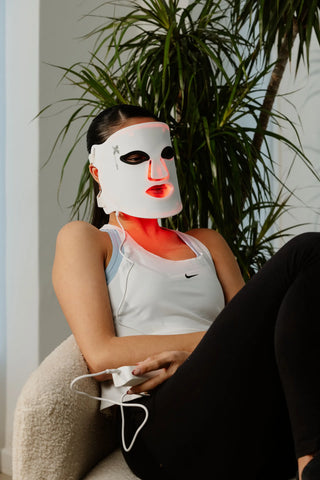
It depends on your main goal. If you're primarily looking for relaxation and a sleep routine , moderate-intensity devices are usually sufficient: a face mask, a small panel for the torso, or a lamp to illuminate the area where you read or meditate. For extensive muscle recovery or sports use, larger and more powerful panels are employed. The important thing is that the device has an appropriate spectrum (red/infrared), adjustable power, and a safe design , and that you can easily integrate it into your nighttime environment without creating a harsh white light throughout the room.
Can I use red light therapy if I work shifts or sleep during the day?
For people with atypical sleep schedules, light management becomes even more critical. If you sleep during the day, the most effective approach is to darken your room as much as possible during your "biological night" and limit exposure to blue light in the hours leading up to sleep (even if it's in the morning). Red light can be useful for seeing and performing your pre-bedtime routine without significantly disrupting your melatonin levels. Even so, the strategic use of bright light during your "biological mornings" and coordination with a sleep specialist are key to minimizing the impact of shift work.
So what now?
If you want to experiment with red light therapy for better sleep, the first step is to design a consistent nighttime routine : less screen time, soft warm lighting, and a few minutes of phototherapy focused on relaxation and recovery. At KUMO, you'll find LED therapy devices designed to integrate seamlessly into your daily life and muscle recovery sessions. If you have specific questions about which one is best for you, you can contact us through our contact page.

Red & infrared light
KumoLux Panel – Red and Infrared LED Panel
★★★★★ 4,8/5 · rated by verified customers
- 660 nm red + 850 nm infrared light
- Full-body muscle recovery
- Clinically validated biohacking protocols
€399,00€499,00· pay in installments with seQura or Klarna