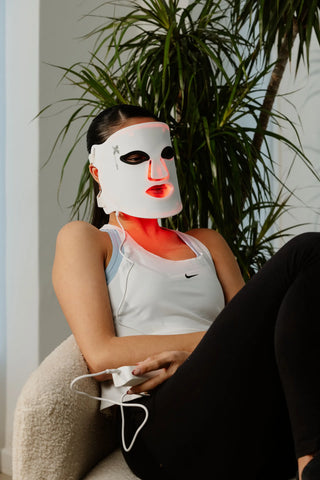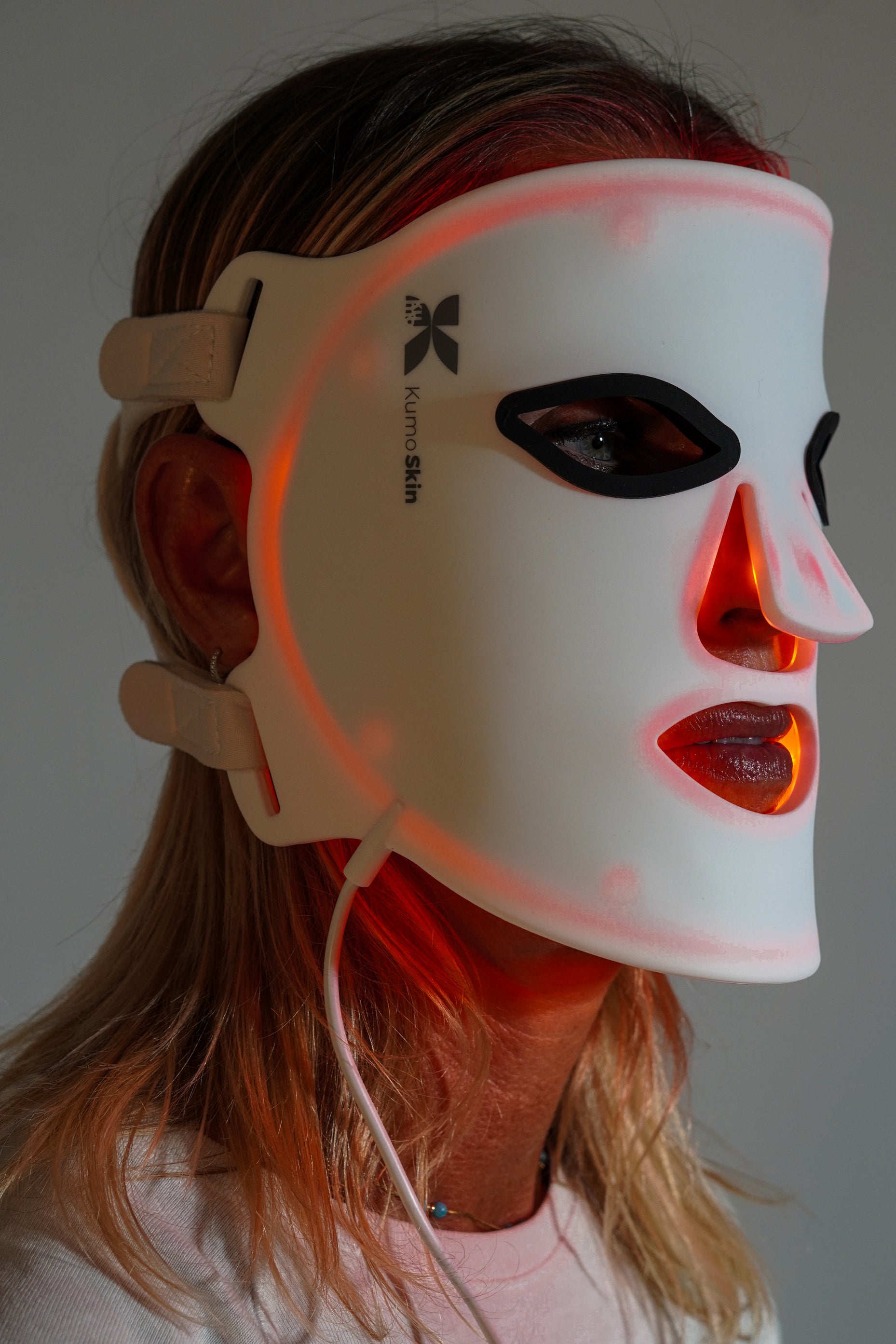

Red light therapy can help with hair loss. In the available evidence, the benefit has mainly been observed in androgenetic alopecia and is measured in hair density and thickness, not in instantaneous changes.
This means it works better as a consistent routine than as a quick fix. Clinical trials typically assess outcomes after 16 to 24 weeks, with protocols ranging from every-other-day sessions to daily sessions.
Red & infrared light
Recover faster, at home
★★★★★ 4,8/5 · rated by verified customers
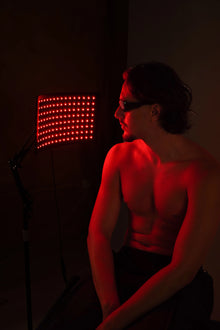
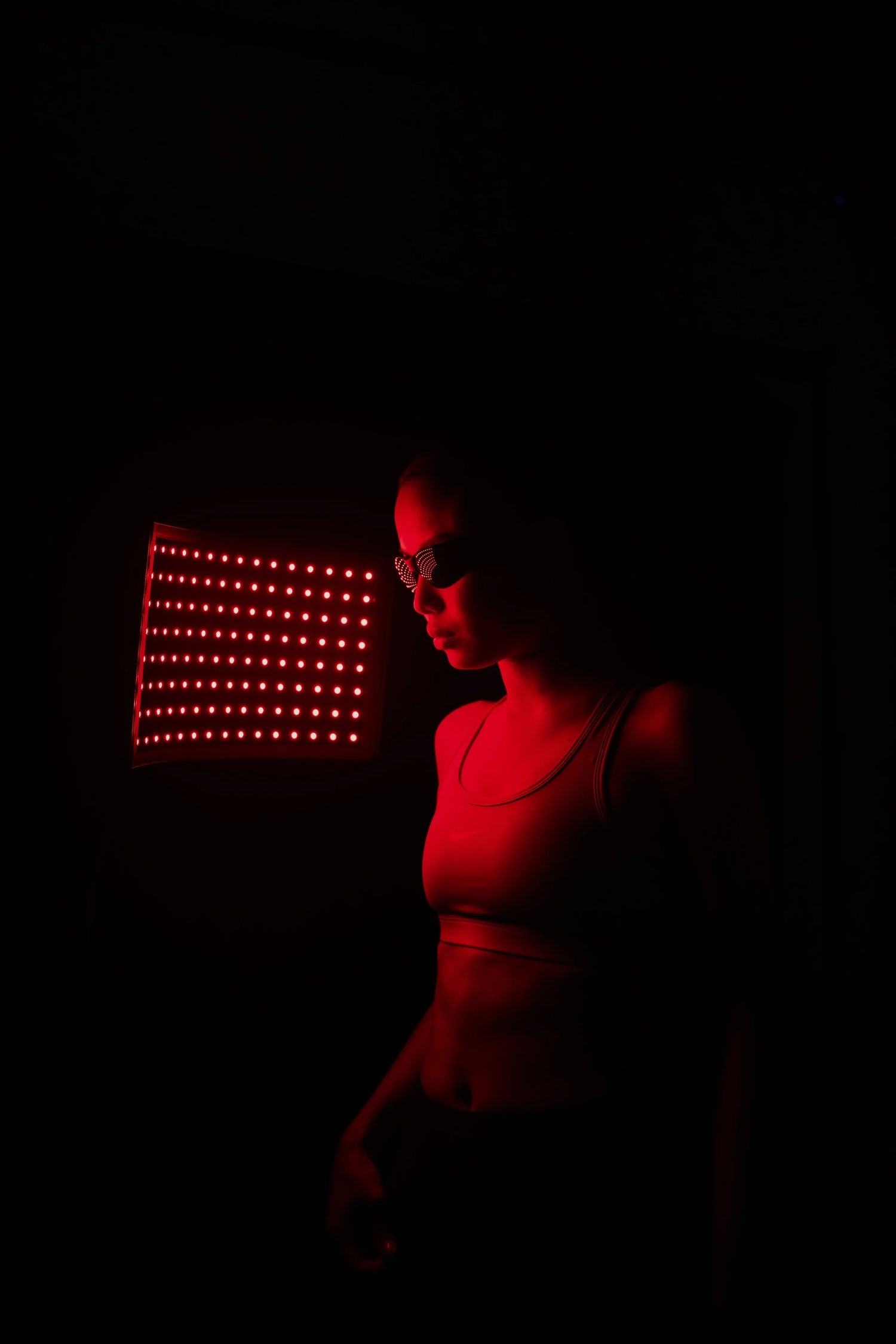
The KumoLux panel supports muscle recovery with full-body red and infrared light.
- 660 nm red + 850 nm infrared light
- Full-body muscle recovery
- Clinically validated biohacking protocols
€399,00€499,00
−10% on your 1st order when you subscribe to the newsletter

If you want to understand the mechanism first, what red light therapy is and how it works explains the technical basis in a simple way.
How to apply it in practice
Correct application depends on four variables: wavelength, session time, weekly frequency, and consistency. In photobiomodulation, the response changes more based on these parameters than on the subjective sensation of "more power."
Personalized protocol · included with your purchase
Want us to tell you how to use it in your case?
With your purchase, our experts set up your red and infrared light sessions for your sport and goal.
Message us on WhatsAppOur experts reply · no obligation
Step-by-step to get started
- Start by confirming that your hair loss fits androgenetic alopecia, as this is the scenario with the best clinical support. If the loss is sudden, in patches, or accompanied by intense scalp symptoms, it is prudent to seek a diagnosis before using a device on your own.
- Choose a device with a declared wavelength and a clear protocol. Positive trials have mainly used 655 nm, and some equipment combines several light bands.
- Maintain the regimen for at least 16 weeks before evaluating whether it's worth continuing. In several studies, changes were more clearly observed between weeks 16 and 24.
- Take comparable photos every 4 weeks to track actual progress and not rely solely on mirror perception.
Indicative usage table
| Variable | What trials have used | Practical interpretation |
|---|---|---|
| Wavelength | 655 nm in a 2020 multicenter trial and protocols mixing 630-690, 820-880, and 910-970 nm in 2023. | Near-red is the most solid reference for hair; mixtures may exist, but not all provide the same level of support. |
| Frequency | 20 minutes daily in 2023 and 25 minutes every other day in 2013. | Consistency weighs more than sporadic intensity. |
| Evaluation horizon | 16 to 24 weeks in studies. | Don't judge the response in one or two weeks. |
| Measured results | Density, thickness, and hair count. | Expected is progressive improvement, not an instant "cure." |
| Best scenario | Androgenetic alopecia in men and women. | This is where the evidence is most consistent. |
In a 2023 study with 50 participants, a helmet with 630-690, 820-880, and 910-970 nm bands was used for 20 minutes daily for 24 weeks. The objective was to measure changes in the scalp and growth, which confirms that there are broader protocols than pure red, although this does not mean that all of them work equally for hair.
If you want to delve deeper into the role of each spectrum, the practical differences between 660 nm and 850 nm help understand why not all "red" acts the same.
What results to expect
Results usually appear gradually. In a 2020 multicenter trial, the active group gained density and thickness compared to the sham control after 16 weeks; in another 2013 study, every-other-day use for 16 weeks also improved hair count in men with androgenetic alopecia.
on your first order when you join the newsletter
We send you the code instantly. No spam.
Translated into practice, it is reasonable to consider a trial period of four to six months before drawing conclusions. This interpretation is an inference from the evaluation times of the trials, not a universal promise.
If you are interested in the general use context, red light therapy: benefits and uses in 2025 expands the framework beyond hair.
Safety and side effects
The FDA guide on photobiomodulation devices describes this technology as light applied at an irradiance that does not induce heat, and no adverse events or side effects were reported in the 2020 trial.
Even so, safety depends on the dose and device design. The FDA itself points out that results depend on variables such as wavelength, fluence, irradiance, and pulses; therefore, it is not advisable to improvise. To refine this point, ocular safety in red light therapy summarizes the most important good practices.
When it might be worthwhile
It makes more sense when hair loss is progressive and consistent with an androgenetic pattern. By inference, it should not be your only strategy if the loss is very sudden, appears in patches, or is accompanied by scalp inflammation, because the evidence supporting the technique is concentrated in a different clinical scenario.
If the treatment fits your case and you want to maintain it at home, a well-planned daily routine can help you be consistent without complications.
Frequently asked questions about red light therapy
Does red light therapy work for hair loss in men and women due to androgenetic alopecia?
Yes, this is where it has been best studied. In the 2020 trial with 60 people and 655 nm, the active group increased density and thickness without adverse effects; the 2013 study also found improvement with 655 nm every other day for 16 weeks. This does not mean it is a unique cure, but it can be real support for men and women with androgenetic alopecia.
How often should red light therapy be used to obtain visible results in hair density?
There is no universal guideline. In clinical trials, 20 minutes daily for 24 weeks and 25 minutes every other day for 16 weeks have been used. The important thing is to follow a stable protocol and give the hair cycle enough time; changing the frequency every week makes it difficult to see if it is working for you. In practice, consistency over several months usually outweighs "doing more" in a single session.
Is red light therapy safe for the scalp, and is there a risk of irritation or damage?
In general, yes, as long as you use an appropriate device and respect the dosage. The FDA describes it as non-thermal light, and no adverse events were reported in the 2020 trial. Even so, actual safety depends on the device, power, and correct use; if you notice discomfort or have an eye condition, it is best to review good practices before continuing. The key is not just the technology, but how it is applied.
What wavelengths are most effective in red light therapy to stimulate hair growth?
The most supported wavelength for hair is around 655 nm. Some devices mix 630-690 nm and even near-infrared, but by inference, the specific evidence for hair growth is more solid in near-red than in isolated 850 nm. If you are comparing spectra, do not confuse "more depth" with "more effectiveness" for hair: for hair, evidence weighs more than the general theory of the device.
Does red light therapy work for all types of hair loss, or are there types for which it is not suitable?
No. The clearest evidence is concentrated in androgenetic alopecia. By inference, red light therapy should not be considered a universal treatment for all causes of hair loss, especially if there is sudden, scarring, or patchy loss. In those cases, it is first necessary to identify the diagnosis and then decide if light can be a complement. It is a useful tool, but it does not replace evaluation when the condition does not fit the typical pattern.
What's next?
If you want to move from theory to a clear routine, return to Kumo Balance and continue with the first steps with red light therapy in 2025. This will allow you to decide with more informed judgment if this technique fits your case and how to integrate it without improvising.

Red & infrared light
KumoLux Panel – Red and Infrared LED Panel
★★★★★ 4,8/5 · rated by verified customers
- 660 nm red + 850 nm infrared light
- Full-body muscle recovery
- Clinically validated biohacking protocols
€399,00€499,00· pay in installments with seQura or Klarna