
Red light therapy, everything you need to know in 2025.
If you're looking for information on what red light therapy (photobiomodulation) is, how it works, and how to use it for skin, muscle recovery, and sleep, here's a clear and up-to-date guide. We've summarized the evidence, best practices for home use, and precautions so you can make informed decisions, with links to trusted medical sources like the Cleveland Clinic and the American Academy of Dermatology.
Red & infrared light
Recover faster, at home
★★★★★ 4,8/5 · rated by verified customers
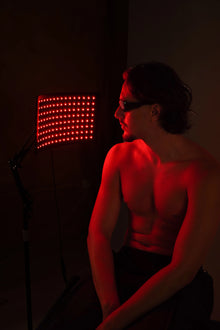
The KumoLux panel supports muscle recovery with full-body red and infrared light.
- 660 nm red + 850 nm infrared light
- Full-body muscle recovery
- Clinically validated biohacking protocols
€399,00€499,00
−10% on your 1st order when you subscribe to the newsletter

In a little while
- It works by stimulating mitochondria and modulating inflammation; it is used on skin, muscle and sleep.
- Reds (≈620–700 nm) work on surface layers; near infrared (≈780–900 nm) reach deeper.
- Short, consistent (weekly) sessions usually work better than long, sporadic exposures.
- High safety for corrective home use; avoid direct eye contact and consult a doctor if photosensitivity occurs.
- The evidence on skin and recovery is solid; on sleep, promising but preliminary.
What is red light therapy and how does it work?
Red light therapy (RLT) is a form of photobiomodulation: exposure to low-intensity red and/or near-infrared light to induce beneficial biological effects without heat or skin damage. By 2025, it was being used at home and in clinical settings to improve skin quality, support physical recovery, and promote sleep hygiene, with a favorable safety profile in most healthy users (Cleveland Clinic, 2024).
Mechanism: cellular energy and anti-inflammatory signaling
- Red light is absorbed by chromophores such as cytochrome c oxidase in mitochondria, increasing membrane potential and ATP production.
- This activates signaling pathways that modulate oxidative stress, microcirculation, and growth factors, with effects on tissue repair and pain relief.
- Scientific reviews describe these mechanisms and their clinical translation in dermatology and rehabilitation ( Avci et al., 2013 ; Frontiers in Neuroscience, 2016 ).
Practical tip: think in terms of "biological dose," not "brute force." In photobiomodulation, more isn't always better; consistency and the right dose make all the difference.
Personalized protocol · included with your purchase
Want us to tell you how to use it in your case?
With your purchase, our experts set up your red and infrared light sessions for your sport and goal.
Message us on WhatsAppOur experts reply · no obligation
Wavelengths: red vs near infrared
- Visible red light (approx. 620–700 nm): reaches mainly the epidermis and dermis, useful for skin quality, mild acne and superficial scarring.
- Near infrared (approx. 780–900 nm): penetrates further, reaching superficial muscles and joints, useful in post-exercise recovery and muscle discomfort.
The American Academy of Dermatology summarizes the role of red LEDs in skin, while photobiomodulation reviews highlight the role of near-infrared in deep tissues.
Table of ranges and applications
Light ranges and typical applications
| Spectral range (approx.) | Relative penetration | Main target tissues | Common uses | Comments |
|---|---|---|---|---|
| 620–660 nm (red) | Superficial (skin) | Epidermis, dermis | Texture, luminosity, mild acne, photoaging | Well documented in clinical dermatology. |
| 660–700 nm (deep red) | Superficial-average | Dermis, vascularization | Superficial repair, redness | It complements the NIR in mixed protocols. |
| 780–850 nm (NIR) | Deep medium | Fascia, muscle | Post-exercise recovery, muscle discomfort | Useful before or after training. |
| 850–900+ nm (NIR) | Deep (variable) | Muscle and connective tissue | Mild joint stiffness, support during movement | Dosage and timing require careful adjustment. |
Note: Actual penetration depends on skin type, angle, power, and hydration. Always follow the manufacturer's instructions and those of your healthcare professional.
on your first order when you join the newsletter
We send you the code instantly. No spam.
Benefits supported (and limits) in 2025
Skin: texture, inflammation and scarring
- Red light can improve texture and fine lines, modulate redness, and support superficial healing thanks to its effects on collagen and microcirculation.
- Clinical evidence in dermatology is extensive, with LEDs used as safe adjuncts in mild acne, photoaging and post-procedure recovery (AAD; Avci et al., 2013 ).
Muscle recovery and performance
- Before or after exercise, photobiomodulation can help reduce post-exertion discomfort and accelerate functional recovery by promoting mitochondrial metabolism and perfusion.
- Reviews from recent years report benefits in performance and post-exercise pain when the dose and timing of application are appropriate (see mechanical synthesis in Frontiers in Neuroscience, 2016 and clinical review in Cleveland Clinic).
Sleep and circadian rhythms
- Exposure to dim red light at night appears to be less disruptive to melatonin than blue or white light, and may promote a smoother transition to sleep.
- A 2012 study of athletes found improvements in sleep quality after several weeks of exposure to red light, although the evidence is still preliminary and based on small samples ( PubMed: 22545913 ). As a sleep hygiene practice, combining red light at night with reduced blue light exposure is a reasonable strategy.
Mild joint pain
- For localized discomfort, red/NIR light may modulate the inflammatory response and contribute to everyday comfort. The strength of the evidence varies by condition; it should be used as an adjunct to, not a substitute for, medical treatment. General review: Cleveland Clinic.
How to use it properly at home
Parameters that matter
- Wavelength: red for skin; add NIR for deeper tissues.
- Dosage and time: the total energy received is key; avoid overexposure. Home sessions are usually brief, and "up to 20 minutes" per area is a common range cited in informational guides (Cleveland Clinic).
- Distance and angle: maintaining a distance recommended by the manufacturer promotes uniformity.
- Frequency: weekly consistency is superior to very long, one-off exposures.
Routines by objective
- Skin: Short, regular sessions on clean skin. Avoid immediate use after photosensitizing products (retinoids, strong acids).
- Recovery: Apply close to the training session (pre or post) to the target muscle group.
- Sleep: At night, reduce cool lights and, if you wish, use dim red light as part of your sleep routine.
Safety and contraindications
- Do not look directly at powerful LEDs; protect your eyes when the device is close to your face. Guidelines on visible/IR light exposure recommend limiting direct eye irradiation (ICNIRP, 2013).
- Consult a dermatologist before use if you are pregnant, have photosensitive epilepsy, are taking photosensitizing medications, or have active skin conditions. If in doubt, seek guidance from a dermatologist (AAD).
How to choose a red light device
Types of equipment and for which profile
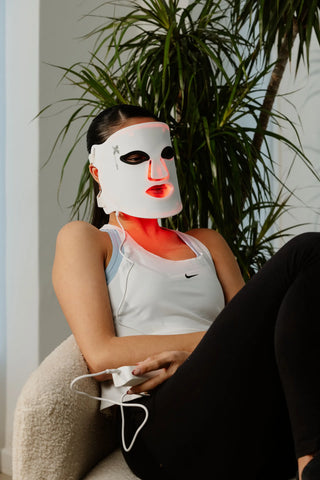
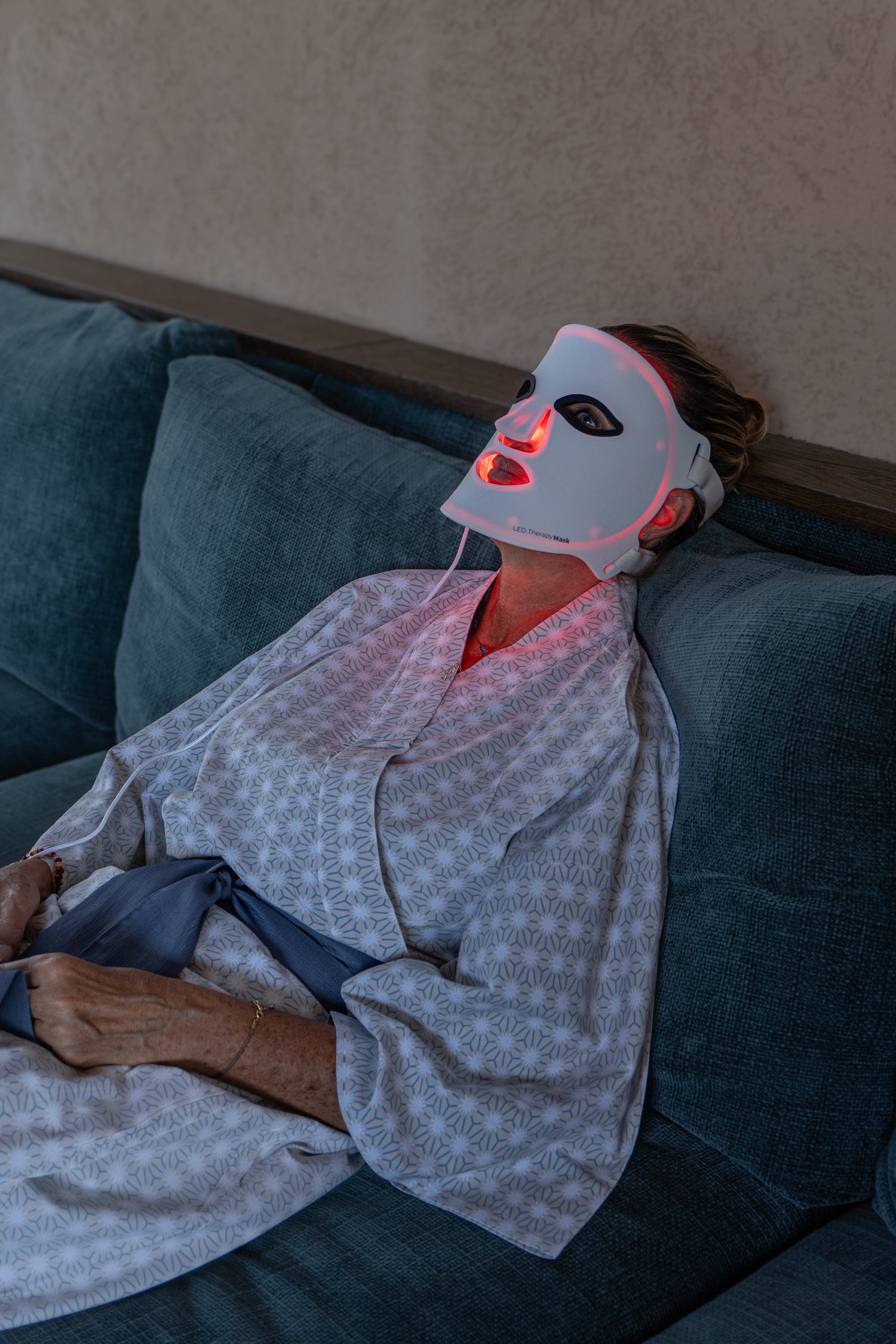
- LED masks: practical for facial care and consistency.
- Panels/hangers: greater body coverage, useful for general recovery.
- Portable devices: focused on specific areas, easy to integrate into daily routines.
If you want to integrate elegant and effective recovery technology into your daily life, discover KUMO's proposal, where aesthetics, performance and science come together to create wellness habits ( KUMO ).
Quality signals and key specifications
- Clear spectrum (red/NIR), uniform distribution and good heat dissipation.
- Instructions for use, timer and electrical certifications.
- After-sales service and warranty. Avoid "miracle" promises; look for technical transparency.
Common Myths and Mistakes
- “More power is always better”: no; photobiomodulation has dose-response windows.
- “It’s like sunbathing”: red/NIR light does not emit UV or tan; its effects are different.
- “If it doesn’t sting, it’s not working”: it’s normal not to feel heat or stinging; the mechanism does not depend on heat.
Use cases and practical examples
- After leg training, apply NIR light to quadriceps and calves to support recovery, maintaining a uniform distance and moderate time per muscle group.
- In a nighttime facial routine, cleanse, apply your non-photosensitizing moisturizer and perform a short red LED session to maintain weekly consistency.
- For improved sleep hygiene, replace cool bedroom lights with soft red lighting during the last hour of the day and reduce screen time. This simple intervention is compatible with other sleep hygiene measures.
Recommended sources and readings
- Summary for patients: Cleveland Clinic – Red Light Therapy
- Dermatological guide: American Academy of Dermatology – LED Light Therapy
- Mechanisms and applications: Frontiers in Neuroscience (2016) – Photobiomodulation
- Skin review: Avci et al. (2013) – LLLT in Skin
- Sleep and red light: PubMed (2012) – Red light and sleep in athletes
- Eye safety: ICNIRP (2013) – Visible and Infrared Radiation
- General Clinical Dermatology: DermNet – Low-Level Laser/Light Therapy
Frequently Asked Questions
How long does it take to see results from red light therapy?
It depends on the goal, consistency, and dosage. In skincare, many people notice subtle improvements in texture or radiance after several weeks of regular use. In post-exercise recovery, comfort can be felt within days if applied close to the exertion. In sleep, changes usually depend on integrating red light into an overall sleep hygiene routine. The key is consistency. Follow the manufacturer's guidelines, and if you're seeking a specific therapeutic goal, consult a healthcare professional.
Is it safe for the eyes? Do I need glasses?
Red/NIR LEDs do not emit UV, but close, direct exposure to intense sources can be uncomfortable and is not recommended. Use the equipment according to the instructions and avoid looking directly at the source; for facepiece devices, wear eye protection if recommended by the manufacturer. International guidelines recommend limiting direct eye exposure in the visible/IR spectrum to minimize risks, especially during frequent or high-intensity sessions (see ICNIRP, 2013).
Does it help you sleep better?
Red light is less disruptive to the circadian rhythm than blue or white light at night, and preliminary studies have shown that it may support sleep quality in certain contexts (e.g., athletes in 2012). Even so, the evidence is still emerging and does not replace basic sleep practices: a regular sleep schedule, exposure to natural light in the morning, reduced screen time before bed, and a dark, cool sleep environment. If you suffer from persistent insomnia, consult a sleep specialist.
Can I combine it with retinoids, exfoliants, or medical treatments?
Yes, but with some caveats. Avoid using LED light immediately after applying potentially photosensitizing products (e.g., strong retinoids, high-concentration acids) to minimize irritation. If you are undergoing medical treatment (such as isotretinoin, photosensitizing therapies, or recent procedures), ask your dermatologist or healthcare professional for specific guidance. The AAD offers general guidelines on LED light therapy and its compatibility with dermatological care.
To go
- Red light therapy is a safe and versatile tool for skin, recovery, and well-being.
- Red for skin; add near-infrared for deeper tissues.
- Weekly consistency and an appropriate dose matter more than long sessions.
- Avoid direct eye exposure and consult a doctor if you have photosensitivity or medical conditions.
- Use it as a smart complement to healthy habits (sleep, nutrition, training).
- Want to take your recovery to the next level? Explore how KUMO integrates technology and design to create daily wellness habits: kumobalance.com .

Red & infrared light
KumoLux Panel – Red and Infrared LED Panel
★★★★★ 4,8/5 · rated by verified customers
- 660 nm red + 850 nm infrared light
- Full-body muscle recovery
- Clinically validated biohacking protocols
€399,00€499,00· pay in installments with seQura or Klarna