Your eyes are non-negotiable.
If you use red light therapy or near-infrared (NIR) light at home—for skin, muscle recovery, or sleep—the most important thing is understanding when the light can be bothersome but harmless (glare, afterimages) and when it can become a real risk (intense and/or deliberate exposure, especially near the face). In this Kumo guide, you'll find practical tips, simple technical criteria, and warning signs to help you use the light safely.
Red & infrared light
Recover faster, at home
★★★★★ 4,8/5 · rated by verified customers
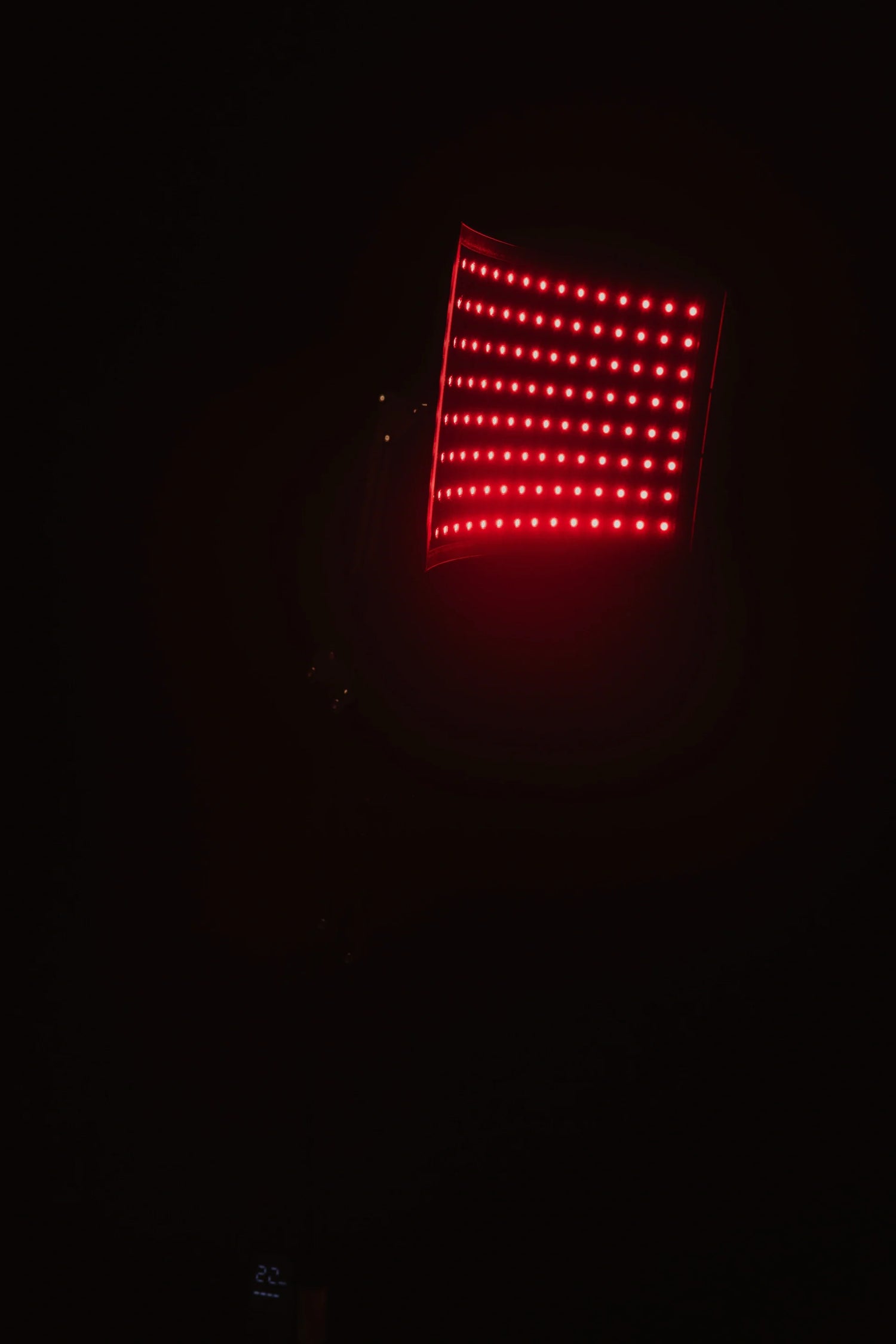
The KumoLux panel supports muscle recovery with full-body red and infrared light.
- 660 nm red + 850 nm infrared light
- Full-body muscle recovery
- Clinically validated biohacking protocols
€399,00€499,00
−10% on your 1st order when you subscribe to the newsletter

1) Why red light can bother your eyes (and when it's a real risk)
Common annoyance: glare and “afterimage”
After a session, some people notice that they "see strangely" for a few minutes: altered colors, a halo, or an afterimage (like when you look at a bright light and then see a blur when you blink). This is usually a temporary effect related to the adaptation of the photoreceptors, especially if there was direct glare.
Even so, just because it's frequent doesn't mean it's a good idea: the rule of thumb is to avoid looking at the light source and reduce the intensity/duration if there is repeated discomfort.
Personalized protocol · included with your purchase
Want us to tell you how to use it in your case?
With your purchase, our experts set up your red and infrared light sessions for your sport and goal.
Message us on WhatsAppOur experts reply · no obligation
Actual risk: intense and/or deliberate exposure
Eye safety depends not only on "color," but also on intensity , distance , duration , and spectrum (visible vs. infrared). Photobiological safety assesses hazards such as retinal thermal damage and ocular IR, among others, using methodologies outlined in exposure standards and guidelines. ( webstore.iec.ch )
Furthermore, there are clinical reports of macular lesions from accidental exposure to high-intensity LEDs, even from short exposures, reinforcing the importance of not "testing" by looking directly at the light. ( pubmed.ncbi.nlm.nih.gov )
2) What the rules and the evidence say (without getting bogged down in formulas)
IEC 62471: the key standard for LEDs (200–3000 nm)
The IEC 62471 standard (published in 2006) defines how to assess the photobiological safety of lamps and lamp systems (including LEDs, excluding lasers) in the 200 to 3000 nm range, with exposure limits, measurement techniques, and a classification scheme. ( webstore.iec.ch )
on your first order when you join the newsletter
We send you the code instantly. No spam.
Risk groups (RG): a very useful idea for the user
IEC 62471 uses four groups (exempt/RG0, RG1, RG2, RG3). In practical terms, the higher the group, the stricter the required measures (distance, time, warnings, protections). ( luminusdevices.zendesk.com )
Exposure and prevention guidelines
In the workplace, the EU has a specific directive on artificial optical radiation that requires the assessment of exposure levels and the prevention of risks to the eyes and skin (information update in 2024). ( osha.europa.eu )
And on a scientific level, ICNIRP published guidelines on exposure limits for visible and incoherent infrared radiation (2013 revision), which serve as a technical reference for understanding why intensity + time matter so much. ( journals.lww.com )
What does “medical” ocular photobiomodulation teach us about safety?
Photobiomodulation (PBM) is being researched and used in clinical settings with controlled protocols and dosimetry. For example, a systematic review and meta-analysis (March 2025 ) analyzed trials of multiwavelength PBM in age-related macular degeneration (AMD) and also reviewed reported adverse events. ( pmc.ncbi.nlm.nih.gov )
This does not mean that any household device is automatically equivalent (power, optics, distance, control and certifications can vary greatly), but it does provide context: with dosage and control , light can be used safely; without control , the risk depends on the scenario.
3) Good practices for protecting your eyes at home (step by step)
Before the session: prepare “frictionless” safety
- Don't improvise with your face close to the light. Close-up exposures are where most mistakes are made.
- Identify whether the device emits only visible red light or also near-infrared (NIR). NIR is invisible and can lead to longer exposures "without you realizing it."
- Look for safety warnings or documentation. Ideally, reference to photobiological assessment (e.g., IEC 62471) or clear distance/time instructions.
- Avoid reflections. Mirrors, glass, or highly polished surfaces can reflect light back into your eyes.
During the session: simple rules that reduce the risk of truth
- Don't look at the light source (not even for a "second to check"). If you need to adjust it, turn it off or look away.
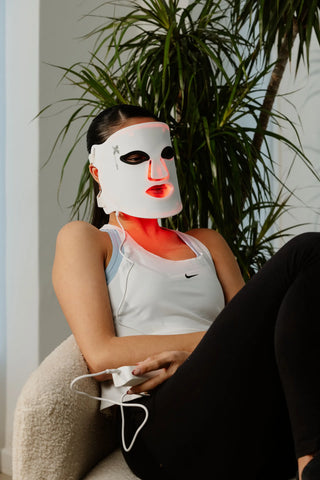
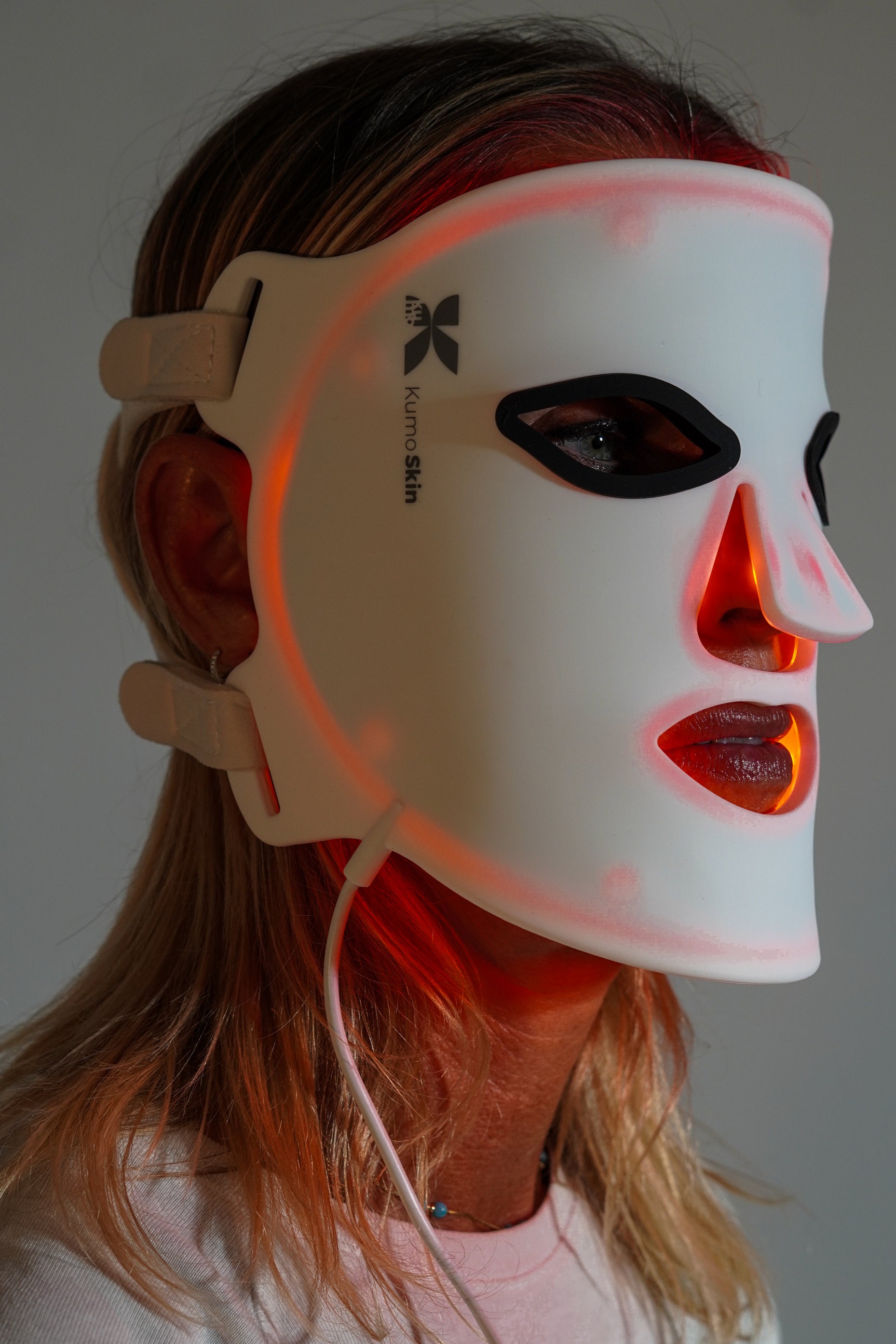
- Wear eye protection during facial treatments, especially if there is near-infrared (NIR) light or if the source is very close.
- Don't rely solely on closing your eyes if there is near infrared: the prudent thing to do is to wear opaque glasses or adequate protection (by design, NIR does not produce the same visual stimulus of aversion as visible light).
- Start conservatively : shorter sessions and greater distance, and gradually increase only if there is no discomfort.
- Avoid long sessions "because of the cumulative effect". In photobiology, more is not always better: exposure accumulates over time.
After the session: mini symptom check-up
Stop use and consult a healthcare professional if any of these signs appear and do not resolve quickly : severe eye pain, persistent blurred vision, a fixed spot in the center of the eye, marked sensitivity to light, or an afterimage that lasts much longer than usual. Clinical reports of bright light injury often describe visual changes and retinal findings that require evaluation. ( pubmed.ncbi.nlm.nih.gov )
4) How to choose eye protection (without falling into false senses of security)
Option 1: opaque (“blackout”) glasses
They're a practical solution when the goal is simple: to block out light . Their advantage is that they don't depend on hitting a specific wavelength range. Use them especially on your face/neck or when the panel is in your field of vision.
Option 2: Glasses with technical specification (OD + nm range)
For equipment requiring specific filter protection, the most important thing is that the goggles indicate the wavelength range (nm) and optical density (OD) . Without this information, it's impossible to know what they actually block.
This does NOT replace adequate protection
- Sunglasses : they can reduce visible glare, but do not guarantee NIR blocking; furthermore, if they darken the visible light they can promote pupil dilation in certain contexts.
- “Squinting” or “looking out of the corner of your eye ”: reduces discomfort slightly, but is not a reliable exposure control.
5) Distance, time, and context: what most changes your level of security
Practical table: typical scenarios and recommended protection
| Use case | Typical eye risk | Recommended protection | Quick best practices |
|---|---|---|---|
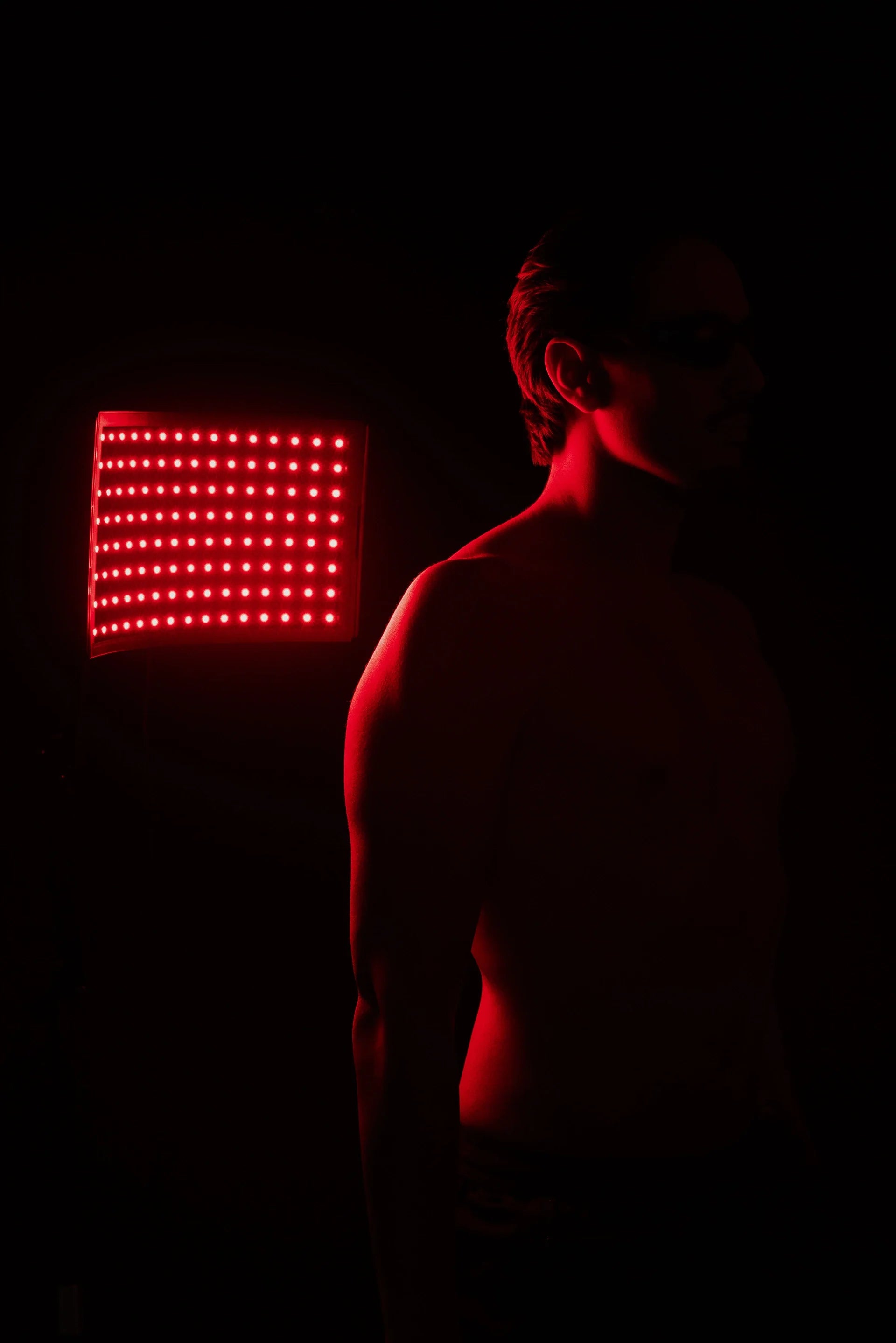
| red light panel/source directed at the body (not the face) | Low if it does not enter the field of vision | Not essential if there is no direct line of sight | Position the source to the side; avoid reflections; do not look at the emitter |
| Facial use (skin, beauty routine) with red visible light | Moderated by near glare | Opaque glasses or comfortable eye protection | Protected eyes + conservative sessions at the beginning |
| Facial use with NIR (near infrared) or red + NIR mix | More sensitive due to the NIR's "invisibility" | Eye protection (ideally opaque) should be used systematically. | Don't rely solely on closing your eyes; avoid direct exposure. |
| “Check” the device by looking at the LEDs | Unnecessary and avoidable | Avoid | Configure it by looking away or by briefly turning it off/on without a direct line of sight. |
| People with high eye sensitivity or dryness | Most likely annoyances | Eye protection + conservative adjustments | Reduce time; increase distance; discontinue if irritation persists |
6) Common mistakes (and how to avoid them)
- Using "any glasses" : without real opacity or range/OD, you don't know what you're blocking.
- Too close, too fast : the combination of short distance + long sessions is the number one mistake.
- Ignoring photosensitivity : Some drugs and products can increase sensitivity to light. Exclusion criteria related to photosensitizing agents and periocular conditions are considered in PBM clinical trials. ( clinicaltrials.gov )
- Assuming that “if it’s LED, it’s fine” : there are published cases of macular injury from high-intensity LEDs. ( pubmed.ncbi.nlm.nih.gov )
7) Kumo and safety: integrating red light into a "premium" recovery routine without compromising eyesight
At Kumo, we understand recovery as a habit: technology + consistency + good practices. If you're incorporating LED light into your routine, do so with a professional approach: protect your eyes, control distance and duration, and avoid direct exposure. To explore light solutions for wellness and performance, you can view the LED light therapy collection or return to the official Kumo website .
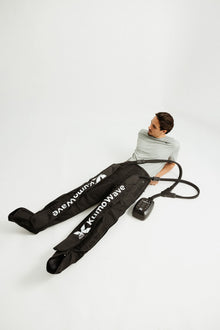
And remember: recovery doesn't depend on just one tool. You can complement your routine with circulation and pressure relief solutions like pressotherapy , or deep tissue work with the KumoPulse Air massage gun , without adding light exposure to the eye area.
If you have questions about responsible use or compatibility, the safest channel is to write to the team via Contact .
FAQ: Frequently asked questions about eye safety and red light (Kumo)
Do I need glasses every time I use red light therapy with Kumo?
Not always, but it's advisable to make it a rule in two situations: when the light is close to your face and when the device includes near-infrared (NIR) light . With visible red light, the glare "warns" you and you tend to look away; with NIR, since it's invisible, it's easier to overexpose yourself without noticing immediate discomfort. The most prudent practice for home use is: if there are faces or eyes in the scene, wear eye protection and avoid looking directly at the light .
Can I use a Kumo LED mask with my eyes closed?
If the treatment is applied to the face, it's safest to protect the eyes , even if they are closed. Closing the eyes reduces the amount of visible light entering the eye, but it's not a "safety system" equivalent to a physical barrier, and in some cases (depending on wavelengths and intensity) it may not be sufficient for repeated use. In practice: if the treatment is applied near the eye area, use comfortable (opaque) protection to avoid glare, afterimages, and unnecessary exposure.
What does “IEC 62471” mean and why should I care about it when choosing a device?
IEC 62471 is an international standard (2006) that defines how to assess photobiological risks from non-laser sources (such as LEDs) between 200 and 3000 nm, including limits, measurement, and classification by risk groups. ( webstore.iec.ch ) For you, this means one thing: if the manufacturer provides clear information based on this framework (or an equivalent), it's easier to use the product with objective criteria (distance, time, warnings) and less blindly.
After a session, everything looks bluish/greenish for a few minutes: have I hurt myself?
Often, it's an afterimage or visual adaptation following glare (especially if there was direct or very close light). Even so, take it as a sign to adjust: greater distance, less time, and eye protection. If intense pain appears, a fixed spot develops in the center of your vision, or the disturbance lasts a long time, discontinue use and consult a doctor. There are clinical reports of macular injury from exposure to high-intensity LEDs, which reinforces the idea that looking at the source is never an "innocent test." ( pubmed.ncbi.nlm.nih.gov )
What happens if I take medication or use cosmetics that increase sensitivity to light?
In clinical settings for photobiomodulation, precautions related to photosensitizing agents and periocular conditions are considered. ( clinicaltrials.gov ) At home, the prudent rule is to avoid sessions near the face if you notice reactivity (eye burning, tearing, photophobia) and prioritize eye protection. If you are under medical treatment and are unsure whether your medication increases photosensitivity, it is best to consult a healthcare professional before increasing its use.
So what now?
If you want to integrate light therapy into your routine with Kumo 's "high-performance" approach, start with the essentials: eye safety, conservative progression, and consistency. Explore LED light therapy and complement your recovery with compression therapy or the KumoPulse Air . For any questions about usage or support, contact us or visit kumobalance.com .
Recommended external sources (information links)
- Health Physics; Clinical case of macular lesion due to LED (
- PubMed; Systematic review of multiwavelength PBM in AMD (
- PMC; LIGHTSITE III Trial (registration) ClinicalTrials.gov

Red & infrared light
KumoLux Panel – Red and Infrared LED Panel
★★★★★ 4,8/5 · rated by verified customers
- 660 nm red + 850 nm infrared light
- Full-body muscle recovery
- Clinically validated biohacking protocols
€399,00€499,00· pay in installments with seQura or Klarna