
The key difference is depth. 660 nm typically directs energy towards the skin; 850 nm tends to reach deeper into soft tissues.
That's why there isn't one "best" wavelength in abstract: the choice depends on whether you're looking for a facial target, more superficial repair, or muscle and joint recovery. In photobiomodulation, dose, power, distance, and tissue type matter as much as the number of nanometers. (pubmed.ncbi.nlm.nih.gov)
Red & infrared light
Recover faster, at home
★★★★★ 4,8/5 · rated by verified customers
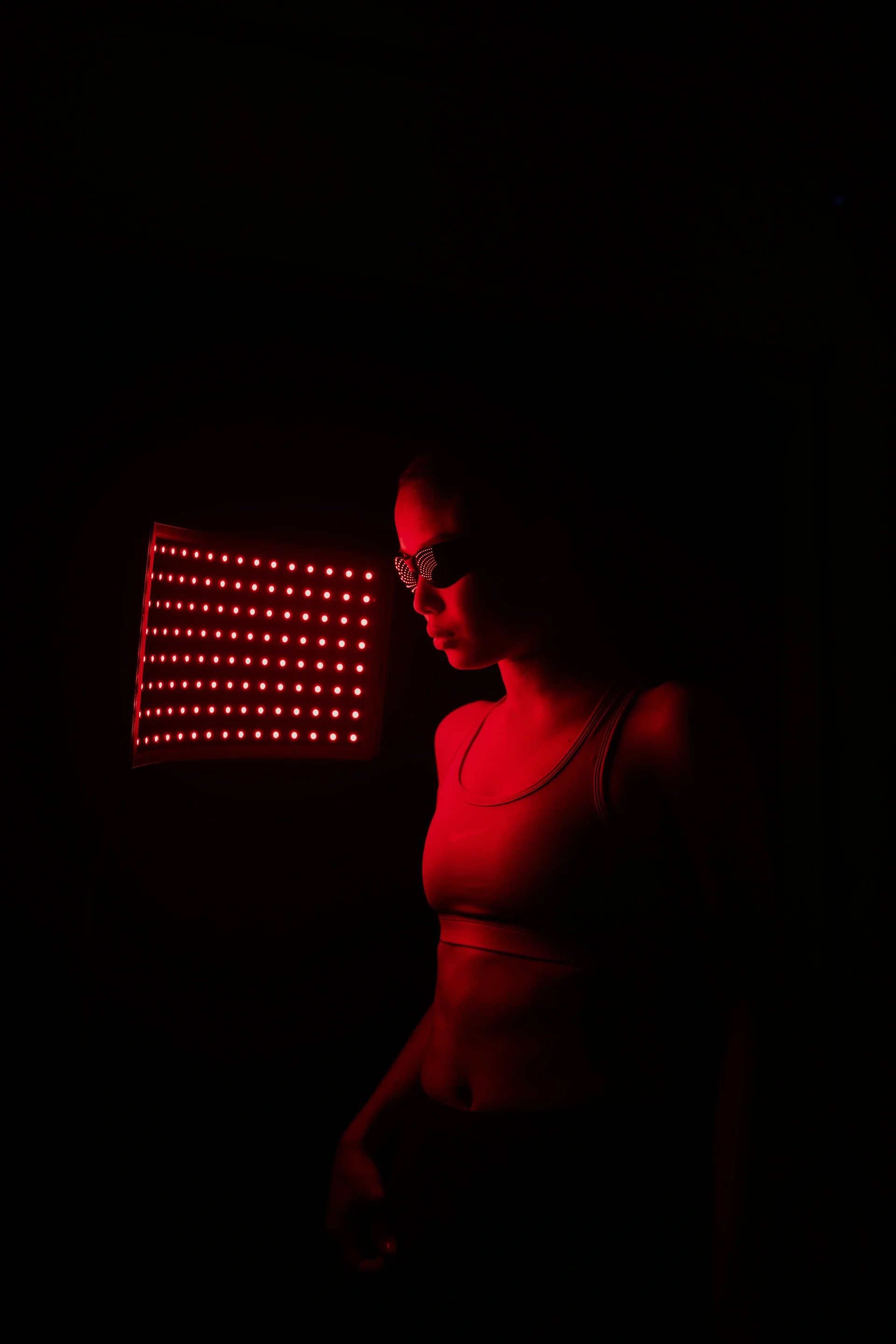
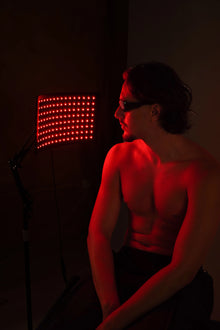
The KumoLux panel supports muscle recovery with full-body red and infrared light.
- 660 nm red + 850 nm infrared light
- Full-body muscle recovery
- Clinically validated biohacking protocols
€399,00€499,00
−10% on your 1st order when you subscribe to the newsletter

What really changes between 660 nm and 850 nm
Both wavelengths fall within the skin's optical window, a range where absorption by melanin, hemoglobin, and water is relatively lower, and light can penetrate tissue better. A review of the skin properties of visible light summarizes this principle well: as wavelength increases, penetration capacity usually also increases, although the final result depends on the device's geometry and the treated area.
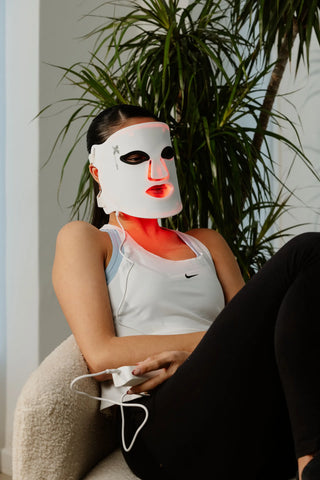
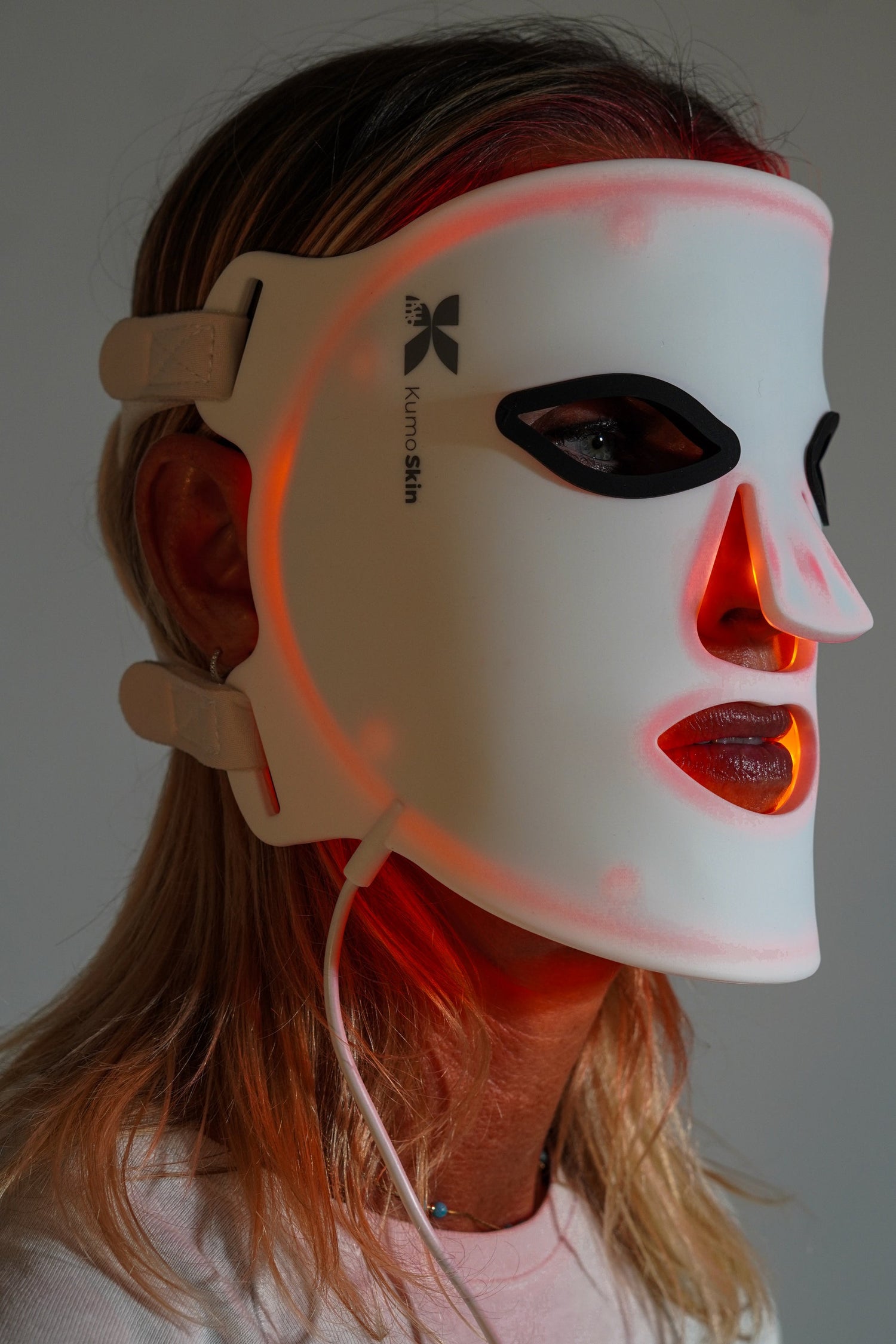
In practice, 660 nm is more associated with superficial targets, while 850 nm is used when the goal is to reach slightly deeper planes. If you're thinking about a facial mask, it might also help to review what each wavelength does in LED facial light, because the aesthetic context changes quite a bit compared to a body recovery application. (journals.sagepub.com)
Personalized protocol · included with your purchase
Want us to tell you how to use it in your case?
With your purchase, our experts set up your red and infrared light sessions for your sport and goal.
Message us on WhatsAppOur experts reply · no obligation
Key idea: 660 nm focuses more on the skin; 850 nm targets deeper. If the goal changes, so does the wavelength.
Quick summary: 660 nm, 850 nm, or combination
Penetration figures are not absolute: they change with tissue thickness, emitter contact, power, and the treated area. Even so, published references serve to guide a sensible decision, not to sell a universal answer. (pubmed.ncbi.nlm.nih.gov)
| Wavelength | What it prioritizes | Practical reading |
|---|---|---|
| 660 nm | Skin, face, texture, and superficial signs. | The cited literature describes an approximate penetration of 1.6 mm into the skin, although the actual value changes depending on the tissue and device. |
| 850 nm | Deeper tissues, musculature, and recovery. | The same cited source places skin penetration around 2.25 mm, and several studies link it to muscle and performance goals. |
| 660 nm + 850 nm | Mixed coverage: surface and depth. | It can make sense when you want to treat skin and recovery in a single routine, provided the device, dose, and objective are well adjusted. (pubmed.ncbi.nlm.nih.gov) |
What 660 nm contributes
660 nm is the most sensible option when the focus is on the skin: face, fine wrinkles, texture, tone, superficial inflammation, or support for skin repair. A clinical trial of 660 nm in acne vulgaris showed relevant improvement in inflammatory lesions with combined red phototherapy, which helps to understand why this wavelength is so widely used in facial routines.
on your first order when you join the newsletter
We send you the code instantly. No spam.
It has also been investigated in relation to collagen production, wound healing, and certain pigmentation processes. This doesn't mean that 660 nm is "magic," but rather that its profile better fits superficial tissues and aesthetic or dermatological goals where the dermis and epidermis are at the center of the strategy. (sciencedirect.com)
If your primary use is facial, a consistent routine is usually more about constancy than intensity. In that case, the question is not just "which wavelength," but "what habit can I repeat without complicating things." To apply this to daily life, you might find it helpful to read a step-by-step nighttime facial routine with an LED mask.
What 850 nm contributes
850 nm is usually the natural choice when the goal is no longer just the skin, but deep tissue: muscles, tendons, overloaded areas, and post-exertion recovery. A 2024 meta-analysis of photobiomodulation and muscle recovery concluded that therapy can improve endurance and promote recovery, although the protocols studied are very heterogeneous.
In humans, studies with 850 nm have also been published on local oxygenation and hemoglobin concentration, which fits with its use when the goal is to reach beyond the skin surface. In other words: 850 nm doesn't "replace" 660 nm; it simply communicates better with a different type of biological depth. (pubmed.ncbi.nlm.nih.gov)
If you want to better understand the difference between facial and body applications, reading the practical differences between 660 nm and 850 nm will help you place each use without mixing goals that are not the same.
Should 660 nm and 850 nm be used at the same time?
Yes, it can make sense when the objective is mixed: skin + recovery, surface + depth, facial routine + general well-being. A prospective study with a domestic 660 and 850 nm LED mask observed synergistic effects on photoaged skin when the light was combined with topical treatment, suggesting that the combination can be useful if the device is well designed.
However, combining does not mean adding without criteria. Photobiomodulation shows a dose-dependent and sometimes biphasic response: too little doesn't do much, but too much doesn't automatically improve results either. Therefore, the best combination is one that respects the objective, exposure time, and the actual power of the equipment.
If you are interested in applying this idea safely and without improvisation, it is worth reviewing the safe use of photobiomodulation at home. That's where theory becomes a useful routine.
How to choose according to your goal
- Choose 660 nm if your priority is facial skin, acne, texture, or photoaging, because it works best on superficial targets.
- Choose 850 nm if you are looking for muscle recovery, relief in strained areas, or light that reaches deeper functionally.
- Choose both if your device is designed for it and you want to cover face and body with the same usage logic.
- Prioritize the protocol over obsessing about the perfect nanometer, because real effectiveness depends heavily on the dose and consistency.
FAQ
660 nm or 850 nm, which wavelength is better for skin and face?
If the main objective is the skin, 660 nm usually wins. The reason is simple: this wavelength acts more superficially and is a better fit for texture, redness, acne, uneven tone, and fine wrinkles. 850 nm can add value if you want deeper action or a combined routine, but for the pure and simple face, 660 nm is usually the first choice. Still, power, usage time, and consistency weigh heavily on the final result.
What are the benefits of 660 nm vs 850 nm red light therapy in cellular repair?
660 nm stands out when cellular repair is sought in more superficial layers, such as the epidermis and dermis. It has been studied in wound healing, collagen production, local inflammation, and acne, so it doesn't compete with 850 nm: it simply acts at a different "depth" in the tissue. 850 nm can also promote repair, but its advantage is reaching deeper. If your priority is the skin, 660 nm is usually more specific; if you're looking for depth, 850 nm is usually more useful. (pubmed.ncbi.nlm.nih.gov)
Is it advisable to use 660 nm and 850 nm at the same time for better results?
It can be advisable when the objective is mixed and the device is designed for it. The combination allows covering surface and depth in a single session, which is useful if you want to work on face and body recovery at the same time. A study with a 660 and 850 nm LED mask observed synergistic effects on photoaged skin when combined with topical treatment, supporting the idea of combined use. However, combining does not replace a good dose or a consistent protocol.
How does the penetration and reach differ between 660 nm and 850 nm in photobiomodulation?
660 nm tends to stay closer to the surface, while 850 nm penetrates further into deep soft tissues. The difference is not just "more or less": it changes the type of tissue that receives useful energy. That's why 660 nm is widely used on skin and 850 nm for muscle, pain, or recovery. Still, the actual reach depends on contact, power, tissue thickness, and the treated area; penetration figures are indicative, not absolute.
For what specific cases is 850 nm recommended over 660 nm in red light therapies?
850 nm is usually recommended when the focus is on muscles, joints, tendons, fatigue, or post-workout recovery. It can also be useful in body applications where the goal is to reach beyond the skin. Photobiomodulation studies in performance and recovery specifically point to this type of use. If your goal is the face or acne, 660 nm is usually more direct; if your goal is a strained or painful area, 850 nm usually makes more sense.
What now?
If you want to move from theory to a simple routine, start by exploring 660 nm vs 850 nm depending on the objective, browse advanced LED light therapy at home, and come back to Kumo Balance's homepage whenever you want to integrate photobiomodulation into your daily life with informed decisions.

Red & infrared light
KumoLux Panel – Red and Infrared LED Panel
★★★★★ 4,8/5 · rated by verified customers
- 660 nm red + 850 nm infrared light
- Full-body muscle recovery
- Clinically validated biohacking protocols
€399,00€499,00· pay in installments with seQura or Klarna