
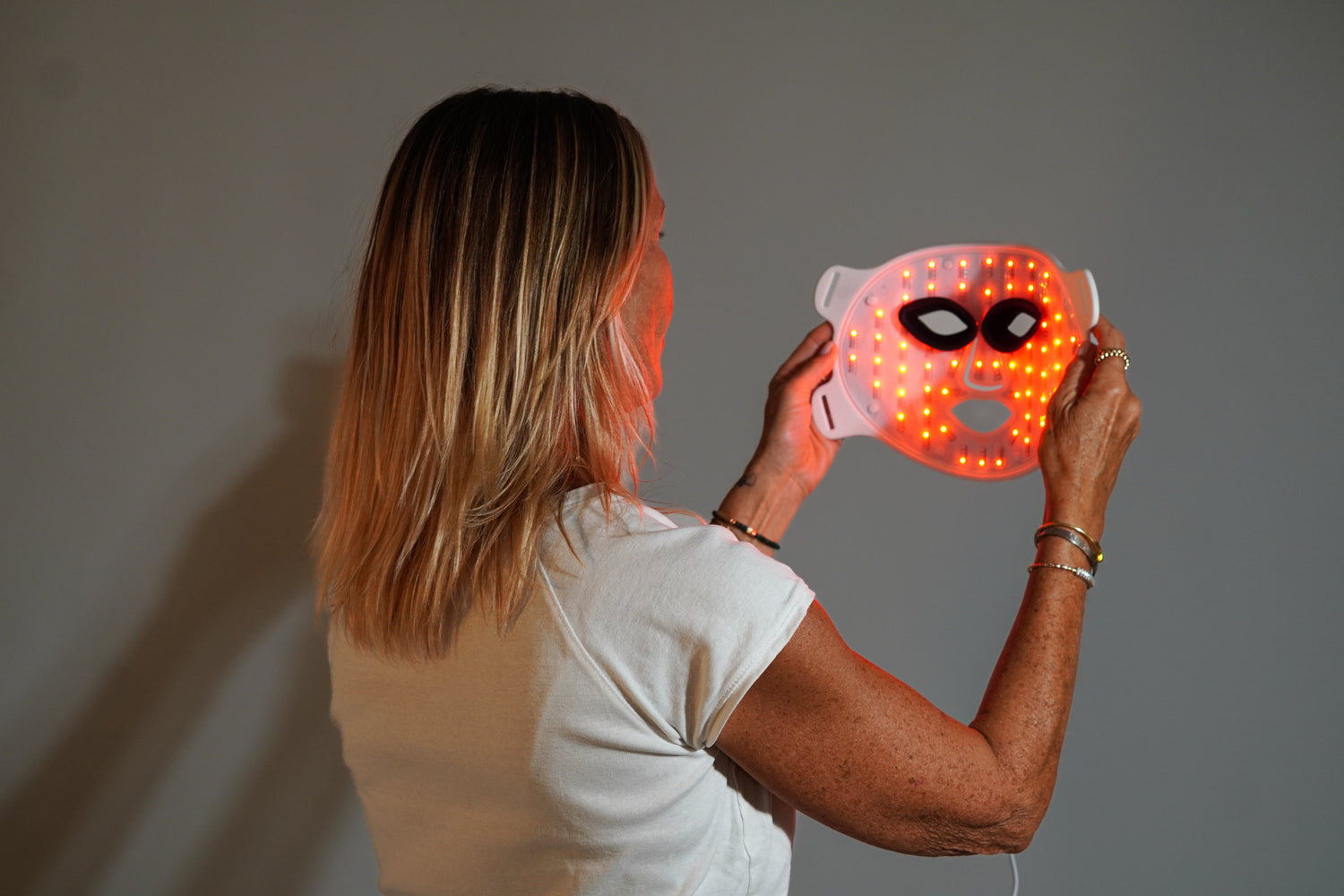
The nighttime facial routine with an LED mask works best when the order is clear: cleanse, treat, moisturize, and repeat consistently.
In the core proposal of Kumo Balance, facial LED therapy is understood as a practical wellness habit, not an isolated action. If you want to first understand the technical basis, you can read what a facial LED mask is and how it works and then return to this protocol. Facial LED light is a non-invasive form of photobiomodulation; red light penetrates deeper and is associated with supporting collagen production and inflammation modulation, while clinical reviews continue to show modest but useful benefits with repeated use. (my.clevelandclinic.org)
Facial red light
Bring your skin back to life
★★★★★ 4,8/5 · rated by verified customers
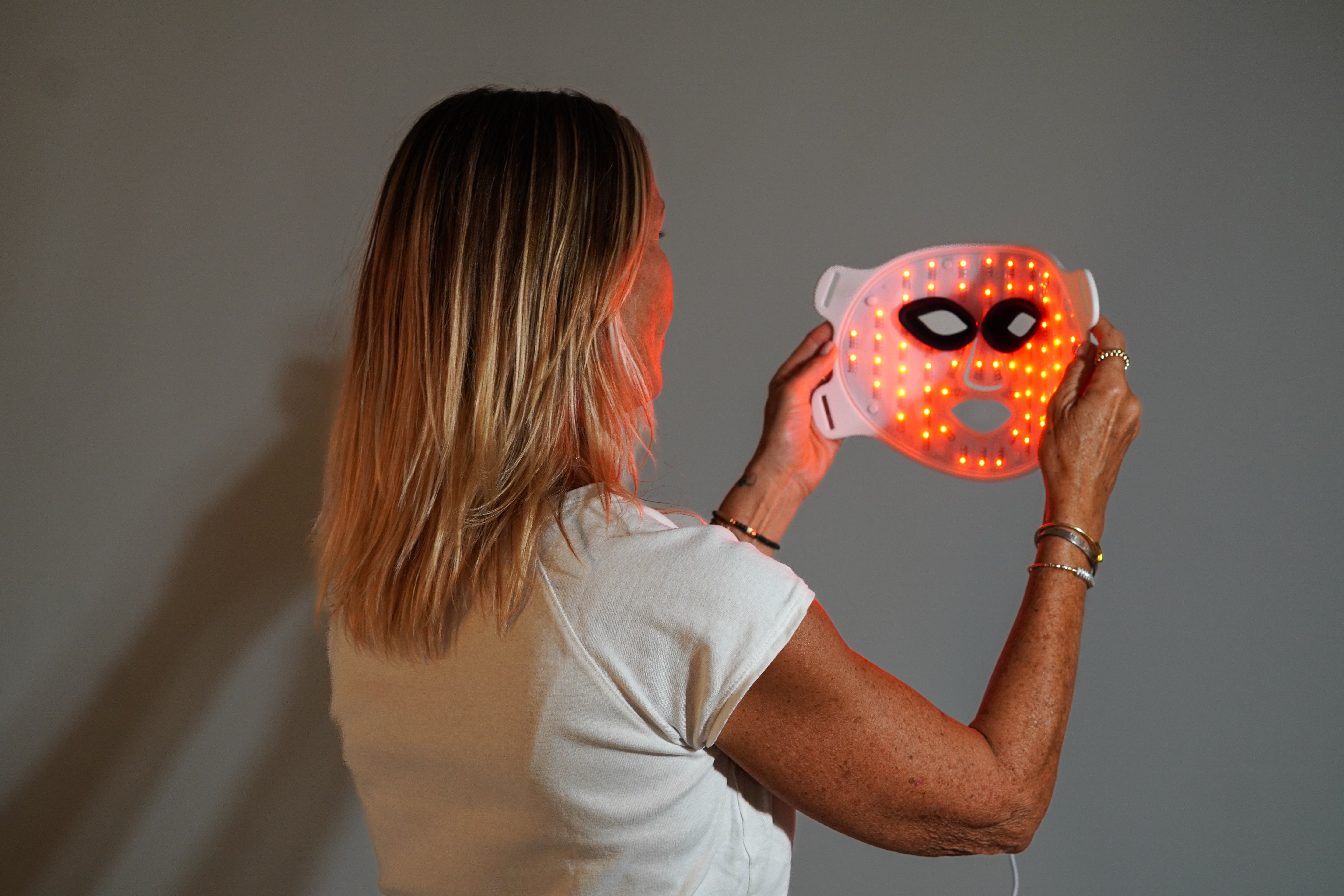
The KumoSkin LED mask helps repair and calm your skin in short sessions at home.
- 250 LEDs in flexible medical silicone
- Red light to boost collagen and glow
- 4 lights: red, infrared, blue and yellow
€299,00€429,00
−10% on your 1st order when you subscribe to the newsletter

The best routine is one you can repeat without irritating your skin or breaking the basic order. (aad.org)
Why it fits so well at night
Night is a good time because the skin is usually free of makeup, sunscreen, and accumulated pollution. Additionally, the nighttime routine often already includes cleansing and moisturizing, so the LED mask integrates without complicating the ritual. Cleveland Clinic explains that LED is a non-invasive treatment, which at home usually requires regularity and that home devices typically provide more subtle improvements than professional equipment. (my.clevelandclinic.org)
Personalized protocol · included with your purchase
Want us to tell you how to use it in your case?
With your purchase, our experts prepare the ideal LED protocol for your skin type and goal (acne, wrinkles, dark spots...).
Message us on WhatsAppOur experts reply · no obligation
The American Academy of Dermatology reminds us that use must be consistent, that the time varies depending on the device, and that eye protection is important. It also warns that people with darker skin tones may be more sensitive to visible light. (aad.org)
Step-by-step protocol for nighttime use
If you're looking for a simple sequence, this order usually works well. You can supplement it with how to use the facial LED mask step-by-step to refine placement and routine details.
Basic nighttime protocol
- Cleanse your face with a gentle product and dry it thoroughly. The idea is to start with skin free of makeup, sunscreen, sweat, and oily residue to make the session more comfortable.
- Avoid applying very heavy products beforehand. Dense oils or very occlusive creams can cause the mask to slip or make the experience uncomfortable.
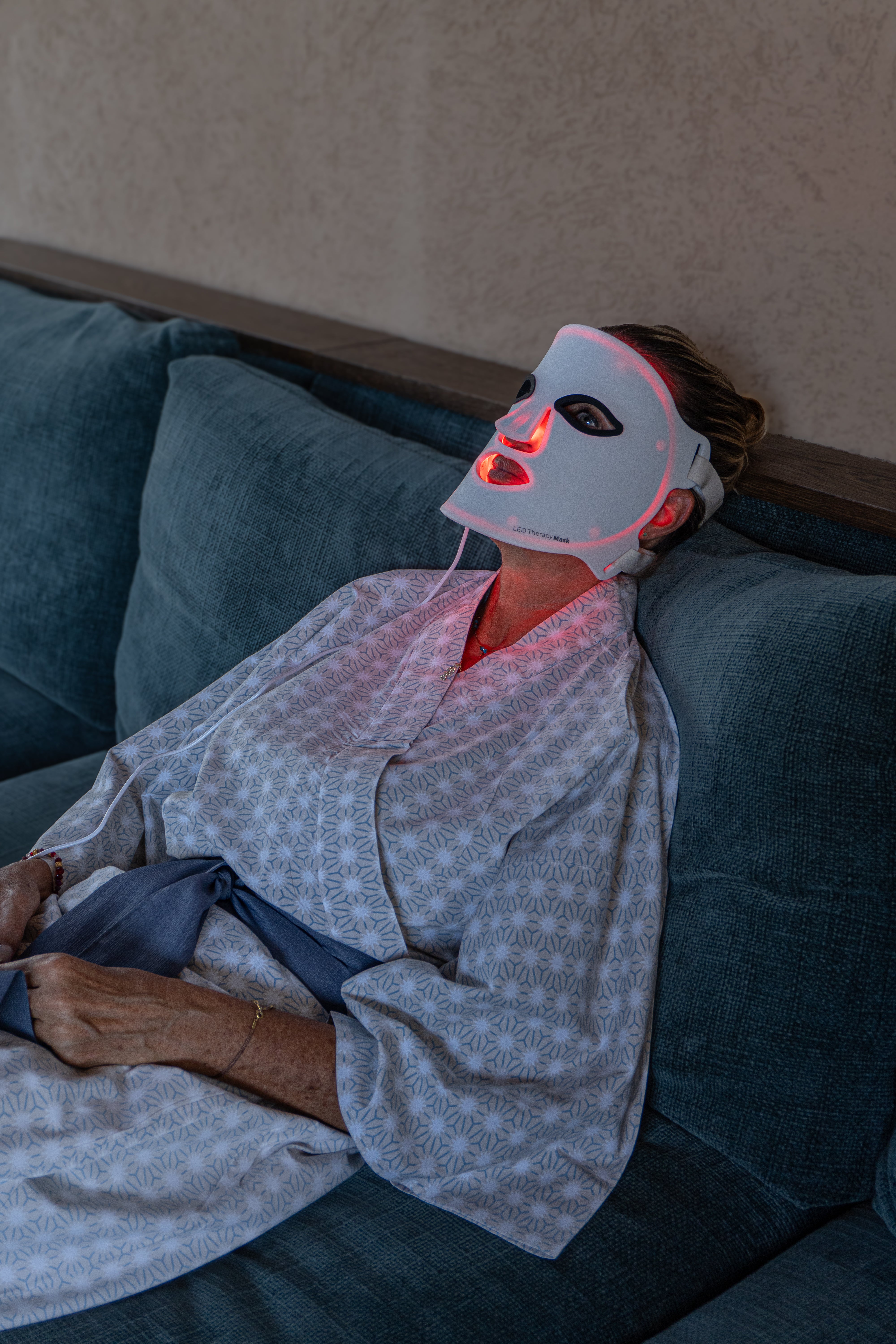
- Adjust the mask without overtightening. A good fit helps ensure the light is well distributed and the session is comfortable from the start.
- Select the mode or color corresponding to your goal. If your device offers several lights, follow the manufacturer's guide and remember that each color behaves differently. To delve deeper into this, review colors and wavelengths in facial LED masks.
- Start the session and protect your eyes. Cleveland Clinic recommends wearing glasses or eye protection and carefully following the device's instructions.
- Adhere to the time indicated by your device. Do not extend the session thinking that this will accelerate results; consistency usually matters more than extra duration.
- Finish with simple hydration. A soothing cream or gel can help conclude the nighttime routine without overloading the skin.
Practical table to keep track of the order
| Step | What you do | Goal | Common mistake |
|---|---|---|---|
| 1 | Cleansing and drying | Prepare the skin for the session | Using it with makeup or cream residue |
| 2 | Mask adjustment | Achieve comfort and uniform coverage | Tightening it too much or leaving it loose |
| 3 | Program or color selection | Adapt the light to the care objective | Choosing randomly without reading the manual |
| 4 | Session with eye protection | Work safely and without discomfort | Not protecting the eyes |
| 5 | Final hydration | Maintain a feeling of comfort | Overloading the skin with too many active ingredients |
How to integrate the LED mask into your nighttime skincare
The cleanest sequence is usually: cleansing, LED mask, and then moisturizing. If your skin tolerates serums well, you can save them for the post-mask phase and keep the session as neutral as possible. If you want a more complete view of how this habit fits into a realistic care ritual, the step-by-step routine with a facial LED mask may be helpful.
on your first order when you join the newsletter
We send you the code instantly. No spam.
If you are evaluating the right device for home, the KumoSkin Mask facial LED mask is the brand's facial offering to incorporate light therapy into regular use. The idea is not to complicate your night, but to make it easier to maintain.
What to do and what not to do before the session
- Yes: a gentle cleanser, a dry face, and a clear routine.
- Yes: a simple moisturizer at the end, if your skin benefits from it.
- No: thick layers that make adjustment difficult.
- No: improvising with too many products on the same night.
Safety, frequency, and realistic expectations
If you choose a home device, it's important to consider safety as much as comfort. The FDA publishes evaluation and labeling recommendations for photobiomodulation devices, which underscores the importance of product design, information, and testing. The AAD, for its part, notes that many red light devices carry the "FDA-cleared" label, which refers to the risk profile, not the promised efficacy. (fda.gov)
It is also important to maintain realistic expectations. Cleveland Clinic indicates that home devices are usually less powerful than those in a clinic, so changes are typically gradual and subtle. The AAD adds that usage time varies by device and that consistency is key; for visible acne devices, it even mentions guidelines that can be as frequent as twice a day for several weeks, always depending on the specific model and indication. (my.clevelandclinic.org)
If you have a photosensitive skin condition, if you take medications that increase light sensitivity, or if you notice your skin easily irritates, it is advisable to review use with a professional. The AAD also warns that people with darker skin tones may experience more intense or prolonged hyperpigmentation after exposure to visible light. (aad.org)
If you want to review the pros and cons in more detail, you can consult benefits and risks of the facial LED mask and decide more accurately if this practice fits into your night.
Common mistakes to avoid
- Using it on makeup or poorly removed makeup.
- Extending the session beyond what the manufacturer indicates.
- Forgetting eye protection.
- Expecting spectacular changes after a single session.
- Abandoning the routine before allowing time for consistency.
FAQ
How to use an LED mask at night step by step?
Start with a clean, dry face, place the mask without overtightening, protect your eyes, choose the mode or color indicated by your device, and respect the specified duration. Afterwards, finish with simple hydration. The AAD reminds us that use must be regular and that time varies by device; Cleveland Clinic insists on following instructions and using eye protection. The key is to repeat the same order every night you have a session. (aad.org)
How long should I leave the LED mask on in my nighttime routine?
There is no universal number. Cleveland Clinic explains that some home devices last only a few minutes a day and others require longer sessions, while the AAD indicates that the time depends on the device and should be followed as directed by the manufacturer. The important thing is not to improvise or think that more time equals better results. With this technology, regularity often outweighs an excessive session. (my.clevelandclinic.org)
How often can I use an LED mask at night in my routine?
It depends on the model, the objective, and how your skin responds. The AAD notes that home red light therapy is not a "one-time" treatment and requires regular use to see changes. Cleveland Clinic also reminds us that results usually come with repeated treatments. If you notice persistent redness or discomfort, reduce the frequency and prioritize tolerance over the number of sessions. (aad.org)
What products should I apply before or after the LED mask at night?
Before, the most important thing is to start with clean, makeup-free skin. Afterwards, a simple moisturizer is usually the most practical option to finish the routine. If you use very potent active ingredients or your skin is sensitive, it's best to keep the sequence simple to avoid overloading it on the same night. Cleveland Clinic specifically recommends starting with a clean face and carefully following the device's instructions. (my.clevelandclinic.org)
Is it safe to use an LED mask overnight and does it adequately cover the eyes?
In general, LED therapy is considered low-risk when used correctly, but eye protection remains essential. The AAD notes that, in the short term, red light appears safe and that many home devices are marked "FDA-cleared," while Cleveland Clinic recommends wearing glasses or goggles during the session. If you have a history of eye disease, light sensitivity, or a photosensitive skin condition, it is prudent to seek professional guidance before incorporating it into your routine. (aad.org)
What now?
If you want to turn this ritual into an easy-to-maintain habit, continue to refine your protocol with the evidence and real results of the facial LED mask, check out KumoSkin Mask, and return to the Kumo Balance main website to integrate light into your nighttime routine with more clarity and less friction.

Facial red light
KumoSkin Mask – LED Facial Mask
★★★★★ 4,8/5 · rated by verified customers
- 250 LEDs in flexible medical silicone
- Red light to boost collagen and glow
- 4 lights: red, infrared, blue and yellow
€299,00€429,00· pay in installments with seQura or Klarna