Rosacea requires routine, not aggression.
If you want to relieve redness at home and know when LED light can fit in without worsening your skin, here's a practical guide. Rosacea is a chronic, non-contagious condition with no definitive cure, although it can be controlled; its flare-ups are often linked to triggers such as sun, heat, alcohol, spicy foods, stress, and certain irritating products. (nhs.uk)
Facial red light
Bring your skin back to life
★★★★★ 4,8/5 · rated by verified customers
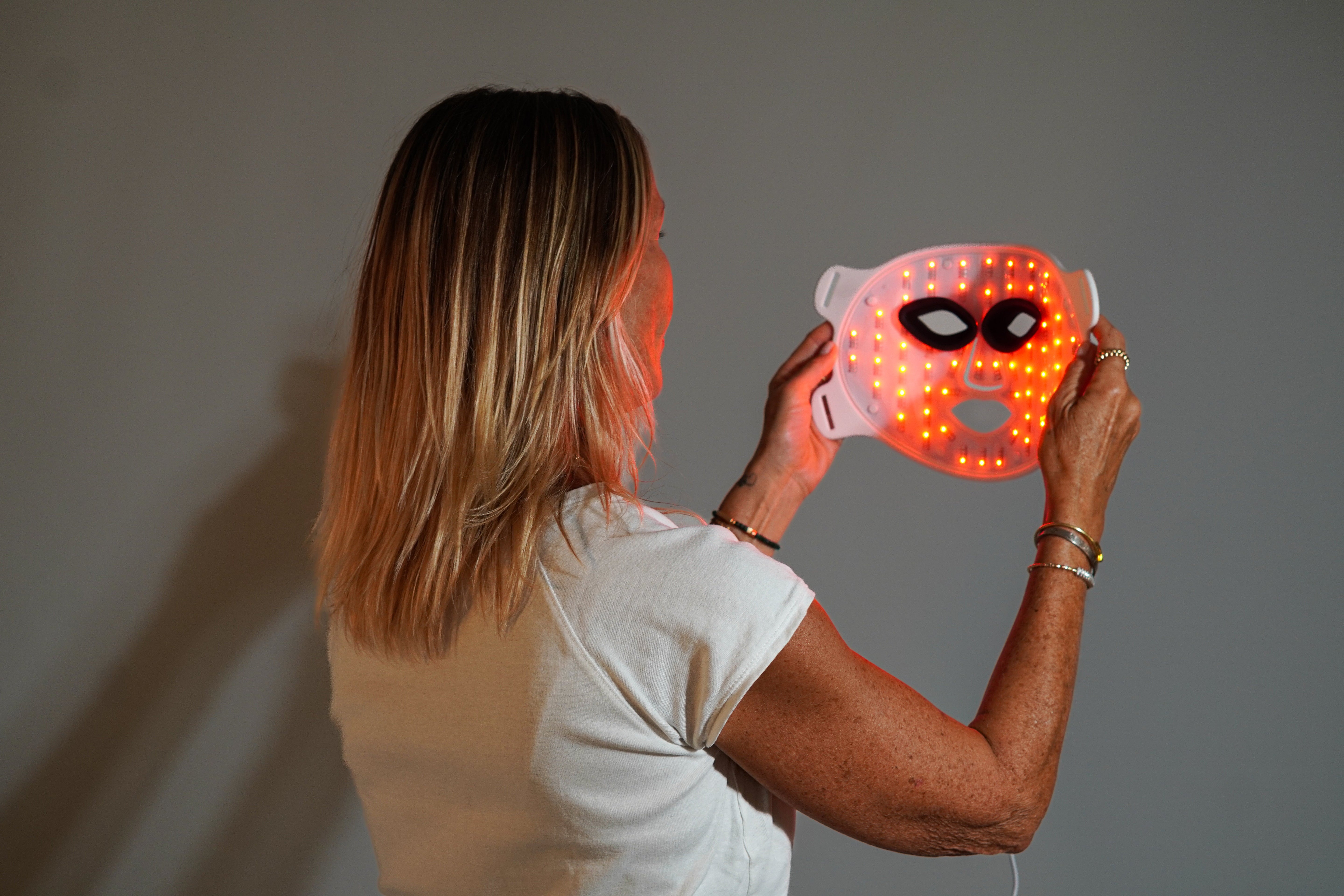
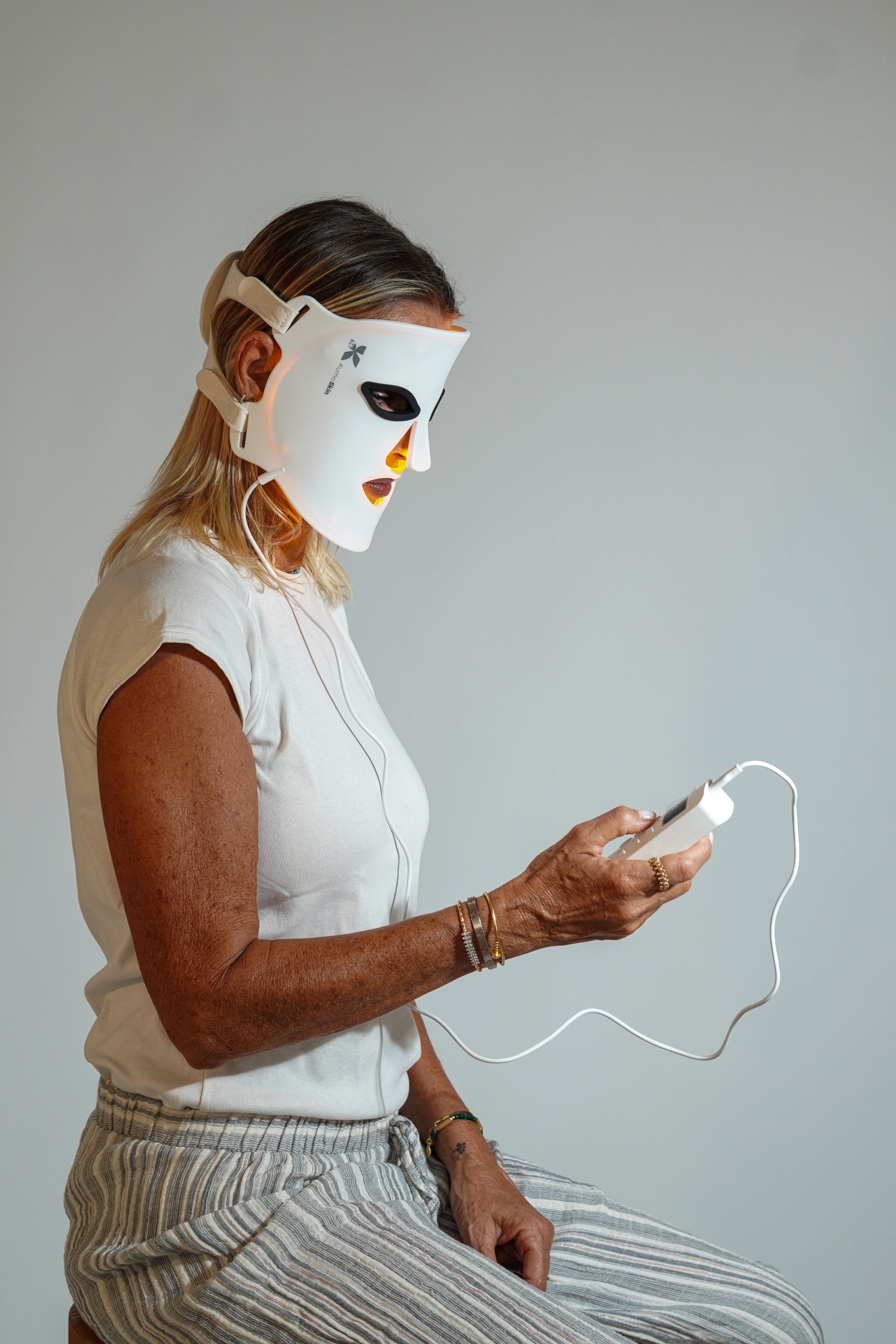
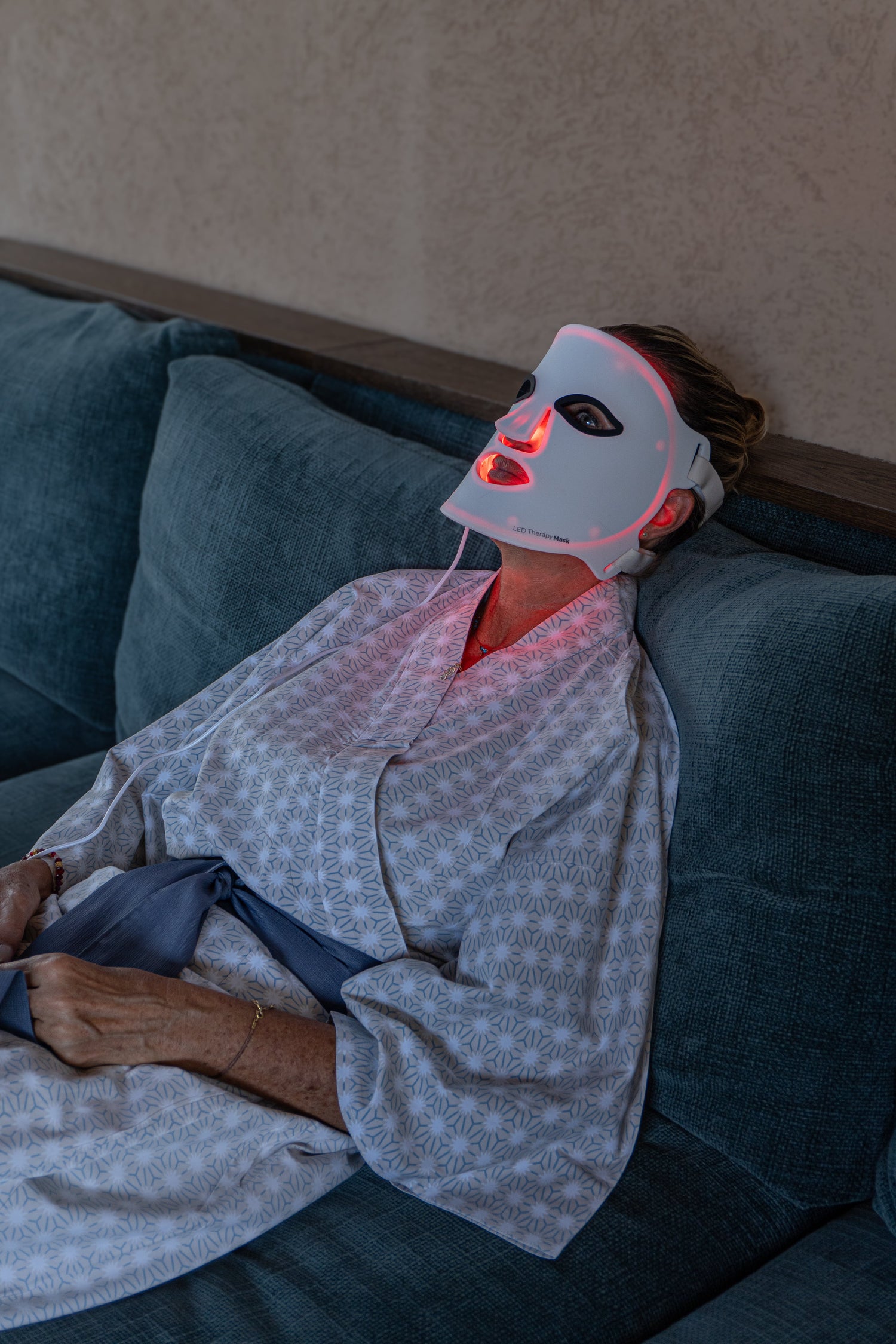
The KumoSkin LED mask helps repair and calm your skin in short sessions at home.
- 250 LEDs in flexible medical silicone
- Red light to boost collagen and glow
- 4 lights: red, infrared, blue and yellow
€299,00€429,00
−10% on your 1st order when you subscribe to the newsletter

The idea is not to "cover up" rosacea at all costs, but to reduce inflammation, strengthen the skin barrier, and thoughtfully decide if an LED mask can be a useful complement. If you are looking for a broader view of home wellness, Kumo Balance's non-invasive wellness approach fits this logic of consistent care.
What you can do at home to calm rosacea
The basis of home care is simple: cleanse gently, moisturize, protect from the sun, and identify your triggers. The AAD recommends avoiding ingredients like menthol, camphor, and sodium lauryl sulfate; Mayo Clinic and the NHS insist on daily photoprotection, gentle cleansing, and the use of products designed for sensitive skin. (aad.org)
Personalized protocol · included with your purchase
Want us to tell you how to use it in your case?
With your purchase, our experts prepare the ideal LED protocol for your skin type and goal (acne, wrinkles, dark spots...).
Message us on WhatsAppOur experts reply · no obligation
Important: rosacea is not acne and, in general, does not improve with over-the-counter anti-acne treatments. If you use active ingredients or medications, they should ideally be adapted for rosacea and not just for "acne-prone skin." (medlineplus.gov)
- Use a gentle, soap-free, fragrance-free cleanser twice a day. (mayoclinic.org)
- Apply moisturizer when the skin is already dry to reduce stinging. (aad.org)
- Choose a broad-spectrum sunscreen with SPF 30 or higher, preferably mineral when the skin is easily irritated. (aad.org)
- Avoid toners, harsh exfoliants, and formulas with menthol, camphor, or sodium lauryl sulfate. (aad.org)
- If certain foods, drinks, or routines trigger redness, write them down to identify them better. (nhs.uk)
If your skin is easily reactive, it might also help to review how an LED facial mask designed for sensitive and rosacea-prone skin behaves before deciding if a home device makes sense for you.
Recommended daily routine for rosacea-prone skin and LED light
These guidelines summarize what the AAD, Mayo Clinic, and NHS recommend for rosacea-prone skin and prudent light use. (aad.org)
on your first order when you join the newsletter
We send you the code instantly. No spam.
| Time | What to do | What to avoid | Goal |
|---|---|---|---|
| Morning | Gentle cleansing, fragrance-free moisturizer, and mineral SPF 30+ sunscreen. | Very hot water, rubbing the skin, and harsh exfoliants. | Protect the skin barrier and reduce the likelihood of flare-ups. (mayoclinic.org) |
| During the day | Shade, hat, glasses, and SPF reapplication when needed. | Prolonged direct sun, intense heat, and conditions that trigger flushing. | Avoid one of the most frequent rosacea triggers. (aad.org) |
| Night / LED | If using LED, follow the manual, protect your eyes, and stop if you feel discomfort. | Prolonging sessions or continuing if pain, erythema, or rash appears. | Keep use within a tolerable and safe range. (my.clevelandclinic.org) |
LED light for rosacea: what it can and cannot provide
LED light is not magic, nor is it an automatic substitute for treatment. In rosacea, light-based therapies have shown variable results: a 2024 systematic review on intense pulsed light found improvements in erythema and telangiectasias in many studies, but also warned of limited methodological quality. This calls for caution when discussing any "definitive" solution. (pubmed.ncbi.nlm.nih.gov)
Specifically for LED, a 2024 retrospective study with 39 patients with papulopustular rosacea combined ozonated hydrotherapy, yellow LED light, and oral minocycline. At 4 weeks, the efficacy rate was 90% in the combined group versus 52.63% with minocycline alone; at 24 weeks, recurrence was 5% versus 26.32%. This is interesting data, but the sample size is small and does not allow generalization to all cases. 2024 clinical study on yellow LED light and papulopustular rosacea. (pubmed.ncbi.nlm.nih.gov)
Additionally, a preclinical study in a murine model observed that photobiomodulation with 590 and 830 nm reduced erythema and inflammatory infiltration. This suggests a possible anti-inflammatory effect, but it is still laboratory evidence, not a clinical guarantee in humans. (pubmed.ncbi.nlm.nih.gov)
If you want to better understand what each wavelength does, you can review the guide on facial LED light colors and their wavelengths and, to put expectations into context, the analysis of whether the facial LED mask really works.
The most prudent interpretation is simple: LED light can be a useful complement in some cases, but it should not replace a skincare routine or a dermatological plan.
How to use an LED mask prudently
The Cleveland Clinic describes LED therapy as a non-invasive and generally safe short-term procedure. For home use, it recommends choosing devices marked as FDA cleared or FDA approved, using eye protection, and rigorously following instructions. It also notes that, although reactions are rare, inflammation, rash, pain, or increased redness can occur, and that less is still known about long-term safety. Clinical guide on LED therapy and safety of use. (my.clevelandclinic.org)
If you are comparing home options, the explanation of how a facial LED mask works can help you separate reasonable use from an exaggerated promise.
- Start only if you can follow the manufacturer's exact protocol and the device is intended for home use. (my.clevelandclinic.org)
- Always use eye protection if the device requires it. (my.clevelandclinic.org)
- Stop the session if you notice more redness, pain, inflammation, or rash. (my.clevelandclinic.org)
- If you have ocular symptoms such as red eye, blurred vision, gritty sensation, or light sensitivity, seek medical attention. (nhs.uk)
- If the goal is cosmetic but your skin is very reactive, prioritize skin tolerance first, then consistency. (aad.org)
And if you prefer a broader overview of home facial phototherapy, advanced home LED light therapy summarizes how to integrate this type of technology into a wellness routine without losing sight of safety.
When home care is not enough
If redness persists, if papules or pustules appear, if the nose thickens, or if the eyes become irritated, the situation is no longer just cosmetic. Mayo Clinic and MedlinePlus remind us that rosacea can be controlled with medical treatments, and the NHS warns that ocular symptoms may require urgent attention. (medlineplus.gov)
In such cases, the doctor may consider creams or gels, oral antibiotics for a limited period, and, for specific subtypes, laser or pulsed light procedures. The important thing is not to make home LED the only plan when your skin is already asking for a more comprehensive evaluation. (nhs.uk)
Frequently asked questions about rosacea and LED light
Is it safe to use LED light at home to treat rosacea?
It can be a reasonably safe option if you choose a suitable home device, use it with eye protection, and follow the manual carefully. However, the specific evidence for rosacea is not as robust as for other uses of phototherapy, so it is advisable to think of LED as a complement and not as the sole strategy. If you notice pain, increased redness, rash, or inflammation, it is best to stop and re-evaluate. (my.clevelandclinic.org)
What LED light colors are recommended for rosacea?
There is no absolute consensus, but the most interesting data in rosacea has been seen with yellow light and with combinations of 590 and 830 nm in small or preclinical studies. Red light is widely used in facial aesthetics, although for rosacea, the most important thing is your skin's actual tolerance and the clinical objective. Avoid assuming that more intensity or more time means better results. (pubmed.ncbi.nlm.nih.gov)
Can LED light therapy help rosacea or can it worsen it?
It can help as support in some cases, but it can also worsen it if it causes heat, irritation, or an inflammatory response. In a 2024 study with yellow LED light associated with minocycline and ozonotherapy, the results were better than with minocycline alone; however, this type of data does not prove that it works the same in all patients. If you notice more redness, pain, or rash, you must stop using it. (pubmed.ncbi.nlm.nih.gov)
Should LED light be used as a complement to rosacea treatment and not as a substitute?
Yes. Clinical sources continue to prioritize photoprotection, gentle care, and, when necessary, prescribed medications or procedures. LED light can add value in selected patients, but the evidence on light-based therapies still shows variable results and uneven methodological quality, so it is not advisable to replace a medical plan with a mask. (mayoclinic.org)
What precautions should I take before using an LED mask if I have rosacea?
Check that the device is suitable for home use, wear eye protection, follow the manufacturer's instructions exactly, and stop the session if redness, pain, inflammation, or a rash appears. If you also have eye discomfort, blurred vision, or light sensitivity, seek medical evaluation, as there may be ocular involvement associated with rosacea. (my.clevelandclinic.org)
What's next?
If you want to continue refining your routine, start with the guide on LED facial mask for sensitive and rosacea-prone skin and also review advanced home LED light therapy to see which option best fits your tolerance and care goals. If you prefer to explore the general home wellness proposal, return to the Kumo Balance homepage and continue building a smarter routine.

Facial red light
KumoSkin Mask – LED Facial Mask
★★★★★ 4,8/5 · rated by verified customers
- 250 LEDs in flexible medical silicone
- Red light to boost collagen and glow
- 4 lights: red, infrared, blue and yellow
€299,00€429,00· pay in installments with seQura or Klarna