Under-eye bags have a solution.
Most of the time, they are due to fluid retention, lack of sleep, allergies, smoking, genetics, or aging; when the cause is a structural bag, home remedies only provide temporary relief. Therefore, LED light can be an interesting support for the skin around the eyes, but it does not replace a professional assessment if the problem is persistent. If you are interested in a tech-based facial routine at home, Kumo Balance’s recovery proposal fits with this idea of non-invasive well-being. (mayoclinic.org)
Red & infrared light
Recover faster, at home
★★★★★ 4,8/5 · rated by verified customers
The KumoLux panel supports muscle recovery with full-body red and infrared light.
- 660 nm red + 850 nm infrared light
- Full-body muscle recovery
- Clinically validated biohacking protocols
€399,00€499,00
−10% on your 1st order when you subscribe to the newsletter

Why do under-eye bags appear?
According to Mayo Clinic's clinical explanation of under-eye bags, the area looks more swollen when the tissues supporting the eyelid weaken and fat or fluid shifts downward. Age, fluid retention, lack of sleep, allergies, smoking, and genetics can worsen it; Cleveland Clinic adds that other causes such as conjunctivitis, chalazion, trauma, or Graves' disease can also appear as "bags." (mayoclinic.org)
The key is to understand that not all bags are the same. Some are temporary puffiness, others reflect skin laxity or fat protrusion, and in these cases, the approach changes completely. Mayo Clinic points out that most cases are a cosmetic problem, but it is advisable to consult a doctor if there is blurred vision, irritation, headache, or skin rash. (mayoclinic.org)
Personalized protocol · included with your purchase
Want us to tell you how to use it in your case?
With your purchase, our experts set up your red and infrared light sessions for your sport and goal.
Message us on WhatsAppOur experts reply · no obligation
Real remedies that can help
In Mayo Clinic's treatment recommendations, lifestyle measures are the first step when swelling is mild or temporary. They are especially useful if the problem appears upon waking, after a short night, or after eating salty foods. (mayoclinic.org)
Practical table: what helps and what doesn't
| Remedy | What it can provide | Main limitation |
|---|---|---|
| Cold compress | Can temporarily reduce swelling caused by fluid, allergy, or fatigue. (mayoclinic.org) | Does not correct a structural bag formed by fat or excess skin. (mayoclinic.org) |
| Sleep 7 to 9 hours and slightly elevate the head | Helps reduce fluid accumulation around the eyes during sleep. (mayoclinic.org) | If the cause is anatomical, the effect will be limited. (mayoclinic.org) |
| Reduce salt and fluids before bed | Decreases water retention that can worsen the puffy appearance. (mayoclinic.org) | Does not change eyelid shape or eliminate prolapsed fat. (mayoclinic.org) |
| Treat allergies | Useful when swelling appears with itching, tearing, or environmental sensitivity. (mayoclinic.org) | Should be done under medical guidance if eye drops or corticosteroids are used. (health.clevelandclinic.org) |
| Corrective makeup | Camouflages the appearance of bags or dark circles for a quick visual result. (mayoclinic.org) | Does not treat the underlying cause. (mayoclinic.org) |
If the problem stems from protruding fat or excess skin, Mayo Clinic explains that blepharoplasty may be a medical option. In other words, when the cause is structural, home measures improve the appearance but do not change the anatomy. (mayoclinic.org)
It's also important to remember that not everything that looks like a bag is simple fluid retention. Cleveland Clinic lists allergies, conjunctivitis, chalazion, trauma, Graves' disease, and kidney disease as possible triggers for swollen eyes, so persistence or asymmetry warrant attention. (health.clevelandclinic.org)
on your first order when you join the newsletter
We send you the code instantly. No spam.
What role does LED light play in the eye contour?
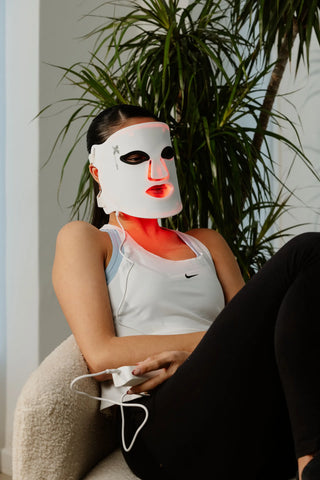
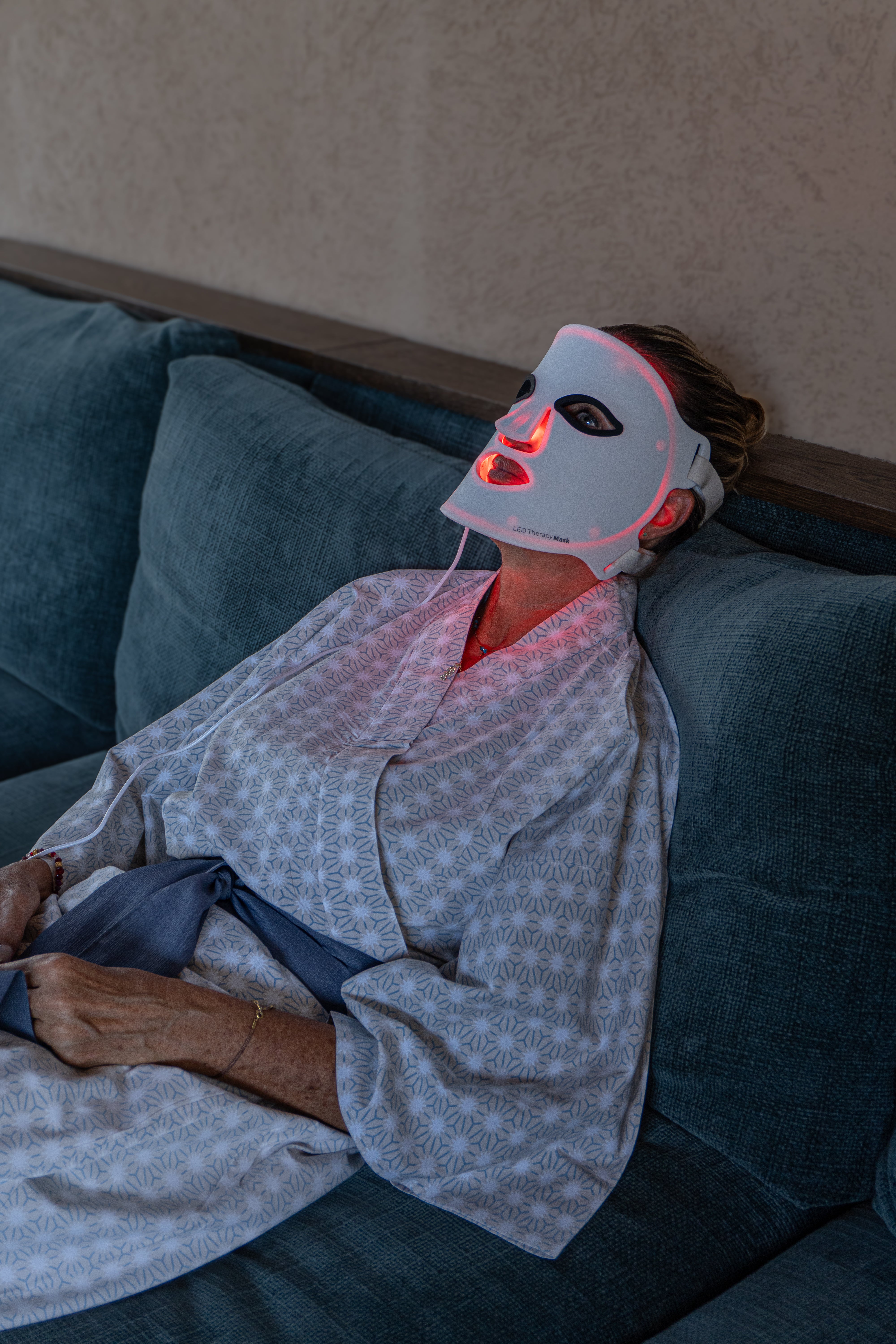
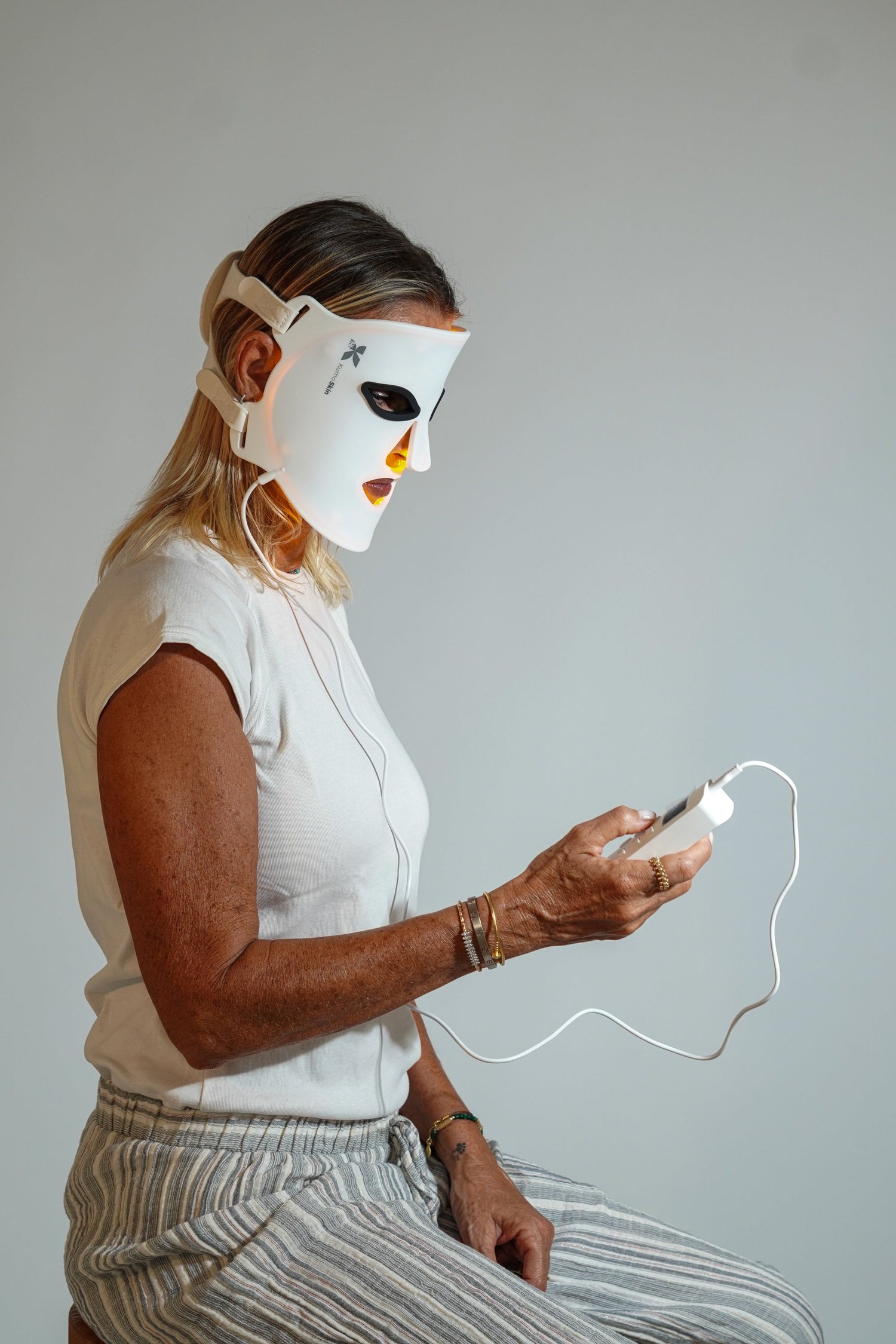
To understand the technical basis, review how an LED facial mask works and what each wavelength does. The AAD describes red light therapy as a non-invasive treatment based on red or near-infrared light primarily used for wrinkles, acne, and other signs of aging; the FDA, for its part, reminds that light-based procedures can damage the eyes and that eye protection should be used when indicated by the manual. (aad.org)
The most compelling evidence for the eye contour does not focus as much on “bags” as it does on periorbital wrinkles and post-surgical edema. A randomized trial published in Photobiomodulation, Photomedicine, and Laser Surgery with 137 women observed a 31.6% and 29.9% reduction in periorbital wrinkle volume after 10 sessions over 4 weeks with 660 nm red LED and 590 nm amber LED. Additionally, a 2024 clinical study on blepharoplasty, available on PubMed, reported less swelling and pain with 830 nm LED. (journals.sagepub.com)
This suggests, by inference, that LED may be useful when the "bag" is mixed with mild inflammation, dull skin, or fine wrinkles; if the volume comes from prolapsed fat or marked laxity, the technology helps less than a medical evaluation. To see how the evidence is interpreted in a home routine, the evidence and real results of the LED mask may be helpful. (journals.sagepub.com)
If you want to explore a device designed for home use, LED light therapy at home can fit with a consistent routine, always with realistic expectations and correct use. The AAD insists that the benefit depends on the type of device, consistency, and the problem to be treated. (aad.org)
How to use an LED device around the eyes more safely
If you're going to try it at home, avoid improvising: follow the manufacturer's recommended time, use the device consistently, and do not point the light directly into your eye. To refine your routine, it's also helpful to review common mistakes when using facial phototherapy at home. The AAD recommends using the eye protection indicated by the device, and the FDA emphasizes that light-based procedures can damage the eyes. (aad.org)
- Use the LED on clean, dry skin and follow the exact duration specified in the manual. (aad.org)
- Do not substitute protective goggles with sunglasses if the device requires eye protection. (aad.org)
- Discontinue use if you notice irritation, pain, light sensitivity, or persistent redness. (aad.org)
- Consult a doctor beforehand if you are taking photosensitizing medications or have a light-sensitive condition, such as lupus. (aad.org)
Consistency matters more than intensity. The AAD reminds us that it is not a "one-time" treatment and that results may take time, while the FDA emphasizes that low-energy light does not heat the skin, but can still be dangerous if used incorrectly. (aad.org)
When is it worth consulting a professional?
Seek medical evaluation if the swelling affects vision, causes irritation, is accompanied by headache or rash, or appears suddenly, especially if it is on only one side. Mayo Clinic recommends ruling out causes such as thyroid issues, infection, connective tissue disease, or allergies when the condition does not fit with simple fluid retention. (mayoclinic.org)
It is also important to seek guidance if the bags are persistent, if their appearance changes, or if you suspect that what you see is prolapsed fat or excess skin. In that scenario, the best solution is usually not cosmetic, but medical or surgical. (mayoclinic.org)
FAQ
What real remedies exist for under-eye bags and how effective are they?
The most sensible remedies are those that reduce temporary swelling: cold compresses, getting enough sleep, elevating your head slightly, reducing salt intake at night, and treating allergies if they are the trigger. Their effect is usually seen more in mild or morning bags than in chronic bags. Mayo Clinic and Cleveland Clinic agree that these measures improve the appearance but do not correct a bag caused by fat or excess skin. When the problem is structural, the solution is no longer just home-based. (mayoclinic.org)
Can LED light therapy reduce bags and dark circles around the eyes?
It can help in some cases, but not in the same way for all problems. The strongest evidence is for periorbital wrinkles and post-surgical swelling, not for chronic bags due to fat herniation. A randomized trial from 2023 showed a reduction in periorbital wrinkle volume with red and amber LED, and a 2024 study on blepharoplasty reported less edema and pain with 830 nm LED. This makes it a useful tool for rejuvenation, not a universal cure. (journals.sagepub.com)
How should an LED device be used for under-eye bags and how long does it take to see results?
The correct way is always to follow the manufacturer's instructions, use the device consistently, and wear eye protection if the manual requires it. It is not advisable to extend the time "just in case," because more exposure does not mean better results. The AAD explains that LED is not a single-session treatment and that changes take time; in dermatological studies, improvements are usually measured after several weeks, not overnight. If you notice eye discomfort or irritation, you should stop. (aad.org)
Is there scientific evidence supporting the effectiveness of red LED light for eye puffiness?
Yes, there is evidence, but most of it doesn't specifically study "bags" as such. Research focuses on periorbital wrinkles, skin quality, and edema after eye surgery. The 2023 trial on red and amber LED showed a reduction in periorbital wrinkle volume, and the 2024 study after blepharoplasty observed less swelling and pain with 830 nm LED. However, for chronic bags due to fat or laxity, direct evidence remains limited. (journals.sagepub.com)
What are the risks or side effects of using LED devices around the eyes?
Side effects are usually mild, such as temporary irritation or pain, but the greatest risk is ocular damage if the equipment is used without protection or incorrectly. The FDA warns that light-based procedures can injure the eyes, and the AAD recommends wearing the protective glasses indicated by the device. Additionally, people with darker skin may be more sensitive to visible light and develop hyperpigmentation, and those taking photosensitizing drugs should exercise extreme caution. (aad.org)
What now?
If you want to incorporate a light and recovery-based routine, start with at-home LED light therapy and return to the Kumo Balance homepage to explore other tech wellness solutions. If your swelling is persistent or has changed shape, the most prudent course of action is to combine the routine with a professional evaluation. (aad.org) To learn more, consult Kumo.

Red & infrared light
KumoLux Panel – Red and Infrared LED Panel
★★★★★ 4,8/5 · rated by verified customers
- 660 nm red + 850 nm infrared light
- Full-body muscle recovery
- Clinically validated biohacking protocols
€399,00€499,00· pay in installments with seQura or Klarna