Yes, but with nuances. The LED facial mask can help with mild acne, texture, and some signs of aging, although its results depend on the light color, dose, and consistency. (pubmed.ncbi.nlm.nih.gov)
If you want to position it well within your routine, start with Kumo Balance's recovery technology and the basic explanation of what an LED facial mask is and how it works. This way, you can evaluate the evidence critically and not based on marketing.
Facial red light
Bring your skin back to life
★★★★★ 4,8/5 · rated by verified customers
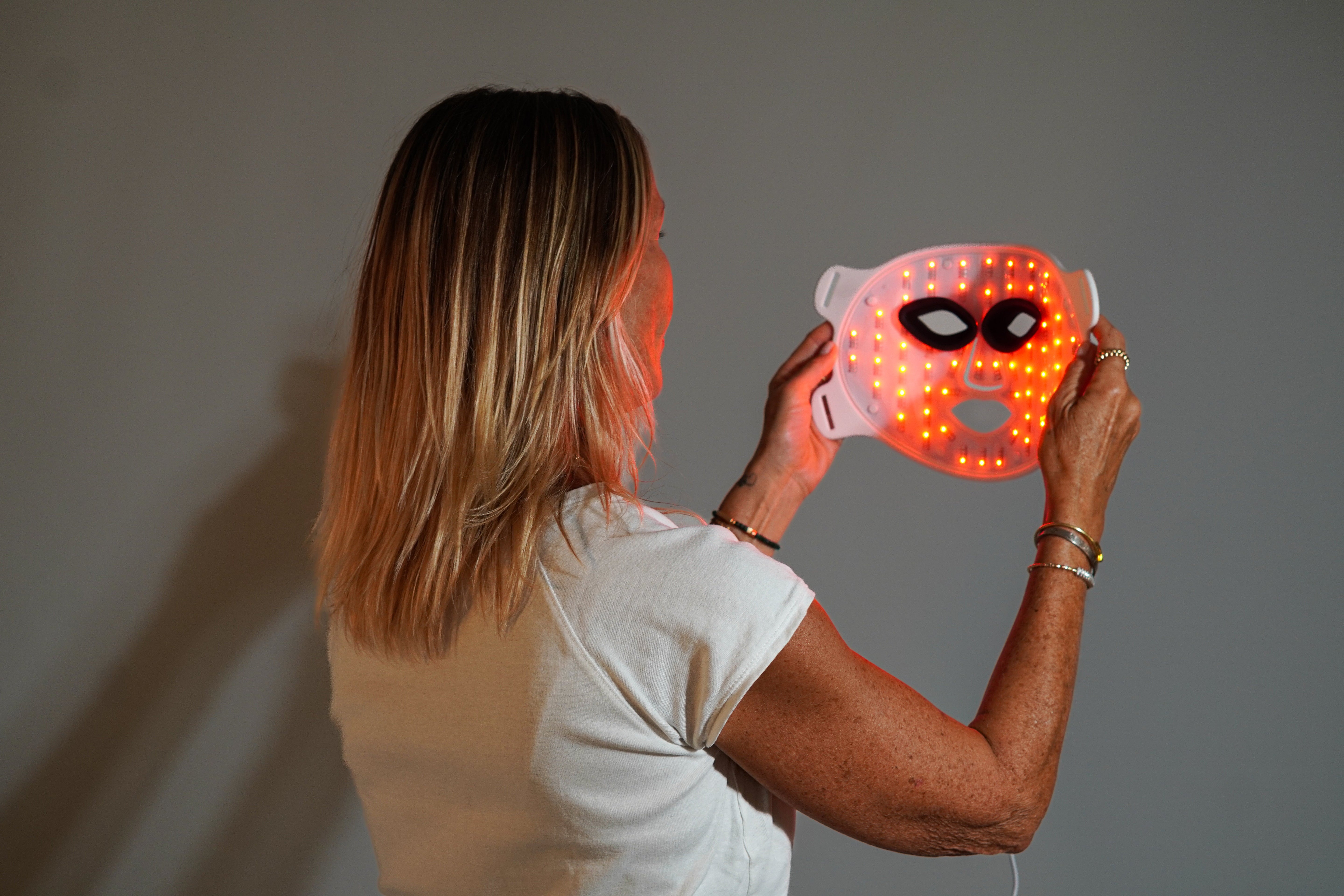
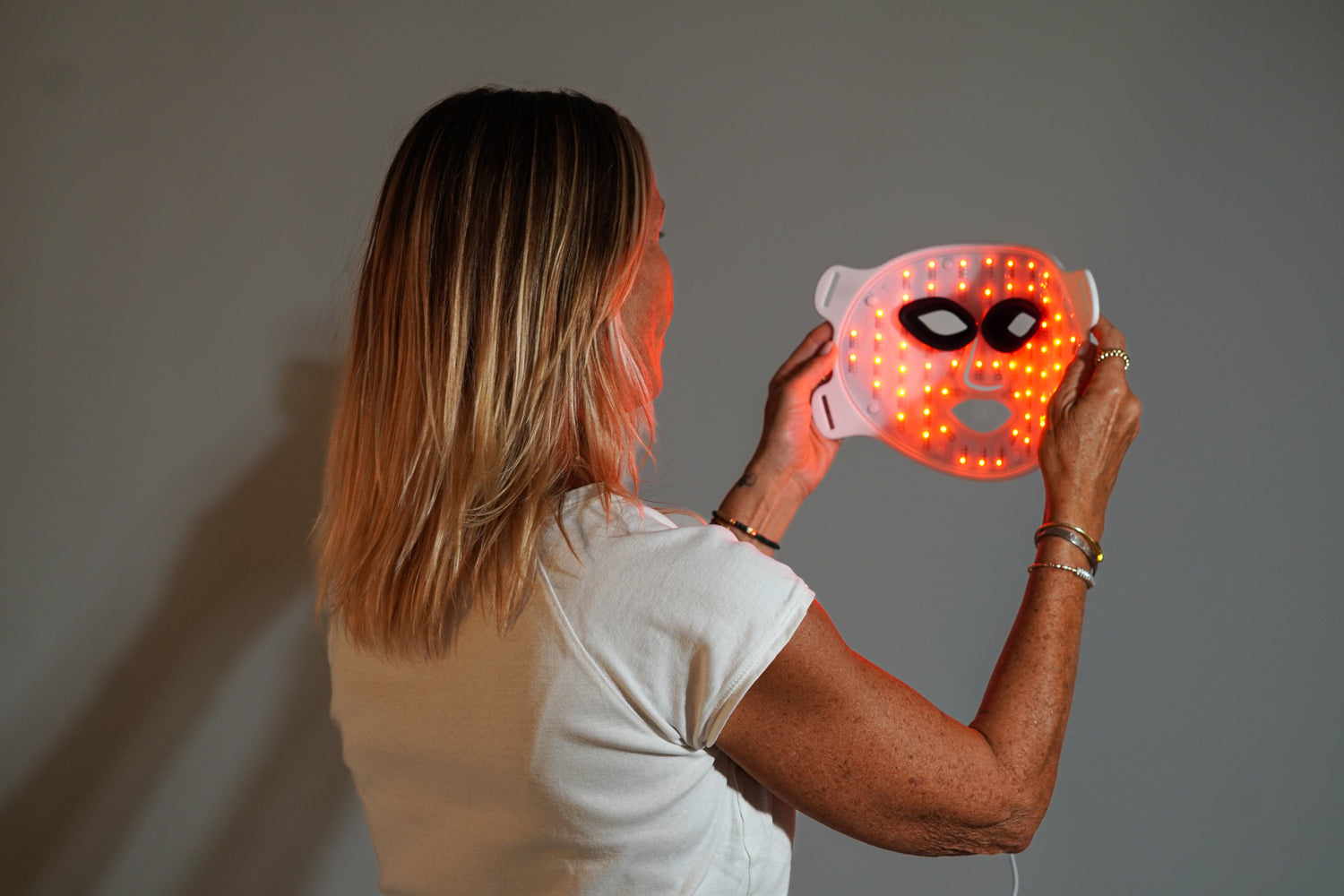
The KumoSkin LED mask helps repair and calm your skin in short sessions at home.
- 250 LEDs in flexible medical silicone
- Red light to boost collagen and glow
- 4 lights: red, infrared, blue and yellow
€299,00€429,00
−10% on your 1st order when you subscribe to the newsletter

How an LED facial mask works
LED facial therapy is a form of photobiomodulation: it uses low-energy visible light to modulate cellular processes without heat or abrasion. In general, blue light acts more superficially, and red light penetrates deeper; therefore, many at-home masks combine blue, red, and even near-infrared light depending on the objective. (pmc.ncbi.nlm.nih.gov)
In DermNet's clinical view on lights and acne, at-home devices are described as non-thermal and non-ablative, primarily targeting mild to moderate facial acne; furthermore, being smaller than clinic equipment, they often require more time or consistency to achieve a comparable effect. (dermnetnz.org)
Personalized protocol · included with your purchase
Want us to tell you how to use it in your case?
With your purchase, our experts prepare the ideal LED protocol for your skin type and goal (acne, wrinkles, dark spots...).
Message us on WhatsAppOur experts reply · no obligation
What clinical evidence exists regarding efficacy?
Mild to moderate acne
The most compelling evidence is for mild to moderate acne. A 2025 systematic review and meta-analysis of at-home LED devices analyzed 6 studies with 216 participants, and a 12-week randomized trial with a 445/630 nm mask found a 24.4% improvement in inflammatory lesions and 19.5% in non-inflammatory lesions. (pubmed.ncbi.nlm.nih.gov)
The FDA 510(k) summary for an OTC LED mask also describes a device intended to treat facial acne and wrinkles with safety and performance testing. As a previous regulatory example, another authorization documents blue light of 425-450 nm, red light of 620-640 nm, and a 10-minute session per day. (accessdata.fda.gov)
However, the Cochrane review on light therapies for acne emphasizes that studies vary widely in wavelength, dose, and comparators, concluding that high-quality evidence remains limited. The practical takeaway is clear: it can work, but the protocol matters greatly. (cochrane.org)
on your first order when you join the newsletter
We send you the code instantly. No spam.
The useful intensity is not a universal magic number. What reviews do show is that the variability between protocols is large, so it is advisable to prioritize a device with clear specifications and a specific indication, not a vague promise of "more power." (cochrane.org)
Wrinkles, firmness, and texture
For wrinkles, firmness, and texture, the results are positive, but more modest and slower. In a randomized, placebo-controlled, double-blind study on LED photorejuvenation with 76 patients, 830/633 nm phototherapy reduced wrinkles by up to 36% and increased elasticity by up to 19%. (pubmed.ncbi.nlm.nih.gov)
In an at-home trial with 24 subjects and 637/854 nm, elasticity significantly improved at 6 and 8 weeks, and texture showed changes at 8 weeks. Another study with a 633/830/1072 nm mask in men reported favorable improvements in fine lines, wrinkles, texture, pores, and spots after 6 weeks. (pubmed.ncbi.nlm.nih.gov)
Additionally, a multicenter, randomized, simulated device trial observed significant differences at 8, 12, and 16 weeks. This suggests that consistency outweighs the expectation of rapid change. (pubmed.ncbi.nlm.nih.gov)
Overall, the LED facial mask is not an empty trick: it can provide real improvements, but especially when the goal is specific and use is consistent. Current evidence favors mild to moderate acne more than profound skin changes. (pubmed.ncbi.nlm.nih.gov)
Key idea: the LED facial mask can indeed deliver real results, especially for mild acne and subtle signs of aging, but it works better as a complement to a well-planned routine than as a miracle solution. (pubmed.ncbi.nlm.nih.gov)
What wavelengths and intensity make the most sense
Practical summary by objective
| Objective | Common wavelengths | What studies show | What it implies in practice |
|---|---|---|---|
| Mild to moderate acne | Blue 425-450 nm and red 620-640 nm; in trials, combinations like 445/630 nm have yielded positive results. (accessdata.fda.gov) | Fewer inflammatory and non-inflammatory lesions after several weeks of use. (pubmed.ncbi.nlm.nih.gov) | This is the area with the best data for home use, provided the protocol is clear and consistent. |
| Wrinkles and texture | Red 633-660 nm and, sometimes, near-infrared 830-854 nm. (pubmed.ncbi.nlm.nih.gov) | Gradual improvements in wrinkles, elasticity, and texture in 6-16 weeks. (pubmed.ncbi.nlm.nih.gov) | Serves as support, not a substitute for other treatments if the desired change is significant. |
| Dose and intensity | There is no universal intensity that works for all masks. (cochrane.org) | Reviews indicate a wide variation between studies in wavelength, dose, and comparators. (cochrane.org) | Choose equipment with clear parameters and follow the manual, instead of just looking for "more power." |
As a concrete reference, the FDA describes an acne mask with blue light of 425-450 nm, red light of 620-640 nm, a 10-minute session per day, and a cumulative dose of 38.38 J/cm² over 30 days. It is not a universal standard, but it helps to understand that useful intensity depends on the complete protocol, not just apparent brightness. (accessdata.fda.gov)
How long it takes to see real results
The short answer is: in weeks, not days. The AAD reminds us that it is not a one-time use, but regular use, and that the time to see changes varies depending on the device and the objective. In studies on acne and rejuvenation, evaluations typically range from 6 to 16 weeks. (aad.org)
A 2023 study with red LED applied twice a week for 3 months reported progressive improvements at 1 month, 2 months, and 3 months, and part of the effect was maintained up to one month after discontinuing use. This reinforces the idea that the LED mask works better as a habit than as a one-time solution. (pubmed.ncbi.nlm.nih.gov)
As a practical reference, you can assess your progress after 8 to 12 weeks of consistent use. If you do not notice improvement, it is worth checking if the equipment is designed for that objective or if you need another strategy. To refine your routine, the guide on how many sessions you need to notice changes in texture and luminosity can help. (pubmed.ncbi.nlm.nih.gov)
How to use it to have more chances of seeing results
Consistency and order matter more than indiscriminately adding colors. Home devices are usually smaller and therefore often require more discipline than a clinic treatment. The AAD recommends following the manufacturer's instructions, choosing a device designed for the problem you want to treat, and using eye protection if the manual indicates it. (dermnetnz.org)
To integrate light into a coherent routine, you can rely on the step-by-step guide for using the LED facial mask and the LED facial mask routine designed for 2025. If you are still comparing technical criteria, the best basis remains a calm reading of the protocol and consistency for several weeks.
Safety, contraindications, and common mistakes
In general, LED facial therapy appears safe in the short term. The American Academy of Dermatology notes that the most common side effects are mild and temporary, such as irritation or discomfort, that red light has not been associated with cancer in available data, and that FDA-cleared does not mean guaranteed efficacy, but rather low regulatory risk. It also reminds us that the long-term effects on the skin are not yet well understood. (aad.org)
The AAD adds that people with darker skin tones may be more sensitive to visible light and experience more intense and lasting hyperpigmentation. Additionally, if the device indicates protective eyewear, always use it; do not substitute it with sunglasses. If you have very reactive skin, take photosensitizing medication, or suffer from a condition that worsens with light, it is prudent to review it first. To expand on this point, review the contraindications of the LED facial mask. (aad.org)
The best sign of a good choice is not the most aggressive promise, but clear specifications, comfortable use, and realistic expectations. (cochrane.org)
Frequently asked questions
Does the LED facial mask work, and what real results can be expected?
Yes, it can work, especially for mild to moderate acne and discreet improvements in luminosity, texture, and fine wrinkles. It is realistic to expect gradual improvement, not a dramatic "before and after." The evidence is stronger for acne than for rejuvenation, and the response depends heavily on the wavelength, dose, and regularity of use. In other words: it helps, but it does not replace dermatological treatment when the problem is significant. (pubmed.ncbi.nlm.nih.gov)
What clinical evidence exists regarding the efficacy of LED masks for different skin problems (acne, wrinkles, texture)?
The most useful clinical evidence comes from small trials and reviews with heterogeneous results. For acne, the 2025 review gathered 6 studies and 216 participants; in a 12-week trial with a 445/630 nm mask, less inflammatory and non-inflammatory acne was observed. For wrinkles, studies show improvements in elasticity and texture, but with more limited samples and different protocols. Therefore, the honest conclusion is "promising, but variable." (pubmed.ncbi.nlm.nih.gov)
How long does it take to see real results when using an LED facial mask?
In most studies, changes are not evaluated in days, but in weeks. For acne, trials usually last 10 to 12 weeks; for rejuvenation, improvements appear after 6 weeks and consolidate between 8 and 16 weeks depending on the device. If you do not see changes after 8-12 weeks of consistent use, it is advisable to review the protocol, the device's indication, and whether that objective is truly appropriate for your skin. (pubmed.ncbi.nlm.nih.gov)
What wavelengths and intensity should LED masks have to be effective and safe?
For acne, combinations of blue around 425-450 nm and red around 620-640 nm are common; for rejuvenation, red 633-660 nm and near-infrared 830-854 nm are very frequent in studies. But for intensity, there is no universal magic number: Cochrane found much variation between studies. The most sensible thing is to choose a device with clear specifications, a specific indication, and a protocol that you can follow consistently. (accessdata.fda.gov)
Is it safe to use an LED facial mask at home, and what risks or side effects should be known?
At home, it is usually safe if used correctly, but it is not without mild discomfort. The AAD indicates that in the short term it appears safe, with common side effects such as temporary irritation or mild pain; it also recommends eye protection if the device requires it and special caution for darker skin tones due to the risk of hyperpigmentation. If you take photosensitizing medication or have a condition that reacts to light, it is best to consult before use. (aad.org)
What now?
If you want to take the next step, start with the complete 2026 guide to choosing your LED facial mask. This way, you can decide critically if it fits your skin, your routine, and your real goals.

Facial red light
KumoSkin Mask – LED Facial Mask
★★★★★ 4,8/5 · rated by verified customers
- 250 LEDs in flexible medical silicone
- Red light to boost collagen and glow
- 4 lights: red, infrared, blue and yellow
€299,00€429,00· pay in installments with seQura or Klarna