The Vodder Method is the original manual lymphatic drainage. It was developed in the 1930s and remains the basis for many drainage applications due to its gentle, precise, and anatomical approach. (vodderschool.com)
If you want a broader foundation before delving into the technique, the basic guide on what lymphatic drainage is and how it works organizes the essential concepts.
Pressotherapy at home
End the day with light legs
★★★★★ 4,8/5 · rated by verified customers
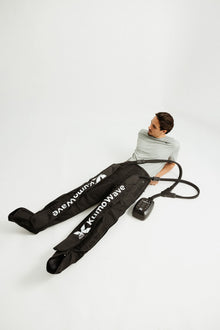
KumoWave pressotherapy boosts circulation and helps drain fluid with sequential compression, in 20-minute sessions at home.
- Boosts circulation and helps drain fluid
- Chamber-based compression, adjustable to you
- Sequential compression that mimics manual drainage
€799,00€999,00
−10% on your 1st order when you subscribe to the newsletter

What exactly is the Vodder Method?
The original version was developed by Emil and Estrid Vodder; the Dr. Vodder School itself places its origin in France in 1932 and explains that classic maneuvers use pumping, circles, and very light pressure. The official history of the method makes it clear that the intention was never to apply force, but to work with the physiology of the lymphatic system. (vodderschool.com)
In practice, this distinguishes it from deep tissue massage: the technique stretches the skin in a controlled manner, respects the direction of drainage, and seeks a functional, not mechanical, response. Cleveland Clinic's clinical explanation of lymphatic drainage agrees that it is a gentle technique, with light pressure and strategic movements. (my.clevelandclinic.org)
Personalized protocol · included with your purchase
Want us to tell you how to use it in your case?
With your purchase, our experts prepare a personalized usage protocol for your case: sport, circulation, fluid retention, pregnancy or lipedema.
Message us on WhatsAppOur experts reply · no obligation
How it works in the lymphatic system
Unlike blood, lymph does not have a central pump like the heart. Therefore, muscle movement, breathing, compression, and manual maneuvers help move fluid towards functional lymph nodes and reduce swelling. The NHS summarizes this logic on its lymphedema treatment page, explaining that specialized massage moves fluid from swollen areas to lymph nodes that can drain it. The NHS approach to lymphedema is a good reference for understanding the clinical framework. (nhs.uk)
How a session is organized
A well-executed session follows a simple sequence: preparing the exit pathways, mobilizing the fluid, and concluding with guidelines that help sustain the result. This logic is better understood if you remember that compression and exercise are part of complete decongestive therapy. (nhs.uk)
| Phase | What it does | Objective |
|---|---|---|
| Proximal preparation | Working on the neck, armpits, or groin first, depending on the area, with very gentle maneuvers. (my.clevelandclinic.org) | To prepare the pathway so that the fluid can move without getting blocked at the end of the journey. (nhs.uk) |
| Work on the congested area | The skin is stretched and pumped with constant rhythm, light pressure, and precise direction. (vodderschool.com) | To facilitate lymph flow and relieve the sensation of swelling. (nhs.uk) |
| Closure and maintenance | The result is reinforced with compression, exercise, or self-care when the case requires it. (nhs.uk) | To make the improvement more stable and not just momentary. (nhs.uk) |
Therefore, the Vodder Method is not understood as "just another massage": its logic is clinical, sequential, and highly dependent on the patient's anatomy. In a broader recovery protocol, the explanation of how pressotherapy and lymphatic drainage complement each other helps to see when pneumatic compression should be added and when not. (nhs.uk)
on your first order when you join the newsletter
We send you the code instantly. No spam.
Real benefits and in what situations it can help
The value of the Vodder Method is not in promising miracles, but in supporting the management of swelling in specific scenarios. In lymphedema, it is often part of decongestive therapy; in postoperative or post-traumatic edema, it is used as support under professional criteria; and in some venous conditions, it has been studied as a complementary treatment. (nhs.uk)
- Lymphedema: typically integrated into a decongestion program with compression, exercise, and skin care to control volume and symptoms. (nhs.uk)
- Postoperative edema: in surgical recovery, it can help manage swelling when healing and medical indication allow. (my.clevelandclinic.org)
- Post-traumatic edema: a prospective study after distal radius fracture concluded that the method described by Vodder was useful for reducing hand edema. (pubmed.ncbi.nlm.nih.gov)
- Venous conditions: it has also been studied in chronic venous disease, with improvements in quality of life and clinical parameters in selected patients. (pubmed.ncbi.nlm.nih.gov)
In a surgical context, manual drainage is used within recovery protocols to help with swelling and the sensation of tension, provided that healing allows. Therefore, it makes sense to review the essential guide to postoperative lymphatic drainage before attempting any routine at home. (my.clevelandclinic.org)
In sports, the evidence has focused on edema and musculoskeletal injuries, so manual drainage is best understood as recovery support, not as a substitute for rest, mobility, and load progression. If you want to see it applied to this context, our article on lymphatic drainage for athletes and recovery provides specific examples. (sciencedirect.com)
On the face and neck, the maneuvers are adapted to more superficial congestion and to areas such as the facial contour or the submandibular area, which is useful when the discomfort is visible swelling upon waking or a feeling of heaviness. The guide on facial lymphatic drainage for swelling and dark circles develops this application step by step. (health.clevelandclinic.org)
It is also important to set expectations: a 2018 randomized trial on the prevention of breast cancer-related lymphedema did not find a clear long-term preventive effect, while other research does show usefulness in specific edema. The practical conclusion is simple: context matters more than the name of the technique. The 2018 randomized trial on lymphedema prevention is a useful reference for understanding this nuance. (pubmed.ncbi.nlm.nih.gov)
When caution is advised and what should not be done
During pregnancy or after surgery, manual drainage can be helpful, but always with adaptation and professional assessment. The Lymphedema Support Network explains that if MLD was performed before pregnancy, the maneuvers may need changes; and in the postoperative period, initiation depends on the type of intervention, the state of the wound, and medical authorization. LSN guidelines on pregnancy are clear on this point. (lymphoedema.org)
If you are looking for practical guidance from the site's perspective, the guide on contraindications for lymphatic drainage can help you decide when to stop and refer. (brighamandwomens.org)
- Active infection, especially cellulitis: the technique should be suspended while the infection is being treated, because inflammation can worsen and the lymphatic system is already compromised. (lymphoedema.org)
- Suspected or confirmed thrombosis: the area should not be manipulated without prior medical evaluation, as the priority is to rule out vascular risks. (lymphedema-clinic.com)
- Decompensated heart failure or significant kidney problems: these require caution and clinical authorization, as fluid management changes completely. (brighamandwomens.org)
- Untreated malignant tumor or oncological area undergoing treatment without specific supervision: requires individualized medical decision before applying MLD. (brighamandwomens.org)
Frequently Asked Questions
How does the Vodder Method of manual lymphatic drainage work?
The Vodder Method works with very light and rhythmic maneuvers that stretch the skin without going deep into the muscle. This stimulus directs the lymph towards areas with functional lymph nodes, first the nearest ones and then the congested areas. The NHS describes this approach as a specialized massage that moves fluid from swollen areas to lymph nodes that can drain it, and the Vodder school insists on the correct direction, pressure, and speed. (nhs.uk)
How does the Vodder Method differ from other lymphatic drainage methods?
It differs mainly in its precision. The original Vodder uses very gentle pressure, pumping and circular movements, and does not aim to work the muscle like a deep massage. In addition, it is usually integrated into a complete decongestion program with compression, exercise, and skin care, while other approaches may be more general or more aesthetic. In other words, it is not just a technique; it is a treatment philosophy. (vodderschool.com)
What benefits does Vodder lymphatic drainage provide for fluid retention and edema?
It can help reduce swelling when the problem is edema of lymphatic or venous origin and when used within a well-planned protocol. In lymphedema, decongestive therapy aims to reduce volume and control symptoms; in a prospective study after distal radius fracture, manual drainage described by Vodder was shown to be useful for reducing hand edema. However, it should not be sold as a universal cure or as a substitute for medical evaluation. (nhs.uk)
What steps are involved in a manual lymphatic drainage session using the Vodder Method?
A session usually begins by opening proximal territories, such as the neck, armpits, or groin, to facilitate the exit pathway. Then the congested area is worked with gentle maneuvers, always following the direction of lymphatic flow and adjusting pressure, rhythm, and sequence to the treated area. Finally, depending on the case, it is combined with compression, exercise, or self-care guidelines to maintain the result. (my.clevelandclinic.org)
Is Vodder lymphatic drainage safe during pregnancy or after surgery?
During pregnancy or after surgery, it can be useful, but only with professional judgment. The LSN indicates that if the person was already receiving MLD before pregnancy, the techniques may need adaptation; and in the postoperative period, initiation depends on the type of surgery, wound healing, and surgeon's authorization. It should never be performed on an active infection, and in the presence of cellulitis or signs of thrombosis, treatment should be stopped and medical advice sought. (lymphoedema.org)
What next?
If you want to continue exploring this logic within Kumo Balance, go back to the main recovery and wellness page and choose the content that best suits your current goal.
KumoWave pressotherapy
Choose your at-home pressotherapy
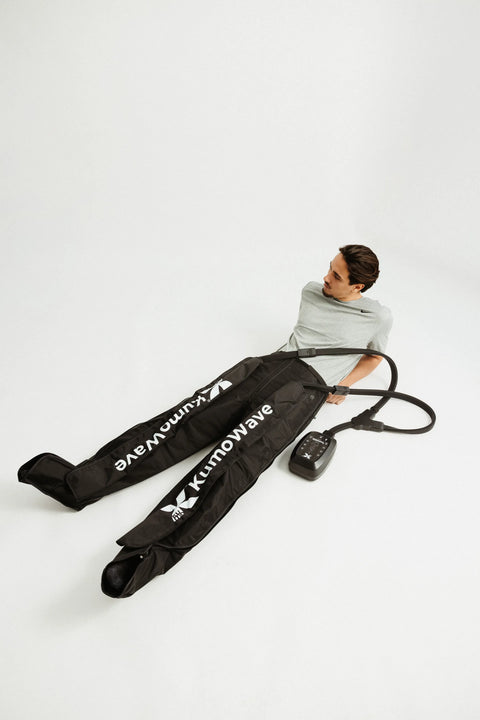
KumoWave Elite – Pressotherapy Pants
Full-coverage trousers. Ideal for lipedema, fluid retention and intensive use.
€799,00 €999,00
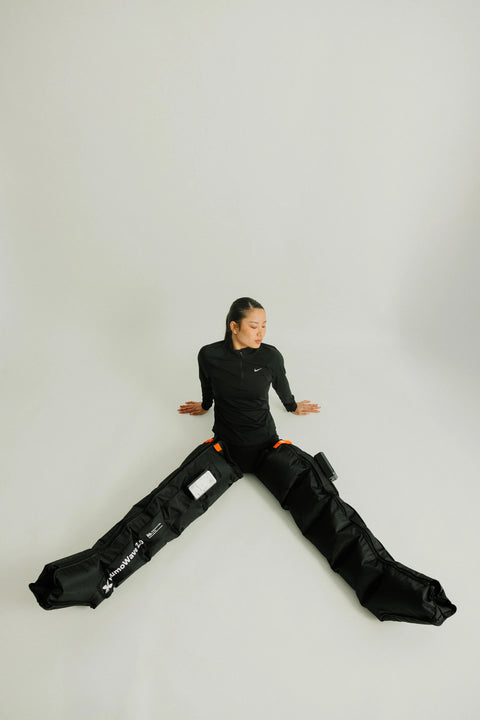
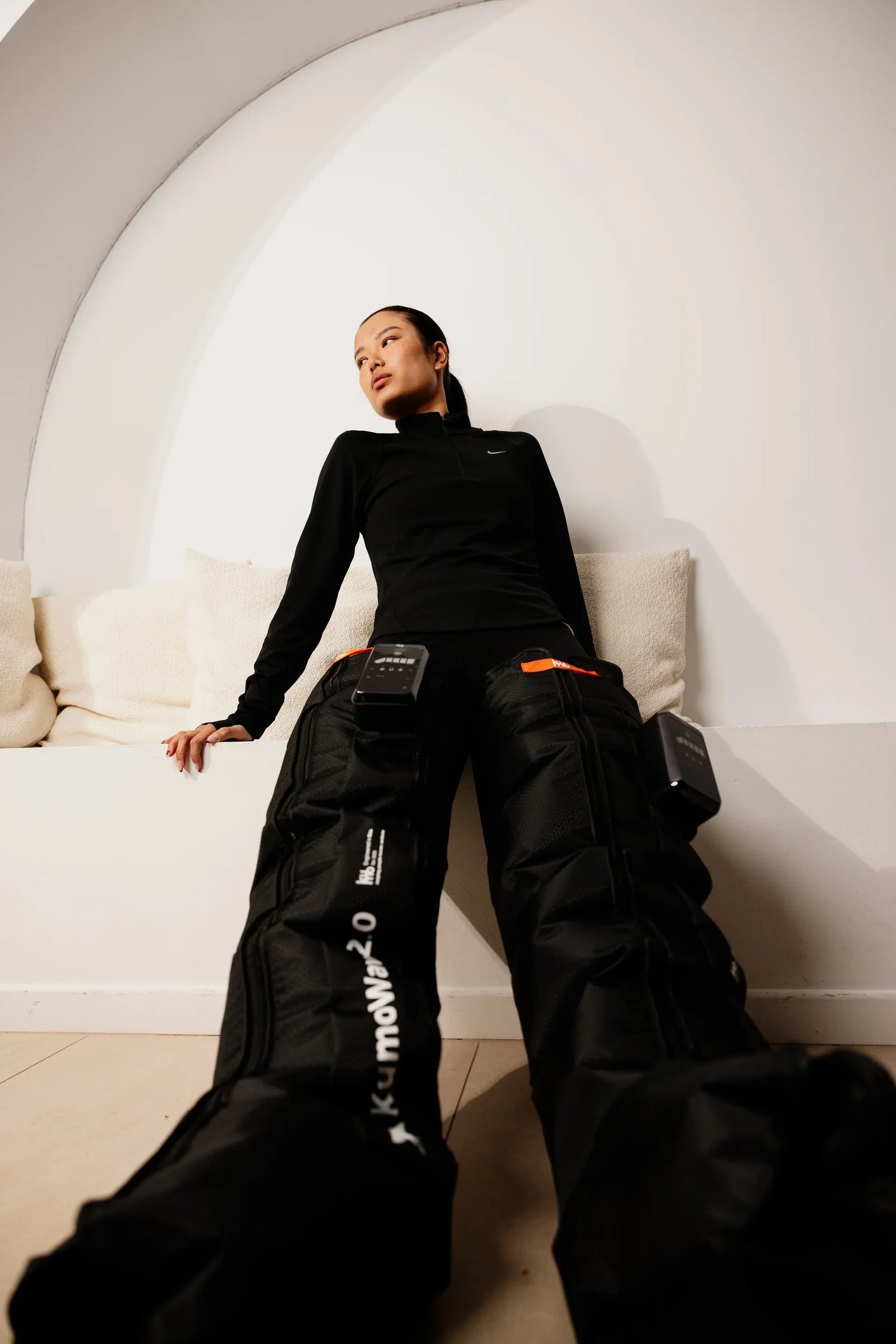
KumoWave 2.0 - Wireless Pressotherapy
Wireless, lightweight boots. Perfect for daily use and recovery.
€499,00 €599,00