
Blue light can indeed affect the skin. In laboratory studies, repeated exposure is associated with increased oxidative stress, inflammation, and changes in the skin barrier; additionally, visible light can promote hyperpigmentation in predisposed skin. in vitro study on blue light skin damage (pubmed.ncbi.nlm.nih.gov)
If the goal is to reverse wrinkles and blemishes with LED, color matters more than intensity: red light and near-infrared are the wavelengths with the best support for repair and collagen, while blue light makes more sense for acne than for anti-aging. Kumo Balance's non-invasive wellness technology fits well into this daily care logic. (pubmed.ncbi.nlm.nih.gov)
Red & infrared light
Recover faster, at home
★★★★★ 4,8/5 · rated by verified customers
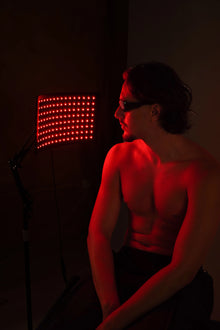
The KumoLux panel supports muscle recovery with full-body red and infrared light.
- 660 nm red + 850 nm infrared light
- Full-body muscle recovery
- Clinically validated biohacking protocols
€399,00€499,00
−10% on your 1st order when you subscribe to the newsletter

What does it really mean to talk about blue light?
Blue light is part of the visible spectrum, and its interest in dermatology comes from two fronts: on one hand, the possibility that it contributes to oxidative damage and barrier alterations; on the other, its role in pigmentation when exposure is repeated. In practice, this doesn't mean that a screen "wrinkles" the skin on its own, but rather that accumulated exposure and individual sensitivity do matter. (pubmed.ncbi.nlm.nih.gov)
What happens when exposure is repeated?
When the skin receives repeated stimuli from visible or blue light, pathways related to inflammation and oxidative stress can be activated, and this affects both texture and tone. In other words, the problem is not a single isolated session, but the daily sum of small aggressions on skin already exposed to sun, pollution, or irritation. This is a practical inference based on laboratory evidence and clinical experience in hyperpigmentation. (pubmed.ncbi.nlm.nih.gov)
Personalized protocol · included with your purchase
Want us to tell you how to use it in your case?
With your purchase, our experts set up your red and infrared light sessions for your sport and goal.
Message us on WhatsAppOur experts reply · no obligation
The useful takeaway is simple: the screen doesn't explain everything, but visible light isn't innocent either; protecting the barrier and blocking light that stains helps any repairing LED work better. (pubmed.ncbi.nlm.nih.gov)
Wrinkles, blemishes, and texture: what light can change
In a randomized clinical trial with 76 patients, phototherapy with 633 and 830 nm LED, applied twice a week for four weeks, produced objective improvements in wrinkles and elasticity, with maximum reductions of 36% in wrinkles and 19% in elasticity compared to baseline. clinical trial of LED rejuvenation on PubMed (pubmed.ncbi.nlm.nih.gov)
More recently, a home-use study combining serum, LED, and massage observed increased skin density and luminosity, as well as wrinkle reduction, with no relevant adverse effects. home study on LED and skin aging (pubmed.ncbi.nlm.nih.gov)
on your first order when you join the newsletter
We send you the code instantly. No spam.
Why blemishes need a different strategy
Blemishes do not behave the same way as wrinkles. The AAD guide on dark spots and visible light reminds us that visible light can darken the skin, especially in people with melasma or post-inflammatory hyperpigmentation, and that tinted sunscreens with iron oxides help block some of that radiation. (aad.org)
When the pigment is deeper, lightening takes longer. Therefore, the realistic goal is not to "erase" overnight, but to reduce contrast, even out tone, and prevent new marks from appearing. Daily photoprotection remains the foundation upon which any LED works best. (aad.org)
In practical terms: visible light can worsen blemishes, red light can help repair, and photoprotection determines how much real progress you see in the mirror. (aad.org)
How LED therapy can help reverse them
Photobiomodulation with red light and near-infrared does not aim to "burn" the lesion or exfoliate the skin. Its goal is more subtle: to support repair processes, promote a better inflammatory response, and stimulate skin that, over time, looks smoother and more even. If you want to delve deeper into this mechanism, the explanation of red light, wrinkles, and collagen helps to understand why this light range is so widely used in anti-aging. (pubmed.ncbi.nlm.nih.gov)
The AAD's dermatological guidance on red light therapy points in the same direction: it appears safe in the short term and is used for signs of aging such as wrinkles and sagging, although long-term effects are still being studied. (aad.org)
Before buying or using a device, it's helpful to break down the problem into three questions: do I want to treat pimples, refine texture, or reduce blemishes? The right color changes expectations and prevents frustration. The AAD guide on lights and lasers for acne explains that blue light can help inflammatory acne, but it is not the best tool for comedones, cysts, or nodules. (aad.org)
Which LED is suitable for your goal
| Goal | Color or approach | What it can provide | What you shouldn't expect |
|---|---|---|---|
| Fine wrinkles and loss of firmness | Red light and near-infrared | Trials have shown improvements in wrinkles, elasticity, density, and texture when used consistently. | Does not instantly erase deep folds on its own. (pubmed.ncbi.nlm.nih.gov) |
| Blemishes and uneven tone | Protection against visible light; support with red LED | Visible light can darken the skin, so SPF 30 or higher and filters with iron oxides are important. | Blue light is not the first choice for lightening hyperpigmentation. (aad.org) |
| Inflammatory acne | Blue light | Can help reduce inflammatory pimples and is used in medical and home protocols. | Does not effectively treat comedones, cysts, or nodules. (aad.org) |
Practical routine for home
If you prefer a more guided structure, the advanced LED light therapy at home serves as a starting point to create a habit that is easy to repeat without complicating your routine.
- Start in the morning: use a broad-spectrum sunscreen with SPF 30 or higher; if you tend to hyperpigmentation, choose a tinted formula with iron oxides. (aad.org)
- Reserve LED for the correct objective: blue if your priority is inflammatory pimples; red or near-infrared if you are looking for texture, fine wrinkles, and firmness. (aad.org)
- Use the device consistently: studies do not show changes in a single session, but after several weeks of repeated use. (pubmed.ncbi.nlm.nih.gov)
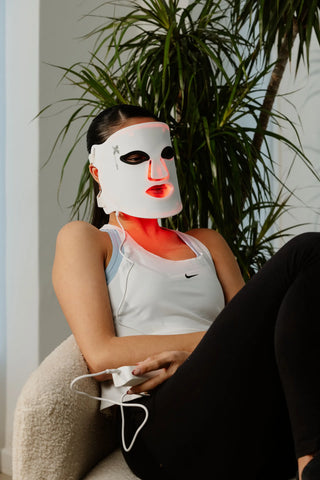
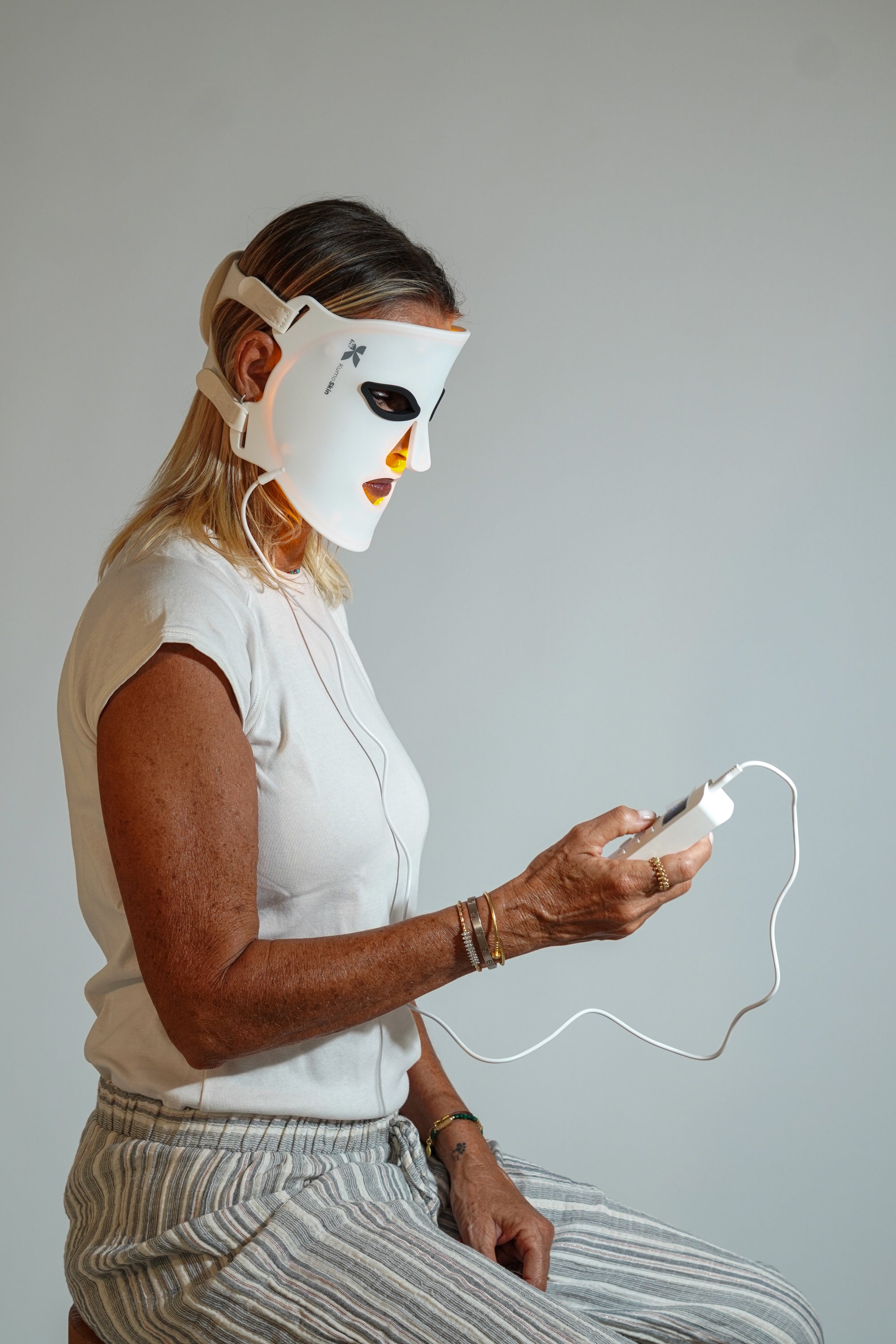
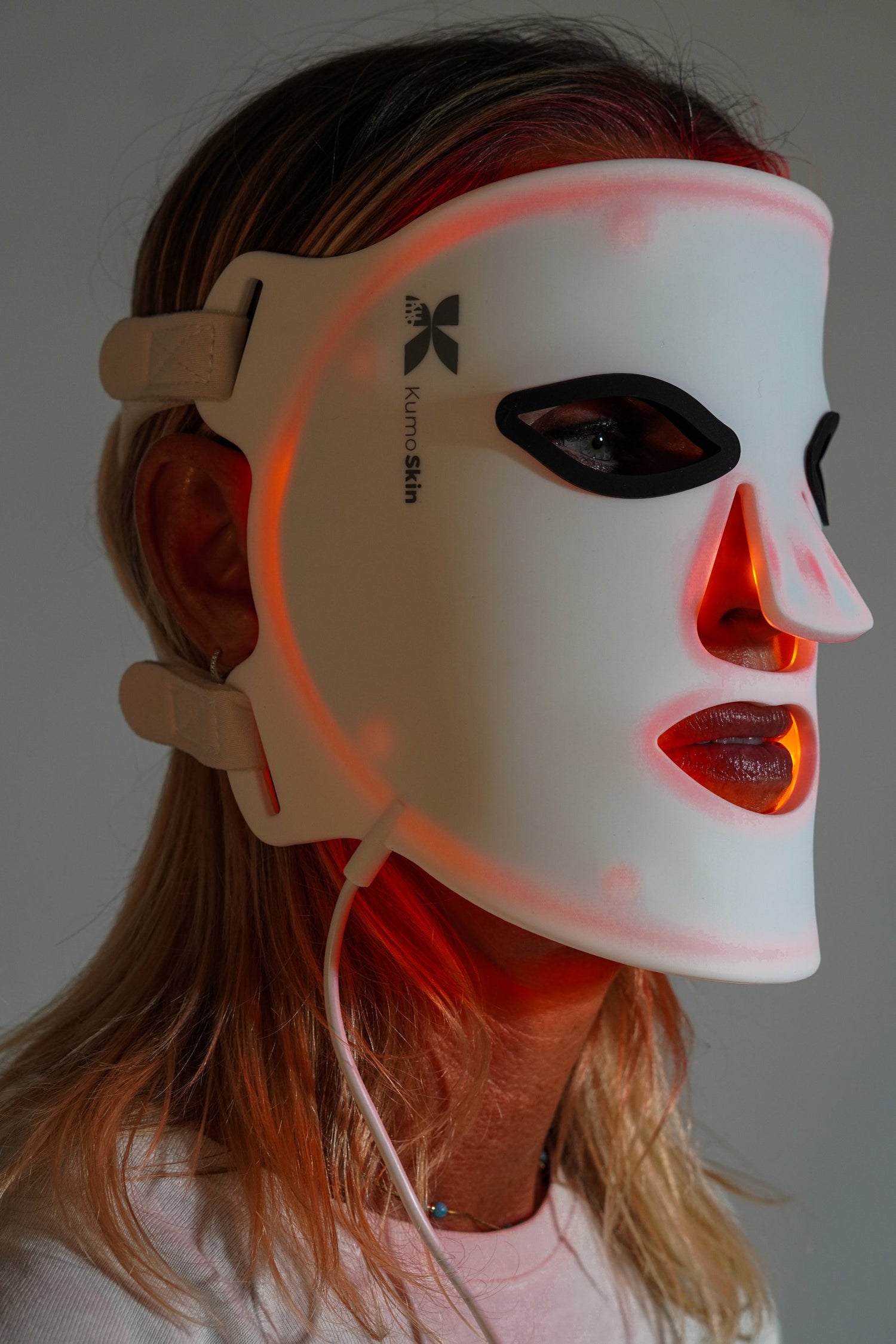
- Use a comfortable format: a facial option like the KumoSkin Mask LED facial mask can help you maintain the routine without making it a burden.
The idea is not to do more things, but to do the few things that do move the needle better: protection, consistency, and a wavelength aligned with your real goal. (aad.org)
When to see results and what not to promise yourself
It is reasonable to talk about a 4 to 12-week cycle. In the LED rejuvenation trial, improvements were measured after four weeks of treatment, with subsequent follow-up, and in the home study, benefits were observed over 12 weeks. This means that consistency and total dose matter more than haste. (pubmed.ncbi.nlm.nih.gov)
It's also important to adjust expectations: LED can soften fine lines, improve texture, and help with tone, but it does not replace medical treatments for deep spots, very pronounced melasma, or advanced structural wrinkles. In such cases, the smartest strategy is to combine prevention, LED, and, if necessary, a more comprehensive dermatological evaluation. (aad.org)
Frequently asked questions
Does blue light from screens age the skin and cause wrinkles and blemishes?
The strongest evidence does not say that a screen, on its own, ages the skin in the same way as the sun; what it does show is that repeated blue light and visible light can activate oxidative stress, inflammation, and pigmentation under controlled conditions. Therefore, if you have blemishes or melasma, it makes sense to think about daily protection and not just LED. In other words, the screen doesn't explain everything, but it shouldn't be ignored if your skin is sensitive or tends to darken. (pubmed.ncbi.nlm.nih.gov)
How does LED light therapy work to reverse wrinkles and blemishes on the skin?
LED therapy works through photobiomodulation: the energy of red and near-infrared light helps modulate cellular processes related to repair, collagen, and inflammatory response. Clinical trials have shown improvements in wrinkles, elasticity, and texture, and home devices have also observed increases in density and luminosity with consistent use. The key is repetition, not a single miraculous session. (pubmed.ncbi.nlm.nih.gov)
Is blue LED light safe for treating acne and reducing blemishes without damaging the skin?
For inflammatory acne, yes: blue light can be useful and, when used correctly, is considered a safe short-term option. But for blemishes, it is not the first choice, because visible light can promote hyperpigmentation in predisposed skin. If your goal is dark marks, the basis should be photoprotection with high SPF and, if necessary, filters with iron oxides. (aad.org)
How long does it take to see improvements in wrinkles and blemishes with LED masks?
It's normal to think in weeks, not days. In the LED rejuvenation trial, changes were evaluated after four weeks of treatment, with subsequent follow-up, and in the home study, benefits were seen over 12 weeks. This means that consistency and total dose matter more than haste. If you are looking for visible results, give it at least a cycle of several weeks before judging the method. (pubmed.ncbi.nlm.nih.gov)
Which LED light color is best for reducing blemishes and improving skin texture?
For texture, fine wrinkles, and firmness, red and near-infrared light have the best clinical backing. For blemishes, the starting point is still to protect against visible light with adequate photoprotection, ideally tinted with iron oxides if there is a tendency to hyperpigment. Blue light is best reserved for inflammatory acne, not for lightening blemishes. (aad.org)
What now?
If you want to put it into practice, combine daily photoprotection, well-chosen LED sessions, and realistic consistency. The combined LED rejuvenation routine helps you organize the process, and the Kumo Balance overview shows you how to integrate facial phototherapy into a broader care ritual. (aad.org)

Red & infrared light
KumoLux Panel – Red and Infrared LED Panel
★★★★★ 4,8/5 · rated by verified customers
- 660 nm red + 850 nm infrared light
- Full-body muscle recovery
- Clinically validated biohacking protocols
€399,00€499,00· pay in installments with seQura or Klarna