The price of an LED face mask varies widely depending on the range. In 2025, the most prominent editorial references range from about $249 to $599 or $650, and Allure notes that many at-home devices start around $150. (allure.com)
If your goal is to understand it as part of a recovery and care routine, the logic is the same as in Kumo Balance's wellness proposal: non-invasive, comfortable tools designed for constant use. (kumobalance.com)
Red & infrared light
Recover faster, at home
★★★★★ 4,8/5 · rated by verified customers
The KumoLux panel supports muscle recovery with full-body red and infrared light.
- 660 nm red + 850 nm infrared light
- Full-body muscle recovery
- Clinically validated biohacking protocols
€399,00€499,00
−10% on your 1st order when you subscribe to the newsletter

Why the price varies so much
Before comparing price tags, it's worth understanding what drives the price. LED therapy uses different wavelengths: blue acts more superficially and is associated with acne, red penetrates deeper and is linked to inflammation and collagen, yellow reaches deeper, and near-infrared penetrates even further. Harvard Health describes it as photobiomodulation with red or near-infrared light, while Cleveland Clinic emphasizes that home devices are usually less powerful than professional ones. (my.clevelandclinic.org)
Therefore, in addition to the design, check if the device combines colors, requires eye protection, and is designed for a specific need. The AAD recommends checking the device's indications, using eye protection when required, and having realistic expectations. (aad.org)
Personalized protocol · included with your purchase
Want us to tell you how to use it in your case?
With your purchase, our experts set up your red and infrared light sessions for your sport and goal.
Message us on WhatsAppOur experts reply · no obligation
If you want to delve deeper into the technical aspect, the colors of the LED face mask and their uses will help you understand why not all lights do the same thing. (my.clevelandclinic.org)
What to expect from each price range
With these ingredients on the table, a useful reading of the market would be this: it's not an official table, but a practical way to interpret what each price segment usually offers. (allure.com)
Indicative table by ranges
| Range | Indicative Price Range | What it usually includes | What you can expect |
|---|---|---|---|
| Entry-level | ≈ 150-250 USD | Usually includes fewer programs, a simpler design, and few extra features. (allure.com) | Can be useful for starting and building a habit, but improvements are usually subtle. (my.clevelandclinic.org) |
| Mid-range | ≈ 250-400 USD | Flexible silicone begins to appear, better fit, light combinations, and more comfortable sessions. (allure.com) | Often the area with the best balance between comfort, features, and cost. (allure.com) |
| High-end / Premium | ≈ 450-650 USD | Usually adds more LEDs, more modes, and, in some cases, extras like vibration or cooling. (allure.com) | This is the most complete range in terms of comfort and versatility, although it does not guarantee a radical transformation at home. (my.clevelandclinic.org) |
Entry-level range: for testing consistency
The entry-level range makes sense when you want to try the habit without making a large investment, but assuming that the fit, coverage, and light variety may be more limited. If you are interested in organizing your routine before buying, benefits and correct use of the LED face mask helps you see the device as part of a broader plan. (my.clevelandclinic.org)
on your first order when you join the newsletter
We send you the code instantly. No spam.
Mid-range: the best balance for most
The mid-range is usually the most interesting for those who want something serious but still reasonable: this is where better materials, more stability on the face, and a more comfortable experience begin to appear. Allure's rankings feature devices like the Shark CryoGlow at $349 and the HigherDose at $349, while Currentbody places its Eye Perfector at $249. (allure.com)
High-end: more comfort, more extras, and higher expectations
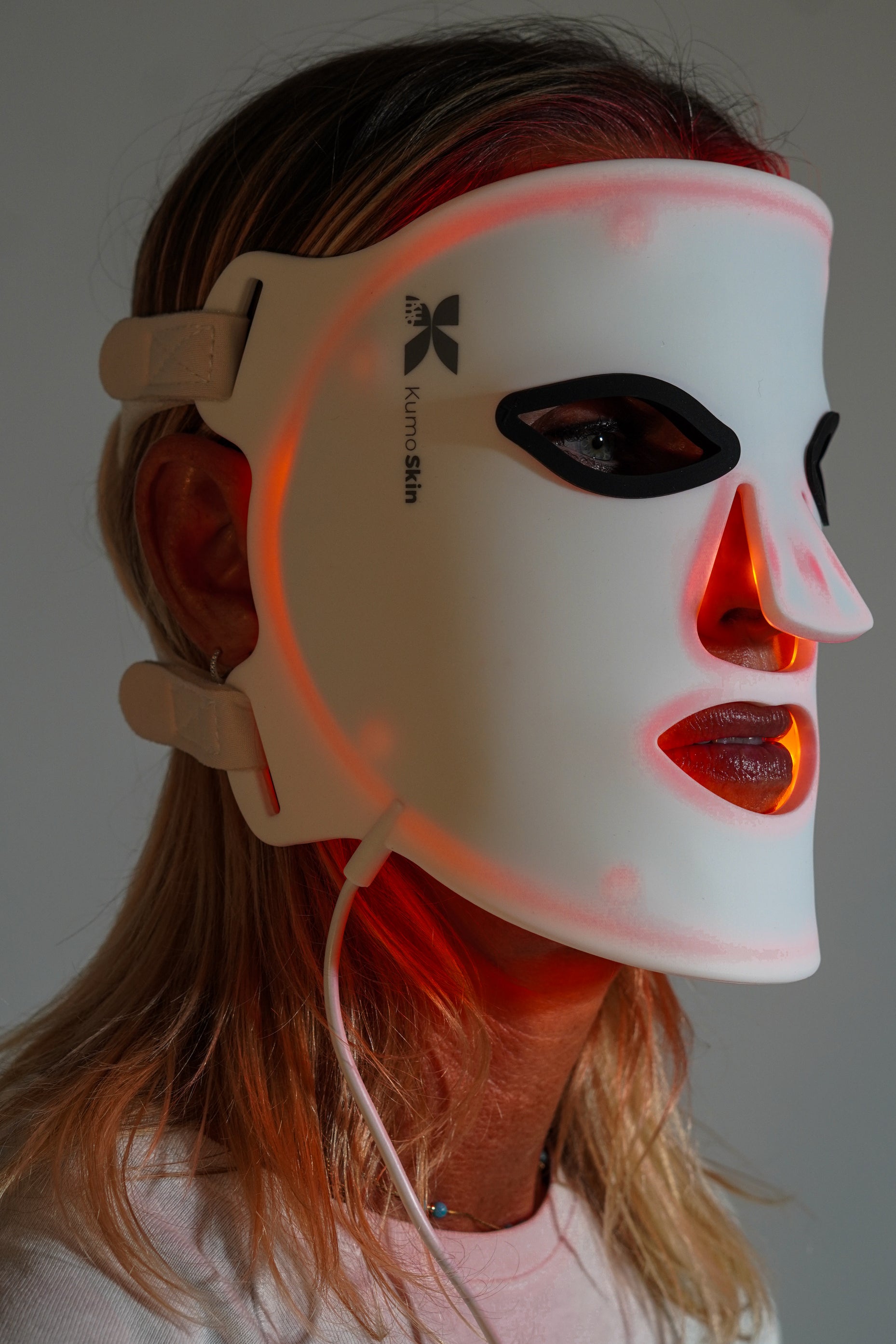
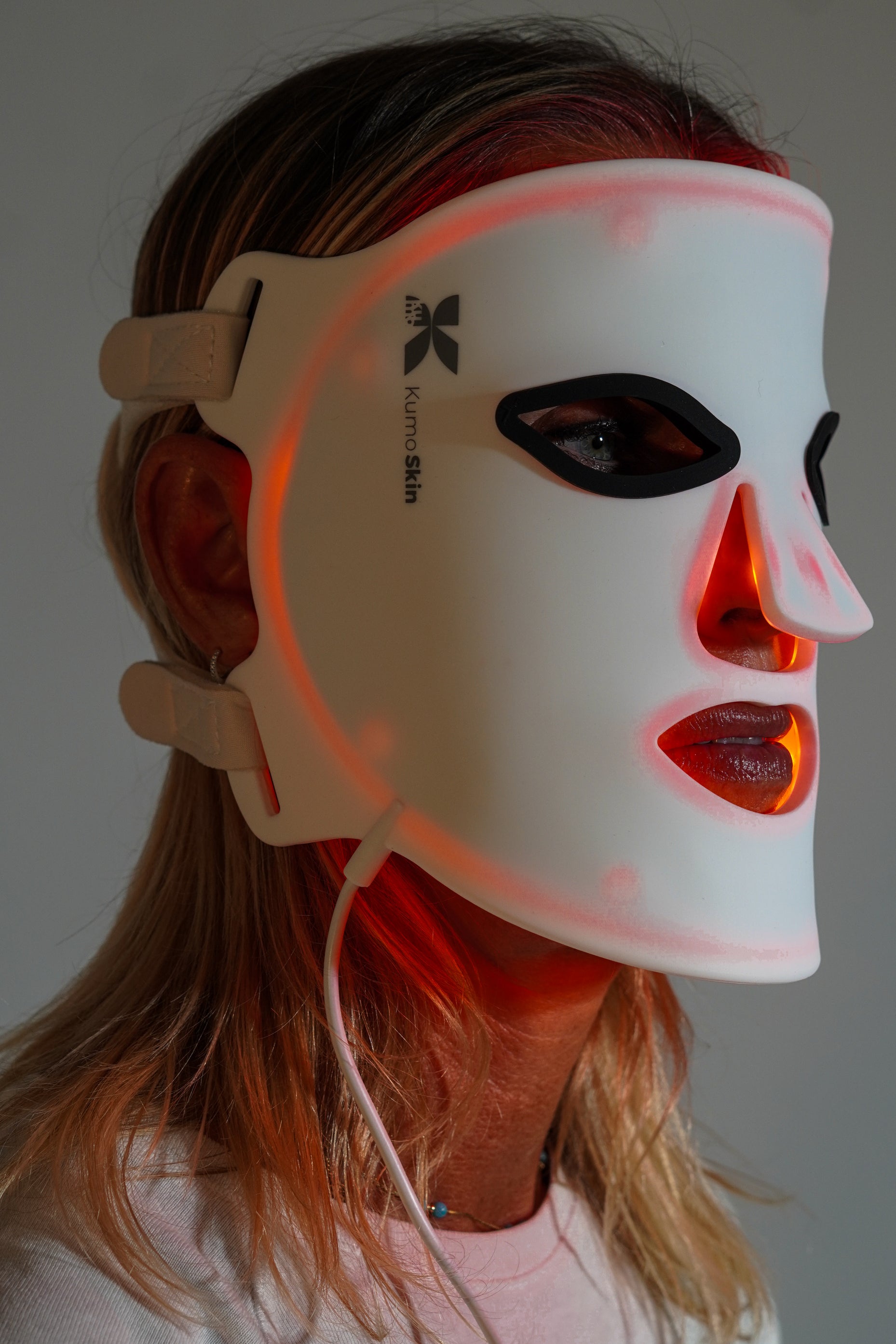
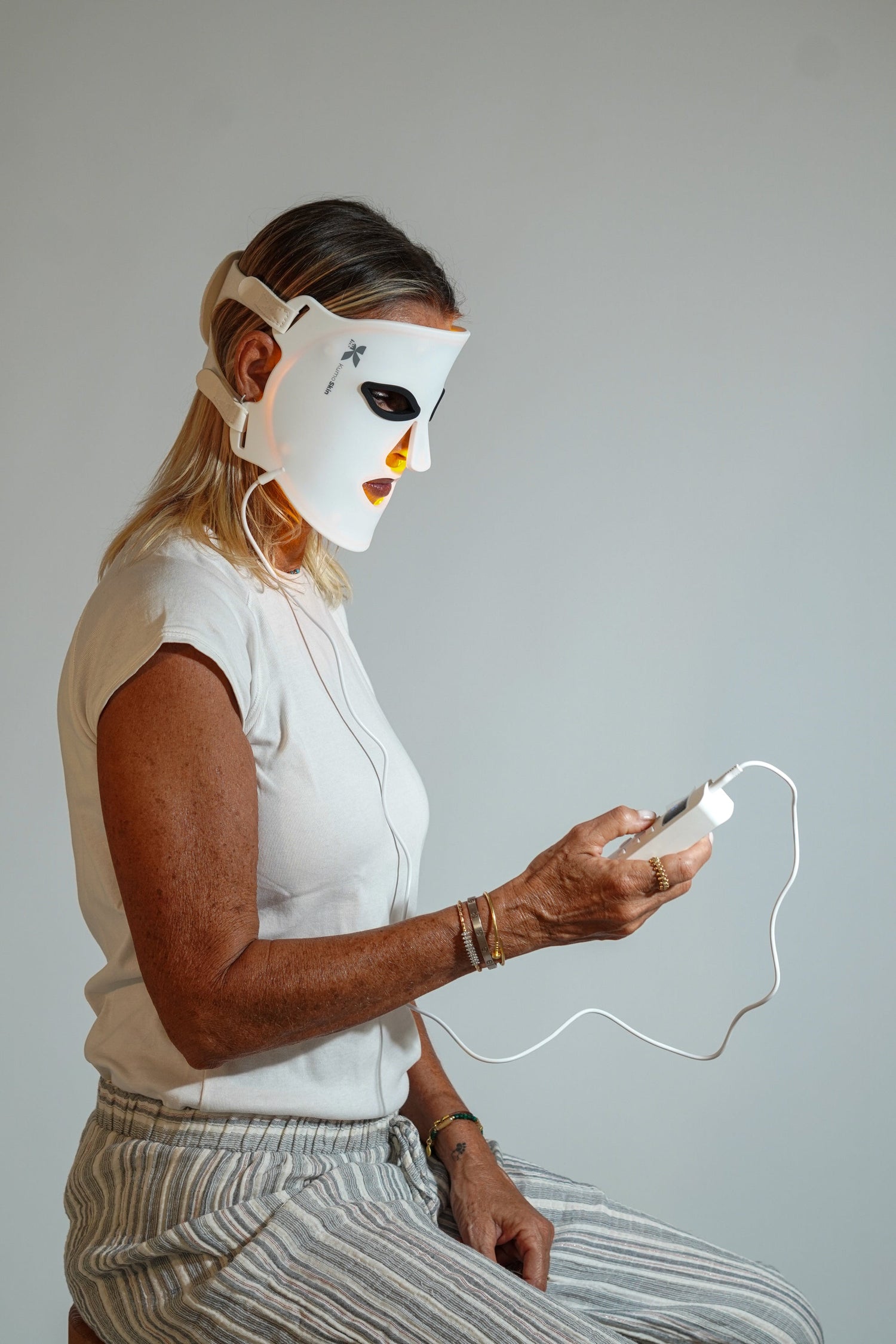
The high-end range adds extras and more refined finishes, but also higher expectations. A close example is KumoSkin Mask, whose specifications mention 250 independent LEDs, four wavelengths, flexible medical silicone, a timer, and adjustable intensity, with a special offer price of €299 and a regular price of €349. The brand adds that it can show visible results in 6-8 weeks if used consistently; if you want to better understand these timelines, results with the LED face mask and their timelines offers a practical reference. (kumobalance.com)
At home, the realistic goal is to build consistency and improve gradually, not to replicate a clinical session. Cleveland Clinic notes that home devices are typically less powerful, and the AAD reminds us to adjust expectations and choose equipment specific to the problem you want to treat. (my.clevelandclinic.org)
What factors drive up the price
The factors that most increase the cost of a mask are usually LED density, variety of wavelengths, ergonomics, and extras. Allure features models with red, blue, and infrared light, 3- to 15-minute sessions, and additions like cooling or vibration; at Cleveland Clinic and AAD, eye safety and "FDA cleared" labeling remain key when purchasing. (allure.com)
- More LEDs and better distribution help cover the face more evenly, as seen in devices with 250 or more diodes. (kumobalance.com)
- Multiple wavelengths allow for adaptation to different needs, from acne to signs of aging. (my.clevelandclinic.org)
- Medical silicone and an anatomical fit improve comfort, making consistency easier. (kumobalance.com)
- Timers, pre-programmed modes, and automatic shut-off make the routine easier to maintain. (kumobalance.com)
What results you can realistically expect
If you're wondering what you can really expect, the short answer is this: gradual improvements in texture, redness, slight firmness, or breakouts, provided you stick to the routine. Cleveland Clinic indicates that at-home treatments usually require repeated use and that results are often subtle; the AAD adds that the long-term impact is still unknown. (my.clevelandclinic.org)
In other words, LED light can help, but it doesn't replace medical treatment when the problem is more serious or when you need a more comprehensive strategy. Harvard Health explains that these lights emit red or near-infrared light towards the skin, and Cleveland Clinic reminds us that frequency and consistency matter as much as the device. (health.harvard.edu)
Safety: what to check before buying
LED light does not use UV and is generally considered safe in the short term, but not everyone is a candidate. Cleveland Clinic and the AAD recommend eye protection, following instructions, and consulting if you take photosensitizing medication, have eye problems, or a history of skin cancer; additionally, those with darker skin tones may be more sensitive to visible light and experience more prolonged hyperpigmentation. (my.clevelandclinic.org)
- Use eye protection if the manufacturer requires it and do not substitute it with sunglasses. (aad.org)
- Avoid improvising if you take photosensitizing medication or have a history of eye problems, skin cancer, or pending dermatological consultations. (aad.org)
- If your skin stains easily or reacts strongly to visible light, seek professional guidance before purchasing. (aad.org)
Frequently Asked Questions
How much does a really good LED face mask cost?
If you're looking for an honest benchmark, think mid-range rather than the lowest price. In 2025, Allure placed many home options around $150 as a starting point and showed reference models between $249 and $650. That doesn't mean the most expensive is always the best for you, but rather that the price usually reflects more LEDs, better fit, more modes, and sometimes comfort extras. (allure.com)
What is the difference between a mid-range and a premium range?
The main difference lies in the user experience. Mid-range models typically feature better materials, more stability on the face, and already quite comprehensive light combinations. In the premium range, such as the $455, $599, or $650 devices highlighted by Allure, more features, more modes, and, in some cases, elements like vibration or cooling are added. Even so, a premium model doesn't guarantee spectacular results; it primarily guarantees a more complete experience. (allure.com)
How long does it take to see results with an LED face mask?
The key is consistency. Cleveland Clinic explains that home devices usually require repeated use and that changes are typically subtle, not immediate. On the KumoSkin Mask product page, the brand mentions visible results in 6-8 weeks if the routine is maintained. This aligns with the general idea that LED light works better as a cumulative process than as an express solution. (my.clevelandclinic.org)
Is an LED face mask safe for sensitive or blemished skin?
In many cases, yes, but with caveats. Cleveland Clinic indicates that LED therapy is relatively safe and can be used on different skin types, although it recommends caution with a history of eye problems, skin cancer, or photosensitizing medication. The AAD adds that people with darker skin tones may be more sensitive to visible light and develop more intense or prolonged hyperpigmentation. If you have blemishes or highly reactive skin, it's worth consulting before purchasing. (my.clevelandclinic.org)
What should I look for before paying more for an LED face mask?
The most important thing is that the price is justified by usefulness, not marketing. Look for a clear indication of the objective, check if the device is "FDA cleared" or equivalent, review how many LEDs it has, what wavelengths it uses, and if it includes eye protection when appropriate. Cleveland Clinic and the AAD insist on following instructions and having realistic expectations; this applies to both an entry-level and a premium purchase. (my.clevelandclinic.org)
What now?
If you now have a clearer idea of which level suits you, take the next step with a well-planned routine: how to use the LED face mask step-by-step will help you put theory into practice without improvising. (my.clevelandclinic.org)

Red & infrared light
KumoLux Panel – Red and Infrared LED Panel
★★★★★ 4,8/5 · rated by verified customers
- 660 nm red + 850 nm infrared light
- Full-body muscle recovery
- Clinically validated biohacking protocols
€399,00€499,00· pay in installments with seQura or Klarna