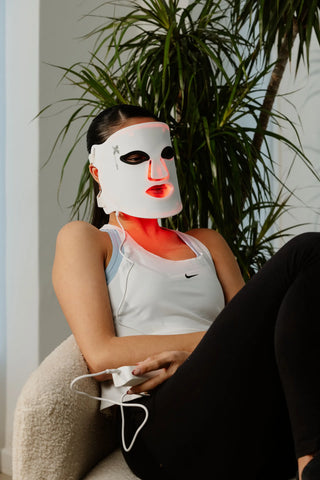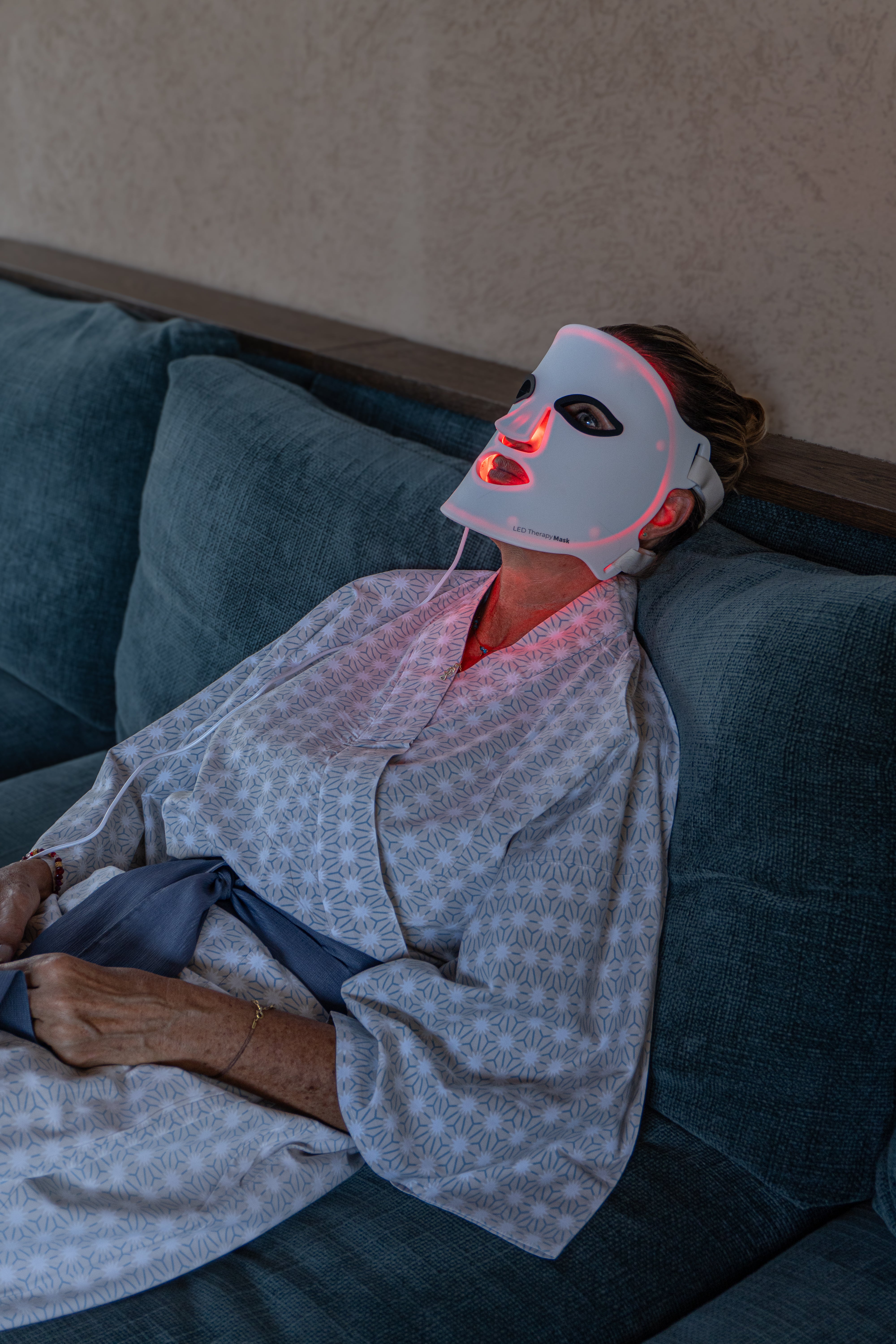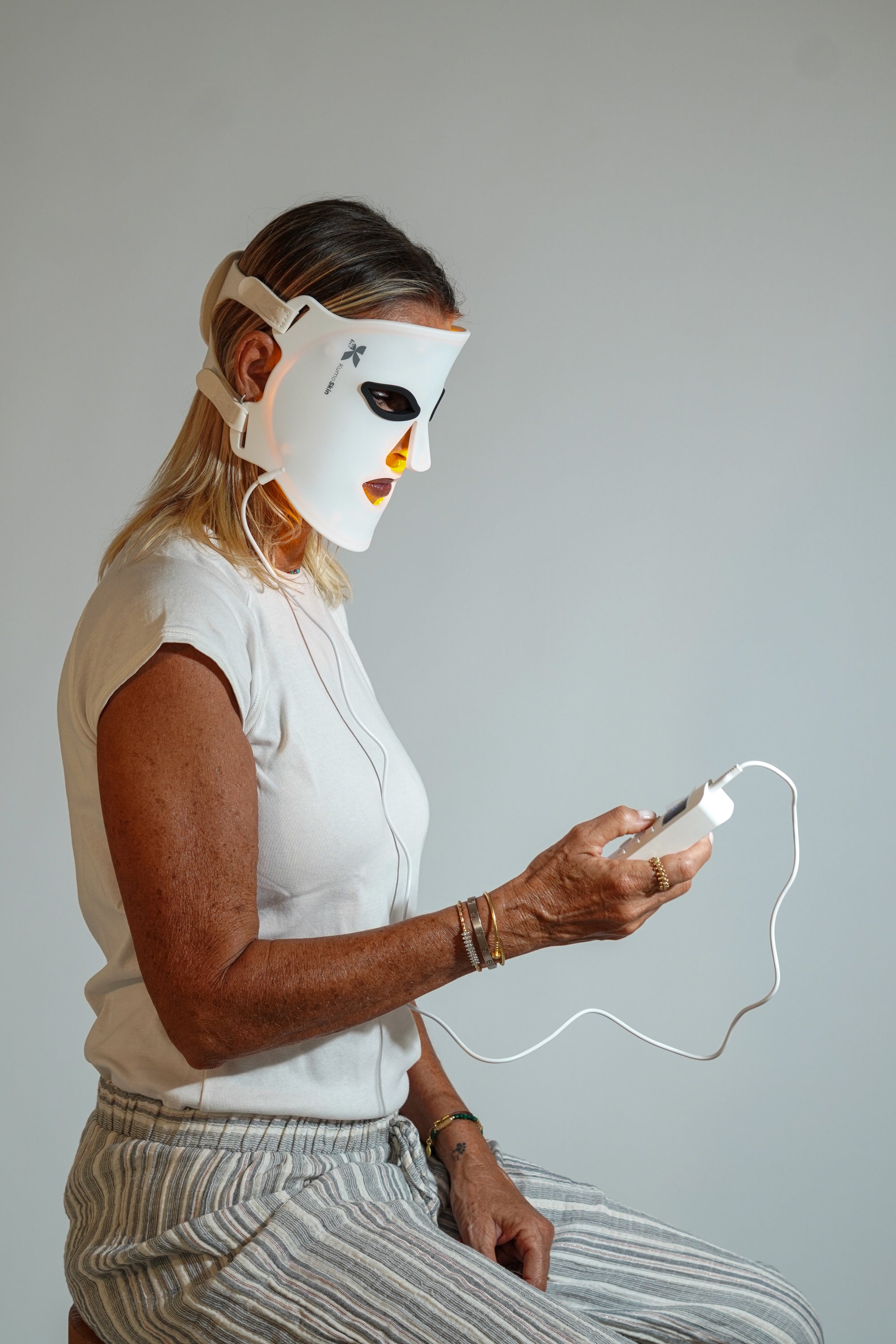

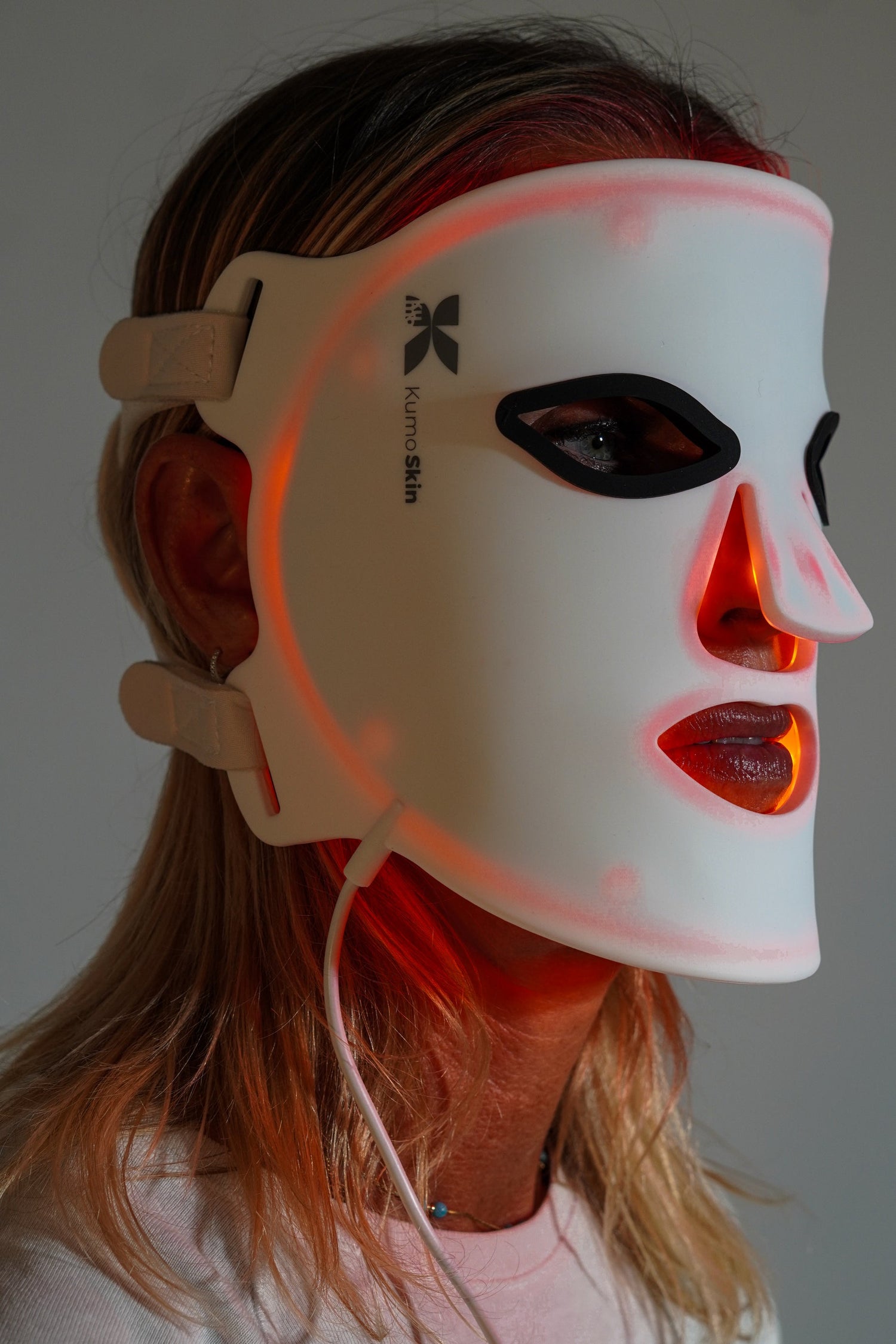
Each facial LED color serves a distinct function. In practice, what matters is the wavelength: blue for acne, red for wrinkles and repair, and near-infrared for deeper penetration; green or yellow tones are used more for support and with less standardized evidence. (pmc.ncbi.nlm.nih.gov)
If you're just starting, it's helpful to first understand what a facial LED mask is and how it works, because the answer doesn't just depend on visible color, but also on energy, dosage, and consistency. (pmc.ncbi.nlm.nih.gov)
Red & infrared light
Recover faster, at home
★★★★★ 4,8/5 · rated by verified customers
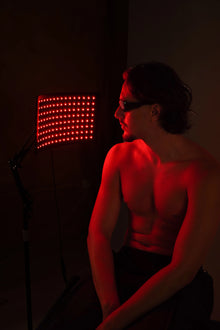
The KumoLux panel supports muscle recovery with full-body red and infrared light.
- 660 nm red + 850 nm infrared light
- Full-body muscle recovery
- Clinically validated biohacking protocols
€399,00€499,00
−10% on your 1st order when you subscribe to the newsletter

In this approach, LED light is not interpreted as "stronger" or "weaker," but as a precise tool for a specific goal within a non-invasive care and recovery routine, similar to the technological vision of recovery proposed by the at-home wellness technology website. (pmc.ncbi.nlm.nih.gov)
What Wavelength Means in an LED Mask
Wavelength is measured in nanometers (nm) and defines which part of the spectrum the device emits. For the same intensity, shorter wavelengths tend to stay closer to the surface, while longer ones penetrate the skin better. A review on visible light in dermatology explains that blue light penetrates less than red light, and that red light can pass through a much greater portion of skin thickness. (pmc.ncbi.nlm.nih.gov)
Personalized protocol · included with your purchase
Want us to tell you how to use it in your case?
With your purchase, our experts set up your red and infrared light sessions for your sport and goal.
Message us on WhatsAppOur experts reply · no obligation
Furthermore, photobiomodulation depends on several parameters simultaneously: wavelength, energy density, session duration, and frequency of use. This is why two "red" masks can behave differently if the nanometers, power, or exposure time change. (pmc.ncbi.nlm.nih.gov)
Wavelength defines depth; dosage and consistency define the result. (pmc.ncbi.nlm.nih.gov)
Quick Table: Colors, Nanometers, and Common Uses
Practical Guide for Orientation
| Color | Typical Wavelength | Approximate Penetration | Most Common Use | What You Need to Know |
|---|---|---|---|---|
| Blue | 415-470 nm | Very superficial, mainly epidermis | Inflammatory acne and active pimples | Works best with consistency and usually shows results after several weeks. (pubmed.ncbi.nlm.nih.gov) |
| Red | 630-660 nm | Epidermis and superficial dermis | Fine wrinkles, texture, radiance, and collagen support | This is the wavelength with the best practical use in facial rejuvenation. (pubmed.ncbi.nlm.nih.gov) |
| Near-infrared | 810-850 nm | Deeper than visible light | Photobiomodulation and support for tissue recovery | Often combined with red when a deeper action is desired. (pmc.ncbi.nlm.nih.gov) |
| Green | 520-530 nm | Superficial | Uneven tone and pigmentation support | Can be useful as a complement, but its clinical standardization is lower. (pmc.ncbi.nlm.nih.gov) |
| Yellow or amber | 585-592 nm | Superficial to medium | Redness support and mixed protocols | An interesting option, though less established than red and blue. (pmc.ncbi.nlm.nih.gov) |
If you want a more visual reference for nm ranges, this other guide on colors and wavelengths in facial LED masks complements this summary well.
on your first order when you join the newsletter
We send you the code instantly. No spam.
What Each Facial LED Light Color Does
Blue Light: The Color Most Associated with Acne
Blue light, around 415-470 nm, is primarily used for inflammatory acne. Clinical evidence shows improvement in lesions in studies lasting several weeks, and the AAD notes that visible light treats papules or pimples, but is not effective for closed comedones, blackheads, cysts, or nodules. (pubmed.ncbi.nlm.nih.gov)
The most cited mechanism is its action on porphyrins produced by Cutibacterium acnes, which promotes an antimicrobial and anti-inflammatory response. In a 12-week randomized study, a combined 445 nm and 630 nm device improved inflammatory lesions; in another 415 nm pilot study, improvement was observed between weeks 4 and 8. (pubmed.ncbi.nlm.nih.gov)
If you want to delve deeper into the limits and nuances of this wavelength, the guide on blue light, spots, and aging may be useful.
Red Light: Fine Wrinkles, Texture, and Radiance
Red light typically operates in ranges near 630-660 nm and is most linked to skin rejuvenation. The AAD describes it as a non-invasive therapy used for acne and signs of aging; some studies show subtle to noticeable improvements in fine wrinkles, texture, spots, and sagging when used repeatedly. (aad.org)
A 2023 study with a red LED mask applied twice a week for three months observed progressive improvements in skin quality and wrinkle depth, with effects maintained up to one month after discontinuing use. This does not mean the change is instantaneous: in photobiomodulation, consistency matters more than the initial sensation of heat or brightness. (pubmed.ncbi.nlm.nih.gov)
If you're interested in the practical difference between visible red and near-infrared, the most useful explanation is in 660 nm and 850 nm in LED therapy.
Near-infrared Light: The Deepest Penetration
Near-infrared, often around 810-850 nm, is used when greater penetration and a deeper photobiomodulation effect are sought. Reviews on light and skin tissues indicate that longer wavelengths penetrate the skin better, and that the red/NIR window is the most studied for repair processes and cellular modulation. (pmc.ncbi.nlm.nih.gov)
This is why it is often combined with red light in masks and panels: it doesn't compete with red, but complements it when the goal is to support tissue recovery and overall skin quality. For a more complete view of this combined logic, you can read how to combine LED in a rejuvenation routine. (pmc.ncbi.nlm.nih.gov)
Green Light: Uneven Tone and Pigmentation
Green light, typically around 520-530 nm, is used for objectives related to skin tone and pigmentation, although its clinical support is less solid than that of red or blue. A recent review of different wavelengths indicates therapeutic potential for the green range, but in practice it remains a less standardized field and more dependent on the protocol. (pmc.ncbi.nlm.nih.gov)
In other words, it can make sense as support within a multi-spectrum mask, but you shouldn't expect the same level of evidence from it as from blue for acne or red for rejuvenation. This cautious interpretation better aligns with guides that clearly separate well-established uses from those still under study. (pmc.ncbi.nlm.nih.gov)
Yellow or Amber Light: Visual Calm and Mixed Protocols
Yellow or amber light is usually around 585-592 nm and appears more in supportive protocols than as a sole protagonist. Recent literature describes its potential to modulate oxidative stress, inflammation, and collagen degradation, but its clinical use remains less standardized than that of red and blue. (pmc.ncbi.nlm.nih.gov)
Therefore, it can be interesting when the goal is to soothe redness or add a more global effect in multi-color devices, but always with realistic expectations. If a device makes too many promises for a single color, it's advisable to prioritize the specific wavelength rather than the chromatic marketing. (pmc.ncbi.nlm.nih.gov)
How to Choose the Color Based on Your Goal
The most useful way to choose is not to start with your favorite color, but with your main concern. For skin with inflammatory acne, blue or blue + red usually makes more sense; for fine wrinkles, texture, and dull tone, red or red + near-infrared; and for more general routines, mixed modes can offer versatility, provided the device clearly indicates its nm. (pubmed.ncbi.nlm.nih.gov)
- If your goal is acne, prioritize blue or blue + red and use the device consistently for several weeks. (aad.org)
- If your goal is rejuvenation, fine wrinkles, and texture, red is the wavelength with the most practical support. (aad.org)
- If you want a deeper effect or a more comprehensive routine, look for the combination of red and near-infrared. (pmc.ncbi.nlm.nih.gov)
- If the device promises spectacular results with green, yellow, or amber, carefully read the manufacturer's specific instructions and do not extrapolate benefits from other colors. (pmc.ncbi.nlm.nih.gov)
To apply these options based on your skin type, you can also review the benefits of LED facial masks for each skin type.
How to Use an LED Facial Mask Without Making the Most Common Mistakes
The best session is the one you can repeat. The AAD explains that home devices usually require regular use, that the time varies depending on the model, and that results are not the same for everyone. It also notes that some devices are used several times a week or even daily according to their instructions. (aad.org)
For acne devices, the AAD indicates that some home devices are used 30 to 60 minutes, twice a day, for 4 to 5 weeks; for rejuvenation, studies typically involve several weeks or months of continuous use. (aad.org)
- Follow the manufacturer's guidelines and do not improvise more time "just in case." Efficacy depends on the dose, not on forcing the session. (pmc.ncbi.nlm.nih.gov)
- Wear eye protection if the device recommends it, and do not substitute simple sunglasses for the indicated eyewear. (aad.org)
- If you have sun-sensitive skin or take photosensitizing medication, consult before starting, as visible light may not be advisable in some cases. (aad.org)
- For darker skin tones, it is advisable to be especially cautious with intense visible light due to the risk of hyperpigmentation. (aad.org)
Frequently Asked Questions
Which facial LED light color helps reduce wrinkles and skin sagging?
Red light is the most used option for fine wrinkles, texture, and a certain degree of mild sagging, especially when the device includes near-infrared. The AAD describes it as a therapy that can yield subtle to noticeable results with repeated use, and a 2023 study with two weekly sessions for three months observed progressive improvements in skin quality and wrinkles. It does not replace medical treatment if sagging is pronounced, but it can be a good complement. (aad.org)
What are the benefits of blue LED light for acne on the skin, and how long does it take to see results?
Blue light is mainly used for inflammatory acne because it acts on the porphyrins of involved bacteria and helps reduce active pimples. In clinical studies, improvement usually begins to be seen after several weeks of consistent use: a pilot found changes between weeks 4 and 8, and a 12-week trial showed additional improvement with a combined blue + red device. At home, consistency is key; if you're looking for immediate results in 2 or 3 days, this is not the appropriate type of therapy. (pubmed.ncbi.nlm.nih.gov)
How does the wavelength of LED light affect penetration and which skin layers does each color reach?
The general rule is simple: the shorter the wavelength, the more superficial the action tends to be. A review on visible light in skin indicates that blue light penetrates less than red light, while red light can reach a much larger portion of skin thickness. Photobiomodulation reviews add that the red/near-infrared window is the most used when aiming to reach the dermis and deeper tissues, with a response that depends on energy, duration, and frequency. (pmc.ncbi.nlm.nih.gov)
What precautions or contraindications are there when using a facial LED mask at home?
The main precautions are three: protect your eyes if the device requires it, avoid unsupervised use if you take photosensitizing drugs or have diseases that increase light sensitivity, such as lupus, and be cautious if your skin tends to hyperpigment easily. The AAD also reminds that home red light is not suitable for everyone and that a doctor can help you decide if it is right for you. If you notice persistent irritation, stop use and review the regimen. (aad.org)
How long do the effects of facial LED therapy last depending on the light color and frequency of use?
There is no single duration, as it depends on the color, the goal, and whether you continue with maintenance sessions. In the 2023 study on red light, some improvements were maintained up to one month after stopping; for acne, the AAD emphasizes that visible light works with repeated use and that the response varies among individuals. In other words, results usually accumulate and then are better maintained if frequency is consistent. (pubmed.ncbi.nlm.nih.gov)
What's Next?
If you want to apply what you've learned to your case, continue with what the LED facial mask offers for each skin type and decide if a blue, red, or near-infrared focused approach suits you.

Red & infrared light
KumoLux Panel – Red and Infrared LED Panel
★★★★★ 4,8/5 · rated by verified customers
- 660 nm red + 850 nm infrared light
- Full-body muscle recovery
- Clinically validated biohacking protocols
€399,00€499,00· pay in installments with seQura or Klarna