
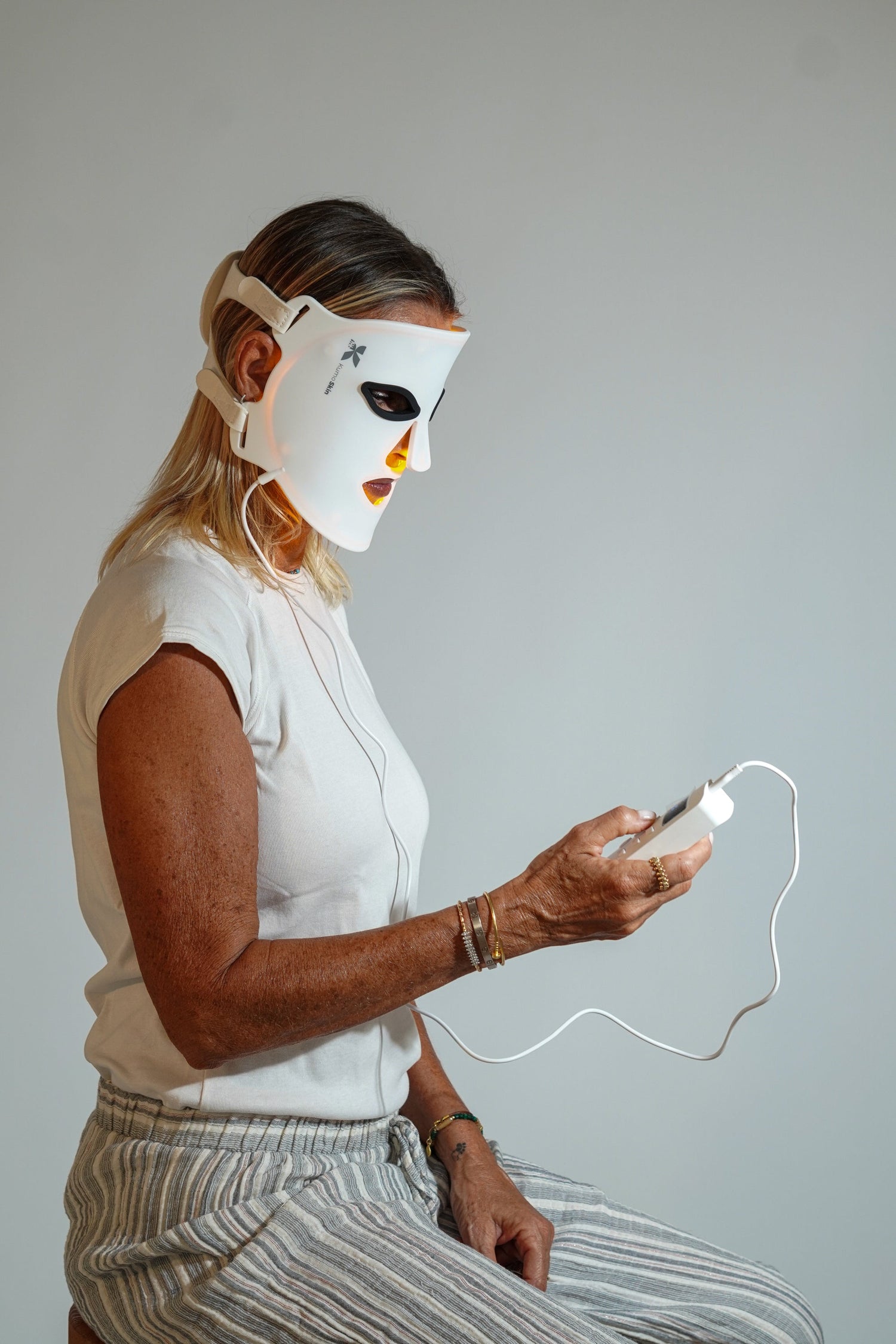

660 nm and 850 nm do not do the same thing. If your goal is skin and visible signs of aging, 660 nm red light is usually the starting point; if you are looking for muscle or joint recovery or a more deep tissue-oriented effect, 850 nm near-infrared usually makes more sense. The key is that they don't compete: they are used for different and sometimes complementary goals. (pubmed.ncbi.nlm.nih.gov)
In photobiomodulation, the result does not depend solely on the number of nanometers: dose, time, power, and application distance also matter. Therefore, choosing well begins by defining the objective, not by looking for a "magic" number. (pmc.ncbi.nlm.nih.gov)
Red & infrared light
Recover faster, at home
★★★★★ 4,8/5 · rated by verified customers
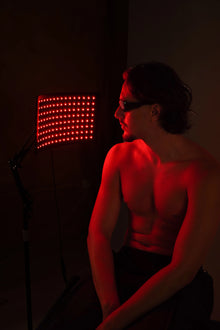
The KumoLux panel supports muscle recovery with full-body red and infrared light.
- 660 nm red + 850 nm infrared light
- Full-body muscle recovery
- Clinically validated biohacking protocols
€399,00€499,00
−10% on your 1st order when you subscribe to the newsletter

What 660 nm and 850 nm really mean
660 nm belongs to visible red and frequently appears in studies of facial rejuvenation and fine wrinkles. 850 nm is in the near-infrared and is widely used in recovery protocols; however, it should not be idealized, because in a measurement on human skin with 850 nm, most of the energy was absorbed in the first millimeter.
The most accepted biological explanation is that light modulates cell function through mitochondrial photoacceptors and intracellular signaling. In practice, this means that the choice of wavelength should be linked to the type of tissue you want to prioritize, not to a generic idea of "more red = better."
Personalized protocol · included with your purchase
Want us to tell you how to use it in your case?
With your purchase, our experts set up your red and infrared light sessions for your sport and goal.
Message us on WhatsAppOur experts reply · no obligation
If you want a more applied and less theoretical explanation, the practical comparison between red and infrared in the practical comparison between red and infrared will serve as a basis for understanding why the objective matters more than the number.
Quick comparison by objective
Comparison table
| Objective | 660 nm | 850 nm | What usually makes more sense |
|---|---|---|---|
| Skin and fine wrinkles | It's the most direct option. | Can complement, but is not usually the first starting point if you only seek surface results. | A randomized trial found significant improvements in periorbital wrinkles with 660 nm LEDs. |
| Muscle and joint recovery | Can be part of a mixed protocol. | Usually the priority NIR component. | The 2016 review on human muscle gathered 46 studies and 1,045 participants, with positive results in some trials for performance and recovery. (pubmed.ncbi.nlm.nih.gov) |
| Healing and tissue repair | Very present in skin studies. | Also appears in NIR reviews. | A 2021 synthesis on diabetic foot ulcers placed 630-660 nm and 850-890 nm among the most successful wavelengths. (sciencedirect.com) |
| Mixed protocol | Useful for the superficial part. | Useful for the deeper part. | Literature uses red, NIR, and combinations; therefore, the choice depends on the target tissue and the dose. |
Practical summary: if the target tissue is on the surface, 660 nm is usually the clearest path; if the objective is deeper, 850 nm usually fits better; if the need mixes skin and recovery, combining both is a logical option. This is a practical inference from the available literature, not a universal law.
Key idea: if the objective is superficial, start with 660 nm; if the objective is deeper, prioritize 850 nm. When the problem mixes both planes, a dual source may make sense. It is a practical synthesis of the literature, not a fixed law.
−10%on your first order when you join the newsletter
We send you the code instantly. No spam.
How to choose according to your objective
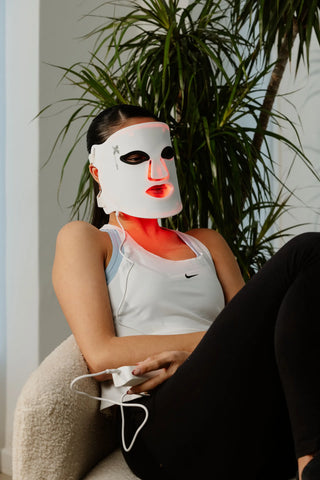
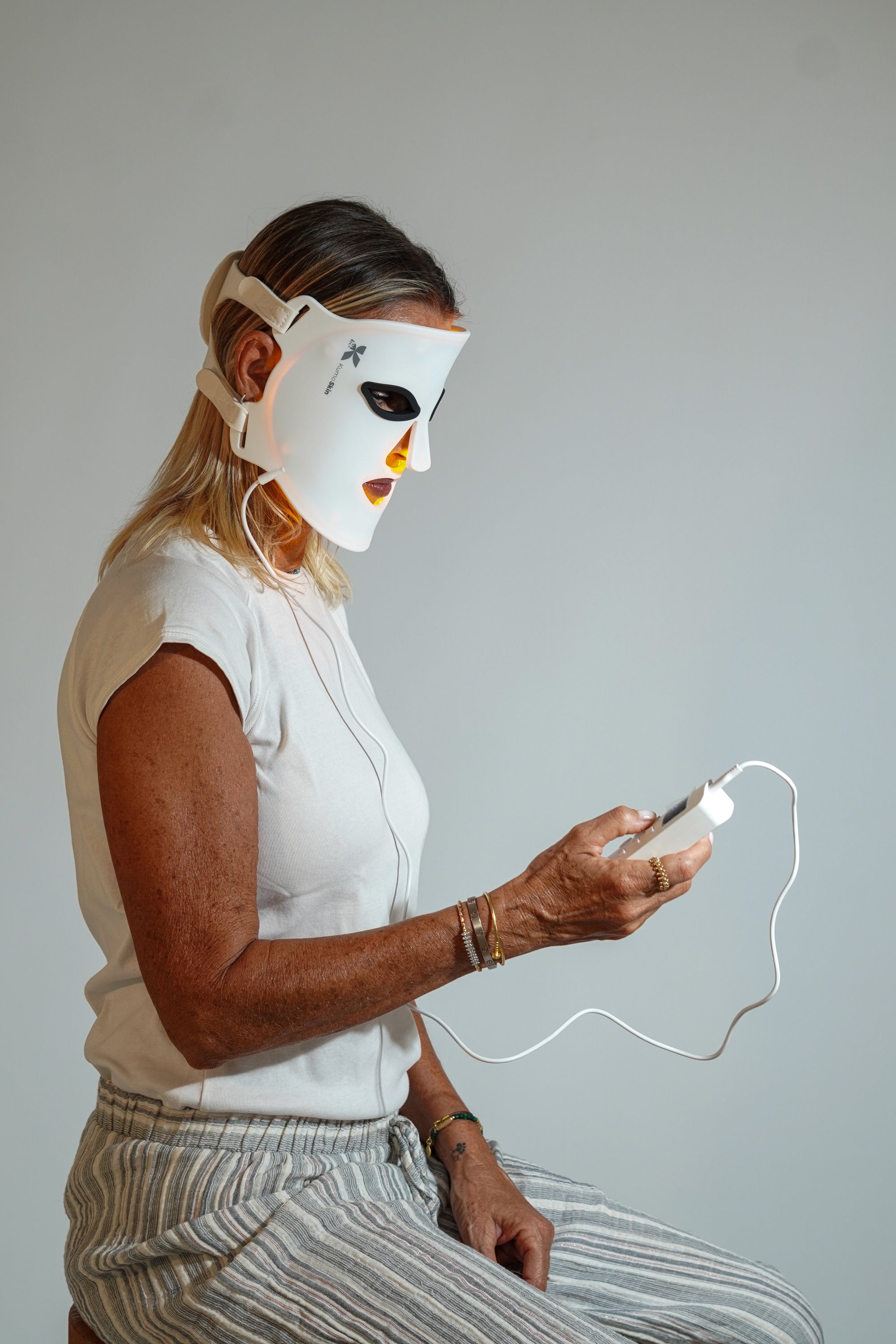
- If your priority is the face, fine lines, or skin texture, start with 660 nm. A randomized trial found significant improvements in periorbital wrinkles with 660 nm LEDs, so for a facial LED mask, that is the most intuitive starting point. what LED mask best suits your skin.
- If your priority is muscle recovery, fatigue, or joints, 850 nm is usually the most logical component in a photobiomodulation protocol. A review on human muscle gathered 46 studies and 1,045 participants, with positive results in some trials for performance and recovery.
- If your goal is tissue repair, the literature does not force you to choose a single number: the synthesis on diabetic foot ulcers places both 630-660 nm and 850-890 nm among the most successful wavelengths. If you are interested in delving deeper, the clinical evidence on wound healing with red and infrared light will help you see it with more context.
- If you are going to buy a device, do not only look at the wavelength: also check power, times, and distance. The red light panel buying guide 2026 and how to calculate the ideal distance to the panel will help you not to be swayed by marketing alone.
When to combine 660 nm and 850 nm
Combining both wavelengths makes sense when the objective mixes different planes: for example, a protocol that wants to care for the skin surface without giving up a deeper layer of recovery. The photobiomodulation literature shows uses of red, NIR, and combinations in muscle, as well as reviews in wound healing where both 630-660 nm and 850-890 nm appear. This does not mean that it is always "better" to add everything; it means that the combination is reasonable when the problem is also mixed.
If your goal is a single one, simplify. If it is mixed, a dual source can be practical. And if you want to land that idea in a real purchase, the guide to buying red light therapy without making a mistake helps you distinguish between useful specifications and pure marketing.
Safety, dose, and distance
Low-level light therapy is considered non-thermal: the FDA points out that it uses very low doses of visible light that do not heat the skin or fat, although it also warns that light-based therapies can injure the eyes and that, rarely, burns can occur. That is why it is advisable to follow the manufacturer's instructions and not to decide the dose by eye. (fda.gov)
- Use eye protection if recommended by the manufacturer or if the device points near the face. The FDA states that light-based therapies can injure the eyes.
- Avoid it if you have photosensitivity or are taking photosensitizing medication. The same FDA guide places it among the situations where photobiomodulation is not recommended.
- Be especially cautious if you have active implants, such as pacemakers, or an active injury in the treated area.
- Do not use it as a substitute for a medical evaluation when there is a wound, infection, or persistent pain.
If you are adjusting the distance or usage time, that detail matters more than it seems. For the same wavelength, changing the geometry of the equipment changes the energy that reaches the tissue; that's why it makes sense to review the model carefully and not assume that "closer" always equals "better."
FAQ about 660 nm and 850 nm
What is the difference between 660 nm and 850 nm red light?
The main difference lies in the practical objective. 660 nm belongs to visible red and is usually used for skin, texture, and fine wrinkles; 850 nm belongs to near-infrared and is chosen more when the focus is on muscle, joint, or deeper tissue recovery. It is not an absolute rule, but it is a useful guide for not buying by intuition. In addition, the choice does not depend only on the wavelength: dose, time, power, and distance also change the result.
What is 660 nm red light?
660 nm red light is a visible wavelength within the red spectrum that is widely used in facial photobiomodulation. In clinical settings and controlled studies, it is associated with improvements in periorbital wrinkles and skin rejuvenation protocols. Simply put: it is the option that usually makes the most sense when the objective is on the surface, especially if you want to work on texture, luminosity, or visible signs of aging.
What is 850 nm red light?
850 nm is not visible red light, but near-infrared. In practice, it is widely used when the objective is deeper, for example in muscle or joint recovery. However, it should not be thought that "deep" means unlimited: a study on human skin with 850 nm observed that a large part of the energy was absorbed in the first millimeter, so dose and distance are still decisive. (pubmed.ncbi.nlm.nih.gov)
Can both wavelengths be used together?
Yes, they can be combined if the device allows it and if the objective is mixed. The photobiomodulation literature shows uses of red, NIR, and combinations in muscle, and also reviews of wound healing where both 630-660 nm and 850-890 nm appear. This does not mean that you should always use both; it means that the combination is logical when you want to cover different tissue planes at the same time.
Can exposure to red light cause burns?
In photobiomodulation, low doses are used and, according to the FDA, low-level light does not heat the skin or fat. However, the agency itself warns that light-based therapies can injure the eyes and that, although rare, burns can occur. The best prevention is simple: follow the manual, do not extend sessions by intuition, and avoid use if you have photosensitivity, certain implants, or active injuries.
What now?
If you already have a clear objective, the next step is to choose a device consistent with it and use it consistently. To further refine, start with the guide to buying red light therapy without making a mistake and return to the Kumo Balance website to see the rest of the resources and recovery solutions.

Red & infrared light
KumoLux Panel – Red and Infrared LED Panel
★★★★★ 4,8/5 · rated by verified customers
- 660 nm red + 850 nm infrared light
- Full-body muscle recovery
- Clinically validated biohacking protocols
€399,00€499,00· pay in installments with seQura or Klarna