
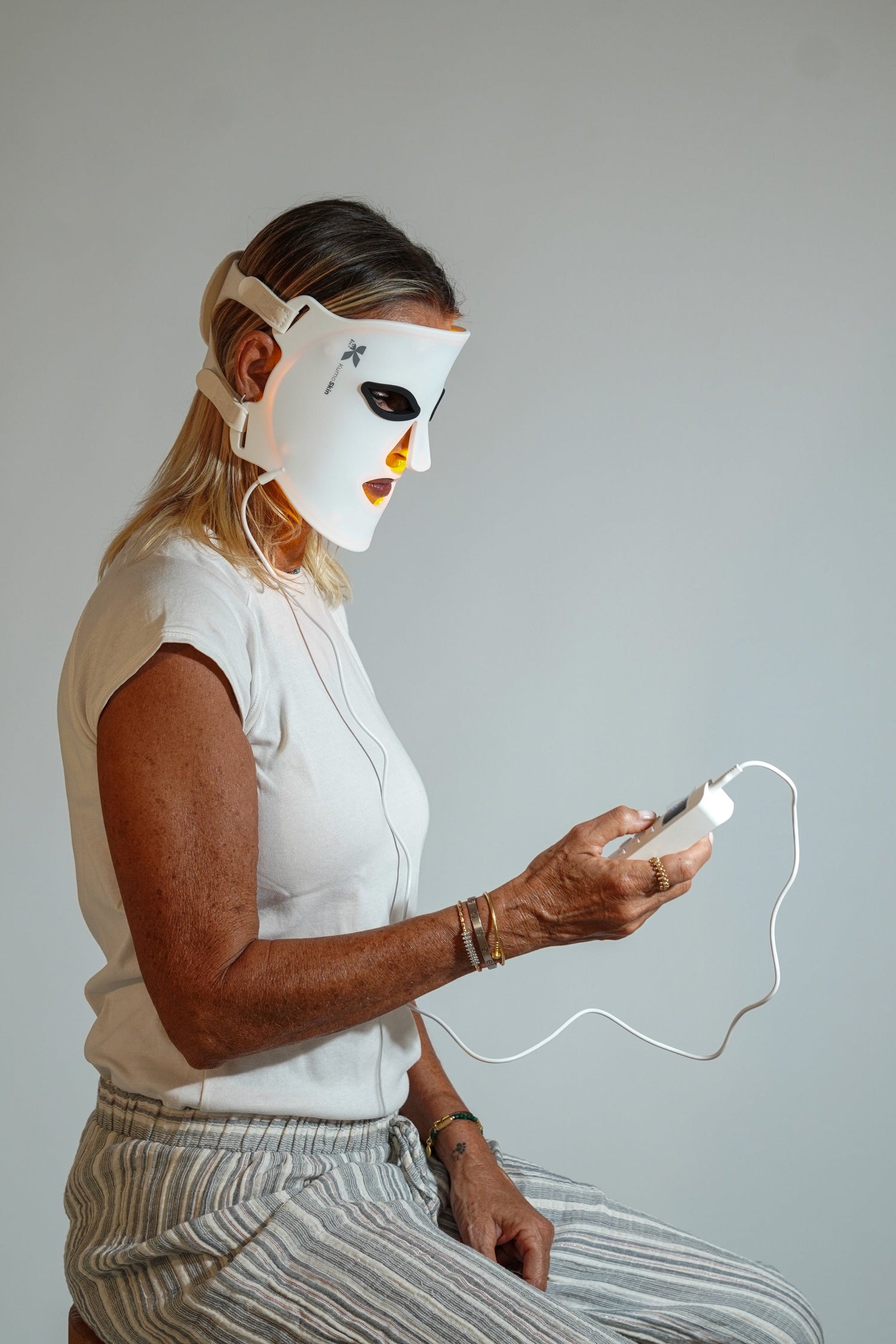

Yellow light in an LED mask can indeed help. Studies on 570-590 nm place it among the wavelengths investigated for photoaging, erythema, and pigmentation, although the evidence remains more limited than for red light. (pubmed.ncbi.nlm.nih.gov)
For dull skin, the goal is to restore a fresher appearance; for sensitive skin, low-intensity visible energy is preferred, which generally does not heat the skin like a thermal source. Nevertheless, the AAD and Cleveland Clinic remind us that not everyone is a candidate and long-term data is still being refined.
Facial red light
Bring your skin back to life
★★★★★ 4,8/5 · rated by verified customers
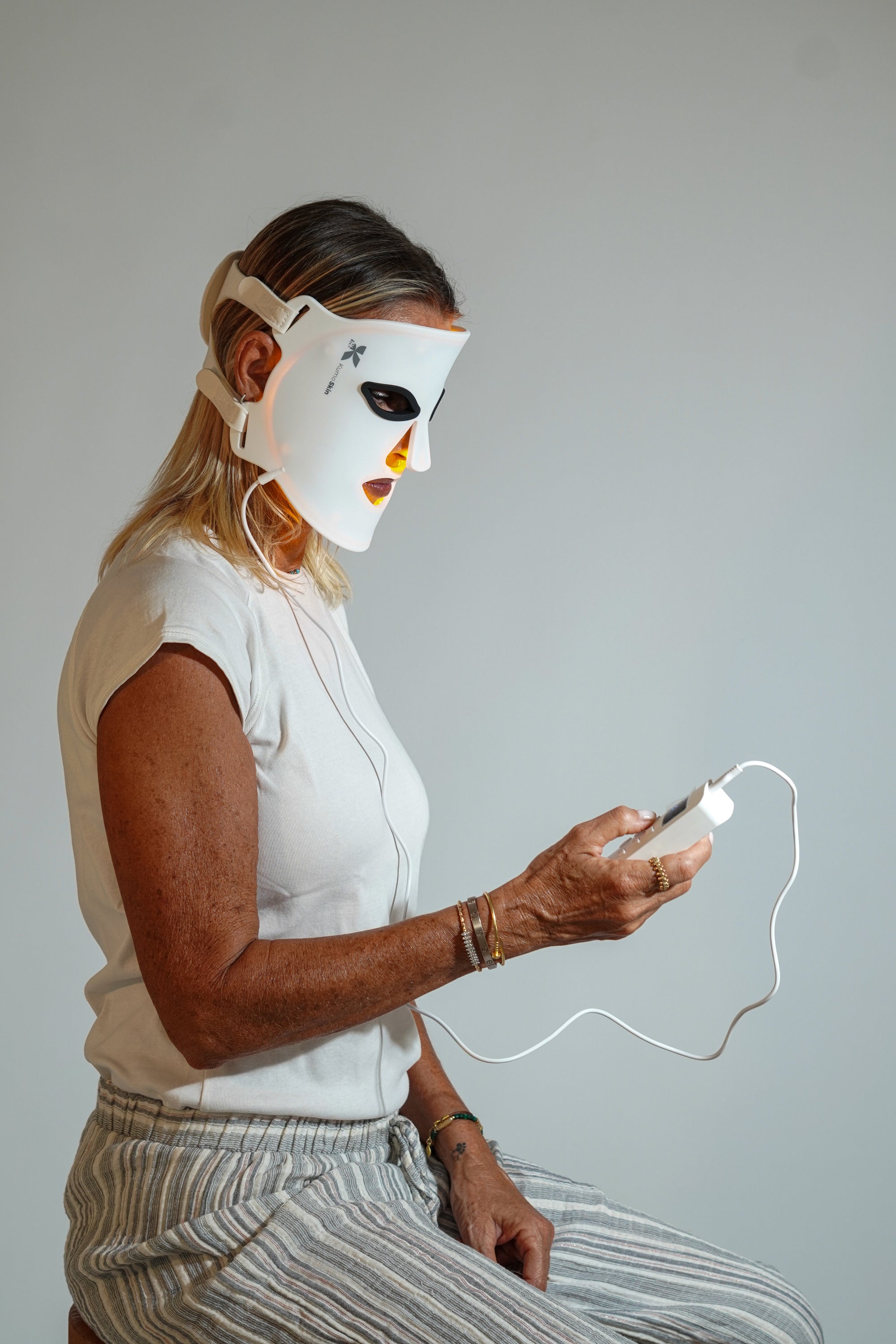
The KumoSkin LED mask helps repair and calm your skin in short sessions at home.
- 250 LEDs in flexible medical silicone
- Red light to boost collagen and glow
- 4 lights: red, infrared, blue and yellow
€299,00€429,00
−10% on your 1st order when you subscribe to the newsletter

What yellow light is in an LED mask and why it's beneficial
Yellow light usually refers to a band of about 570-590 nm, sometimes described as amber. In photobiomodulation, it is studied because it can modulate cellular activity without the thermal effect of other energy-based treatments. If you want a more technical explanation of the device, how a facial LED mask works helps to understand diodes, spectrum, and usage time.
In the laboratory and clinic, 590 nm has been linked to less oxidative stress in photoaged fibroblasts, improved erythema and pigmentation in melasma, and modulation of collagen and MMPs in comparisons between yellow and red LED. You can see the original studies in research on 590 nm and oxidative stress, in work on erythema and pigmentation, and in the comparison between yellow and red LED.
Personalized protocol · included with your purchase
Want us to tell you how to use it in your case?
With your purchase, our experts prepare the ideal LED protocol for your skin type and goal (acne, wrinkles, dark spots...).
Message us on WhatsAppOur experts reply · no obligation
Potential benefits for dull and sensitive skin
More radiance and a less tired appearance
For dull skin, the desired benefit is not a dramatic transformation, but a subtle improvement in texture, uneven tone, and a feeling of freshness. In a photoaging study with 590 nm, irradiation was associated with antioxidant and anti-inflammatory effects; other works observed favorable changes in wrinkles, background erythema, and pigmentation.
In practice, this translates into skin that can look more awake if consistency is maintained. The key is not to expect an immediate "filter effect," but a progressive and subtle improvement. For a broader view of the results of this technology, you might also find the guide on the general benefits of LED masks for the skin useful. (pubmed.ncbi.nlm.nih.gov)
Gentle support when skin reacts easily
Photobiomodulation uses extremely low doses of visible light that do not heat the skin or fat, according to the FDA. Cleveland Clinic describes it as a non-invasive and painless option, although not suitable for everyone and still with unknowns about its long-term effects. The FDA guide on low-intensity light and the clinical information from Cleveland Clinic summarize this framework well.
on your first order when you join the newsletter
We send you the code instantly. No spam.
If your skin already irritates easily, it's wise to view yellow light as a support tool, not an invitation to increase intensity or mix too many active ingredients. This guide on sensitive skin and rosacea helps you fit the session into a more cautious routine. (aad.org)
The practical takeaway is simple: yellow light can add radiance and comfort, but the safety margin depends more on how you use it than on the color alone. If you feel heat, itching, or increased redness, the session is no longer "gentle."
Redness, rosacea, and reactive skin: what to expect
The AAD places light therapy within a broader plan for rosacea, along with a gentle routine and, if necessary, medication or procedures; it is usually not a standalone solution. Their article on lasers and lights for rosacea makes it clear that correct patient and treatment selection matters greatly.
That doesn't mean yellow light is "just cosmetic." It means that for skin with redness or a tendency to irritate, the realistic goal is to support skin comfort and overall appearance, not replace medical treatment when there is active rosacea. If you want to refine the map of expectations, comparing red and infrared light according to your skin type can also help, because many masks combine different objectives.
What the evidence says and its limitations
The evidence is promising but not entirely conclusive. Published trials use different parameters, which makes it difficult to compare results directly. One photorejuvenation study used 8 sessions over 4 weeks, while an exploratory trial with 570/590 nm applied 3 sessions per week for 8 weeks. This pattern suggests that changes, if they appear, are evaluated in weeks, not days. (pubmed.ncbi.nlm.nih.gov)
Practical summary in a table
| Situation | What yellow light can contribute | What to watch out for |
|---|---|---|
| Dull skin and uneven tone | Literature on 590 nm associates it with photorejuvenation, reduced oxidative stress, and favorable changes in erythema and pigmentation. | Results are usually gradual and depend on the dose, consistency, and device. |
| Sensitive or reactive skin | Photobiomodulation uses very low-energy visible light and generally does not heat the skin. | If there is burning, light sensitivity, or photosensitizing medication, consult beforehand. |
| Rosacea-like redness | Light therapy can be part of the plan, along with a gentle routine and, if necessary, medical treatment. | It is usually not the only approach; very irritated skin requires caution. |
The table summarizes useful patterns, not a diagnosis. In a real LED mask, the quality of the device, the consistency of the spectrum, and your skin's tolerance matter much more than the generic promise of a "pretty color."
How to use an LED mask with yellow light without irritating the skin
A cautious protocol
There is no universal calendar. The best reference remains that of the device itself and, if your skin is reactive, the opinion of a dermatologist. Studies show different schemes, so it's sensible to start with the minimum effective and observe the response over several weeks.
- Use the mask on clean, dry skin without any prior burning sensation.
- Start with the minimum duration recommended by the manufacturer.
- Stop the session if heat, itching, or prolonged redness appears.
- Consult beforehand if you are taking drugs that increase light sensitivity.
These precautions follow the logic recommended by the AAD, FDA, and Cleveland Clinic for home use of LED light. If you want a more organized sequence, the night facial routine with an LED mask can serve as a framework to avoid overloading the skin.
FAQ about yellow light in LED masks
Can the yellow light of an LED mask help dull and sensitive skin without irritating it?
Yes, it can help, especially when the device works with low energy and does not generate noticeable heat. Studies on 590 nm have observed promising effects on photoaging, oxidative stress, erythema, and pigmentation, while the FDA describes photobiomodulation as very low-dose visible light that does not heat the skin. For sensitive skin, the key is tolerance: if it burns, becomes redder, or is combined with irritating active ingredients, it is not advisable to force it.
What specific benefits does yellow light offer for sensitive or reddened skin when using an LED mask?
It can provide a subtle improvement in the appearance of redness, uneven tone, and a "tired skin" feeling. The AAD notes that light therapy can be part of rosacea management, but it is usually not the only treatment. Studies with 590 nm suggest effects on inflammation, erythema, and pigmentation, so the realistic expectation is cosmetic and complementary, not curative. If your main goal is to soothe the skin, think of yellow light as support, not a total solution.
Is it safe to use an LED mask on sensitive skin or with rosacea and with yellow tone to brighten the skin?
In general, LED masks are considered safe in the short term, but they are not suitable for everyone. Cleveland Clinic describes them as non-invasive and painless, and the AAD recommends reviewing a history of light sensitivity and photosensitizing medication before using them at home. If your rosacea is flaring up, there is burning, or the skin is severely compromised, it is best to prioritize the advice of a dermatologist. Safety depends as much on the clinical context as on the device.
How long are sessions with yellow light required to see improvements in dull skin?
There is no universal number. Published studies use different protocols: 8 sessions over 4 weeks in some photorejuvenation trials and 3 weekly sessions for 8 weeks in an exploratory study of 570/590 nm. This suggests that changes, if they appear, are usually evaluated after several weeks of consistent use. If the device heats you or irritates you, it is advisable to shorten the exposure and review the protocol, because consistency only helps when the skin tolerates it well.
What precautions should I take when combining yellow light in an LED mask with other treatments for sensitive skin?
Avoid suddenly adding strong exfoliants, very drying treatments, or sessions that leave the skin clearly reactive. The AAD warns that some medications increase light sensitivity and that it is advisable to report this before using light therapy at home. In a sensitive routine, less is more: gentle cleanser, simple hydration, daily photoprotection, and consistency with the mask, not overuse. If you are also treating redness or rosacea, it is preferable to introduce only one new variable at a time.
What now?
If you want to continue refining your routine, start by understanding how a facial LED mask works, continue with the guide on sensitive skin and rosacea, and explore Kumo Balance's proposal for recovery and well-being to see how this technology fits into a more complete and consistent approach.

Facial red light
KumoSkin Mask – LED Facial Mask
★★★★★ 4,8/5 · rated by verified customers
- 250 LEDs in flexible medical silicone
- Red light to boost collagen and glow
- 4 lights: red, infrared, blue and yellow
€299,00€429,00· pay in installments with seQura or Klarna