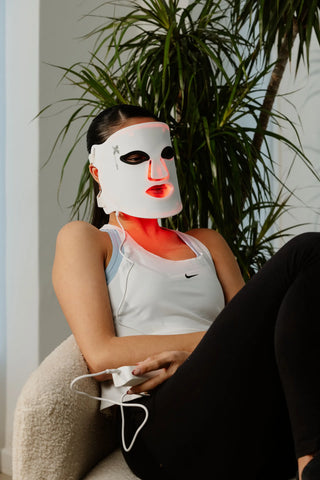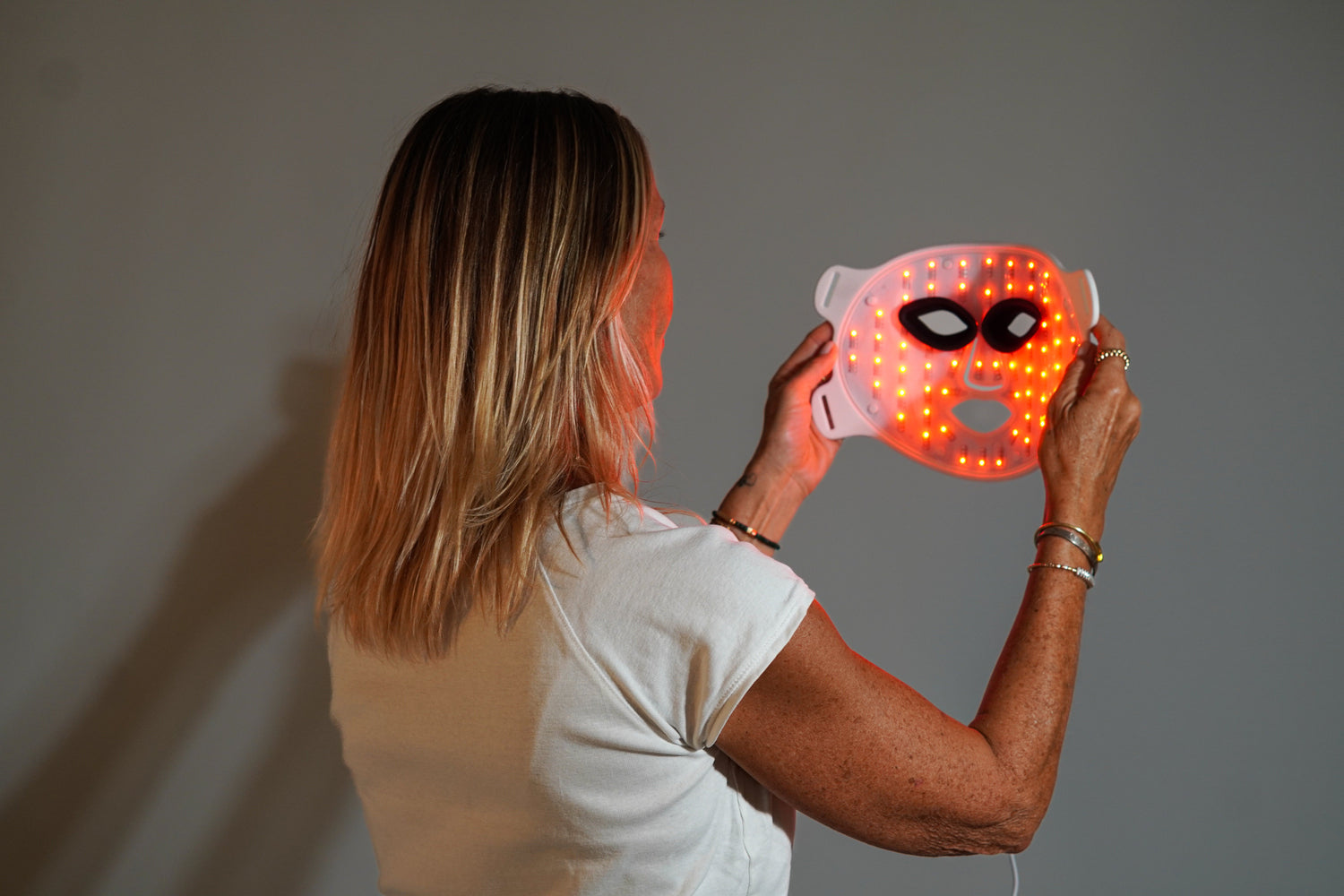
LED facial mask: what it is, how it works, and why it can improve your skin's health. If you're looking for visible results with a non-invasive method that's easy to integrate into your routine, here's a clear and comprehensive guide.
In a little while
- The LED facial mask uses visible and near-infrared light to activate natural skin processes (photobiomodulation), without pain or downtime.
- Typical benefits: collagen support, improvement of fine lines, acne control, increased radiance and improved texture.
- Key colors: blue (acne), red (rejuvenation), amber (calm) and near infrared (deep recovery and repair).
- Typical rhythm: 10–20 minutes, 3–5 times/week for 4–8 weeks, then maintenance.
- Safety: Generally well tolerated; avoid if you are taking photosensitizing drugs or have photosensitivity. Consult your doctor if you are pregnant or have an active dermatological condition.
What is an LED face mask and how does it work?
LED light masks emit specific wavelengths that interact with cell receptors and trigger beneficial biological responses. This process is called photobiomodulation. It does not heat or damage tissue like an ablative laser; instead, it modulates cellular functions to promote skin repair and balance. Technical review on photobiomodulation in skin: PubMed (2013) .
Red & infrared light
Recover faster, at home
★★★★★ 4,8/5 · rated by verified customers
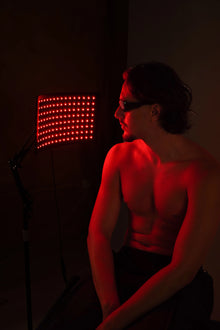
The KumoLux panel supports muscle recovery with full-body red and infrared light.
- 660 nm red + 850 nm infrared light
- Full-body muscle recovery
- Clinically validated biohacking protocols
€399,00€499,00
−10% on your 1st order when you subscribe to the newsletter

Photobiomodulation, explained easily
- Red light stimulates fibroblasts, supporting collagen synthesis and repair.
- Blue light acts on the porphyrins of Cutibacterium acnes, helping to reduce breakouts.
- Amber/yellow light is calming and can reduce temporary redness.
- Near-infrared light reaches deeper layers, promoting tissue recovery.
For a clinical overview of LEDs in dermatology: DermNet NZ.
Colors, wavelengths, and objectives
Each color penetrates differently and serves specific functions. At home, devices often combine several colors to address different goals in a single session.
Personalized protocol · included with your purchase
Want us to tell you how to use it in your case?
With your purchase, our experts set up your red and infrared light sessions for your sport and goal.
Message us on WhatsAppOur experts reply · no obligation
Tip: Consistency is more important than maximum potency. Results = effective dose x regularity.
Expected results and times
- Texture, luminosity and fine lines: gradual improvements in 8–12 weeks with consistent use.
- Acne: Reduction of inflammatory lesions in 4–8 weeks, especially with blue/red light. See clinical synthesis: Cleveland Clinic (2024) and systematic review of light therapies in acne: Cochrane ( 2016) .
Reference table: LED colors and targets on skin
| Light color | Approx. wavelength | What is it used for? | Ideal for | Usage notes |
|---|---|---|---|---|
| Blue | 405–420 nm | Reduce acne-associated bacteria | Skin with outbreaks, inflammatory lesions | It is often combined with red to modulate inflammation |
| Red | 630–660 nm | Collagen support, repair | Fine lines, firmness, dull tone | Consistency takes 8-12 weeks to notice changes |
| Amber/Yellow | 580–600 nm | Calm, improve brightness | Temporary redness, sensitive skin | Useful after gentle exfoliation (not on the same day as strong acids) |
| Near infrared | 810–850 nm | Deep recovery, circulation | Tired or environmentally stressed skin | Not visible to the naked eye, it complements the red |
General source on LEDs in dermatology: DermNet NZ and educational overview: Harvard Health.
Benefits for different skin goals
Fine lines, firmness and texture
Red and near-infrared light may support fibroblast function and extracellular matrix remodeling, resulting in a smoother, brighter appearance over time. Evidence in photobiomodulation suggests gradual improvements with no downtime when regular doses are accumulated over weeks (PubMed, 2013) .
on your first order when you join the newsletter
We send you the code instantly. No spam.
Acne and blemishes
Blue light acts on C. acnes by activating porphyrins, which helps to reduce the bacterial load; red light modulates inflammation. Together, they can support the reduction of papules and pustules within a few weeks, especially as a complement to a dermatological routine (Cochrane, 2016) .
Spots and hyperpigmentation
Red/amber light may contribute to a more even skin tone by promoting skin renewal and reducing oxidative stress. The response varies depending on the type of dark spot and skin type; in cases of melasma, light therapy requires individual medical evaluation. Overview of red light and its potential: Harvard Health.
Redness and sensitive skin
Amber and red light, in moderate doses, are generally well tolerated and can soothe mild post-treatment reactions in non-sensitized skin. For active rosacea or marked telangiectasias, medical evaluation is recommended to choose the appropriate light modality (e.g., vascular laser). Cleveland Clinic.
How to use an LED face mask correctly
Frequency and duration
- Start: 10–20 minutes per session, 3–5 times/week for 4–8 weeks.
- Maintenance: 2–3 times/week or according to your skin's response.
- Adjust if you experience dryness or sensitivity, reducing the time or frequency. Home use recommendations: Cleveland Clinic.
Steps for a home session
- Cleanse with a gentle gel and dry without rubbing.
- Apply a compatible serum (e.g., hyaluronic acid). Avoid strong acids/retinoids immediately beforehand.
- Place the mask, choose the program/color according to the objective.
- Relax for 10–20 minutes.
- Finish with moisturizer and, during the day, SPF 30+ sunscreen.
Compatibility with your routine
- Tomorrow: LED + antioxidants + SPF.
- Night: LED + hydration.
- If you use retinoids or AHA/BHA, space out their application (e.g., LED in the morning and active ones at night) to minimize irritation.
Safety, contraindications and side effects
Home LED therapy is generally well-tolerated when used as directed. Possible mild side effects include transient dryness, temporary flushing, or headache due to excessive brightness. Avoid use if you are taking photosensitizing drugs (e.g., some tetracyclines), have known photosensitivity, photosensitive epilepsy, or an unsupervised active skin condition. Safety and Uses Review: DermNet NZ and General Consumer Guide: Cleveland Clinic.
If you have implanted medical devices sensitive to fields or magnets, always check the warnings from the cosmetic device manufacturer before using it.
Evidence and realistic expectations
- Acne: The Cochrane (2016) notes that light therapies may help in the short term in inflammatory lesions, with variability between studies and a need for consistent Cochrane protocols.
- Anti-aging/collagen: The literature on photobiomodulation in skin supports improvements in texture and fine wrinkles with cumulative doses over weeks, with a favorable safety profile PubMed (2013) .
- Please note: results are gradual, not equivalent to more aggressive medical procedures, and depend on consistency and a comprehensive routine (cleansing, hydration, sun protection).
For an informative and balanced view: Harvard Health.
How to choose a good LED mask
- Clear specifications: colors/wavelengths and irradiance uniformity.
- Comfort and ergonomics: stable fit, ventilation channels and ease of cleaning.
- Useful programs: red/blue/amber combinations and near infrared.
- Safety certifications and manufacturer's warranties.
- Support and responsible use guide. Discover how KUMO integrates aesthetics, technology, and performance into its approach to recovery and well-being: KUMO Balance .
Frequently Asked Questions
How long does it take to see results with an LED facial mask?
It depends on your goal and consistency. For acne control with blue/red light, many people see fewer breakouts within 4–8 weeks of regular use. For collagen support and fine lines with red light, changes are usually gradual and most noticeable between 8 and 12 weeks. These timeframes align with skin renewal and the need to build up a safe dose of light over repeated sessions. Keep expectations realistic and complement your routine with gentle cleansing, moisturizing, and daily sun protection.
Can it be used with retinol or exfoliating acids?
Yes, but it's best to space out your applications to minimize irritation. A practical guideline is to use the mask in the morning on clean skin and moisturize afterward; and reserve retinoids or AHAs/BHAs for the evening. If your skin is easily sensitized, reduce the frequency of the active ingredients or alternate days. Avoid applying strong acids immediately before the LED session. If you are undergoing dermatological treatments (e.g., tretinoin or peels), consult your professional to adjust the schedule.
Is LED light the same as a laser?
No. Lasers emit a coherent, concentrated beam, often with higher energy, for very specific purposes; some are ablative and require recovery time. LED light is non-coherent and low-energy, designed to modulate cellular processes without damaging tissue. Therefore, LED light is suitable for home use and maintenance, while lasers are medical procedures with specific indications. Both can be complementary depending on the dermatological treatment plan.
Can I use it if I'm pregnant or have rosacea?
LED therapy is considered low-risk, but evidence regarding its use during pregnancy is limited; therefore, consult your healthcare professional before using it. In rosacea, the skin can be reactive: many people tolerate moderate doses of red/amber light, but protocols should be individualized. If you have active flare-ups, prominent telangiectasias, or are currently undergoing medical treatment, seek an evaluation to determine if LED, vascular laser, or another option is most appropriate.
How often is it ideal to use it?
As a general guideline, use 10–20 minutes per session, 3–5 times per week for 4–8 weeks, followed by maintenance 2–3 times per week. This frequency allows for building up an effective dose without overloading the skin. Adjust according to your skin's sensations: if you notice dryness or tightness, reduce the duration or space out the sessions. For active acne, combined blue/red programs several days a week are often helpful; for collagen support, weekly consistency is key.
To remember
- The LED facial mask works with photobiomodulation to support natural skin repair and balance processes.
- It benefits various objectives: fine lines, texture, acne, radiance and skin comfort.
- Regularity is key: 3–5 times/week at the beginning; gradual and cumulative results.
- Integrate LED into a complete routine: gentle cleansing, hydration and daily sun protection.
- You prioritize safety: check contraindications and clear device specifications.
Ready to incorporate recovery and wellness technology into your routine? Discover KUMO's philosophy and solutions here: kumobalance.com .

Red & infrared light
KumoLux Panel – Red and Infrared LED Panel
★★★★★ 4,8/5 · rated by verified customers
- 660 nm red + 850 nm infrared light
- Full-body muscle recovery
- Clinically validated biohacking protocols
€399,00€499,00· pay in installments with seQura or Klarna