
LED facial mask: how to use it with sensitive skin and rosacea. In this guide, you'll find out how phototherapy works, which wavelengths to prioritize, how to choose a safe device, and a gentle usage protocol to minimize breakouts and redness.
In a little while
- Red and near-infrared light can help soothe inflammation and improve skin tolerance.
- Start with short sessions, 2-3 times/week, and increase according to tolerance.
- Prioritize masks with eye protection, certifications, and moderate power.
- Avoid direct blue light in areas with active rosacea and review photosensitizing medications.
- Consult your dermatologist if you are taking medication or have moderate-to-severe rosacea.
How LED therapy works on sensitive skin and rosacea
Photobiomodulation: wavelengths and mechanisms
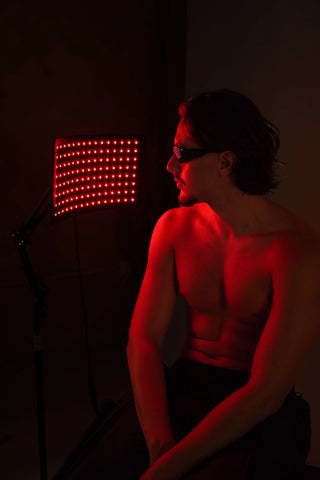
LED phototherapy works through photobiomodulation: light at low to moderate intensities interacts with cellular chromophores to modulate processes such as inflammation, oxidative stress, and tissue repair. Red light (≈630–660 nm) and near-infrared light (≈810–850 nm) are associated with pro-repair signals without heat. A 2017 physiology review details how these wavelengths can improve mitochondrial function and reduce inflammatory mediators in sensitized skin ( mechanistic source ). For a clinical overview of LEDs in dermatology, review this safety and uses summary on DermNet.
Facial red light
Bring your skin back to life
★★★★★ 4,8/5 · rated by verified customers
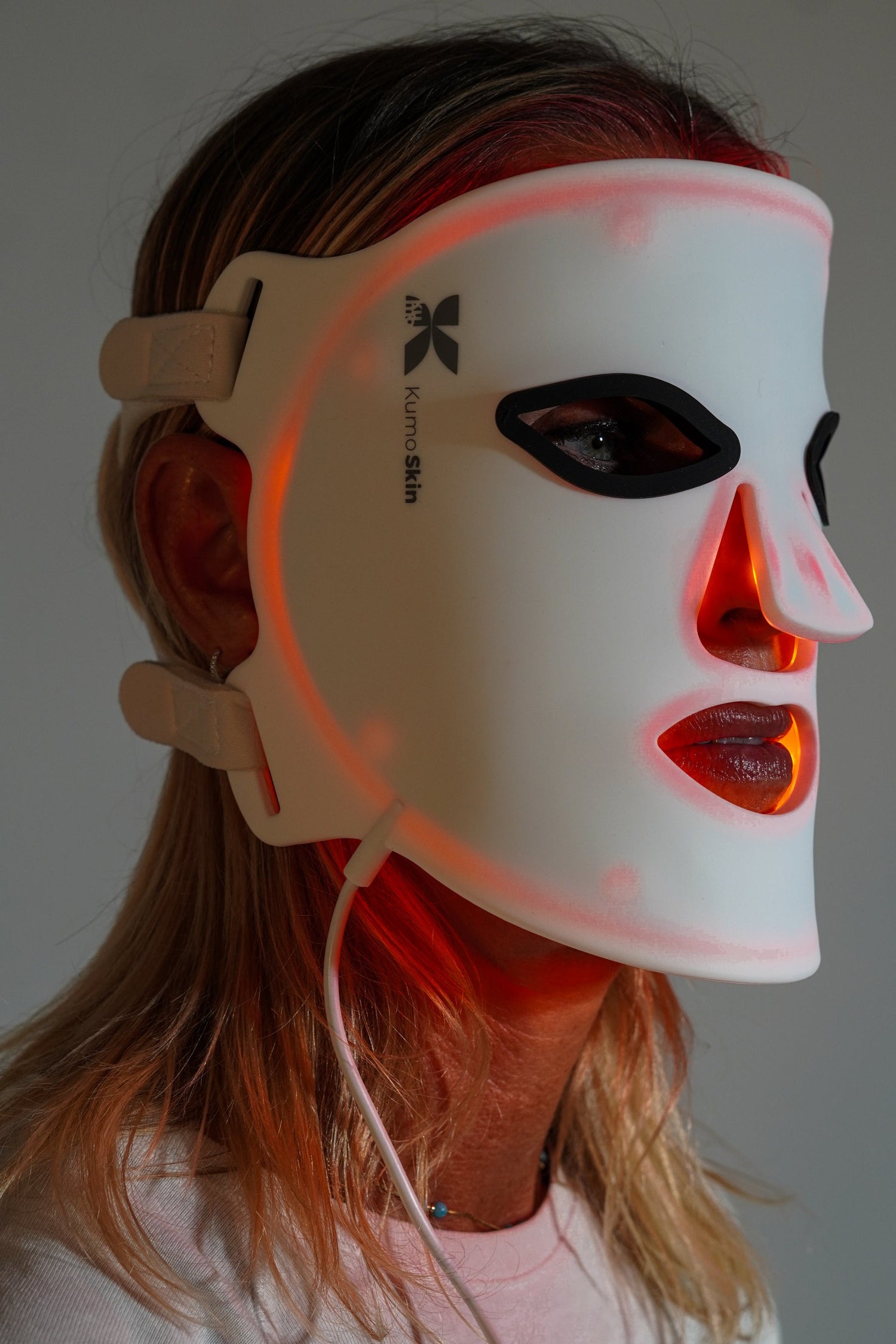
The KumoSkin LED mask helps repair and calm your skin in short sessions at home.
- 250 LEDs in flexible medical silicone
- Red light to boost collagen and glow
- 4 lights: red, infrared, blue and yellow
€299,00€429,00
−10% on your 1st order when you subscribe to the newsletter

What does the evidence say? Safety and efficacy
- Direct evidence for the use of LED light in rosacea is emerging (small studies and case series). Even so, the mechanistic basis and results in other inflammatory dermatoses support its use as a non-invasive adjunct, especially with red/NIR light.
- Rosacea guidelines prioritize gentle care and trigger control; non-thermal light energy may fit as a complement, not a substitute for medical treatment. AAD and DermNet rosacea overview .
- Tolerance is generally good on sensitive skin when starting with short exposures and protecting the eye area. Avoid very high power settings and long initial sessions.
Practical tip: less is more. On reactively sensitive skin, slow progression reduces the risk of flushing and discomfort.
Potential benefits for rosacea and sensitivity
Reduction of redness and inflammation
Red light can modulate pro-inflammatory cytokines involved in erythema and improve skin comfort. Users with erythematotelangiectatic rosacea report a calming sensation and reduced reactivity after several weeks of consistent use. Although results vary, the focus is on reducing the frequency and intensity of flare-ups.
Personalized protocol · included with your purchase
Want us to tell you how to use it in your case?
With your purchase, our experts prepare the ideal LED protocol for your skin type and goal (acne, wrinkles, dark spots...).
Message us on WhatsAppOur experts reply · no obligation
Strengthening the skin barrier and comfort
Photobiomodulation can support repair processes that strengthen the skin's barrier function, helping to reduce burning and tightness. This, combined with a minimalist, hydrating routine, helps the skin better tolerate temperature changes and other triggers. Consult the consensus on classification and management to understand your rosacea subtype and personalize your expectations (ROSCO 2017 consensus ).
How to choose an LED face mask if you have rosacea
Recommended wavelengths
- Prioritize red light and NIR for calm and recovery.
- Amber light (≈585–595 nm) can support tone uniformity.
- Avoid or limit direct blue light in areas with active rosacea; it may be useful only focally on lesions with pustules, and under professional judgment.
For reference information on colors and uses, please review this independent clinical guide from DermNet: LED light therapy.
Intensity (irradiance), time, and design
- Look for moderate power levels and adjustable intensity options. More isn't always better for sensitive skin.
- Timers and predefined programs help you avoid exceeding your limits.
- Comfortable design with a good fit and ventilation prevents accumulated heat.
- Integrated eye protection and/or dark glasses is essential.
Safety: certifications, materials, eye protection
- Hypoallergenic materials in contact with the skin.
- Electrical and photobiological safety certifications.
- Opaque eye shields protect the retina. Remember: eye sensitivity may be increased in people with rosacea (ocular rosacea).
Step-by-step usage protocol
Preparation and tolerance test
- Cleanse and dry your skin; avoid exfoliants on the day of the session.
- Do a test on one cheek with reduced exposure the first time.
- Always wear eye protection.
Frequency and progression
- It begins with 2–3 short sessions per week.
- Observe the response for 24–48 hours. If there is no persistent redness or burning, increase gently.
- Keep a journal of outbreaks and sensations to adjust.
Compatibility with your routine (ingredients and medication)
- Gentle ingredients: sulfate-free cleansers, moisturizers with ceramides, panthenol or squalane.
- Avoid applying acids, retinoids, or perfumes just before the session.
- If you are taking photosensitizing drugs (e.g., doxycycline, tetracyclines, some diuretics), consult your dermatologist and review resources on drug-induced photosensitivity .
Common mistakes and how to avoid them
- Starting with long sessions or at maximum power increases the risk of flushing. Start gently.
- Using blue light on active erythema: may cause irritation. Prioritize red/NIR light.
- Do not protect your eyes: always use eye protection.
- Changing too many things at once (new cosmetics + LED): introduce one variable at a time to identify tolerance.
- Skipping trigger control (heat, alcohol, stress): Light helps, but it doesn't replace trigger management; see this helpful list from the National Rosacea Society.
Quick guide to wavelengths and objectives (sensitive skin and rosacea)
| Color | Approx. wavelength | Main objective | Potential benefit | Recommended use | Precautions |
|---|---|---|---|---|---|
| Red | 630–660 nm | Surface photobiomodulation | Calming, redness reduction | Base protocol 2–4×/week | Avoid exceeding time limits if flushing is present |
| Near infrared | 810–850 nm | Deeper tissues | Recovery and comfort | Alternate with red | Do not use if it causes noticeable heat |
| Amber | 585–595 nm | Uniformity of tone | Luminous appearance | Occasional supplement | Evaluate tolerance first |
| Green | 520–530 nm | Appearance of the tone | Balance hyperpigmentation | Punctual | It may not be a priority in rosacea |
| Blue | 405–420 nm | Bacteria (acne) | Action on pustules | Focused only and with medical discretion | May cause irritation in active erythema |
Note: These ranges are guidelines only. Always follow the device manual and your dermatologist's advice.
on your first order when you join the newsletter
We send you the code instantly. No spam.
Warning signs and contraindications
- Intense redness that persists >24–48 hours, burning or pain: stop and consult.
- Photo-triggered migraines or eye discomfort: reduce intensity/time and check eye protection.
- Pregnancy/breastfeeding: There is no evidence of harm with low-energy LEDs, but consult if you have any concerns.
- Photosensitizing medication or photosensitive diseases: it is essential to evaluate individually with a health professional . AAD overview on rosacea and care .
Frequently Asked Questions
Can LED face masks worsen rosacea?
If used correctly, generally not. The key is to start with red/near-infrared light, moderate intensities, short sessions, and eye protection. Avoid blue light on areas with active redness and don't abruptly change your entire routine. If you notice prolonged flushing, discontinue use and adjust accordingly. Remember that specific evidence is still limited, so the approach should be conservative and complementary to medical treatment. Review clinical guidelines such as those from the AAD and DermNet .
What results can I expect and how long will it take?
In many cases, greater skin comfort and less reactivity are observed after several weeks of consistent use. The realistic goal is to modulate redness and burning sensations, not to "erase" telangiectasias or change the vascular structure. The response is individual and depends on the rosacea subtype and adherence. Keeping a symptom diary will help you assess changes. To understand subtypes and expectations, consult the ROSCO consensus .
Can I combine the mask with my usual creams?
Yes, but keep your routine minimalist. Cleanse, apply the LED light to dry skin, and then moisturize with gentle formulas (ceramides, panthenol, glycerin). Avoid acids, retinoids, or perfumes right before. If your dermatologist has prescribed metronidazole, ivermectin, or other rosacea treatments, coordinate schedules to avoid interference and monitor your tolerance. Check the compatibility of photosensitizing medications on reliable resources like DermNet .
What is the difference between LED and other energy sources (laser, IPL)?
LED uses low, non-thermal intensities to modulate cellular processes, which is generally gentler on sensitive skin. Laser and IPL selectively heat blood vessels or pigment and can be effective for telangiectasias or persistent erythema, but they require medical evaluation and different protocols. Many patients combine medical treatments (laser/IPL) with gentle at-home maintenance using LED. For an overview of LED and its safety, see DermNet.
How do I adjust the usage if I have ocular rosacea or eye sensitivity?
Eye protection is mandatory. Choose masks with opaque visors and, if necessary, add blackout goggles. Reduce intensity and duration of exposure if you experience eye strain or pain. Keep the area around your eyes covered and focus the light on your cheeks and forehead. If you have severe dry eye or other active eye symptoms, consult your ophthalmologist/dermatologist first. More general information about rosacea and its subtypes can be found in the AAD .
To remember
- Red and near-infrared light are the most friendly for sensitive skin and rosacea.
- Start with low intensity and short sessions; progress according to tolerance.
- Avoid blue light if you have active erythema and review photosensitizing medications.
- Eye protection and hypoallergenic materials are essential.
- The LED mask is a complement: it does not replace medical treatment or the management of triggers.
Want to safely incorporate recovery technology into your routine? Discover how KUMO integrates aesthetics, technology, and performance for your daily well-being in KUMO Balance .

Facial red light
KumoSkin Mask – LED Facial Mask
★★★★★ 4,8/5 · rated by verified customers
- 250 LEDs in flexible medical silicone
- Red light to boost collagen and glow
- 4 lights: red, infrared, blue and yellow
€299,00€429,00· pay in installments with seQura or Klarna