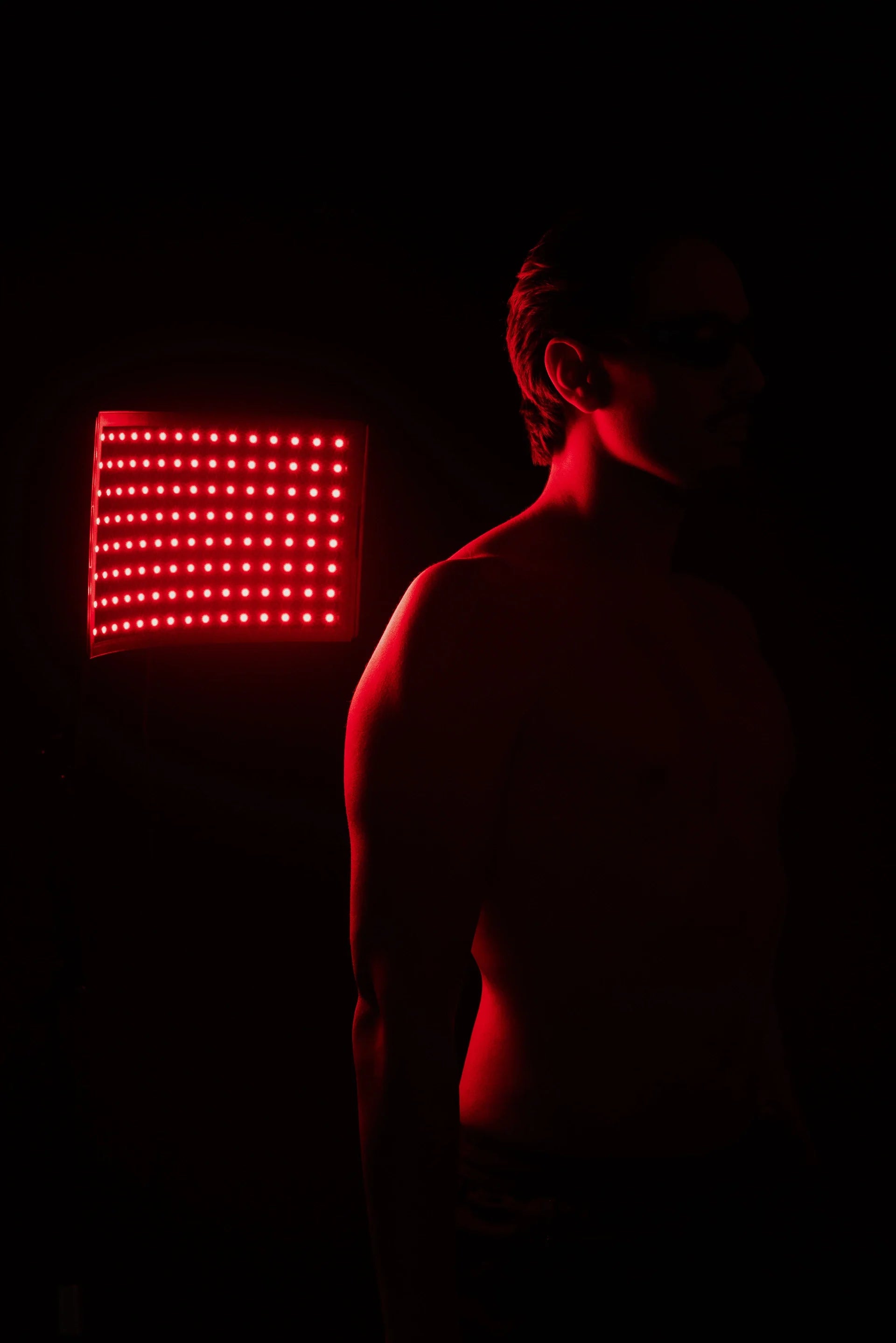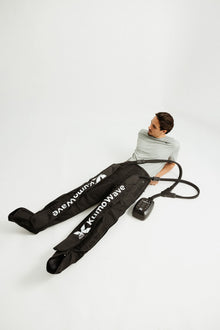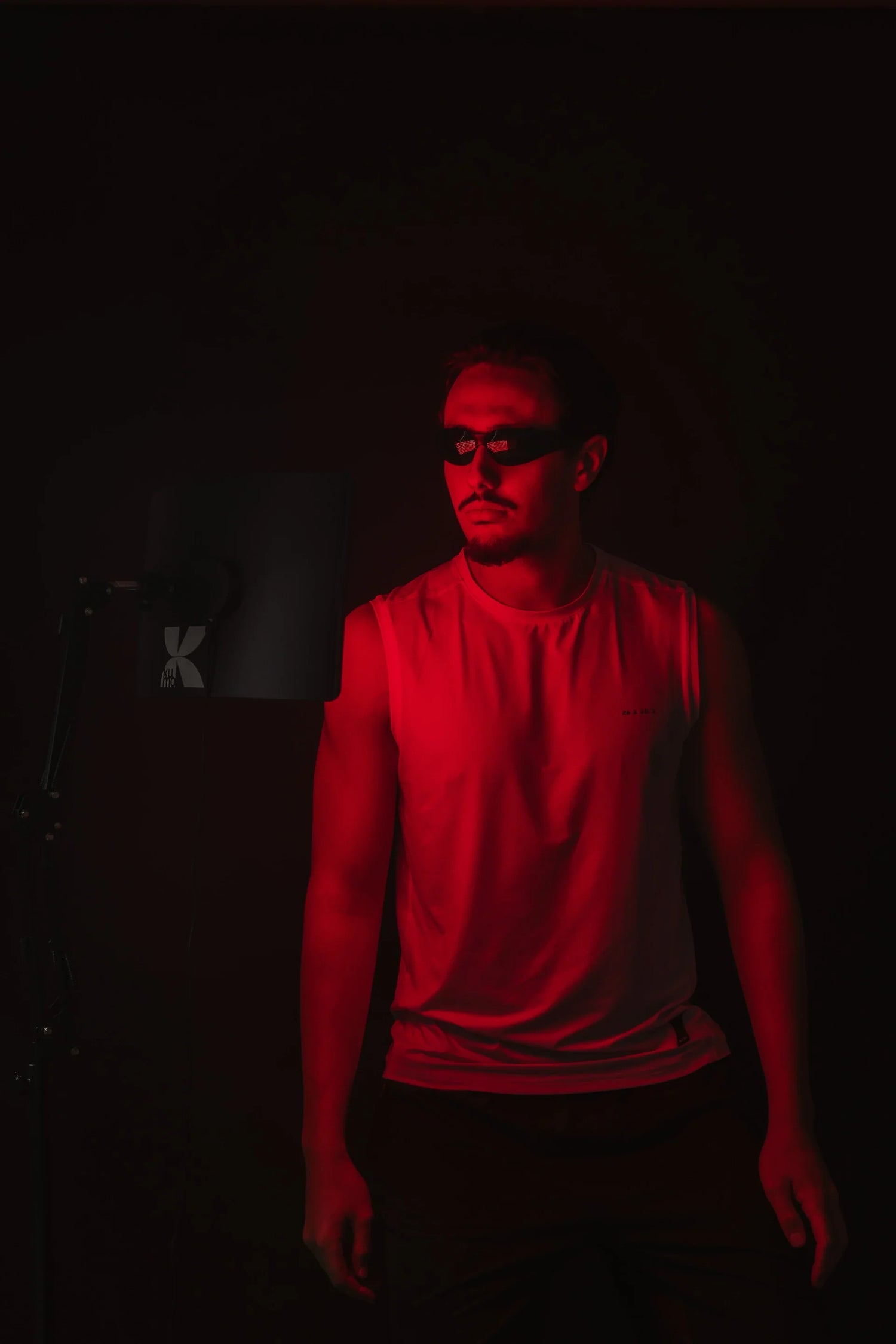

It depends on your goal. If you're looking to improve performance, red light is usually better before training; if you're looking to speed up recovery, the post-training window makes more sense. Studies with athletes have shown improvements when applied before exertion, and also benefits when aimed at muscle recovery. (pubmed.ncbi.nlm.nih.gov)
There's no magic minute. The magnitude of the effect changes depending on the dose, energy, treated area, and training level; therefore, two similar protocols can yield different results. (pmc.ncbi.nlm.nih.gov)
Red & infrared light
Recover faster, at home
★★★★★ 4,8/5 · rated by verified customers
The KumoLux panel supports muscle recovery with full-body red and infrared light.
- 660 nm red + 850 nm infrared light
- Full-body muscle recovery
- Clinically validated biohacking protocols
€399,00€499,00
−10% on your 1st order when you subscribe to the newsletter

Quick summary
The most useful reading of the evidence is simple: before training, photobiomodulation is mainly used for performance and activation; afterward, for recovery; and in highly adapted athletes, the extra benefit may be more subtle. One rugby trial saw better functional performance with prior application, another in trained women found no additional improvement, and a practical study organized the session to start work five minutes after the light. (sciencedirect.com)
- Before training: prioritize activation and performance.
- After training: prioritize recovery and decompression.
- If you train hard and consistently: always repeat the same window to evaluate if it truly works for you.
Practical table according to your goal
| Goal | Recommended time | What you're looking for | What to do |
|---|---|---|---|
| Performance | Before training | Feeling more ready for the effort | Maintain a fixed protocol and always use it the same way. |
| Recovery | After training | Returning with less perceived load | Place it after hard sessions or high-volume days. |
| Mixed routine | Depending on the priority of that day | Adapting to the type of session | Don't change the window every time; choose a logical one and repeat it. |
| Very frequent training | The one you can consistently maintain | Comparing sensations and performance | Evaluate over several sessions before drawing conclusions. |
How to choose the timing without overcomplicating it
If you train regularly, think of red light as a programming tool: before if the goal is to activate, after if the goal is to decompress. To organize this into a real routine, a weekly protocol for athletes based on volume and intensity can help, especially if you alternate hard days with softer days.
Personalized protocol · included with your purchase
Want us to tell you how to use it in your case?
With your purchase, our experts set up your red and infrared light sessions for your sport and goal.
Message us on WhatsAppOur experts reply · no obligation
When your focus is on recovering legs, feeling fresh, or general well-being after a load, it makes sense to consult a specific guide on red light therapy for muscle recovery. If you also want to place the tool within a broader routine, reviewing the key benefits and uses of red light therapy can be helpful.
For home sessions, the gap between light and training matters less than repeating the same criteria. If you're going to use it, keep the distance, time, and session timing constant, and refine with how to adjust distance and time in red light therapy to improve your home sessions.
Frequently asked questions
Is it better to use red light therapy before or after training for recovery?
If the main objective is recovery, the post-exercise window is usually the most logical. In a 2022 trial on delayed onset muscle soreness, photobiomodulation combined with light stretching was applied at 24, 48, and 72 hours after exercise and showed changes compared to control in pressure sensitivity. Translated into practice: after exertion is the natural place to think about recovery, not activation. (journals.sagepub.com)
on your first order when you join the newsletter
We send you the code instantly. No spam.
Does red light help improve performance if used before training?
Yes, especially when the intention is to perform better in demanding efforts. A study with 630 nm and 940 nm LEDT applied before eccentric exercise reported less muscle damage and no interference with adaptation to repeated exertion. This reinforces the idea of using it before when you're looking to activate and arrive at training with better sensations, especially if you always repeat the same protocol. (journals.lww.com)
How long before training should I apply red light for best results?
There is no universally validated "magic minute." The literature compares different windows around exertion, and in a specific trial, the publication itself concludes that the best timing is still not entirely clear. Therefore, if you choose to use it beforehand, the smartest thing to do is to set a stable window and repeat it for several sessions to see if it really helps you. (pesquisa.bvsalud.org)
Can red light be used both before and after exercise for better results?
Yes, but with nuances. There are protocols that place the application around the session and others that show variable results depending on the population and the type of load. A trial and research on athletes indicate that the benefit largely depends on the protocol design and training level, so combining both windows may only make sense if it's part of a plan, not as an automatic rule. (bmjopensem.bmj.com)
What now?
If you want to turn this decision into something practical, start with Kumo Balance and also check out red light therapy for post-workout recovery. This will help you better integrate it with your actual sessions and make a more informed choice about whether to use it before or after.

Red & infrared light
KumoLux Panel – Red and Infrared LED Panel
★★★★★ 4,8/5 · rated by verified customers
- 660 nm red + 850 nm infrared light
- Full-body muscle recovery
- Clinically validated biohacking protocols
€399,00€499,00· pay in installments with seQura or Klarna