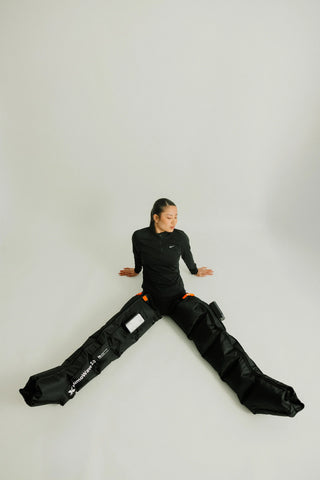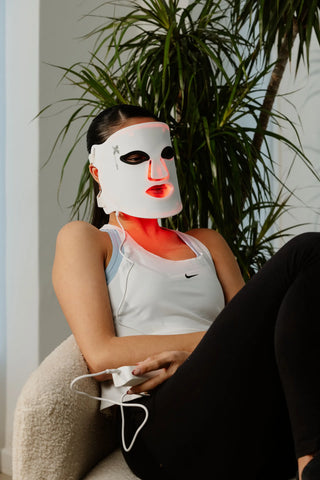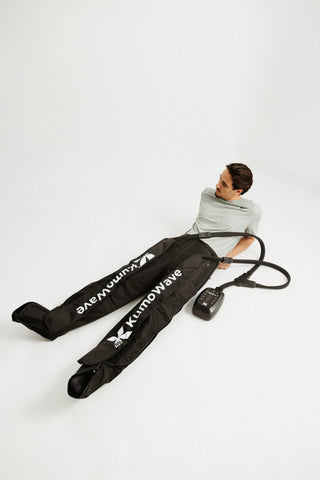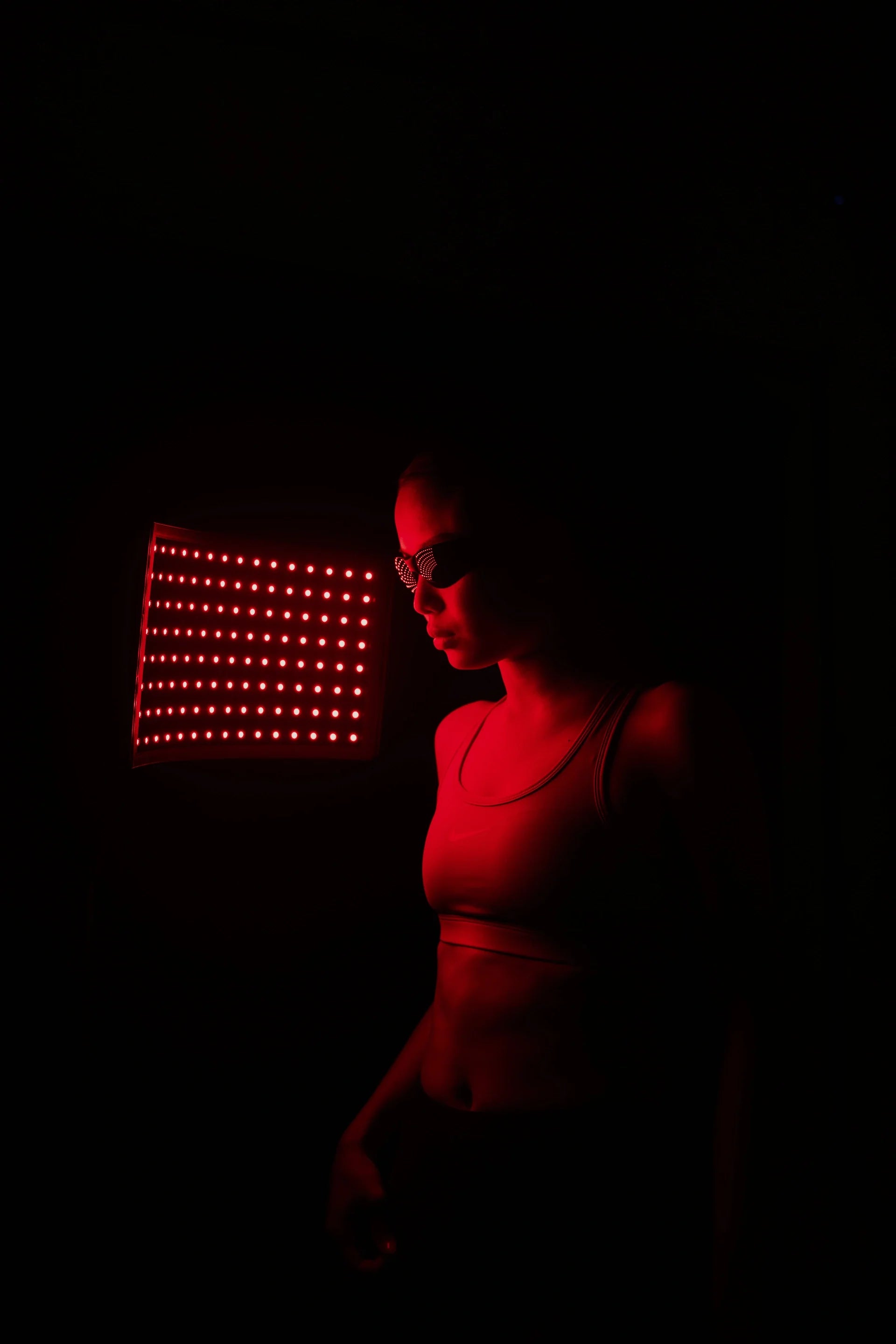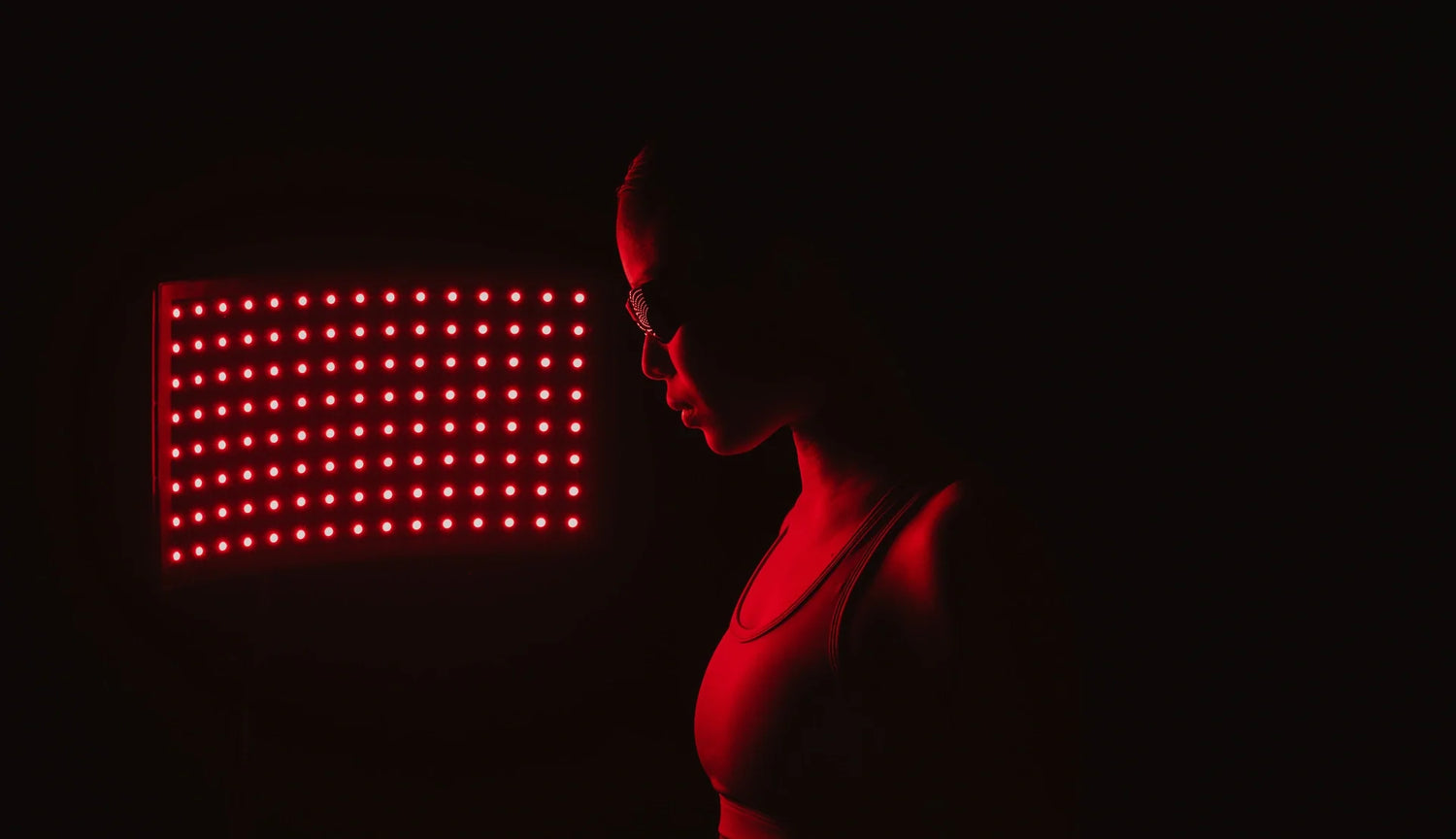
The dose is everything.
If you use red light therapy (photobiomodulation) at home, properly adjusting the distance and duration makes all the difference between a "correct" session and a truly effective one. The idea is simple: the closer the distance, the more light reaches your skin (greater intensity); the longer the duration, the more energy you accumulate (higher dose). In this Kumo guide, you'll learn how to calculate these parameters, how to get started without complications, and how to fine-tune your sessions with confidence and safety.
Red & infrared light
Recover faster, at home
★★★★★ 4,8/5 · rated by verified customers
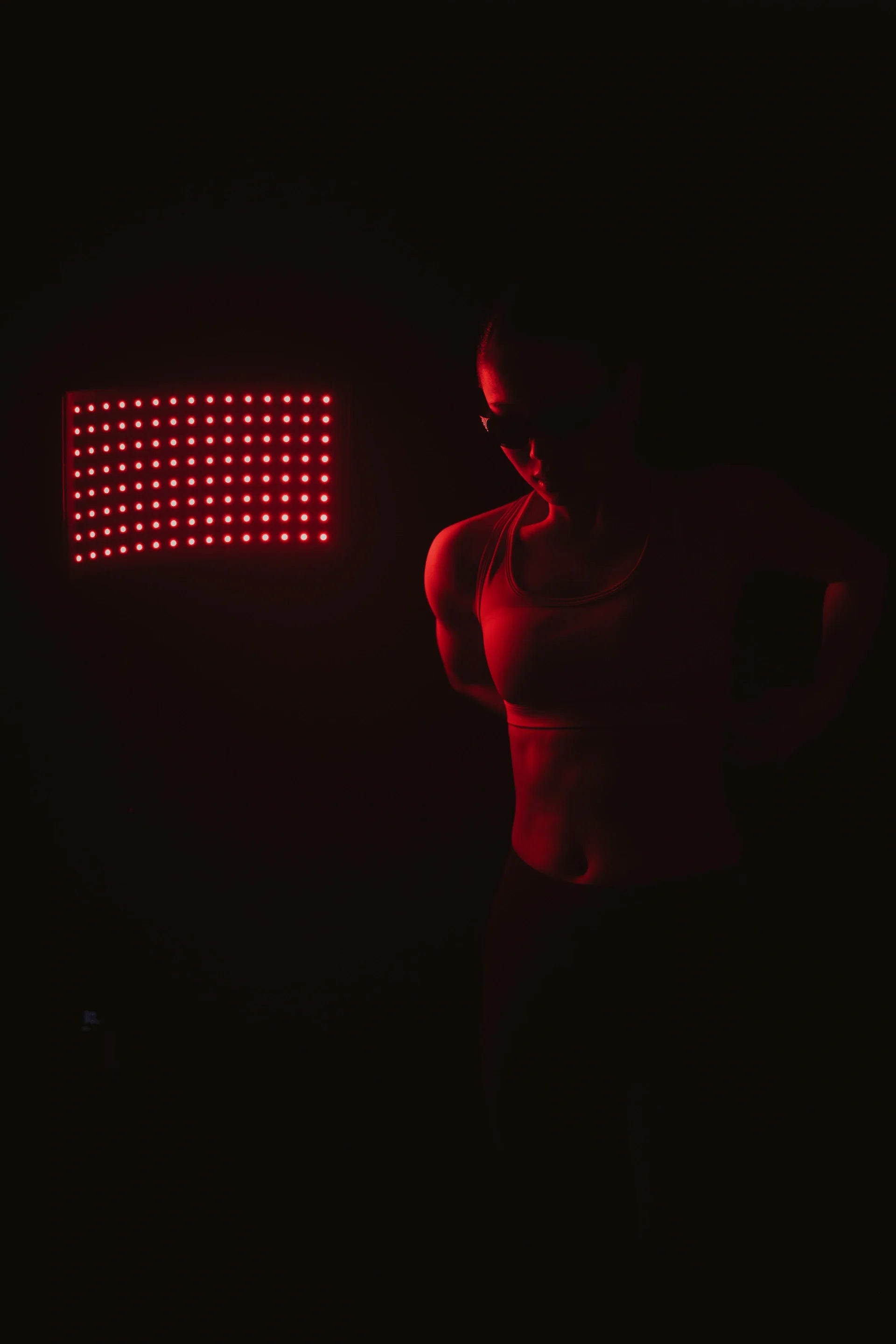
The KumoLux panel supports muscle recovery with full-body red and infrared light.
- 660 nm red + 850 nm infrared light
- Full-body muscle recovery
- Clinically validated biohacking protocols
€399,00€499,00
−10% on your 1st order when you subscribe to the newsletter

To explore devices for home use, you can view the LED light therapy collection or return to the Kumo homepage.
First: Understand the 4 concepts that control your results
1) Distance: Your most powerful “volume wheel”
In practice, distance defines how much light reaches the skin ( irradiance ). Although many articles cite the inverse square law (doubling the distance ≈ receiving 1/4), with real LED panels the drop-off isn't perfect because of lenses, multiple emitters, and dispersion. Even so, the useful rule still holds:
Personalized protocol · included with your purchase
Want us to tell you how to use it in your case?
With your purchase, our experts set up your red and infrared light sessions for your sport and goal.
Message us on WhatsAppOur experts reply · no obligation
- Closer = greater intensity in less time (but greater risk of heat, discomfort, or overexposure).
- Further away = lower intensity (you need more minutes for a similar dose, but you cover more area evenly).
2) Irradiance (mW/cm²): “how much light per second” reaches the skin
Irradiance (power per unit area) is usually expressed in mW/cm² and almost always depends on distance. It is the most important piece of information for converting "minutes" into a reproducible dose. Ideally, the manufacturer specifies irradiance at a specific distance ; if they only provide the total "W" of the panel, this won't allow you to dose accurately.
3) Time: the second check (after distance)
Time is the variable you adjust once you have a stable distance. If you change the distance every day, time stops meaning the same thing. Therefore, first set a comfortable and repeatable distance and then adjust the time by minutes.
4) Dose or fluence (J/cm²): the real objective
In photobiomodulation, the “dose” is usually expressed as energy per area ( J/cm² ). The most commonly used relationship is:
on your first order when you join the newsletter
We send you the code instantly. No spam.
Dose (J/cm²) = Irradiance (mW/cm²) × time (seconds) ÷ 1000
This is not theory: published clinical guidelines and protocols specify parameters including wavelength (nm), irradiance (mW/cm²), time (s), and fluence (J/cm²) . For example, the MASCC/ISOO guidelines (published open access in 2020) include intraoral photobiomodulation protocols for mucositis with explicit values for irradiance, time per spot, and fluence. See the MASCC/ISOO guidelines on PMC .
Why “more” isn’t always better (and how to avoid going overboard)
Photobiomodulation is often described as having a biphasic response (bell-shaped curve): low or moderate doses can stimulate, while higher doses can reduce or even inhibit the effect depending on the context. In an in vitro study with fibroblasts (2020), low doses showed better indicators of viability/activity than higher doses within that experimental model. Reference in PubMed (2020) .
Furthermore, recent reviews emphasize the importance of reporting and monitoring parameters (irradiance, fluence, duration, etc.) to ensure reproducible and safe results. Review on photobiomodulation in skin (2024) .
How to adjust distance and time at home: a practical 3-level method
Level 1 (simple): set a distance and keep it constant for 2–3 weeks
The goal here is to eliminate the "noise." Choose a comfortable distance (for example, a distance at which the device doesn't generate excessive heat) and repeat the same process each time. At this level:
- Maintain the same distance for the same area (face, neck, thigh, back…).
- Start with conservative times and gradually increase if you tolerate it well.
- Evaluate changes by weeks, not by days (many effects are gradual).
The American Academy of Dermatology (AAD) emphasizes following the device instructions and wearing eye protection when indicated, especially for home use. AAD recommendations for home use .
Level 2 (recommended): calculate your dose using the irradiance declared by the manufacturer
If your device indicates something like “X mW/cm² at Y cm”, you can now dose more accurately:
- Choose the distance (for example, “Y cm”, the one from the data).
- Define a target dose (if you're not sure, work with conservative ranges and prioritize tolerance + consistency).
- Calculate the time using the formula.
Example (calculation): if your irradiance is 50 mW/cm² at your distance of use and you want 10 J/cm², the time would be 10×1000/50 = 200 s ≈ 3.3 minutes for that area.
Level 3 (more accurate): Measure your irradiance with a meter
Two devices can "look the same" and give different readings at the same distance. If you really want to fine-tune things, the most reliable way is to measure (ideally with the right equipment) and calculate based on your actual reading. If you're not interested in the technical aspects, stick to Level 2 and be very consistent.
Quick calculation table (time to a target dose)
Use this table if you already know (or estimate) your irradiance at the distance of use. Remember: J/cm² = (mW/cm² × s) / 1000 .
Quick guide: approximate minutes depending on irradiance
| Skin irradiance (mW/cm²) | 5 J/cm² | 10 J/cm² | 20 J/cm² |
|---|---|---|---|
| 10 mW/cm² | 8.3 min | 16.7 min | 33.3 min |
| 25 mW/cm² | 3.3 min | 6.7 min | 13.3 min |
| 50 mW/cm² | 1.7 min | 3.3 min | 6.7 min |
| 100 mW/cm² | 0.8 min | 1.7 min | 3.3 min |
How to use it without getting confused: choose a distance, find the irradiance at that distance (or measure it), select a conservative target dose, and apply the corresponding time. Maintain the protocol for 2–3 weeks before changing variables.
Fine-tuning: clear signals to increase or decrease distance/time
At home, your feedback matters. Adjust only one variable at a time (distance or time) and observe for 1–2 weeks.
Signs that you probably need to lower your dose
- Excessive heat or discomfort during the session.
- Redness that lasts much longer than you would expect or a feeling of "irritated skin".
- Headache, fatigue, or eye discomfort (especially if you treated near the face without adequate protection).
- If you use it in the afternoon/evening and notice that it energizes you instead of relaxing you, try it during the day or reduce the time.
Signs that you can increase very gradually
- Perfect tolerance (zero discomfort) and consistency for several weeks.
- Specific objective that requires more coverage (e.g., large body areas), while maintaining the same thermal sensation.
Safety in home sessions (the important things, without alarmism)
In general, red light therapy is considered low-risk when used correctly, but misuse can cause problems (especially to the eyes). The Cleveland Clinic notes that if used too frequently or without following instructions, skin or eye damage can occur , and recommends protecting the eyes and following the device's instructions. Safety and recommendations (Cleveland Clinic) .
The AAD also distinguishes “FDA-cleared” from other marketing terms and emphasizes the importance of following the device instructions and using the recommended eye protection. AAD Guide to Home Devices .
In 2025, an evidence-based consensus published in the Journal of the American Academy of Dermatology concluded that photobiomodulation is a safe modality for adults and that red light PBM does not induce DNA damage, in addition to summarizing indications with clinical evidence in several areas. Clinical consensus (JAAD, 2025) in PubMed .
Quick checklist before turning on the device
- Eyes: Do not look directly at the LEDs; wear eye protection if the manufacturer indicates it (and if you are dealing with the face, it is better to err on the side of caution).
- Skin: clean and dry; avoid combining on the same day with strong irritants if your skin reacts (for example, some retinoids or acids, depending on individual tolerance).
- Photosensitivity: If you are taking photosensitizing medication or have a condition that worsens with light, consult a healthcare professional.
- Darker skin tones: the AAD warns that there may be greater sensitivity to visible light in some phototypes and a risk of hyperpigmentation; it's best to start more conservatively.
How to turn it into a recovery routine (Kumo approach)
Consistency wins. At Kumo, we like the "recovery habits" approach that you can maintain: short, well-paced sessions that are easy to repeat.
- If your goal is muscle recovery: many people combine red light therapy with mechanical tools (massage or compression) for a complete routine. You can complement this with a massage device like the KumoPulse Air or with compression therapy from the pressotherapy collection.
- If your goal is skin health: prioritize regularity, eye protection, and a distance/duration that doesn't cause irritation. Explore LED light therapy options.
- If your goal is rest: avoid experimenting with long sessions at night at first; try earlier times and adjust gradually.
Reliable readings for in-depth study (without noise)
- American Academy of Dermatology (AAD): Precautions and Home Use
- Cleveland Clinic: Benefits, Limitations, and Safety
- MASCC/ISOO: Clinical guidelines with protocols and parameters (PBM, 2020)
- Evidence-based consensus (JAAD, 2025) on clinical application of PBM
- WALT: Dosage recommendation tables (documentation)
FAQ: Common questions about distance and time on red light (at home)
At what distance should I use a red light panel so as not to fall short (or go too far)?
The ideal distance depends on the actual irradiance of your device at that distance and your tolerance. The most reliable approach is to choose a comfortable distance (without excessive heat), maintain it consistently, and adjust the exposure time using the dose formula. As a safety guideline, medical organizations remind us that misuse (for example, for too long or without following instructions) can cause skin or eye irritation, so it's best to start conservatively and be consistent. If the manufacturer indicates a recommended distance, use it as a starting point.
How many minutes should I do per zone if I don't know the mW/cm² of my device?
If you don't have irradiance data, your best strategy is to standardize : same distance, same area, same number of minutes, for 2–3 weeks, and assess tolerance and progress. Adjust only one variable at a time. You can also rely on the practical recommendation of strictly following the manufacturer's instructions (AAD) and prioritizing eye protection if treating the face. If you want to move beyond guesswork without overcomplicating things, look for a device that publishes irradiance at a distance or consider measuring for precise dosing.
Can I do red light therapy every day?
It depends on your goal, your skin type, and the total dose you're accumulating. Photobiomodulation is described as having a biphasic response: higher doses don't always mean greater effect, and some experimental models show that higher doses can lose their benefit. In home practice, if you do daily sessions, they should be short and well-tolerated , and you should observe for irritation, excessive heat, or fatigue. If signs of overload appear, reduce the time or increase the distance. And if you have a medical condition or are taking photosensitizing medication, consult a doctor beforehand.
Do I need glasses if I use red light at home, even with my eyes closed?
If you're treating areas near the face, caution is a good idea. The AAD recommends using the eye protection specified by the manufacturer and not substituting sunglasses if specific goggles are requested. The Cleveland Clinic also suggests protecting your eyes and following instructions, as improper use can cause eye damage. In short: if the device indicates it, always use it; if it doesn't indicate it but you'll be exposing the area around your eyes, keep your eyes closed, don't look at the LEDs, and consider additional protection.
So what now?
If you want to make red light therapy an easy habit (and not a never-ending experiment), start by establishing a safe distance , calculating (or estimating) your dose , and maintaining the same protocol for a few weeks. You can explore LED light therapy solutions and complement your routine with pressotherapy or KumoPulse Air . If you need guidance on which approach best suits your home routine, contact us through our contact page .

Red & infrared light
KumoLux Panel – Red and Infrared LED Panel
★★★★★ 4,8/5 · rated by verified customers
- 660 nm red + 850 nm infrared light
- Full-body muscle recovery
- Clinically validated biohacking protocols
€399,00€499,00· pay in installments with seQura or Klarna