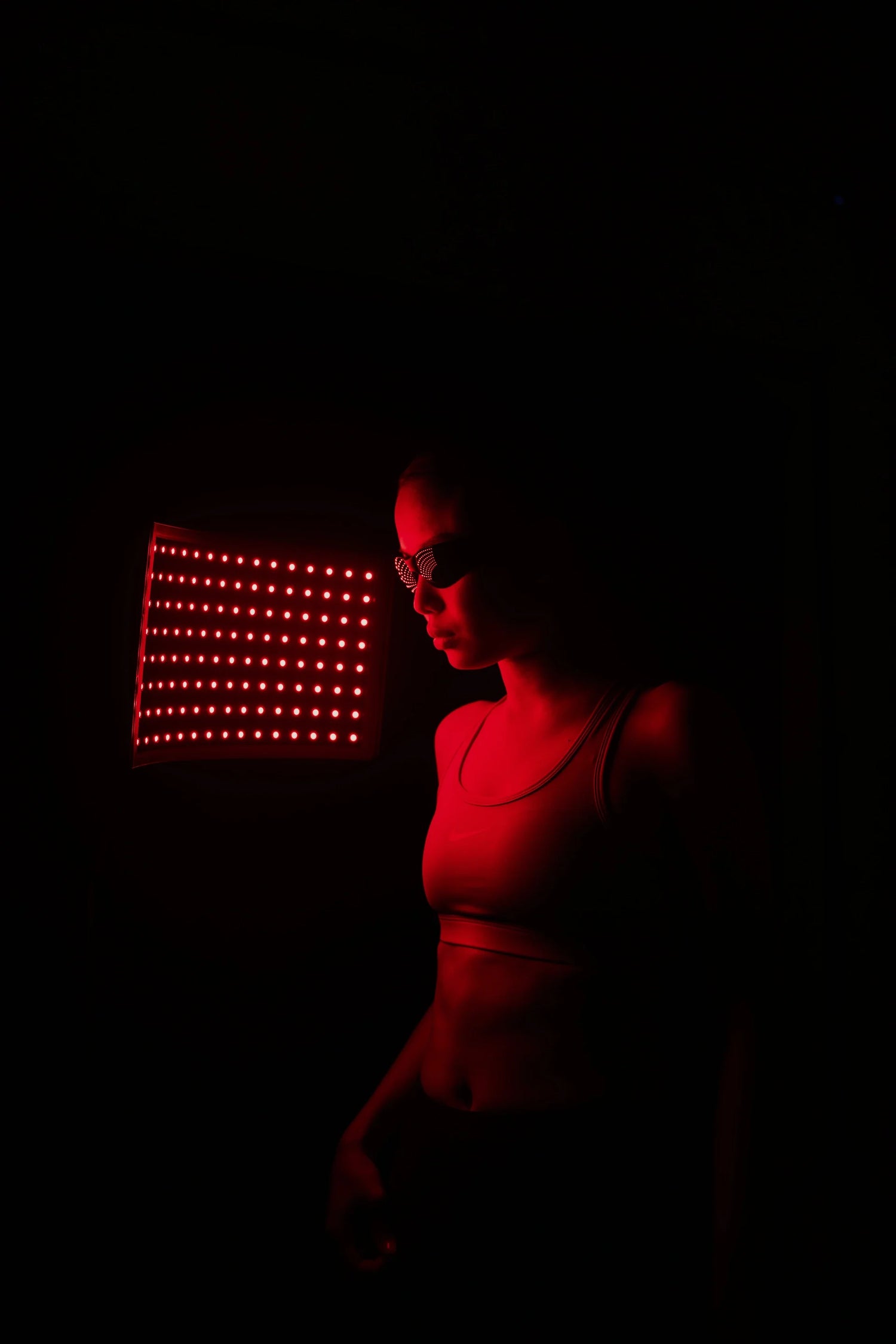
Red light can be a real ally in improving the quality of the body's skin.
If you're looking for how to use an LED panel on your back, abdomen, and legs , the key isn't "more time," but a better method : choosing the right area, adjusting the distance and frequency, and understanding which results are reasonable (texture, comfort, appearance) and which require further evaluation (for example, very pronounced stretch marks). In this practical guide, I explain how to integrate photobiomodulation into a Kumo -type recovery routine, clearly and safely.
Red & infrared light
Recover faster, at home
★★★★★ 4,8/5 · rated by verified customers
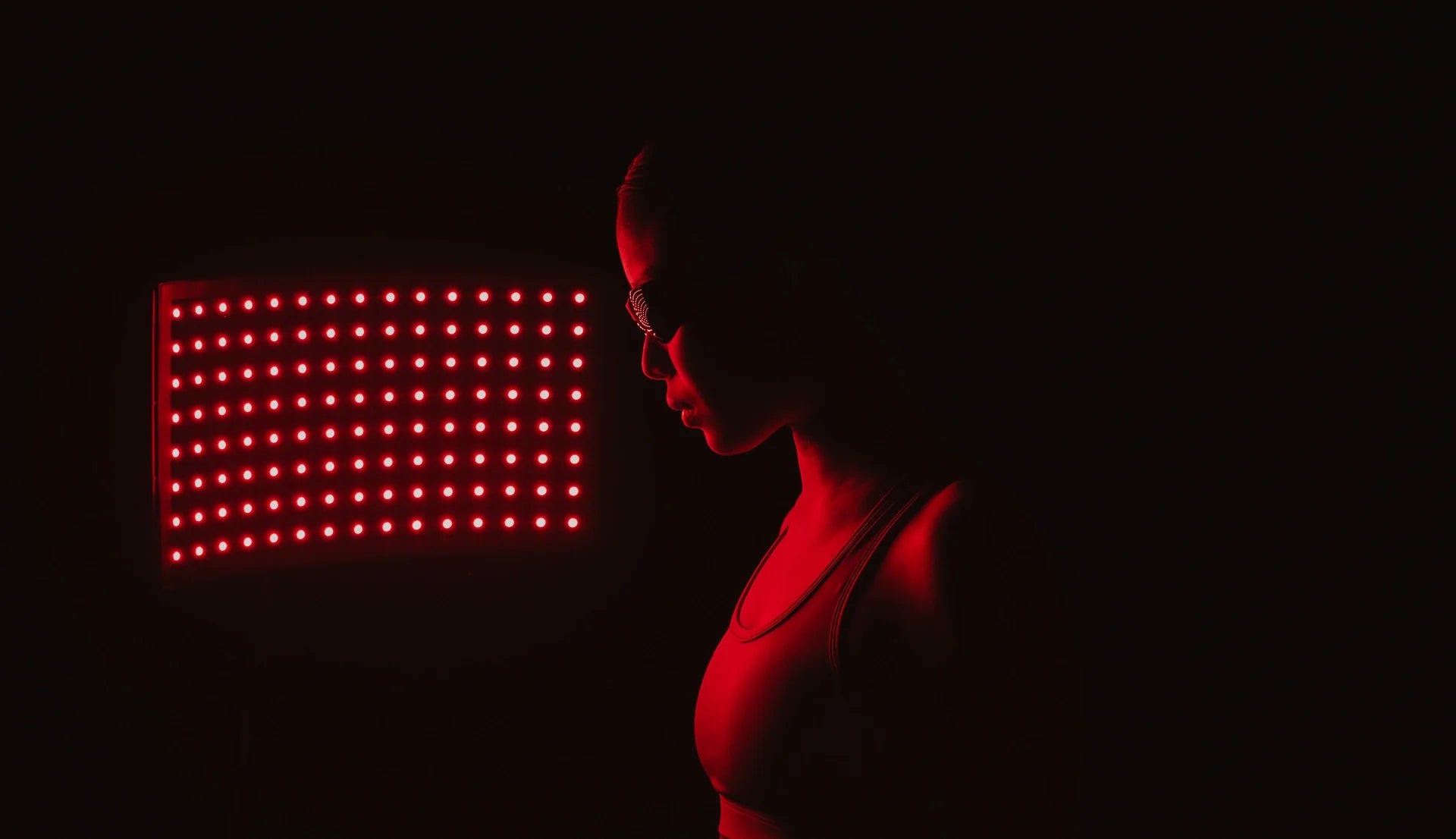
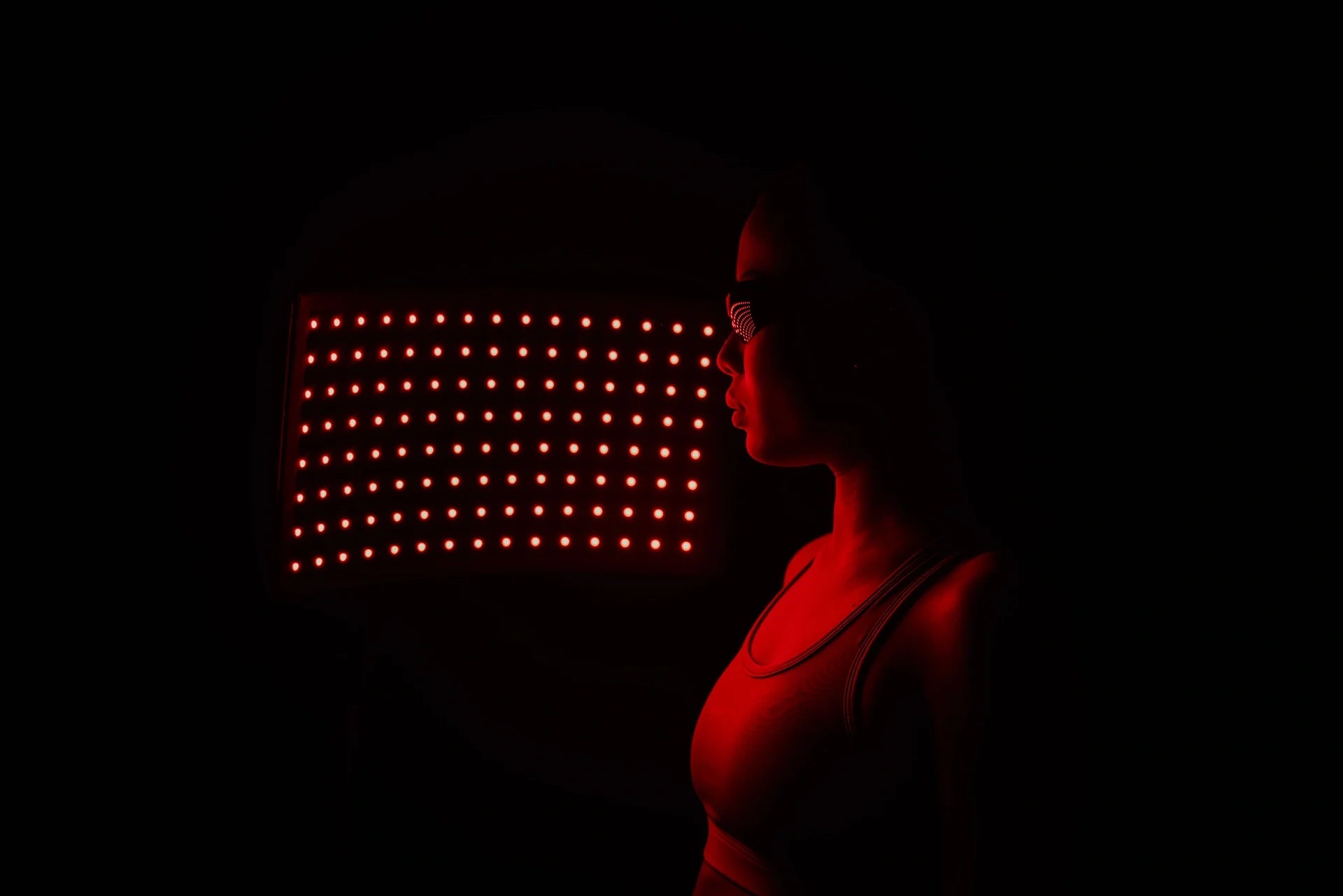
The KumoLux panel supports muscle recovery with full-body red and infrared light.
- 660 nm red + 850 nm infrared light
- Full-body muscle recovery
- Clinically validated biohacking protocols
€399,00€499,00
−10% on your 1st order when you subscribe to the newsletter

What is red light therapy (photobiomodulation) and why is it used on the skin of the body
Red light therapy (and often near-infrared light ) is known scientifically as photobiomodulation (PBM) . Unlike UV light, it does not seek to “burn” or exfoliate: it is used at non-thermal doses to support biological processes related to cellular energy, inflammation, and repair . A classic review in dermatology describes how the skin responds to red and near-infrared wavelengths through mitochondrial chromophores and signaling cascades that can influence skin firmness, texture, and repair. ( pubmed.ncbi.nlm.nih.gov )
In simple terms: a well-used LED panel can be useful for purposes such as:
Personalized protocol · included with your purchase
Want us to tell you how to use it in your case?
With your purchase, our experts set up your red and infrared light sessions for your sport and goal.
Message us on WhatsAppOur experts reply · no obligation
- Texture and “softer skin” (feel and appearance).
- Signs of photoaging (most studied on the face, but applicable by mechanism to other areas).
- Supports skin recovery after mild irritation or aesthetic routines (as a complement, not a substitute).
- Muscle comfort in recovery routines (with mixed evidence depending on protocol and measured outcome). ( pubmed.ncbi.nlm.nih.gov )
What the evidence says (without unrealistic promises)
Skin results: measurable improvements, with consistency
In a controlled trial published in 2014 , with 136 volunteers , large-area/whole-body photobiomodulation was evaluated with treatments twice weekly (up to 30 sessions ), and significant improvements were observed in parameters such as skin feel , roughness , and intradermal collagen density (measured by ultrasound), with a protocol that included a normalized dose of around ~9 J/cm² in the red range (611–650 nm). ( pmc.ncbi.nlm.nih.gov )
Previous LED rejuvenation studies (primarily focused on the face) have also reported objective improvements in wrinkles and elasticity after several weeks of use, comparing wavelengths such as 633 nm and 830 nm (alone or in combination). ( pubmed.ncbi.nlm.nih.gov )
Muscle recovery: useful for some goals, but not always
In post-exercise recovery, the literature is inconsistent: a review and meta-analysis (published in 2016 ) concluded that low-intensity phototherapy may not have a substantial effect on pain and function after exercise, with high heterogeneity between studies. ( pubmed.ncbi.nlm.nih.gov ) In a randomized trial (published in 2022 ), no clear improvements in perceived pain and functional performance in DOMS were observed with PBM, and in some cases, the combination with stretching was not beneficial. ( pubmed.ncbi.nlm.nih.gov )
on your first order when you join the newsletter
We send you the code instantly. No spam.
Key takeaway: In skin care, consistency and dose adjustment are often more important than "long sessions." In recovery, results depend heavily on the protocol, objective, and measurement (pain, strength, fatigue).
How to use an LED panel on your body: a practical step-by-step method
1) Define the objective by area (back, abdomen or legs)
Before turning on the panel, specify the "why":
- Back: texture, visual uniformity, support for already closed marks/scars (not open wounds), post-workout comfort.
- Abdomen: skin appearance (texture), self-care routine and recovery.
- Legs: feeling of lightness + skin self-care; ideal to integrate with circulation and unloading habits.
2) Prioritize dosage and regularity (not just minutes)
In photobiomodulation, we usually talk about energy per unit area ( J/cm² ) and irradiance ( mW/cm² ). A real-world example involving the whole body used a normalized dose of ~ 9 J/cm² in the red range and a 30-session treatment plan. ( pmc.ncbi.nlm.nih.gov )
If your device indicates irradiance at a specific distance, you can estimate the time using this rule:
J/cm² ≈ (mW/cm² × seconds) / 1000
If you don't have reliable data on distant irradiance, the safest option is to follow the manufacturer's protocol and adjust according to tolerance (skin, heat, irritation). The American Academy of Dermatology recommends caution with home use, choosing devices intended for cutaneous use and following their instructions, as well as considering precautions such as photosensitivity or photosensitizing medication. ( aad.org )
3) Placement and distance: how to avoid “underdosing” or overheating
- Position the panel perpendicular to the area (90°) for uniformity.
- Avoid excessive heat: if you notice uncomfortable heating, increase distance or reduce duration.
- Divide into “fields” (for example, upper back and lower back) so as not to force a single posture for too long.
- Protect your eyes if your device indicates it (especially when there is intense brightness or when using it close to your face). ( aad.org )
4) Skin preparation (quick, but important)
- Clean, dry skin (avoid very occlusive oils just before if they increase the feeling of heat).
- If you shave your legs or abdomen, wait a while if your skin gets irritated easily.
- Hydration afterwards (if you tolerate it) to support the skin barrier.
5) Signals for adjustment
In general, red light is considered well-tolerated in the short term, but mild effects such as irritation or sensitivity may occur; furthermore, there are individuals who should consult a doctor (photosensitivity, certain dermatoses, photosensitizing medications). ( aad.org )
- Reduce if: persistent redness, tight skin, increased sensitivity, uncomfortable heat.
- Keep if: skin feels normal and you notice gradual improvement in texture/“calmer skin”.
- Stop and ask if: you experience a severe reaction, a worsening of a skin condition, or have any questions about your medication.
Guidelines by area (back, abdomen and legs)
Protocols vary considerably depending on the panel (actual power at a distance), skin type, and the desired outcome. However, a consistent pattern emerges in aesthetic studies: multiple weeks and repeated sessions . For example, LED trials have used 2 sessions per week for 4 weeks (face) ( pubmed.ncbi.nlm.nih.gov ), and large-area applications have involved a total of 30 sessions with objective measurements ( pmc.ncbi.nlm.nih.gov ).
Table: Quick guide to using LED panels by body area
| Area | Typical objective | How to position yourself with the panel | Indicative frequency | When to adjust |
|---|---|---|---|---|
| Back | Texture, visual uniformity, post-workout comfort | Standing or seated, perpendicular panel; divide into upper/lower back if necessary | Consistent for several weeks (e.g., 2–4 days/week) following the device | If there is heat or irritation, increase the distance or reduce the duration. |
| Abdomen | Skin self-care routine; more even complexion | Front panel; comfortable posture for breathing and relaxing the abdomen | Consistency > intensity; avoid isolated “marathons” | If there is sensitivity after waxing/shaving, space out sessions |
| Legs | Feeling of lightness + skin care | Alternate front/back (thigh/calf) for even coverage | Can be integrated into a recovery routine (especially on loading days) | If you have a tendency towards hyperpigmentation or melasma, consult a doctor first and prioritize caution. |
Safety and contraindications: what you should be clear about
Red light therapy is generally considered safe in the short term when used correctly, but it's not for everyone . The American Academy of Dermatology highlights precautions such as consulting a doctor if you have a condition that causes light sensitivity (e.g., lupus), if you are taking photosensitizing medication, and wearing eye protection when directed. ( aad.org )
Furthermore, in a controlled trial (2012–2012; published in 2014), participants were excluded for reasons such as pregnancy , breastfeeding , history of photosensitivity , recent use of photosensitizing medication , epilepsy , or skin cancer , which serves as a prudent reference for common criteria in research. ( pmc.ncbi.nlm.nih.gov )
How to integrate it into a “Kumo-style” recovery routine
At Kumo, recovery is understood as a habit: technology + consistency + body signals. For a balanced body routine, you can combine:
- LED therapy as a basis for skin self-care and recovery: visit the LED light therapy collection .
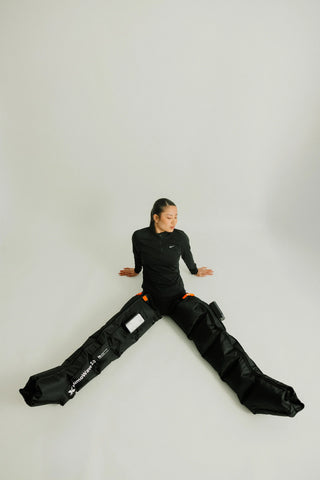
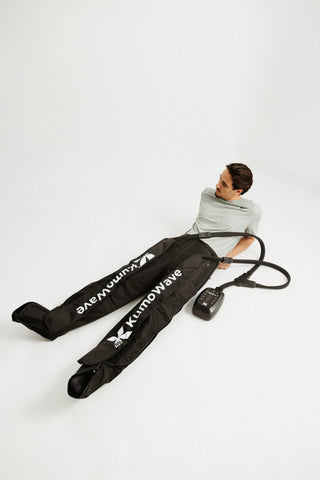
- Tired legs : alternate LED light with circulation habits; if it suits you, you can explore the pressotherapy collection .
- Targeted muscle release (calves, quadriceps, lower back): mechanical support with the KumoPulse Air massage gun .
If your priority is "body skin", the most effective thing is usually the combination of regularity (weeks), hydration , sun protection (when there is exposure) and intelligent use of the panel (without chasing heat or overexposure).
FAQ: Frequently asked questions about Kumo, LED panels and body skin
How often should I use Kumo red light therapy on my legs, back, and abdomen?
The ideal frequency depends on the device and your tolerance, but in practice, a consistent approach over several weeks usually works better than long, sporadic sessions. Trials with LED therapy have used multi-week plans (e.g., twice a week for four weeks in facial protocols) and also longer programs on large areas with up to 30 sessions. ( pubmed.ncbi.nlm.nih.gov ) As a general rule: start with a few weekly sessions, assess how your skin responds (no irritation or excessive heat), and adjust according to the Kumo device's instructions.
Can I combine Kumo LED panel with leg pressotherapy?
Yes, as a wellness routine, it's often a logical combination: LED light therapy is geared more towards skin and local recovery, while pressotherapy integrates into relaxation and circulation habits (especially after long hours on your feet or workouts). The key is not to "stack" the intensity: alternate sessions, pay attention to sensations (heat, skin sensitivity), and maintain hydration and rest. If you have a vascular condition, unusual pain, or significant inflammation, it's responsible to consult a healthcare professional before making it a routine.
Does red light therapy help with scars or marks on the back?
It can be helpful as a support in certain contexts, but let's be realistic: the evidence is stronger regarding parameters of skin texture, collagen, and quality than regarding "erasing" scars. There are dermatology reviews on the use of low-intensity light on skin and mechanisms compatible with repair. ( pubmed.ncbi.nlm.nih.gov ) Furthermore, there are trials with LED therapy in the context of scarring (for example, prevention of hypertrophic scars after surgery with 830 nm LEDs). ( pubmed.ncbi.nlm.nih.gov ) Even so, the type of scar, its age, and your skin type greatly affect the outcome; if you're concerned, dermatology is the best guide.
What distance and posture are best for using an LED panel on the abdomen without irritating the skin?
The most important thing is to avoid overheating and maintain even exposure: the panel should be perpendicular to the abdomen, the posture relaxed (breathing comfortably), and the intensity adjusted gradually. If you feel uncomfortable heat, increase the distance or reduce the duration. For home use, a recommendation widely repeated by dermatologists is to follow the device's instructions and take extra precautions if you have photosensitivity or are taking photosensitizing medication. ( aad.org ) If your skin becomes irritated after hair removal or using active cosmetics, wait a while before your session.
So what now?
If you want to make red light therapy a simple and sustainable habit, start by exploring Kumo 's premium recovery approach: you can see the LED light therapy for skin and recovery, complement leg treatments with compression therapy , and add localized shock absorption with KumoPulse Air . For questions about how to use it in your specific case (sensitive skin, medication, goals), please contact us through the contact page .

Red & infrared light
KumoLux Panel – Red and Infrared LED Panel
★★★★★ 4,8/5 · rated by verified customers
- 660 nm red + 850 nm infrared light
- Full-body muscle recovery
- Clinically validated biohacking protocols
€399,00€499,00· pay in installments with seQura or Klarna