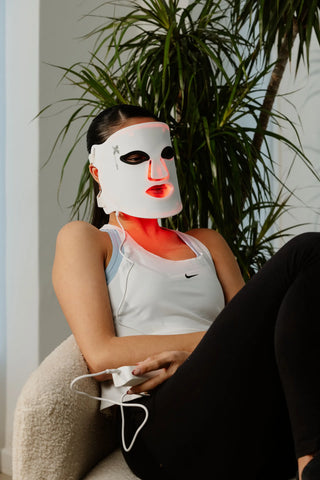


Red and infrared light can help with healing. Photobiomodulation shows promising results for some wounds, but the response depends heavily on the type of injury, the dosage, and the protocol used.
The key idea is this: we're not talking about a magic solution, but a complementary tool that can be beneficial when the wound is properly assessed and the treatment is well-adjusted. In practice, the evidence is more compelling for diabetic ulcers and surgical wounds than in other contexts, and the overall quality of studies remains inconsistent.
Red & infrared light
Recover faster, at home
★★★★★ 4,8/5 · rated by verified customers
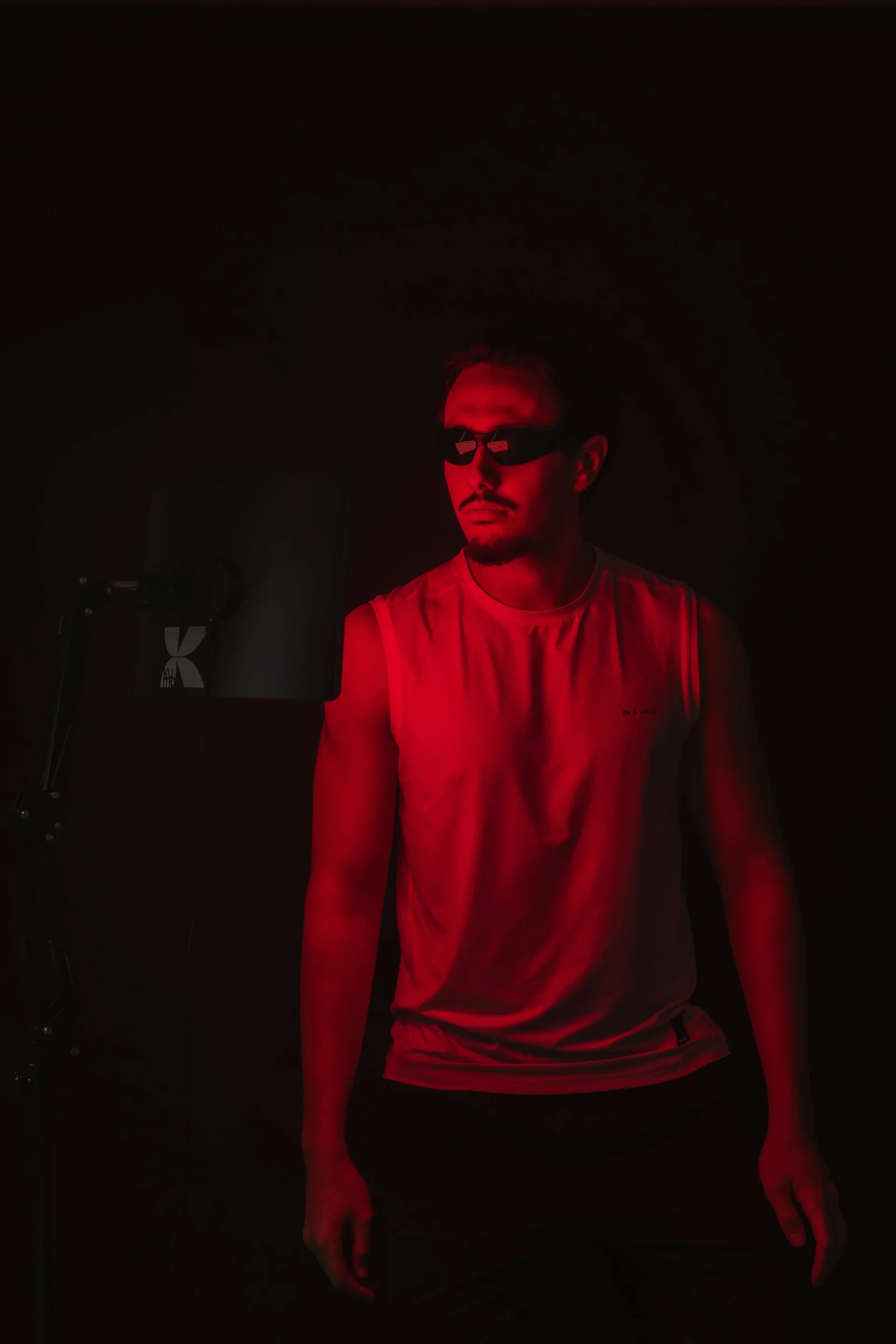
The KumoLux panel supports muscle recovery with full-body red and infrared light.
- 660 nm red + 850 nm infrared light
- Full-body muscle recovery
- Clinically validated biohacking protocols
€399,00€499,00
−10% on your 1st order when you subscribe to the newsletter

What is photobiomodulation and why red and infrared light are important
Photobiomodulation is the therapeutic use of red light and near-infrared light to modulate cellular processes related to tissue repair. At appropriate doses, this intervention is described as non-invasive and non-thermal; its goal is not to burn or cut, but to influence wound biology. (sciencedirect.com)
In practical terms, red light is usually around 630-660 nm and near-infrared around 800-900 nm. They do not act the same: they penetrate differently, which is why they are studied with different objectives. If you want to delve deeper into this nuance, the practical comparison between 660 nm and 850 nm helps to understand why not all configurations are equivalent.
Personalized protocol · included with your purchase
Want us to tell you how to use it in your case?
With your purchase, our experts set up your red and infrared light sessions for your sport and goal.
Message us on WhatsAppOur experts reply · no obligation
To broaden the general map of uses, red light therapy and its key benefits offers a useful overview of how this technology fits in beyond wounds.
What the clinical evidence says
Quick table of evidence by wound type
| Wound type | What the evidence suggests | Key reference |
|---|---|---|
| Surgical wounds | A systematic review and meta-analysis from 2026 included 56 trials and 4,920 patients; NIR light improved healing and reduced pain, although heterogeneity was high and certainty was very low. | 2026 Meta-analysis on infrared light and surgical wounds |
| Diabetic foot ulcers | A 2021 narrative synthesis compiled 13 studies and 417 participants; wavelengths 630-660 nm and 850/890 nm, with 3-7 J/cm², were the most promising, although there were issues with sample size and reproducibility. | 2021 Narrative synthesis on diabetic foot and lower leg |
| Diabetic foot ulcers | In a 2024 randomized trial, infrared LED showed the greatest reduction in ulcer area, with daily intervention for 12 weeks and a favorable clinical trend compared to control. | 2024 Randomized trial with red and infrared LED for diabetic ulcers |
| Burns | A 2023 systematic review and meta-analysis found that the evidence was primarily preclinical and that the 660 nm laser did not show a statistically significant effect on retraction or collagen deposition. | Meta-analysis on photobiomodulation in burns |
Overall, the clinical message is cautious: photobiomodulation can contribute, but it does not replace local wound care, debridement when appropriate, pressure relief in diabetic foot, or control of the underlying cause. In complex wounds, the combination of treatments is often more important than any isolated intervention.
Surgical wounds: a promising, but not definitive, signal
The 2026 review is relevant because it gathered a large sample and, even so, made it clear that results vary greatly depending on the protocol. It found improvement in healing and pain, but also very low certainty of evidence and strong variation between studies. In practice, this means that infrared light seems useful as support, but does not yet allow for a uniform outcome to be promised.
on your first order when you join the newsletter
We send you the code instantly. No spam.
Diabetic foot and chronic ulcers: where the evidence is most interesting
The 2021 narrative review on diabetic foot and lower leg ulcers gathered 13 studies and 417 participants, highlighting two particularly studied windows: 630-660 nm and 850-890 nm. It also pointed to exposures of 3-7 J/cm² as promising ranges. Nevertheless, the authors emphasize design problems, small sample sizes, and difficulties in reproducing protocols. the scientific basis of photobiomodulation and red light can help you put this data into context.
In a 2024 randomized trial, infrared LED was the group that showed the greatest tendency to reduce ulcer area after 12 weeks of daily application. This is an interesting clinical signal, but not proof that all ulcers respond the same or that a single configuration works for all cases.
If you are interested in the relationship between inflammation and recovery, red and infrared light to reduce muscle inflammation shows another application where the goal is also to modulate the inflammatory response.
Burns and other complex wounds: consistency is still lacking
The evidence for burns is weaker and, above all, more preclinical. The 2023 review and meta-analysis did not find a statistically significant effect for 660 nm laser on wound retraction or collagen deposition, and also highlighted the need for more homogeneous studies. In other words: the potential exists, but it should not be sold as a complete solution.
How it could promote healing
Cellular mechanisms that make biological sense
The most accepted explanation is that red and infrared light interacts with cellular machinery, especially mitochondrial cytochrome c oxidase. From there, changes in ATP, nitric oxide, and redox signals are described that can promote repair, cell migration, and inflammation control. (pmc.ncbi.nlm.nih.gov)
A Frontiers review focused on fibroblasts in diabetic wounds summarizes the idea well: PBM could influence key cells for repair when the wound environment is hindered by inflammation or poor perfusion. Frontiers review on fibroblasts and diabetic wounds.
In dermatology, a comprehensive review published in PMC covers effects on genes and mediators such as VEGF, PDGF, FGF2, and MMP, also noting that more evidence is still needed for dark skin phototypes and standard protocols. Dermatological review on mechanisms and limitations of photobiomodulation.
- It can promote the proliferation of fibroblasts and keratinocytes, two cell types essential for closing and reorganizing the wound. (pubmed.ncbi.nlm.nih.gov)
- It can modulate macrophage activity towards a more reparative profile, which helps organize the inflammatory phase.
- It can support angiogenesis and extracellular matrix remodeling, important steps for new tissue to gain stability.
Dosage matters more than it seems
In photobiomodulation, more is not always better. The literature describes a biphasic response: an insufficient dose may produce no effect, and an excessive dose may reduce the benefit. Furthermore, several authors continue to insist that there is no well-established universal protocol, because wavelength, fluence, distance, and number of sessions change the result. (pubmed.ncbi.nlm.nih.gov)
This also explains why the most recent reviews indicate different usage windows depending on the context: in surgery, the 2026 meta-analysis found better results with 700-850 nm, 4-10 sessions, and non-contact application; in diabetic foot, the 2021 synthesis favored 630-660 nm and 850-890 nm with 3-7 J/cm². The pattern is not a single recipe, but a clue on how to adjust the treatment to the objective.
How to integrate it into practice without exaggerating results
The most sensible way to use this technology is as a complement to a standard wound care plan, not as a substitute. In diabetic foot, for example, glucose control, pressure relief, and debridement remain crucial determinants of the clinical outcome. Light can help, but it doesn't correct the underlying cause on its own.
It is also important to accept the methodological reality: most studies do not measure exactly the same things, use different timings, and compare protocols that are difficult to reproduce. Therefore, when a device promises universal results, it is wise to return to the evidence and not the slogan.
If you want to continue exploring when and why it is used, red light before or after training helps to see how exposure time is organized in other recovery contexts.
And if you're interested in a broader practical application, the combined LED technology routine shows how light is considered part of a strategy, not an isolated action.
Safety, limitations, and precautions
Photobiomodulation is generally well tolerated when used correctly, but it should not be trivialized. Eye protection must be respected, recommended exposure time followed, and contraindications reviewed if photosensitivity, active bleeding, or an injury requiring priority medical assessment exists.
There are also limitations that do not disappear no matter how much marketing there is around: for burns, the evidence remains weak, for some groups the evidence is scarce, and protocols are not yet standardized. Therefore, the best criterion remains clinical judgment.
In summary, red and infrared light can be a reasonable ally when used in the appropriate context, but it does not replace either diagnosis or basic care. Prudence, here, is also part of the treatment.
FAQ
Does red and infrared light accelerate the healing of any wound?
No. The most compelling evidence focuses on diabetic foot ulcers and surgical wounds, while in burns and other scenarios the results are much less consistent. Even in surgery, a large review from 2026 found benefit, but with very low certainty and high heterogeneity. It is most accurate to see it as a complementary aid, not a universal solution for all wounds.
What is the real difference between 660 nm and 850 nm?
The main difference lies in penetration and how they interact with tissue. 660 nm red light is usually studied more for superficial layers, while near-infrared, around 850 nm, is often used when a slightly deeper penetration is desired. In diabetic foot, both ranges have shown positive signals, but the choice depends on the objective, lesion depth, and protocol.
Is it effective for diabetic ulcers?
This is one of the contexts with the most clinical interest. A 2021 narrative synthesis brought together 13 studies and 417 participants and found promising ranges of 630-660 nm and 850-890 nm, in addition to 3-7 J/cm². A 2024 randomized trial also observed a favorable trend, especially with infrared light. Even so, it remains a complementary therapy and does not replace standard diabetic foot treatment.
How many sessions are usually used?
There is no single protocol, but reviews help to guide. For surgical wounds, the 2026 meta-analysis found better results with 4-10 sessions and non-contact application. For diabetic foot, the 2024 trial used daily sessions for 12 weeks. In practice, the total duration depends on the injury, the objective, and the clinical response, not just the device.
Is it safe to use at home?
It can be if used judiciously, but it shouldn't be improvised. The literature recommends eye protection, control of exposure time, and attention to contraindications, especially in people with photosensitivity or if the wound shows warning signs. Furthermore, the quality of evidence and protocol standardization continue to improve, so using a home device is not equivalent to having an automatic and universal treatment.
What now?
If you want to incorporate red and infrared light into a recovery routine with more discernment, explore the KumoLux Red and Infrared Light Panel and return to the Kumo Balance homepage to see the brand's full approach.

Red & infrared light
KumoLux Panel – Red and Infrared LED Panel
★★★★★ 4,8/5 · rated by verified customers
- 660 nm red + 850 nm infrared light
- Full-body muscle recovery
- Clinically validated biohacking protocols
€399,00€499,00· pay in installments with seQura or Klarna