
Red light and the thyroid have indeed been studied. In current evidence, photobiomodulation appears promising as support in some cases of autoimmune thyroiditis, but it remains neither a standard treatment nor a solution for all types of hypothyroidism.
The cautious interpretation is this: for Hashimoto's, there are interesting signals, but the studies are small and very heterogeneous. In contrast, when discussing thyroid nodules or a history of thyroid cancer, the information is much weaker and necessitates conservatism. The primary treatment for hypothyroidism due to Hashimoto's remains levothyroxine. (mdpi.com)
Red & infrared light
Recover faster, at home
★★★★★ 4,8/5 · rated by verified customers
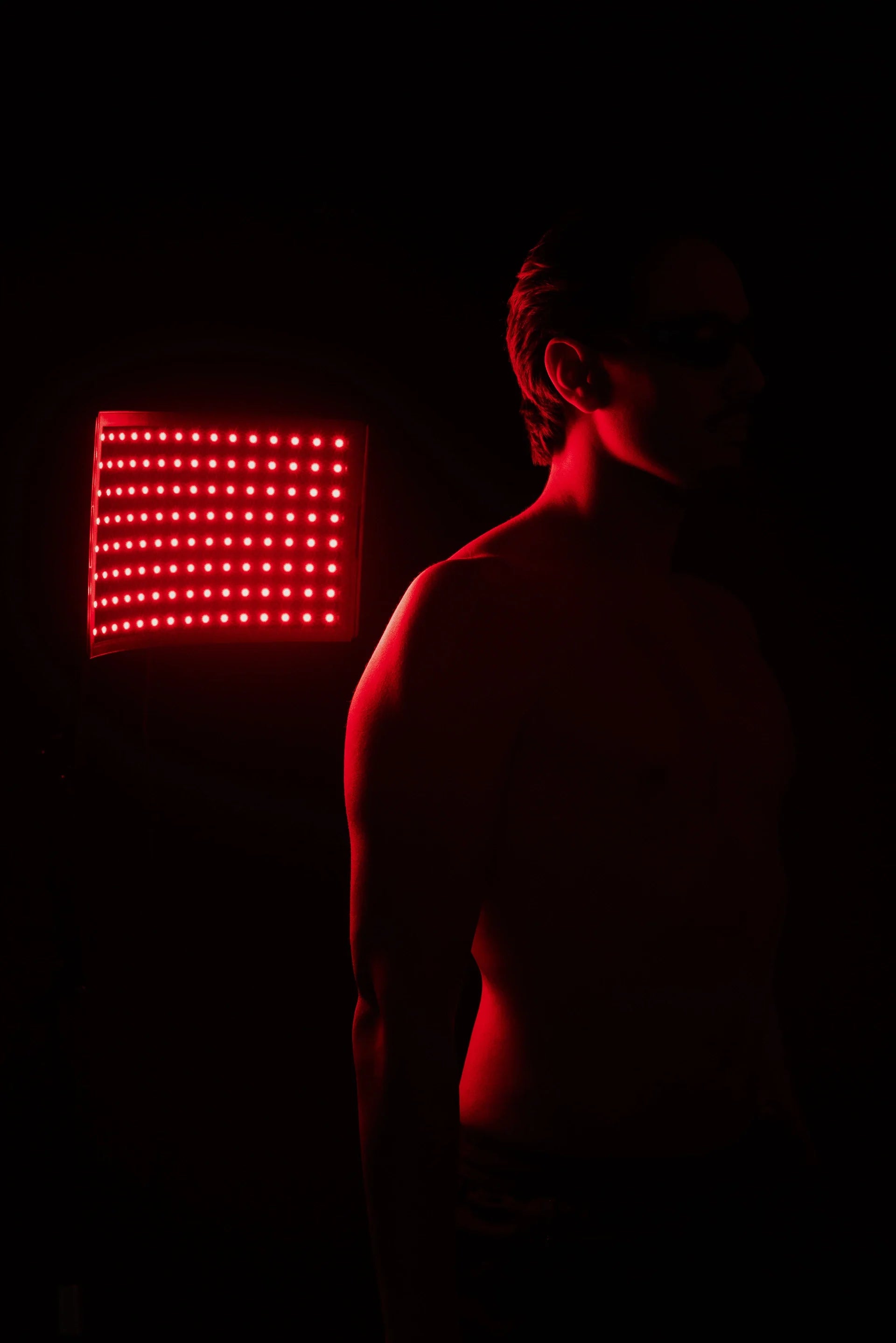
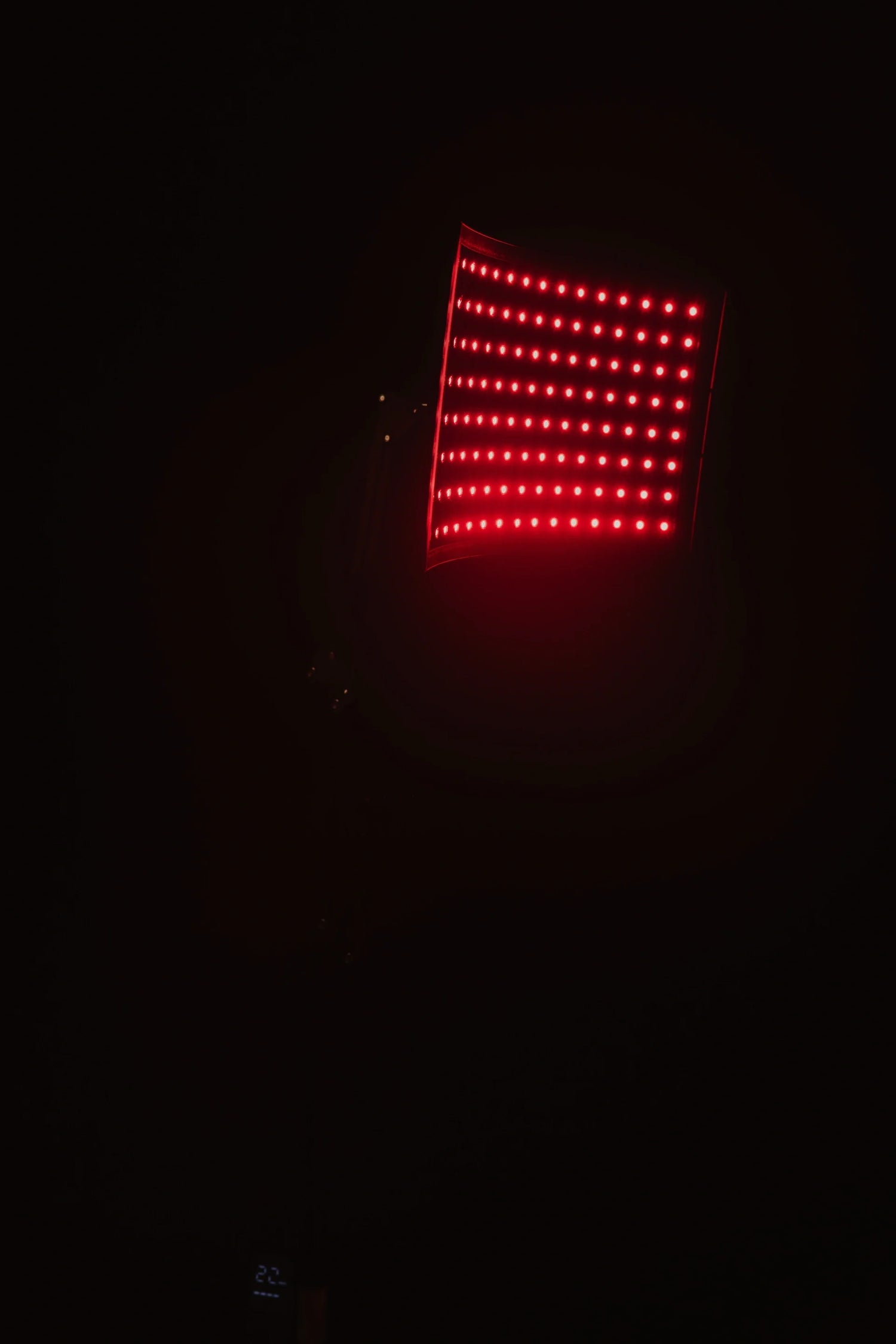
The KumoLux panel supports muscle recovery with full-body red and infrared light.
- 660 nm red + 850 nm infrared light
- Full-body muscle recovery
- Clinically validated biohacking protocols
€399,00€499,00
−10% on your 1st order when you subscribe to the newsletter

What exactly is red light applied to the thyroid?
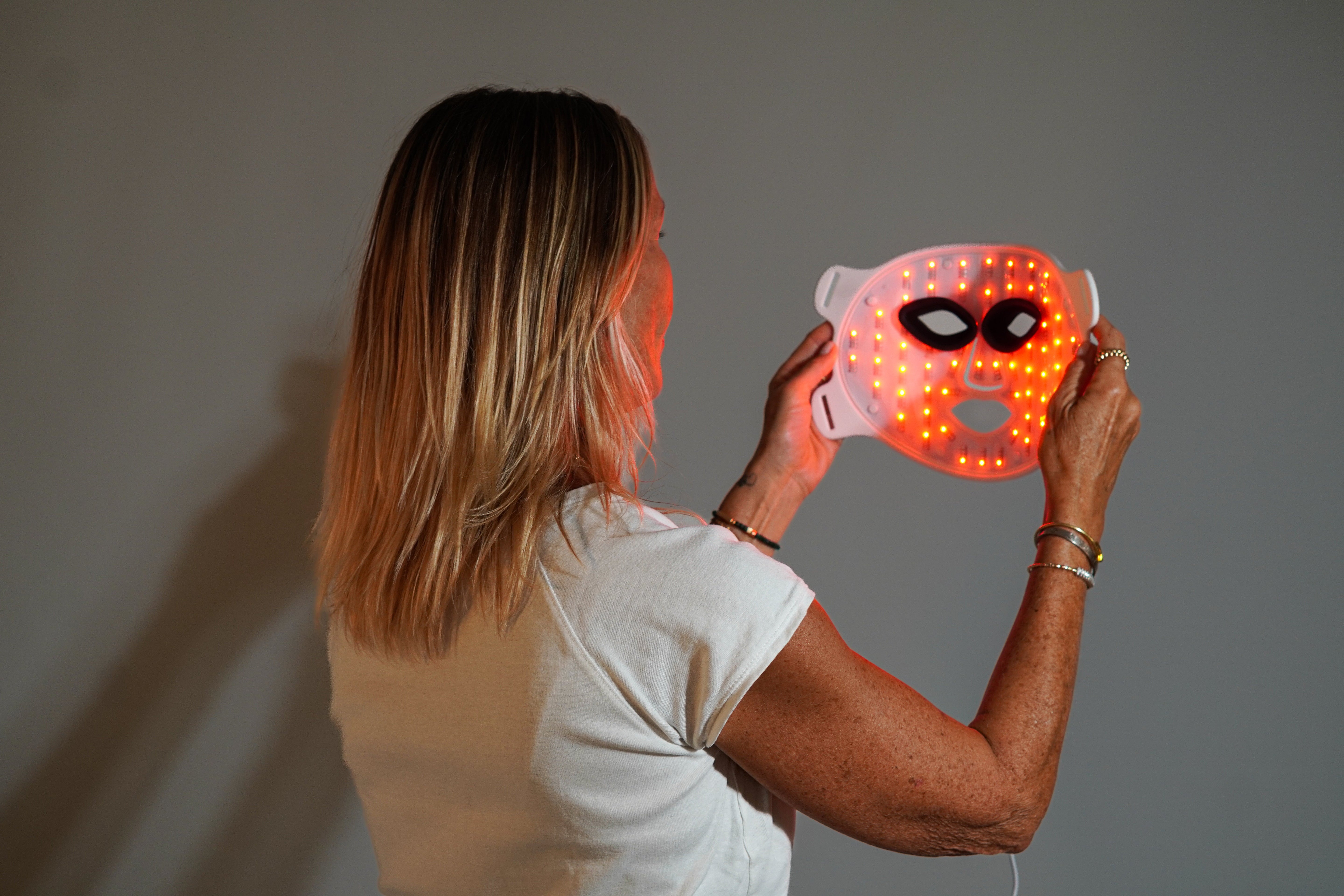
When talking about "red light for the thyroid," one is usually referring to photobiomodulation or low-level laser therapy: a controlled exposure to red or near-infrared light with specific parameters of wavelength, dosage, number of sessions, and application area. In the literature on autoimmune thyroiditis, most studies use near-infrared light and different protocols, which makes it difficult to compare results and draw universal conclusions.
If you wish to broaden your understanding of the general framework of this technique, the scientific explanation of red light therapy and the proven benefits of red light in 2025 help to distinguish between what is well-supported and what is merely promising.
Personalized protocol · included with your purchase
Want us to tell you how to use it in your case?
With your purchase, our experts set up your red and infrared light sessions for your sport and goal.
Message us on WhatsAppOur experts reply · no obligation
What studies show for Hashimoto's
The most cited evidence focuses on chronic autoimmune thyroiditis, i.e., Hashimoto's. In the 2010 pilot study on autoimmune thyroiditis, 15 patients treated with levothyroxine received 10 sessions of LLLT; during follow-up, 7 of 15 no longer needed levothyroxine. Later, a 6-year follow-up reported a lower hormone dose in the treated group and found no clear sign of autoimmune worsening or problematic increase in nodules compared to placebo.
A trial on the T3/T4 ratio in Hashimoto's observed an improvement in that ratio and a reduced need for hormone replacement, and a 2024 study in Hashimoto's patients added improvements in oxidative stress markers and quality of life when photobiomodulation was combined with levothyroxine. Still, all of this remains supportive evidence, not proof that the thyroid is "cured" with light.
Quick comparison of evidence
| Study | What was investigated | What was observed | What limits its interpretation |
|---|---|---|---|
| 2010, pilot | LLLT in patients with autoimmune thyroiditis treated with levothyroxine. | Reduced need for levothyroxine; 7 out of 15 did not need it at follow-up. | Small sample size and inability to establish a universal protocol. |
| 2018, 6-year follow-up | Long-term safety after a previous clinical trial. | Lower levothyroxine dose in the treated group; no clear difference in thyroid antibodies; no evident excess of nodules. | The population was specific and does not allow extrapolation to all thyroid patients. |
| 2020, T3/T4 trial | Relationship between photobiomodulation, thyroid function, and hormonal need. | Improvement in T3/T4 ratio and reduced hormone demand. | Does not, by itself, demonstrate a consistent effect in all cases of hypothyroidism. |
| 2024, study in Hashimoto's | Oxidative stress, thyroid function, and quality of life. | Improvements in oxidative biomarkers and quality of life with LLLT + levothyroxine. (pubmed.ncbi.nlm.nih.gov) | Still a developing field with a need for larger trials. |
| Recent systematic review | Synthesis of literature on autoimmune thyroiditis and photobiomodulation. | Promising pattern, but high variability of protocols; quantitative meta-analysis could not be performed. | Heterogeneity prevents converting findings into general recommendations. |
The key idea is simple: there are favorable signals, especially in Hashimoto's, but a universal recipe for dosage, frequency, or duration does not yet exist. Therefore, today, red light should be viewed as a possible complementary tool and not as a substitute for endocrine therapy.
on your first order when you join the newsletter
We send you the code instantly. No spam.
How it might work: cellular energy, inflammation, and tissue repair
At a biological level, photobiomodulation has been described as a way to modulate cellular bioenergetics, inflammatory signaling, and tissue repair. This is the hypothesis explaining why some studies find less oxidative stress, reduced hormonal need, or better quality of life, even though we don't yet know exactly which patients respond best or with what parameters. (pubmed.ncbi.nlm.nih.gov)
If you want to understand how it is applied outside the thyroid context, this guide on using red light at home helps to see why the protocol matters as much as the technology.
Safety: thyroid nodules, cancer, and limits of use
Safety is the most delicate point. A review on the oncological safety of photobiomodulation concluded that there is no relevant clinical data linking it to new or recurrent malignancy and that the available clinical and preclinical evidence is, in general, reassuring in an oncological context; however, this conclusion is not equivalent to authorizing its indiscriminate use on the thyroid. (academic.oup.com)
Furthermore, caution is warranted: a study on anaplastic thyroid cancer cells observed increased proliferation and angiogenesis under certain LLLT parameters, and a recent trial on Hashimoto's excluded thyroid nodules, thyroid surgery, cervical neoplasia, and a history of malignancy. By inference, this tells us that safety in suspicious nodules or thyroid cancer is not well-established. (journals.sagepub.com)
Not all hypothyroidisms are equal
The available evidence focuses almost entirely on Hashimoto's or chronic autoimmune thyroiditis. This means it cannot be extrapolated directly to postsurgical, central, postpartum hypothyroidism, or other forms of "deregulated thyroid." In other words: if the cause is not Hashimoto's, photobiomodulation should be considered experimental until specific studies are available.
- It could make sense as a complement in already diagnosed Hashimoto's, with levothyroxine and medical follow-up, if the goal is to explore additional support and not replace standard treatment.
- It should not be used on one's own if there are suspicious nodules, recent thyroid surgery, or a history of malignancy in the neck. (pmc.ncbi.nlm.nih.gov)
- It is not a shortcut to discontinuing levothyroxine, because the reference treatment for hypothyroidism due to Hashimoto's remains hormone replacement. (pubmed.ncbi.nlm.nih.gov)
FAQ
Can red light therapy help improve thyroid function in people with autoimmune hypothyroidism (Hashimoto's) according to scientific evidence?
Yes, but with nuances. In Hashimoto's, several small trials and a recent review suggest that photobiomodulation can improve some thyroid markers and, in certain patients, reduce the levothyroxine dose. However, the systematic review also emphasizes that protocols vary widely and that the evidence remains heterogeneous. Therefore, today it is considered a possible complement, not a substitute treatment or a cure.
What do studies say about the safety of red light for the thyroid in the presence of thyroid nodules or a history of thyroid cancer?
The honest answer is that solid evidence is lacking. A long-term follow-up in autoimmune thyroiditis did not show a clear excess of nodules in the treated group, but a recent trial excluded nodules, thyroid surgery, and malignancy, making it clear that these profiles are not well-studied. Furthermore, a study on anaplastic thyroid cancer cells found increased proliferation under certain parameters. In these cases, medical caution is mandatory.
Does photobiomodulation with red light influence the conversion of T4 to T3 and the thyroid's hormonal demand?
There are interesting, but not definitive, signals. A trial in Hashimoto's reported an improvement in the T3/T4 ratio and a reduced need for levothyroxine, and other studies also suggest favorable changes in function and quality of life. Still, this does not prove that red light consistently converts T4 to T3 in all people; the effect seems to depend on the protocol, the tissue, and the initial state.
Are there differences in the effects of red light on the thyroid between primary hypothyroidism and thyroid deregulation due to other causes?
Yes. The evidence is concentrated almost entirely on chronic autoimmune thyroiditis, so it cannot be extrapolated directly to postsurgical, central, postpartum hypothyroidism, or other causes. A recent study even excluded several of these profiles, highlighting the data gap. In practice, if the cause of thyroid alteration is not Hashimoto's, photobiomodulation should be considered experimental until specific studies are available.
What do systematic reviews say about the use of red light for thyroid health and when might it be considered as a complementary treatment?
The recent systematic review on autoimmune thyroiditis found promising, but very heterogeneous, literature, and therefore could not perform a quantitative meta-analysis. This means that there is not yet a universal protocol or strong recommendation for its use. At most, it could be considered as a complement in well-diagnosed Hashimoto's, with an endocrinologist, clear objectives, and analytical follow-up, never as a substitute for standard treatment.
What now?
If you are interested in continuing to learn with a cautious approach, start by visiting the Kumo Balance website, review the general guide on red light therapy, and consult how to use it at home properly. The key is not "more light," but better judgment.

Red & infrared light
KumoLux Panel – Red and Infrared LED Panel
★★★★★ 4,8/5 · rated by verified customers
- 660 nm red + 850 nm infrared light
- Full-body muscle recovery
- Clinically validated biohacking protocols
€399,00€499,00· pay in installments with seQura or Klarna