
They are not the same. Red light and near-infrared light are used for different purposes within facial photobiomodulation.
If you're looking to improve texture, mild breakouts, or fine lines, red light is often the most direct option; if you want a more global approach to firmness and tissue support, the combination with near-infrared is usually more versatile.
Red & infrared light
Recover faster, at home
★★★★★ 4,8/5 · rated by verified customers
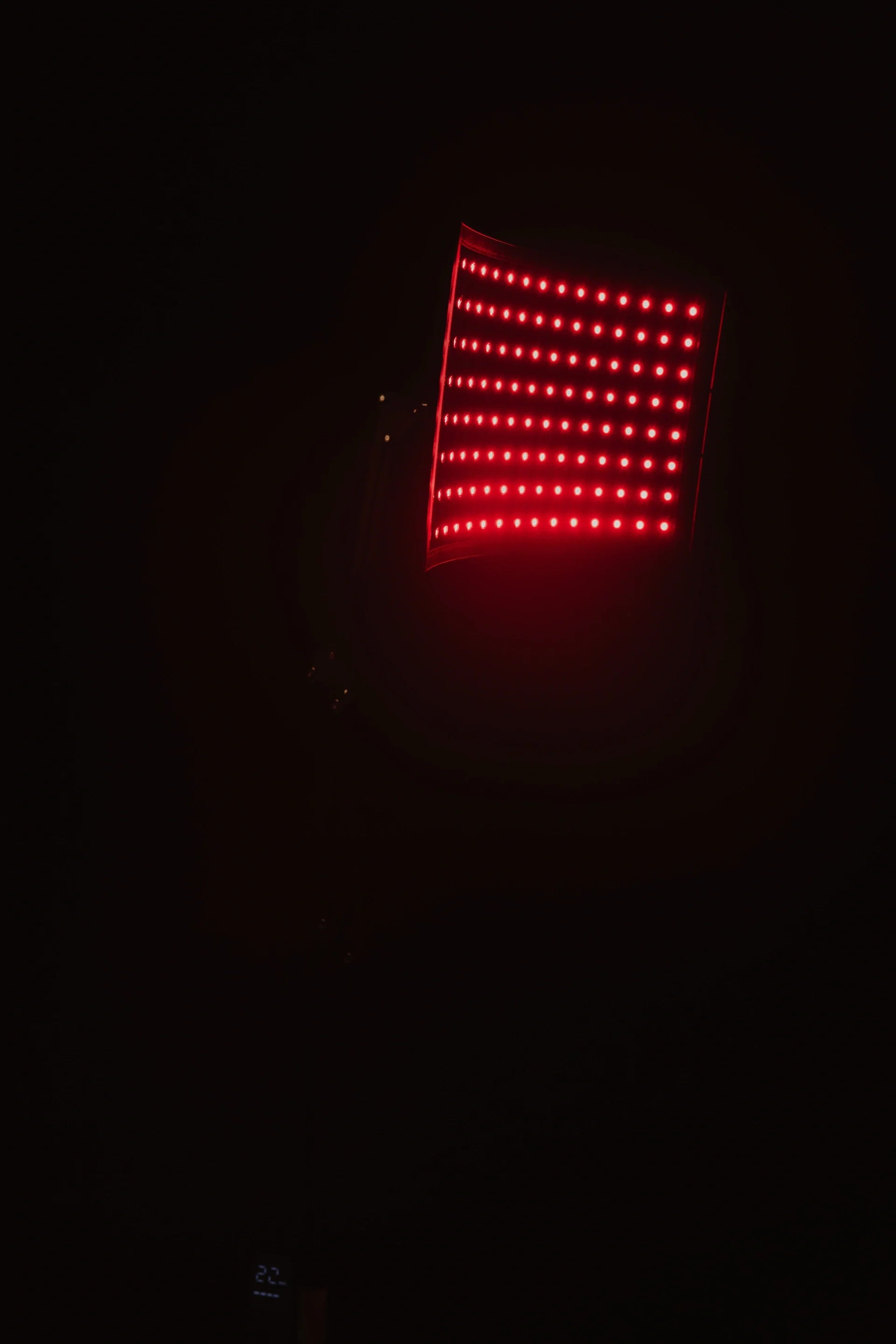
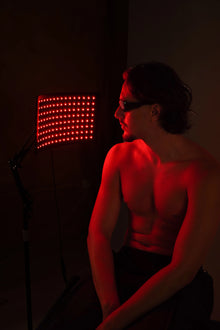
The KumoLux panel supports muscle recovery with full-body red and infrared light.
- 660 nm red + 850 nm infrared light
- Full-body muscle recovery
- Clinically validated biohacking protocols
€399,00€499,00
−10% on your 1st order when you subscribe to the newsletter

What really changes between the two lights
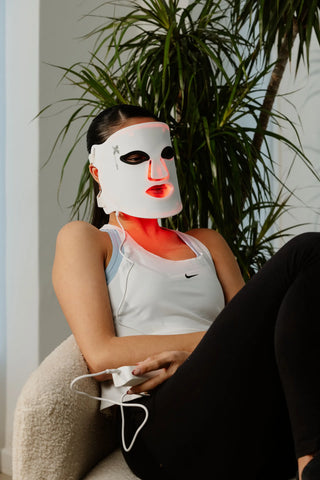
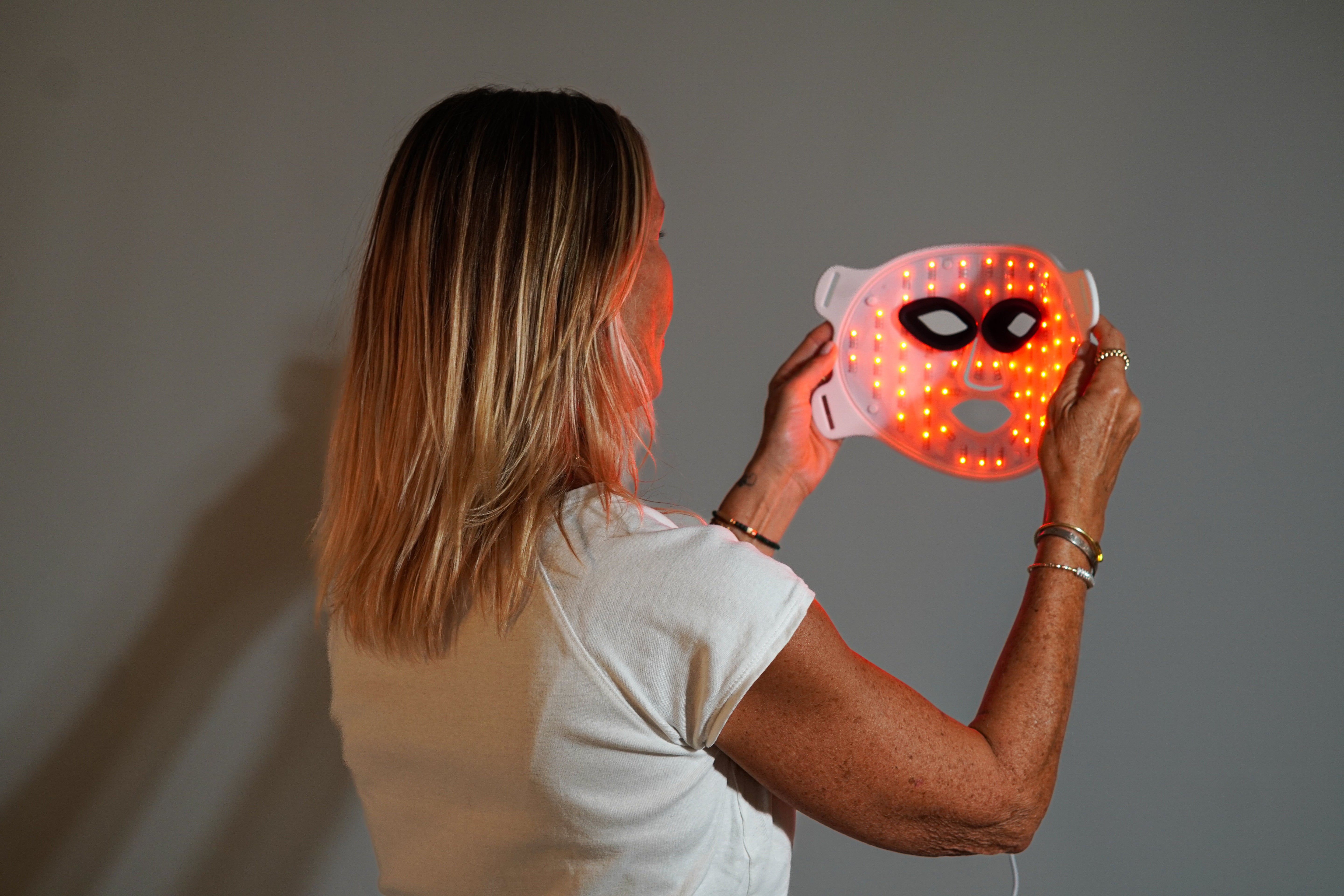
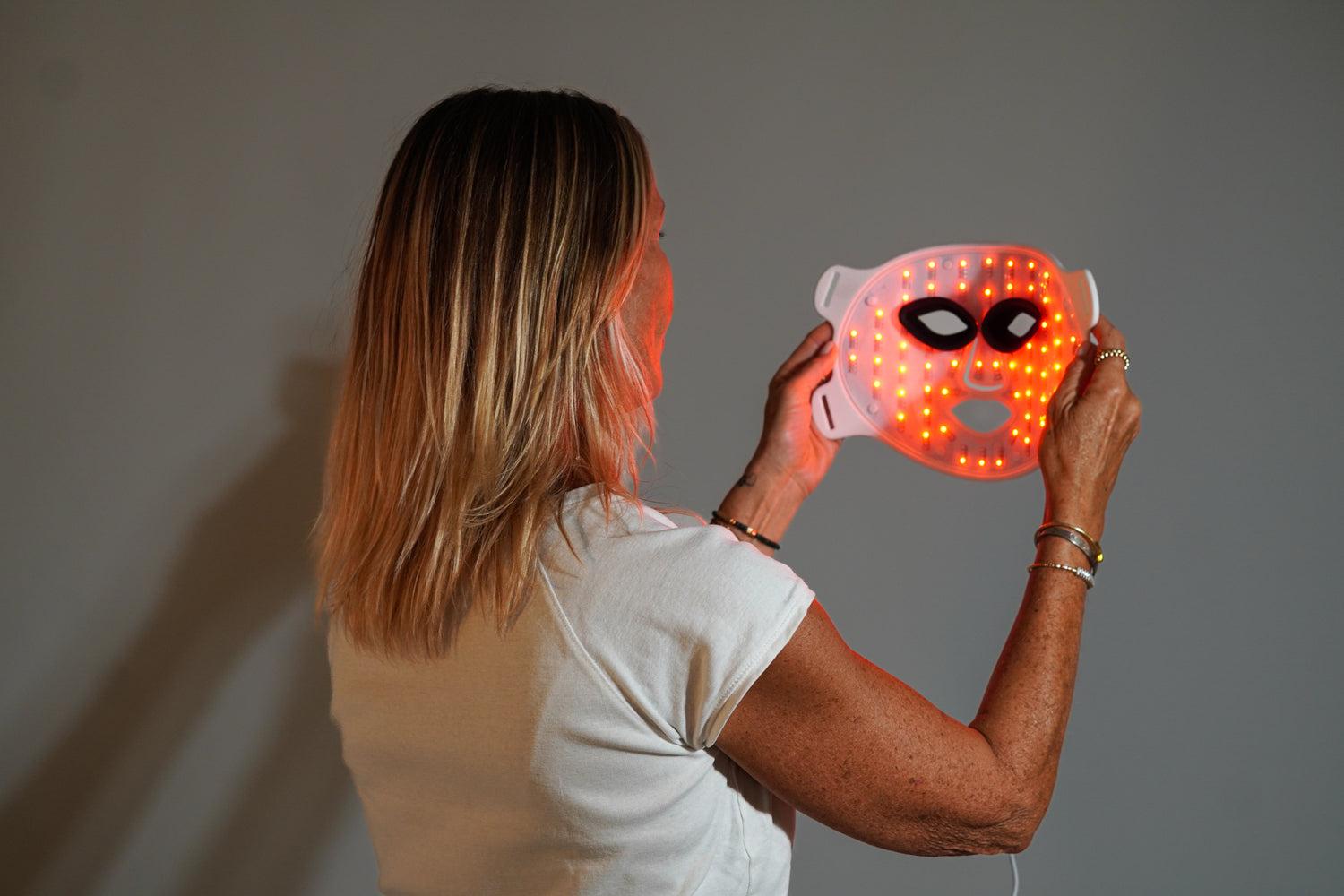
In LED facial masks, red light typically works around 630-660 nm and near-infrared light around 830-850 nm. These ranges frequently appear in clinical trials and home rejuvenation studies.
The useful difference is not just the color: in practical terms, near-infrared is chosen when you want to extend the reach to deeper tissues, while red is used more for surface objectives. This is a useful inference from published protocols, not a rigid rule for all devices.
Personalized protocol · included with your purchase
Want us to tell you how to use it in your case?
With your purchase, our experts set up your red and infrared light sessions for your sport and goal.
Message us on WhatsAppOur experts reply · no obligation
If you want to review the technical part without getting lost in numbers, the guide to colors and wavelengths in LED facial masks and the article on what an LED facial mask is and how it works will be helpful.
Quick comparison between red light and near-infrared light
| Option | Typical Wavelength | Most Frequent Objective | When it usually fits best |
|---|---|---|---|
| Red Light | 630-660 nm | Texture, fine lines, and support for mild breakouts. | It's a solid entry point if you want to prioritize visible skin and a simple routine. |
| Near-Infrared | 830-850 nm | Firmness, tissue support, and more global rejuvenation. | It usually fits best when you're looking to extend the reach of the treatment beyond the surface. |
| Combination | 630/850 nm or similar | Complete routines and broad anti-aging goals. | It's the most versatile option if you want a single mask for multiple skin goals. |
The best choice is not the "most powerful" light, but the one that aligns with your goal and how consistently you will actually use it. (aad.org)
Which to choose based on your skin type
Dry or dehydrated skin
If your skin tends to feel tight, flaky, or uncomfortable, you'll usually be interested in a gentle and consistent approach rather than aggressive exposure. In that scenario, the red + near-infrared combination often makes sense because facial rejuvenation trials work precisely with that pairing; if you're only going to choose one, start with red and observe how your skin responds. To delve deeper into this profile, how to enhance results in dry and dehydrated skin may also help you.
on your first order when you join the newsletter
We send you the code instantly. No spam.
Oily or acne-prone skin
For skin with shine, visible pores, or inflammatory breakouts, red light is often the first choice among these two because it appears most often in acne trials and in home uses described by dermatology. A randomized trial showed improvement in mild to moderate acne vulgaris with red light alone, so it may fit if your main goal is to calm inflammation, not "dry out" the skin.
Sensitive or reactive skin
If your skin easily reddens or often reacts, prudence dictates: short sessions, low initial exposure, and observation of tolerance. The American Academy of Dermatology indicates that adverse effects are usually mild, but also reminds that darker skin can be more sensitive to visible light. Therefore, for reactive skin, it's usually wiser to start with red and not with the device's "most intense" option.
Mature or sagging skin
If you're concerned about fine wrinkles, dull texture, or loss of firmness, the combination usually fares better than choosing a single color in isolation. In clinical studies with 611-650 nm and 570-850 nm, improvements were observed in fine lines, skin roughness, and collagen density, and 630/850 nm home protocols point in the same direction.
Dark skin or skin prone to post-inflammatory hyperpigmentation
For higher phototypes, there is no general prohibition, but it is advisable to individualize the routine more because the AAD notes greater sensitivity to visible light in darker skin tones. If this is your case, prioritize the most conservative adjustment, avoid increasing exposure impulsively, and if you have a history of spots or irritation, rely on professional judgment.
How to use the mask to get the most out of it
A good choice of light is of little use if the routine is chaotic. To organize the process, you can rely on an evening facial routine with an LED mask and turn it into a simple, repeatable, and comfortable habit.
- Start with the manufacturer's guidelines, as the literature does not offer a universal duration valid for all masks.
- If your skin is reactive, progress slowly and prioritize consistency over intensity.
- Evaluate the skin after several weeks, not just one session, because clinical studies use different schemes and results are seen with repetition.
- If you alternate goals, remember that the same mask can serve more than one need, but not every day requires the same approach.
The best LED mask is not the most striking, but the one that fits your goal, your tolerance, and your real ability to maintain it over time.
What the scientific evidence says
In a controlled trial with 136 volunteers, protocols of 611-650 nm and 570-850 nm were associated with improvements in skin perception, fine lines, roughness, and intradermal collagen density compared to controls.
In a multicenter, double-blind study on a home LED and IRED mask, the 630/850 nm protocol was described as effective, safe, well-tolerated, and painless for facial rejuvenation. This does not mean that all masks are the same, but it does mean that the combination of both ranges has real clinical backing.
For acne, a randomized trial with red light alone showed improvements in mild to moderate acne vulgaris, making it a reasonable option if your priority is controlling inflammatory breakouts. Even so, if your acne is persistent or severe, the LED mask should be seen as a complement, not a substitute for a dermatological plan.
If you want to broaden your understanding of when a mask adds value and when it's better to be more cautious, the article on benefits and risks of the LED facial mask will help you set realistic expectations.
Frequently Asked Questions
What are the differences between red light and near-infrared light in an LED mask and which is suitable for your skin type?
Red light and near-infrared light do not do the same thing: in the most common protocols, red light is around 630-660 nm and near-infrared light is around 830-850 nm. In practice, red light usually works better for visible skin concerns, such as texture, fine lines, or mild breakouts, while the combination with near-infrared is usually more versatile when you are looking for a global effect. If your skin is sensitive, starting with red is usually the most cautious option.
Is red light or infrared light more effective for reducing wrinkles and stimulating collagen in facial masks?
There isn't a universal "winner" for everyone, but the available evidence strongly favors the combination of both. In the controlled trial with 136 volunteers, both the 611-650 nm and 570-850 nm ranges were associated with improvements in fine wrinkles and collagen density. This suggests that for global anti-aging, a mask that combines red and near-infrared is usually more complete than a single-color one.
How to choose an LED mask according to your skin type (dry, oily, sensitive) and care goals?
If your skin is dry or dehydrated, prioritize a gentle and consistent routine, ideally with a red + NIR combination if the goal is anti-aging. If your skin is oily or prone to breakouts, red light may be the most logical option among these two. And if it's sensitive, start with less exposure and observe tolerance. The important thing is not the biggest promise, but choosing a wavelength that you can sustain without irritation.
What wavelengths does an LED mask use for facial rejuvenation and what benefits does each provide?
The most common ones in facial rejuvenation are red light, around 630-660 nm, and near-infrared light, around 830-850 nm. Red light is usually associated with texture, fine lines, and more even skin; near-infrared light usually appears in protocols that seek a more global response and broader reach. In clinical studies, the combination of both wavelengths is one of the most repeated formulas.
Is it safe to use a red and infrared LED mask daily and how long does each session last?
In the short term, red light therapy is generally considered safe with mild side effects, but there is no universal duration valid for all masks. The best reference remains the manufacturer's protocol and your skin's response. If you are sensitive, start slowly and let consistency set the pace. In other words: a well-tolerated routine is better than an overly ambitious session.
What now?
If you want to move from theory to a simple routine, choose the wavelength that best suits your skin and make it a habit. You can start with KumoSkin Mask and return to the Kumo Balance homepage to explore more recovery and wellness solutions adapted to your daily life.

Red & infrared light
KumoLux Panel – Red and Infrared LED Panel
★★★★★ 4,8/5 · rated by verified customers
- 660 nm red + 850 nm infrared light
- Full-body muscle recovery
- Clinically validated biohacking protocols
€399,00€499,00· pay in installments with seQura or Klarna