
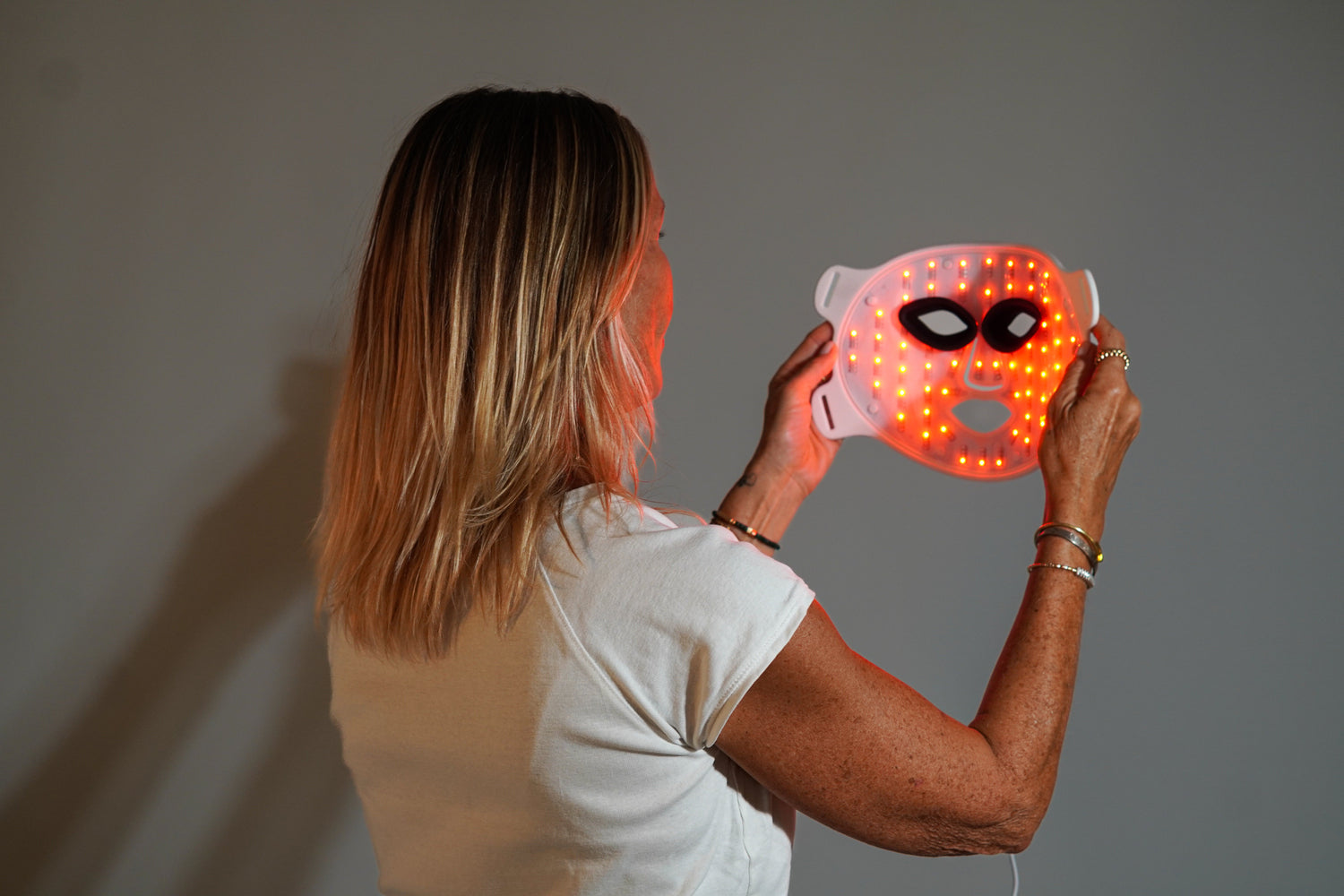

Green light is indeed beneficial for dark spots. If you're looking for a short answer, it can help in specific cases, but it depends on the device and the type of pigmentation. Visible light can influence melasma and other hyperpigmentations, so a green LED mask is being studied as a support to even out skin tone, not as a miracle cure.
The key lies in expectation: the evidence is promising but still limited, and results vary greatly depending on the wavelength, dose, and usage protocol.
Facial red light
Bring your skin back to life
★★★★★ 4,8/5 · rated by verified customers
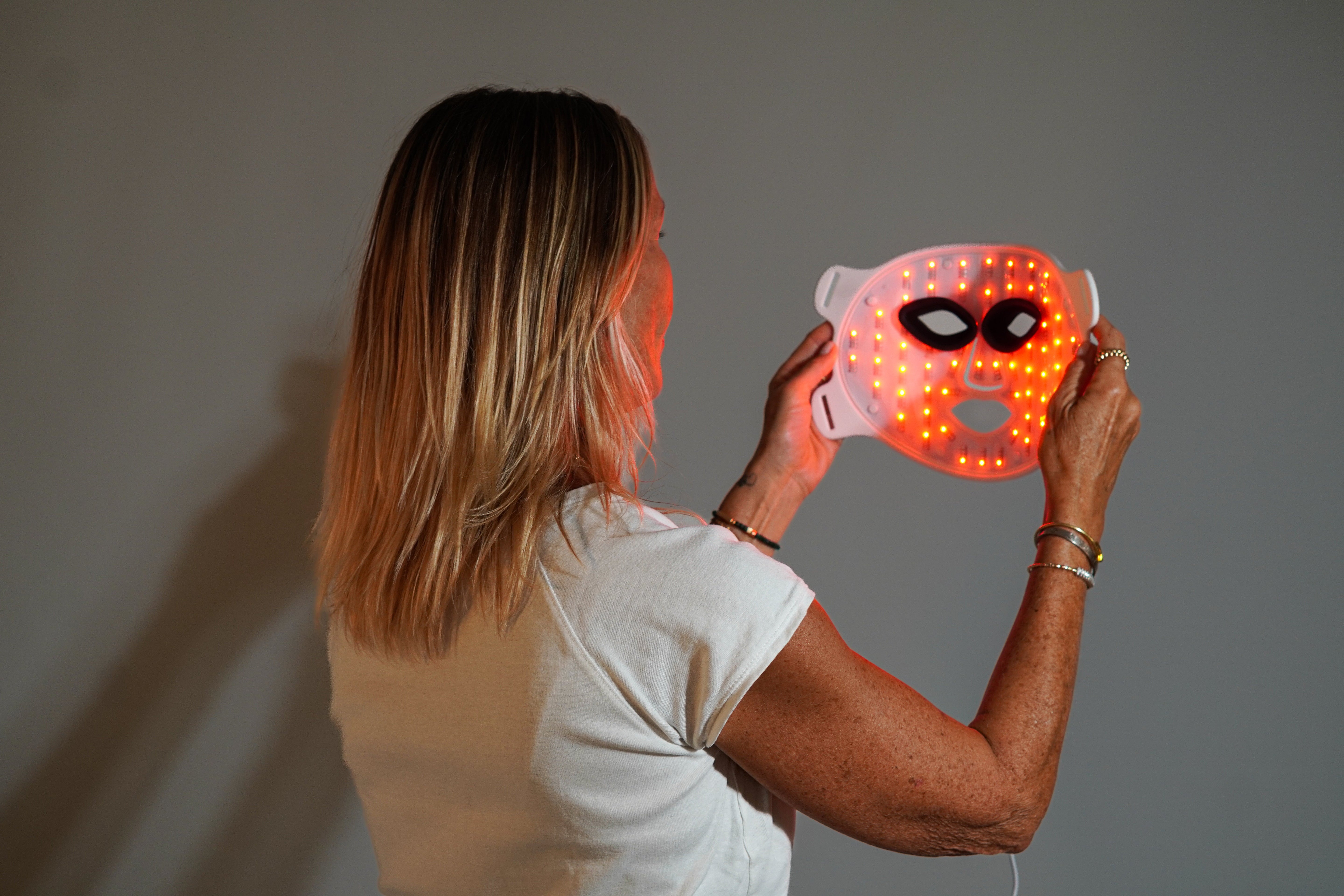
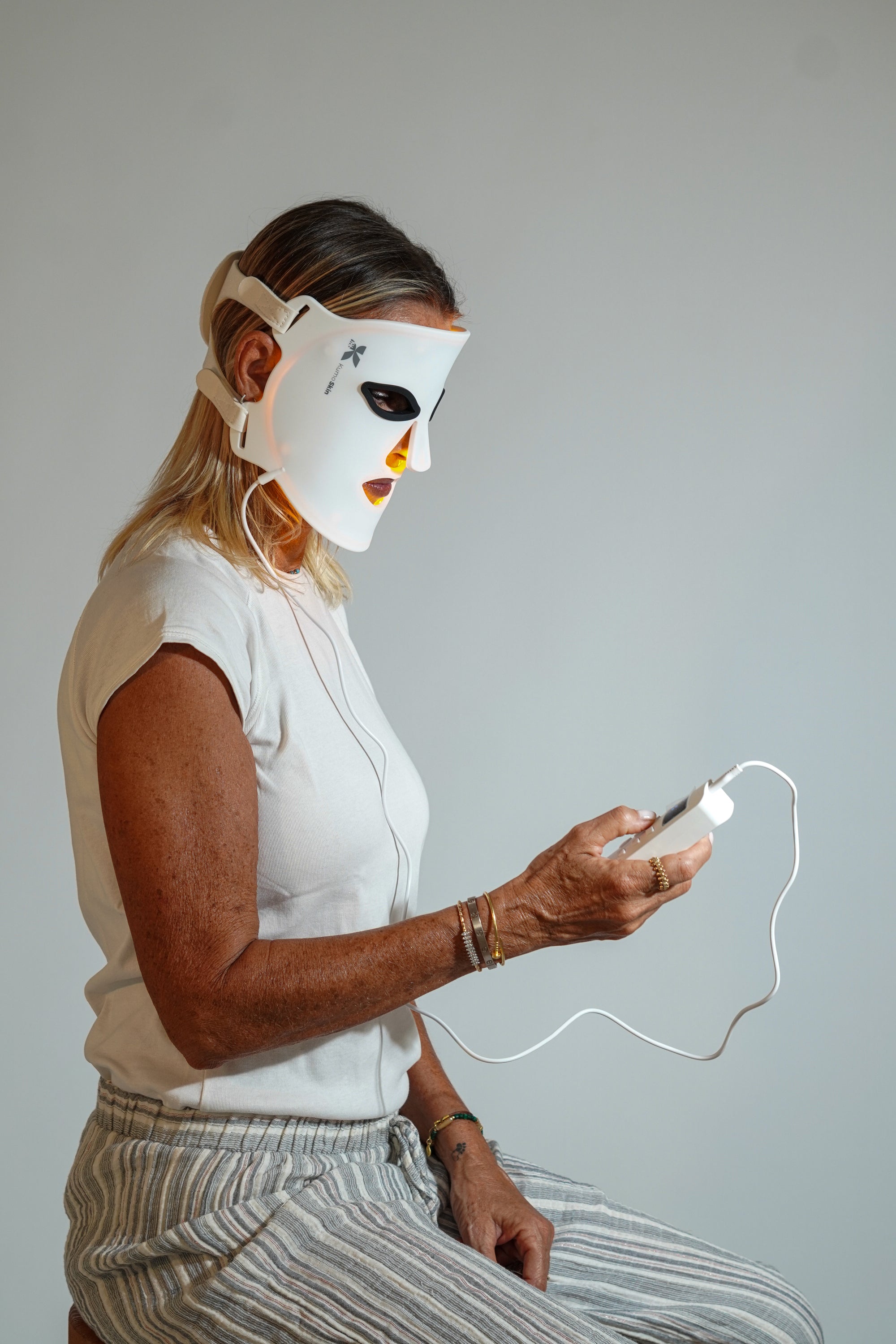
The KumoSkin LED mask helps repair and calm your skin in short sessions at home.
- 250 LEDs in flexible medical silicone
- Red light to boost collagen and glow
- 4 lights: red, infrared, blue and yellow
€299,00€429,00
−10% on your 1st order when you subscribe to the newsletter

What is green light in an LED mask?
In photobiomodulation, wavelength matters. The most specific clinical study on green light evaluated 505 nm and showed, in cells, a drop in MITF and TYR; in 3D models, less melanin; and, in people, improvements in melanin index, brightness, color, and number of spots after 8 weeks, with no adverse events. clinical study on 505 nm green LED and facial pigmentation
However, the 2024 review of photobiomodulation in melasma identified only nine relevant studies and stressed that the best-studied wavelengths were red, amber, and infrared; it also called for larger and better-designed trials. Therefore, it's not advisable to assume that any "green" mask reproduces the same effect.
Personalized protocol · included with your purchase
Want us to tell you how to use it in your case?
With your purchase, our experts prepare the ideal LED protocol for your skin type and goal (acne, wrinkles, dark spots...).
Message us on WhatsAppOur experts reply · no obligation
What can it offer for dark spots and uneven tone?
Visible light, which constitutes almost half of solar radiation, is not neutral for pigmentation. A 2026 review on visible light protection positions it as a relevant factor in melasma and other hyperpigmentary disorders, and the AAD reminds us that it can worsen melasma, especially in darker skin tones. Therefore, green light should not be seen as a substitute for photoprotection, but as a possible complement.
Its interest lies in the modulation of melanogenesis: in the 505 nm study, the cellular signal linked to melanin production was reduced, and dark spots improved with sustained use. This does not mean erasing deep hyperpigmentation in a few days, but it does suggest a reasonable way to improve tone uniformity with consistency. If your marks appeared after acne or inflammation, the approach is very similar to that of post-inflammatory spots treated with at-home LEDs.
What the evidence says today
The evidence is hopeful, but still limited. To interpret it correctly, it's important to differentiate between what has been observed in the laboratory and what has been observed in people.
on your first order when you join the newsletter
We send you the code instantly. No spam.
Quick summary of the evidence
| Aspect | Finding | Practical Interpretation |
|---|---|---|
| 505 nm green | In cells, it reduced MITF and TYR; in 3D models, it decreased melanin; and in humans, it improved melanin index, brightness, color, and number of spots after 8 weeks, with no adverse events. | This is the most concrete sign that green light can play a real role, although it comes from a specific protocol and not from just any mask on the market. |
| Quality of evidence | The 2024 review found nine relevant studies on photobiomodulation for melasma and noted that robust trials are needed to define optimal parameters. | It is advisable to read the results with caution and not extrapolate too much. |
| Pigmentary context | Visible light can aggravate melasma and other hyperpigmentation problems; additionally, tinted formulas with iron oxides and pigmentary TiO2 offer the most effective protection against this part of the spectrum, reducing HEVL transmission by up to 80-97%. | If you're looking for a more even tone, visible-light-aware photoprotection is still part of the plan. |
| Device parameters | Not all green masks are equivalent: wavelength, power density, and usage time change the results. | The specific model matters as much as the color of the light. |
In summary, green light seems more interesting as a support for skin with dark spots and dull tone than as a universal solution. If you want to compare this interpretation with a broader view of real results, the article on evidence and real results of the facial LED mask helps to set expectations and limits.
How to integrate it into a realistic routine
The best strategy is simple: think of the green LED mask as constant support, not a shortcut. Thus, the goal shifts from "erasing spots" to "progressively improving tone uniformity."
- Use the device following its exact protocol; in the 505 nm study, changes appeared after 8 weeks of continuous use.
- During the day, maintain photoprotection that also considers visible light, because melasma can worsen with this spectrum, and formulas with iron oxides remain the most effective against it.
- Always check the declared wavelength and dose: the data from the 2024 review show that the response changes depending on the parameter used.
- If your skin is reactive or you want to know when to stop, consult the contraindications of the facial LED mask before continuing.
Safety and limitations
In dermatology, LEDs have a generally good safety profile, and the systematic review on LEDs in dermatology describes excellent safety. In the 505 nm study, no adverse events were reported, and 3D models showed no loss of cell viability. Even so, this does not eliminate the need for prudent and consistent use.
In other words, the most reasonable approach is to consider the mask as a supportive tool: useful for adding to a routine, limited for solving problems on its own, and most effective when it fits into a well-planned routine. Pay attention to the light it emits, not just the color it promises.
FAQ
Does the green light of LED masks help to even out skin tone and reduce dark spots?
Yes, it can help in some cases, especially when the problem is mild to moderate hyperpigmentation and the device uses a protocol similar to the one studied. In the 505 nm trial, improvements in melanin index, brightness, color, and number of spots were observed after 8 weeks. However, this is not a universal result: the evidence is still limited, and daily photoprotection remains key to prevent the tone from darkening again.
What specific benefits does green light offer in LED phototherapy for hyperpigmentation and dark spots?
The potential benefits are quite specific: modulating melanin production, decreasing the activity of pathways like MITF and TYR, and visually improving facial homogeneity. In the 505 nm study, these changes were seen in both the laboratory and in human intervention. That said, photobiomodulation for pigmentation is still in the consolidation phase, so it should be thought of as a promising support, not a definitive depigmenting agent.
Is it safe to use an LED mask with green light to even out skin tone without irritation?
In general, LEDs show a favorable safety profile when used according to the correct protocol. The systematic dermatology review highlights good safety, and the 505 nm study reported no adverse events or changes in cell viability in 3D models. However, safety does not mean indiscriminate use: it is important to respect the indicated time, ensure eye comfort, and follow the manufacturer's instructions to avoid unnecessary discomfort.
How does green light work to treat dark spots and uneven skin tone with an LED mask?
It does not act like a classic chemical depigmenting agent. The idea is that green light influences cellular pathways related to melanin synthesis and, with consistent use, helps the pigmentation appear more even. In the 505 nm study, a decrease in MITF and TYR was observed, as well as clinical improvements after 8 weeks. Therefore, uneven tone usually responds better when the mask is integrated into a routine with photoprotection and follow-up.
Can any LED mask with green light improve uneven tone and pigmentation, or does it depend on the model?
It depends heavily on the model. The effect observed in research is linked to a specific wavelength, power density, and defined protocol, not to just any "green" device. The 2024 review precisely insists that robust trials are needed to establish optimal parameters. In practice, this means that two masks of the same color can behave differently if the engineering, exposure time, or intensity changes.
What now?
If you want to continue with a technological facial routine, explore Kumo Balance's homepage and complete your reading with the benefits of the facial LED mask for your skin to see how it fits into a broader approach to care and recovery.

Facial red light
KumoSkin Mask – LED Facial Mask
★★★★★ 4,8/5 · rated by verified customers
- 250 LEDs in flexible medical silicone
- Red light to boost collagen and glow
- 4 lights: red, infrared, blue and yellow
€299,00€429,00· pay in installments with seQura or Klarna