
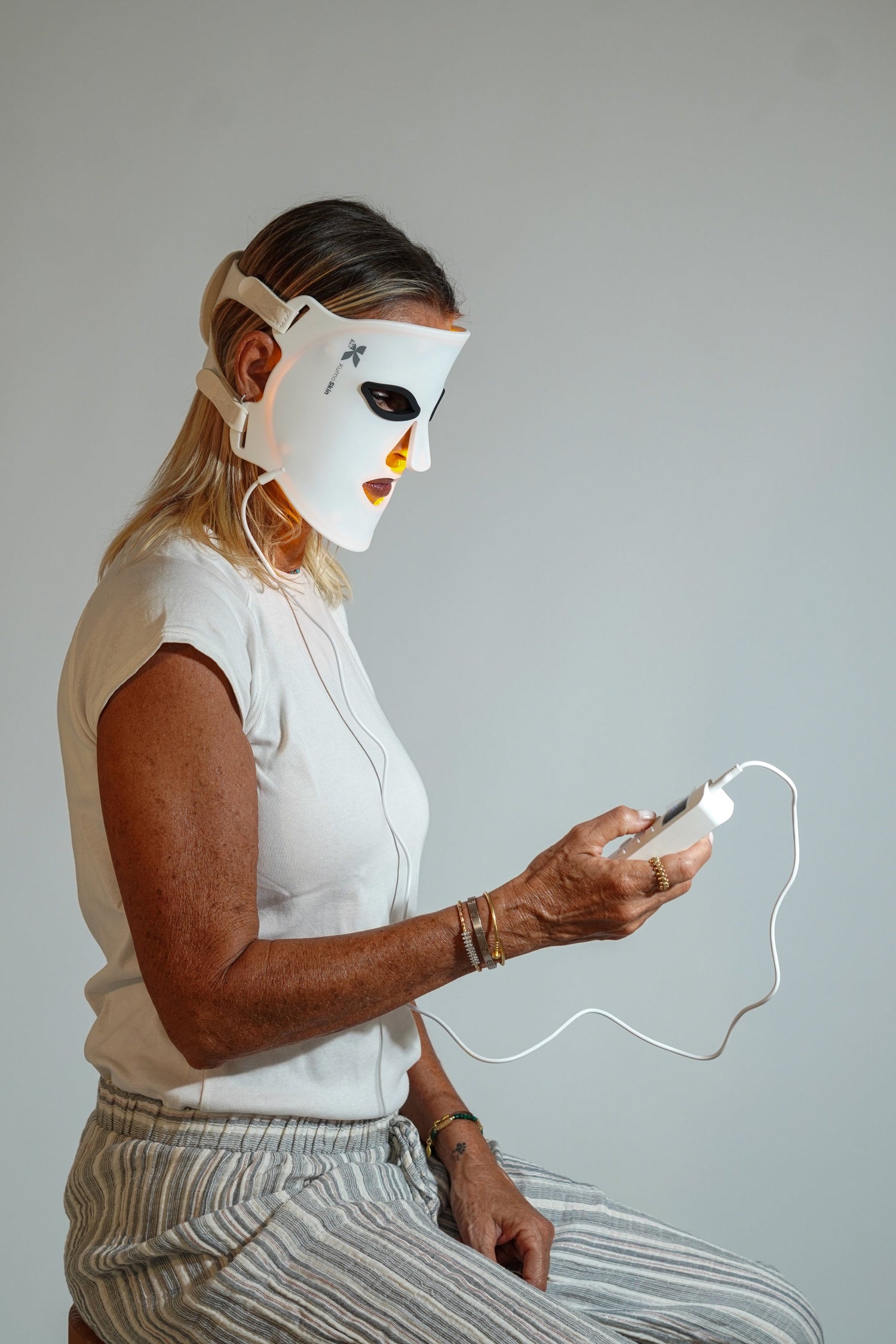

Post-inflammatory hyperpigmentation does not disappear overnight. At-home LED can help, but it usually works better as support for a consistent routine than as a standalone solution for PIH. (aad.org)
PIH appears after an inflammatory process—acne, eczema, irritation, friction, or injury—and is more commonly seen in medium and dark skin tones. Sun and visible light can darken it even further, so photoprotection is part of the treatment from the start. (dermnetnz.org)
Facial red light
Bring your skin back to life
★★★★★ 4,8/5 · rated by verified customers
The KumoSkin LED mask helps repair and calm your skin in short sessions at home.
- 250 LEDs in flexible medical silicone
- Red light to boost collagen and glow
- 4 lights: red, infrared, blue and yellow
€299,00€429,00
−10% on your 1st order when you subscribe to the newsletter

What is post-inflammatory hyperpigmentation and why does it appear?
Post-inflammatory hyperpigmentation is not a scar itself, but rather a change in color in the area where inflammation occurred. In practice, the skin “remembers” the aggression: it produces more melanin or distributes it irregularly, leaving a brown, grayish, or darker mark than the base tone. (aad.org)
Depth matters a lot. More superficial spots usually lighten over time, often within months, while deeper ones may take longer to fade and, in some cases, leave a more persistent tone. Therefore, if breakouts or irritations continue to appear, new marks will continue to form. (aad.org)
Personalized protocol · included with your purchase
Want us to tell you how to use it in your case?
With your purchase, our experts prepare the ideal LED protocol for your skin type and goal (acne, wrinkles, dark spots...).
Message us on WhatsAppOur experts reply · no obligation
Can at-home LED therapy help?
Based on available evidence, red and near-infrared light seem more logical as anti-inflammatory support than as direct depigmenting treatment; blue light is mainly used for active acne, and visible light itself—especially blue—can induce pigmentation in darker skin types. In other words: if your PIH stems from a breakout, LED can add value; if you’re looking to erase an established spot, don't expect it to be sufficient on its own.
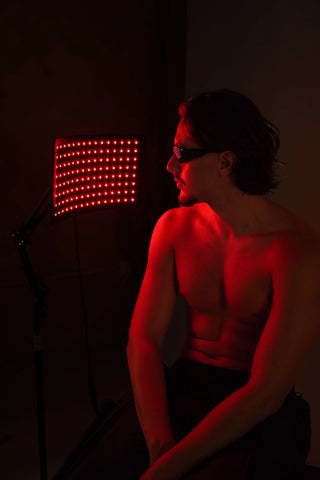
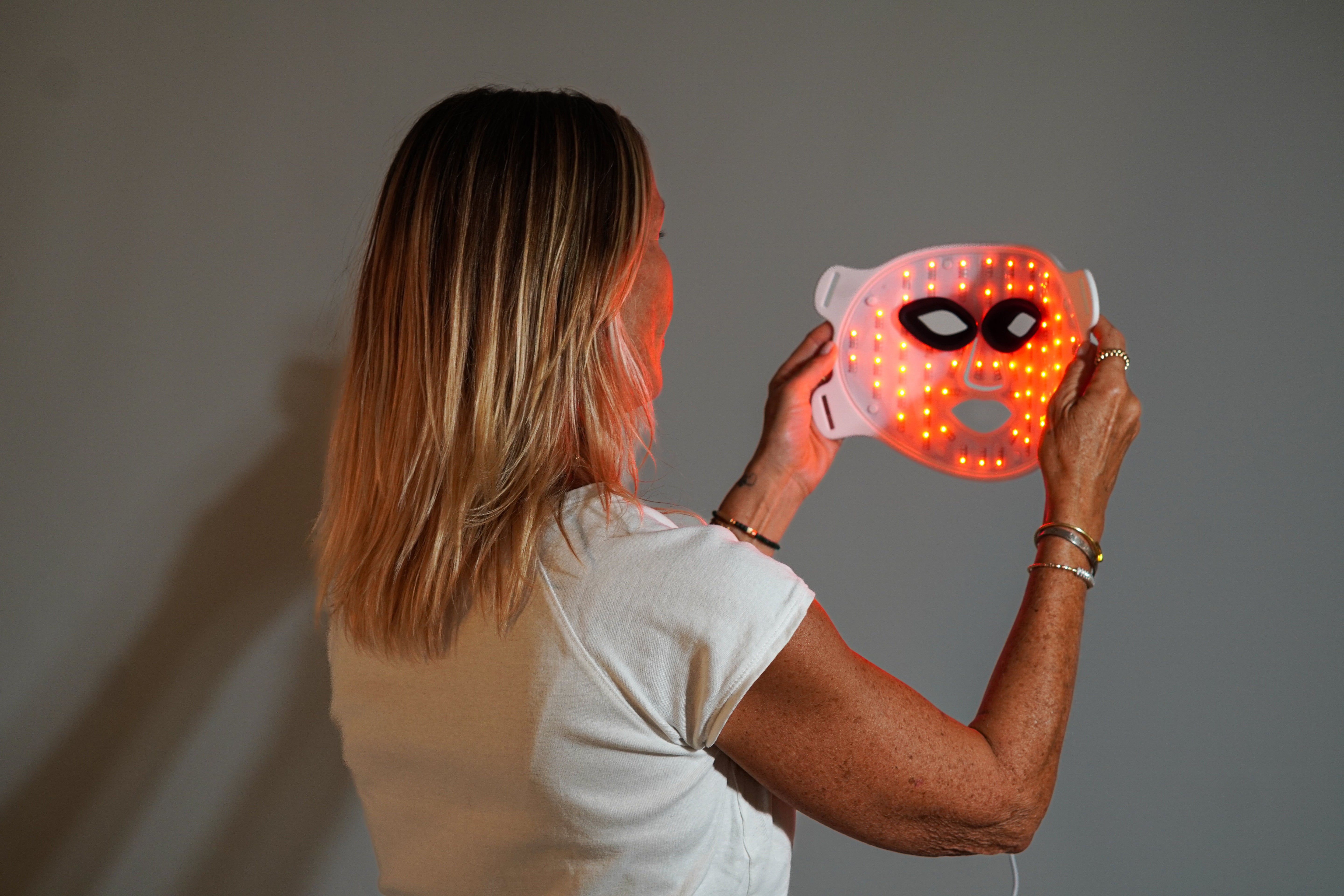
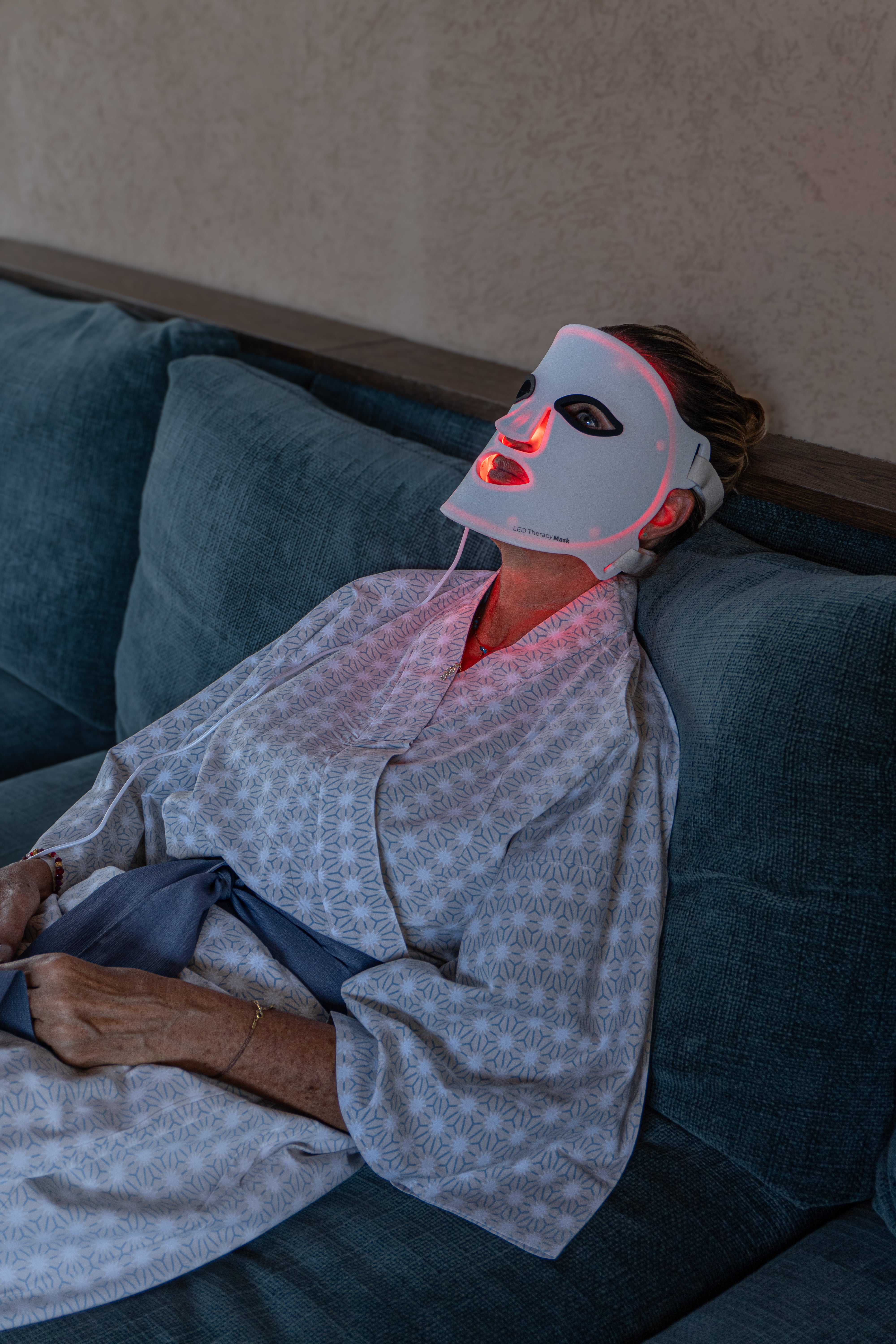
If you want a comfortable facial format to integrate that consistency, an at-home LED facial mask may be a better fit than occasional treatment, as long as the routine remains gentle and realistic. At-home devices typically use LEDs and lower power than in-office treatments, so their reasonable role is to complement, not replace, a well-managed skincare plan.
Which LED colors make the most sense for PIH?
| Color / Range | Common Use | What to Expect for PIH |
|---|---|---|
| Red | Photobiomodulation to support skin calming and recovery. | This is the option that makes the most sense as a complement when PIH is fueled by residual inflammation. |
| Near Infrared | Used in conjunction with red in many home devices. | Can complement the goal of tissue recovery, although it does not act as a direct depigmenting agent. |
| Blue | More associated with active acne management. | Not the first choice for established PIH, and blue light can promote pigmentation in some skin types. (aad.org) |
If you're weighing two commonly cited home wavelengths, comparing 660 nm and 850 nm helps understand why red often focuses more on the surface and near-infrared on deeper support.
on your first order when you join the newsletter
We send you the code instantly. No spam.
How to integrate LED into an anti-PIH routine without irritating the skin
The best context for LED is calm, clean, and sun-protected skin. DermNet and the AAD agree that daily photoprotection is key to preventing PIH from darkening, and that treating the underlying problem that caused the spot accelerates improvement.
To structure the process, a nighttime facial routine with an LED mask can serve as a framework: cleanse gently, use LED according to device instructions, moisturize, and save irritating active ingredients for another time if your skin is sensitive.
- First, control active inflammation. If PIH comes from acne, eczema, or friction, the priority is to prevent new lesions that will repigment. (aad.org)
- Use sunscreen daily. For PIH, the AAD recommends starting with effective photoprotection; for skin with visible spots, tinted sunscreens with iron oxides also help against visible light.
- Apply LED regularly, not excessively. At-home light therapy is not "more time = better results"; consistency and manufacturer instructions outweigh improvising long sessions.
- Maintain a calm skin barrier. If your skin irritates easily, prioritize gentle cleansers and hydration to avoid adding inflammation to the spot.
One of the most common mistakes is starting too intensely or using the device on already reactive skin; if you want to avoid this, review the common mistakes in at-home facial phototherapy.
Risks, limitations, and when to stop
In general, LED therapy does not use UV and is usually considered safe in the short term; even so, it can cause mild irritation, and the AAD advises checking for photosensitivity, using the indicated eye protection, and speaking with a dermatologist if your skin is darker or reactive. Visible light can induce hyperpigmentation in predisposed individuals, so caution is advised.
- Discontinue if you notice persistent stinging, more redness than usual, or an area that darkens after several sessions.
- Always use the eye protection indicated by the manufacturer; sunglasses are not a substitute for glasses designed for the device.
- If the spot is very deep or has been present for a long time, do not expect a home LED device to completely resolve it; in some cases, topical treatments or dermatological evaluation are necessary.
If you also tend to have melasma, it is worth reviewing how light combines with that type of pigmentation: if your skin also tends to melasma. (dermnetnz.org)
Frequently asked questions about PIH and at-home LED
Does at-home LED therapy work for post-inflammatory hyperpigmentation (PIH) on the skin?
It can help, but it's usually not the main solution. The evidence is stronger for calming inflammation, supporting acne control, and improving skin recovery than for erasing established PIH. In practice, at-home LED makes more sense as a complement to photoprotection, a gentle routine, and treating the trigger. If the spot is deep or has been present for a long time, progress is usually slower and sometimes requires dermatology.
Which LED colors are best suited to treat post-inflammatory hyperpigmentation and why?
Red and near-infrared make more sense because they are oriented towards photobiomodulation and anti-inflammatory support. Blue is mainly used for active acne; it is not the primary option for an already pigmented spot. In addition, the literature on visible light shows that certain wavelengths, especially blue, can induce pigmentation in darker skin types, so caution is advisable if you are prone to PIH.
What are the possible risks or side effects of using an at-home LED device for PIH?
The most common risks are mild irritation, temporary redness, stinging, and, in predisposed individuals or those with darker skin, pigmentation changes if exposure is not managed well. The AAD recommends checking for photosensitivity due to medications, using the indicated eye protection, and consulting before starting if you have any doubts. LED is not UV, but that doesn't mean every device is suitable for everyone.
How long does it usually take to see improvements in PIH when combining at-home LED with a skincare routine?
It depends on the depth of the spot, whether inflammation is still active, and your consistency. For superficial PIH, some spots may begin to lighten within 6 to 12 months; deeper ones take longer. If you combine LED with photoprotection and control of the trigger, changes are usually seen earlier in fewer breakouts and in a more stable texture than in a complete disappearance of the mark.
Is it safe to use at-home LED if I have sensitive skin or a tendency to develop PIH, and what precautions should I take?
Yes, but with more caution. If your skin irritates easily, start with a very simple routine, avoid using the LED on already reactive skin, and observe if there is increased heat, stinging, or unexpected darkening. The AAD advises speaking with a dermatologist before using at-home red light if you have dark skin or take photosensitizing medication. When the skin barrier is calm, tolerance is usually better.
What now?
If you want to move forward with a realistic strategy, combine photoprotection, consistency, and a device that is easy for you to use. Start with Kumo Balance's complete proposal and, if a home format for the face suits you, also check out advanced at-home LED light therapy to choose the option that best fits your routine.

Facial red light
KumoSkin Mask – LED Facial Mask
★★★★★ 4,8/5 · rated by verified customers
- 250 LEDs in flexible medical silicone
- Red light to boost collagen and glow
- 4 lights: red, infrared, blue and yellow
€299,00€429,00· pay in installments with seQura or Klarna