
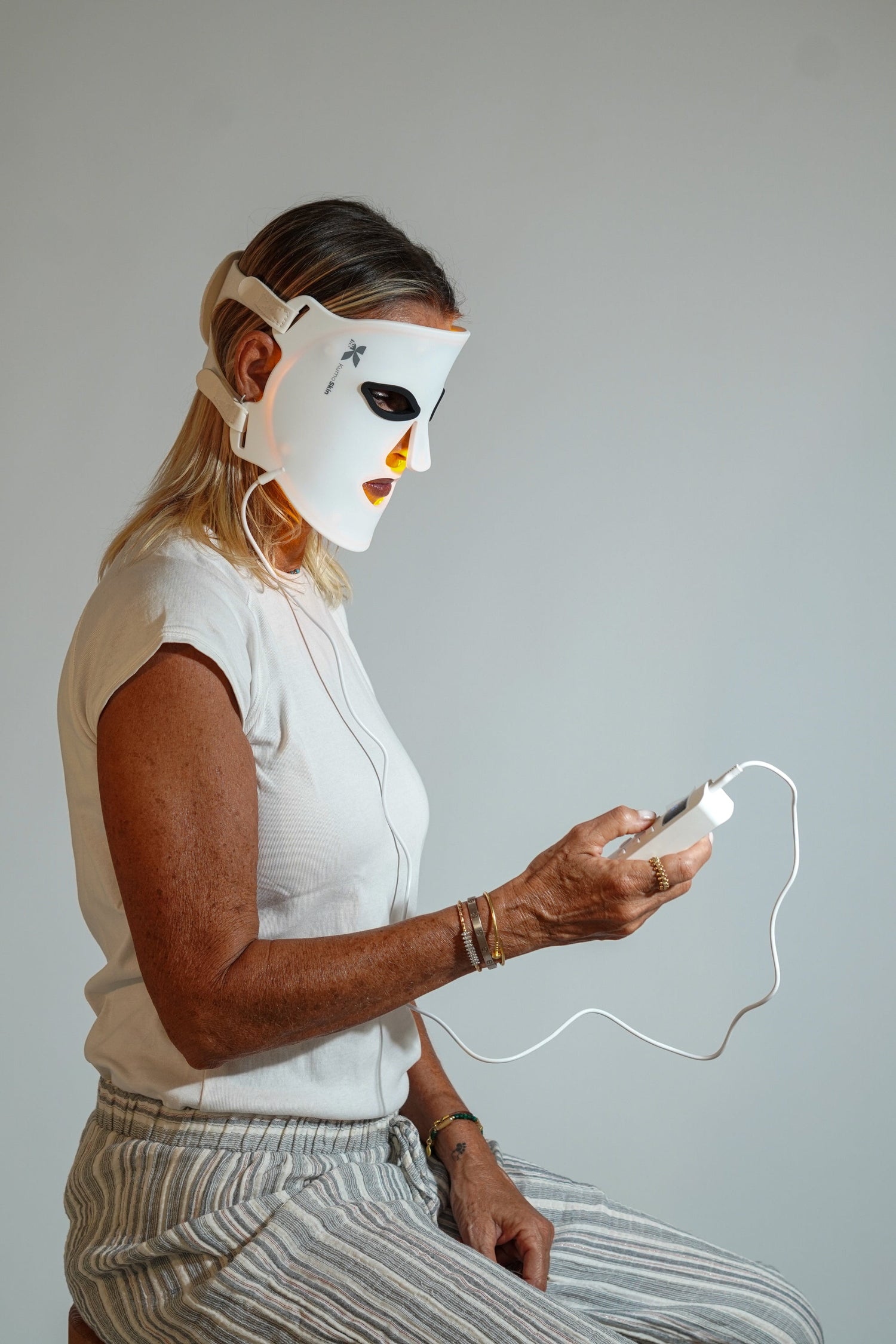
Yes, LED light can help rejuvenate the skin. The key is to make it a consistent, well-planned routine that is compatible with the skin barrier, not to look for a quick, one-session fix. (aad.org)
As part of an at-home recovery and facial care technology proposal, photobiomodulation is understood as a support to improve firmness, luminosity, and texture, along with daily cleansing, hydration, and photoprotection. (kumobalance.com)
Red & infrared light
Recover faster, at home
★★★★★ 4,8/5 · rated by verified customers
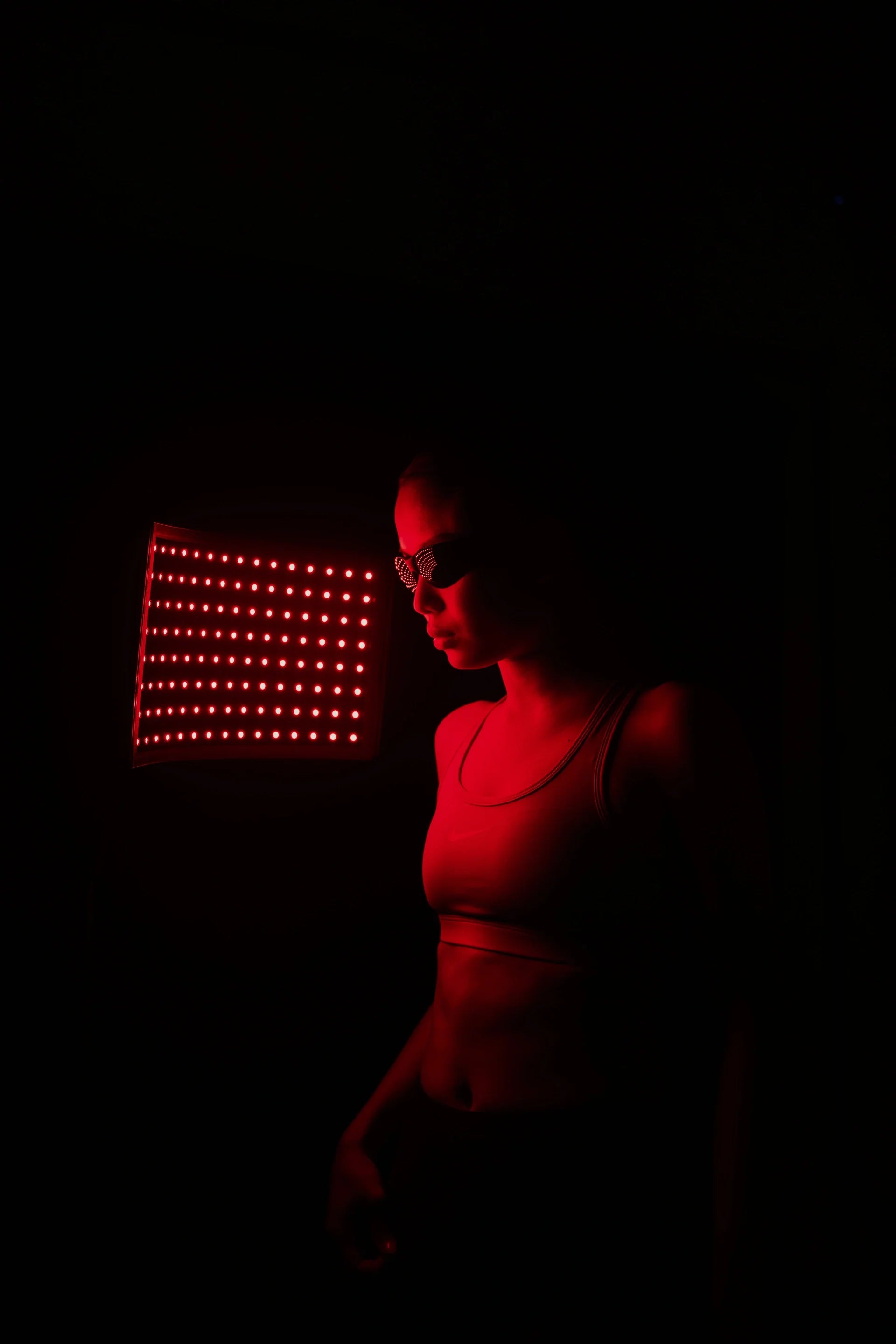
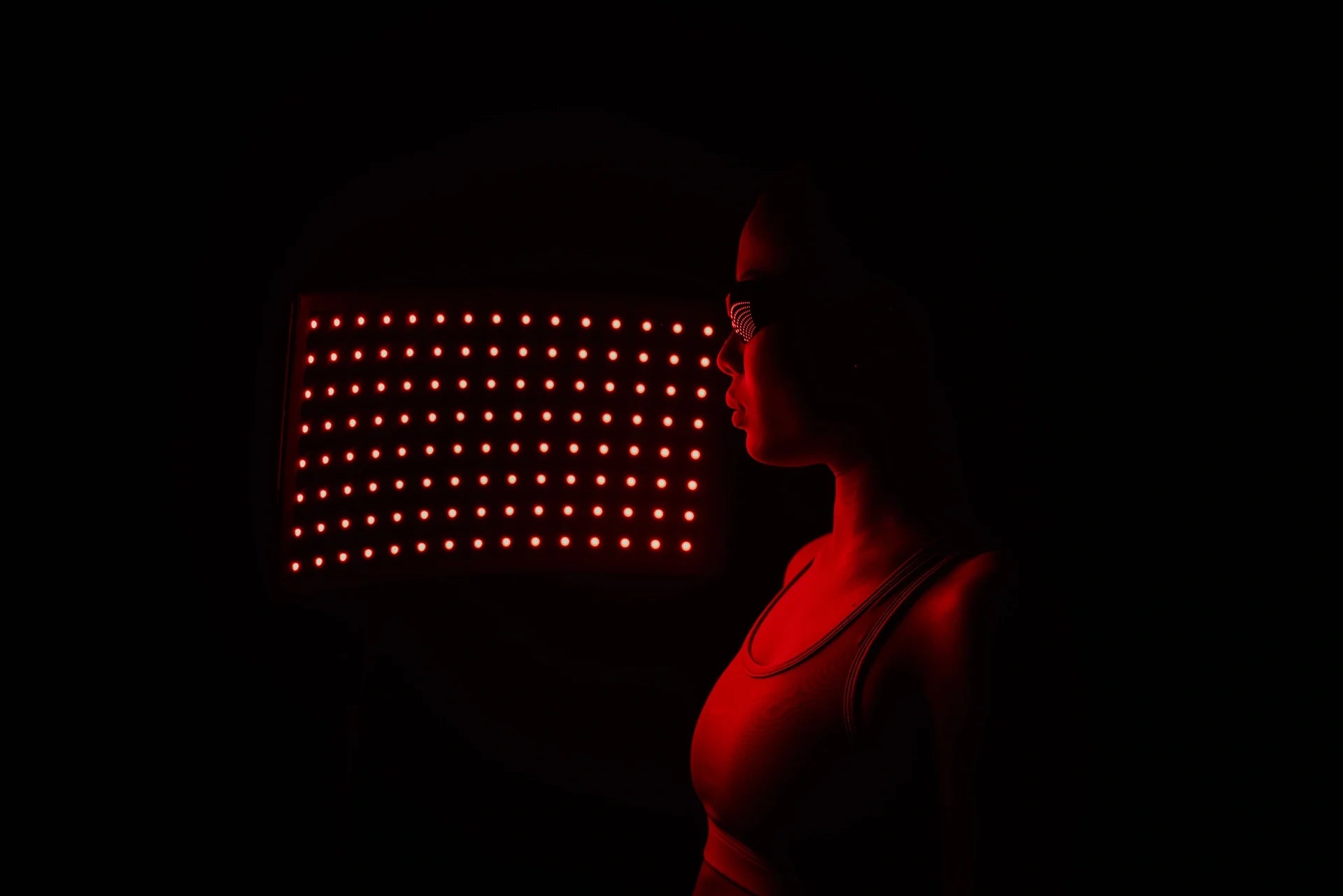
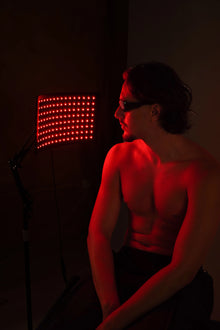
The KumoLux panel supports muscle recovery with full-body red and infrared light.
- 660 nm red + 850 nm infrared light
- Full-body muscle recovery
- Clinically validated biohacking protocols
€399,00€499,00
−10% on your 1st order when you subscribe to the newsletter

What can LED light do for the skin?
Facial LED therapy uses visible and near-infrared light. It does not exfoliate, does not use UV, and is considered a non-invasive technique; therefore, it is integrated as a complement to a skincare routine, not as a substitute for basic habits. The American Academy of Dermatology precisely positions it as an aid for signs of aging, uneven texture, and other skin goals, with results depending on the device and consistency. If you want to understand the technical basis, you might find it useful to review what a facial LED mask is and how it works. (aad.org)
When the goal is skin rejuvenation, the wavelengths that have generated the most clinical interest are usually red and near-infrared. In a 2006 randomized trial with 633 and 830 nm, 36 participants received 9 sessions over 5 weeks, and the authors observed improvements in wrinkles, smoothness, and firmness, as well as thicker collagen fibers under the microscope. (pubmed.ncbi.nlm.nih.gov)
Personalized protocol · included with your purchase
Want us to tell you how to use it in your case?
With your purchase, our experts set up your red and infrared light sessions for your sport and goal.
Message us on WhatsAppOur experts reply · no obligation
More recently, a 2025 multicenter trial with 630/850 nm light for crow's feet described the treatment as effective, safe, well-tolerated, and painless. In practice, this reinforces a simple idea: LED works better as a repeated protocol over weeks than as an isolated use. (pubmed.ncbi.nlm.nih.gov)
The best LED routine is not the most intense, but the one you can repeat without irritating the skin. (kumobalance.com)
Combined routine for youthful skin: how to integrate LED
Think of the routine in three moments: prepare, illuminate, and seal. If you want a practical and very easy-to-follow reference, the step-by-step guide to using a facial LED mask summarizes a simple home protocol. (kumobalance.com)
on your first order when you join the newsletter
We send you the code instantly. No spam.
- Cleanse gently. Start with a gentle cleanser and thoroughly dry the skin; LED light works best on clean skin free of heavy residues. (kumobalance.com)
- Apply the LED session on dry skin. As a home reference, Kumo suggests sessions of 10 to 20 minutes, 3 to 5 times a week for 6 to 8 weeks, adapting the program to the goal. (kumobalance.com)
- Finish with hydration. After the light, use a simple cream that suits you well; in the morning, always complete with daily photoprotection. (kumobalance.com)
- Think in cycles, not impulses. Clinical studies usually assess progress after several weeks of repeated use, not after a single application. (pubmed.ncbi.nlm.nih.gov)
Most useful wavelengths for skin rejuvenation
| Wavelength | Common Use | What it aims to provide | Practical insight |
|---|---|---|---|
| 630–660 nm | Red light | Associated with firmness, fine lines, and collagen support. | This is the most common range in anti-aging facial protocols; Kumo includes it in its mask, and the 633/830 and 630/850 nm trials point to visible improvements. (kumobalance.com) |
| 830–850 nm | Near-infrared | Used as a complement due to its greater penetration and its role in combined routines. | Studied alongside red light because it helps build more complete rejuvenation and recovery protocols. (kumobalance.com) |
| 470 nm | Blue light | More geared towards acne than anti-aging. | The AAD guide on lights for acne indicates that visible blue and red light is primarily used for pimples, not for deep comedones or nodules. (aad.org) |
Which device best fits an anti-aging routine?
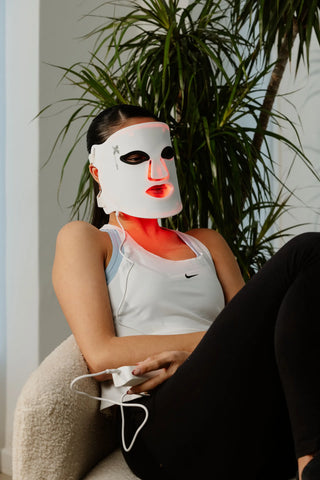
If you're looking for a complete facial format, the KumoSkin LED facial mask is designed with flexible medical-grade silicone, 250 independent LED diodes, and full facial coverage. Its wavelengths include red 630–660 nm and infrared 850 nm, precisely the most common range in facial rejuvenation protocols. (kumobalance.com)
If you prefer to combine face and body in the same ritual, advanced at-home LED therapy brings together a mask and panel within a broader wellness proposal. Kumo presents this system as a way to work on skin, recovery, and rest from a single routine. (kumobalance.com)
Common mistakes and safety
LED is simple, but it should not be used blindly. Before starting, check three points: eyes, photosensitivity, and your skin's tolerance. The AAD and Kumo agree that the device should be used exactly as indicated by the manufacturer, with eye protection when appropriate. (aad.org)
- Do not use on open wounds, sunburns, or highly irritated areas. (kumobalance.com)
- If you are taking photosensitizing drugs, have photosensitivity, photosensitive epilepsy, or a specific eye condition, seek guidance before starting. (kumobalance.com)
- Use the eye protection indicated by the manufacturer and do not substitute recommended glasses for sunglasses. (aad.org)
- Start with less time if your skin is reactive and only increase when you see good tolerance. (kumobalance.com)
- If the device is FDA-cleared, take it as a safety reference, not an automatic promise of results. (aad.org)
For very sensitive skin or with a known reaction to light, the AAD recommends consulting before using home devices. This precaution is not intended to stop the routine, but to help you choose wisely from the start. (aad.org)
Frequently Asked Questions
What benefits does LED light therapy provide for facial skin rejuvenation?
Facial LED therapy can help improve the appearance of fine lines, redness, roughness, and dull tone when used consistently. The AAD presents it as a complementary therapy, and the clinical studies cited in this article show improvements in wrinkles, firmness, and texture with multi-week protocols. It does not replace a well-done basic routine, but it can add value when cleansing, hydration, and SPF are already well-established. (aad.org)
How often should an LED mask be used to achieve skin results?
As a practical reference, a commonly used home guideline is 10 to 20 minutes, 3 to 5 times a week for 6 to 8 weeks, followed by maintenance. However, there is no universal frequency, as each device has different power, distance, and program. Therefore, it is advisable to start with the manufacturer's guide and adjust according to tolerance: if you notice irritation, reduce the time or frequency before increasing again. (kumobalance.com)
Can LED light help reduce fine wrinkles and improve skin texture?
Yes, especially when used regularly and with an appropriate wavelength. In the 2006 trial with 633 and 830 nm, improvements in wrinkles, smoothness, and firmness were observed, and the AAD summarizes that some studies find results from subtle to noticeable on the face. The important thing is to think in terms of weeks of consistent use, not immediate changes after a single session. (pubmed.ncbi.nlm.nih.gov)
Is it safe to use LED devices at home, and what precautions should be taken?
Yes, provided the device is intended for home use and you follow its instructions. The AAD recommends choosing FDA-cleared equipment whenever possible, using eye protection if the manufacturer indicates it, and avoiding treatment if you are taking photosensitizing drugs or have a condition that worsens with light. For sensitive skin, it is advisable to start with shorter sessions and consult if there are doubts before making it a habit. (aad.org)
Which LED wavelengths are best for facial rejuvenation and why?
For facial rejuvenation, the most studied are usually red, around 630–660 nm, and near-infrared, around 830–850 nm. Red is more associated with firmness and fine lines, while near-infrared is used as a complement due to its greater penetration and its role in combined protocols. Blue light, on the other hand, is more geared towards acne. Therefore, an anti-aging mask usually prioritizes red + NIR. (kumobalance.com)
What now?
If you want to turn this idea into a real habit, start with a simple facial option like the LED mask for the face with medical silicone, and if you are interested in a broader ritual, look at advanced at-home LED therapy. To refine daily use, go back to the practical step-by-step guide and build your routine consistently, not in a hurry. (kumobalance.com) To learn more, consult Kumo.

Red & infrared light
KumoLux Panel – Red and Infrared LED Panel
★★★★★ 4,8/5 · rated by verified customers
- 660 nm red + 850 nm infrared light
- Full-body muscle recovery
- Clinically validated biohacking protocols
€399,00€499,00· pay in installments with seQura or Klarna